
Repair problem
Frost Buildup Troubleshooting Guides – Page 2
Published FixGraph guidance for diagnosing and responding to frost buildup.
Matching published guides
Choose a guide that matches the service, equipment, and conditions you are seeing.
-
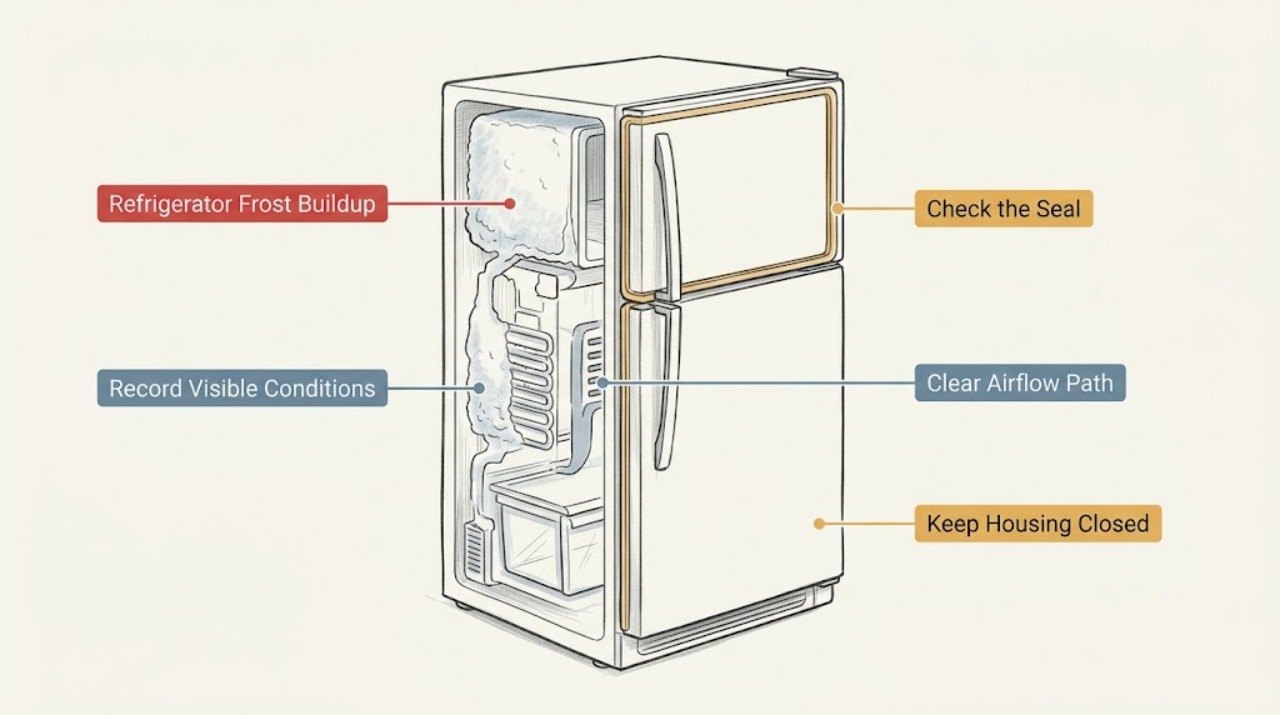
LG Refrigerator Frost Buildup: Check the Door Seal and Moisture Sources
Find out whether frost is localized near the door, spread across a wall, or blocking an air vent. Keep the freezer door fully sealed, clean a dirty gasket, avoid putting hot or uncovered wet food inside, and remove frost only with a cloth or warm method allowed by LG. Never use a knife or ice pick; recurring frost after a complete seal check needs service.
-
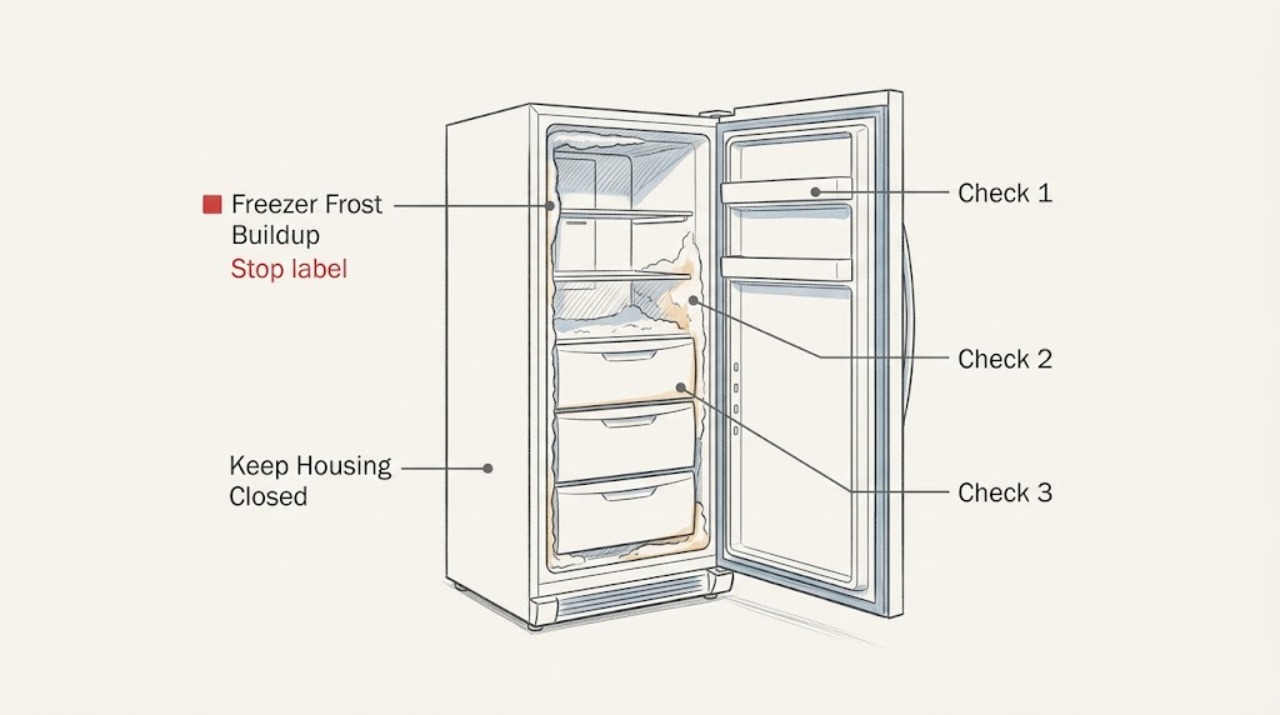
Liebherr Freezer Frost Buildup: Check the Door Seal Before Defrosting
Some frost is expected on Liebherr SmartFrost models, but rapidly returning or thick frost usually means warm, moist air is entering or the model needs a documented defrost. First identify whether frost is limited to the back wall, door edge, gasket, drawer area, or the whole compartment.
-
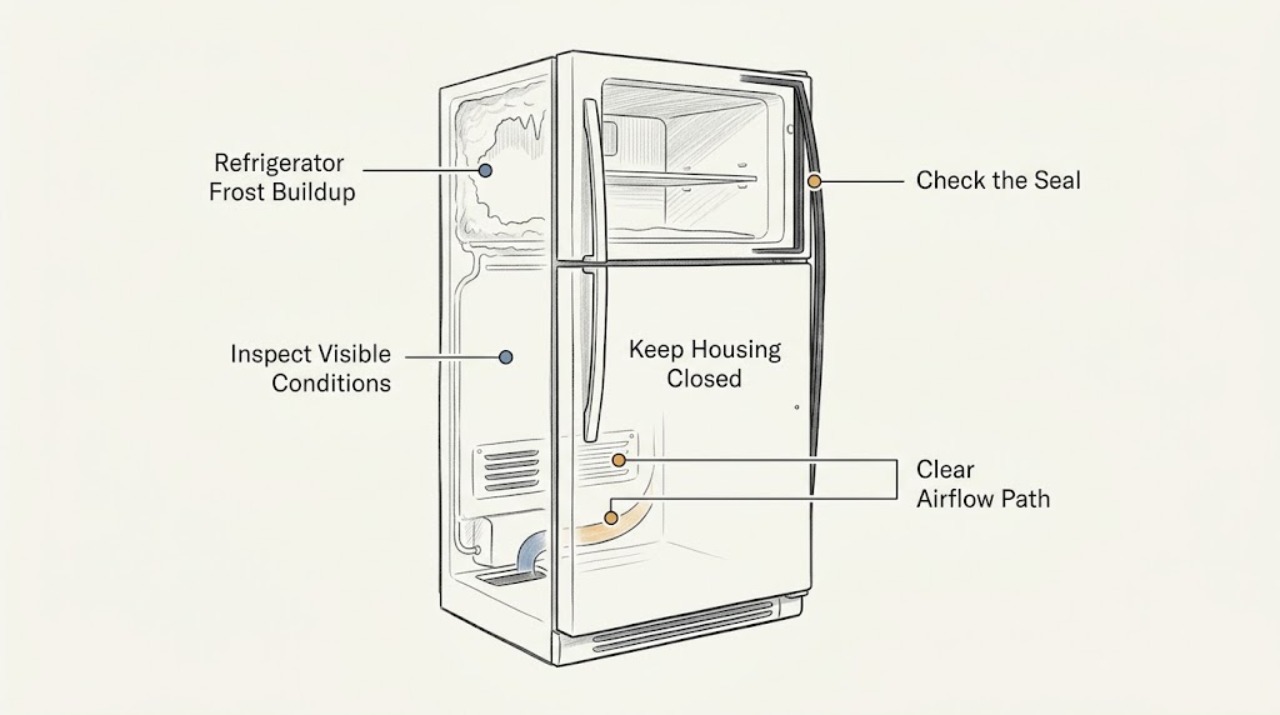
Liebherr Refrigerator Frost Buildup: Check the Door Seal and Drain Path
For frost buildup in a Liebherr refrigerator or freezer, first check that the door closes fully and the gasket is clean and continuous. Then look for food packages blocking the door or airflow and confirm that rear-wall defrost water can drain through its gutter opening. NoFrost models should not accumulate persistent ice; if frost returns after the external checks, contact Liebherr service and do not chip ice with a sharp tool.
-
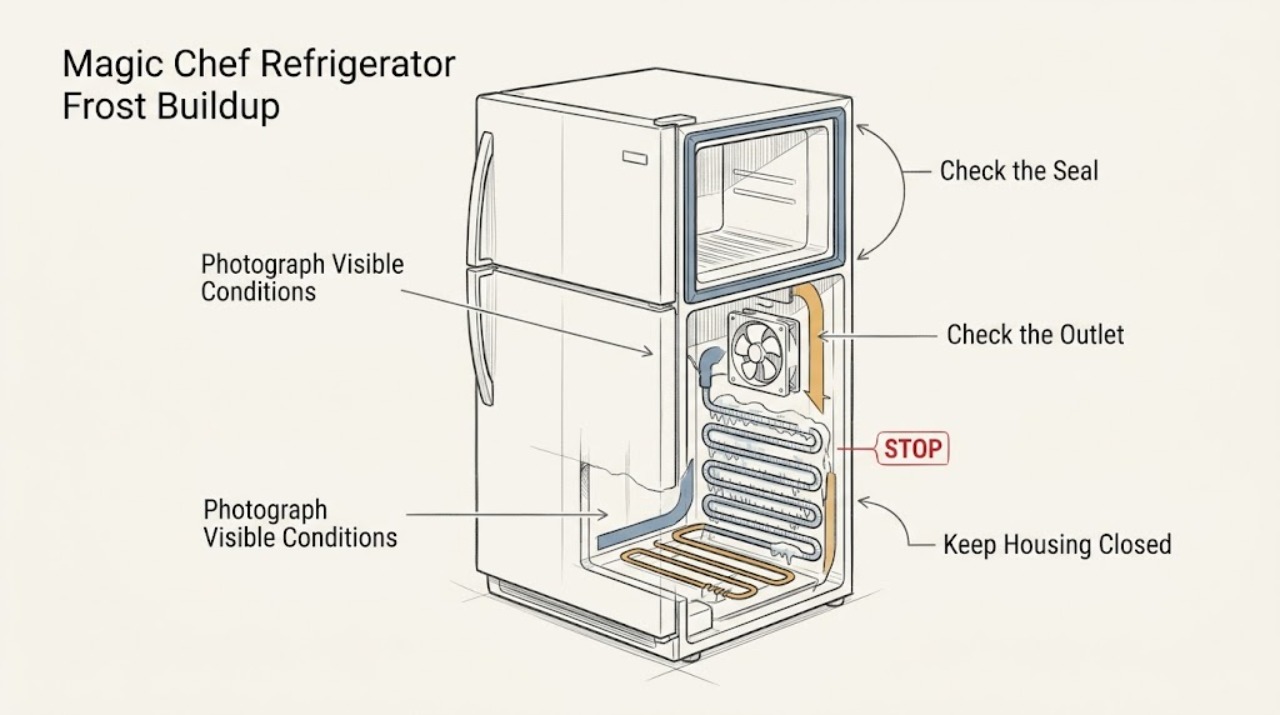
Magic Chef Refrigerator Frost Buildup: Use the Pattern to Find the Cause
Record where frost builds up in the Magic Chef refrigerator before defrosting it: around the door points to air leakage, one rear panel points to airflow or defrost behavior, and frost on packages can come from moisture and placement. Check the door seal, clear visible vents, and use the exact manual for a safe defrost procedure. Do not chip ice or work behind panels; arrange service when frost returns quickly or blocks cooling.
-
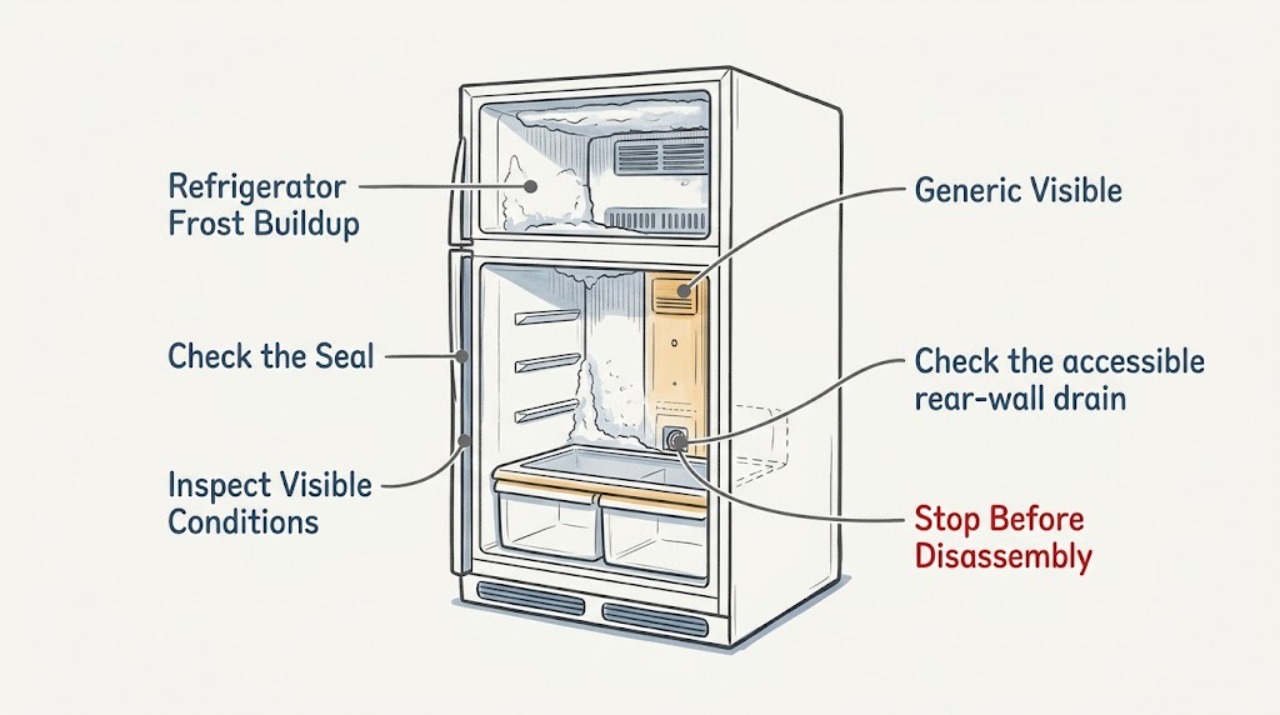
Maytag Refrigerator Frost Buildup: Check the Seal, Airflow, and Drain
For frost buildup in a Maytag refrigerator, first check that the door closes fully and that the gasket is clean and contacting the cabinet. Then clear food from the vents and check the accessible defrost-water path for visible blockage. Humidity from an open door can create temporary frost, but frost that returns after the seal and loading checks can indicate a defrost or airflow fault and needs service.
-
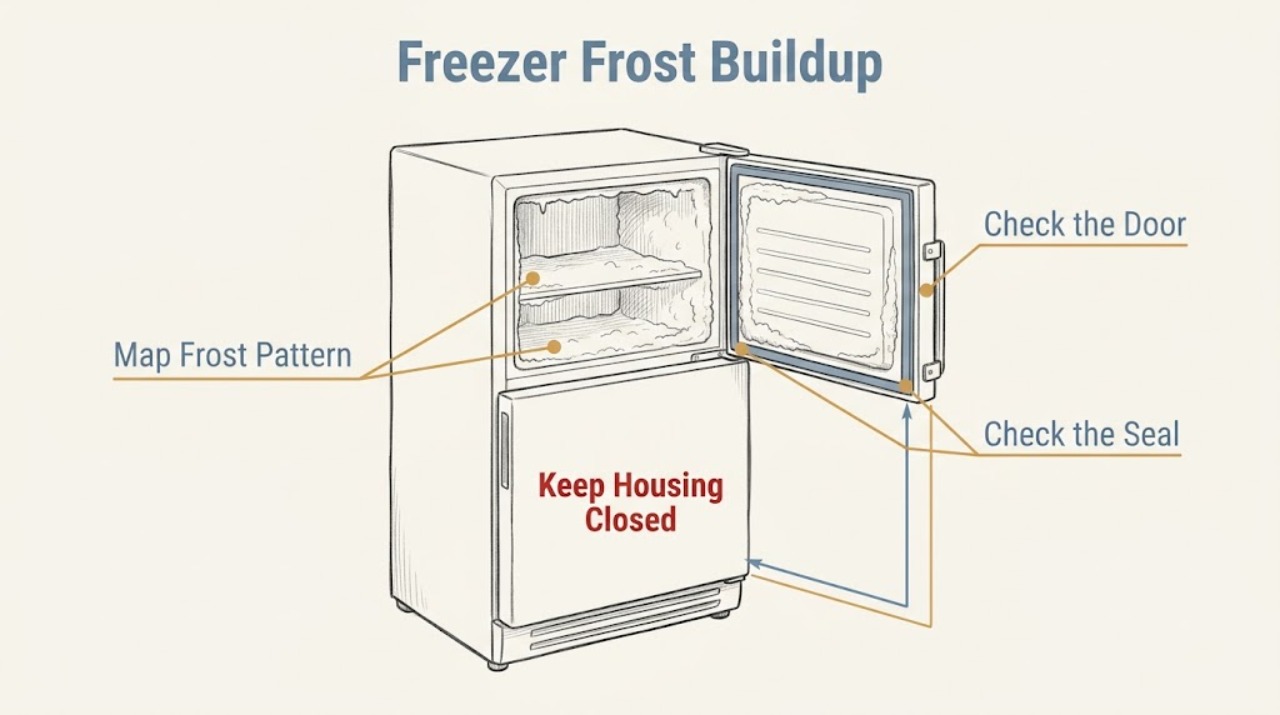
Miele Freezer Frost Buildup: Find the Air-Leak Cause Before Defrosting
A thick layer of frost or ice in a Miele freezer most often means that warm, moist air is entering or that the freezer is not completing its intended defrosting and cooling cycle. Start by checking that drawers and food are not preventing the door from closing, then inspect the door seal from the outside for a gap, damage, or a section out of its groove.
-
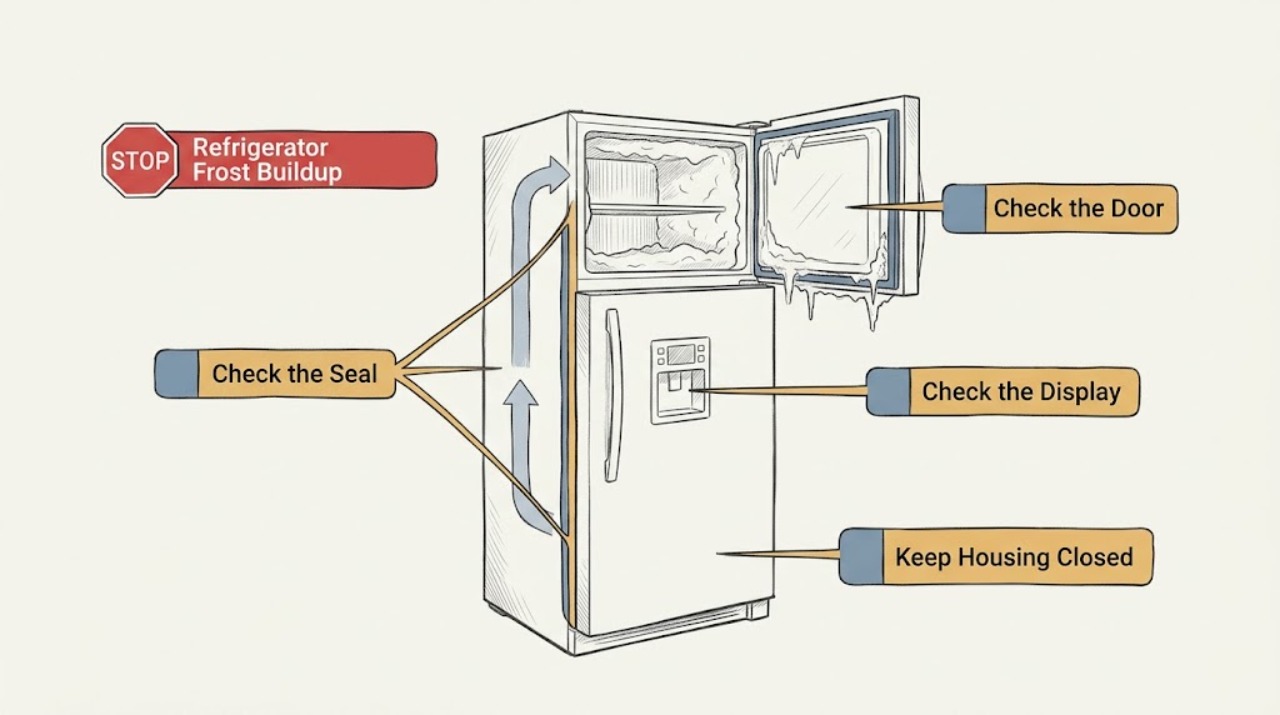
Miele Refrigerator Frost Buildup: Find the Air-Leak or Drain Cause
Start by checking whether the freezer door closes evenly and whether the door seal sits flat in its groove. Miele identifies a door that was not closed properly, or a seal that is displaced or damaged, as a cause of ice or condensation. Defrost and clean the affected section only as the model manual permits; recurring frost after a good seal check needs Miele Service.
-
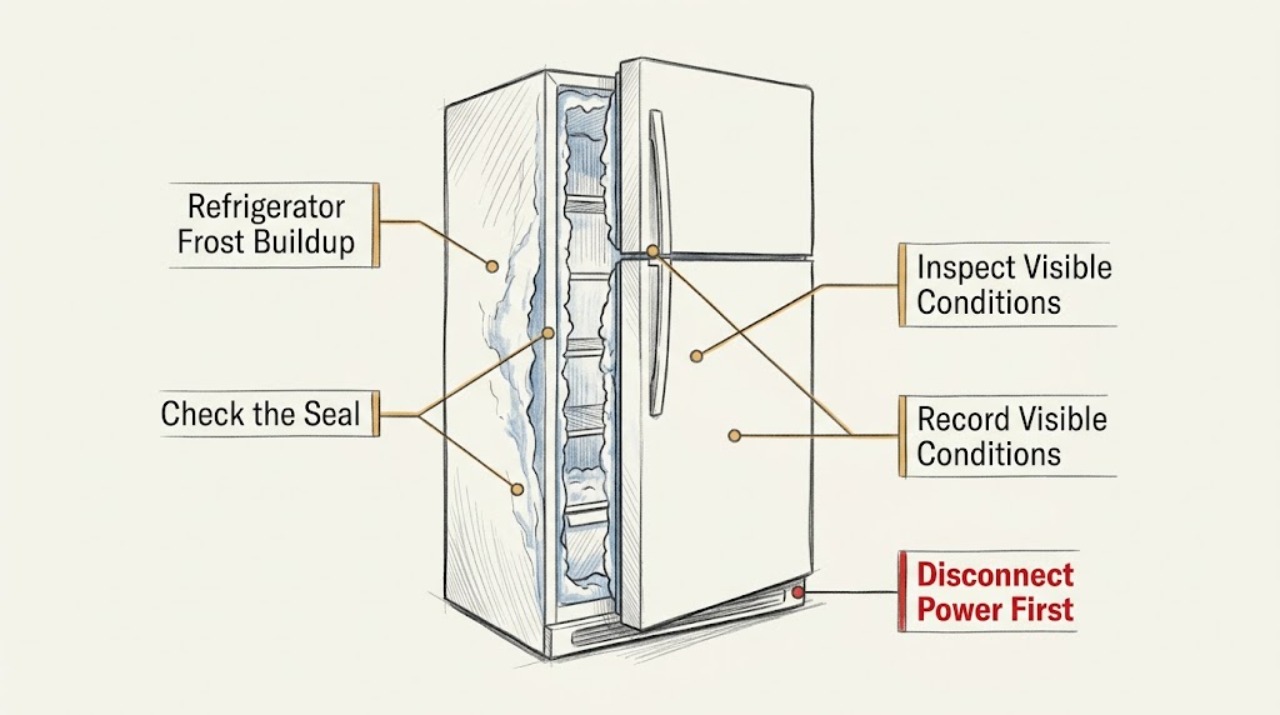
Moffat Refrigerator Frost Buildup
On a Moffat refrigerator, frost usually means humid air is entering through a door that is not sealing, food or packaging is blocking an air path, or the unit needs its documented defrost process. Check the door and gasket first, then the loading and frost pattern. Do not chip ice with a sharp tool or remove panels; if frost returns after the safe external checks, arrange model-specific service.
-
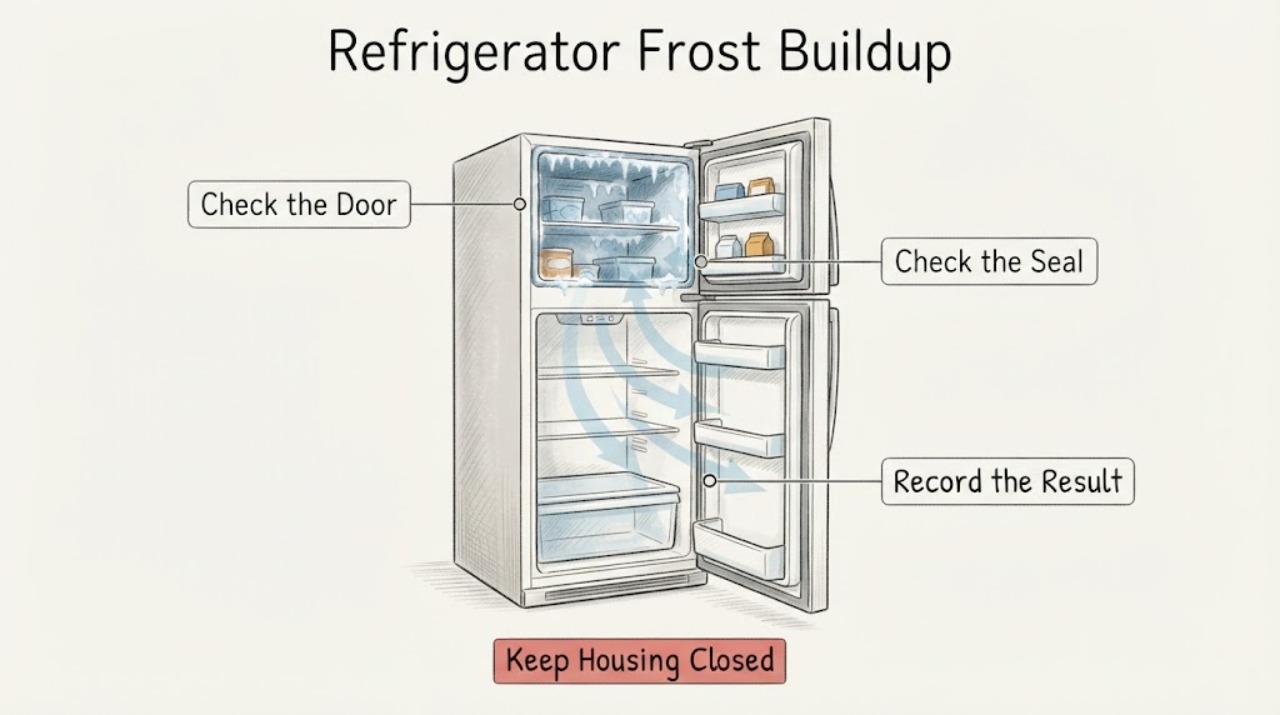
Monogram Refrigerator Frost Buildup: Check the Door Seal and Air Entry
Frost usually means warm, moist air is entering the freezer or an item is preventing a seal. Check for packages or shelves holding the door open, a gasket that is loose or torn, and a refrigerator that is not level. Remove only visible frost safely and follow the Monogram manual; recurring heavy frost can require service.
-
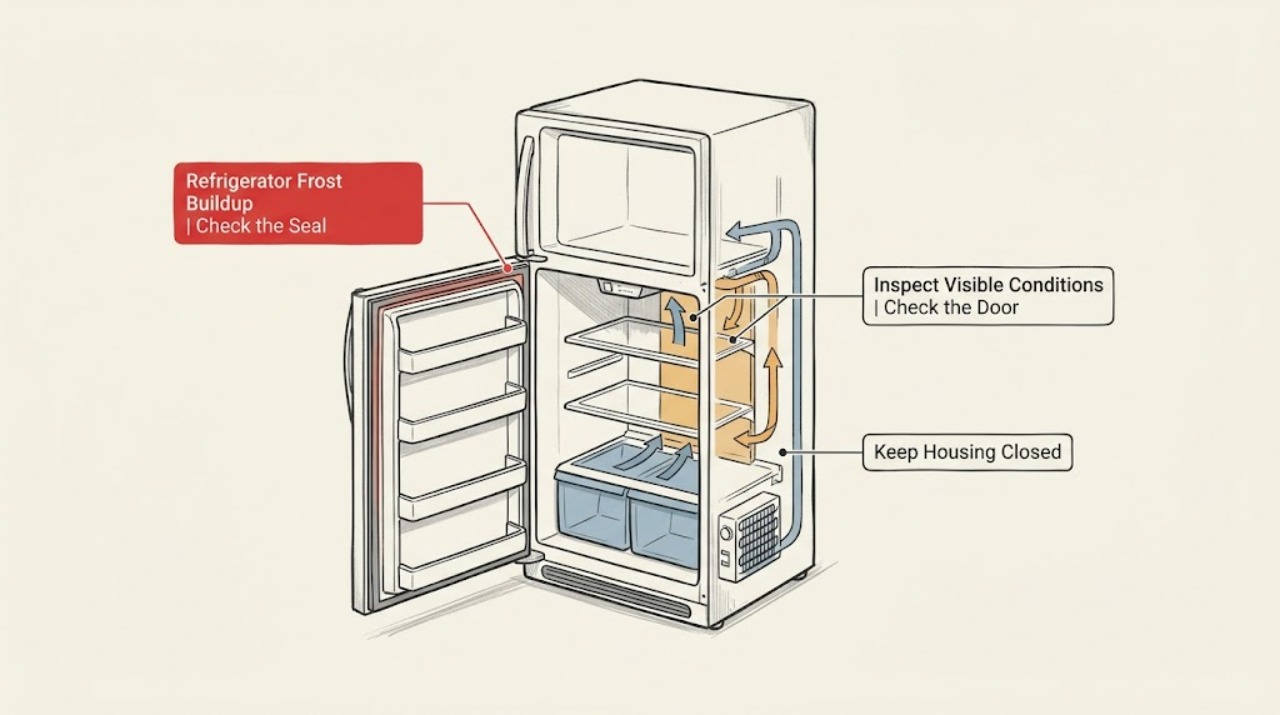
Panasonic Refrigerator Frost Buildup: Check the Door Seal, Load, and Defrost Path
Check whether warm air is entering through a door gap, whether food blocks airflow, and whether the frost is localized or covering a large area. Panasonic documentation describes automatic defrost on covered models and allows only model-approved manual defrost/cleaning. Never chip ice with a sharp tool; recurring or heavy frost after the external checks needs service.
-
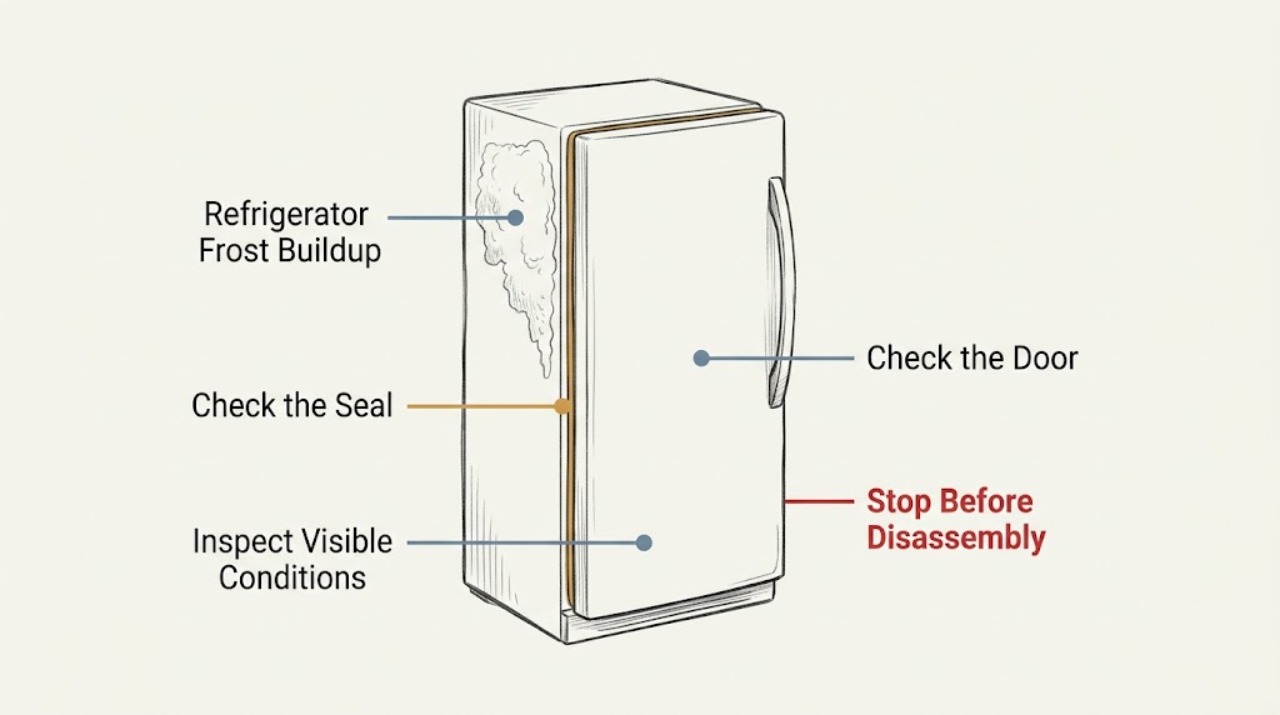
Performa Refrigerator Frost Buildup
Frost buildup on a Performa refrigerator usually means humid air is entering through a door that stays open or does not seal, or that stored items are blocking cold-air vents. Close and check the door seal, clear the vents, and let the unit stabilize; recurring heavy frost needs service because the defrost or sealed cooling system may need diagnosis.
-
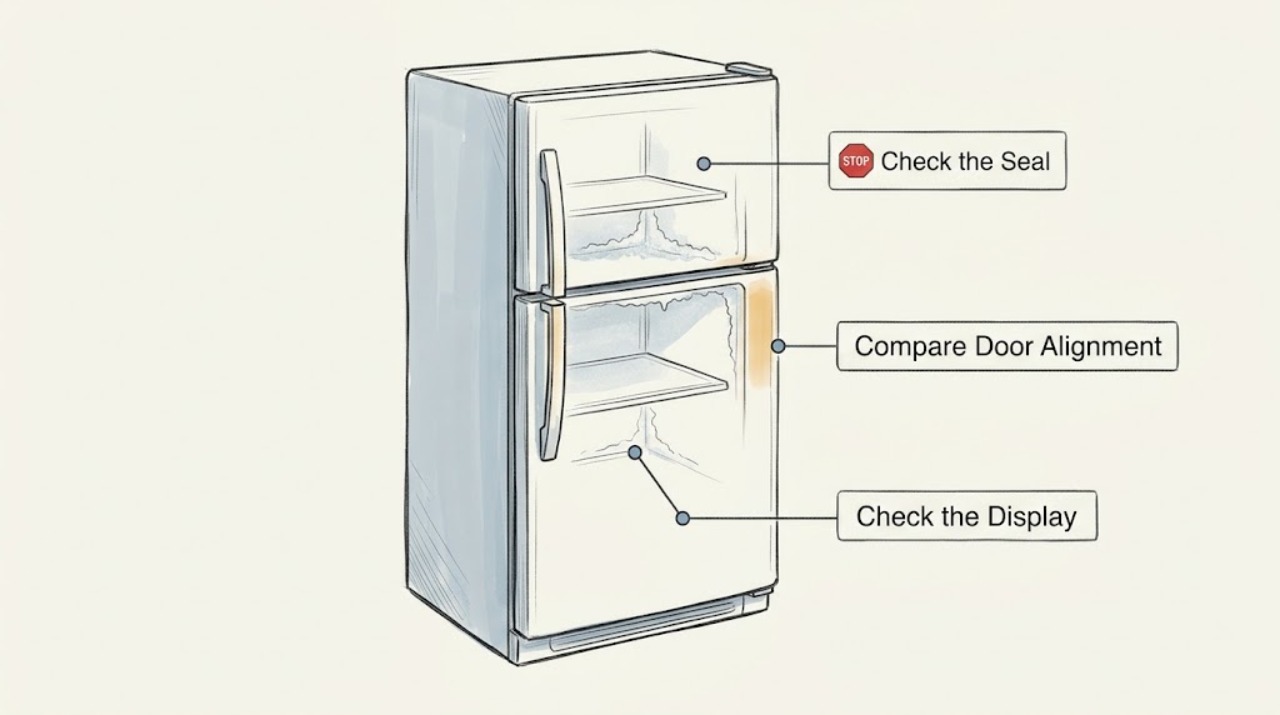
Profile Refrigerator Frost Buildup: Check the Seal, Loading, and Airflow
For Profile refrigerator frost buildup, first check that the freezer door or drawer closes fully and that no package, shelf, or bin blocks the seal. Inspect the gasket and alignment, clear only visible frost with a dry towel, and use the model instructions for temperature or leveling changes. Frost that returns after those checks, or frost that blocks airflow, needs service.
-
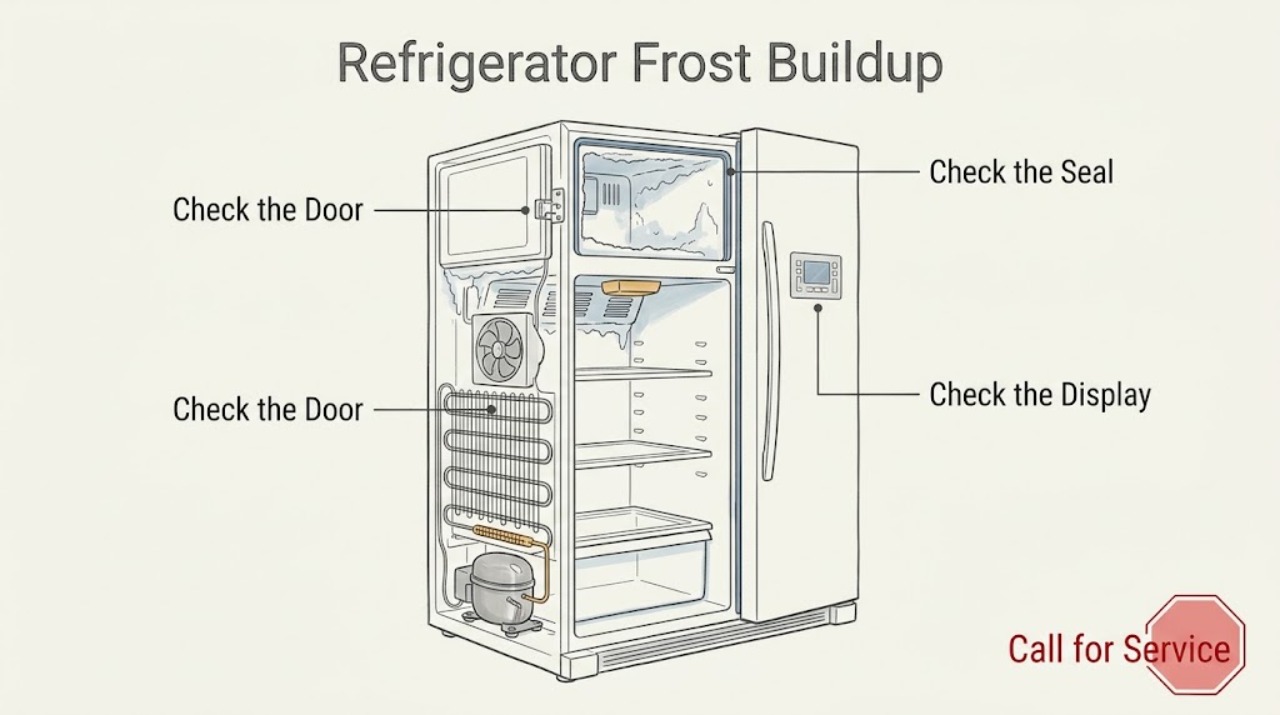
Roper Refrigerator Frost Buildup
Frost in a Roper refrigerator usually means humid air is entering through a door or gasket, airflow is blocked, or the freezer is running too cold; a heavy return can also indicate a defrost problem. Check door closure and the gasket, keep vents clear, and use the model's normal temperature setting. Do not chip ice with a sharp tool or remove interior panels.
-
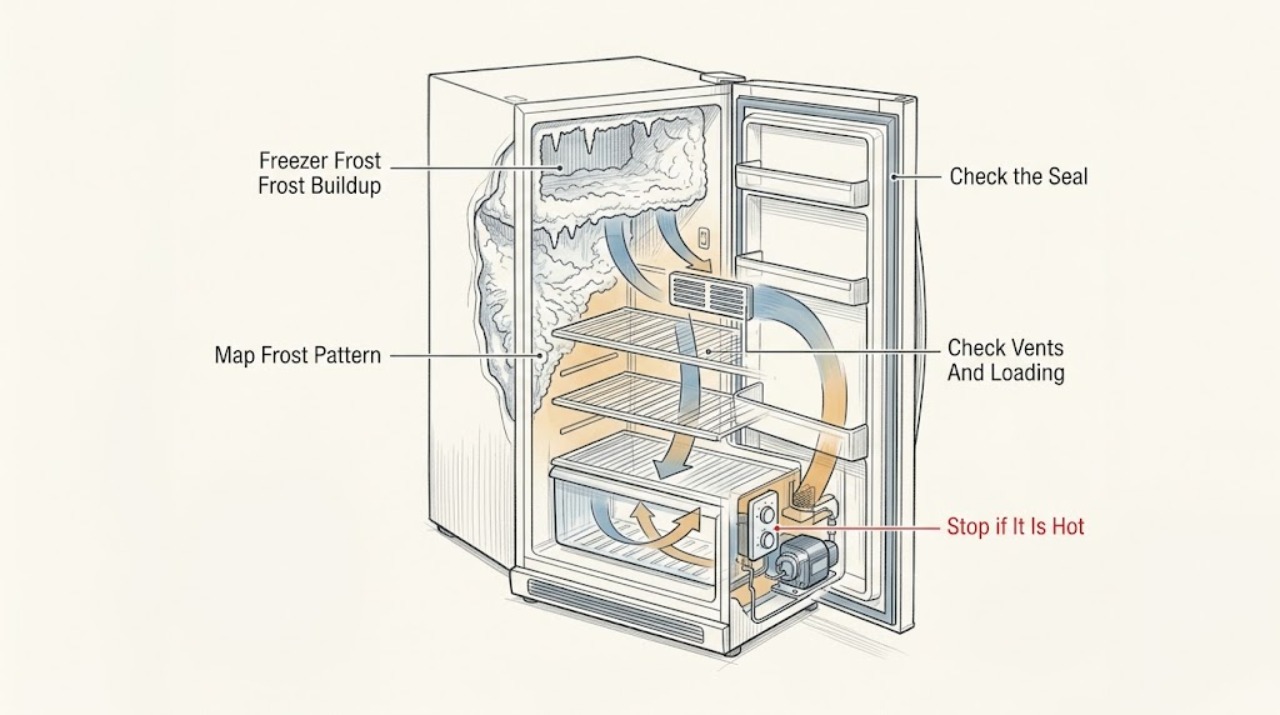
Samsung Freezer Frost Buildup: Find the Air Leak and Defrost Safely
Samsung says freezer frost forms when warm, moist air enters through a door that is left open, food or drawers that prevent sealing, a damaged gasket, or blocked vents. First identify whether the frost is a thin local film, a door-edge band, a vent blockage, or a heavy layer across the compartment.
-
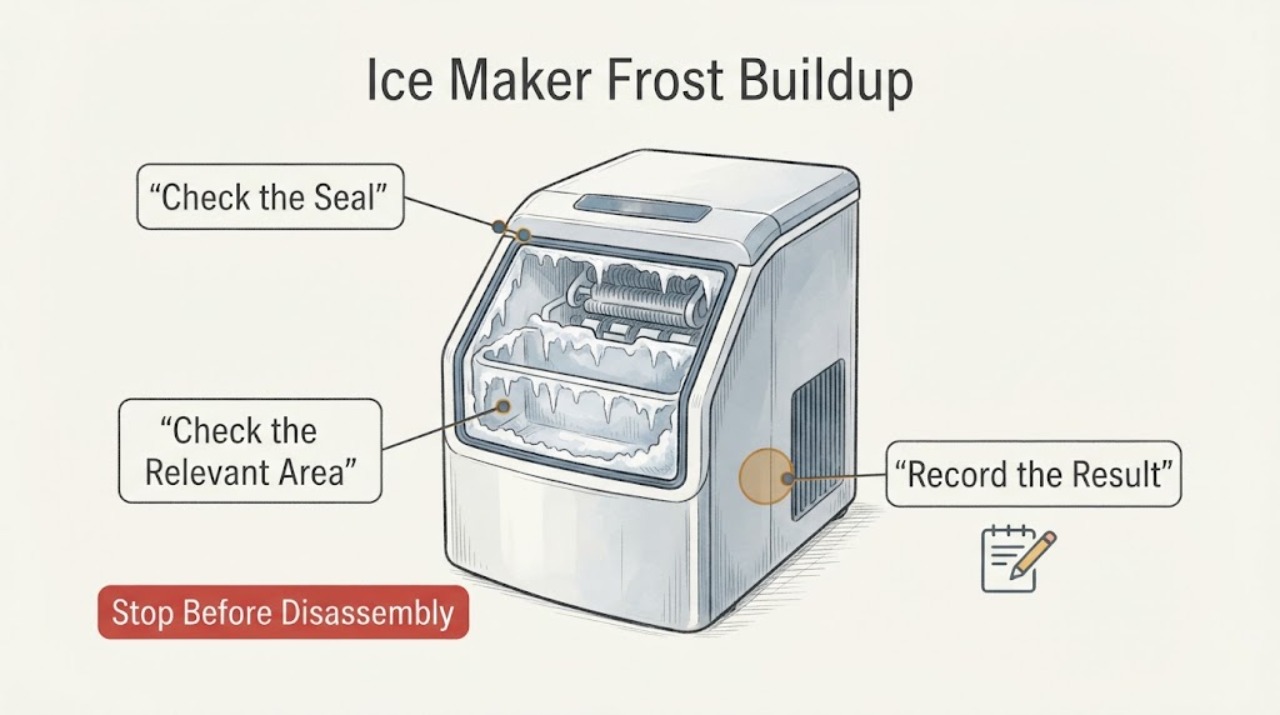
Samsung Ice Maker Frost Buildup
Frost around a Samsung refrigerator ice maker or ice bucket usually means warm, moist air is entering through a door, bucket seal, chute flap, or alignment gap. Clear only light frost with a damp cloth or a plastic scraper as Samsung describes, and never use a hair dryer or other heat source. If frost is heavy, the ice maker is frozen over, a seal is damaged, or frost returns after the accessible seal checks, request service.
-
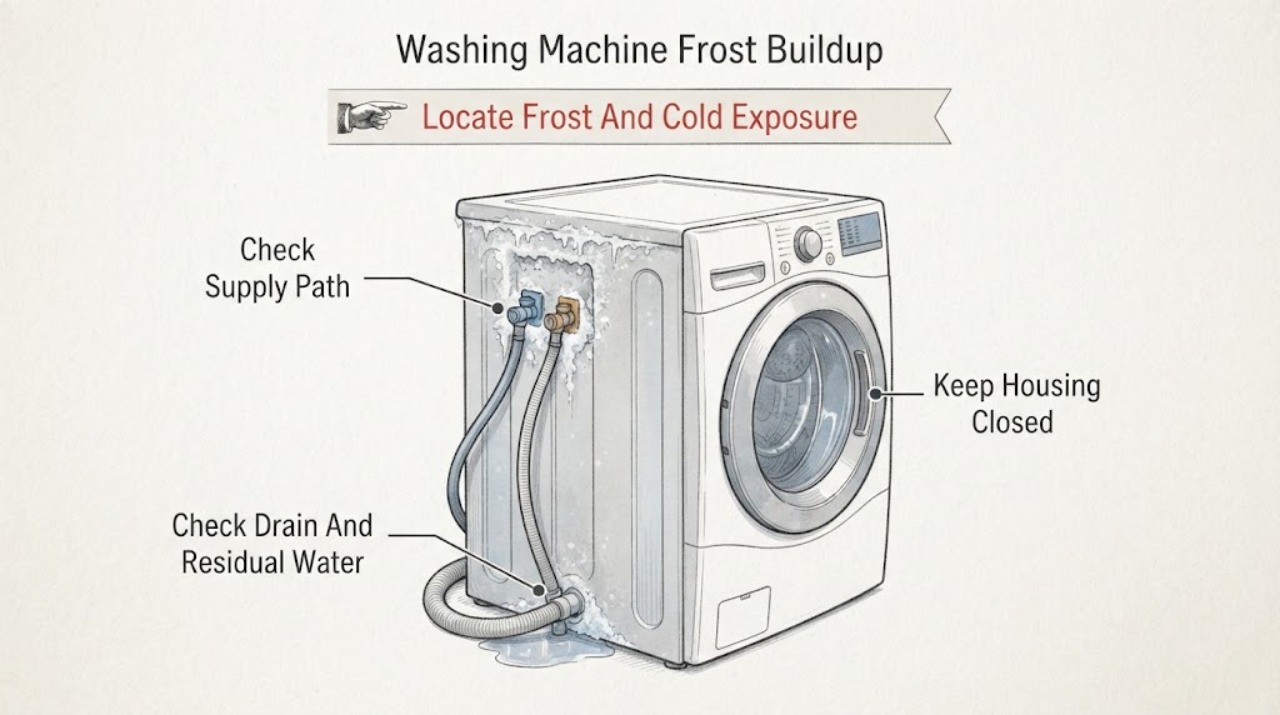
Samsung Washing Machine Frost Buildup: Find Frozen Water Paths Safely
A Samsung washing machine should not develop refrigerator-style frost during normal indoor use. Visible frost or ice around a washer usually means water left in an exposed supply hose, drain hose, residual-water hose, or tub has frozen because the installation became too cold.
-
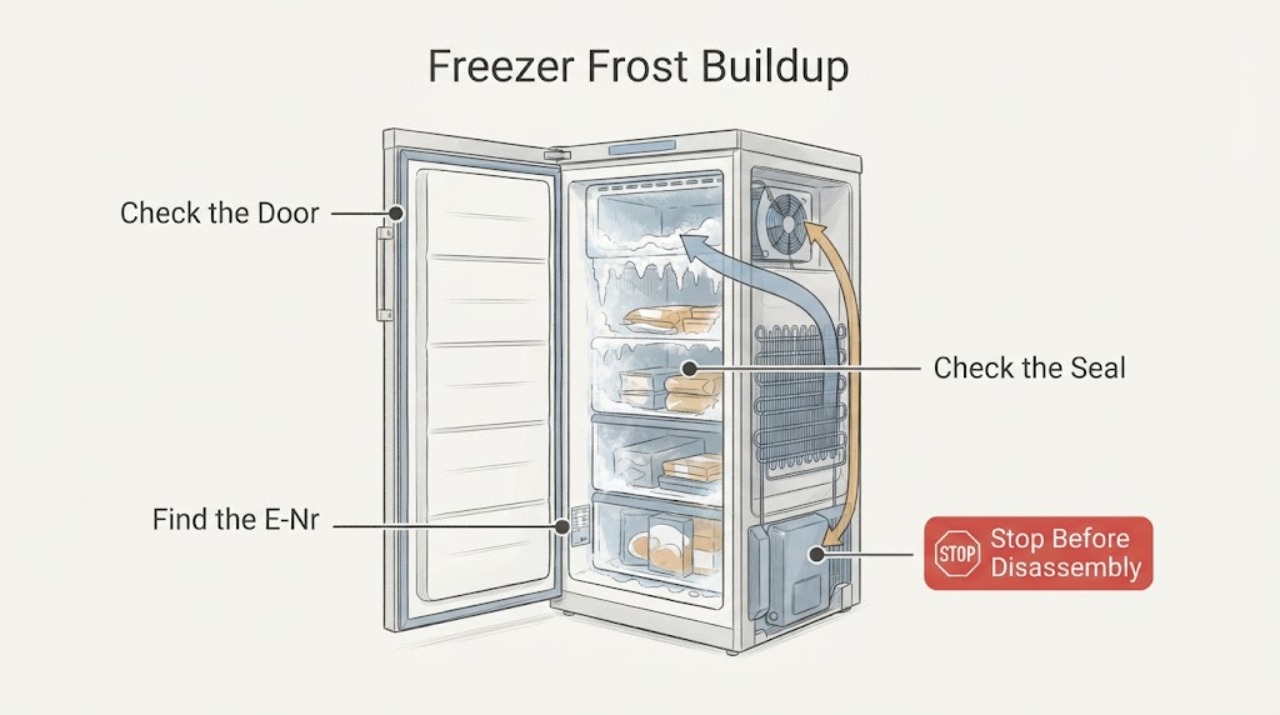
Siemens Freezer Frost Buildup
Some frost is expected in Siemens lowFrost or manual-defrost freezers, but a noFrost model is designed to prevent routine frost buildup. First protect the food and identify the model's system from its E-Nr manual or product page.
-
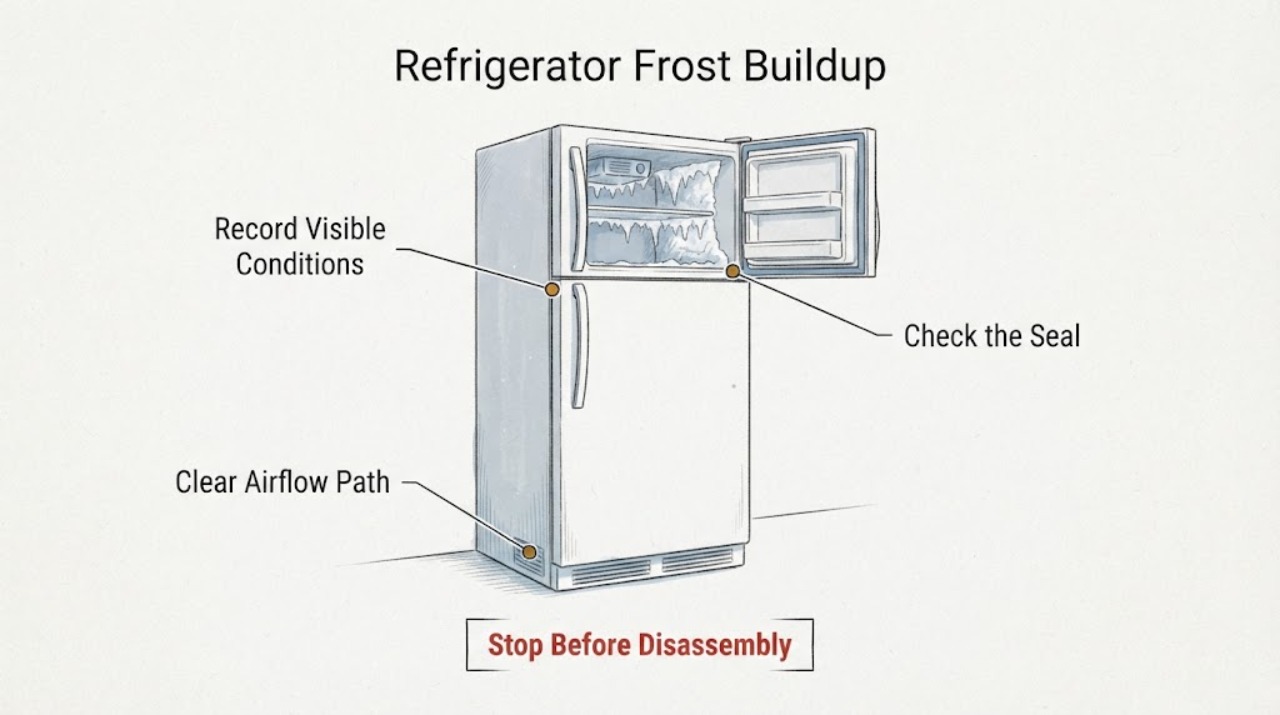
Siemens Refrigerator Frost Buildup
Frost buildup on a Siemens refrigerator usually points to warm humid air entering through a door or seal, a blocked air path, or a defrost issue. Check the seal and airflow without scraping or heating the liner.
-
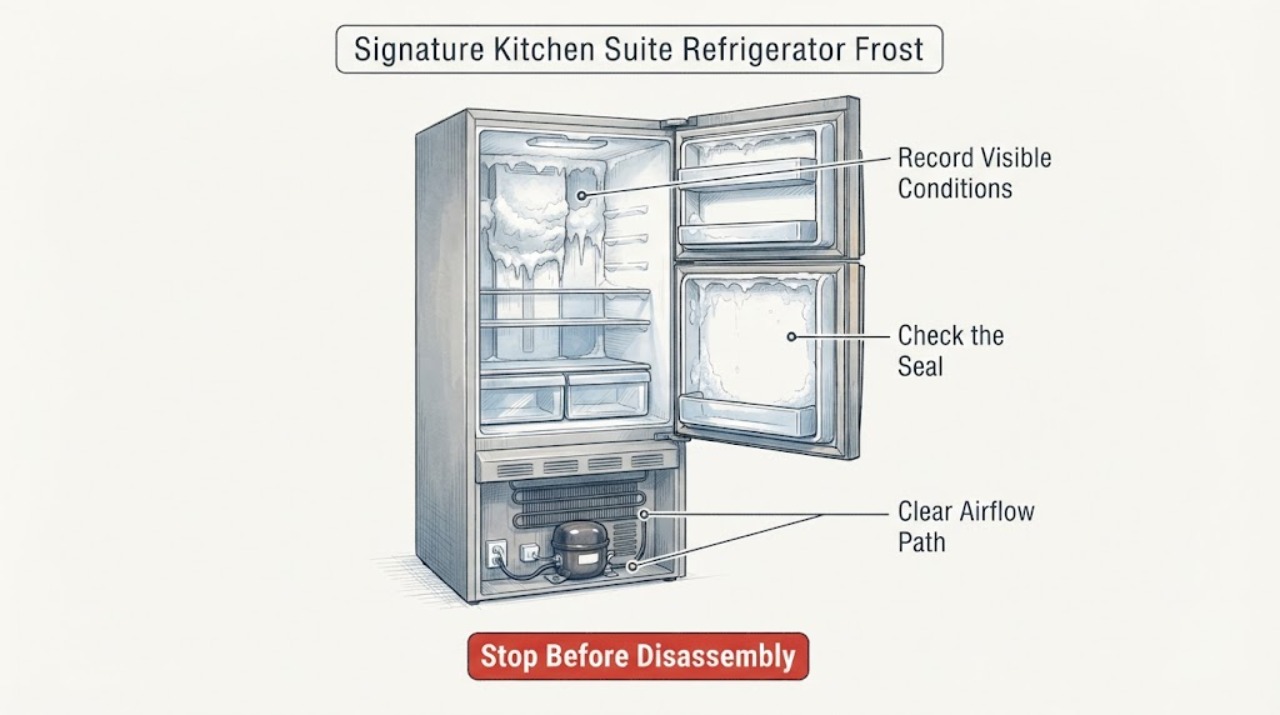
Signature Kitchen Suite Refrigerator Frost Buildup: Safe Checks
Frost in a Signature Kitchen Suite refrigerator usually means moisture is reaching a cold surface, often through a door that is not sealing, warm or uncovered food, or blocked airflow. First note where the frost is forming, then check door closure and the gasket, food and shelf position, vents, leveling, and the model's temperature setting.
-
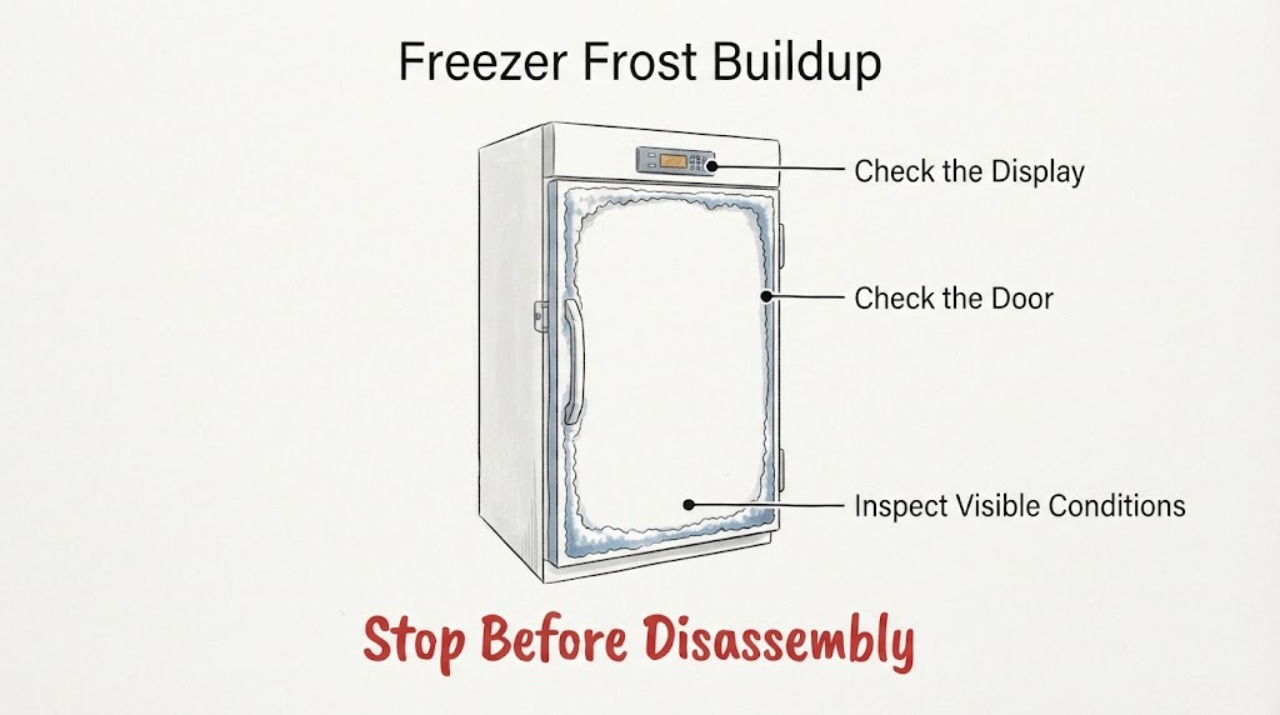
Smeg Freezer Frost Buildup
First identify the exact Smeg model and whether its freezer is No Frost, low-frost, or manual-defrost. A No Frost model is designed to prevent routine ice formation, while some Smeg refrigerator-freezers have a static freezer that must be defrosted manually.
-
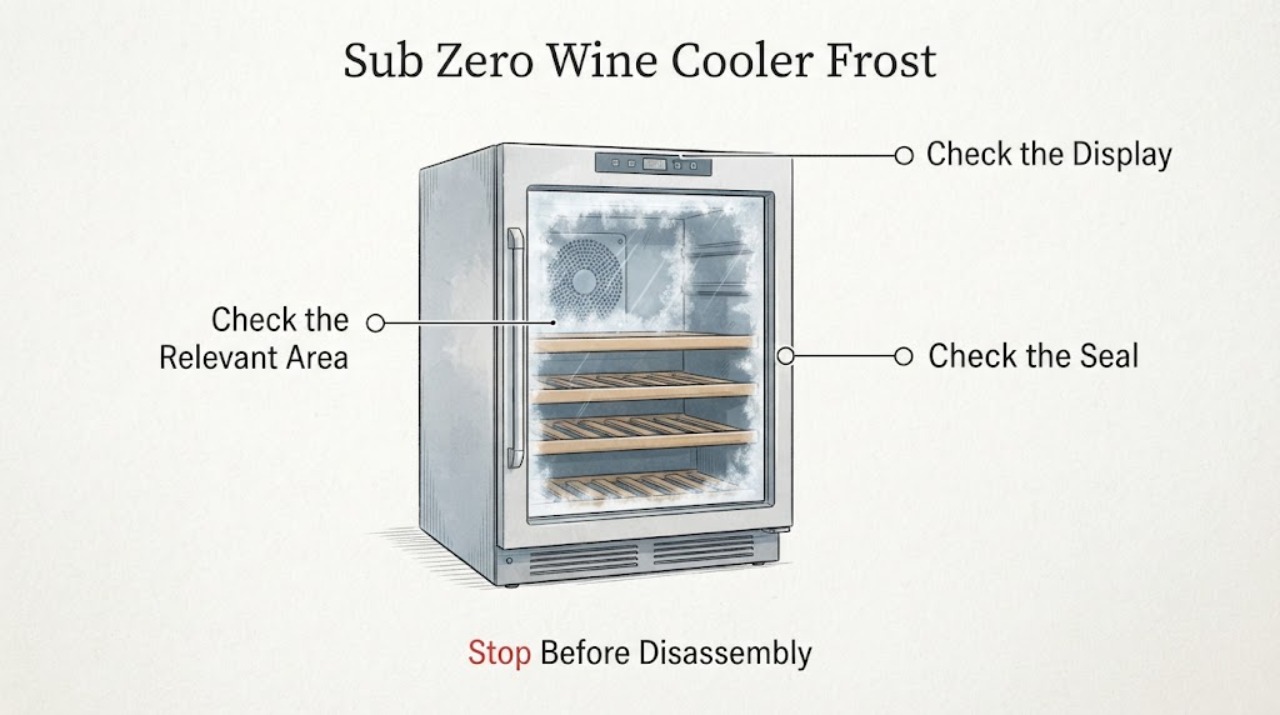
Sub Zero Wine Cooler Frost Buildup
A small amount of condensation after frequent door openings can be normal in a Sub-Zero wine storage unit, but recurring frost or a thick ice layer calls for a sequence of checks. Confirm the door or drawer closes fully, inspect the gasket, verify the condenser is clean, and confirm the wine-storage setpoint for the exact control type.
-
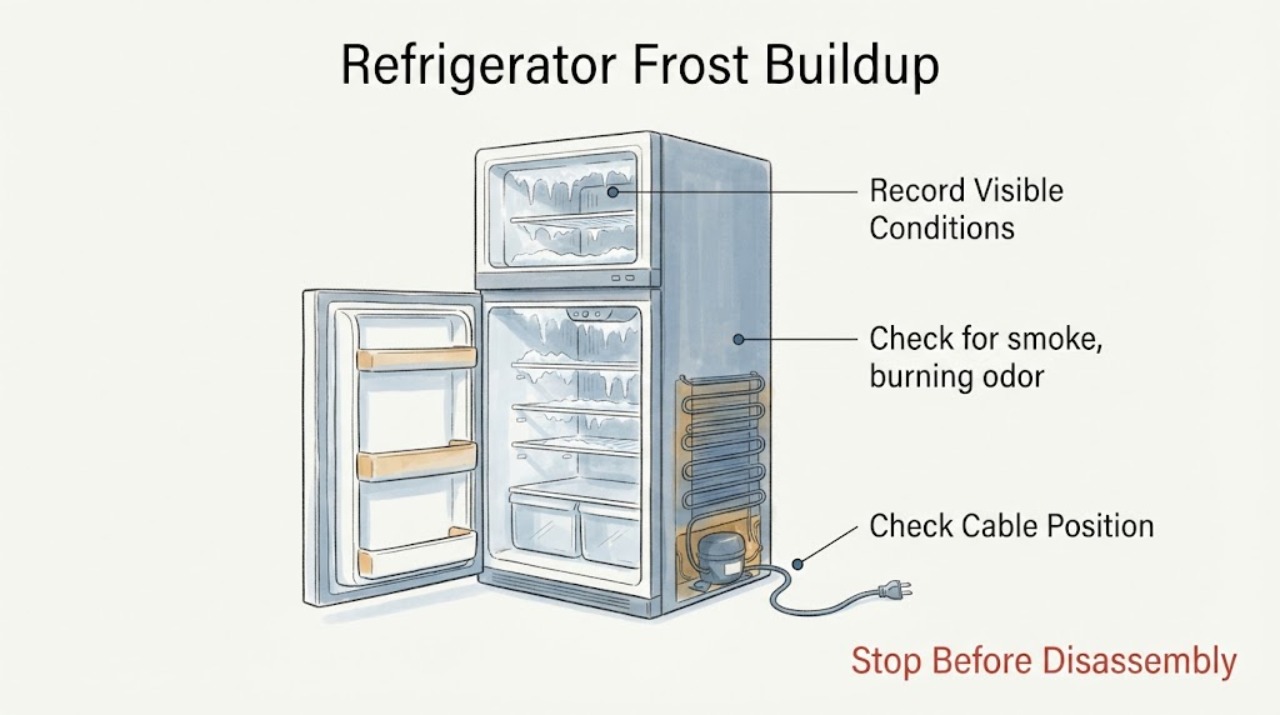
Sub-Zero Refrigerator Frost Buildup: Safe Checks and Service Boundaries
For Sub-Zero refrigerator frost buildup, check door obstructions and the gasket, record the frost location, and inspect only accessible drain and condenser areas allowed by the guide. Heavy or recurring frost needs service.
-
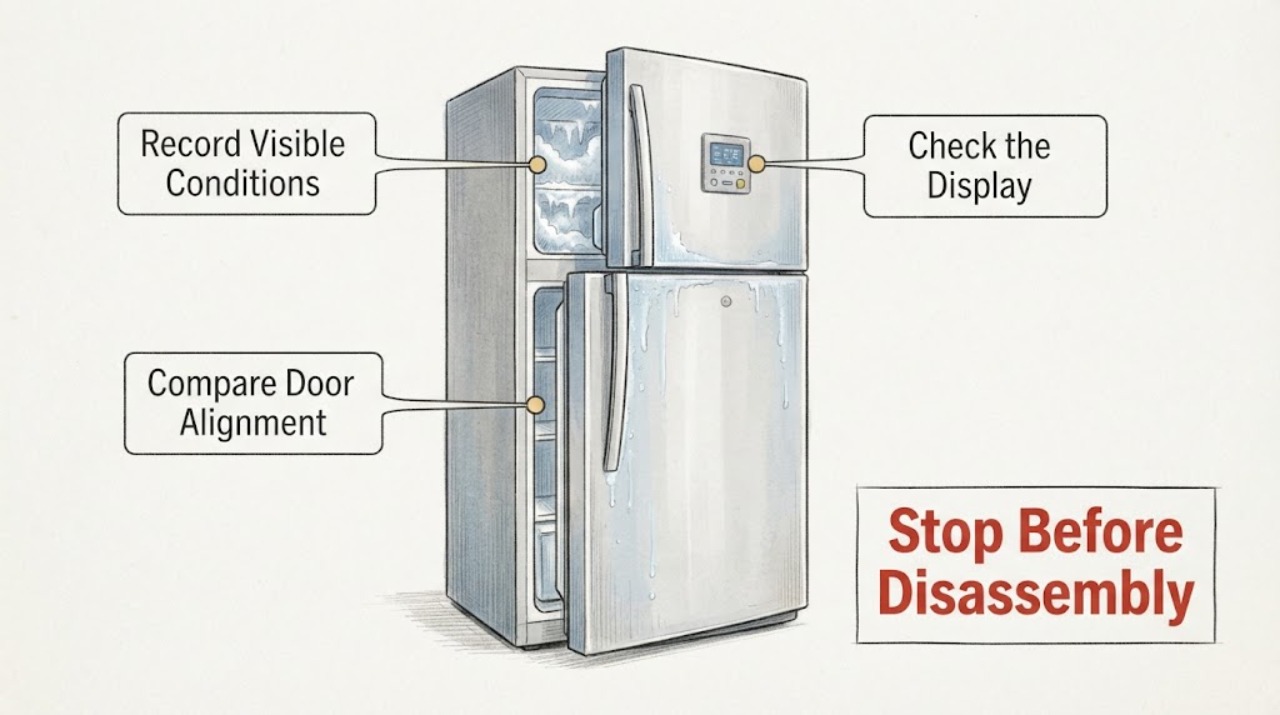
Summit Refrigerator Frost Buildup: Find the Cause and Defrost Safely
Summit refrigerator frost buildup is not diagnosed by the frost alone because Summit sells both manual-defrost and auto-defrost designs. First record whether frost is on the refrigerator rear wall, in the freezer, around a door seal, or blocking an air path, then check the temperature setting, door closure, packing, and model defrost instructions.
-
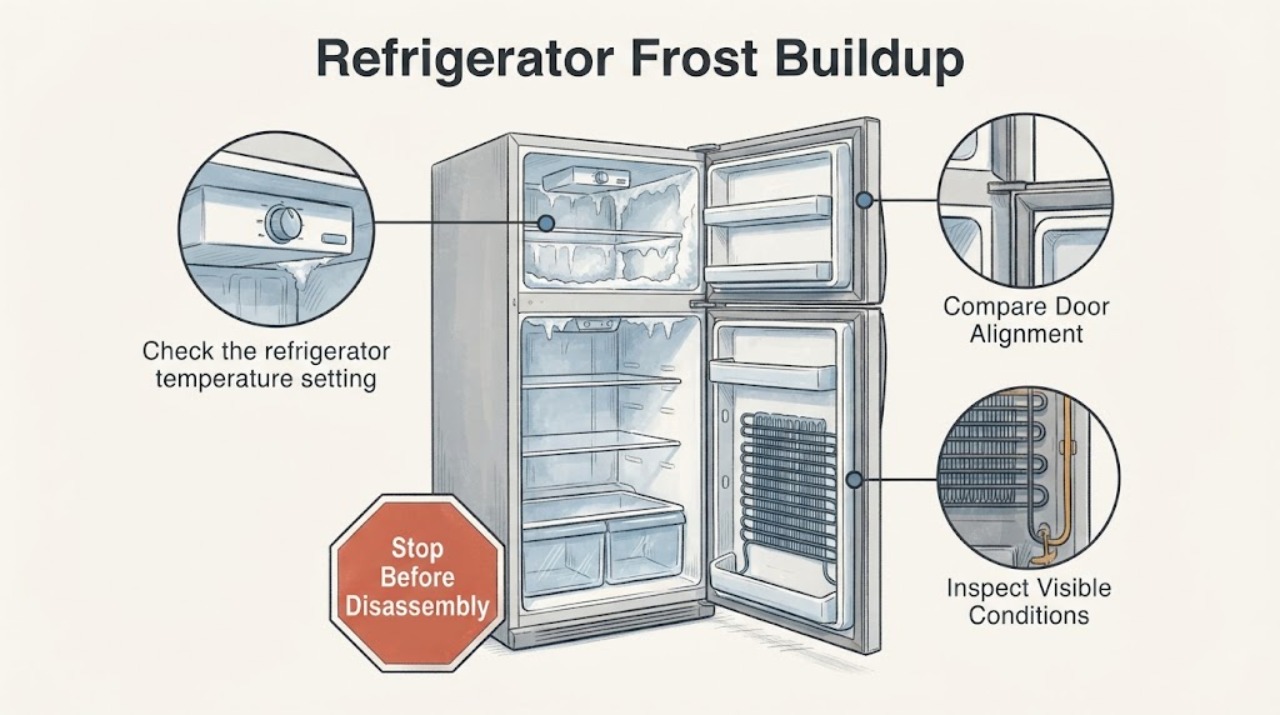
Tappan Refrigerator Frost Buildup
For a Tappan refrigerator with frost buildup, start with the external control, closure, setting and user-accessible path checks for this model. Note exactly when the symptom appears and what changes after one safe check. If the appliance shows smoke, sparking, a burning smell, abnormal heat, flooding near electrics, damaged wiring or repeated breaker operation, stop using it and arrange qualified service.
-
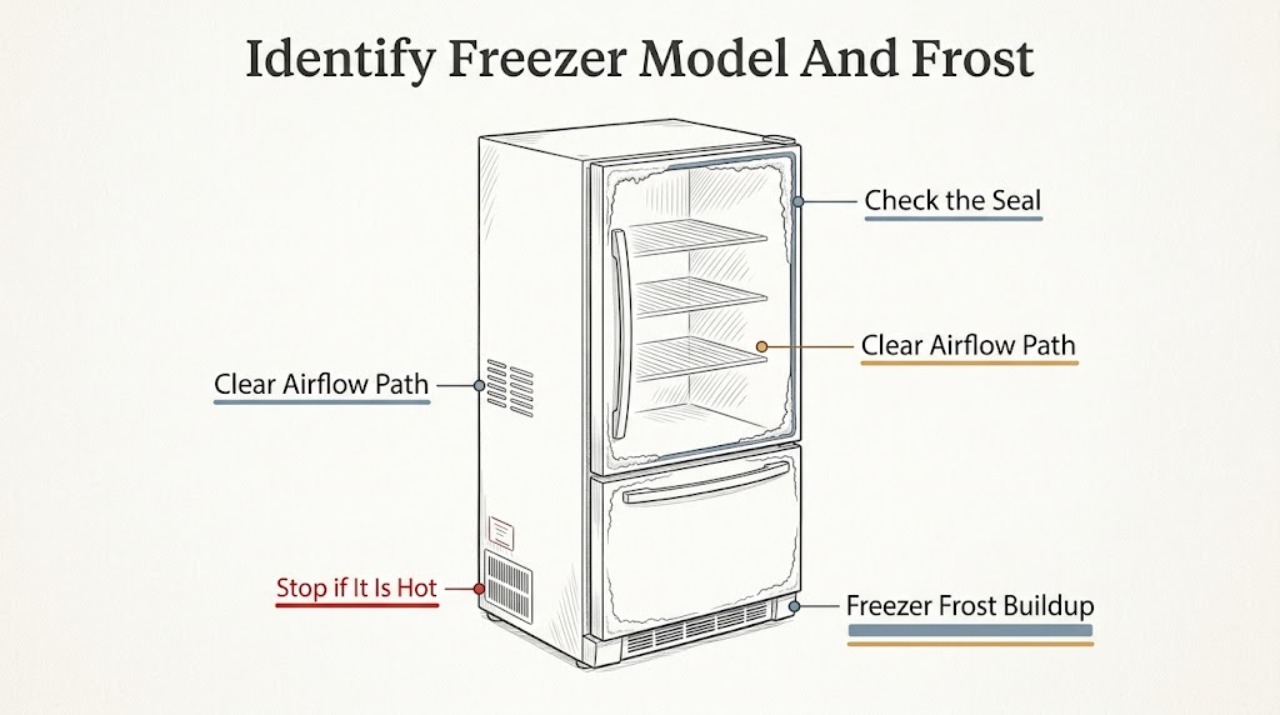
Thermador Freezer Frost Buildup: Check the Door, Airflow, and Defrost Path
Thermador freezer frost usually starts with warm, humid air entering through a door or drawer that is blocked, not fully closed, or not sealing, but the correct remedy depends on the exact model. First record the model number and determine from its manual whether the freezer is an automatic NoFrost design or requires a documented manual-defrost procedure.
-
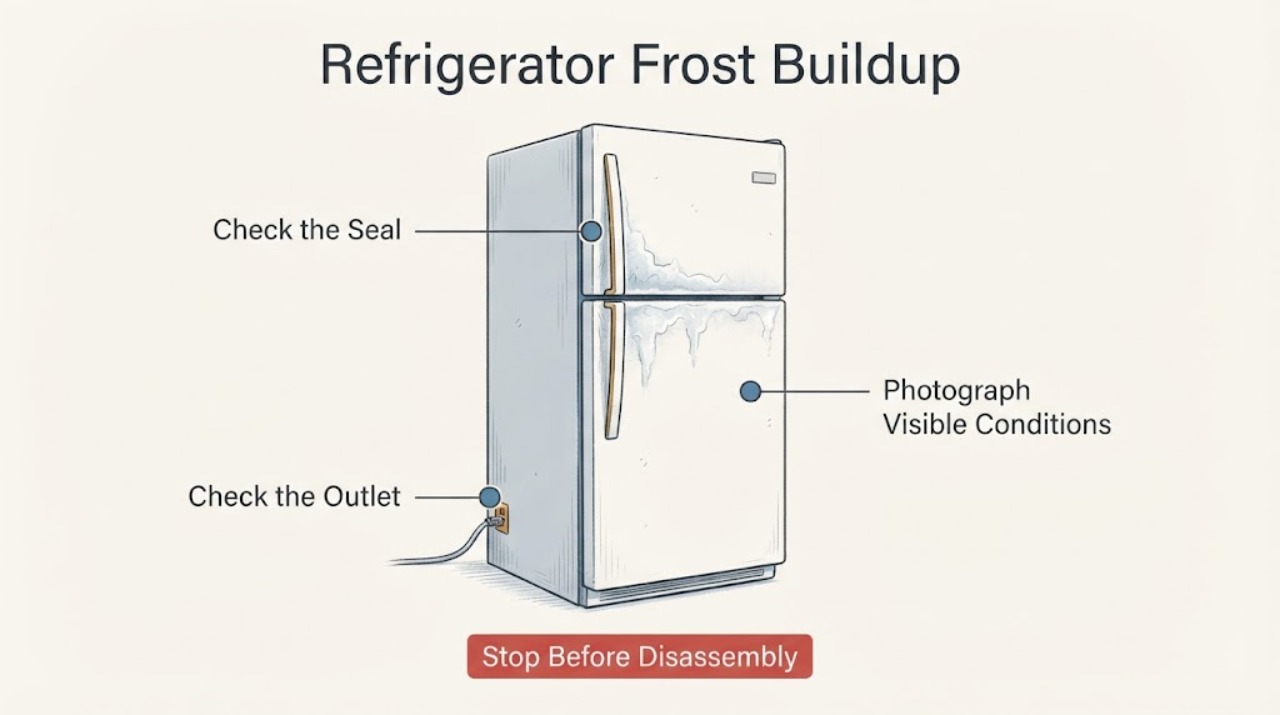
Thermador Refrigerator Frost Buildup
For frost buildup in a Thermador refrigerator, note where it forms, check that the door closes against a clean seal, and avoid chipping frost or using heat. Persistent or rapidly returning frost needs model-specific service diagnosis.
-
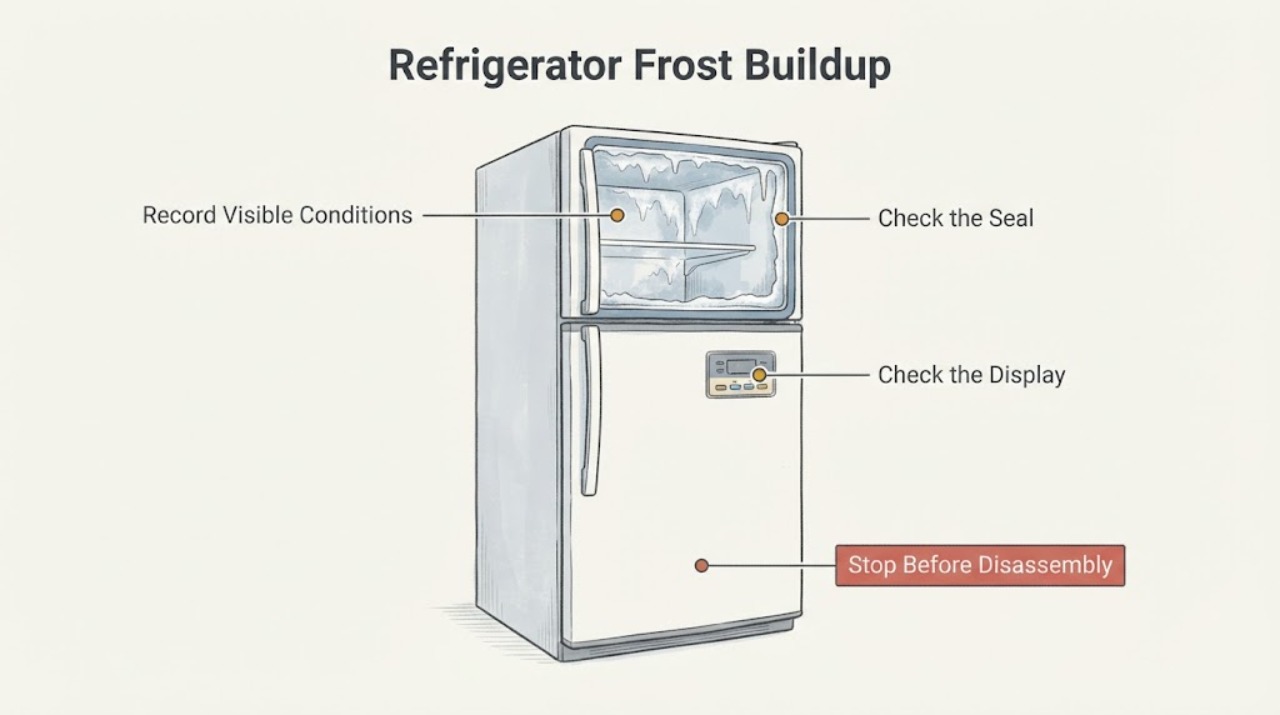
Viking Refrigerator Frost Buildup
Frost inside a Viking refrigerator usually means humid room air is entering or moisture is not being managed normally. Check that every door and drawer closes fully, that food or a shelf is not holding a door open, and that vents are not blocked. If frost rapidly returns, the gasket is damaged, temperatures are unstable, or moisture collects with a door that appears closed, stop repeated defrosting and arrange qualified service.
-
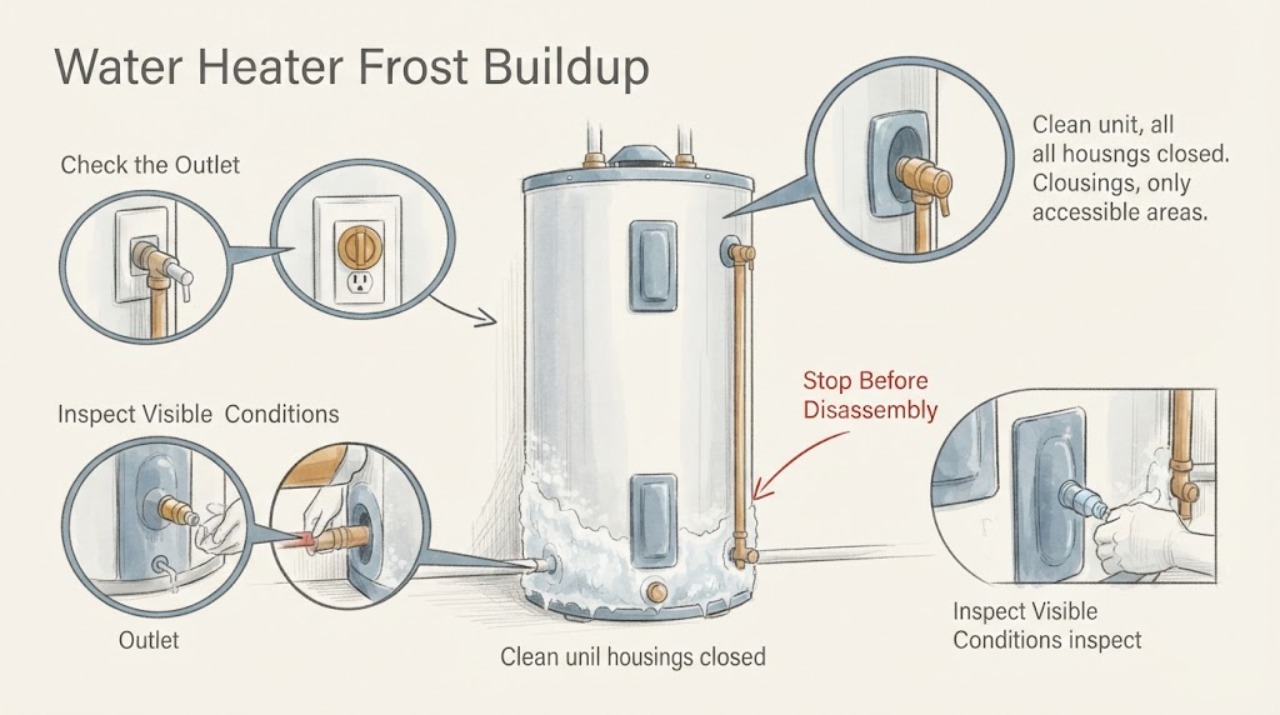
Water Heater Frost Buildup
Frost on or around a water heater can signal freezing conditions and possible pipe, valve, tank, or heat-exchanger damage. Shut off the heater’s electrical or fuel supply and incoming water when safe, do not force-thaw or restart it, and inspect for leaks after gradual thawing by a qualified technician.
-
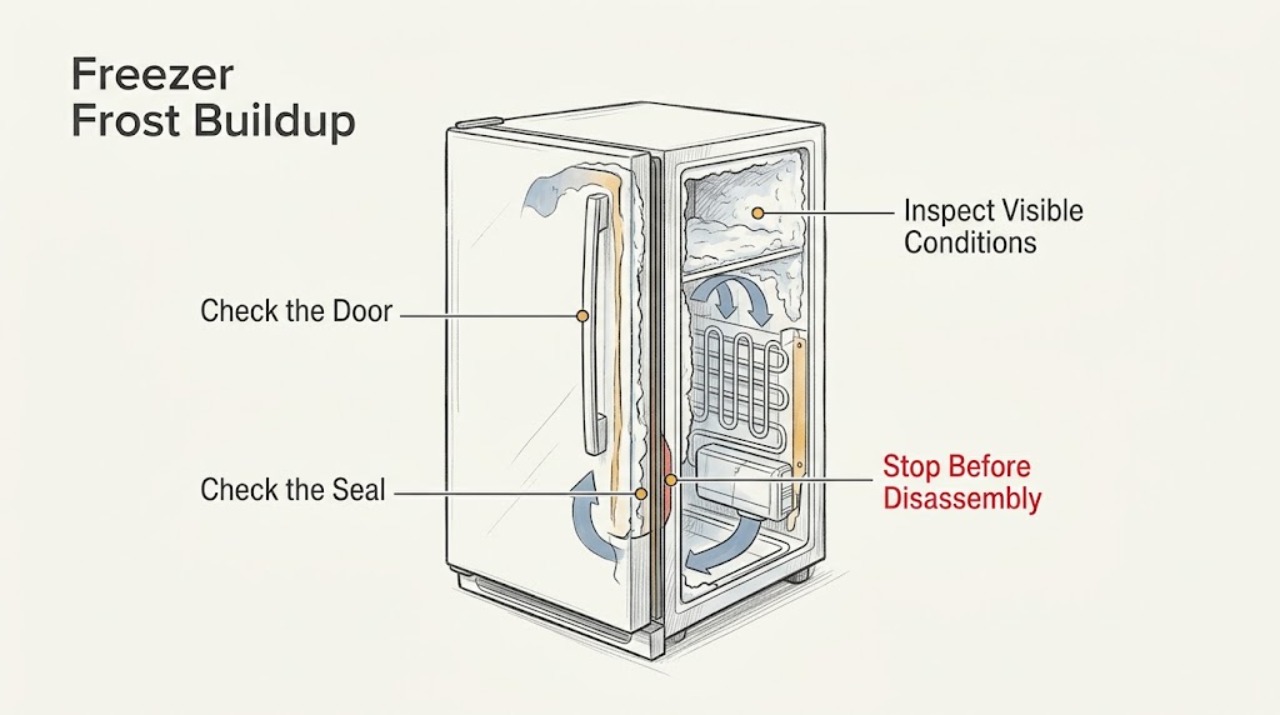
Whirlpool Freezer Frost Buildup: Find the Air Leak Before Defrosting
Whirlpool freezer frost usually comes from humid air entering through a door that is open, blocked, dirty, or not sealing, although blocked vents, overpacking, temperature conditions, and a defrost fault can also contribute. First note whether frost is a light, even layer or a thick patch around the door, back wall, vent, or drain.
-
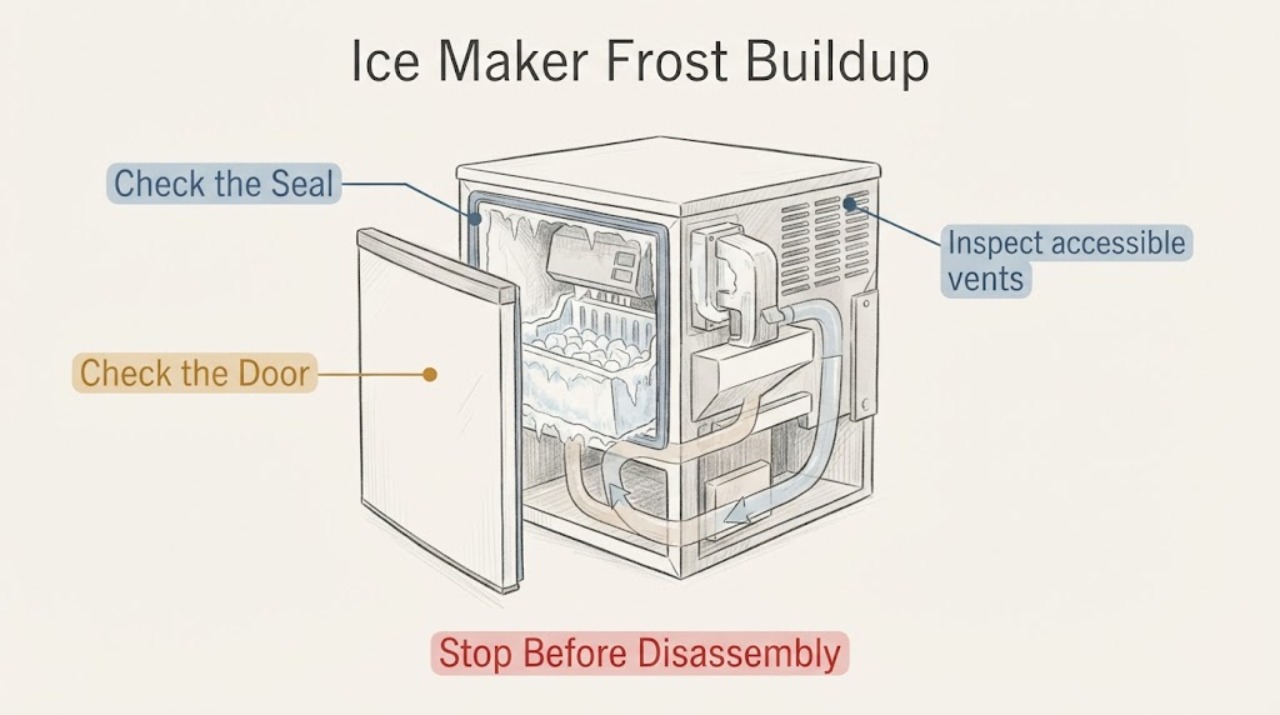
Whirlpool Ice Maker Frost Buildup: Check Moisture, Door Sealing, and Airflow
For frost around a Whirlpool ice maker, reduce humid-air entry by closing the freezer door fully and limiting long or frequent openings, check the gasket and vents, and confirm the bin is used and seated normally. Whirlpool says frost is normal on top of some ice bins from opening and closing, while moisture and frost can increase with humidity and poor sealing.
-
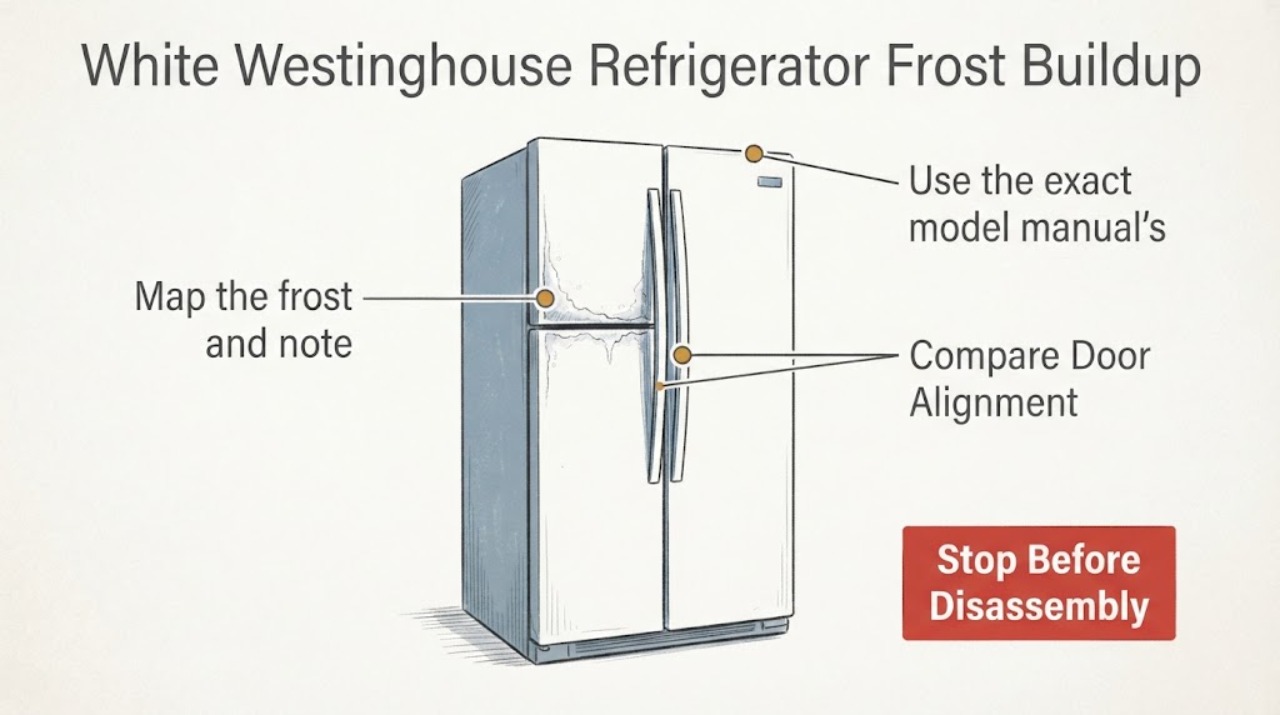
White Westinghouse Refrigerator Frost Buildup
Frost in a White Westinghouse refrigerator usually starts with humid air entering through a door that is open, obstructed, or not sealing. Check the door path and gasket, keep food away from vents, and use the exact model manual for defrosting. If frost returns quickly, the gasket is damaged, cooling is unstable, or frost blocks airflow, stop repeated defrosting and arrange qualified service.
-
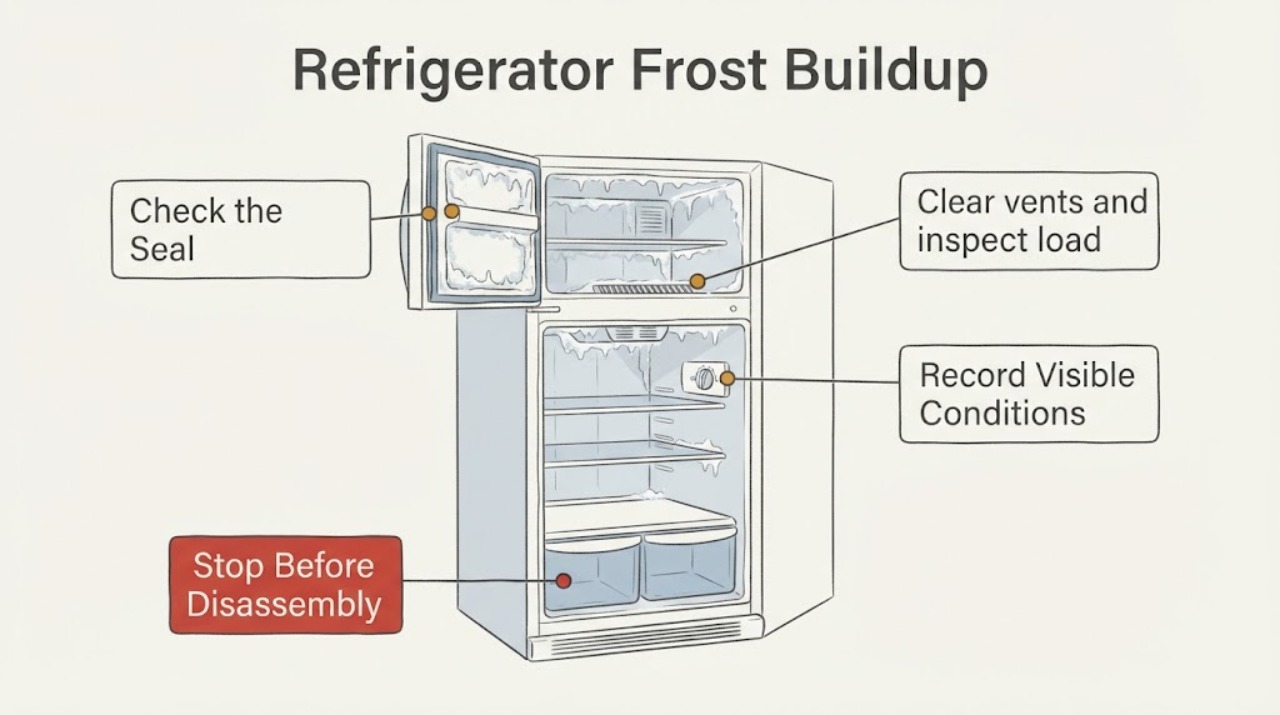
WINIA Refrigerator Frost Buildup
For WINIA refrigerator frost buildup, check door sealing, frequent openings, warm uncovered food, blocked vents, and the ice-maker area. Humid air and poor sealing can create frost, while thick rapidly returning frost or poor cooling needs service. Do not chip ice with sharp tools.