
On this page
Start here
Quick answer
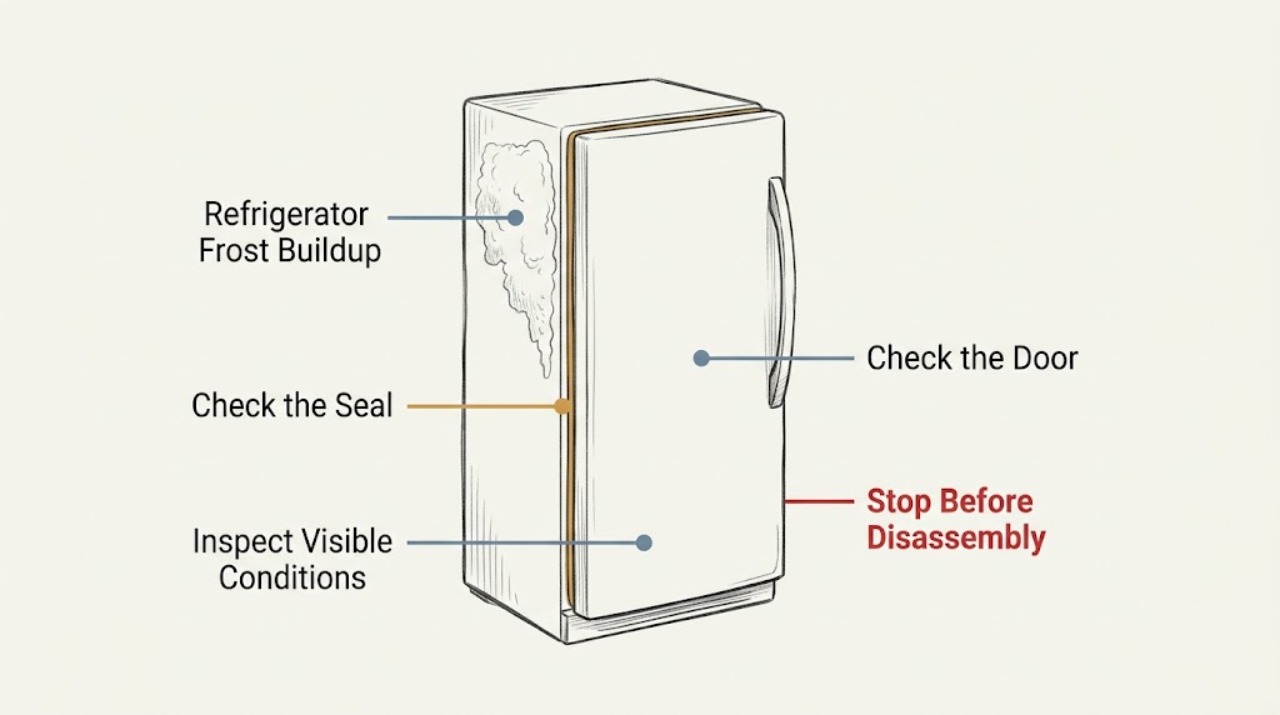
Frost buildup on a Performa refrigerator usually means humid air is entering through a door that stays open or does not seal, or that stored items are blocking cold-air vents. Close and check the door seal, clear the vents, and let the unit stabilize; recurring heavy frost needs service because the defrost or sealed cooling system may need diagnosis.
Work through in order
Diagnostic checks
Use only checks that match the exact appliance or system and its official guide.
-
Check 1
With the appliance closed, inspect the freezer and refrigerator gaskets for gaps, tears, food, or a door that springs back open; wipe the sealing surfaces and close the door fully.
Expected result: The gasket contacts the cabinet continuously, or a visible gap remains at one section.
Next step: Remove the obstruction and check door alignment; if the gasket is damaged or the gap remains, arrange service rather than forcing the door.
Why this matters
Why: A gap or obstruction lets humid room air enter and is a stronger frost cause than a brief normal film.
-
Check 2
Look at the freezer and refrigerator air vents without removing panels, and move packages away from the openings.
Expected result: Food or ice is covering a vent, or the vents are open with room for air to circulate.
Next step: Clear only movable items, close the door, and monitor frost and temperature after the refrigerator has had time to stabilize.
Why this matters
Why: A blocked vent can create moisture and uneven temperatures; open vents make a door-seal or defrost issue more likely if frost returns.
-
Check 3
Check whether the unit is level and whether frost returns after a normal period with doors closed; do not chip frost with a sharp tool.
Expected result: The cabinet rocks or frost rapidly reforms in the same area after the seal and vents are corrected.
Next step: Follow the model manual for leveling; if frost rapidly returns, stop dismantling the freezer and call a qualified appliance technician.
Why this matters
Why: A leveling problem can interfere with door closure, while rapid localized recurrence points beyond a simple loading habit.
Use your observations
Decision map
Find the observation that best matches what you see, then follow the next safe action.
-
PATH 01Next step
What you see
Frost is light, follows a long or frequent door opening, and does not return once the door closes fully.
Do this next
Reduce door-open time, cover warm or uncovered food, and monitor the freezer.
Why this path and its safety boundary
Why it matters: Moisture entry is more likely than a failed component.
-
PATH 02Next step
What you see
Frost is concentrated near a gasket gap or the door does not close evenly.
Do this next
Remove obstructions and verify alignment; arrange a gasket or door repair if the gap persists.
Why this path and its safety boundary
Why it matters: The seal or alignment is allowing a continuing moisture path.
-
PATH 03Next step
What you see
Heavy frost returns quickly even with a sound seal and clear vents, or temperatures are also unstable.
Do this next
Protect perishable food and call a qualified refrigerator technician; do not puncture or scrape the ice with sharp tools.
Why this path and its safety boundary
Why it matters: A defrost, fan, airflow, or sealed-system fault becomes more likely and cannot be identified safely from the outside.
Helpful context
Understand the symptom
Why frost forms
A thin, temporary film can follow humid weather or a long door opening. A thick, recurring layer means moisture is entering faster than the refrigerator can remove it, or air cannot circulate normally. The Performa manual identifies door, temperature, leveling, and cooling checks, while Whirlpool's current guidance adds door seals and clear vents.
When checks do not resolve it
Need a professional?
Stop if the frost is heavy and recurring, food is warming, water reaches electrical parts, or the gasket/door cannot seal. Keep the refrigerator closed and arrange qualified service; do not remove sealed-system covers or work on refrigerant components.
Common questions
FAQ
Is a small amount of frost always a failure?
No. Humidity and a long door opening can create a light temporary film. Frost that is thick, returns quickly, or accompanies warming needs service evaluation.
Can I scrape the frost off with a knife?
No. Use the model's approved defrost procedure or have a technician handle recurring buildup; a sharp tool can damage the cabinet or cooling system.
Read the exact guide
Official sources
- Frosting in the Freezer Section - Quad DoorWhirlpool Corporation · refrigerator frost, door sealing, humidity, vents, and leveling
- Owner's ManualWhirlpool Corporation / Maytag Appliances · Maytag Performa refrigerator operation, care, temperature, leveling, and ice service
- Not CoolingWhirlpool Corporation · refrigerator airflow, temperature stabilization, and door-opening moisture
Community feedback
Share a repair observation
Share a plain-text repair observation. Accepted observations are published automatically; this page may take a moment to update.