
On this page
Start here
Quick answer
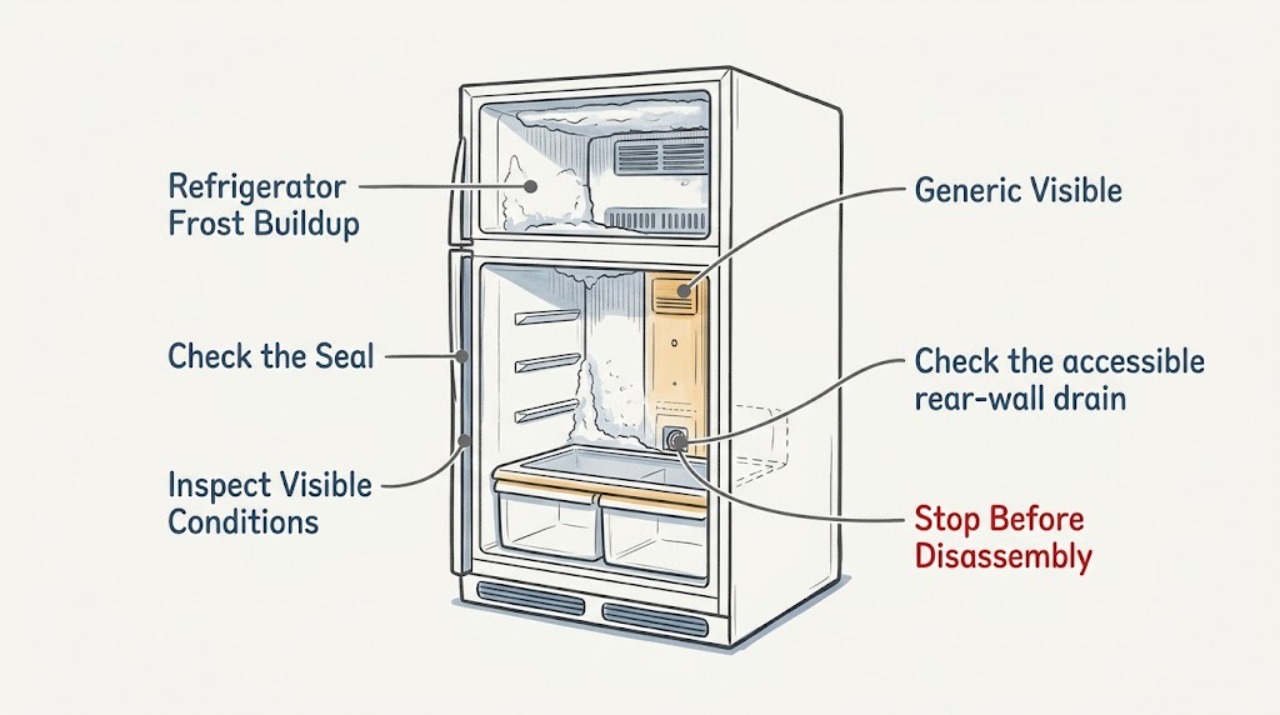
For frost buildup in a Maytag refrigerator, first check that the door closes fully and that the gasket is clean and contacting the cabinet. Then clear food from the vents and check the accessible defrost-water path for visible blockage. Humidity from an open door can create temporary frost, but frost that returns after the seal and loading checks can indicate a defrost or airflow fault and needs service.
Before you begin
Safety first
- Do not chip ice with a sharp tool, puncture a drain channel, or work on the sealed refrigeration system.
Work through in order
Diagnostic checks
Use only checks that match the exact appliance or system and its official guide.
-
Check 1
Inspect the refrigerator and freezer door gaskets all the way around for dirt, tears, folds, or a section that does not touch the cabinet; wipe accessible dirt with a soft damp cloth and dry it.
Expected result: The gasket has a visible gap or obstruction, or it is clean and contacts evenly when the door closes.
Next step: Rearrange anything holding the door open and monitor for new frost. Do not glue, cut, or heat a damaged gasket.
Why this matters
Why: A poor seal lets humid room air enter and can create frost; an even seal makes the door path less likely.
-
Check 2
Look for containers, bins, or packages pressing against the door or rear wall and for items blocking the cold-air vents between compartments.
Expected result: A package prevents full closure or blocks an air passage, or the storage area has clear space.
Next step: Restore clearance without forcing shelves or vents, then watch whether the same frost location returns after the appliance stabilizes.
Why this matters
Why: Maytag notes that door obstructions and blocked airflow can cause temperature and moisture problems.
-
Check 3
Check the accessible rear-wall drain gutter or opening for visible residue or standing water, using only the cleaning method stated in the model manual.
Expected result: Water cannot move through the visible opening or the gutter is clear and dry between cycles.
Next step: Clear only accessible residue. Do not probe hidden tubing or remove an interior panel.
Why this matters
Why: A blocked defrost-water path can leave moisture that later refreezes; a clear path shifts attention toward seal, airflow, or internal defrost control.
-
Check 4
Note whether frost began after a door was left open, frequent door openings, a power interruption, or a large load of warm food, and whether it is a thin temporary film or a growing layer.
Expected result: The timing matches a humidity or recovery event, or frost returns during normal operation.
Next step: Keep doors closed as much as practical and allow normal recovery. Contact service if the frost repeatedly rebuilds or obstructs cooling.
Why this matters
Why: Maytag says humid air and prolonged door opening can create frost; repeated buildup without that trigger is more concerning.
Use your observations
Decision map
Find the observation that best matches what you see, then follow the next safe action.
-
PATH 01Next step
What you see
Frost is light and follows a long or frequent door opening
Do this next
Reduce door-open time, keep the seal clean, and monitor rather than scraping repeatedly.
-
PATH 02Next step
What you see
A gasket gap or package obstruction is found and frost is concentrated near that door
Do this next
Correct the accessible obstruction and arrange gasket service if the seal is damaged.
-
PATH 03Next step
What you see
Frost returns with a clean seal, clear vents, and no unusual humidity event
Do this next
Protect food and arrange Maytag service; do not chip ice with a sharp tool or remove panels.
Helpful context
Understand the symptom
Read the frost pattern before removing it
A light, temporary film after humid air enters is different from a thick layer that repeatedly blocks an air route. Record where frost appears and whether the door was obstructed so the next check tests a real cause.
When checks do not resolve it
Need a professional?
Request Maytag service if frost returns after the seal, storage clearance, and accessible drain checks, if the gasket is damaged, or if ice requires panel removal.
Safety scope: Do not chip ice with a sharp tool, puncture a drain channel, or work on the sealed refrigeration system.
Common questions
FAQ
Is a small amount of frost in a Maytag refrigerator always a failure?
No. Maytag says light frost or condensation can occur when humid air enters, especially after frequent or prolonged door openings. Persistent or growing buildup deserves the seal, airflow, and drainage checks.
Can a refrigerator door that does not close cause frost?
Yes. A dirty or damaged gasket, a package in the way, or an unlevel cabinet can keep the door from sealing and let humid air enter. Correct only accessible obstructions and use service for a damaged seal or internal adjustment.
Read the exact guide
Official sources
- How to Help Eliminate Condensation and FrostMaytag Product Help · Maytag full-size refrigerators
- Doors Not Closing ProperlyMaytag Product Help · Maytag refrigerator doors
Community feedback
Share a repair observation
Share a plain-text repair observation. Accepted observations are published automatically; this page may take a moment to update.