
On this page
Start here
Quick answer
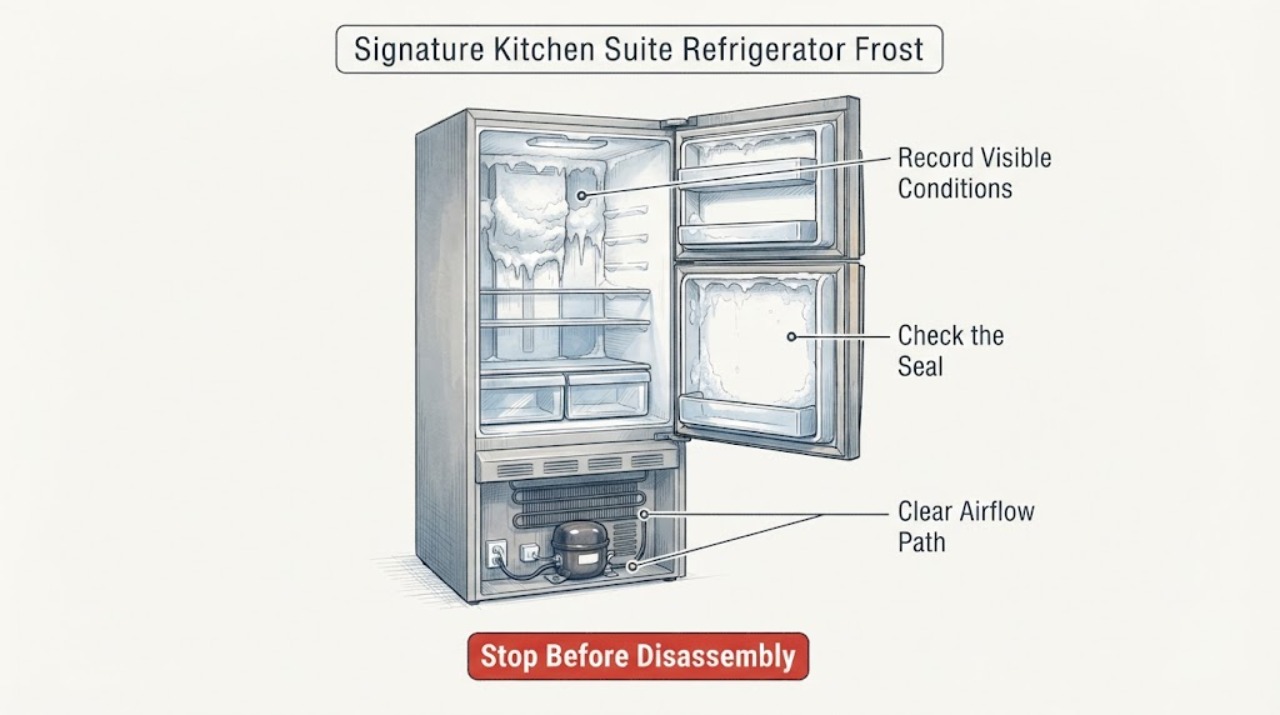
Frost in a Signature Kitchen Suite refrigerator usually means moisture is reaching a cold surface, often through a door that is not sealing, warm or uncovered food, or blocked airflow. First note where the frost is forming, then check door closure and the gasket, food and shelf position, vents, leveling, and the model's temperature setting. Remove frost only with the exact model's approved procedure; never chip it with a knife or ice pick. If a sheet of ice returns after a complete defrost, frost covers the rear wall or vents, the gasket is torn, or cooling is affected, stop and arrange qualified service.
Work through in order
Diagnostic checks
Use only checks that match the exact appliance or system and its official guide.
-
Check 1
Map where the frost is forming and record whether the refrigerator interior is still at its normal temperature.
Expected result: Frost is near a door or gasket, on a rear wall or vent, on the floor, or widespread; cooling is normal or reduced.
Next step: Follow the branch for the observed location and record a photo or description for the model-specific service conversation.
Why this matters
Why: The location changes the likely next check: door moisture, airflow and temperature, drainage, or a broader defrost or cooling issue.
-
Check 2
Close the refrigerator door fully and inspect the visible gasket, shelves, drawers, and door bins for anything preventing a tight seal.
Expected result: A package obstructs the door, the gasket is dirty or compressed, or the gasket is torn, twisted, or detached.
Next step: Rearrange the load and clean the gasket with the model-approved method. If the gasket is damaged or the door still does not seal, arrange service rather than removing the seal yourself.
Why this matters
Why: A door gap lets humid room air enter and freeze on cold surfaces; a damaged gasket can keep causing frost after rearranging food.
-
Check 3
Check the contents and internal airflow without scraping the frost: cool hot food before loading, cover watery foods, and keep packages away from the air vents.
Expected result: Hot or uncovered food was added, the refrigerator is overpacked, or frost is covering a return-air vent.
Next step: Cool and cover food, restore the vent path, and monitor after the compartment stabilizes. If frost blocks the vent or cooling remains poor, use the exact model defrost or service procedure.
Why this matters
Why: Added moisture can freeze on cold surfaces, and blocked vents can reduce circulation so frost remains or spreads.
-
Check 4
Check the displayed temperature, refrigerator leveling, and whether the door and drawers were recently reassembled or the power was recently restored.
Expected result: The setting is outside the model guidance, the unit is not level, a drawer or shelf is mis-seated, or frost appeared after a move, cleaning, or power interruption.
Next step: Correct only the model-documented setting or external assembly, then allow the unit to stabilize. If the frost continues to build, contact Signature Kitchen Suite or an authorised technician.
Why this matters
Why: A temperature or assembly condition can prevent normal airflow and sealing; moisture can also freeze temporarily as a recently powered unit cools again.
-
Check 5
If the exact model manual allows manual defrosting, disconnect power and let the frost melt completely with towels in place, then dry the interior before restoring power.
Expected result: The frost clears and does not return, or a sheet of ice returns at the same location after a complete defrost.
Next step: Do not chip, puncture, or heat the frost. If a sheet returns or cooling is affected, stop user-level work and arrange qualified service.
Why this matters
Why: A one-time moisture or door condition is more likely when frost stays away; recurring floor ice after defrost raises concern for a blocked drain or another fault requiring disassembly.
Use your observations
Decision map
Find the observation that best matches what you see, then follow the next safe action.
-
PATH 01Next step
What you see
Frost is light and concentrated near the door, and a package or dirty gasket prevents the door from closing tightly.
Do this next
Clear the obstruction, clean the gasket as directed by the model manual, and monitor after the unit stabilizes. Arrange service if the gasket is torn or frost returns.
Why this path and its safety boundary
Why it matters: Moist room air entering at the door is more likely than an internal defrost failure.
-
PATH 02Next step
What you see
Frost covers a rear wall or air vent, the compartment is overpacked, or the temperature setting is outside the model guidance.
Do this next
Restore the vent path and model-approved setting without scraping the frost. Use the model's defrost procedure if permitted; contact service if the frost blocks airflow or returns.
Why this path and its safety boundary
Why it matters: Restricted airflow or a temperature condition is more likely, and continued frost can reduce cooling performance.
-
PATH 03Next step
What you see
A sheet of ice forms on the refrigerator or freezer floor and returns after the frost has fully melted once.
Do this next
Stop disassembly and arrange a trained technician; the manufacturer guidance says this repair requires refrigerator disassembly.
Why this path and its safety boundary
Why it matters: A blocked drain or recurring defrost-water path is more likely than surface frost caused by one open door.
-
PATH 04Next step
What you see
Frost is widespread, cooling is reduced, the gasket is damaged, or frost returns despite correct door closure, airflow, setting, and a complete model-approved defrost.
Do this next
Stop user-level troubleshooting, protect temperature-sensitive food, and contact Signature Kitchen Suite service with the model, frost location, and observations.
Why this path and its safety boundary
Why it matters: A defrost, fan, sensor, sealing, or cooling-system fault is more likely, but the symptom does not identify a compatible part.
-
PATH 05Next step
What you see
A sharp object, improvised heat, damaged wiring, refrigerant odor, water near electrical components, or other unsafe condition is present.
Do this next
Stop immediately, disconnect power only if safe, keep the appliance out of service, and arrange qualified repair.
Why this path and its safety boundary
Why it matters: The situation has a damage or electrical safety risk beyond routine frost removal.
Helpful context
Understand the symptom
Use the frost location as the first clue
Light frost near a door or on exposed food points toward humid air entering the compartment. Frost on a rear wall or return-air path points toward airflow or temperature conditions, while a sheet of ice on the floor that returns after defrost points toward drainage. Signature Kitchen Suite's refrigeration line includes built-in columns, wine columns, and undercounter units, so the exact compartment layout and defrost procedure must come from the model manual.
Check the door and moisture path
A small gap can admit enough warm, humid air to make frost. Look for a bottle, shelf, drawer, or package preventing the door from closing, then inspect the gasket for dirt, tears, twisting, or a section pulled away from the liner. Let hot food cool before storage and keep high-moisture foods covered. These are external checks; do not remove the door or gasket to change its fit without the model instructions.
Protect airflow and use the exact setting
Confirm that food is not packed against the refrigerator's air vents and that drawers and shelves are fully seated. Check the displayed temperature and leveling against the Signature Kitchen Suite manual for the model. A setting that is too cold or a blocked return-air path can leave frost in place through normal defrosting, but the correct value and control sequence are model-specific.
Defrost only through a documented procedure
If the model manual permits a user defrost, move food to safe storage, disconnect power, leave the specified doors open, protect the floor from meltwater, and wipe the compartment completely dry before restoring power. LG's general refrigerator guidance uses a long manual-defrost interval and a 24-to-48-hour stabilization period, but those timings must not be assumed for every Signature Kitchen Suite model. Never use a knife, ice pick, hair dryer, or other improvised heat source to remove frost.
When checks do not resolve it
Need a professional?
Contact Signature Kitchen Suite or an authorised appliance technician when frost returns after a complete model-approved defrost, a sheet of ice forms on the floor, the gasket is torn or detached, frost blocks airflow, cooling is reduced, or any diagnosis would require removing panels or accessing the drain, defrost, fan, sealed system, or controls. Provide the model code, frost location, door and gasket observations, temperature setting, and what changed after each external check.
Common questions
FAQ
What usually causes frost buildup in a Signature Kitchen Suite refrigerator?
Moist air entering through a door gap, hot or uncovered food, blocked airflow, a temperature or leveling condition, and defrost-water drainage can all produce different frost patterns. The location of the frost helps choose the next external check.
Can I scrape frost off with a knife?
No. Manufacturer guidance warns against sharp objects because they can damage the refrigerator. Follow the exact Signature Kitchen Suite model manual for defrosting, or arrange service if frost is heavy or returns.
Why does ice keep forming on the refrigerator floor after defrosting?
A sheet that returns after a complete defrost can indicate a blocked drain or recurring defrost-water path. That repair may require disassembly, so do not probe the drain or remove panels; arrange a trained technician.
Read the exact guide
Official sources
- LG Refrigerator - Troubleshooting Frost or Moisture Buildup In Your LG RefrigeratorLG USA Support · Opened official LG refrigerator moisture guidance. Used for external causes and the warning against sharp objects; exact Signature Kitchen Suite model care and defrost instructions remain controlling.
- LG Refrigerator - Frost BuildupLG USA Support · Opened official LG refrigerator guidance. Used for symptom-level moisture, door, vent, leveling, temperature, manual-defrost, and recurring-drain checks; exact Signature Kitchen Suite timings and settings must come from the model manual.
- Signature Kitchen Suite Debuts Industry-First 48-Inch French Door RefrigeratorSignature Kitchen Suite / LG · Opened the official Signature Kitchen Suite press release hosted by LG. Used to confirm the assigned brand's refrigerator product line and varied configurations, which is why exact model instructions are required for defrost and internal service.
- LG Refrigerator - Troubleshooting Ice Buildup in an LG RefrigeratorLG USA Support · Opened official LG refrigerator guidance. Used for the specific pattern of recurring floor ice and its technician boundary; it is not used to claim a Signature Kitchen Suite model-specific drain design.
Community feedback
Share a repair observation
Share a plain-text repair observation. Accepted observations are published automatically; this page may take a moment to update.