
On this page
Start here
Quick answer
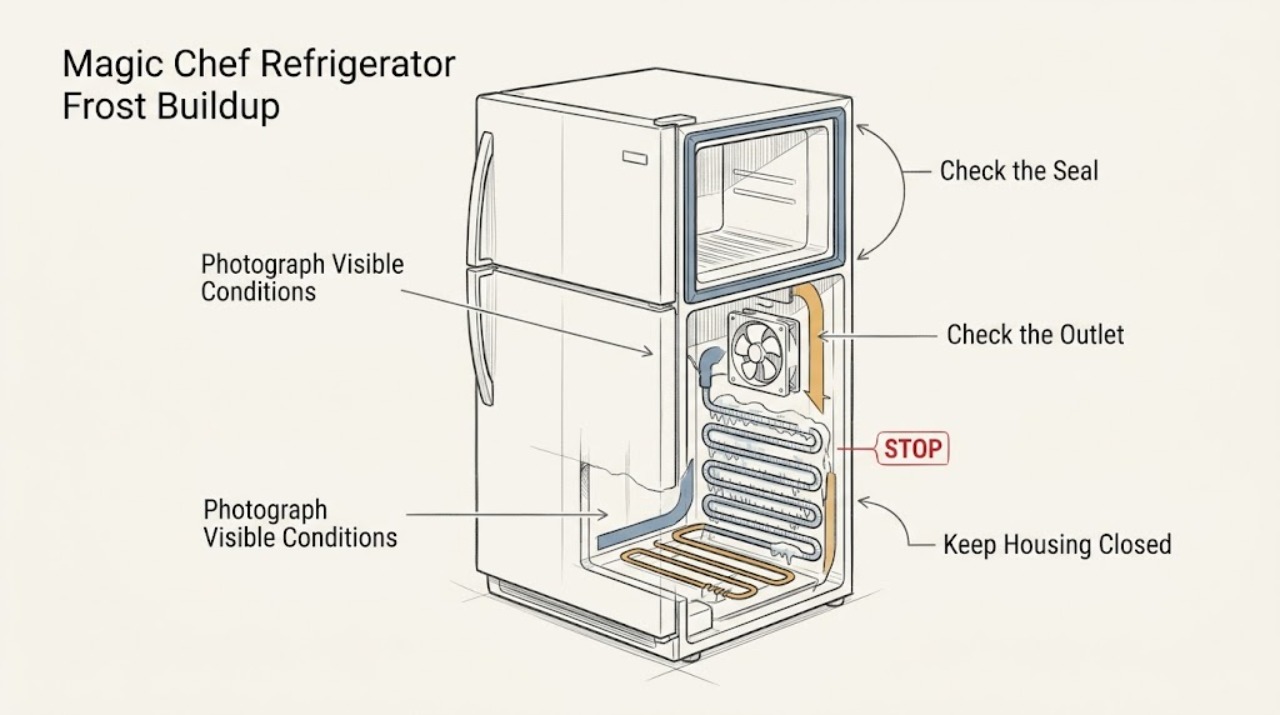
Record where frost builds up in the Magic Chef refrigerator before defrosting it: around the door points to air leakage, one rear panel points to airflow or defrost behavior, and frost on packages can come from moisture and placement. Check the door seal, clear visible vents, and use the exact manual for a safe defrost procedure. Do not chip ice or work behind panels; arrange service when frost returns quickly or blocks cooling.
Before you begin
Safety first
- Use only the model's documented defrost procedure. Do not pierce ice, remove sealed-system panels, or work near a fan or electrical component.
Work through in order
Diagnostic checks
Use only checks that match the exact appliance or system and its official guide.
-
Check 1
Photograph the frost before removing food and note whether it is on the door gasket, around one rear air outlet, across a rear wall, or attached to individual packages.
Expected result: Frost is localized at the door, concentrated at a rear panel/outlet, or limited to uncovered food and containers.
Next step: Keep the photo and temperature reading for comparison after the model-approved defrost or cleaning step.
Why this matters
Why: The pattern distinguishes an air-seal issue, an airflow/defrost concern, and moisture entering from uncovered food or frequent openings.
-
Check 2
Inspect the full gasket perimeter and close the door on an unobstructed load, looking for a fold, tear, gap, or a drawer or package preventing contact.
Expected result: The gasket is intact and contacts evenly, or a section is folded, torn, loose, or held open by the load.
Next step: Reposition the load and gently clean an intact gasket as the manual allows. Request service for a damaged gasket or crooked door.
Why this matters
Why: A sealing gap lets humid air in and commonly produces perimeter frost; an intact seal keeps airflow or defrost causes more likely.
-
Check 3
Make sure visible interior air outlets are not covered by packages and that food is covered when practical; then check the compartment with an appliance thermometer.
Expected result: Airflow is blocked or food is uncovered, or the vents are clear but the refrigerator is warming or freezing unevenly.
Next step: Clear only the accessible load obstruction and monitor. Do not remove an interior panel to reach ice or a fan.
Why this matters
Why: Blocked airflow and moisture from uncovered food can create local frost; abnormal temperature with clear paths suggests a system issue.
-
Check 4
Follow the exact Magic Chef manual for a safe user defrost or power-off procedure if one is provided, and observe whether frost returns quickly after the compartment is dry and restarted.
Expected result: Frost stays away after the documented procedure, or it reforms rapidly in the same pattern.
Next step: Stop repeating defrost cycles and arrange qualified service for rapid recurrence, heavy ice, or a temperature that cannot be maintained.
Why this matters
Why: A one-time moisture or door-opening event may settle; rapid patterned return points to a continuing seal, airflow, or defrost fault.
Use your observations
Decision map
Find the observation that best matches what you see, then follow the next safe action.
-
PATH 01Next step
What you see
Frost is confined to a door edge and the gasket has a gap or obstruction
Do this next
Correct the load obstruction or clean an intact gasket; request service for damage or persistent frost.
Why this path and its safety boundary
Why it matters: Humid room air is likely entering at the seal.
-
PATH 02Next step
What you see
Frost covers a rear panel or returns rapidly with clear vents
Do this next
Protect food and arrange model-specific qualified service; do not chip ice or remove panels.
Why this path and its safety boundary
Why it matters: The continuing problem is beyond routine placement and may involve airflow or defrost control.
-
PATH 03Next step
What you see
Frost is only on uncovered food or containers and the thermometer is stable
Do this next
Cover food, keep it off cold surfaces, and monitor the pattern.
Why this path and its safety boundary
Why it matters: Moisture from food or storage may be freezing locally rather than indicating a cabinet fault.
Helpful context
Understand the symptom
The frost location matters more than its thickness
A thin patch at a door edge, a snowy rear wall, and ice around packages have different likely paths. Photograph the pattern and note whether the refrigerator temperature is stable before clearing it.
When checks do not resolve it
Need a professional?
Provide the frost photograph/location, temperature reading, gasket result, airflow observation, and time to recurrence.
Safety scope: Use only the model's documented defrost procedure. Do not pierce ice, remove sealed-system panels, or work near a fan or electrical component.
Common questions
FAQ
Why is frost forming around my Magic Chef refrigerator door?
Check for a drawer, package, folded gasket, or damaged seal keeping the door from closing tightly. Correct an obstruction or clean an intact gasket as allowed; persistent gaps need service.
Can I chip refrigerator ice away with a knife?
No. Do not pierce or chip ice, because you can damage hidden tubing or wiring. Use only the exact manual's safe defrost procedure or request service.
What does frost that returns quickly mean?
Rapid recurrence after a documented defrost and clear vents points to a continuing seal, airflow, or defrost problem. Record the pattern and arrange qualified service.
Read the exact guide
Official sources
- Manual DownloadsMagic Chef · Magic Chef model-specific defrost and gasket instructions
- Refrigeration & Food SafetyUSDA Food Safety and Inspection Service · Refrigerator temperature, tight door closure, and safe storage
Community feedback
Share a repair observation
Share a plain-text repair observation. Accepted observations are published automatically; this page may take a moment to update.