
On this page
Start here
Quick answer
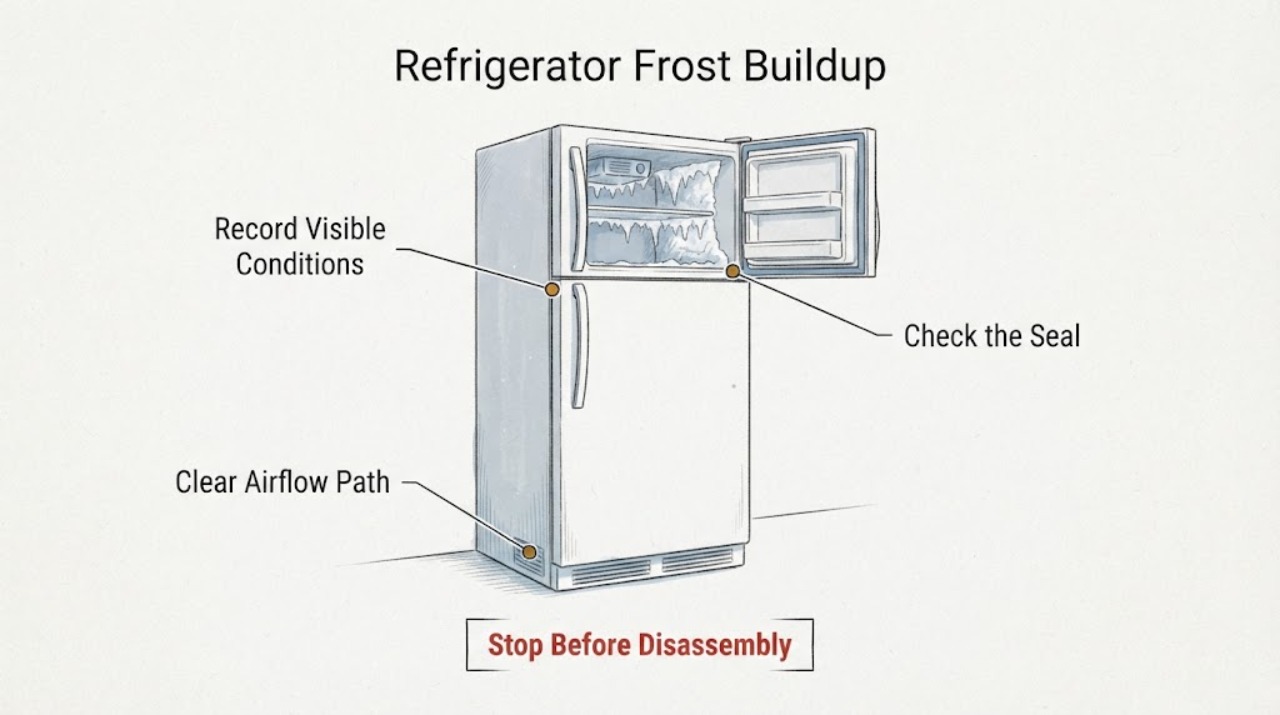
Frost buildup on a Siemens refrigerator usually points to warm humid air entering through a door or seal, a blocked air path, or a defrost issue. Check the seal and airflow without scraping or heating the liner.
Work through in order
Diagnostic checks
Use only checks that match the exact appliance or system and its official guide.
-
Check 1
Record where frost appears: around the opening, on the rear wall, near vents, or across a compartment.
Expected result: The symptom location, timing, or control response is clear, or another symptom is present.
Next step: Continue with the next documented check only if the area is safe; otherwise stop use and arrange qualified service.
Why this matters
Why: Frost buildup on a Siemens refrigerator usually points to warm humid air entering through a door or seal, a blocked air path, or a defrost issue. Check the seal and airflow without scraping or heating the liner.
-
Check 2
Check that the door closes evenly, the gasket contacts the cabinet, and food is not blocking the internal air path.
Expected result: The accessible condition is corrected, or it is normal and the original symptom remains.
Next step: Continue with the next documented check only if the area is safe; otherwise stop use and arrange qualified service.
Why this matters
Why: The result narrows the fault to an external condition or leaves a model-specific internal fault unresolved.
-
Check 3
Do not chip frost with a sharp tool or apply direct heat; arrange service if frost rapidly returns after the seal and loading checks.
Expected result: The appliance operates normally after the check, or the symptom returns or creates a safety concern.
Next step: Continue with the next documented check only if the area is safe; otherwise stop use and arrange qualified service.
Why this matters
Why: The result narrows the fault to an external condition or leaves a model-specific internal fault unresolved.
Use your observations
Decision map
Find the observation that best matches what you see, then follow the next safe action.
-
PATH 01Next step
What you see
The external check for frost buildup finds a clear correctable condition and the symptom does not return.
Do this next
Monitor normal operation and keep the exact model manual available.
Why this path and its safety boundary
Why it matters: The observed pattern fits an owner-level condition described by Siemens support; the symptom alone does not identify a part.
-
PATH 02Next step
What you see
The frost buildup remains after power, door, airflow, supply, or loading checks, or returns quickly.
Do this next
Move food or stop dispensing as applicable and arrange Siemens or qualified service.
Why this path and its safety boundary
Why it matters: The first external explanation is not sufficient and a model-specific fault remains possible.
-
PATH 03Next step
What you see
There is active water, repeated breaker tripping, burning odor, exposed electrical damage, or a dangerous mechanical sound.
Do this next
Keep the appliance off and have qualified service investigate it.
Why this path and its safety boundary
Why it matters: This is a safety boundary rather than a routine adjustment.
Helpful context
Understand the symptom
What the first check tells you
Frost buildup on a Siemens refrigerator usually points to warm humid air entering through a door or seal, a blocked air path, or a defrost issue. Check the seal and airflow without scraping or heating the liner.
Use the exact model guidance
Siemens publishes model-specific instructions for the refrigerator. Preserve the full model identity and use the opened support or manual page before disassembly.
When checks do not resolve it
Need a professional?
Stop use for active water, repeated breaker trips, burning smell, exposed electrical damage, or a dangerous mechanical sound; arrange qualified service.
Common questions
FAQ
Can I keep using a Siemens refrigerator with this problem?
Use it only when the owner-level check clears the symptom and there is no leak, heat, smoke, electrical damage, or unsafe movement. A recurring symptom needs qualified service.
Does this symptom identify one replacement part?
No. Record the exact model and observed result first; use the model manual and service diagnosis before selecting any part.
What information should I give service?
Provide the full model, the frost buildup symptom, when it occurs, what the external checks showed, and any photo or short recording.
Read the exact guide
Official sources
- Service Assistance - Built-in fridges and freezers | Siemens Home AppliancesSiemens · Official siemens source for siemens refrigerator frost buildup troubleshooting and service guidance.
Community feedback
Share a repair observation
Share a plain-text repair observation. Accepted observations are published automatically; this page may take a moment to update.