
On this page
Start here
Quick answer
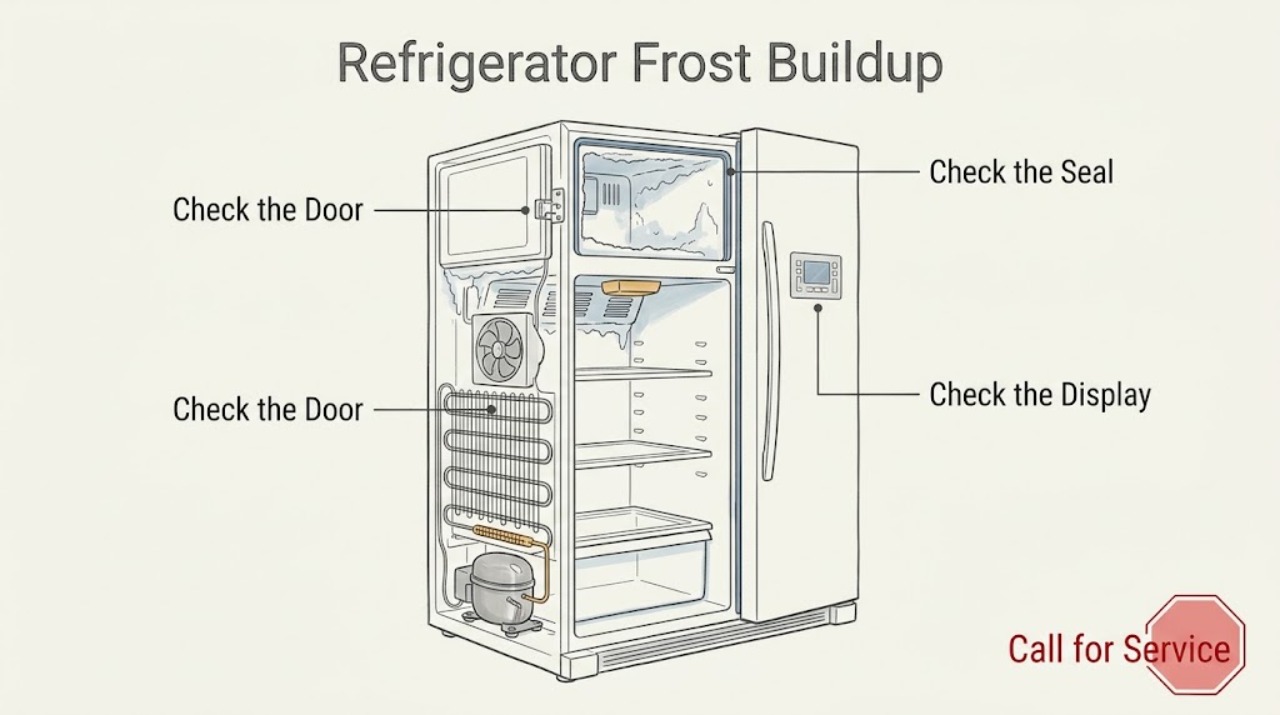
Frost in a Roper refrigerator usually means humid air is entering through a door or gasket, airflow is blocked, or the freezer is running too cold; a heavy return can also indicate a defrost problem. Check door closure and the gasket, keep vents clear, and use the model's normal temperature setting. Do not chip ice with a sharp tool or remove interior panels.
Work through in order
Diagnostic checks
Use only checks that match the exact appliance or system and its official guide.
-
Check 1
Locate where frost forms and check that packages, shelves, or bins are not preventing the refrigerator or freezer door from closing completely.
Expected result: Frost is concentrated along an edge or the door is blocked, or frost covers a broad interior area with the door closing normally.
Next step: Reposition items and close the door fully, then monitor for recurrence rather than scraping the ice aggressively.
Why this matters
Why: A blocked or ajar door lets humid air in; broad frost with a normal seal makes airflow or defrost conditions more likely.
-
Check 2
Inspect the door gasket and its contact surface for dirt, tears, gaps, or a section that is folded away from the cabinet; clean it with the model-approved mild method.
Expected result: The gasket seals evenly after cleaning, or it remains damaged or does not contact the cabinet.
Next step: Arrange a model-specific gasket or alignment service when the seal remains uneven; do not force a hinge adjustment without the manual.
Why this matters
Why: A dirty, damaged, or poorly seated gasket can admit warm moist air and create frost.
-
Check 3
Clear food away from interior air vents and confirm the freezer control is at the normal model setting rather than its coldest position.
Expected result: A vent was blocked or the setting was unusually cold, or airflow and settings were already normal.
Next step: Restore clear airflow and wait for the appliance to stabilize; do not use a sharp object or heat gun to remove ice.
Why this matters
Why: Blocked vents can promote moisture and frost, while an overly cold setting can freeze moisture faster without fixing the cause.
-
Check 4
If frost is thick or returns rapidly after the external checks, protect food and record the location, rate of return, and temperature symptoms for service.
Expected result: Frost clears only after a full defrost or returns soon afterward, or it does not recur.
Next step: Contact qualified service for panels, heaters, fans, sensors, or refrigerant-system work.
Why this matters
Why: Rapid recurrence can indicate a defrost, fan, sensor, or sealed-system issue that cannot be distinguished safely from outside.
Use your observations
Decision map
Find the observation that best matches what you see, then follow the next safe action.
-
PATH 01Next step
What you see
Frost is concentrated at the door edge and a package or gasket gap is visible
Do this next
Clear the obstruction, clean the gasket, and arrange alignment or gasket service if the gap remains.
-
PATH 02Next step
What you see
Frost covers an interior vent or shelves are packed against the rear wall
Do this next
Clear the vents and allow temperatures to stabilize; do not chip the ice with a sharp object.
-
PATH 03Next step
What you see
Frost returns quickly with a normal seal and clear vents
Do this next
Protect food and schedule service; avoid removing interior covers.
Helpful context
Understand the symptom
Look for the pattern, not just the ice
A thin patch near a door edge points toward sealing or humid-air entry. Frost covering an interior vent points toward airflow restriction. Frost that returns quickly after external checks needs a model-specific defrost diagnosis.
When checks do not resolve it
Need a professional?
Arrange qualified refrigerator service for frost that rapidly returns, a damaged gasket or hinge, warm food, an obstructed internal fan, or any need to access defrost, electrical, or sealed-system components.
Common questions
FAQ
Why is frost forming in my Roper refrigerator?
Check for a door that is not sealing, blocked vents, or an unusually cold setting. Frost that returns rapidly after those checks may need defrost-system service.
Can I scrape frost off with a knife?
No. A sharp tool can damage the liner or hidden components. Follow the model manual's defrost procedure or arrange service for heavy or recurring frost.
Read the exact guide
Official sources
- TOP-MOUNT REFRIGERATOR Use & Care GuideRoper by Whirlpool Corporation · Roper top-mount refrigerator use and care; exact model features vary
- Frosting in the Freezer Section - Quad DoorWhirlpool Product Help · General refrigerator frost guidance; consult the Roper model manual for layout
Community feedback
Share a repair observation
Share a plain-text repair observation. Accepted observations are published automatically; this page may take a moment to update.