
On this page
Start here
Quick answer
Frost usually means warm, moist air is entering the freezer or an item is preventing a seal. Check for packages or shelves holding the door open, a gasket that is loose or torn, and a refrigerator that is not level. Remove only visible frost safely and follow the Monogram manual; recurring heavy frost can require service.
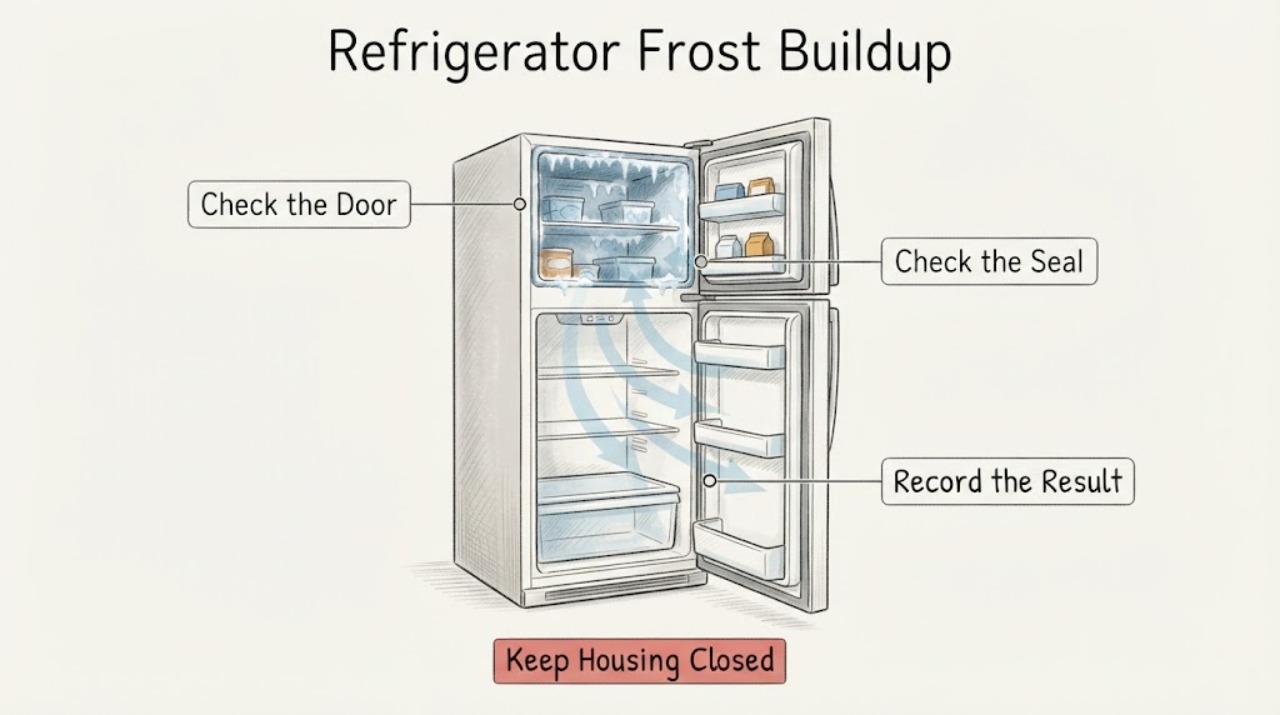
Work through in order
Diagnostic checks
Use only checks that match the exact appliance or system and its official guide.
-
Check 1
Inspect the freezer door or drawer opening for packages, bins, shelves, or ice that prevent full closure.
Expected result: Something holds the door open or the door closes squarely with no obstruction.
Next step: Rearrange only visible items and observe whether the seal closes evenly; continue if frost returns.
Why this matters
Why: Warm room air can enter through even a slightly open door and freeze on the walls and food.
-
Check 2
Check the gasket around the freezer opening for cuts, tears, loose sections, or gaps against the cabinet, without removing it.
Expected result: The gasket is damaged or does not contact evenly, or it appears intact.
Next step: Use the model manual for gasket care or arrange service for damage; do not improvise a replacement fit.
Why this matters
Why: A torn or poorly seated gasket can continuously admit moist air; an intact gasket makes door alignment and airflow more important.
-
Check 3
Check whether the refrigerator is level and whether the door closes on its own as described in the installation instructions.
Expected result: The door sits unevenly or fails to close, or it closes and seals normally.
Next step: Follow the Monogram installation instructions for leveling. Do not adjust concealed hinges without the correct procedure.
Why this matters
Why: An uneven installation can prevent the gasket from sealing even when it looks undamaged.
-
Check 4
Remove visible frost with a dry towel and monitor the freezer after correcting the seal; never chip ice with a sharp tool or heat an internal panel.
Expected result: Frost stays away, or heavy frost returns on the wall or around the opening.
Next step: Arrange qualified service for recurring frost, a stopped fan, or frost hidden behind an interior panel.
Why this matters
Why: A one-time moisture event may clear after the cause is corrected; recurring heavy frost can indicate a fan, defrost, or sealed-area fault.
Use your observations
Decision map
Find the observation that best matches what you see, then follow the next safe action.
-
PATH 01Next step
What you see
Frost stops after a blocked door or drawer is corrected
Do this next
Keep packages clear of the seal and monitor for recurrence.
-
PATH 02Next step
What you see
The gasket is torn or the door remains uneven after visible obstructions are removed
Do this next
Use model-specific installation/service guidance and arrange repair if the seal cannot be restored safely.
-
PATH 03Next step
What you see
Heavy frost returns with a good seal and correct loading
Do this next
Do not remove panels or melt ice around wiring; arrange qualified Monogram service.
Helpful context
Understand the symptom
Look for the air-entry path
Frequent openings, warm uncovered food, a blocked drawer, or a damaged gasket can all add moisture. Frost that returns after those conditions are corrected points toward a sealing, fan, or defrost problem.
Only after diagnosis
Potential parts
- freezer door gasket
Consider a gasket only when inspection confirms a tear, gap, or poor seal and the exact model fit is known.
Confirm the exact Monogram model before ordering.
When checks do not resolve it
Need a professional?
Arrange service for recurring heavy frost after visible seal checks, a torn gasket, a fan that is not running, frost behind a panel, or a door that cannot close and seal.
Common questions
FAQ
Why does my Monogram freezer keep forming frost?
Check for a package or shelf holding the door open, a damaged gasket, and poor leveling. Heavy frost that returns after those checks can indicate a fan or defrost fault.
Can I chip away freezer frost?
Remove only visible frost with a dry towel. Do not use sharp tools or heat near panels; arrange service when frost is hidden or repeatedly returns.
Read the exact guide
Official sources
- Refrigerator & Freezer - Ice on Freezer WallGE Appliances · Frost-free refrigerators and freezers
- Refrigerator - Frost in FreezerGE Appliances · Refrigerators; consult the Monogram model manual
Community feedback
Share a repair observation
Share a plain-text repair observation. Accepted observations are published automatically; this page may take a moment to update.