
On this page
Start here
Quick answer
Frost on or around a water heater can signal freezing conditions and possible pipe, valve, tank, or heat-exchanger damage. Shut off the heater’s electrical or fuel supply and incoming water when safe, do not force-thaw or restart it, and inspect for leaks after gradual thawing by a qualified technician.
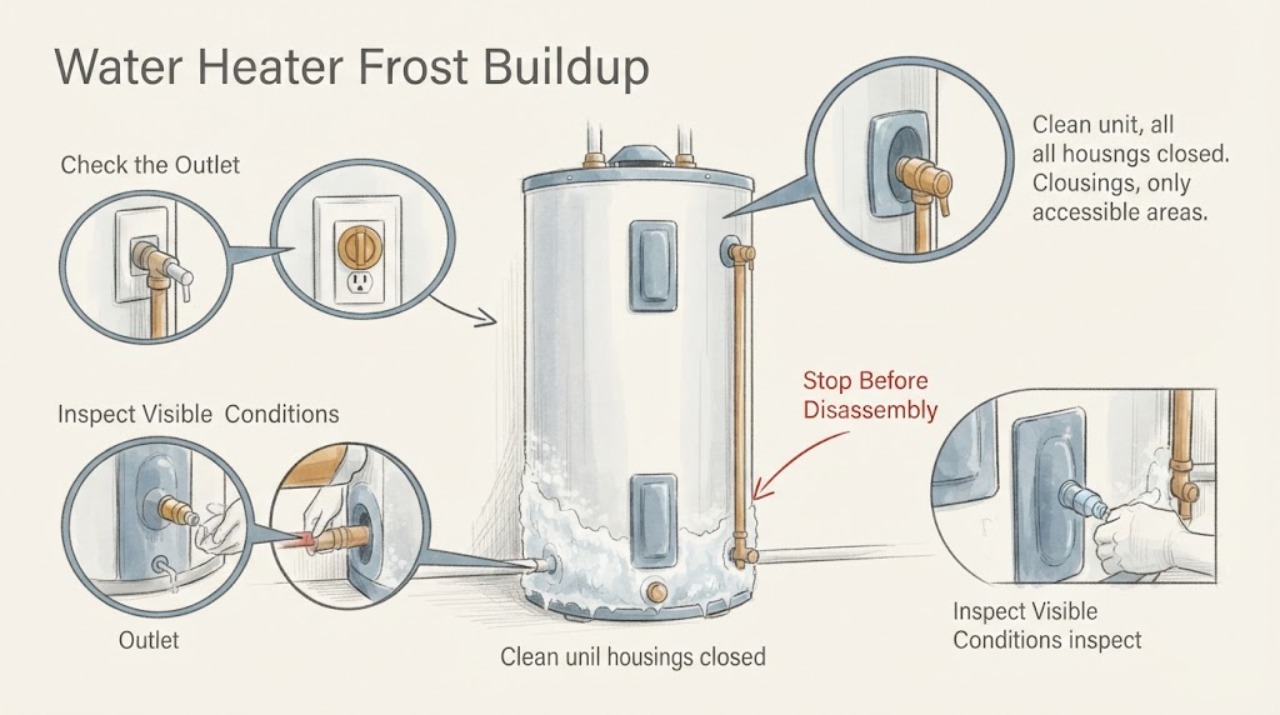
Work through in order
Diagnostic checks
Use only checks that match the exact appliance or system and its official guide.
-
Check 1
From a safe distance, note where frost is present: exposed supply or outlet pipes, valves, cabinet, vent area, or tank or heat-exchanger housing.
Expected result: Frost is on exposed plumbing, around fittings, or across the heater body, with or without a leak.
Next step: Do not scrape ice or remove covers; proceed to safe shutoff and professional assessment.
Why this matters
Why: Rheem explains that ice expansion can stress lines, valves, tanks, and heat exchangers; location helps set the service urgency.
-
Check 2
Turn off electrical power or fuel to the heater and the incoming water supply only if the shutoffs are accessible and dry.
Expected result: The supplies are isolated safely, or a shutoff is inaccessible, wet, or damaged.
Next step: Keep away from unsafe controls and have qualified service isolate them if necessary.
Why this matters
Why: Operating a frozen system can worsen damage, and thawing can reveal a burst connection.
-
Check 3
Look for active dripping, bulging pipes, cracked fittings, or water collecting near the unit without touching frozen components.
Expected result: A leak or deformation is visible, or the area is dry and intact.
Next step: Contain water only from a safe dry position and arrange emergency plumbing or water-heater service for any leak.
Why this matters
Why: A leak after or during thaw suggests freeze damage; a dry surface does not prove internal safety.
-
Check 4
Allow gradual natural thawing in a safe environment; do not use a torch, high heat, or a restart test.
Expected result: Frost clears without a leak, or leaks, no hot water, or fault behavior appear as it thaws.
Next step: Leave the heater off and have the tank, heat exchanger, valves, and connected piping inspected before operation.
Why this matters
Why: Rheem says damage may become apparent as ice thaws and recommends preventing forced thaw or operation.
Use your observations
Decision map
Find the observation that best matches what you see, then follow the next safe action.
-
PATH 01Next step
What you see
Frost is on a pipe or fitting and water begins leaking as it warms.
Do this next
Keep water and heater supplies isolated and call qualified plumbing service.
Why this path and its safety boundary
Why it matters: A cracked or stressed connection is possible.
-
PATH 02Next step
What you see
The frost clears but the heater has no hot water or a fault indication.
Do this next
Do not restart it; arrange water-heater service and provide the frost location.
Why this path and its safety boundary
Why it matters: Internal sensor, valve, tank, or heat-exchanger damage may have occurred.
-
PATH 03Next step
What you see
Frost is minor, no leak is visible, and the heater is in a cold unheated space.
Do this next
Have insulation and approved freeze protection reviewed before restoring operation.
Why this path and its safety boundary
Why it matters: Freezing exposure remains a risk even without visible damage.
Helpful context
Understand the symptom
This guide focuses on whether frost is external condensation or freeze damage. The symptom is a starting point, not a part diagnosis; each result changes the next safe check.
The cited manufacturer guidance supports these external checks. Confirm model-specific controls, parts, and service procedures in the appliance manual.
Only after diagnosis
Potential parts
- freeze-damaged valve, pipe, or heat exchanger
Relevant only after a qualified inspection identifies damage; frost alone does not identify a part.
Confirm the exact appliance model and manufacturer instructions before ordering.
When checks do not resolve it
Need a professional?
Use qualified water-heater and plumbing service before restoring a frosted or frozen unit, especially when a tank, heat exchanger, valve, or pipe may be compromised.
Common questions
FAQ
Can I use a hair dryer or torch to remove water-heater frost?
No. Rheem advises gradual thawing and warns that operating or force-thawing a frozen system can worsen damage.
Why can a frozen water heater leak later?
Expanding ice can stress rigid components, and cracks may begin leaking once the ice thaws.
Read the exact guide
Official sources
- Can Water Heaters Freeze? What Happens If They Do?Rheem · water-heater frost or freeze damage, shutoff, gradual thaw, and prevention
Community feedback
Share a repair observation
Share a plain-text repair observation. Accepted observations are published automatically; this page may take a moment to update.