
Brand-independent appliance guidance
General Water Heater Repair Guides
Brand-independent troubleshooting and repair guidance for common water heater problems and maintenance questions.
General water heater guides
Use these guides when the problem is not limited to a specific manufacturer.
-
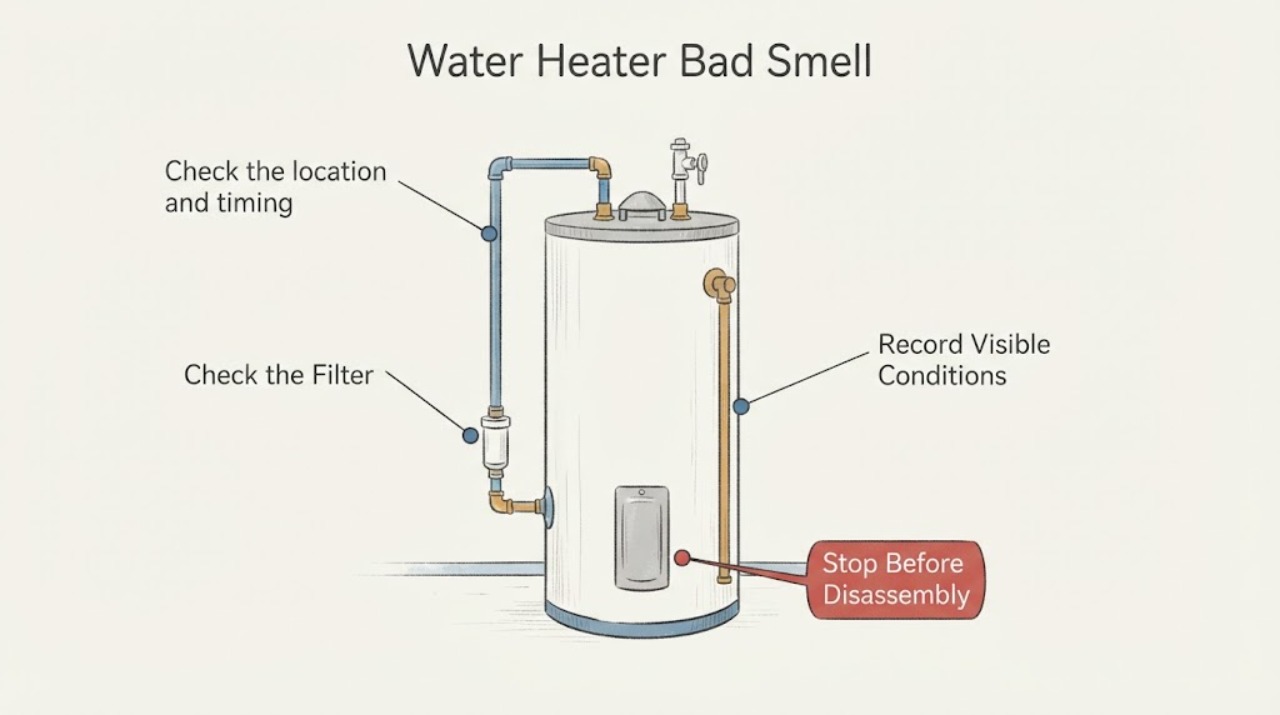
Water Heater Bad Smell: Separate Hot-Water Odor From a Gas Emergency
A bad smell associated with a water heater must first be classified by where it is noticed. A rotten-egg odor only in hot water can arise from water chemistry and the anode reaction, while a gas-like odor around the appliance is an emergency. Do not remove the anode or alter temperature settings without model-specific professional guidance.
-
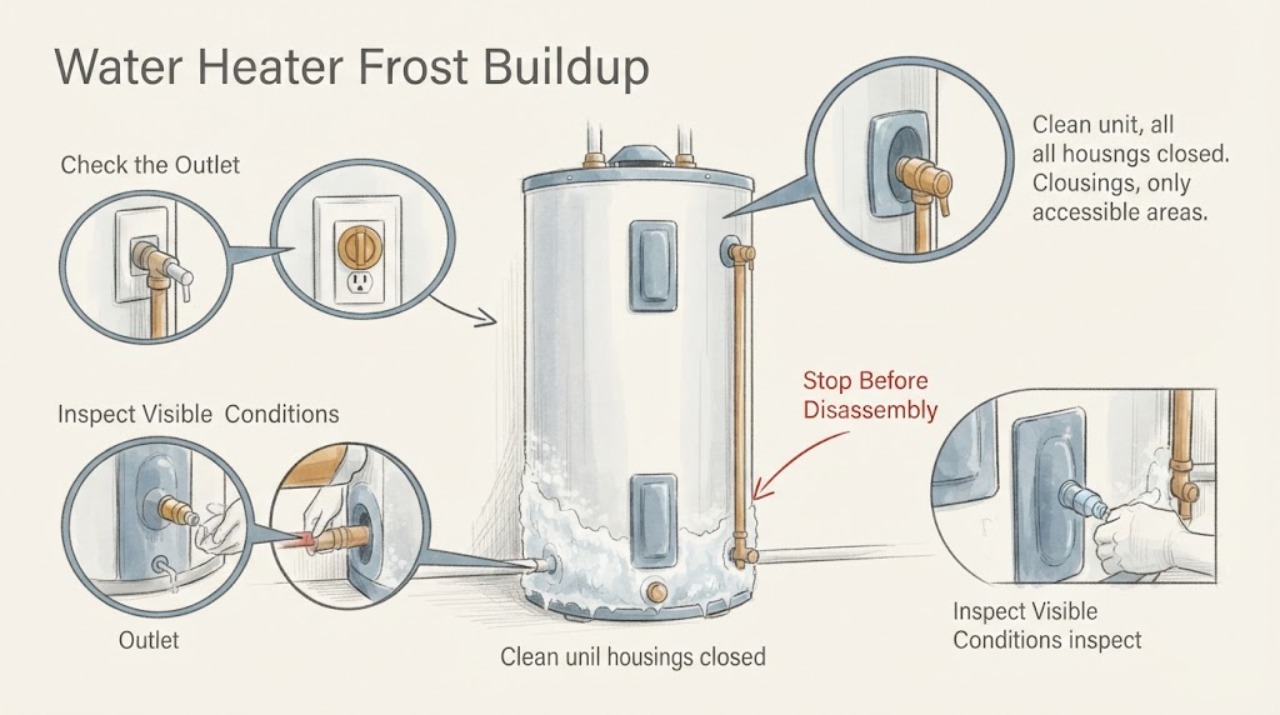
Water Heater Frost Buildup
Frost on or around a water heater can signal freezing conditions and possible pipe, valve, tank, or heat-exchanger damage. Shut off the heater’s electrical or fuel supply and incoming water when safe, do not force-thaw or restart it, and inspect for leaks after gradual thawing by a qualified technician.
-
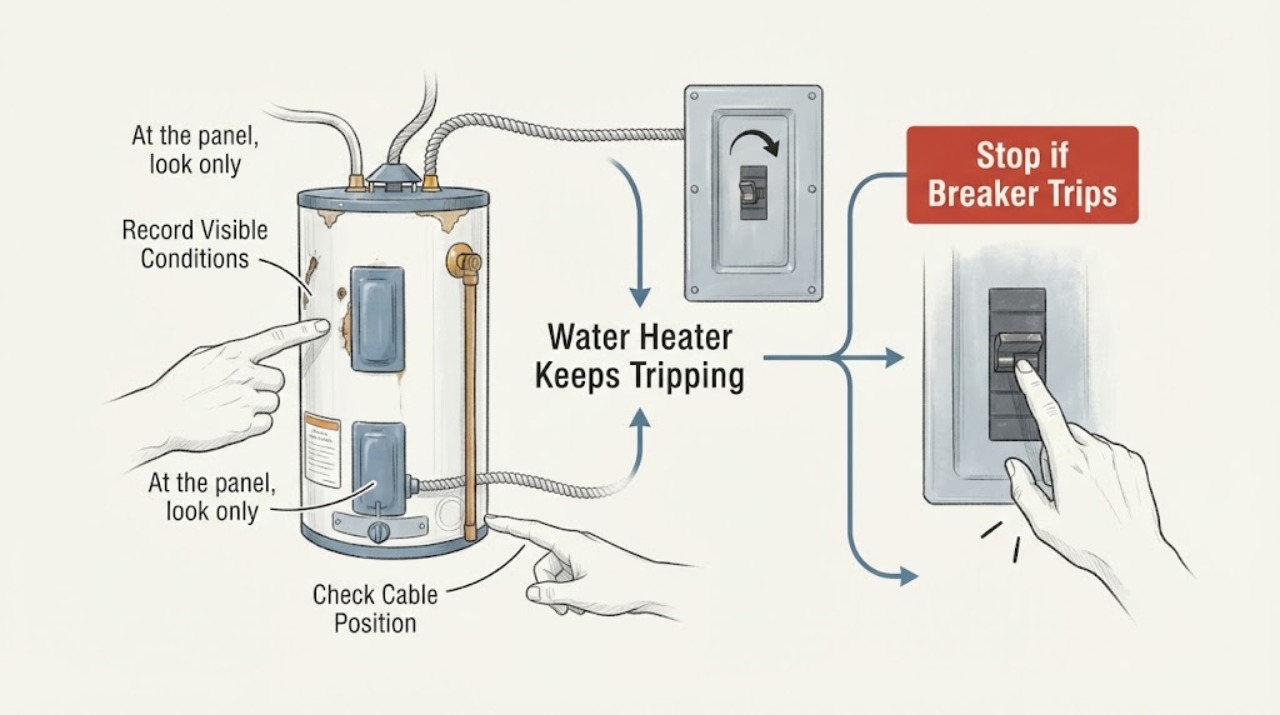
Water Heater Keeps Tripping the Breaker: Stop Repeated Resets
A water heater that repeatedly trips its breaker should not be kept in service by repeated resets. Confirm only that the correct labeled breaker is involved and note when it trips; circuit sizing, loose connections, wiring, a heating element, control, or unit defect require an electrician or qualified water-heater technician.
-
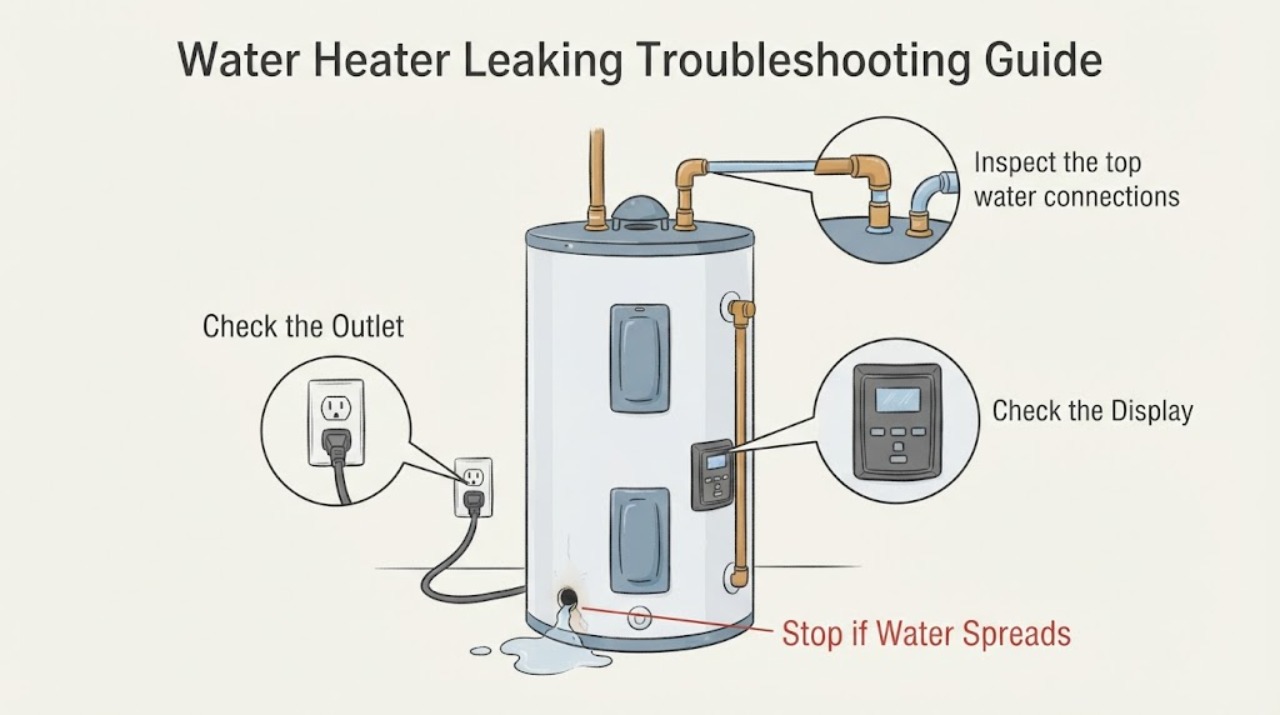
Water Heater Leaking Troubleshooting Guide
For a leaking water heater, first identify whether water is from a connection, drain valve, temperature-and-pressure relief outlet, condensation, or the tank body or base. A visible fitting leak and a tank leak have different consequences, and a relief outlet must never be capped.
-
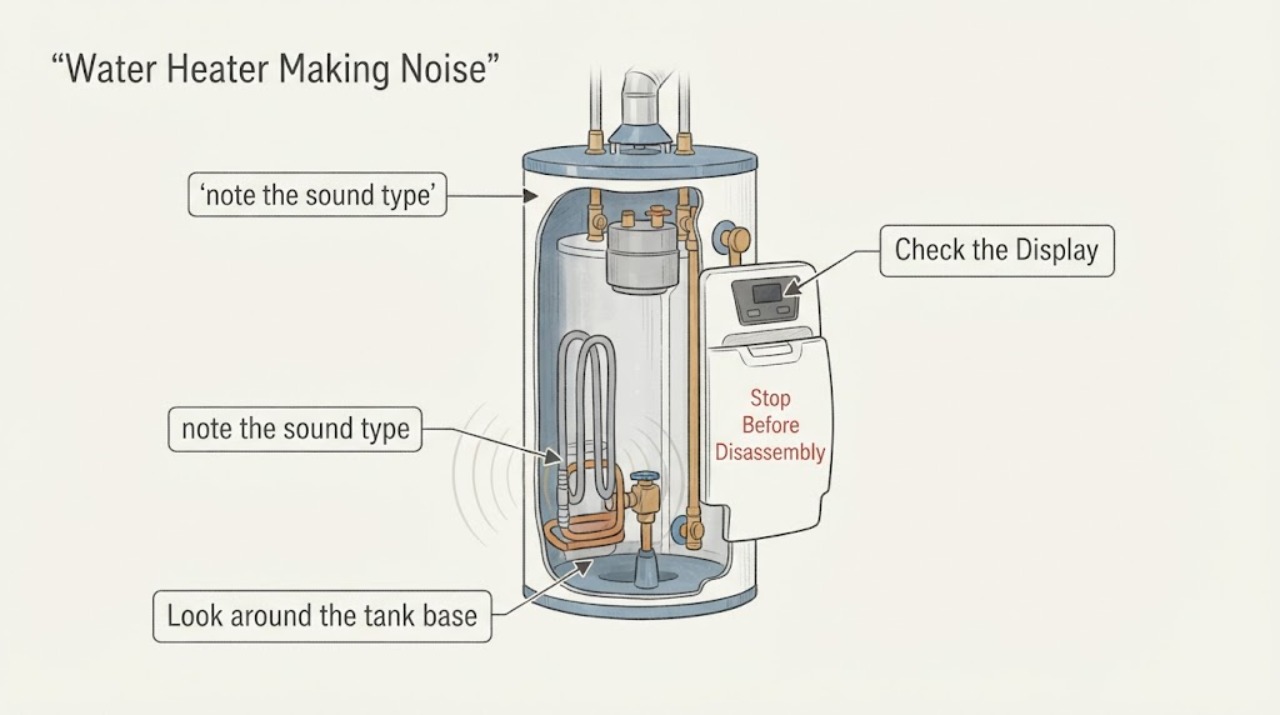
Water Heater Making Noise: Identify Popping, Knocking, and Hissing
A water heater's sound helps separate normal expansion from sediment, water hammer, venting, or a component fault. Popping or rumbling during heating commonly points to sediment at the tank bottom; knocking can be water hammer; hissing or screeching can involve a vent, blower, or heating element.
-
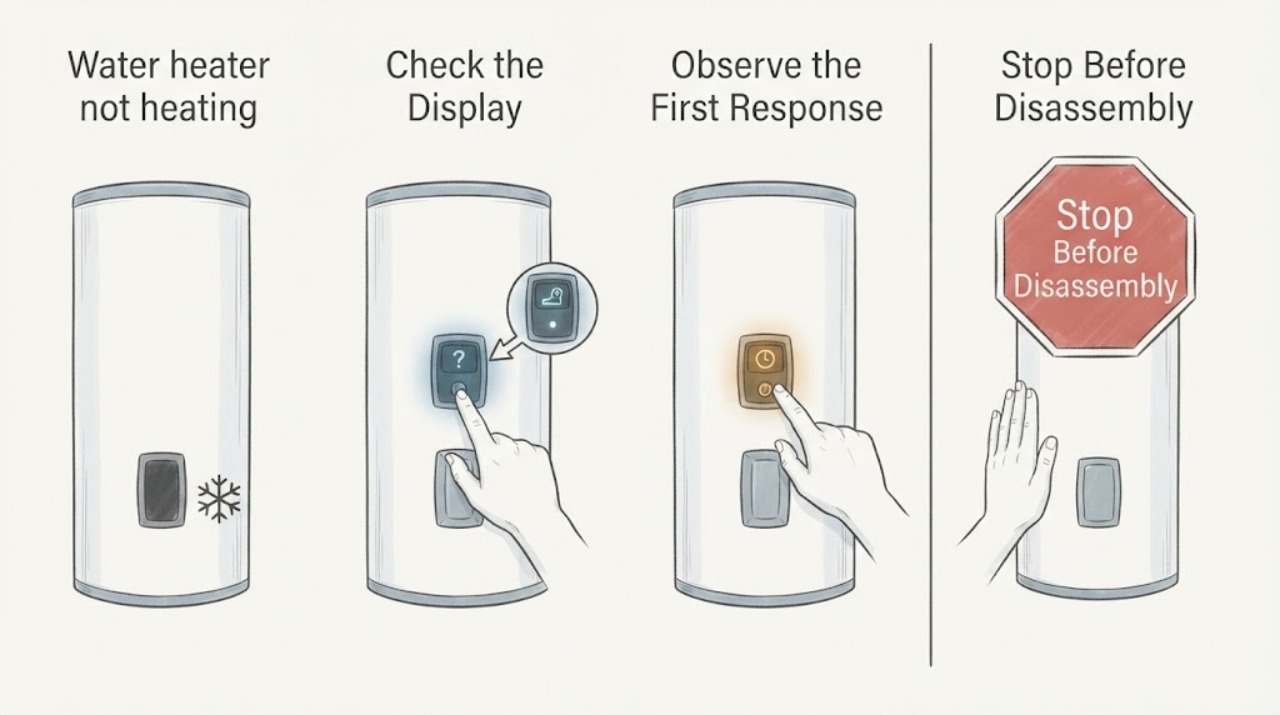
Water heater not heating
A water heater that is not heating should be checked by type: confirm fuel/power, thermostat setting, error or safety state, and whether the problem affects all hot water or one outlet. Check the breaker or normal control once, but do not remove access panels or test live wiring, elements, gas valves, or safety controls. Scalding, leaks, smoke, gas odor, or repeated trips require immediate service.
-
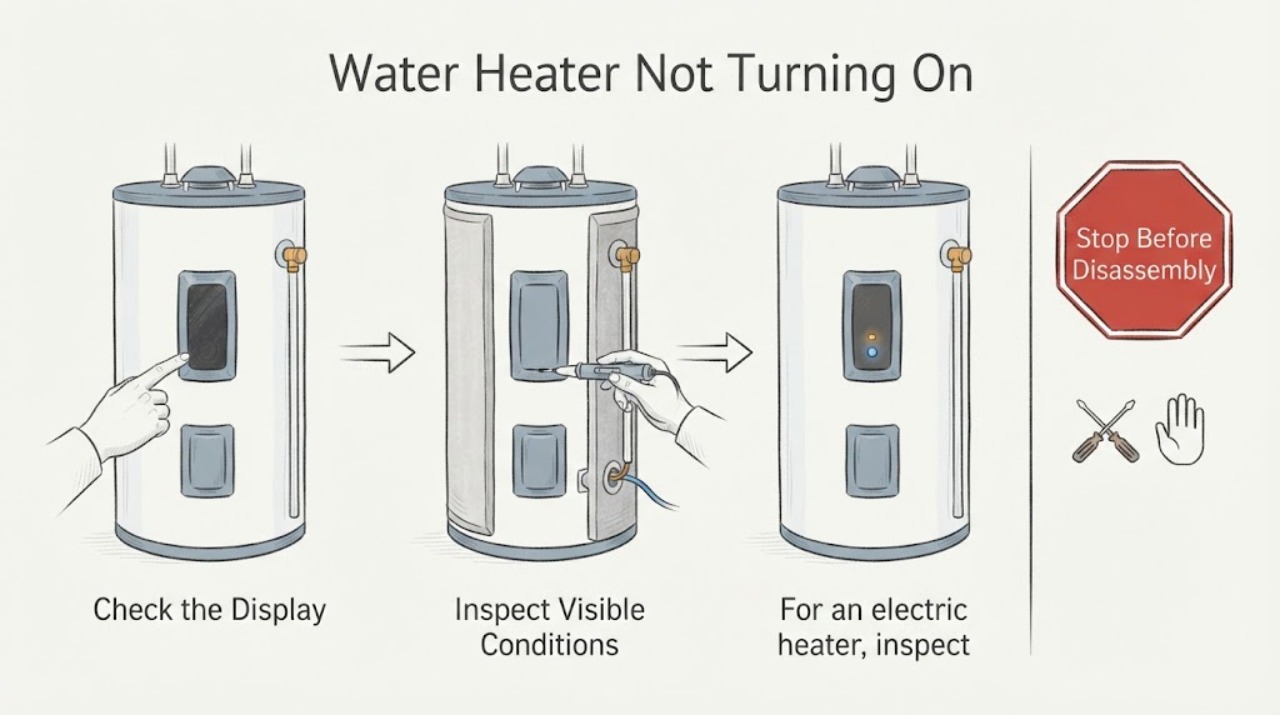
Water Heater Not Turning On
A water heater that will not turn on must be separated into electric no-power, gas ignition, and tankless no-flow cases. For an electric unit, check only the labeled breaker and whether the tank is full; do not open the cover or test live conductors. For gas equipment, do not relight or service combustion parts unless qualified. A repeat trip, gas odor, leak, or no heat after safe external checks needs professional service.
-
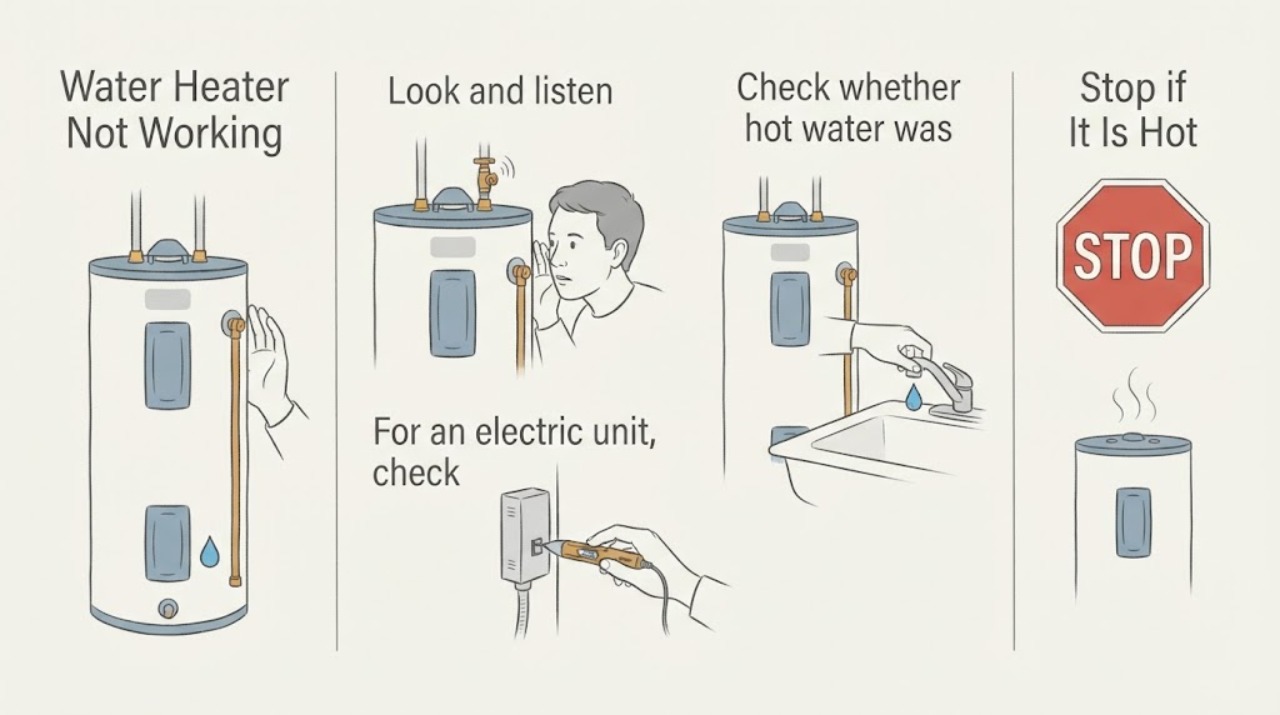
Water Heater Not Working
For a water heater that is not working, first identify whether the symptom is no hot water, a leak, a tripped breaker, or a gas/combustion issue. Check only the exterior power/disconnect and visible water conditions; never open electrical panels or service gas controls without the required qualification.
-
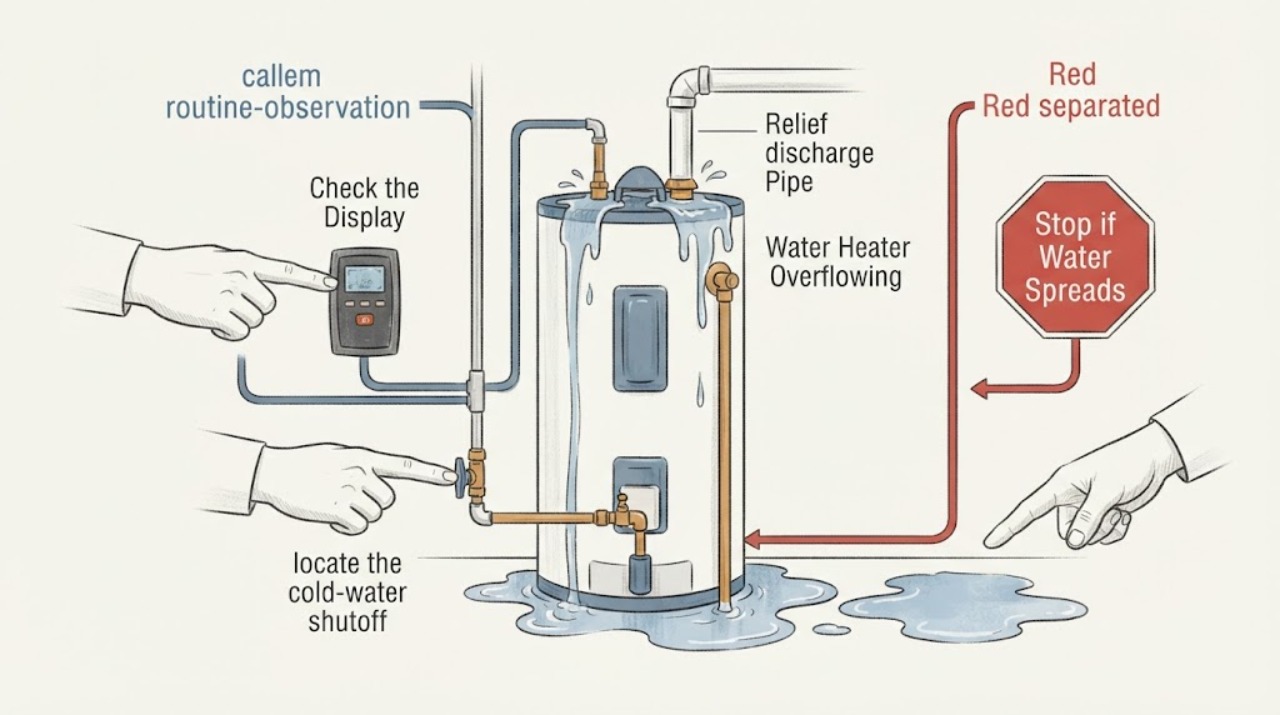
Water Heater Overflowing
Treat an overflowing water heater as a water and scald hazard. Keep people away from hot discharge, shut off the water and energy supply only if the controls are safely reachable and the exact manual permits, and identify whether water is from the relief discharge, drain valve, fittings, or a ruptured tank.
-
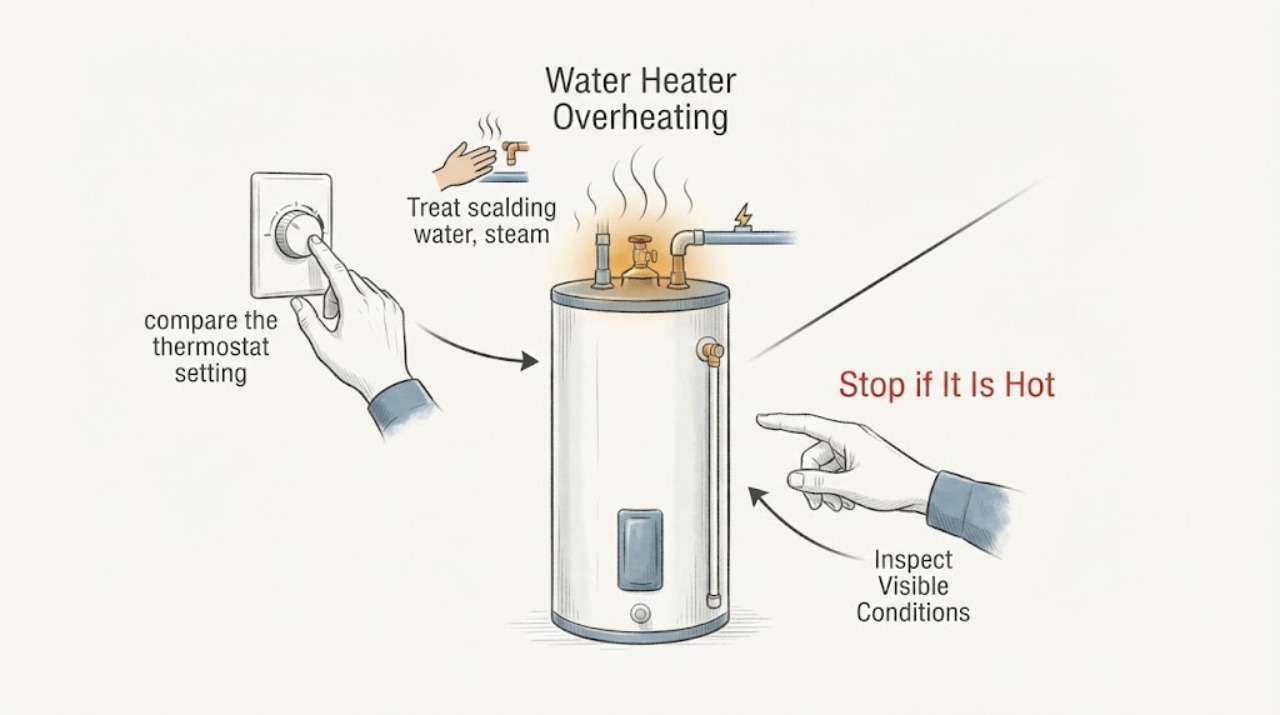
Water Heater Overheating
Treat dangerously hot water or a large temperature-and-pressure relief discharge as an emergency stop condition. Compare the thermostat with the manufacturer’s safe setting only from a safe position; normal settings with continued overheating, repeated high-limit trips, or relief discharge require qualified service.