
On this page
Start here
Quick answer
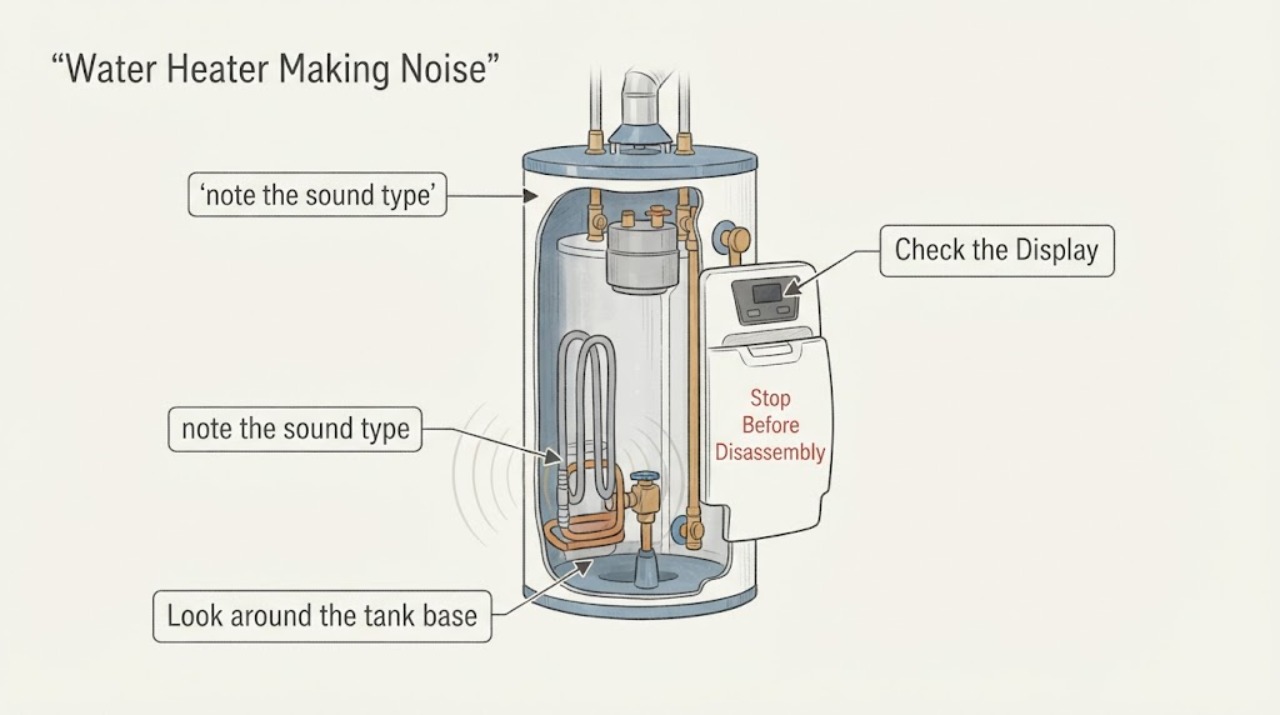
A water heater's sound helps separate normal expansion from sediment, water hammer, venting, or a component fault. Popping or rumbling during heating commonly points to sediment at the tank bottom; knocking can be water hammer; hissing or screeching can involve a vent, blower, or heating element. Listen from outside, check for water around the base, and do not remove covers or work on gas, electrical, or pressure components. Shut the heater down safely and call a qualified technician for gas odor, a leak, relief-valve discharge, scorching, or persistent loud noise.
Work through in order
Diagnostic checks
Use only checks that match the exact appliance or system and its official guide.
-
Check 1
From a safe distance, note the sound type and whether it occurs during a heating cycle, after a hot-water draw, or when a valve closes. Do not touch hot panels or piping to locate it.
Expected result: The sound is popping or rumbling during heating, a bang when flow stops, or hissing or screeching near the top or vent.
Next step: Use the sound pattern to choose the next external check and avoid opening the cabinet.
Why this matters
Why: Heating-cycle popping or rumbling supports sediment; a bang at flow change supports water hammer; high-pitched or vent-area noise needs a vent, blower, or element assessment.
-
Check 2
Look around the tank base, drain valve, temperature and pressure relief discharge path, and connecting pipes for pooling, dripping, rust, or mineral trails without operating a valve.
Expected result: The area is dry, or water is present at the tank, valve, or connection.
Next step: If water is escaping, isolate fuel or power and water only according to the model's safe procedure, then call a qualified technician.
Why this matters
Why: A leak changes the priority from noise diagnosis to water and pressure safety; a dry base does not rule out internal sediment.
-
Check 3
For an accessible gas or power control, confirm only that the normal status indicator is present and that no vent opening is visibly blocked. Do not remove covers, relight a pilot outside the printed instructions, or perform electrical measurements.
Expected result: A gas odor, soot, blocked vent, missing status light, or unusual heat is present, or none is observed.
Next step: Leave the area and contact qualified service or emergency utility help for gas odor; otherwise arrange a technician for abnormal vent or power symptoms.
Why this matters
Why: Gas odor, vent restriction, or electrical abnormality can create immediate danger and is not a DIY noise adjustment.
-
Check 4
If the model owner manual explicitly permits tank flushing and you are trained to do it safely, schedule that maintenance only after the heater is shut down and the water has cooled. Otherwise do not open the drain valve.
Expected result: Sediment is seen during an authorized flush, or the noise remains without an owner-safe maintenance procedure.
Next step: Restore the unit only according to the model instructions and call a qualified technician for persistent noise or any uncertain step.
Why this matters
Why: Visible sediment supports the sediment explanation, but failure to improve or inability to perform the procedure safely needs professional service.
Use your observations
Decision map
Find the observation that best matches what you see, then follow the next safe action.
-
PATH 01Next step
What you see
Popping or rumbling occurs during heating and no leak is visible
Do this next
Use the model's safe maintenance instructions or arrange a professional flush
Why this path and its safety boundary
Why it matters: Sediment at the tank bottom is a common explanation
-
PATH 02Next step
What you see
A bang occurs when water flow stops abruptly
Do this next
Have the plumbing and water-hammer protection assessed
Why this path and its safety boundary
Why it matters: Water hammer or a flow restriction is more likely than a tank heating fault
-
PATH 03Next step
What you see
Hissing, screeching, soot, or vent restriction is present
Do this next
Stop adjusting the heater and call a qualified technician
Why this path and its safety boundary
Why it matters: Blower, venting, combustion, or heating-element diagnosis is needed
-
PATH 04Next step
What you see
Water is pooling or the relief path is discharging
Do this next
Shut down safely according to the model and obtain urgent professional service
Why this path and its safety boundary
Why it matters: A leak or pressure condition takes priority over the noise
Helpful context
Understand the symptom
Record when the sound occurs: only while heating, when a faucet closes, during ignition, or continuously. That timing is more useful than calling every sound a rumble, and it helps a technician distinguish tank sediment from water-flow or combustion issues.
A tank contains hot, pressurized water, and gas and electric models have different hazards. The homeowner checks below stay external and observational; flushing, vent, burner, element, and relief-valve work should follow the exact model instructions or be performed by a qualified professional.
When checks do not resolve it
Need a professional?
Call a qualified water-heater technician for persistent loud noise, leaks, relief-valve discharge, gas odor, blocked venting, soot, or any gas, electrical, burner, element, or pressure work.
Common questions
FAQ
Is every water-heater noise dangerous?
No. Some expansion and operating sounds are normal, but the sound pattern and any leak, odor, soot, or performance change determine the next step.
What commonly causes popping?
A.O. Smith identifies sediment that traps steam bubbles near the heating source as a common cause.
Can I remove the burner or element cover?
No. Gas, electrical, hot-water, and pressure components require the model procedure and qualified service.
When is a noise urgent?
Treat gas odor, active leakage, relief-valve discharge, scorching, blocked venting, or rapidly worsening sound as urgent stop-use conditions.
Read the exact guide
Official sources
- Hot Water Heating Making NoisesA. O. Smith · A. O. Smith water-heater noise causes and safe troubleshooting
Community feedback
Share a repair observation
Share a plain-text repair observation. Accepted observations are published automatically; this page may take a moment to update.