
Repair problem
Making Noise Troubleshooting Guides
Published FixGraph guidance for diagnosing and responding to making noise.
Matching published guides
Choose a guide that matches the service, equipment, and conditions you are seeing.
-
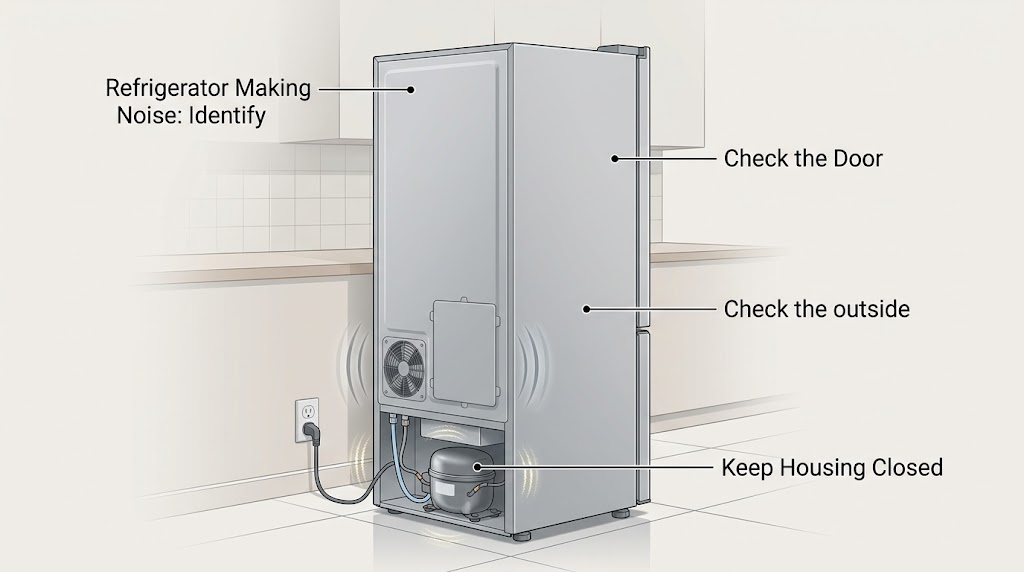
Admiral Refrigerator Making Noise: Identify the Sound Before Calling for Service
First identify the sound and when it occurs rather than assuming an Admiral part has failed. A brief hum, soft airflow, gentle gurgle, occasional click, or pop during cooling, defrost, or ice making can be normal on many refrigerator designs.
-
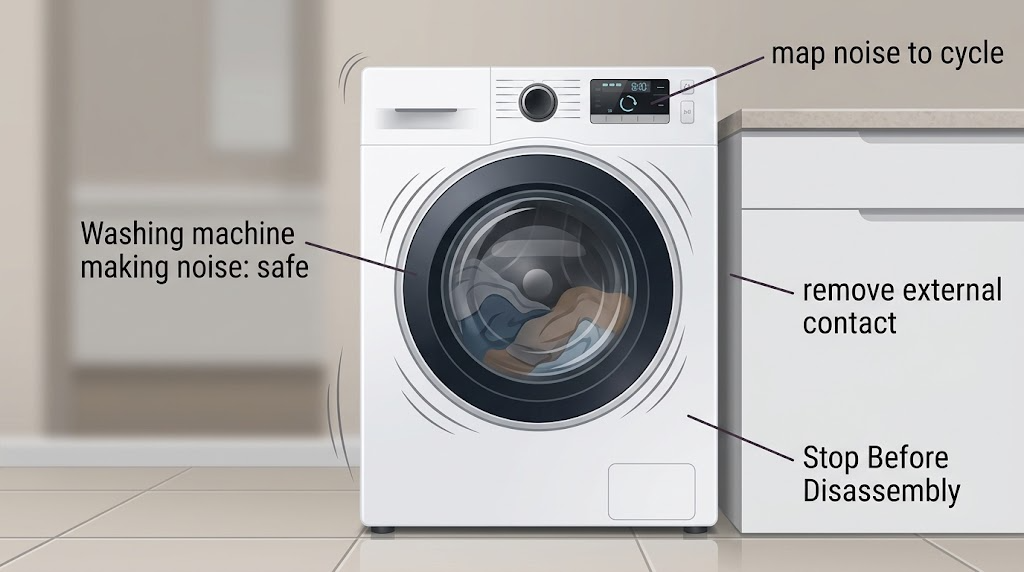
Admiral washing machine making noise: safe checks
First note whether the noise occurs during filling, agitation, draining, or spin, then stop the cycle and check the outside of the washer, hose contact, load balance, and whether the cabinet is level and firm. Redistribute an uneven load and secure a hose or object that is striking the cabinet; do not keep running the washer if it bangs violently, scrapes, grinds, smells hot, leaks, or repeatedly stops.
-
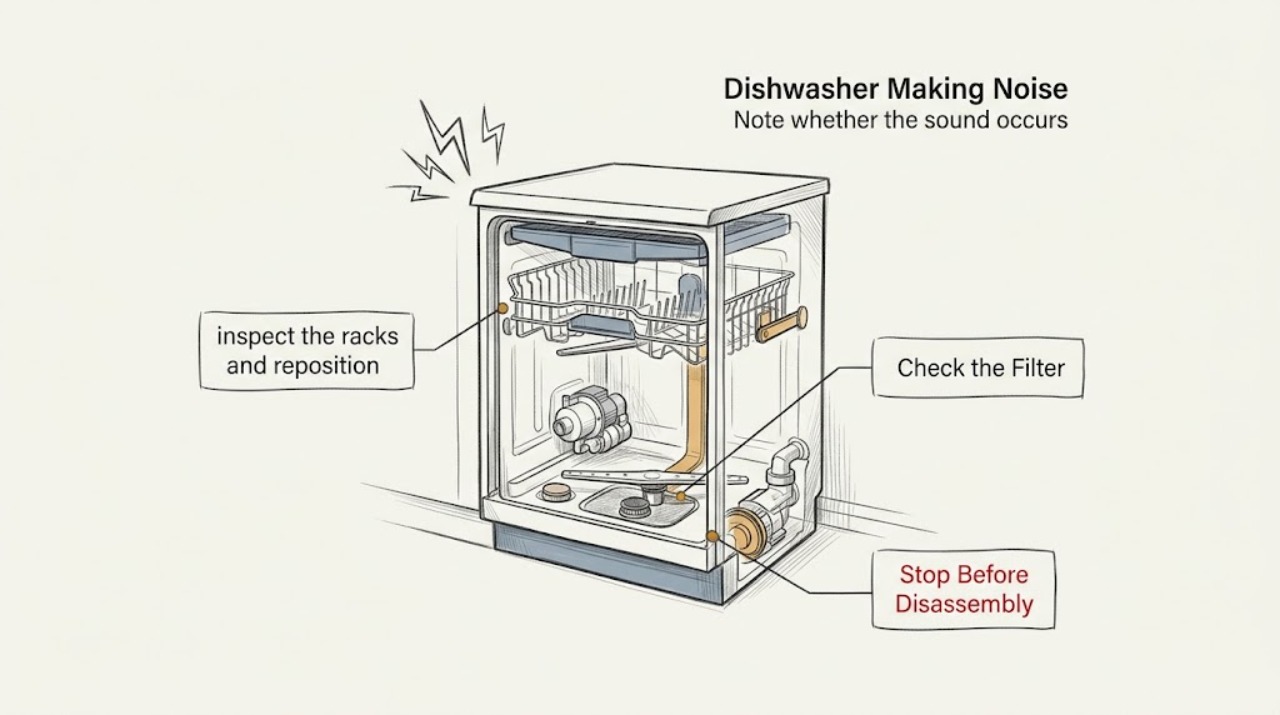
AEG Dishwasher Making Noise: Identify Normal Sounds and Safe Checks
An AEG dishwasher can make normal humming, filling, spraying, draining, or light clicking sounds, so first match the noise to the programme phase. A repeated click or knock that follows spray-arm rotation can come from a plate, tray, or utensil; rattling can come from loose dishes; and grinding, metal scraping, persistent knocking, sudden excessive vibration, or noise with poor washing or draining is abnormal.
-
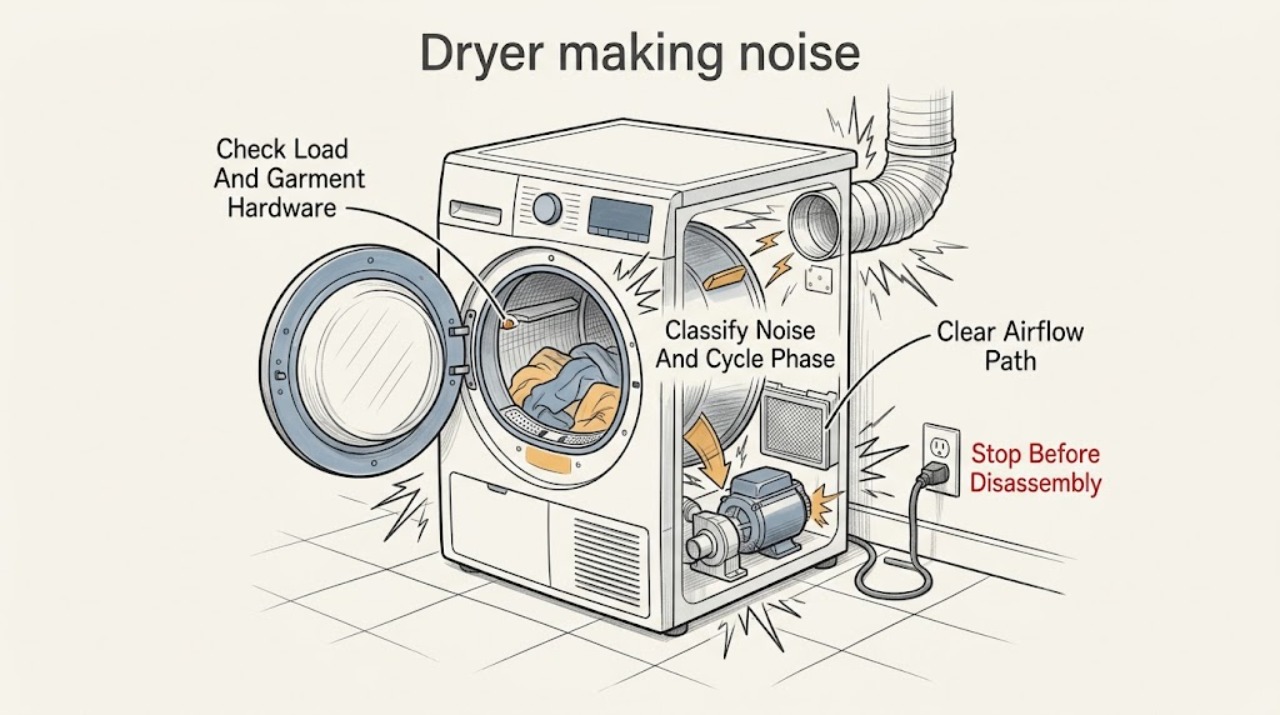
AEG dryer making noise: Safe checks and when to arrange service
Some AEG dryer noises are normal: a compressor can be louder at the beginning of a heat-pump cycle, and the drum, fans, pump, condensation transfer, and heat-pump compressor can all produce sound. A new bump may be a transit mechanism releasing, while zips and buttons can rattle.
-
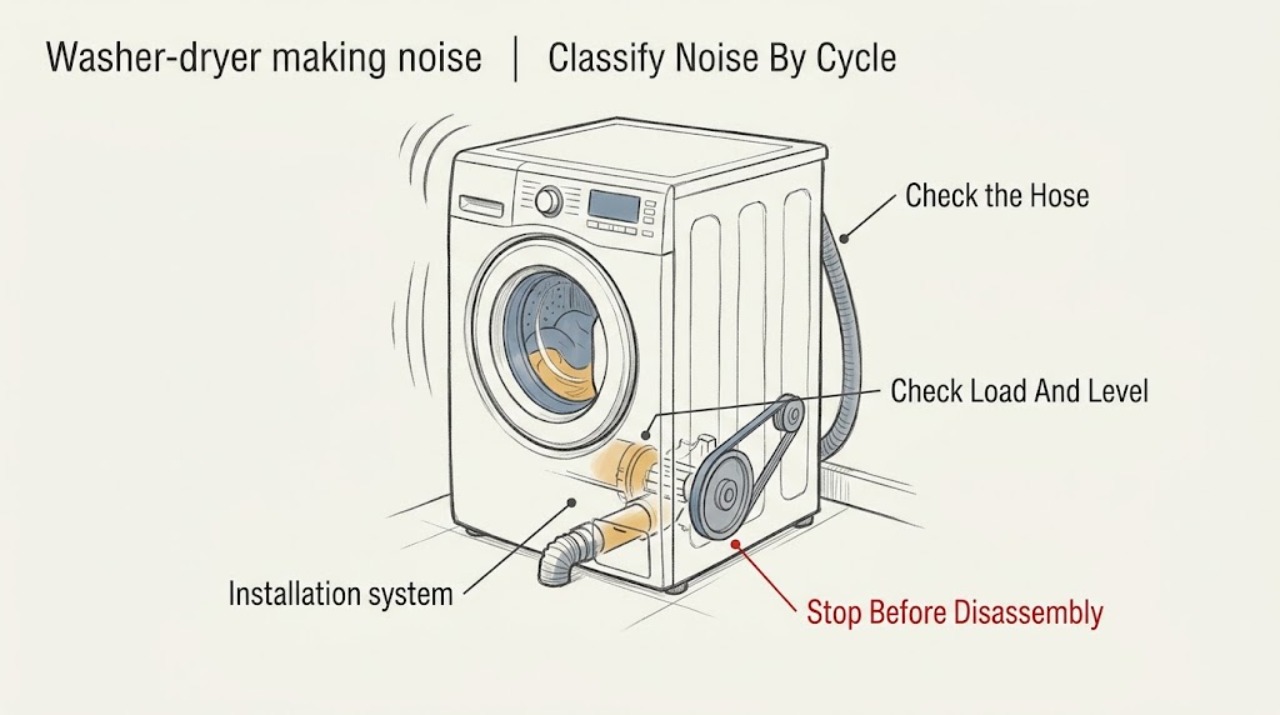
AEG washer-dryer making noise: What to check and what to do next
Some AEG washer-dryer sounds are part of normal operation: a motor or drain-pump hum, relay or door-lock clicks, water sloshing, load-balancing movement, and a higher-pitched spin sound can all occur. A new, unusually loud, worsening, or persistent noise should be separated by cycle phase and checked for an unbalanced load, a trapped object, or a visibly kinked, crushed, rubbing, or poorly routed hose.
-
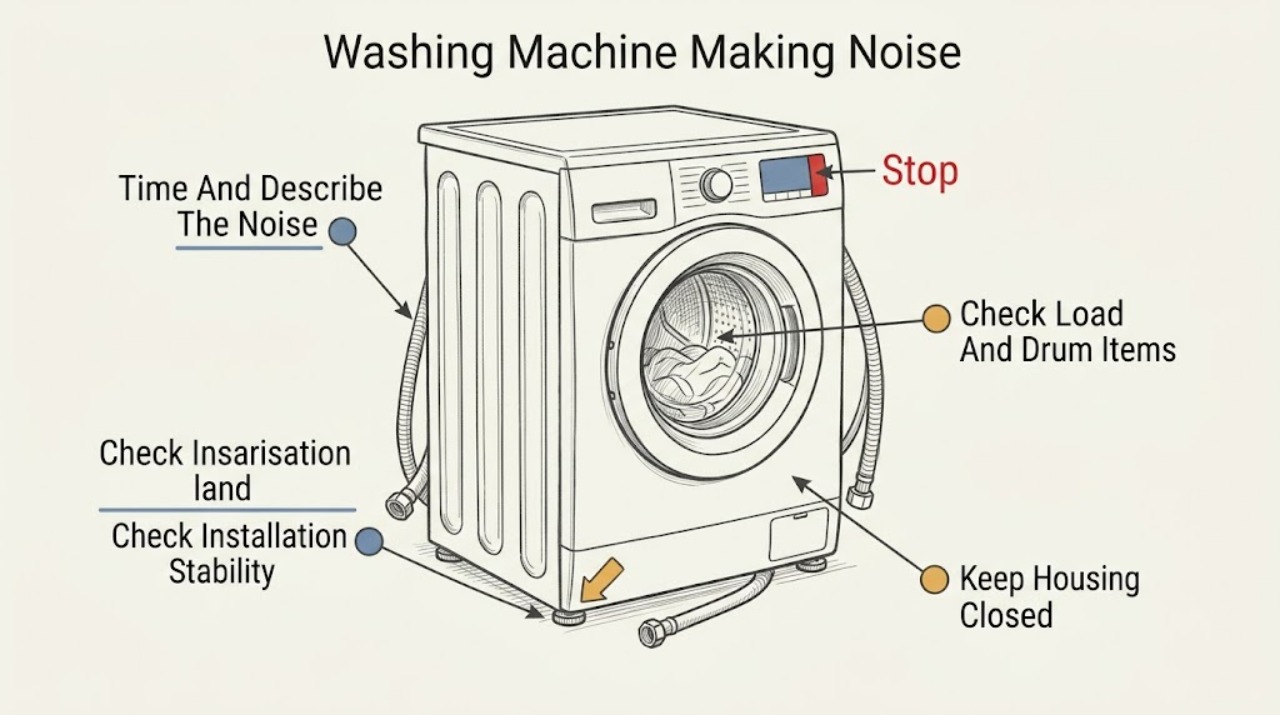
AEG Washing Machine Making Noise: Identify the Sound Safely
First record when the AEG washing machine makes the noise and whether it is a normal hum, a rattle from laundry, or a new knock, scrape, or grinding sound. AEG says humming or pumping during a cycle can be normal, while excessive spin noise or movement can come from transit bolts, an unlevel machine, an unbalanced load, loose hoses, or objects in the drum or drain filter.
-
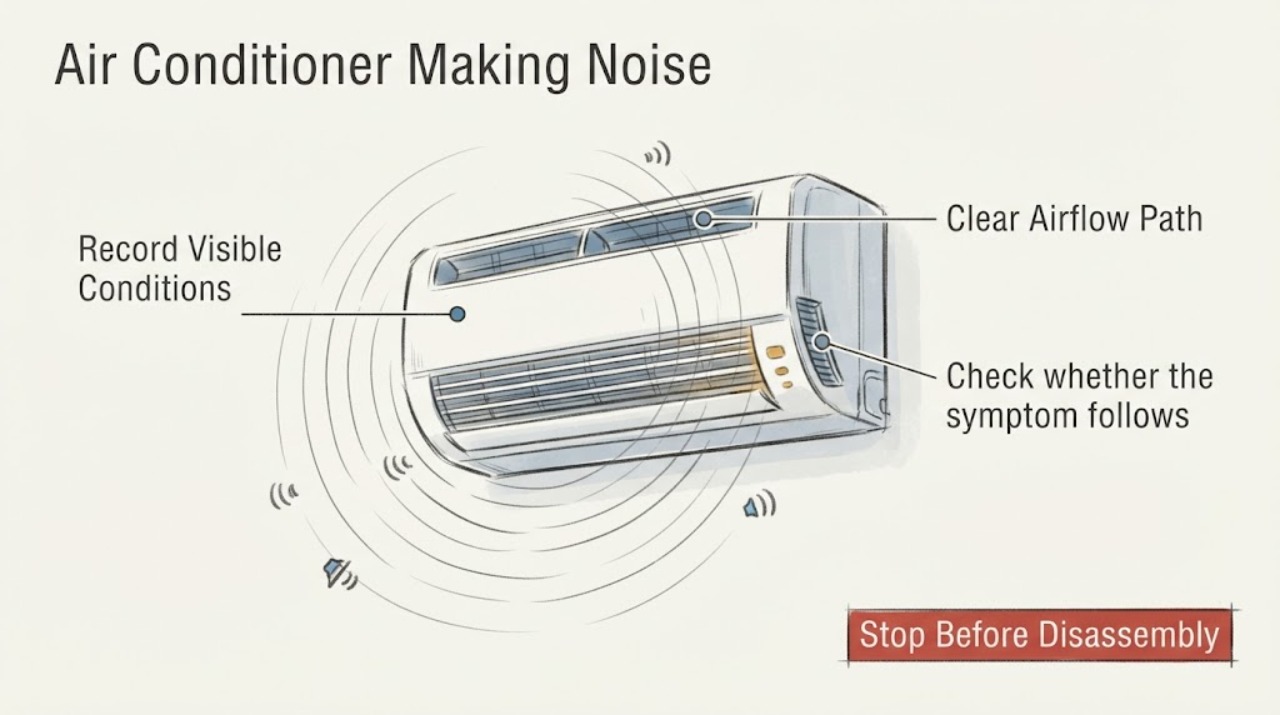
Air Conditioner Making Noise: Safe Checks and Service Boundaries
For an air conditioner that is making noise, record the unit type, model, room conditions, controls, airflow and any water or ice. Check only the accessible filter, airflow, installation and control conditions documented for that unit; stop for electrical or refrigerant hazards and arrange qualified HVAC service when the symptom persists.
-
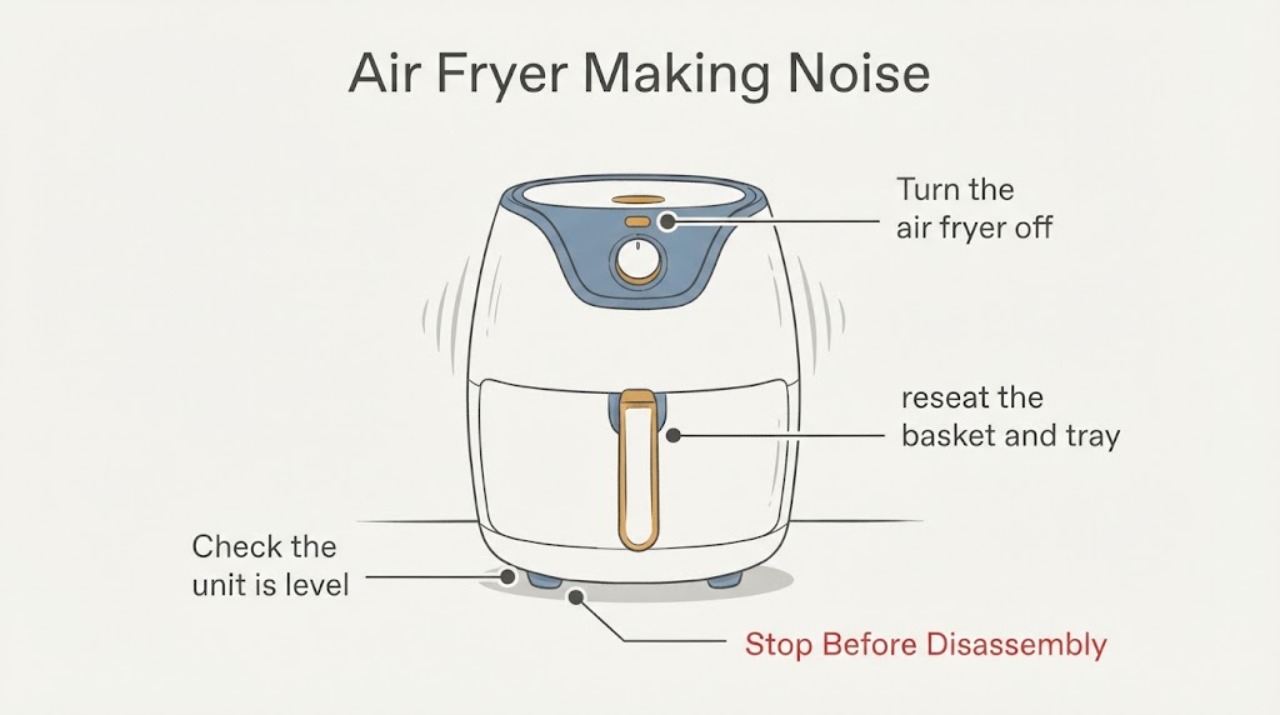
Air Fryer Making Noise
An air fryer may make a steady fan sound during normal operation, but a new fluttering, scraping, or rattling noise can indicate a loose part. Turn it off and unplug it, check that the basket and tray are seated, and stop using it if the abnormal noise remains. Do not open the heating body.
-
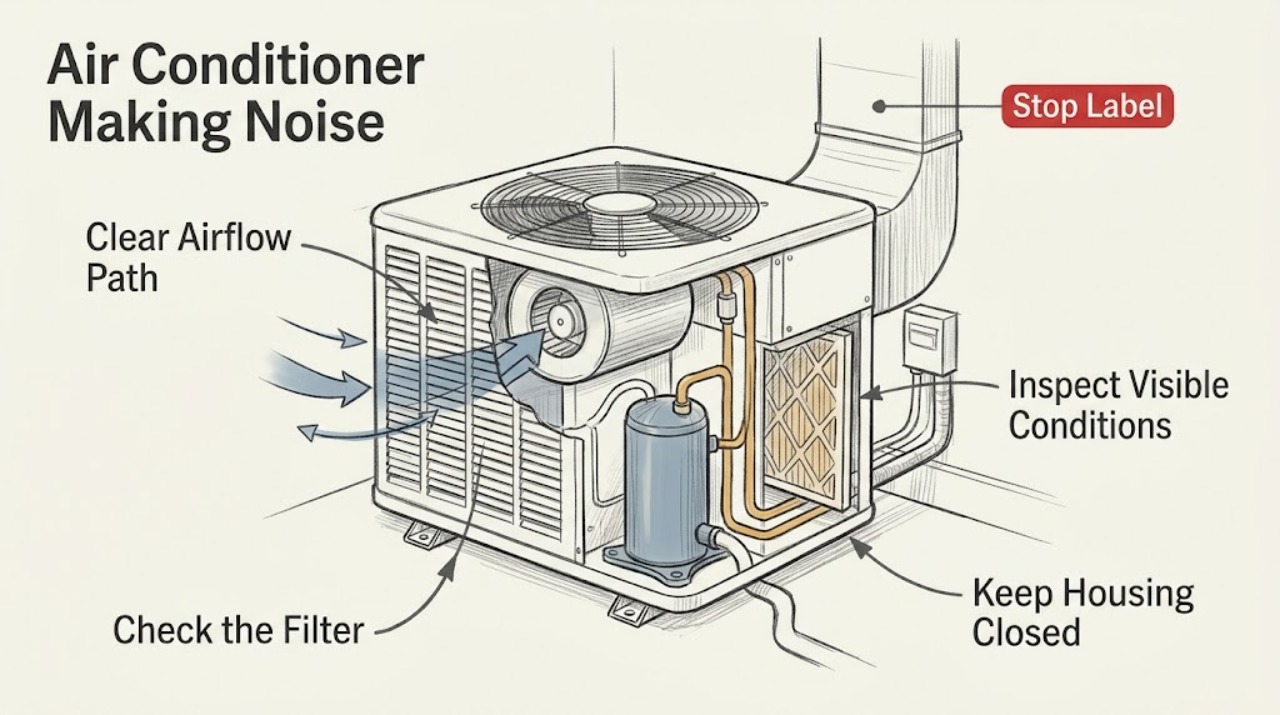
Amana Air Conditioner Making Noise: Identify the Sound Safely
First record where and when your Amana air-conditioner makes the noise: indoors at a vent, at the indoor unit, outdoors, or only when the compressor or fan starts and stops. A soft hum, airflow, brief click, or some cycling sound can be normal, especially when a system is starting, stopping, or changing speed.
-
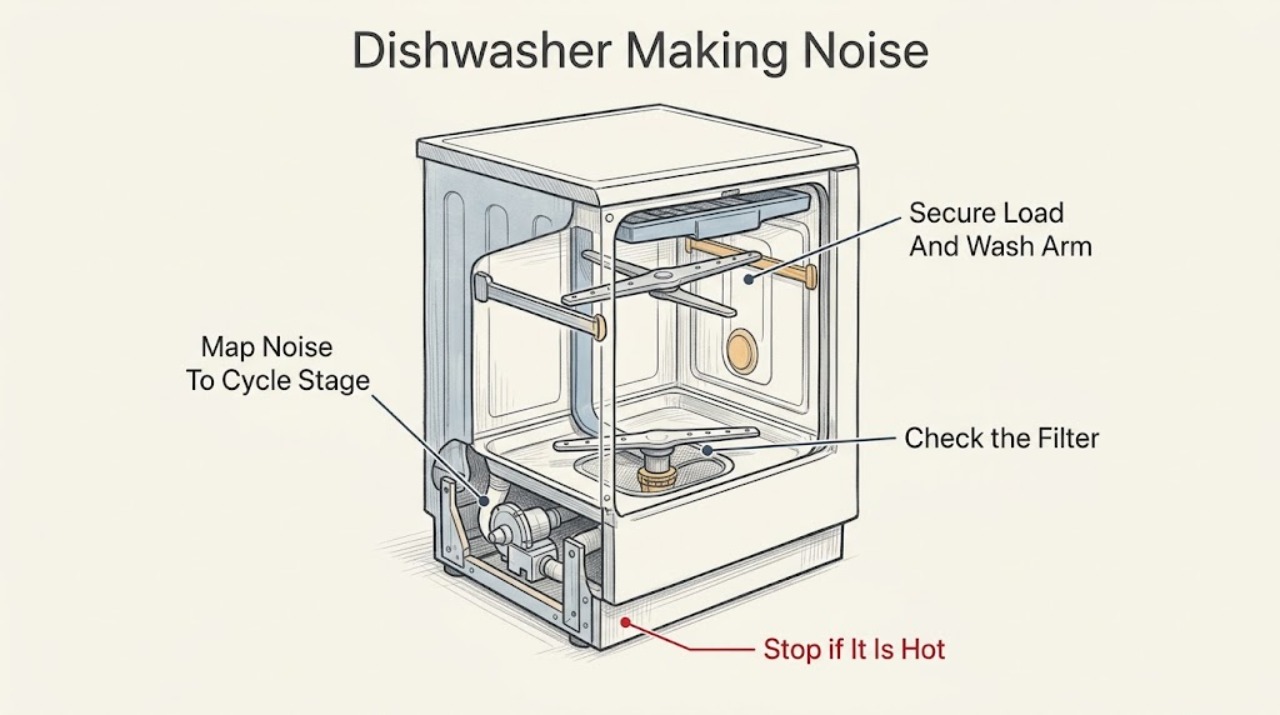
Amana Dishwasher Making Noise: Identify the Sound and Check Safely
An Amana dishwasher can normally make a soft hum, rushing or swishing water sound, a periodic hiss, a detergent-dispenser snap, or a brief drain gurgle, depending on the cycle stage. First note whether the noise occurs during filling, spraying, draining, drying, or door movement.
-
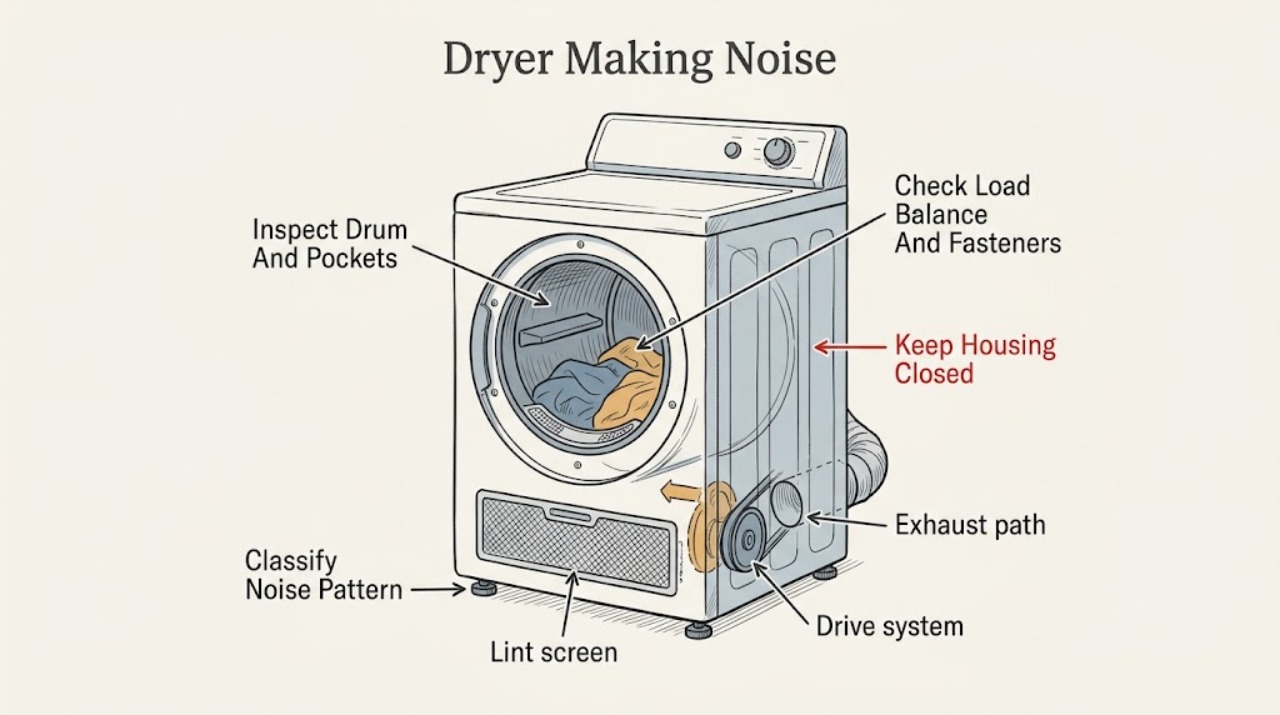
Amana Dryer Making Noise: Identify Normal Sounds and Safe Checks
An Amana dryer can make normal thumping after sitting unused, whirling as air moves, pulsating as the drum rotates, or clicking as parts operate. For a new rattling, clanking, or vibrating sound, stop the dryer, remove the load, and check pockets, the drum edges, load balance, and whether all feet sit firmly on the floor.
-
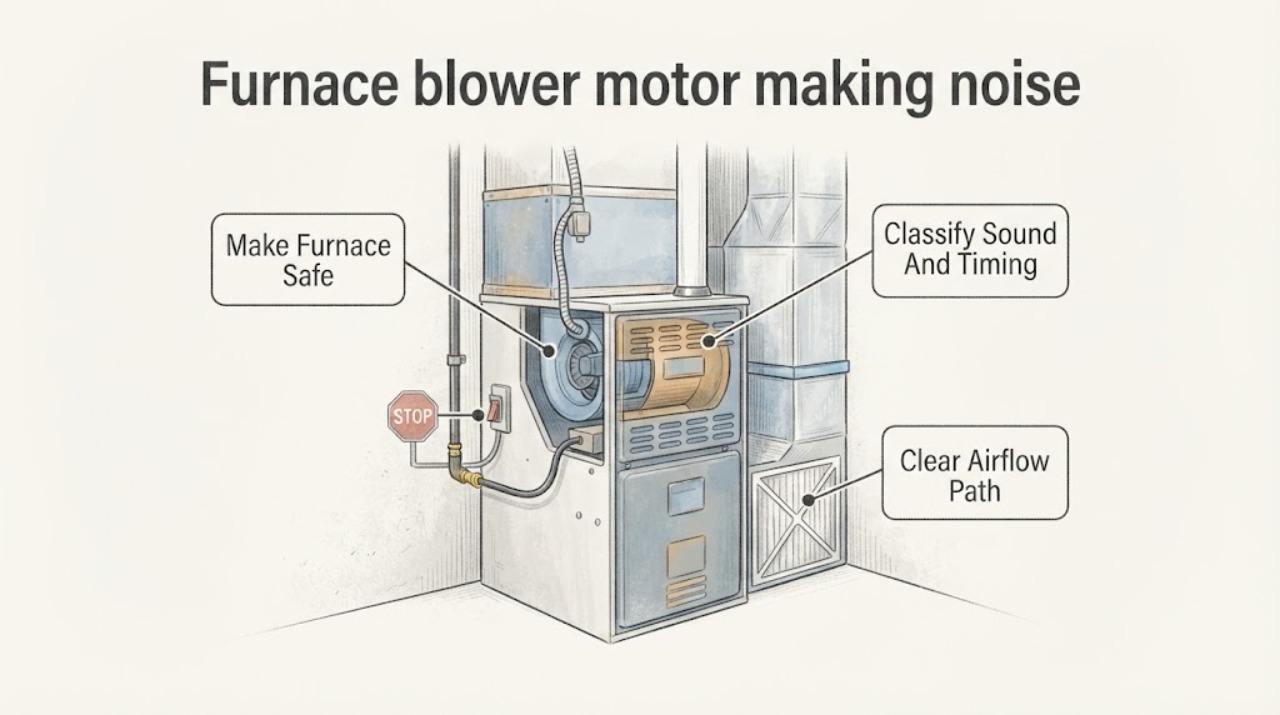
Amana furnace blower motor making noise: What to Check and What to Do Next
An Amana furnace blower motor that suddenly hums, rattles, scrapes, squeals, or vibrates may be reacting to restricted airflow, debris, a loose panel or duct, an unbalanced blower wheel, worn bearings, an electrical/control fault, or a motor that is overheating. First make a safe note of when the sound starts and whether it changes with the heating call, then check only the accessible filter, return and supply airflow, and exterior panels or ducts.
-
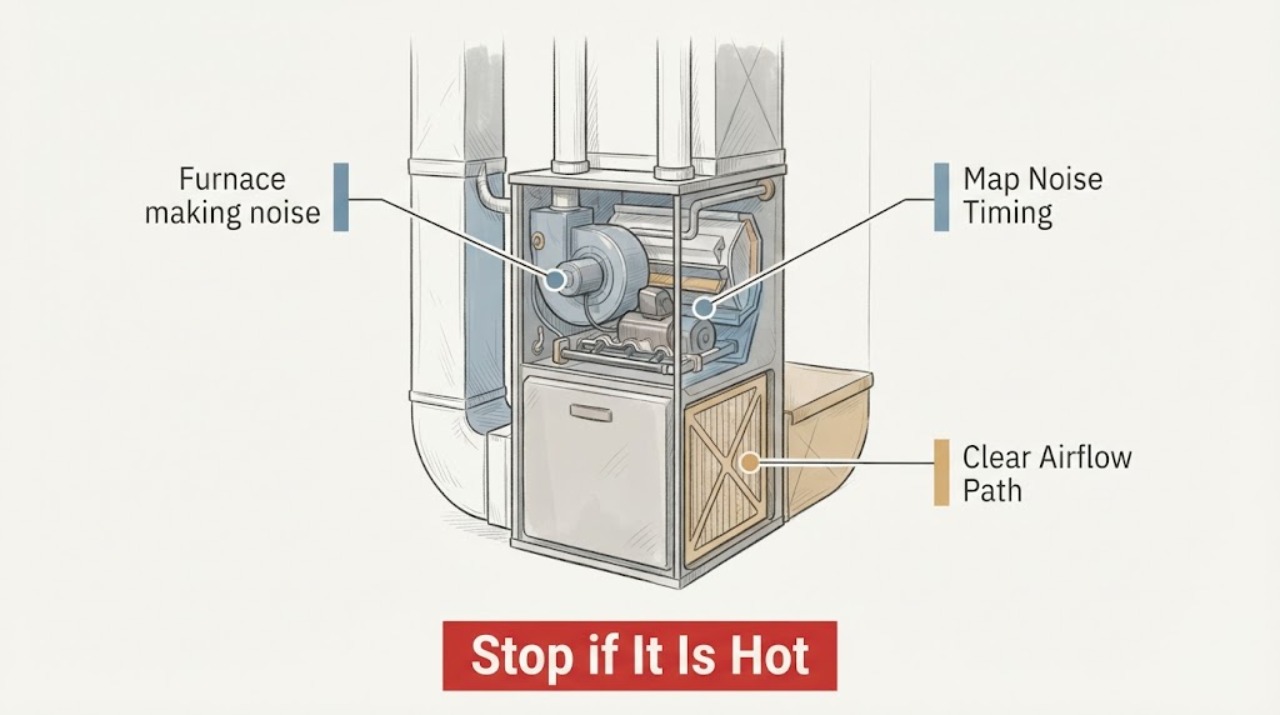
Amana furnace making noise: What to Check and What to Do Next
Treat a new or sharply louder Amana furnace noise as a symptom, not as a part diagnosis. From a safe position, note when the sound starts—at ignition, while the blower runs, at shutdown, or continuously—and whether it is a hum, rattle, scrape, squeal, bang, roar, or airflow whistle.
-
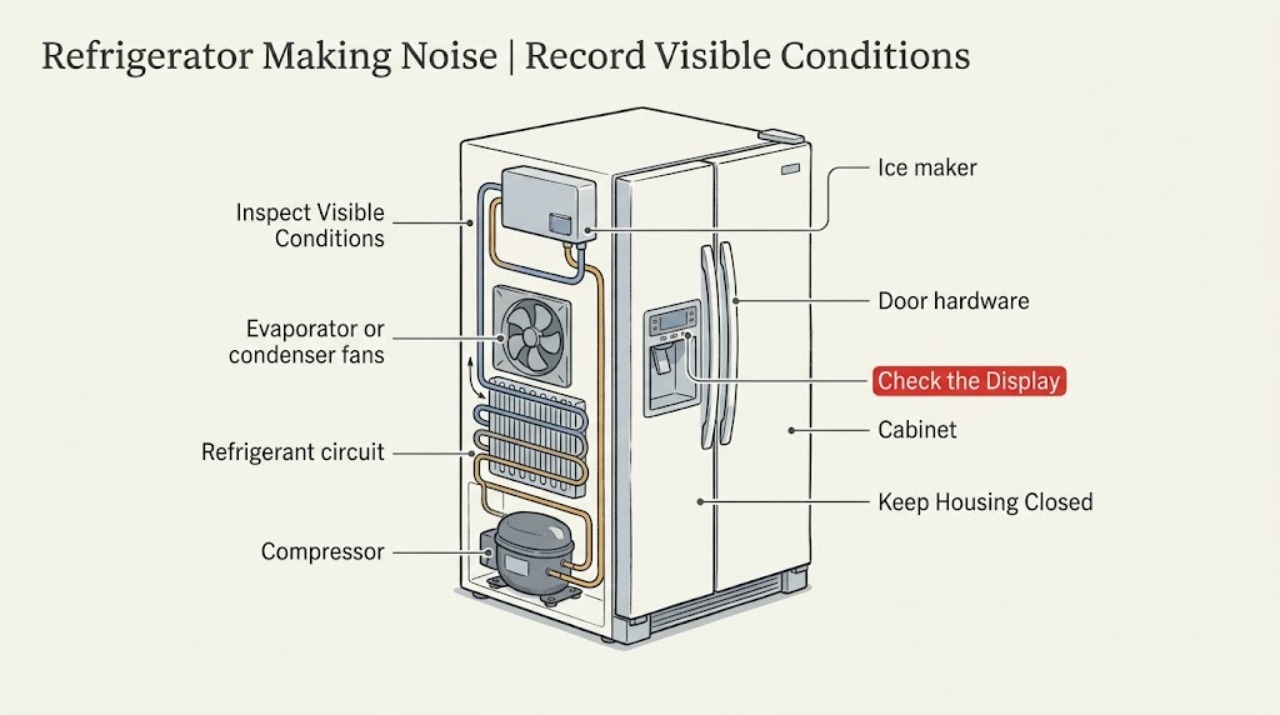
Amana Refrigerator Making Noise: Identify the Sound Before You Call
First record the sound and when it occurs: a low hum, gentle gurgle, airflow, clicking, popping, sizzling, or a brief high-pitched or pulsating sound can be normal as an Amana refrigerator cools, defrosts, circulates air, or dispenses water and ice. Rattling or vibration can also come from items on top, the water line, refrigerant flow, or an unlevel refrigerator.
-
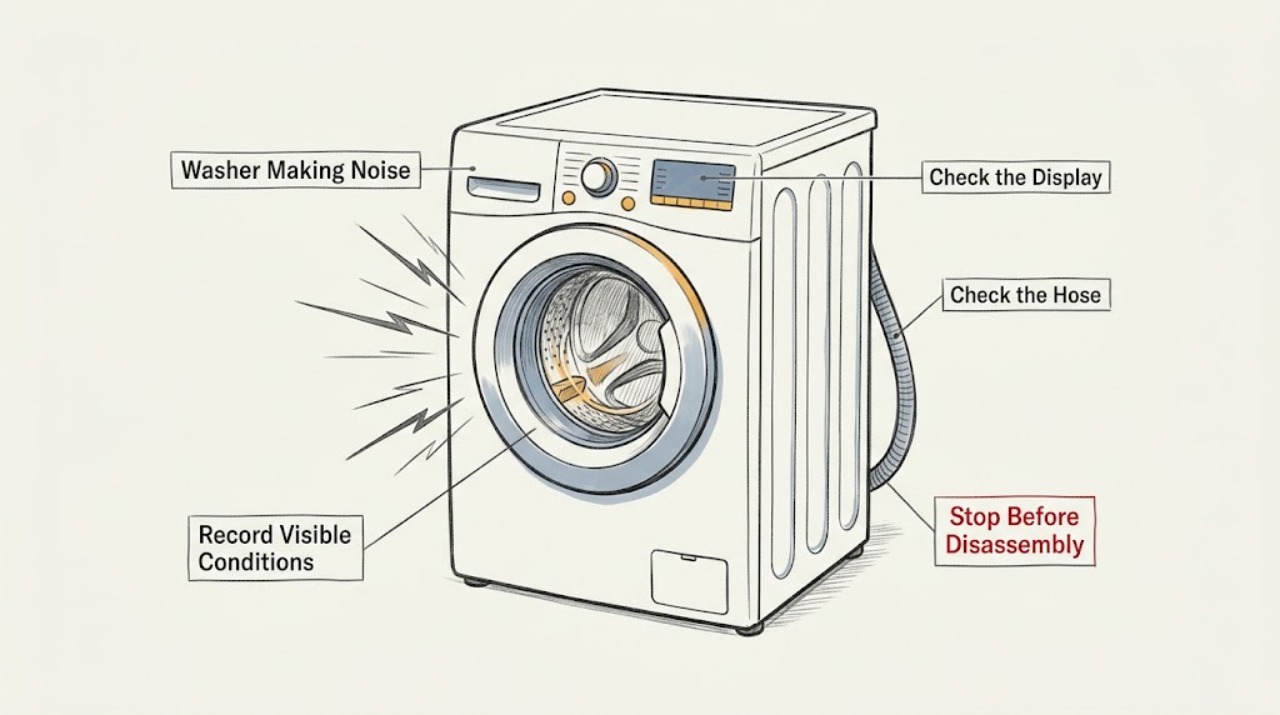
Amana Washer Making Noise: What to Check and What to Do Next
First identify the sound and when it occurs. A hum during sensing, agitation, or draining, a clunk as the drive changes direction, or water moving through the pump can be normal on an Amana washer.
-
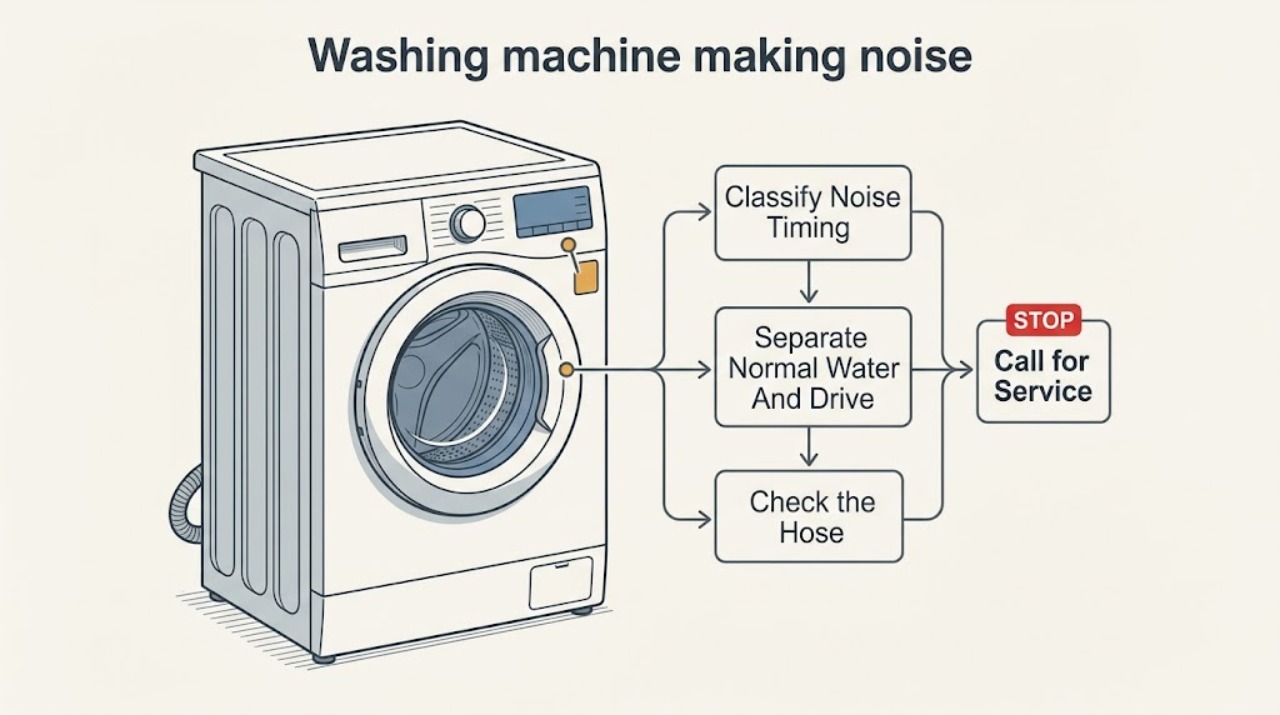
Amana washing machine making noise: identify hoses, load balance, and normal sounds
First identify when and where the noise occurs. Some Amana sounds are normal, including drive or gear sounds as the machine changes direction, spray or sloshing during filling and rinsing, and occasional locking or operating clicks.
-
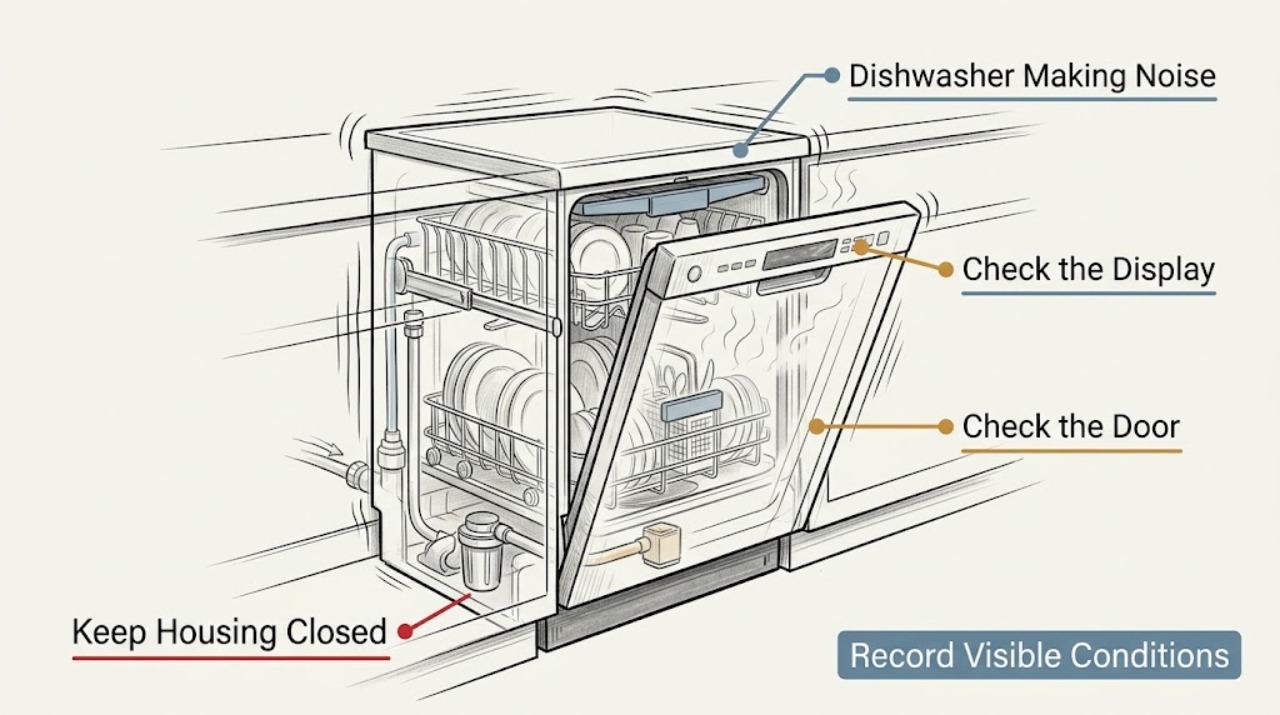
Asko Dishwasher Making Noise: Trace Load, Water, and Filter Clues
First identify when the Asko dishwasher makes the noise: only while washing, when draining, during drying, after the program, or when the load is moving. Asko describes a Night mode that lowers spray-arm water pressure to reduce noise, so a sound tied to wash pressure is different from a harsh sound that continues when the machine is idle.
-
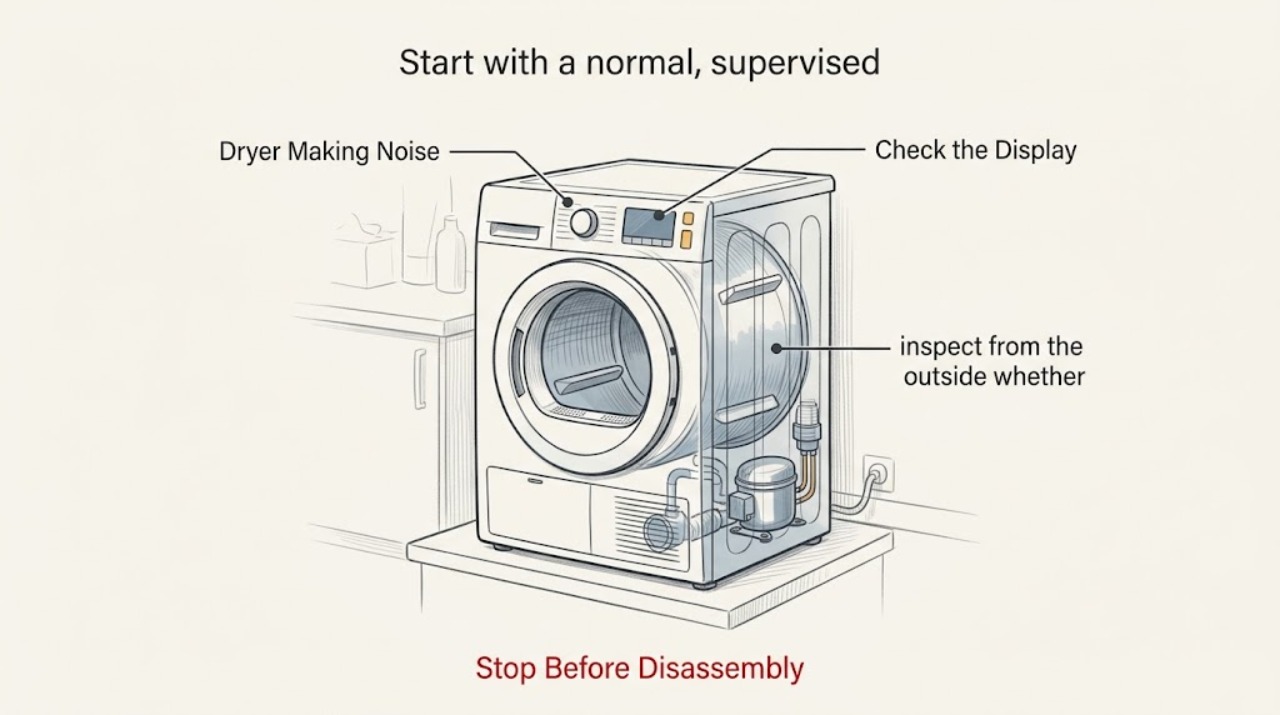
Asko Dryer Making Noise: Identify Normal Pump, Compressor, Load, and Vibration Sounds
An Asko dryer can make normal operating sounds: its manual describes compressor humming or flowing-liquid noise, compressor ventilation buzzing, condensate-pump or liquid-flow sounds, heat-exchanger cleaning clicks, and rattling from hard items such as buttons or zippers in the laundry. First note when the sound begins and whether it follows the load, programme stage, or cooling period.
-
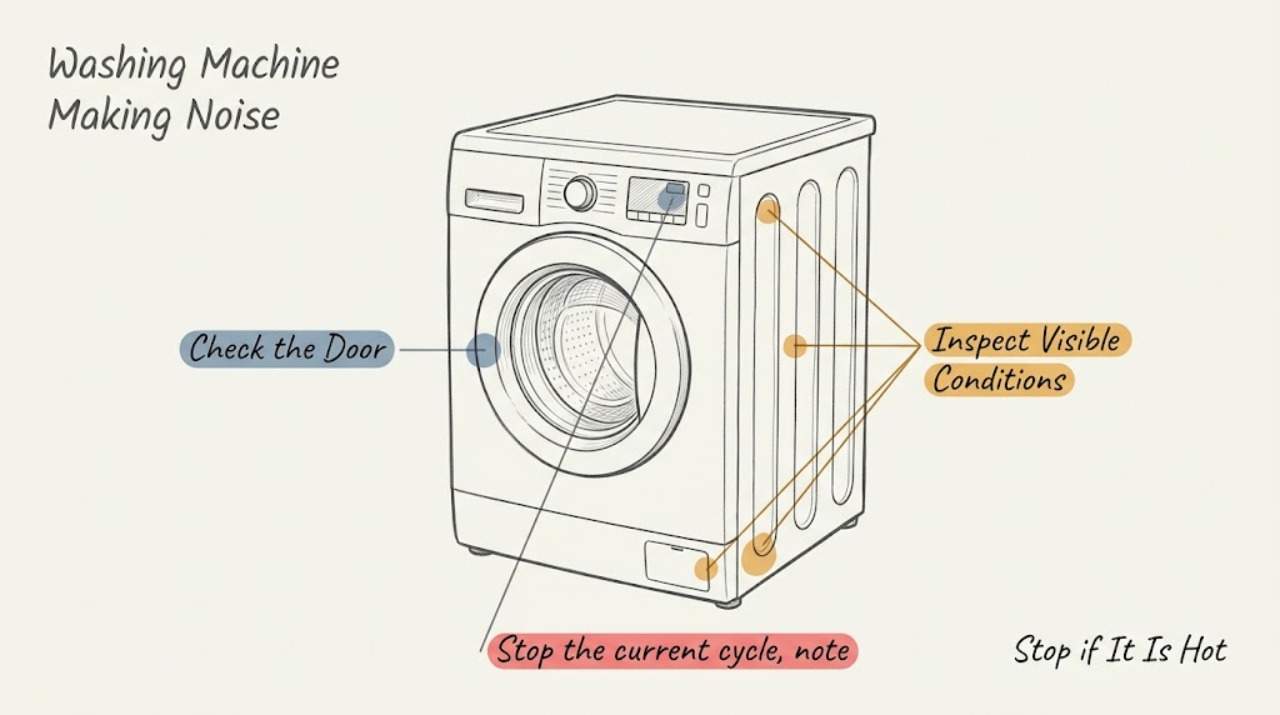
ASKO Washing Machine Making Noise: Find the Safe Next Check
An ASKO washing machine making noise should be diagnosed by when the sound occurs and whether the machine is stable. Rattling during draining can point to a foreign object in the accessible pump-filter path; knocking or walking during spin is more consistent with an uneven load or an unstable installation.
-
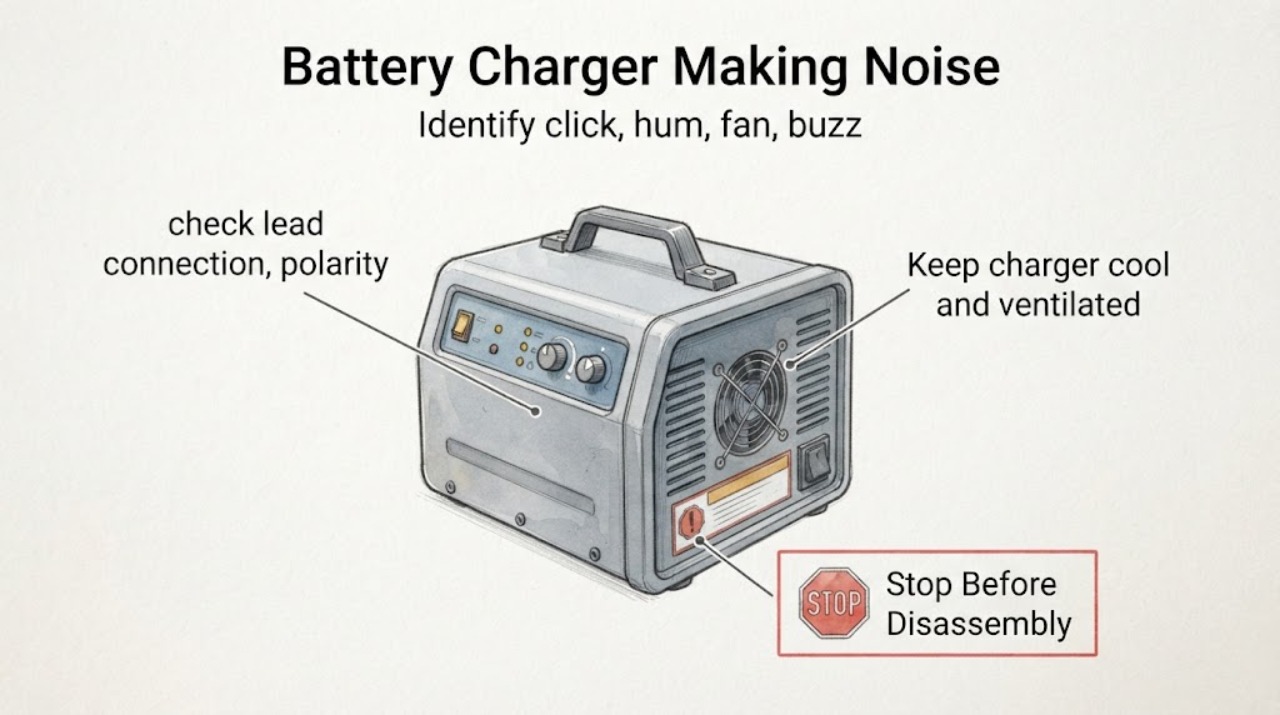
Battery Charger Making Noise
A battery charger making noise may have a normal relay or fan sound, but rapid clicking, loud buzz, heat, smell or sparks is abnormal. Identify the sound, check the battery and leads with power off, keep the unit ventilated, and stop if the cause is uncertain.
-
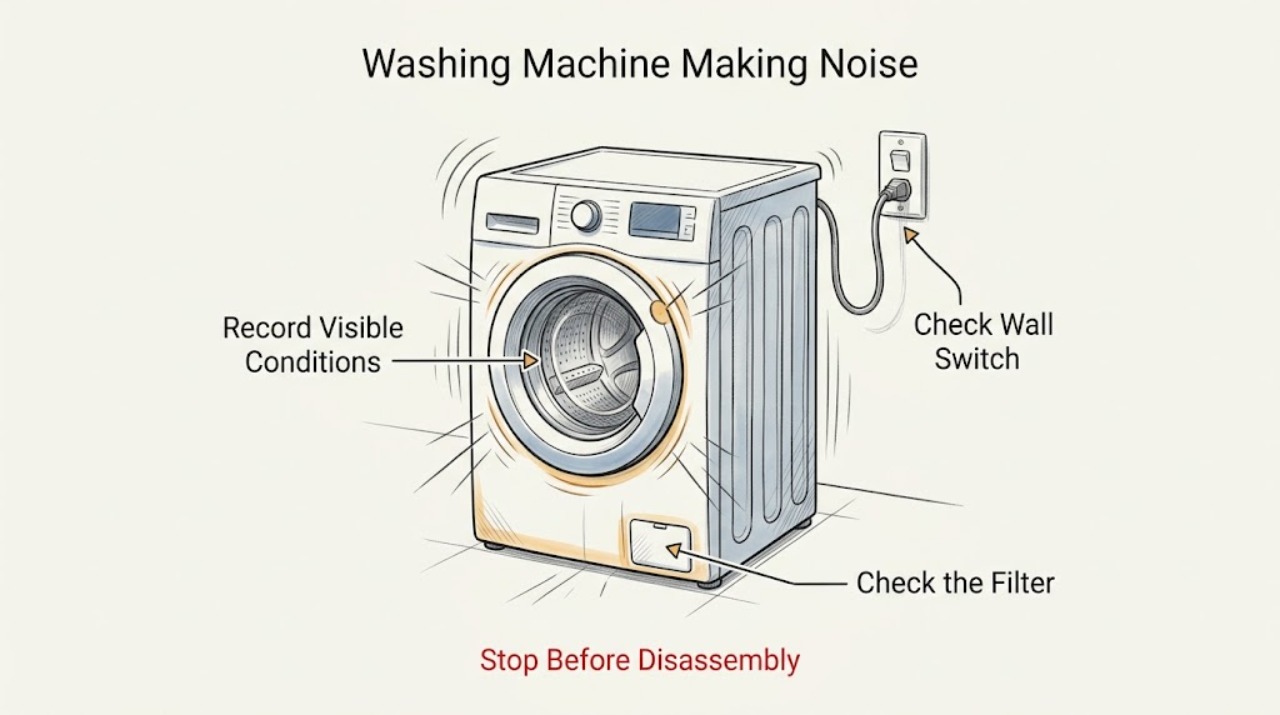
Bauknecht Washing Machine Making Noise: Match the Sound to the Check
First identify whether the noise occurs while filling, washing, draining, or spinning, then run only the safe checks that match that stage. On a Bauknecht washer, clothing hardware, a foreign object, an unbalanced or poorly leveled load, transport hardware after installation, a belt, motor sound, or a bearing can produce different clues; a loud empty-drum turn or excessive drum play needs professional diagnosis.
-
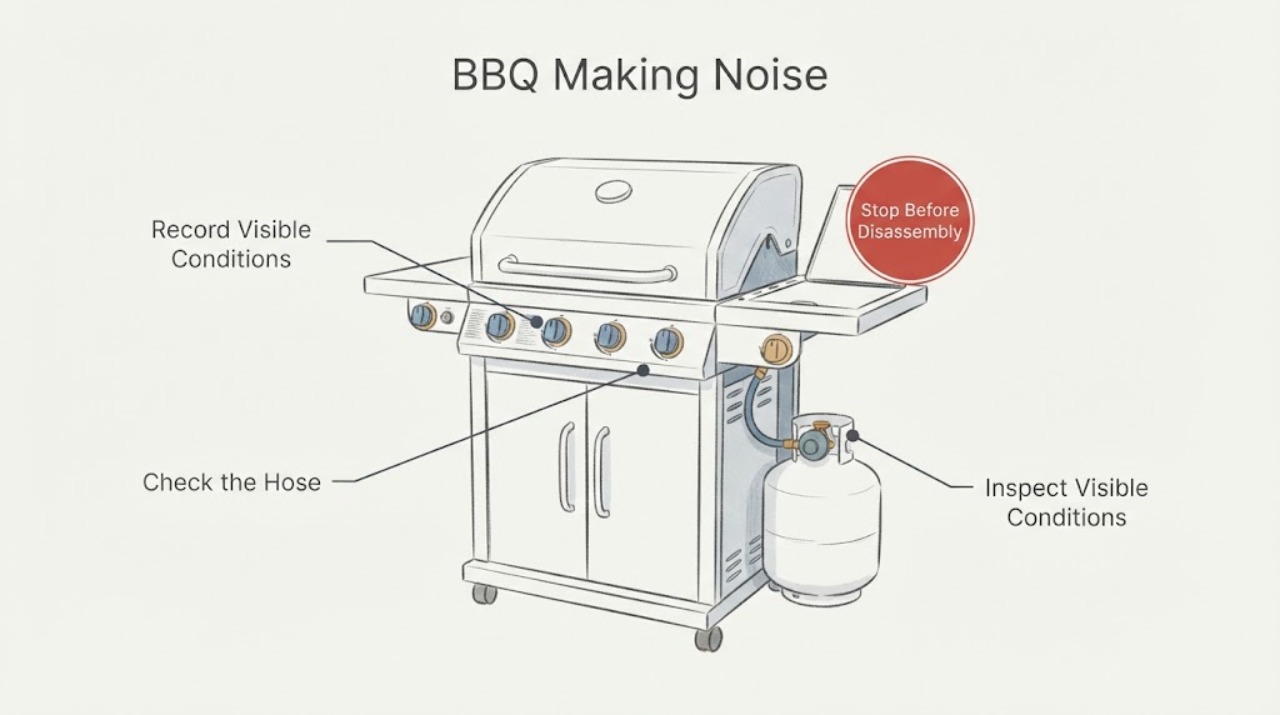
BBQ Making Noise: Separate Regulator Humming from a Gas Hazard
A BBQ noise must be classified by fuel type, sound, timing, and smell. A quiet hum or whistle from a gas regulator can be normal when there is no gas smell and the flame is stable, while a hiss with gas odor, lifting flame, popping, or a loose grate needs an immediate stop. Turn controls off, keep clear of hot parts, and use qualified gas service for leaks or persistent abnormal noise.
-
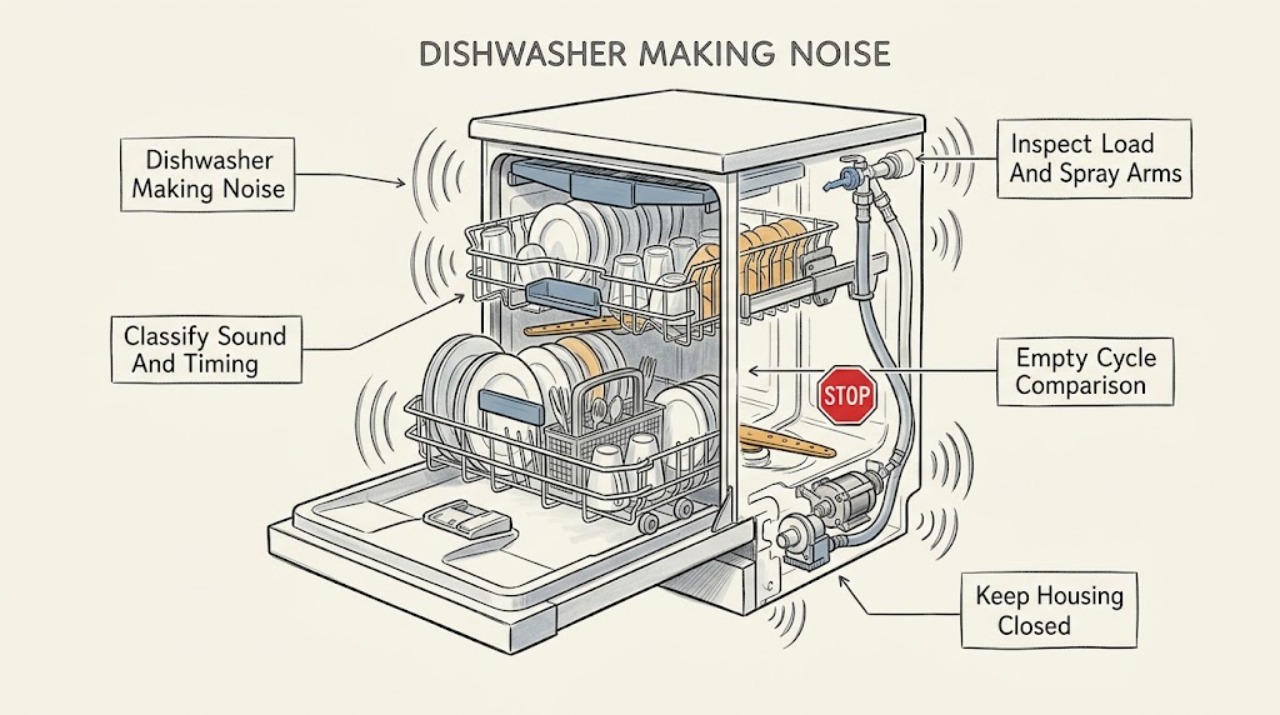
Beko Dishwasher Making Noise
A Beko dishwasher can click, clunk, hum, or snap as its controls, detergent dispenser, drain pump, or other cycle parts operate; those sounds can be normal when the dishwasher otherwise runs correctly. A continuous knock or rattle is more likely to involve dishes or a spray arm, while a bang or boom during filling can come from water hammer or a hose touching the appliance.
-
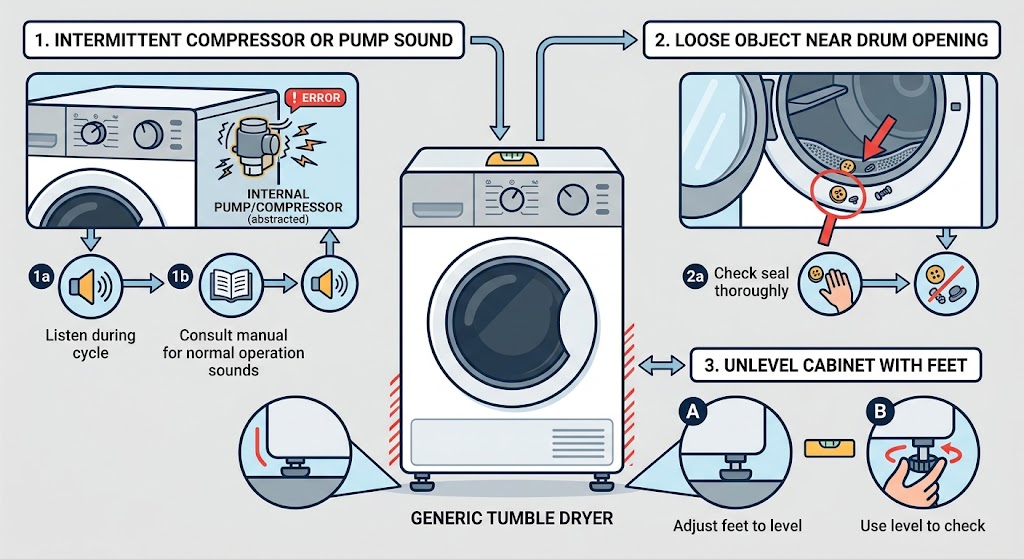
Beko Dryer Making Noise: Identify Normal Sounds and Stop Unsafe Ones
First note the sound and whether drying still works. On a Beko heat-pump dryer, occasional metallic compressor vibration and pumping sounds can be normal.
-
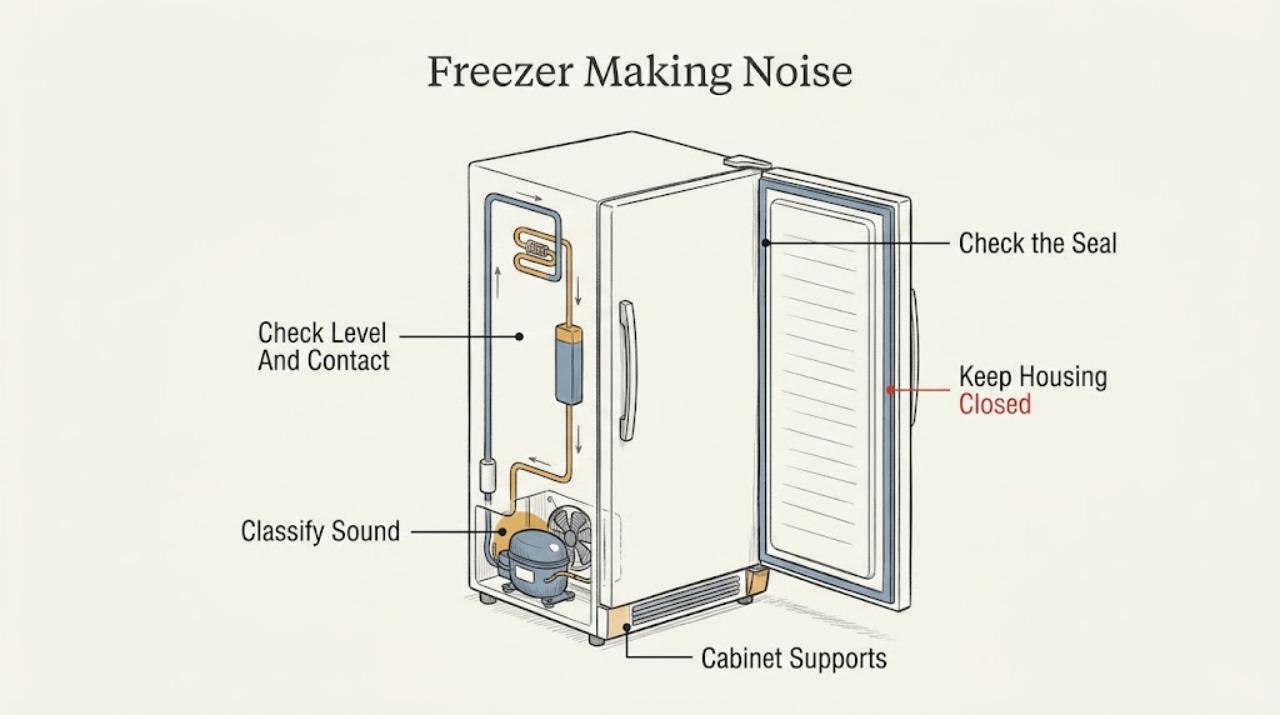
Beko Freezer Making Noise: Normal Sounds, Safe Checks, and Next Steps
A Beko freezer can make normal humming, fan, liquid-flow, clicking, or cracking sounds during cooling and defrosting. First identify the sound and where it comes from, then check whether the freezer is still holding temperature, whether it is level and touching a wall or object, whether items are vibrating, and whether the door seal, vents, or frost pattern look abnormal.
-
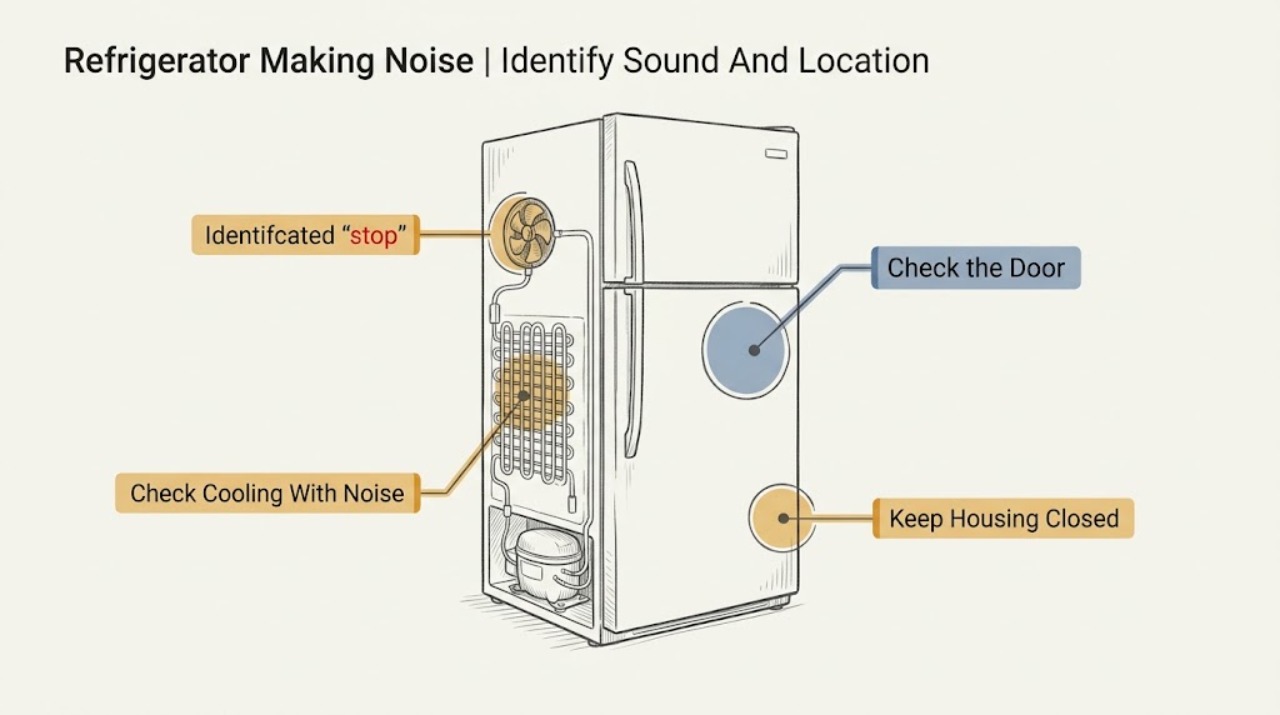
Beko Refrigerator Making Noise: What the Sound Means
Some Beko refrigerator sounds are part of normal operation: flowing or bubbling sounds can come from refrigerant movement, clicking can come from a defrost timer or ice maker, cracking can come from components expanding or contracting, and hissing can occur during No-Frost defrosting. First identify the sound and whether cooling remains normal.
-
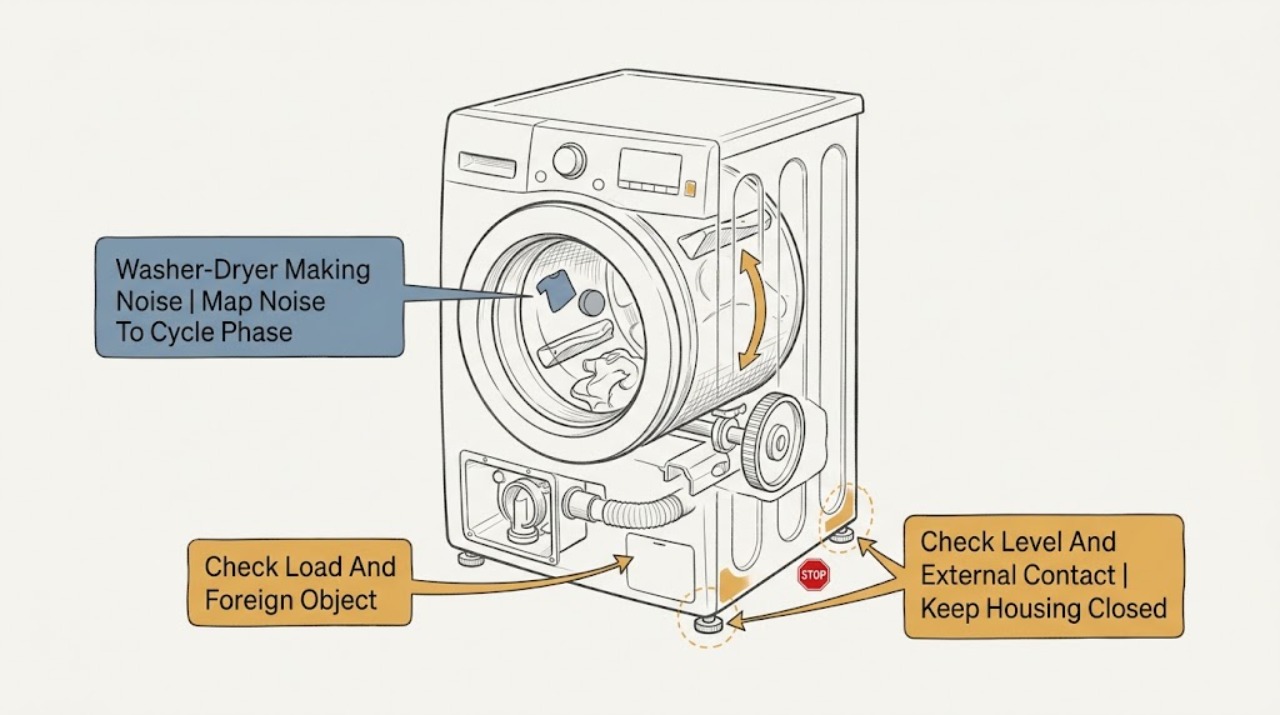
Beko Washer-Dryer Making Noise: Find the Cause Safely
A noisy Beko washer-dryer should be diagnosed by when and how the sound occurs. Rhythmic banging during spin commonly follows an unbalanced load, a foreign object or an appliance that is not level; a hose, wall or cabinet can also be struck.
-
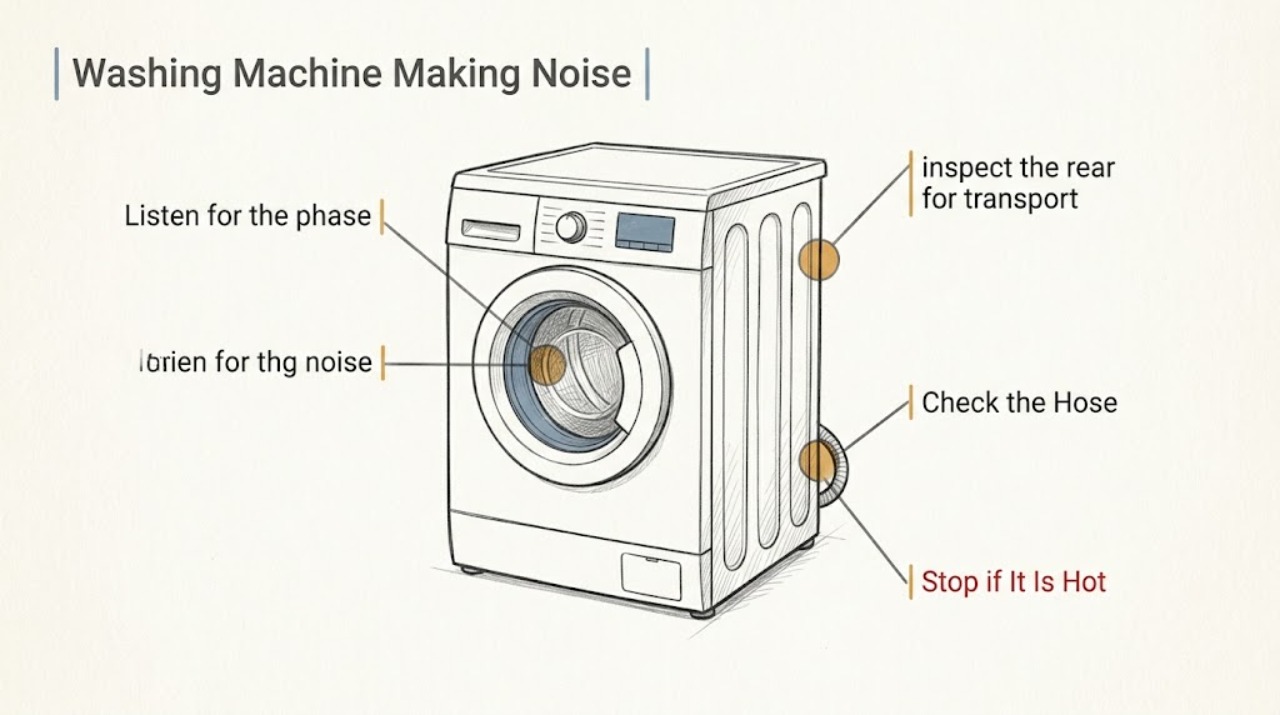
Beko Washing Machine Making Noise: Find the Source Safely
A Beko washing machine can make normal humming, whirling, sloshing, or clunking sounds during filling, draining, and changes between wash stages. Loud rhythmic banging usually points to an uneven load, an object in the drum, contact with a wall or hose, or an unlevel machine.
-
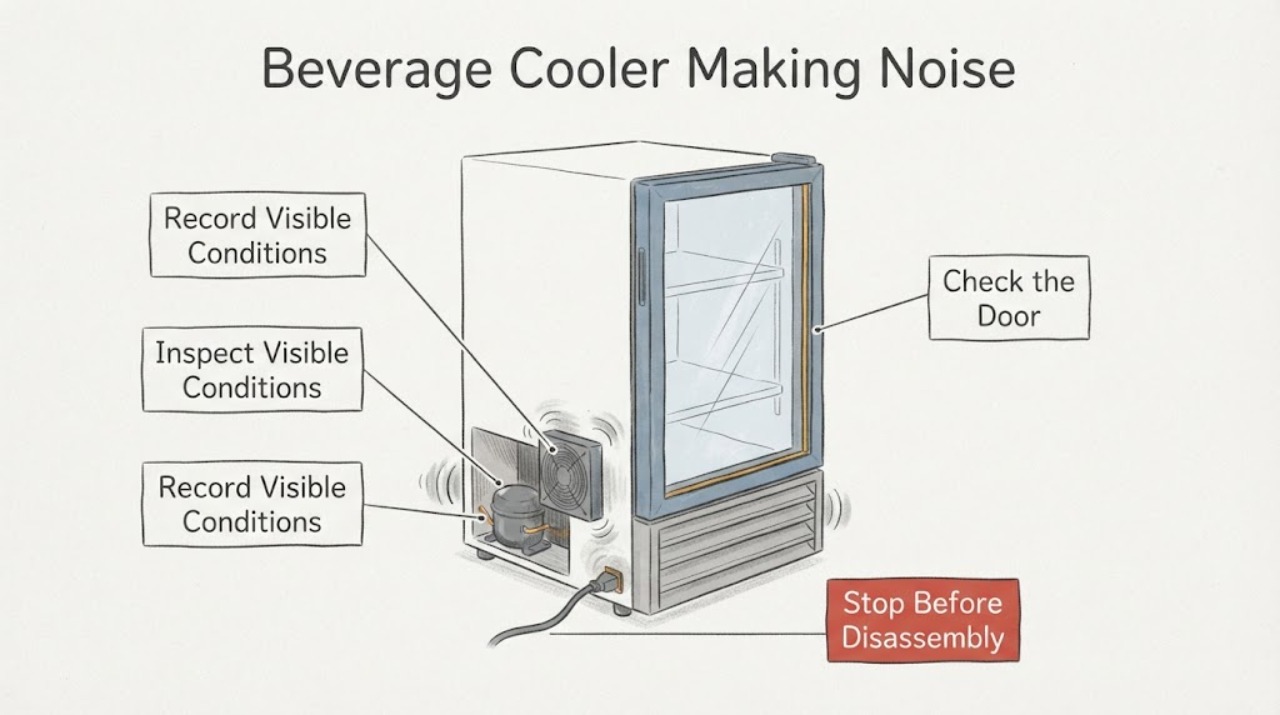
Beverage Cooler Making Noise
A beverage cooler may make normal compressor, fan, clicking, or expansion sounds, but a new loud vibration or unusual noise should first be separated by timing and location. Make sure the unit is on a stable, level surface, remove loose bottles and shelves that can rattle, and listen for whether the sound follows compressor or fan operation.
-
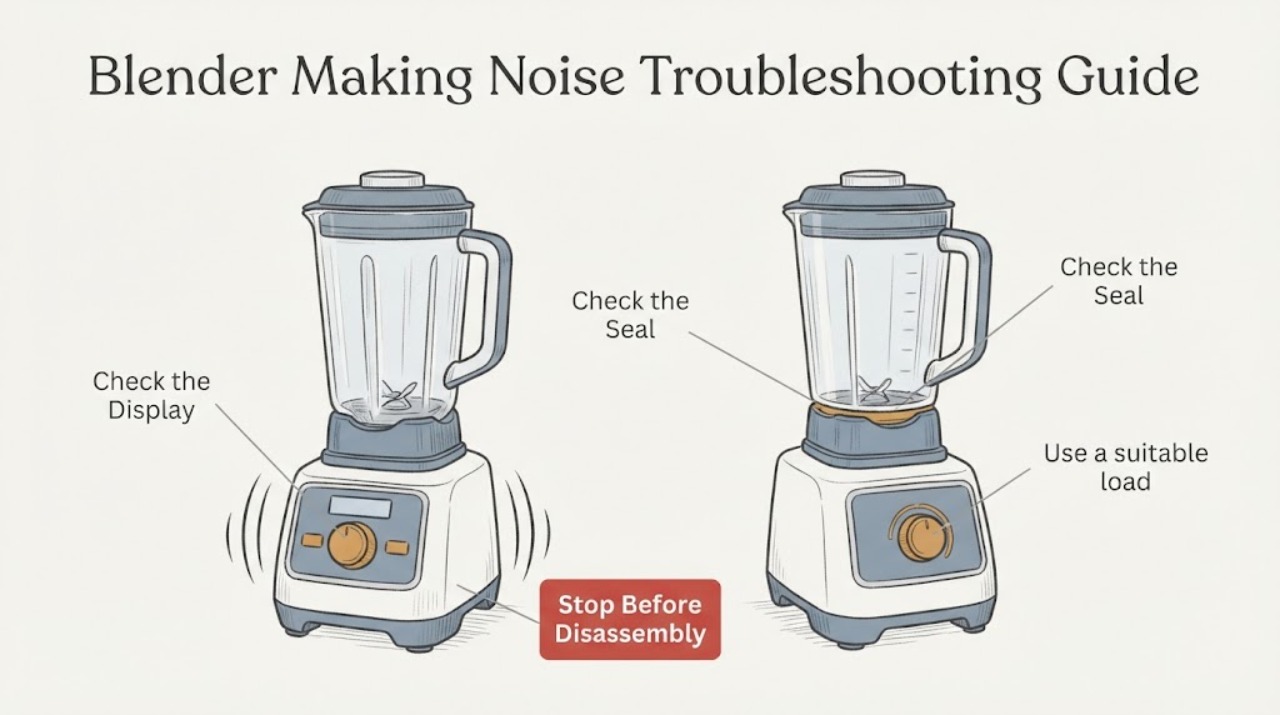
Blender Making Noise Troubleshooting Guide
A blender with making noise should be checked with power disconnected before inspecting the container, gasket, coupling, and blade area. Confirm container seating and load, allow overload protection to reset after a demanding blend, and stop for damage, smoke, sparks, or a burning smell.
-
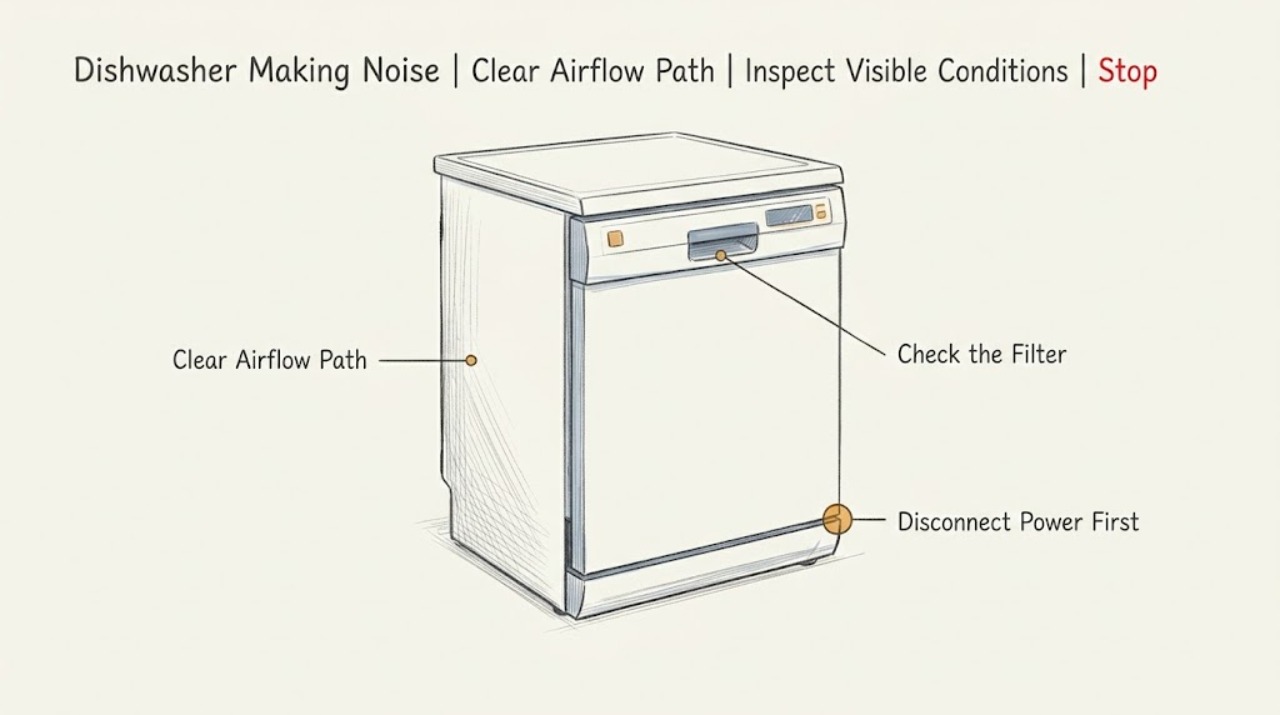
Blomberg Dishwasher Making Noise
First note whether the noise happens while filling, washing, draining, or only when a basket or door moves. Unplug the Blomberg dishwasher and check for a dish touching an impeller, blocked spray-arm holes, food in the filters, or an impeller that does not turn freely.
-
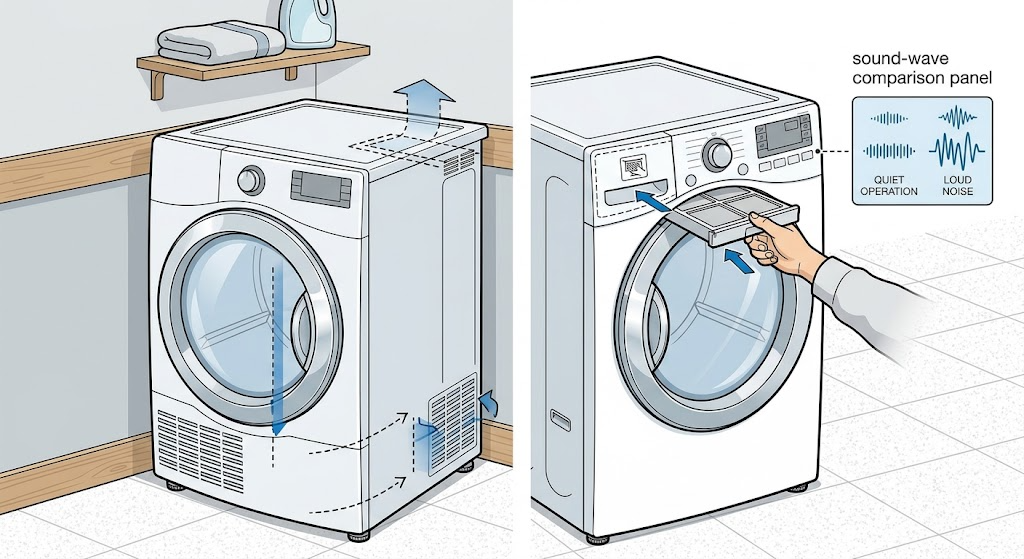
Blomberg Dryer Making Noise: Identify Normal Sounds and Stop Harmful Vibration
First identify the sound instead of treating every noise as the same fault. Blomberg’s dryer manual says an occasional metallic compressor sound and the sound of water being pumped to the tank can be normal, while a dryer that is not level can vibrate and become noisier.
-
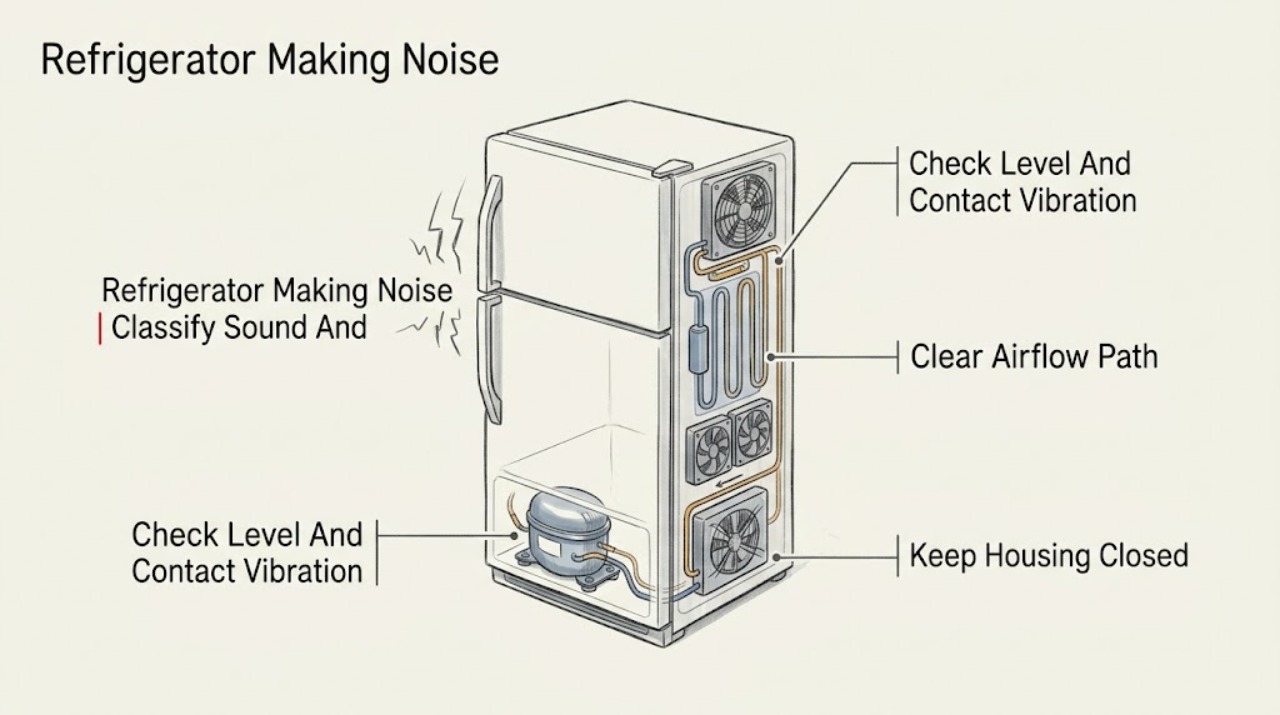
Blomberg Refrigerator Making Noise: Checks and Next Steps
Some Blomberg refrigerator noise is part of normal operation: the official Blomberg FAQ describes a compressor or fan hum, light clicking, refrigerant gurgling, and defrost-related hissing as common sounds, while a pop can come from temperature-related expansion. Start by identifying when the noise occurs and whether cooling remains normal.
-
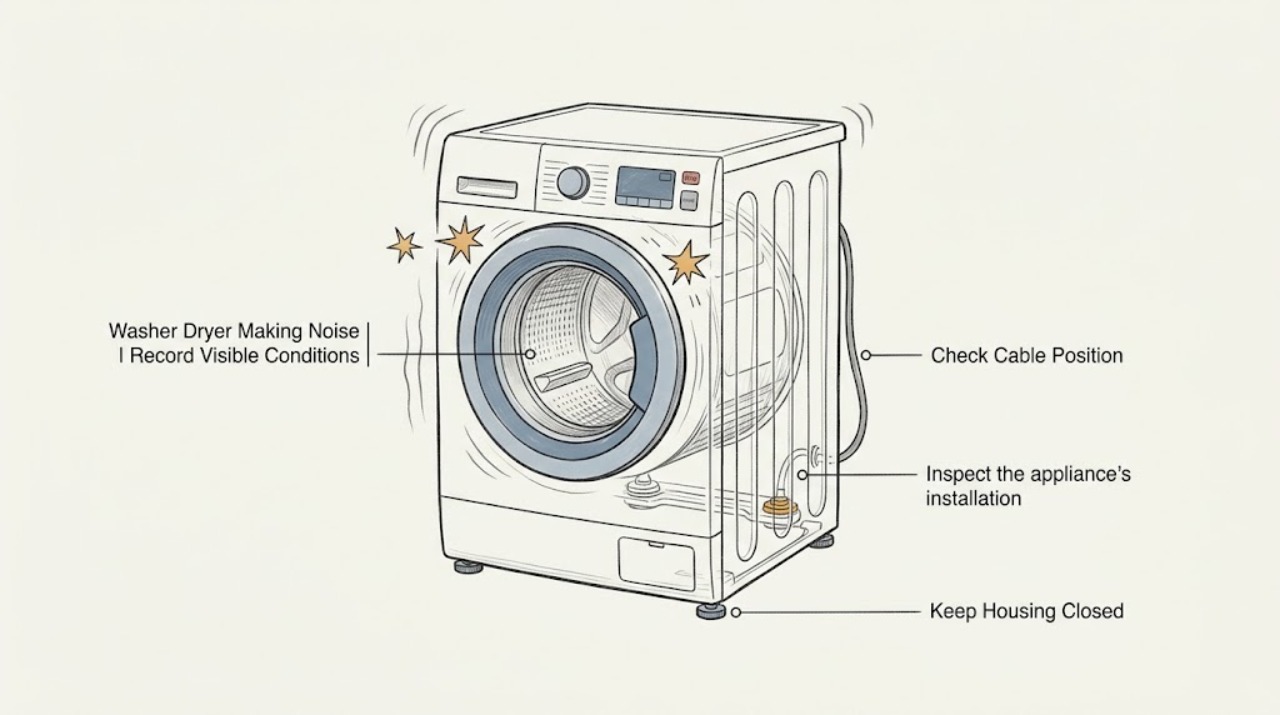
Blomberg Washer Dryer Making Noise: Check the Load, Level, Drum, and Pump
A Blomberg washer-dryer can make more noise during spin when the load is uneven, the appliance is not level, transit bolts remain, or the cabinet is touching a rigid surface. First identify whether the sound occurs while filling, tumbling, spinning, draining, or drying; then stop the cycle, check the load and visible installation conditions, and inspect the pump-filter area only with the appliance safely disconnected and any water managed.
-
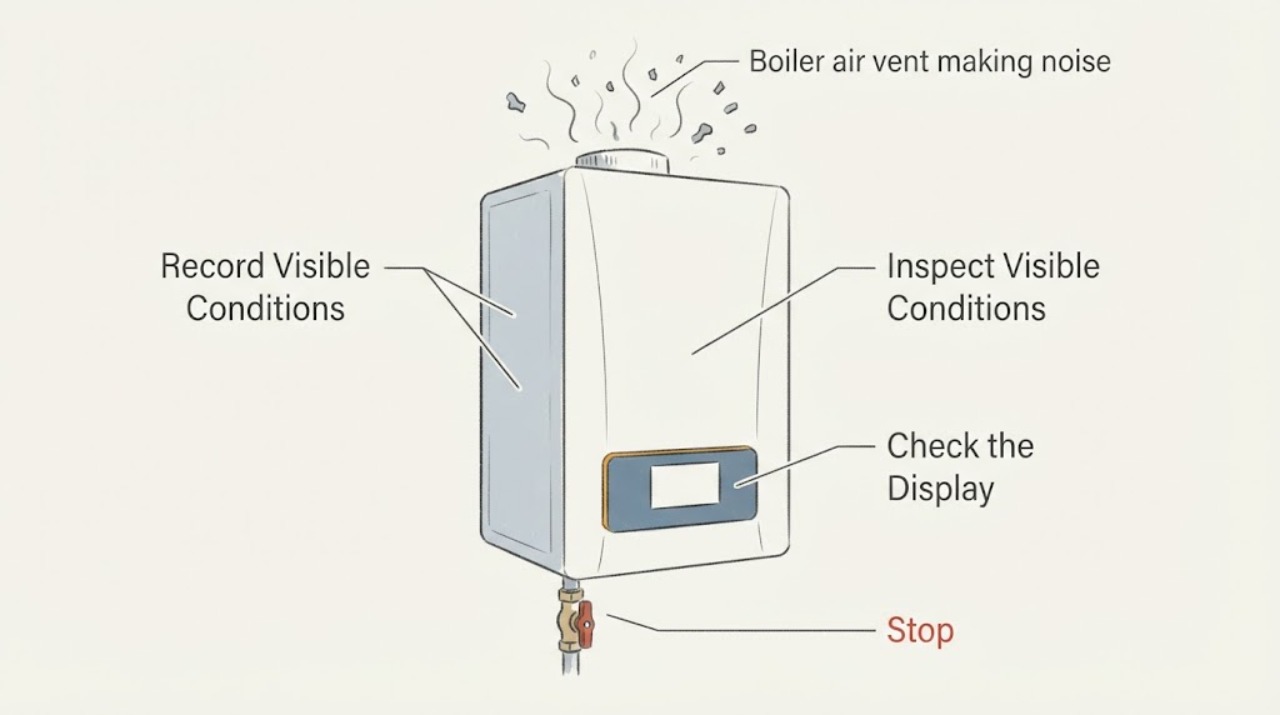
Boiler air vent making noise: What to Check and What to Do Next
A noisy boiler air vent can indicate trapped air, water movement, a fouled vent, an air-vent leak, or a broader pressure and circulation problem. Treat the boiler and vent as a pressurized hot-water system: from a safe position, record the sound, timing, visible moisture, system type, and any visible gauge or fault message, then arrange HVAC service.
-
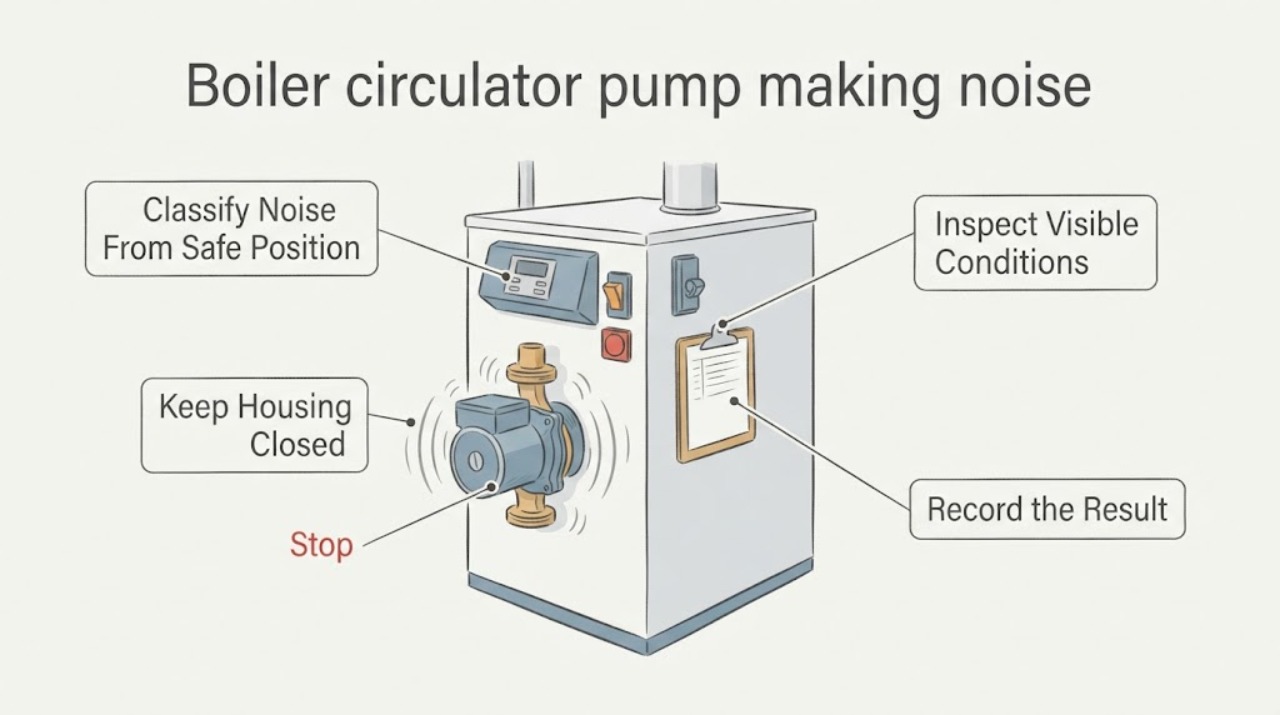
Boiler circulator pump making noise: What to Check and What to Do Next
Treat a noisy boiler circulator pump as a diagnostic clue, not a part to open or adjust. From a dry, safe position, record whether the sound is a hum, rattle, gurgle, squeal, or water-flow noise; when it starts; and whether the boiler still heats normally.
-
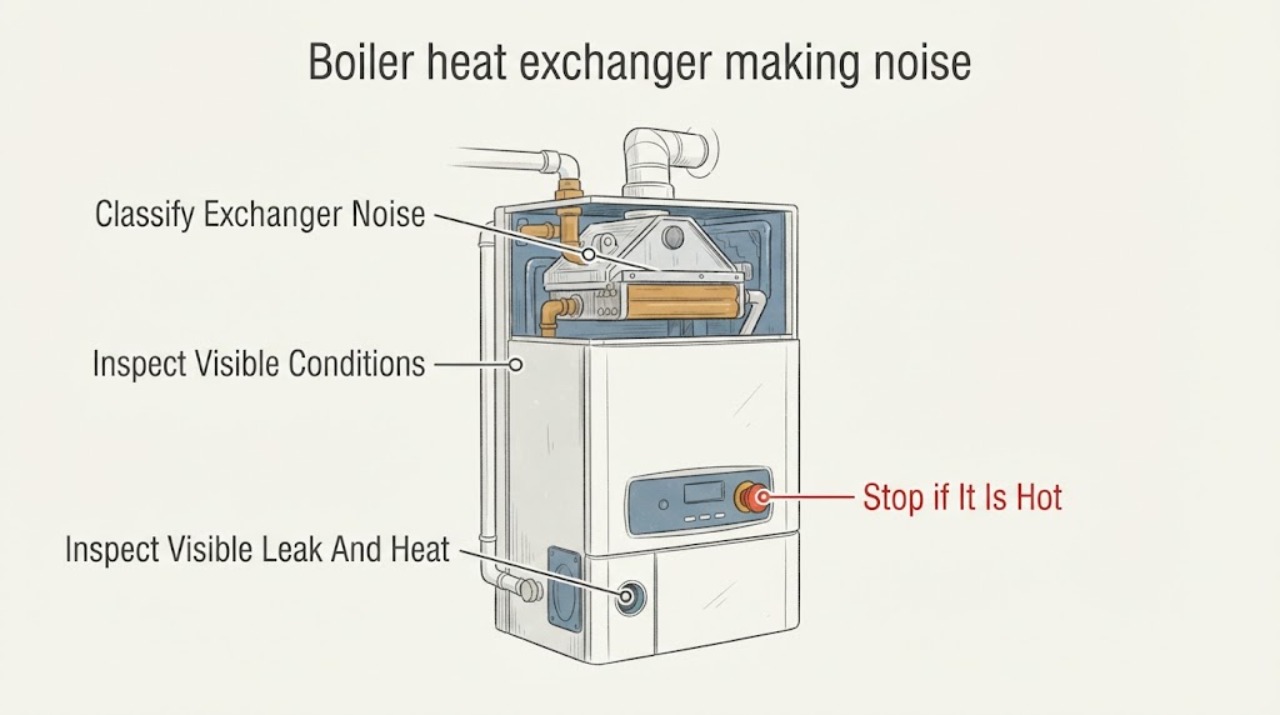
Boiler heat exchanger making noise: What to Check and What to Do Next
A noisy boiler heat exchanger cannot be confirmed or safely repaired from outside the appliance. From a dry, safe position, record the sound type and when it occurs, compare it with the boiler display and heat delivery, and look for visible leaks or overheating warnings without opening the casing.
-
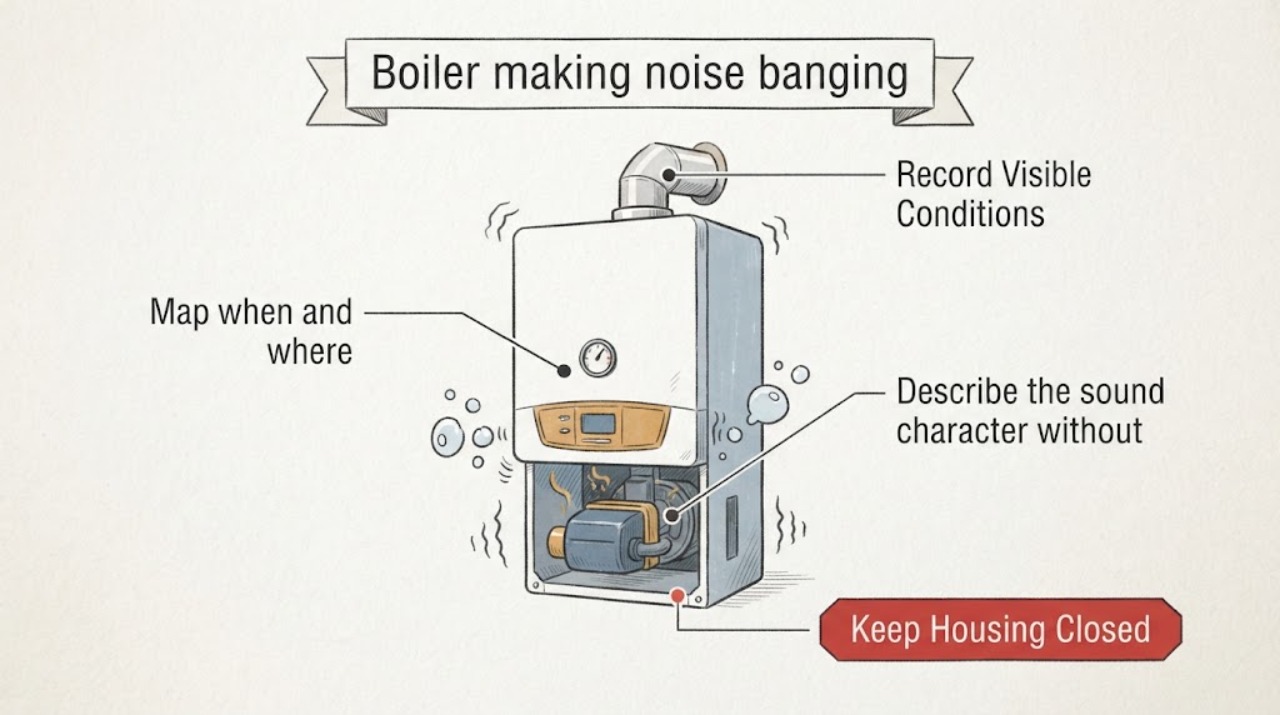
Boiler making noise banging or kettling sound: What to Check and What to Do Next
A boiler that bangs or makes a kettle-like noise needs a pattern record, not a homeowner diagnosis. From a stable position, note whether the sound occurs at startup, shutdown, heating, or pump operation; whether it comes from the boiler cabinet, nearby pipes, or radiators; and what the existing pressure or temperature gauge shows without changing it.
-
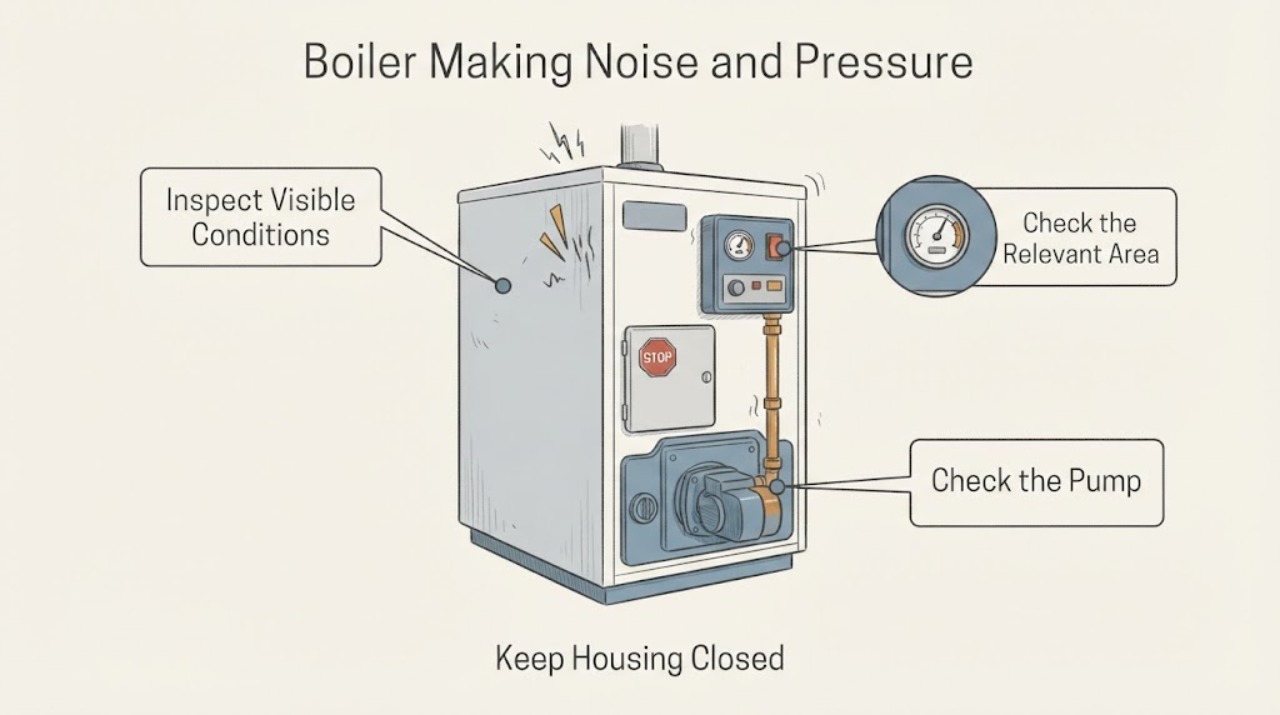
Boiler Making Noise and Pressure May Fluctuate: What to Check and What to Do Next
A small pressure rise while the boiler heats and a small fall as it cools can be normal, but the gauge should remain within the range stated in the boiler manual. Noise together with a rise of more than about 1 bar during heating, entry into the high or red zone, pressure rising while the boiler is off, repeated pressure loss, or frequent topping up points to a fault such as an expansion-vessel, filling-link, leak, circulation, or combustion issue.
-
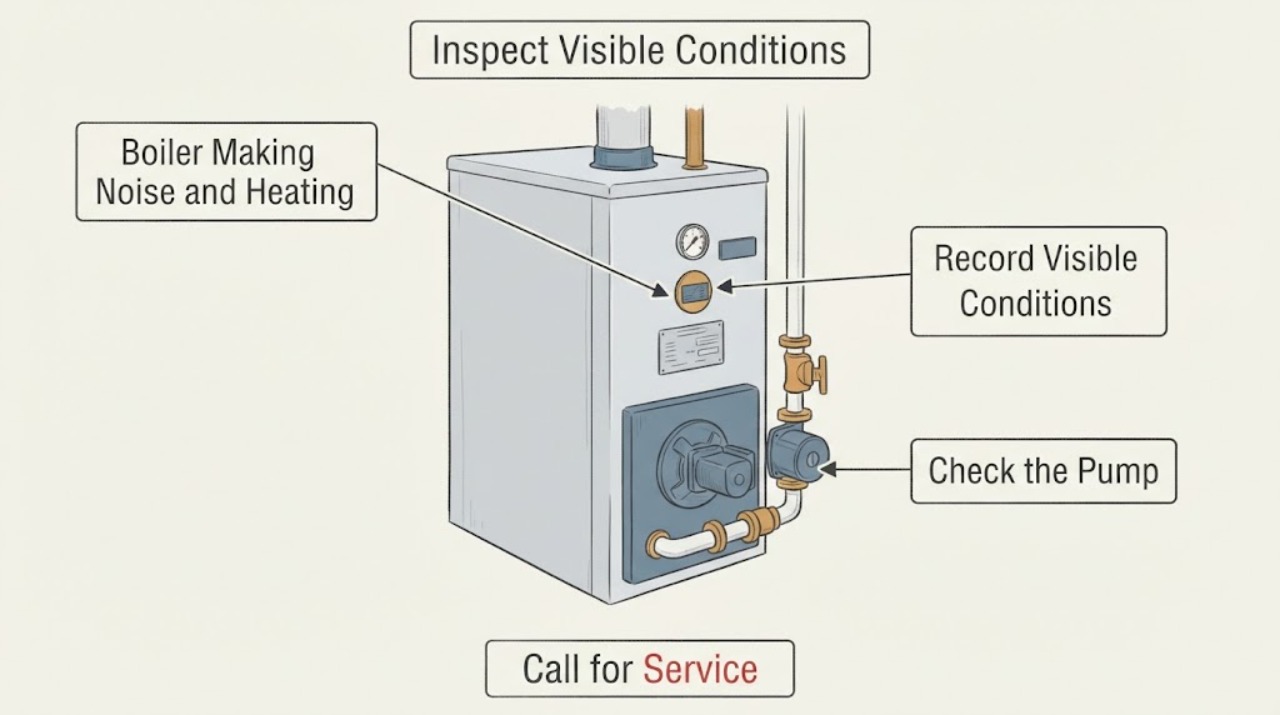
Boiler Making Noise and Heating Unevenly: What to Check Next
A boiler that has become noisy while rooms or radiators heat unevenly may have trapped air, restricted circulation, a control or zone problem, a pump issue, or scale and flow trouble. First classify the sound and compare it with the cold rooms or cold sections of radiators; gurgling with a radiator cold at the top points toward air, while banging or whistling at the boiler, a new drone, repeated pressure change, leaks, or lockouts needs professional diagnosis.
-
Boiler making noise: What to Check and What to Do Next
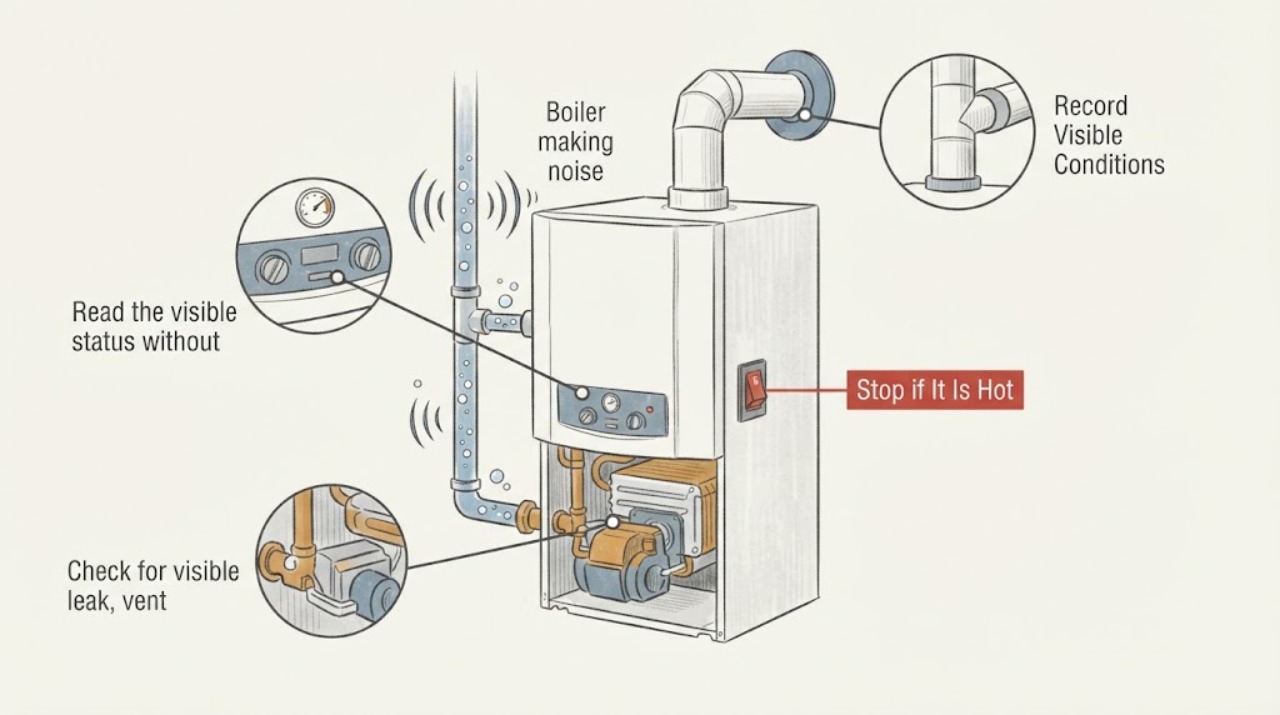
A new or unusually loud boiler noise should be treated as a diagnostic signal, not something to fix by opening the casing or adjusting a pressurized system. First identify the sound and when it happens, then read any visible display or gauge from a safe position and look for signs of leakage, overheating, fuel odor, venting trouble, or a carbon-monoxide alarm.
-
Bosch Cooktop Making Noise: What the Sound Usually Means
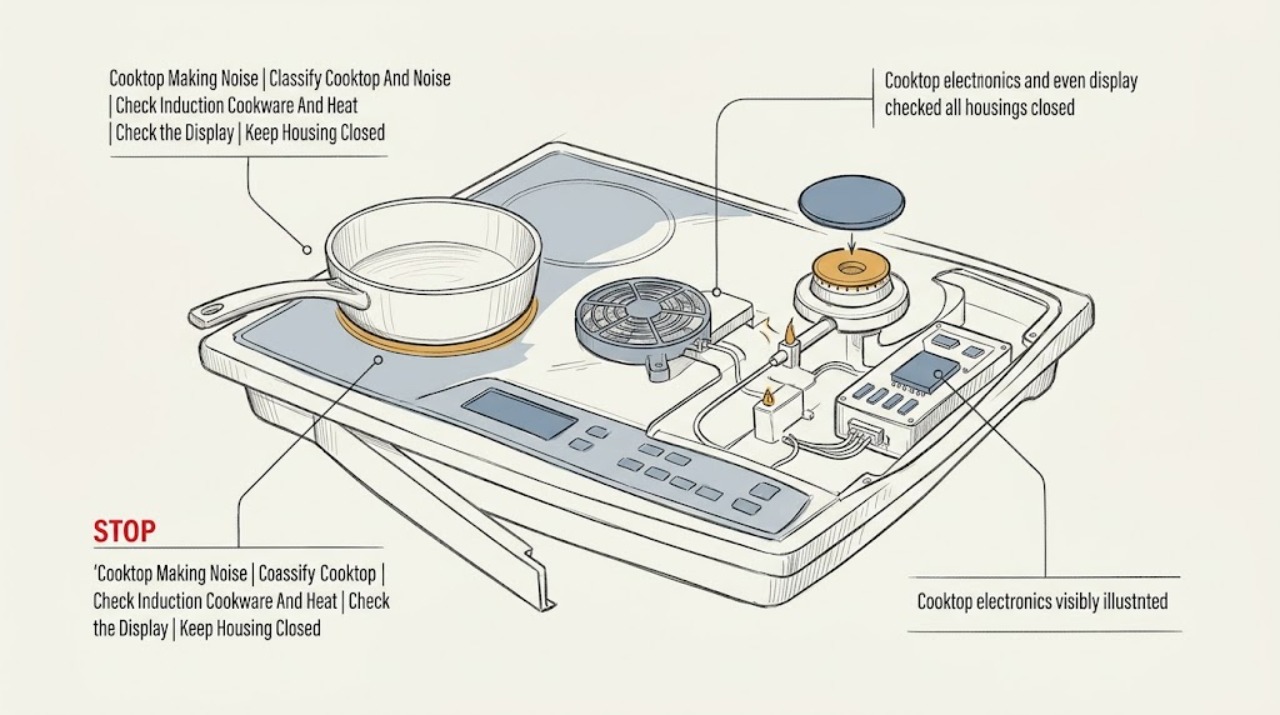
A Bosch cooktop noise can be normal or can indicate a fault, and the useful first clue is the cooktop type and when the sound occurs. On an induction model, a low hum, whistle, crackle, or cooling-fan sound can depend on cookware, heat setting, or residual temperature; reduce the setting, center suitable cookware, and see whether the sound changes.
-
Bosch Dishwasher Making Noise: What the Sound Can Mean and What to Check
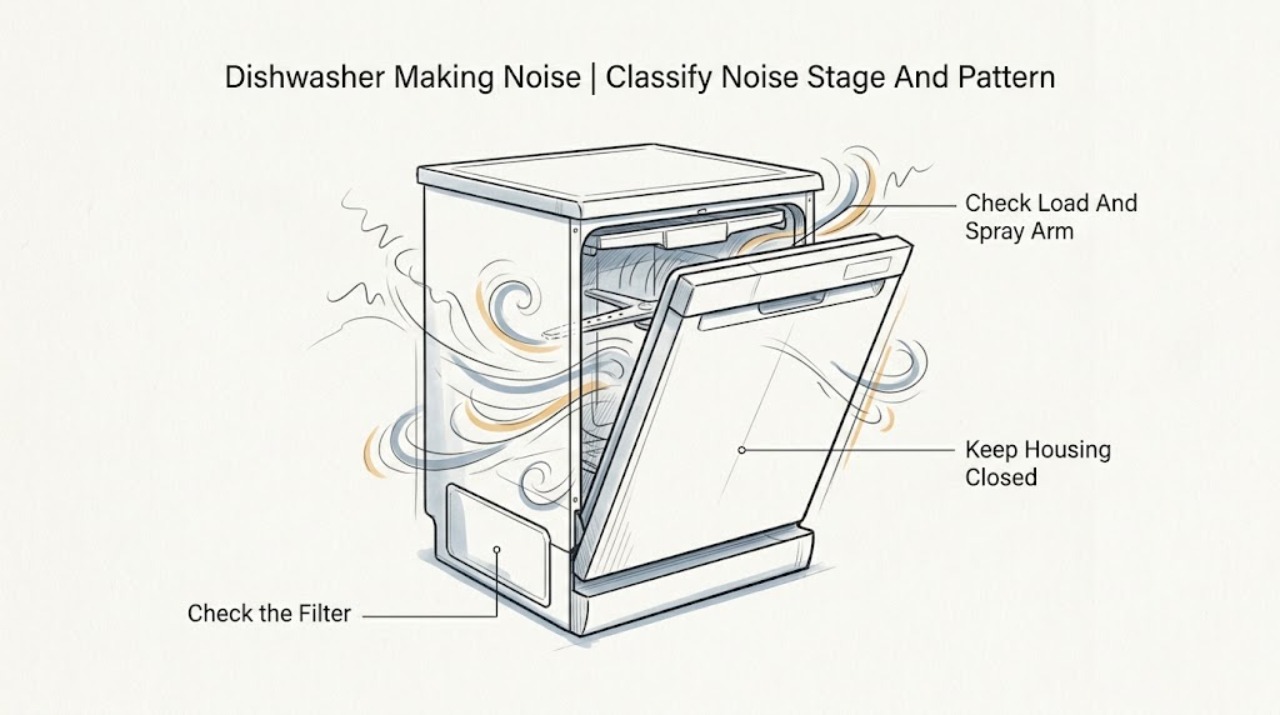
If a Bosch dishwasher is making noise, first note when the sound occurs: a beep at programme end, a hum or buzz while draining, rattling during spray, or a knock during water fill points to different checks. Stop the cycle, switch off the dishwasher, and isolate power before touching the racks, spray arms, filters, or any pump-area cover.
-
Bosch Dryer Making Noise: Find the Cause Safely
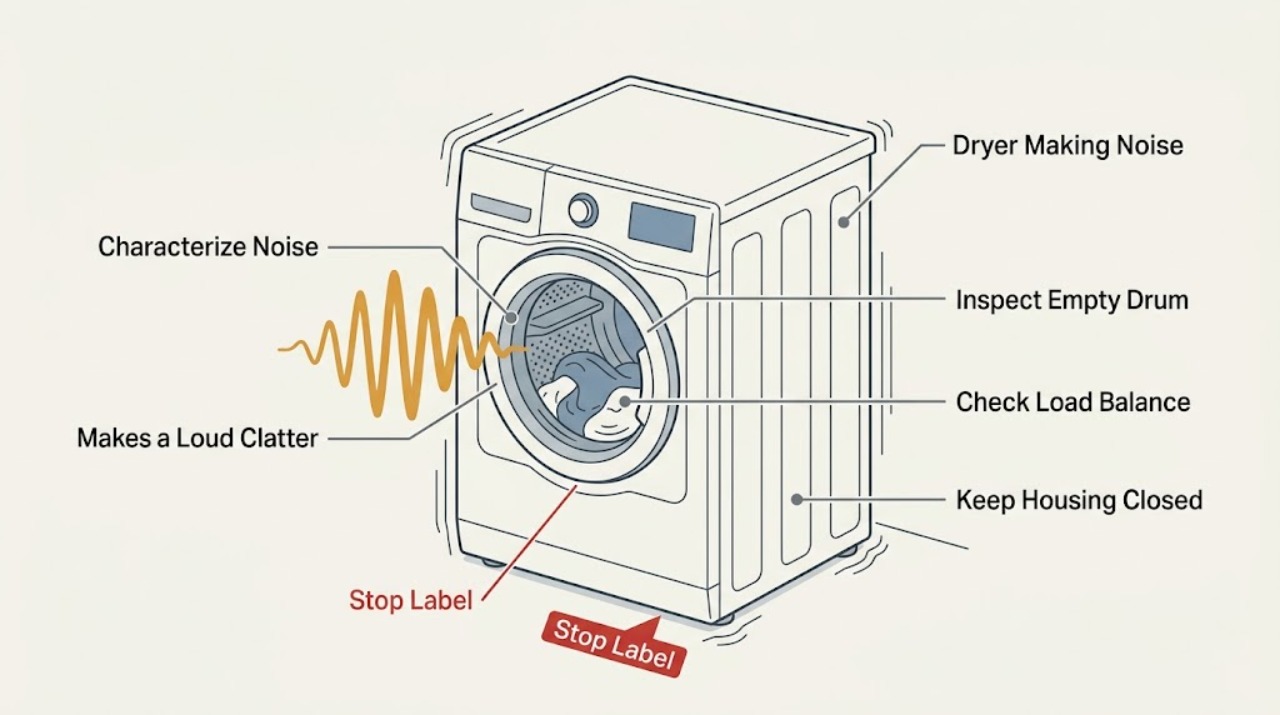
Stop the Bosch dryer and remove the laundry before investigating the sound. First check the empty drum for a coin or another object from a pocket, then check whether the load is uneven and whether the dryer is aligned on a stable surface.
-
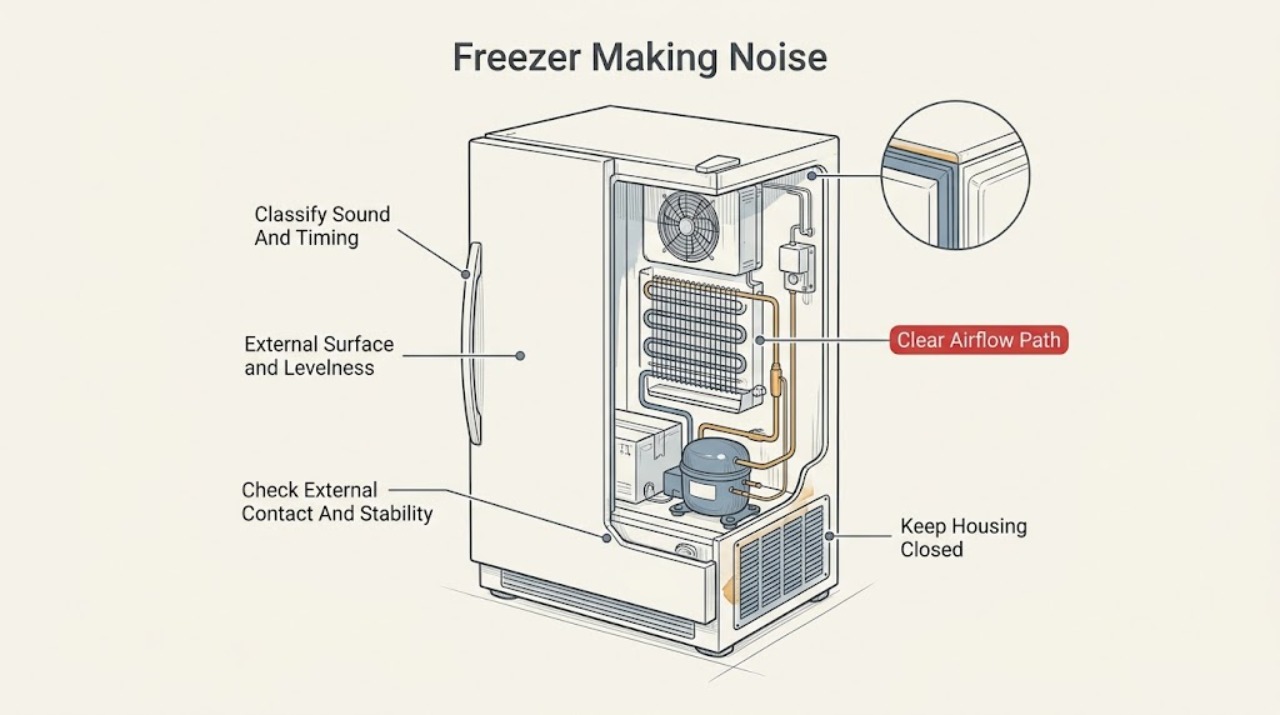
Bosch Freezer Making Noise: Identify Normal Sounds and Safe Next Steps
A Bosch freezer can make normal humming, bubbling or gurgling, clicking, cracking, and brief louder sounds during automatic defrost or an increased-freezing mode. First record the sound and when it occurs, then check from outside whether the cabinet touches a wall, the appliance is unstable, or bottles, shelves, or bins are vibrating.
-
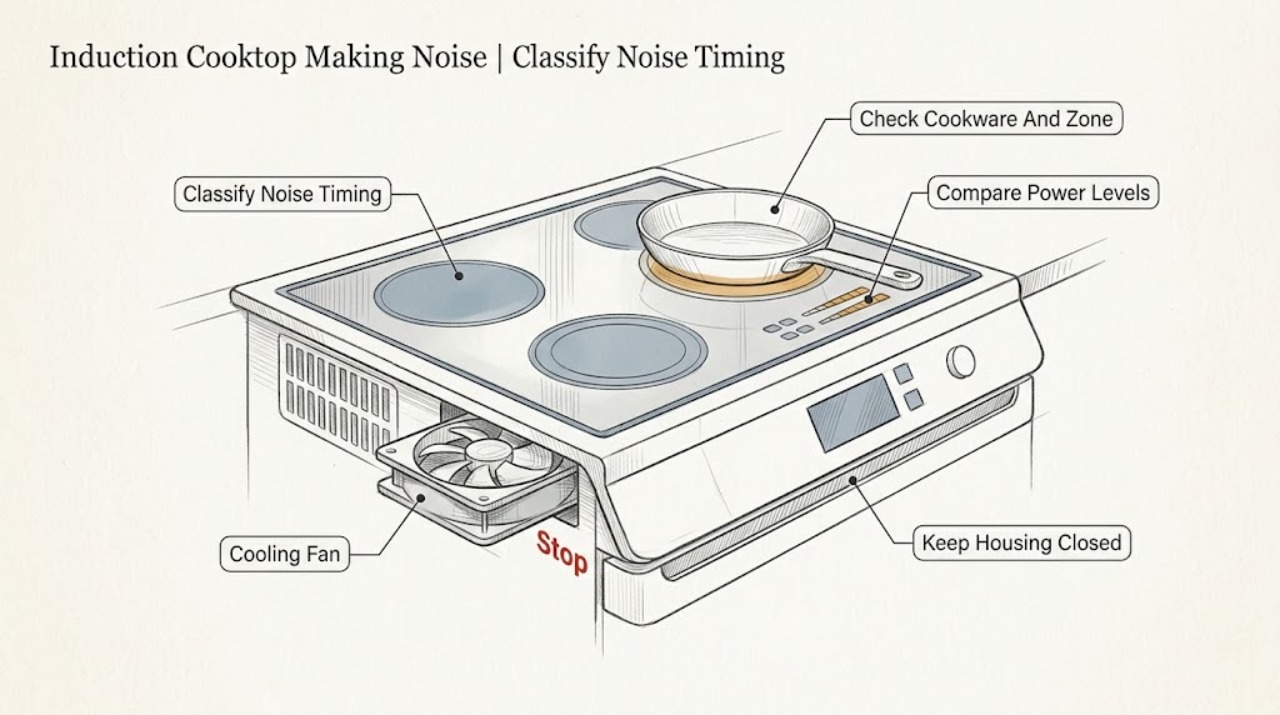
Bosch Induction Cooktop Making Noise: Identify Normal Sounds and Fault Signs
Many Bosch induction-cooktop sounds are normal: a deep hum can occur at high power, a quiet whistle can occur with empty cookware, multilayer or mixed cookware can crackle, and the cooling fan can run during or after cooking. First identify when the sound occurs, try the manufacturer's cookware and power-setting checks, and keep the control panel and ventilation area clear.
-
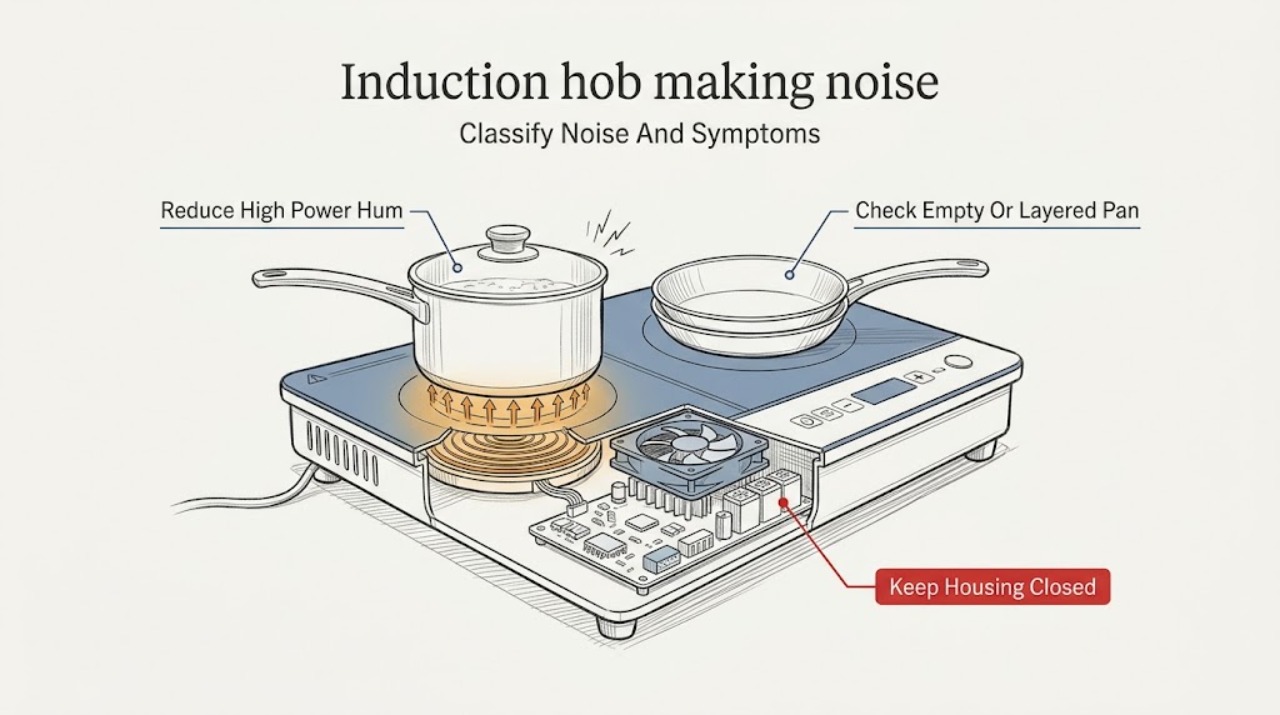
Bosch induction hob making noise: identify normal pan and fan sounds
Most Bosch induction-hob noises are normal and come from the pan, the power level, or the cooling fan. First identify whether the sound follows one pan or one cooking zone.
-
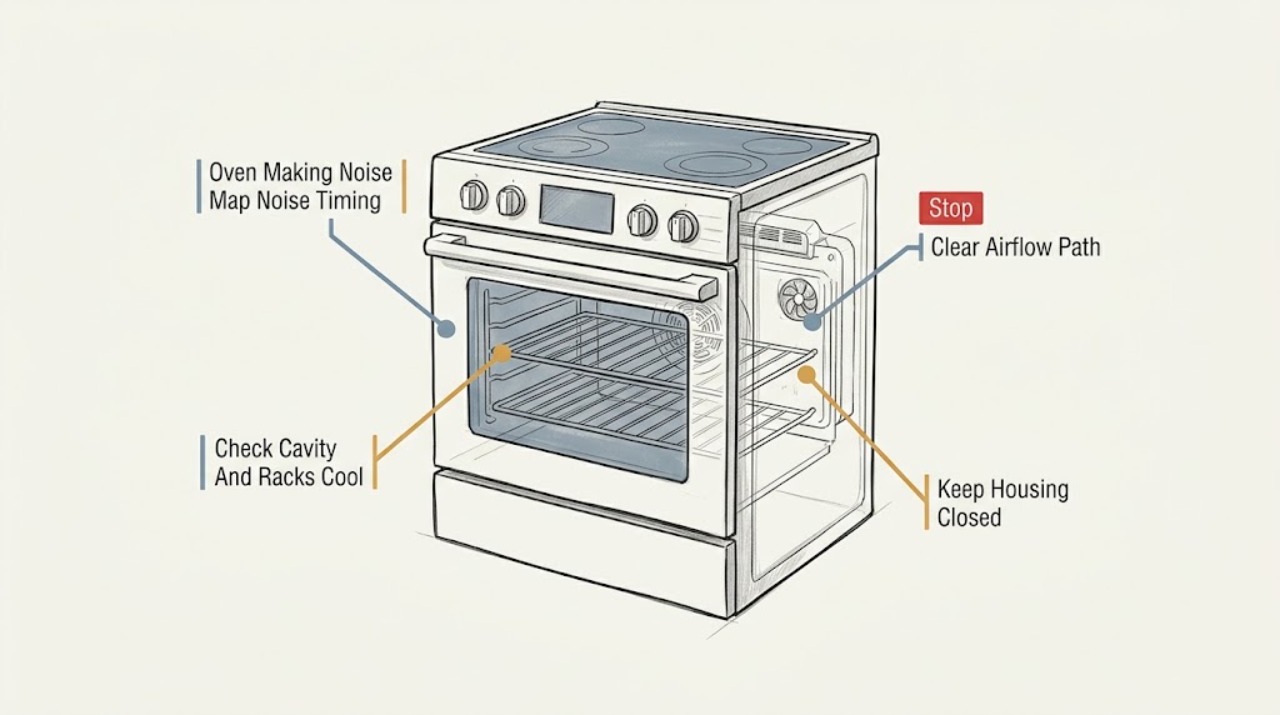
Bosch Oven Making Noise: Tell Normal Fan Operation from a Fault
Some Bosch oven fan sounds are expected: the convection fan may run during preheating or a convection mode, and a cooling fan may continue after the oven is turned off until the appliance cools. A new or unusually loud grinding, scraping, rattling, clicking, or high-pitched noise needs a pattern check before the oven is used again.