
Repair problem
Making Noise Troubleshooting Guides – Page 2
Published FixGraph guidance for diagnosing and responding to making noise.
Matching published guides
Choose a guide that matches the service, equipment, and conditions you are seeing.
-
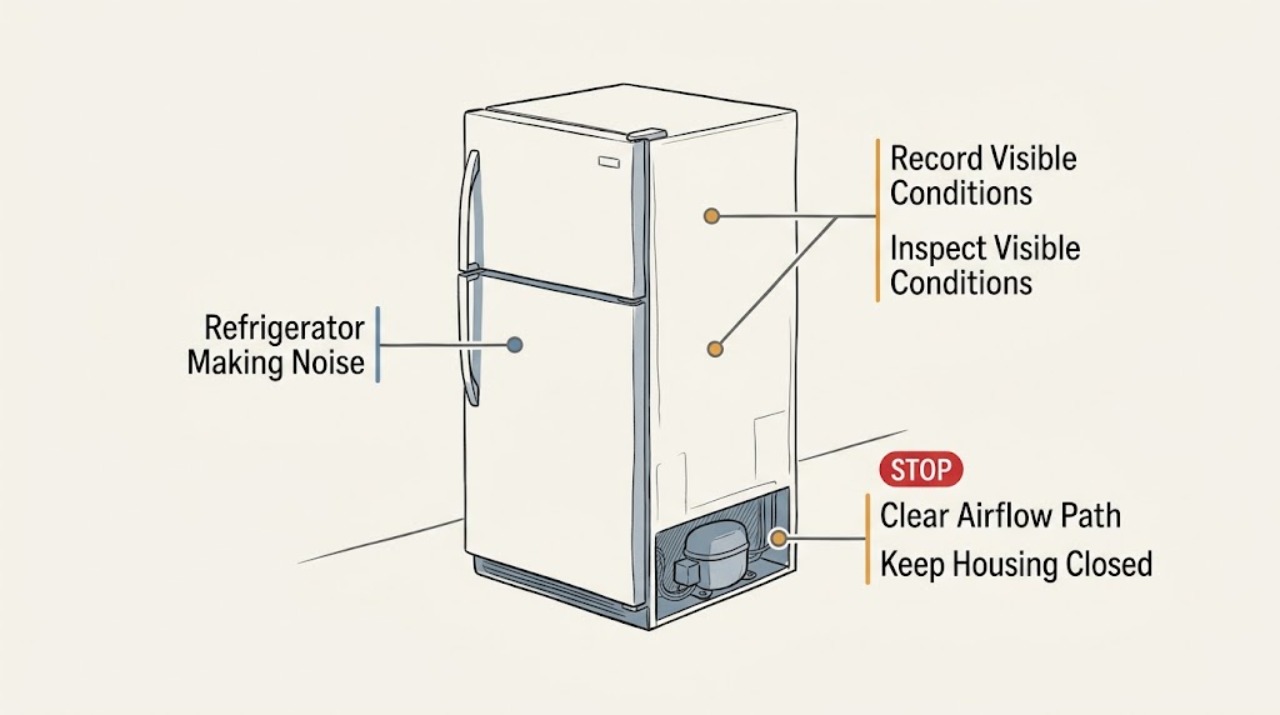
Bosch Refrigerator Making Noise
A Bosch refrigerator can normally hum while the compressor or a fan runs, gurgle or bubble as refrigerant moves through the tubes, click as a motor or switch changes state, or pop during automatic defrost. First note whether the sound is smooth and cyclical or a new scrape, grind, knock, or loud vibration.
-
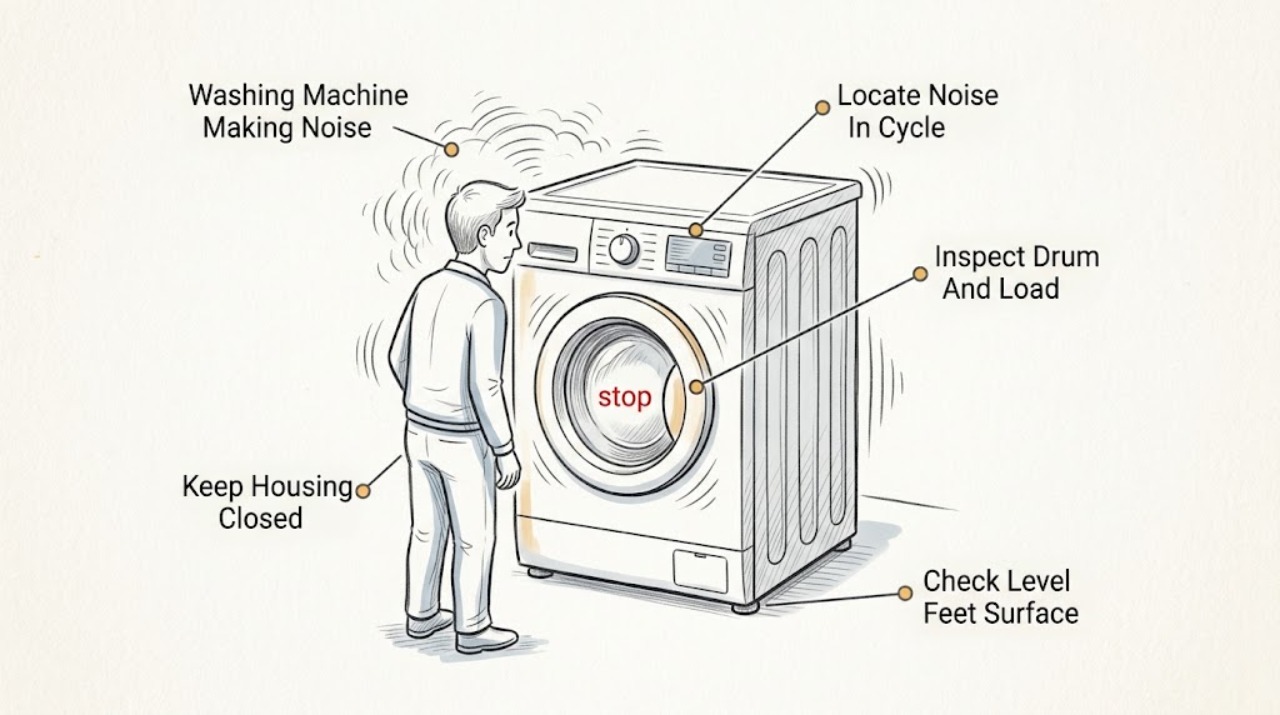
Bosch Washing Machine Making Noise: Find the Source Safely
A Bosch washing machine can make normal water, pump, or brief motor noises, but banging, rattling, grinding, or movement needs a source check. First note when the sound occurs, then stop the cycle and inspect the drum for loose objects, redistribute an uneven load, and check from the outside that the washer is level, its feet are secured, and transit bolts were removed after installation.
-
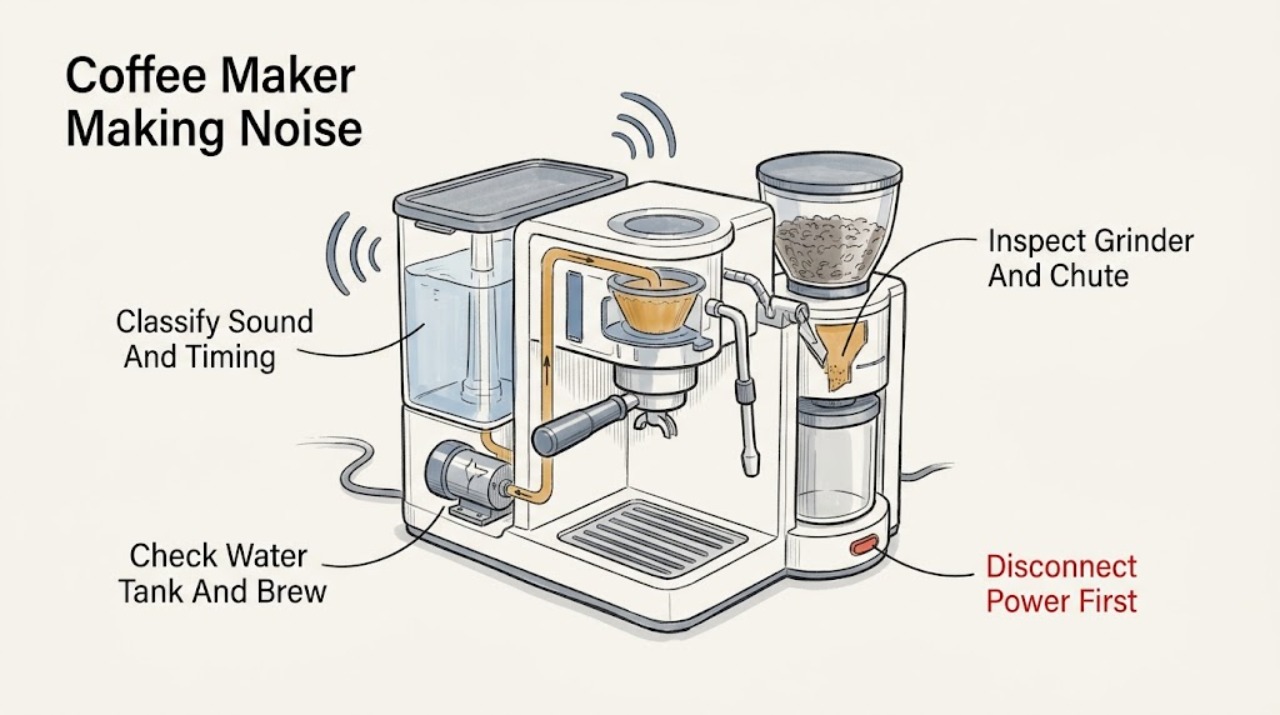
Breville Coffee Maker Making Noise: Normal Sounds and Safe Checks
First identify when the sound occurs and which Breville architecture is involved. Pulsing during espresso extraction or steaming, water being released during an automatic purge, and a short winding sound while a Grind Control chute moves can be normal on models that have those functions.
-
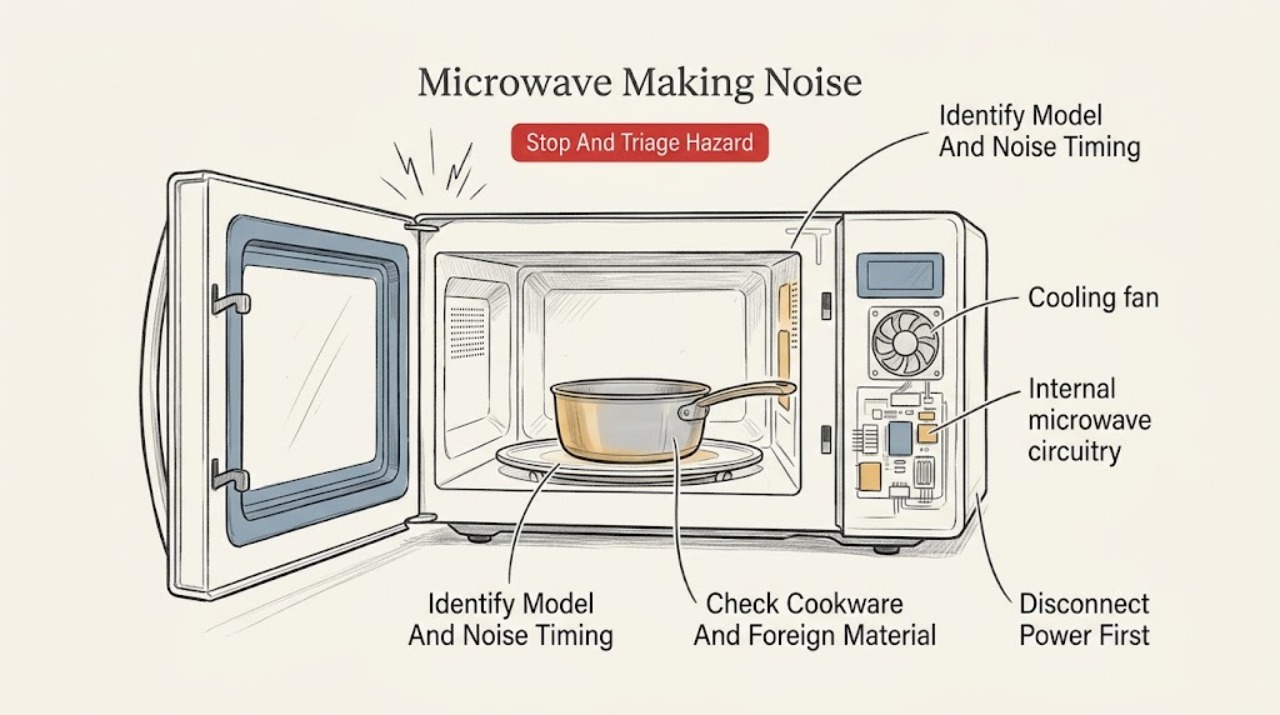
Breville Microwave Making Noise: Check the Turntable and Cavity First
First stop the cycle and identify when the sound occurs. A click, scrape, or rumble that follows glass-tray rotation is often associated with the tray, roller ring, cavity floor, or an oversized container; Breville manuals specifically direct owners to clean and correctly reseat the roller and turntable when the turntable is noisy.
-
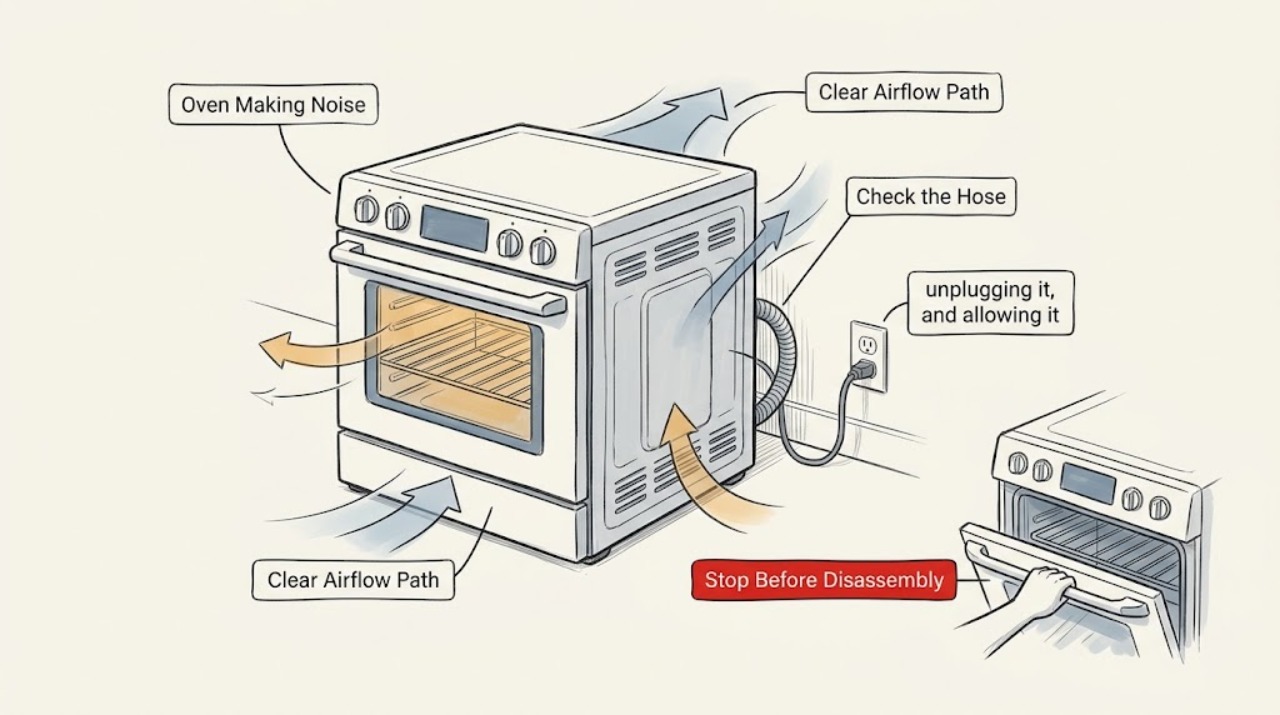
Breville Oven Making Noise: What the Sound Means and When to Stop
A Breville oven may hum or blow after a cooking cycle because its cooling fan protects the electronics, and convection modes also use a fan while cooking. First identify when the sound occurs, then let the oven cool completely and check only the removable tray, rack, pan, clearance, and external ventilation openings.
-
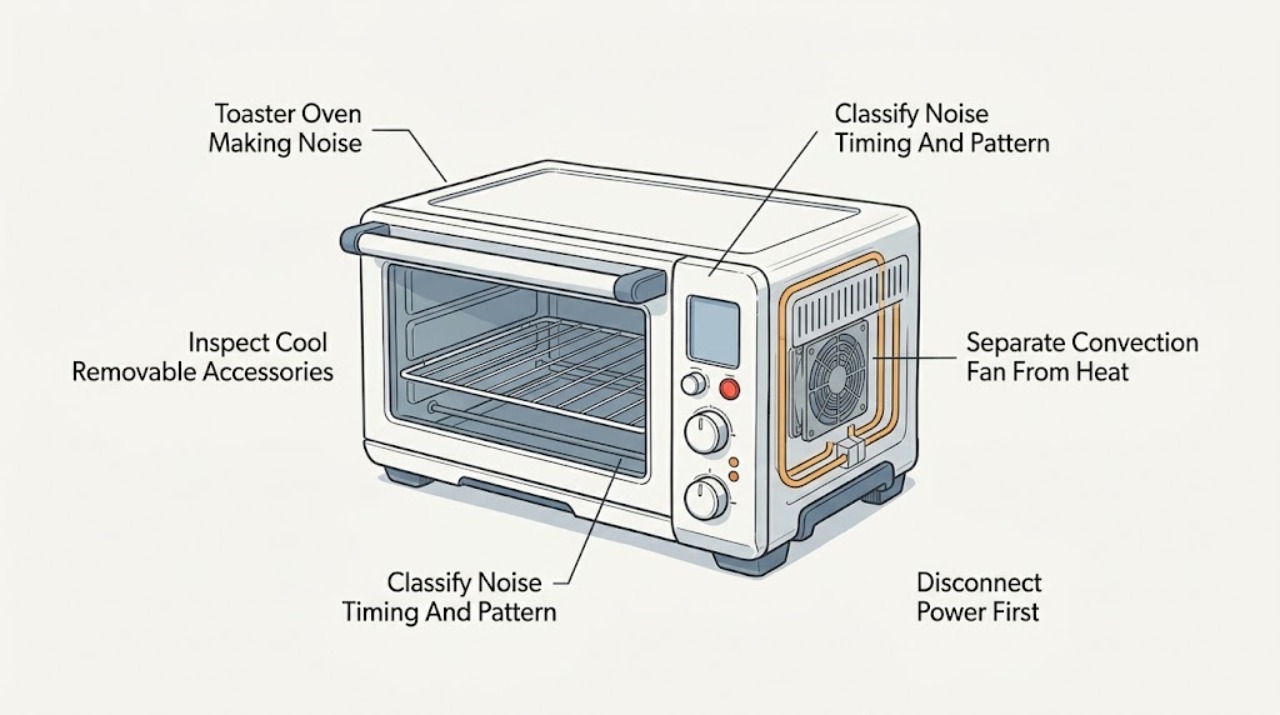
Breville Toaster Oven Making Noise: Normal Sounds vs. Faults
First record when the Breville toaster oven makes the sound. A fan that continues after cooking can be normal on applicable Smart Oven models because Breville says the cooling fans protect electronics until temperatures fall; element power pulsing can also be normal temperature control.
-
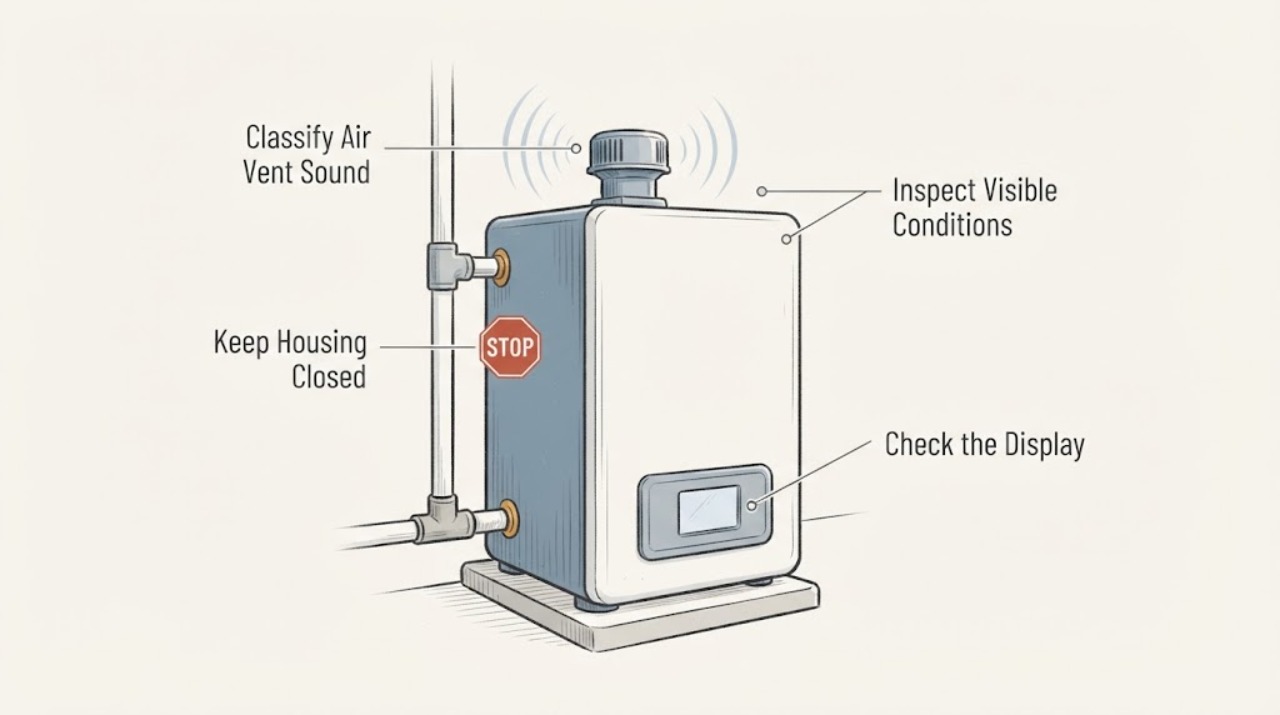
Buderus Boiler Air Vent Making Noise: What to Check and What to Do Next
A noisy air vent on a Buderus boiler can be caused by air moving through the hydronic loop, water or pressure changes, a vent that is leaking or failing, or noise transmitted from a pump or another nearby component. From a dry, safe position, record whether the sound is a hiss, gurgle, whistle, chatter, or vibration; look for visible moisture or corrosion; and note the already-visible pressure or fault display and the effect on heating.
-
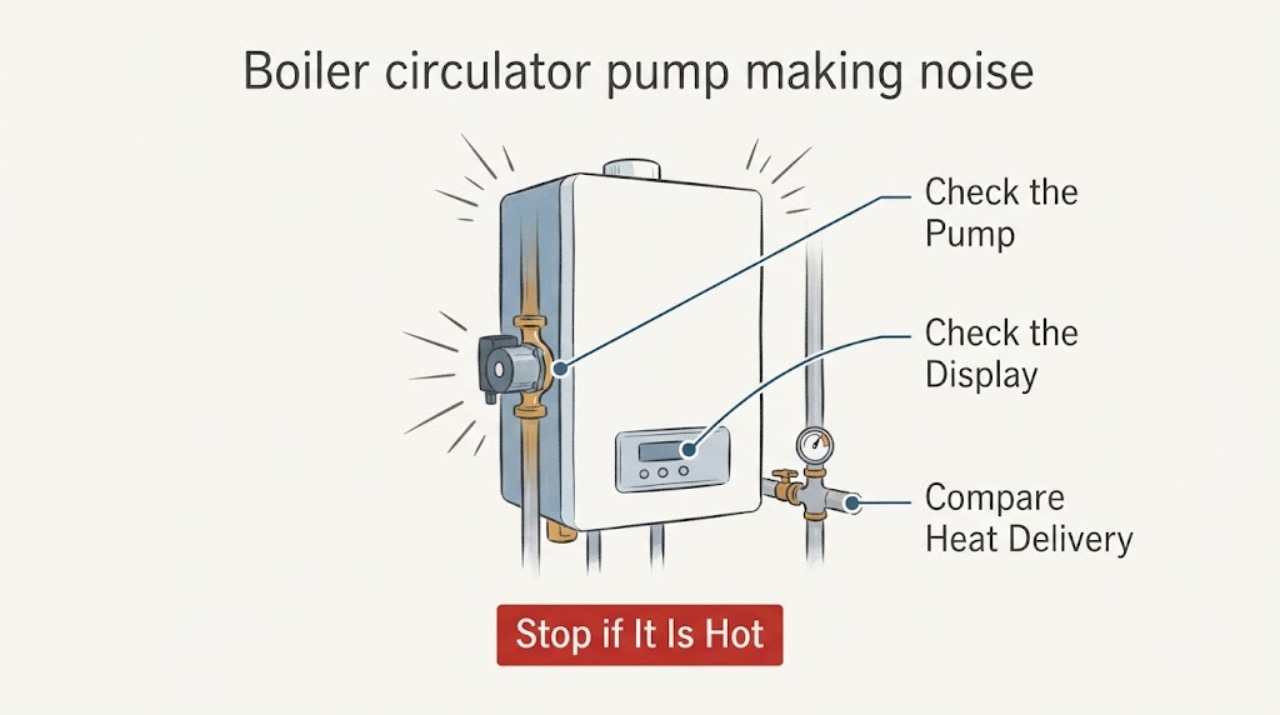
Buderus boiler circulator pump making noise: What to Check and What to Do Next
A noisy Buderus boiler circulator pump needs the sound and the heating result considered together. Light water rushing or an occasional pump sound can occur, but persistent rushing, gurgling, buzzing, rattling, or a high-pitched whine can point to air in the hydronic loop, unsuitable pump output, low system pressure or dry running, flow restriction, pipe vibration, or worn pump bearings.
-
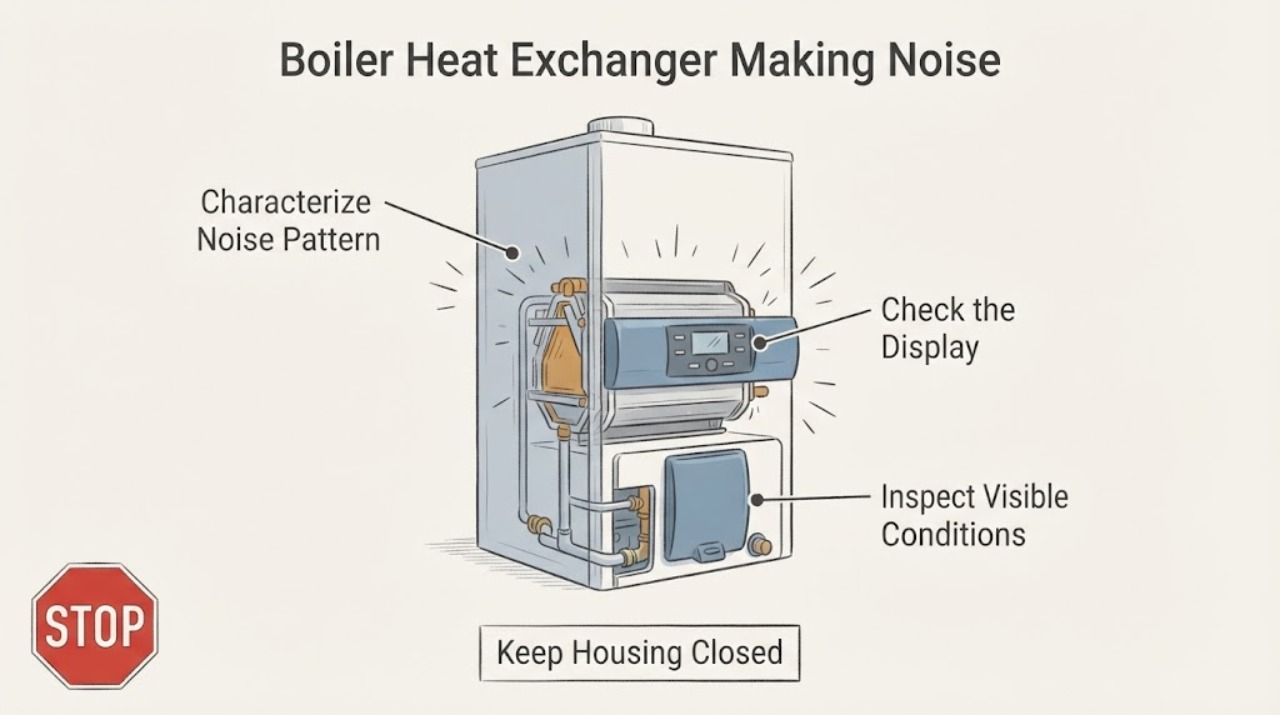
Buderus Boiler Heat Exchanger Making Noise: What to Check and What to Do Next
A Buderus boiler heat exchanger that makes new bubbling, boiling, crackling, rumbling, or whistling sounds should not be diagnosed by sound alone. First note whether the noise occurs only during a call for heat, whether it comes from the boiler cabinet or nearby piping, and whether there is a fault display, temperature instability, pressure change, water leak, or loss of heat.
-
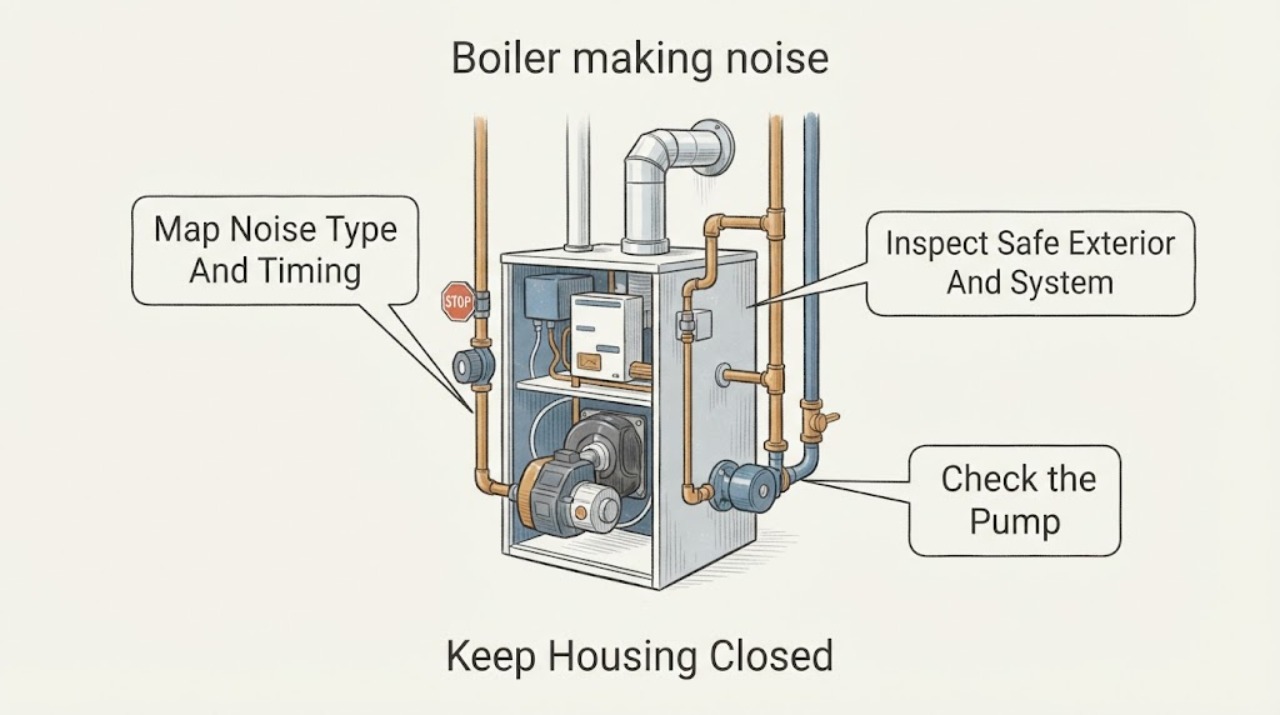
Buderus boiler making noise: What to Check and What to Do Next
The useful clue is when and what kind of noise your Buderus boiler makes. Gurgling, bubbling, or rushing water can point to air or poor circulation; knocking or kettling can accompany restricted flow, scale, or an overheating condition; a hum, whine, or grinding sound can come from a pump or motor; and a boom, rumble, or change in burner sound can be a combustion or ignition concern.
-
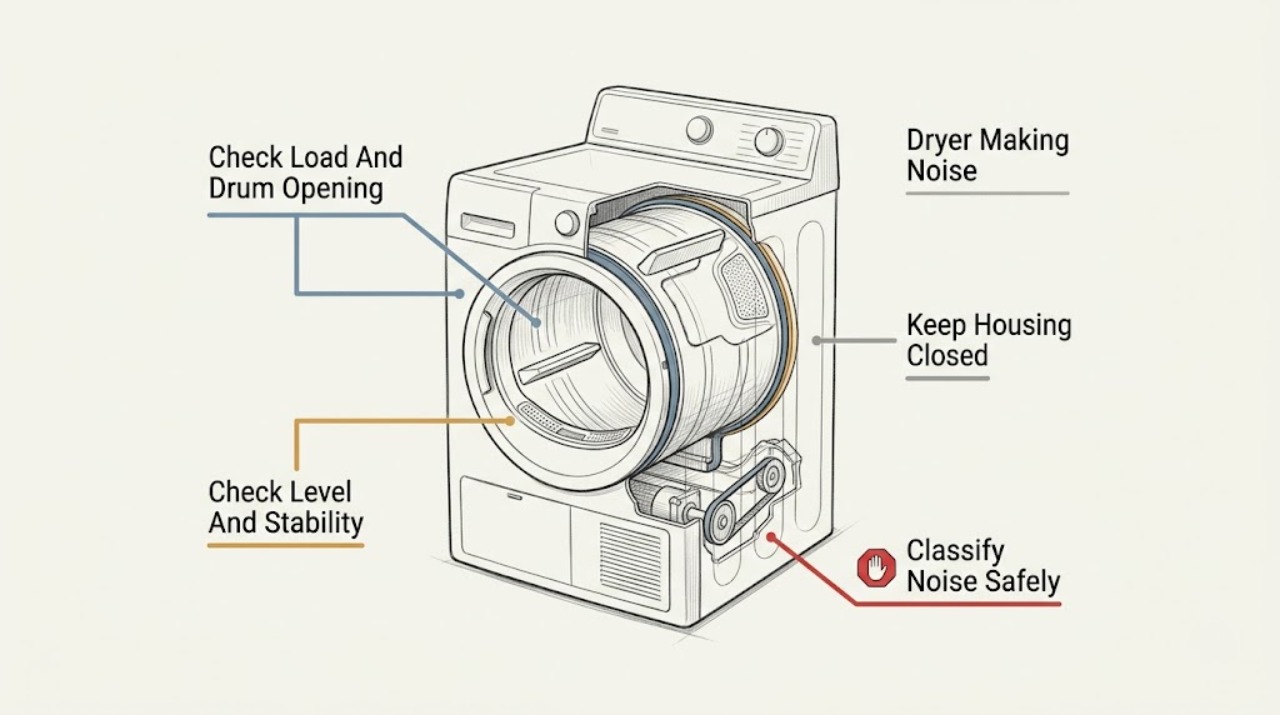
Candy Dryer Making Noise: Identify the Sound Before It Causes Damage
A Candy dryer that suddenly makes a new scraping, grinding, rumbling, vibrating, tapping, or creaking sound should be stopped and classified before it is run again. Candy's own troubleshooting guidance links scraping or grinding with drum contact that can be worsened by an unlevel appliance, vibrating or rumbling with an imbalanced position or loose pads, and creaking with the tension-pulley area.
-
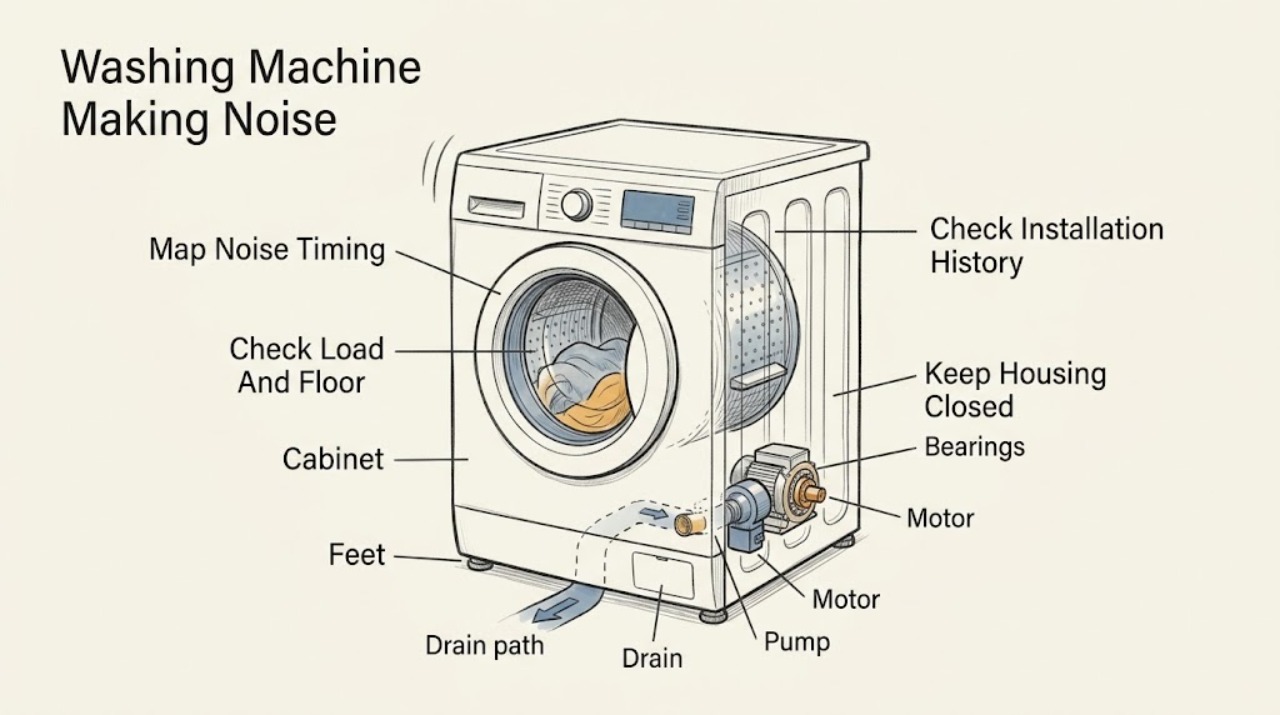
Candy Washing Machine Making Noise
A noisy Candy washing machine is diagnosed by when the sound occurs and whether the cabinet is moving. Stop the cycle if there is scraping, a repeated knock, a burning smell, a damaged cord, a sharp metal sound, or violent movement.
-
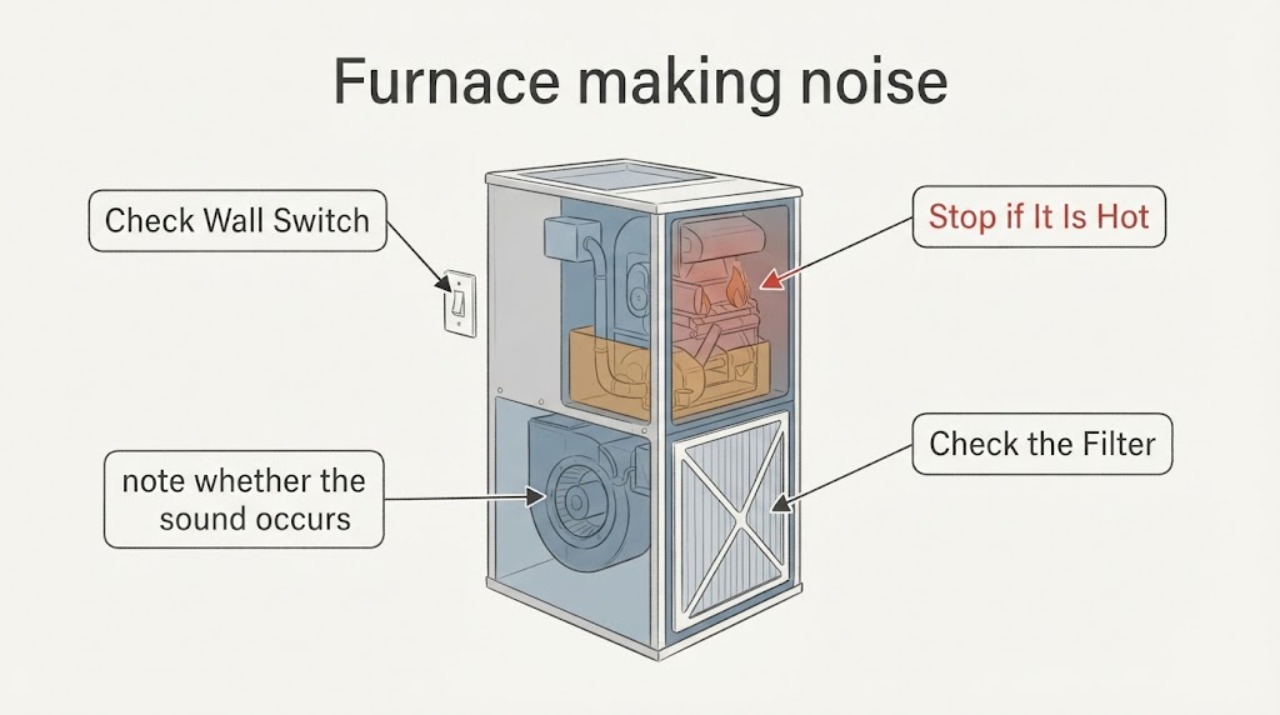
Carrier furnace making noise: What to Check and What to Do Next
A noisy Carrier furnace can be reacting to restricted airflow, loose duct or cabinet connections, a blower wheel, motor, belt, or bearing problem, or a combustion and ignition fault.
-
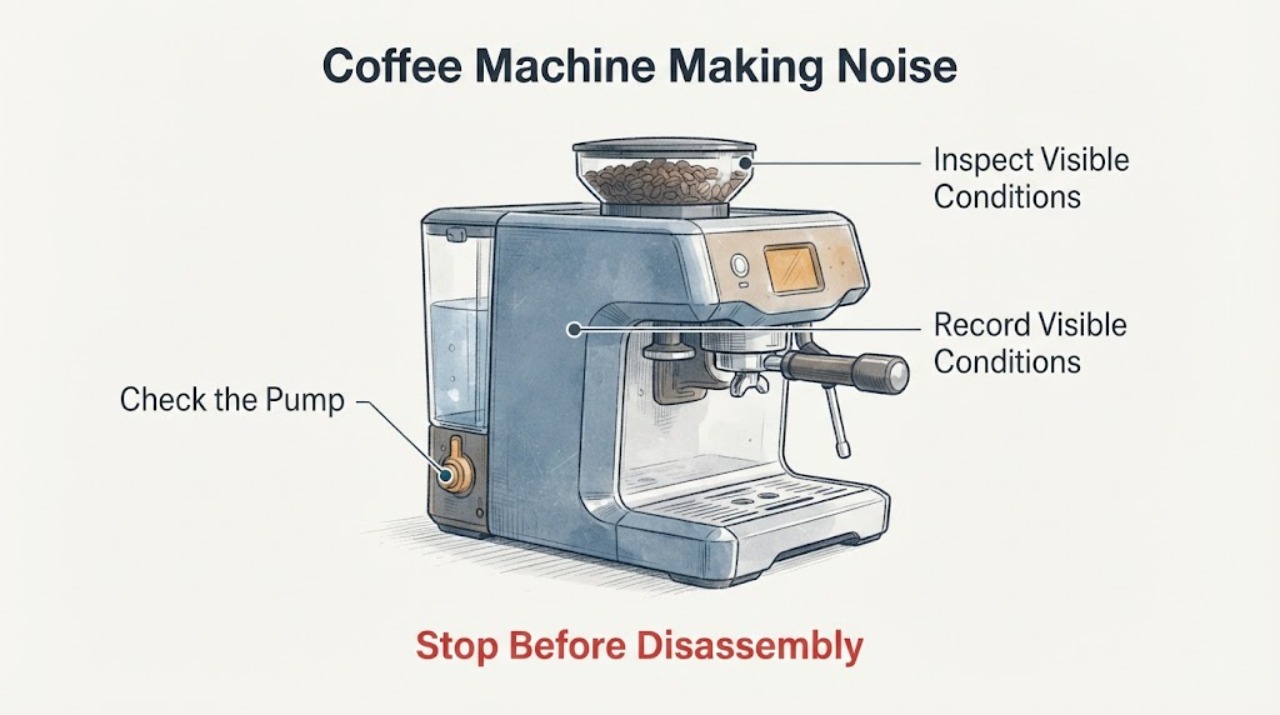
Coffee Machine Making Noise: Check Water Flow and Pump Load
A coffee machine’s noise must be classified by pump, grinder, steam, or vibration. De’Longhi guidance links loud pump noise with an empty or poorly seated water tank and air in the circuit; a brief pump sound with water flow can be expected. Turn it off and unplug it before cleaning, and stop for burning odor, grinding metal, leaking water, or a hot cord.
-
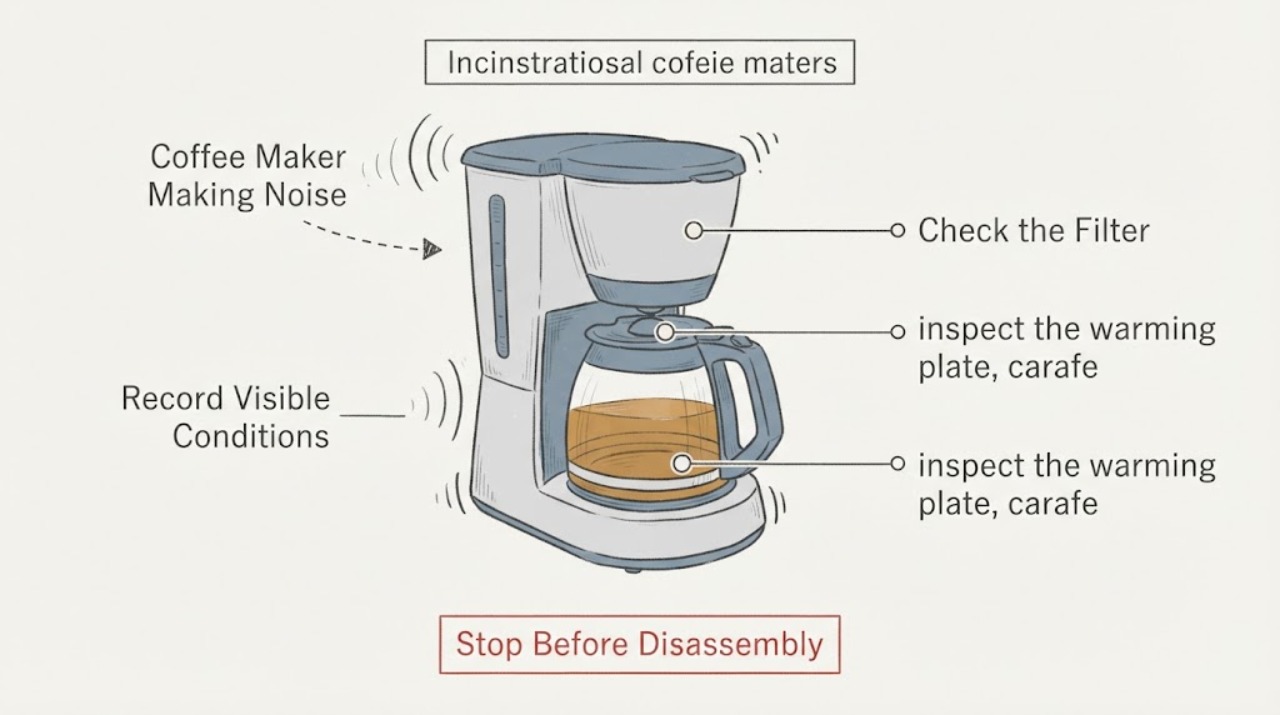
Coffee Maker Making Noise: Identify Pump, Drip, or Vibration Sounds
A drip coffee maker can make brief water, steam, clicking, or warming-plate sounds during a brew cycle, but loud rattling, crackling, grinding, or noise with leaking or a hot cord needs attention. Check water level, carafe/filter seating, scale, and counter stability only while the machine is cool and unplugged for cleaning.
-
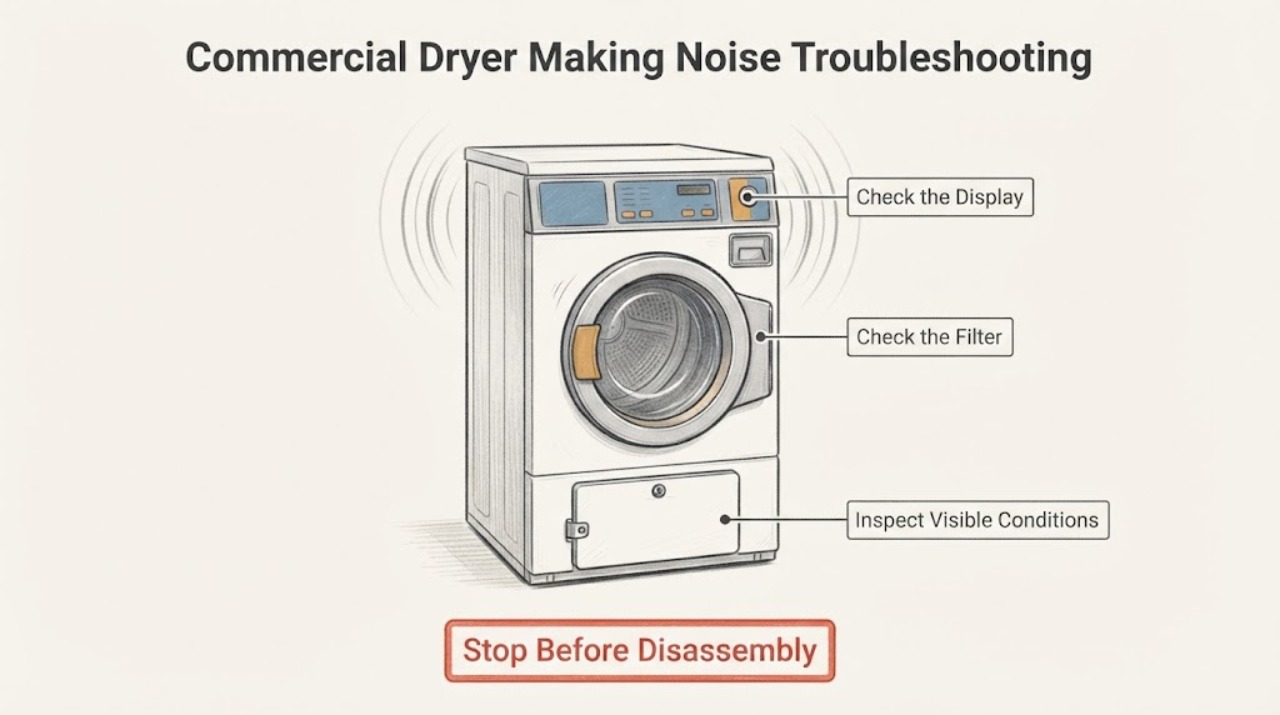
Commercial Dryer Making Noise Troubleshooting Guide
A commercial dryer with making noise should be taken through the control state, lint screen, exhaust airflow, and drum or load checks. Lint restriction, overheating, repeated errors, or drive problems require taking the unit out of service and using qualified commercial service.
-
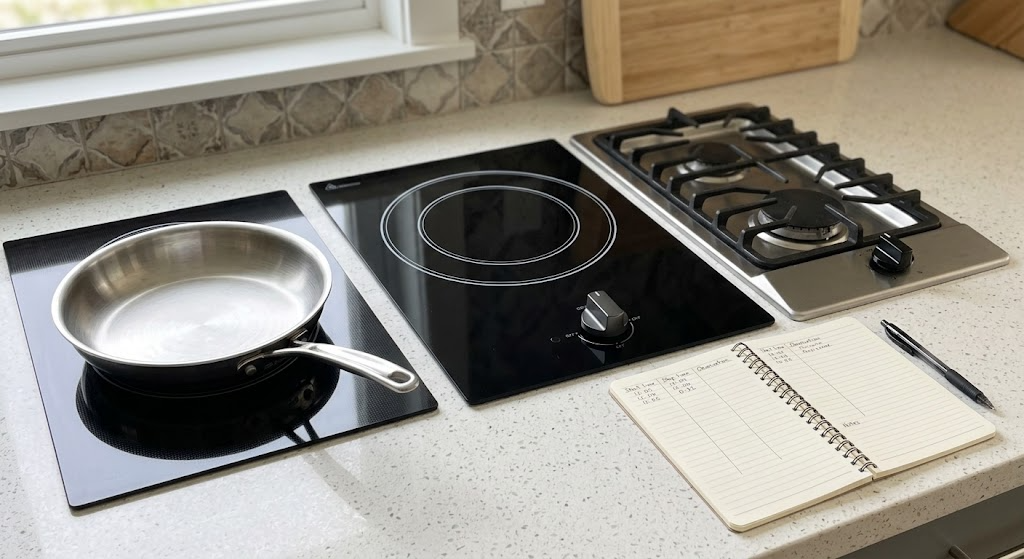
Cooktop Making Noise: Sort Normal Hums, Clicks, Fans, and Unsafe Arcing
A cooktop noise is diagnosed by its type, source, timing, and effect on heat. A low induction hum or cookware crackle that changes with power or pan can be normal; a cooling fan that continues after electric or induction cooking can also be normal.
-
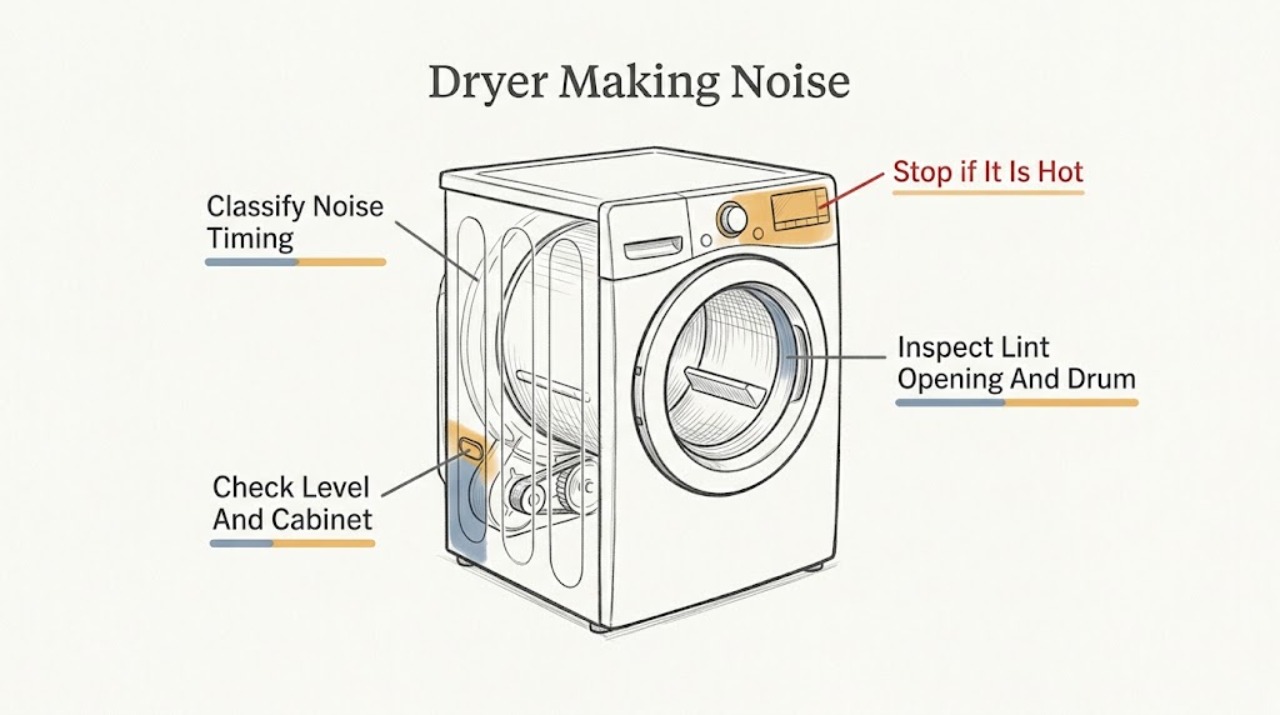
Crosley Dryer Making Noise: Identify the Sound Safely
A brief squeak when a Crosley dryer starts and the normal sound of the drum turning can be expected, but a continuing squeak, thump, hum, chirp, scraping, or rattling needs a closer check. First identify when the sound occurs, then disconnect power before inspecting the level floor, exposed cabinet screws, lint-filter opening, and drum for loose objects.
-
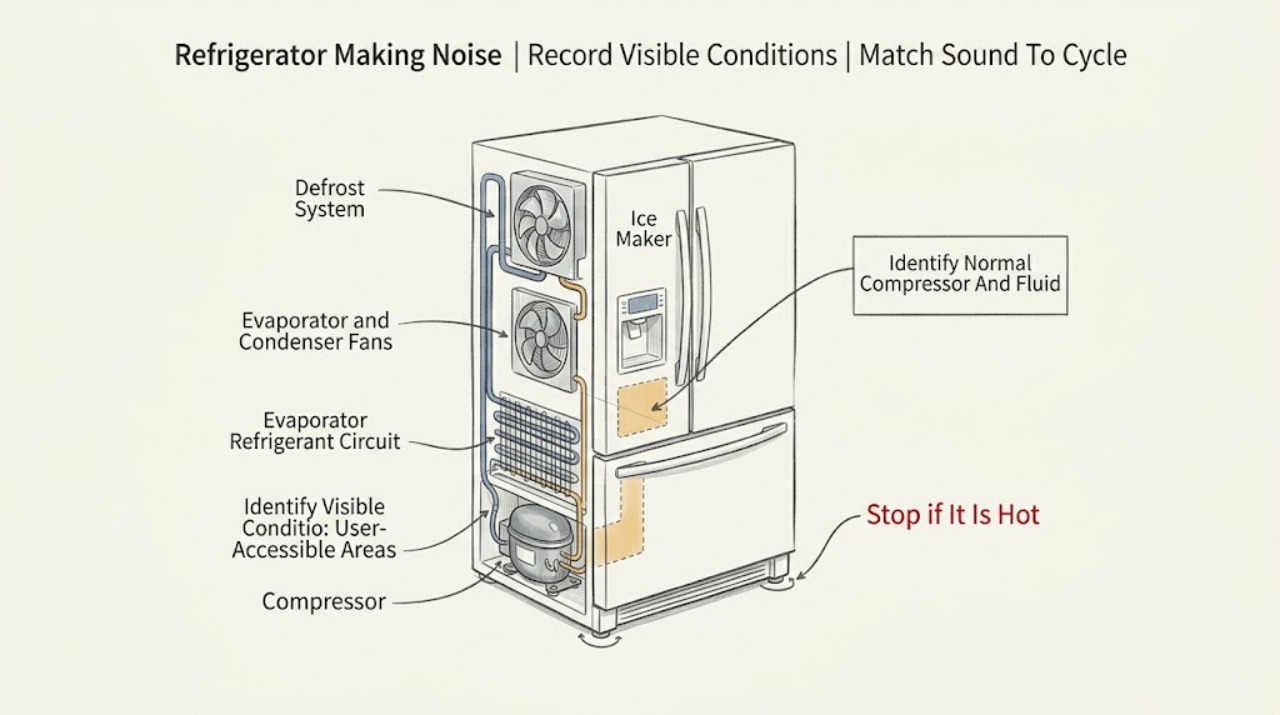
Crosley Refrigerator Making Noise
A Crosley refrigerator can make normal hum or pulsating compressor sounds, fan airflow, gurgling as refrigerant moves, whooshing as door pressure equalizes, clicks during a restart or defrost, and sizzling or dripping during automatic defrost. First note where and when the sound occurs and whether the refrigerator is cooling normally.
-
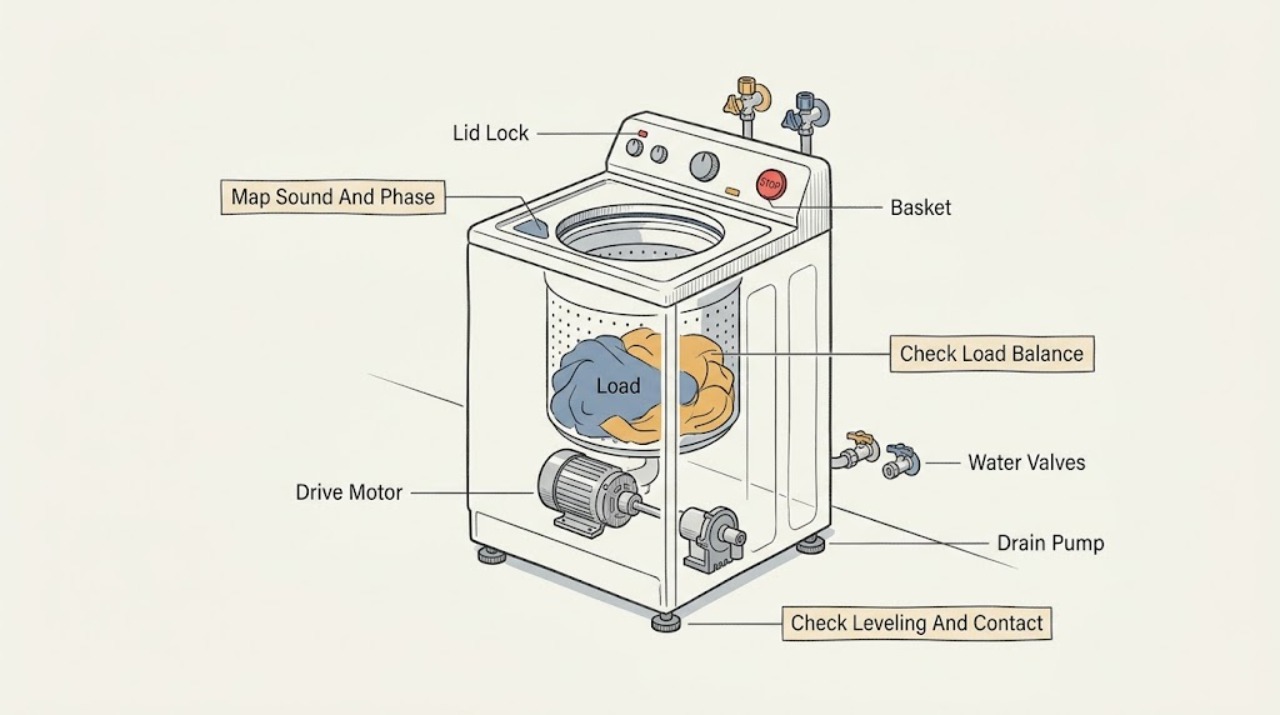
Crosley Washing Machine Making Noise
A Crosley washer can make normal clicking, water-flow, gear, electric-hum, or motor sounds, but a new scrape, grinding noise, repeated hard knock, or violent movement needs a stop-and-check decision. Note whether the sound occurs during fill, wash agitation, drain, or spin.
-
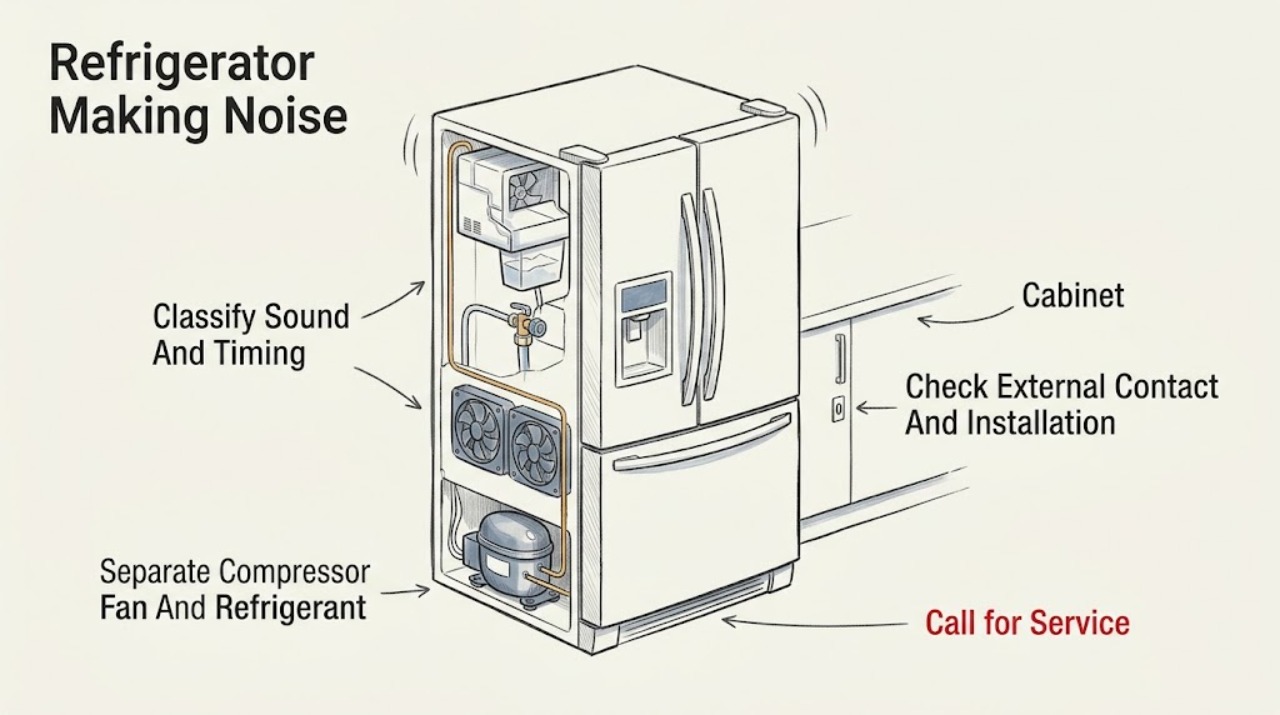
Dacor Refrigerator Making Noise: What the Sound Usually Means
A Dacor refrigerator is not expected to be silent. A soft compressor hum or changing motor tone, fan airflow, refrigerant gurgle or hiss, brief defrost sizzling, and ice-maker fill or ice-drop sounds can be normal when cooling is stable and the sound follows the related cycle.
-
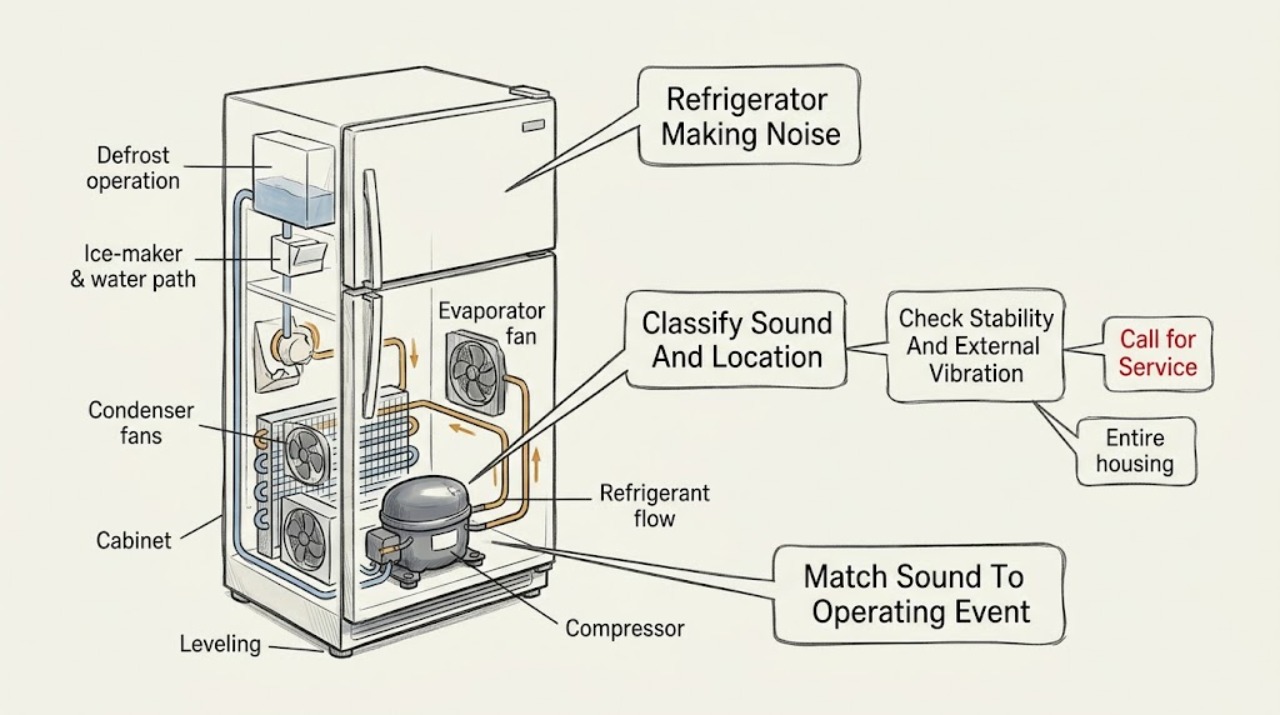
Daewoo Refrigerator Making Noise: Normal Sounds and Safe Service Clues
Many Daewoo refrigerator sounds are part of normal operation: a compressor hum or brief louder startup, bubbling or splashing as refrigerant moves, air movement from a fan, water flow during defrost, and cracking as materials expand or contract. The Daewoo user-manual guidance also lists dust on the condenser, insufficient rear or side space, an overloaded cabinet, a door that is not closed properly, and an unlevel surface as things to check when operation is poor or noisy.
-
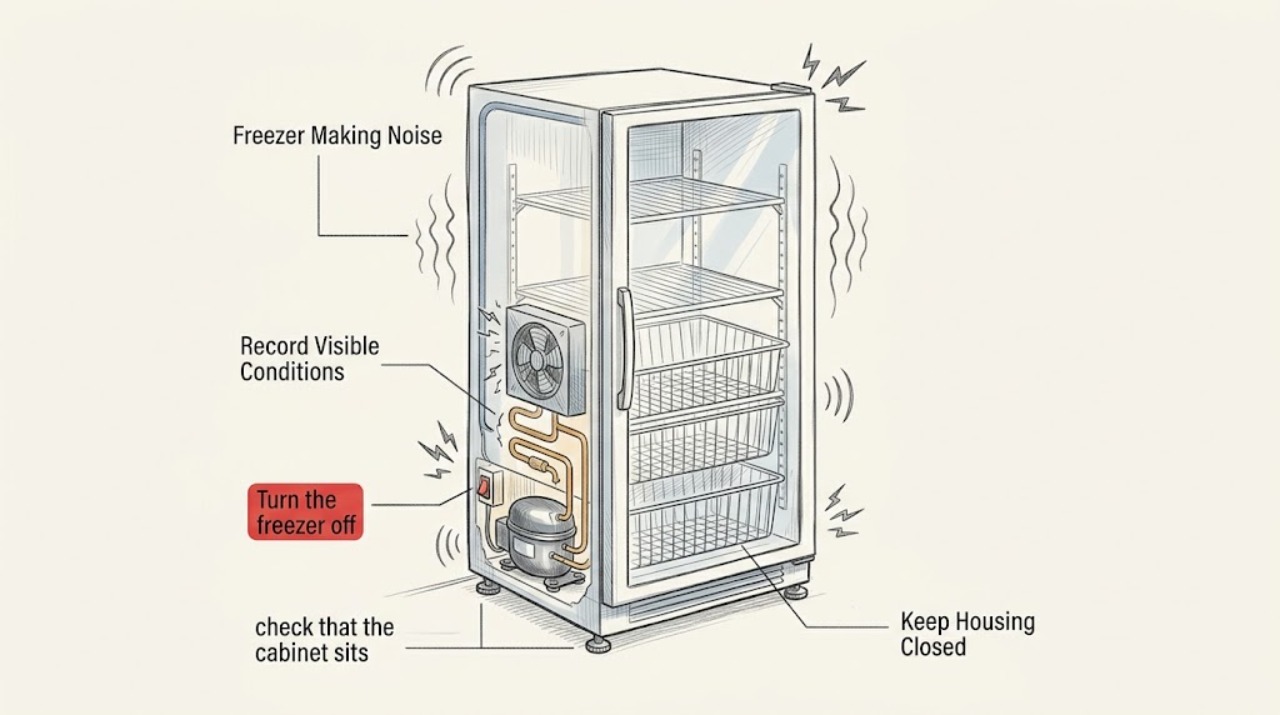
Danby Freezer Making Noise: Identify Normal Sounds and Safe Checks
First identify the sound and when it occurs. Danby says gurgling can be normal refrigerant circulation, popping or cracking can come from parts expanding and contracting, and a louder compressor start can settle as the cycle continues.
-
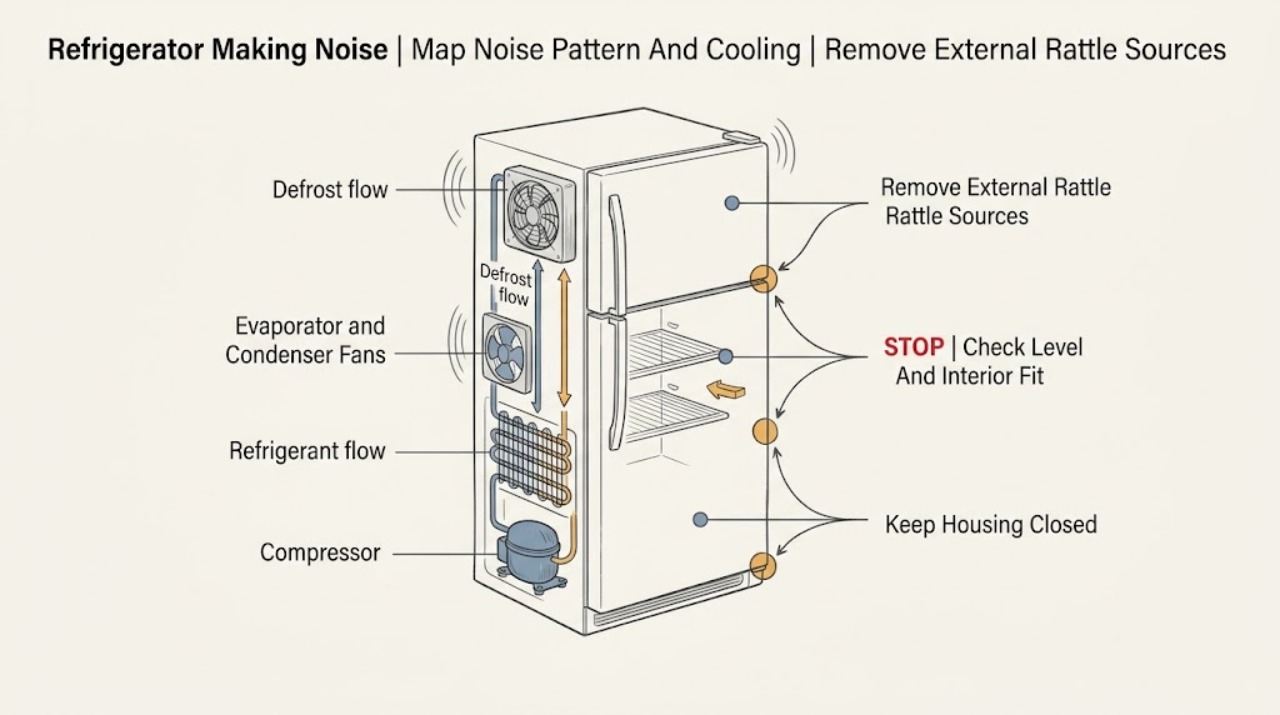
Danby Refrigerator Making Noise: Separate Normal Cooling Sounds from Vibration
First record when the sound occurs and whether cooling remains normal. Danby manuals describe compressor running, fan airflow, refrigerant gurgling, clicks before compressor start, defrost sizzling, water entering the drain pan, and cabinet expansion or contraction as sounds that can be normal for particular models.
-
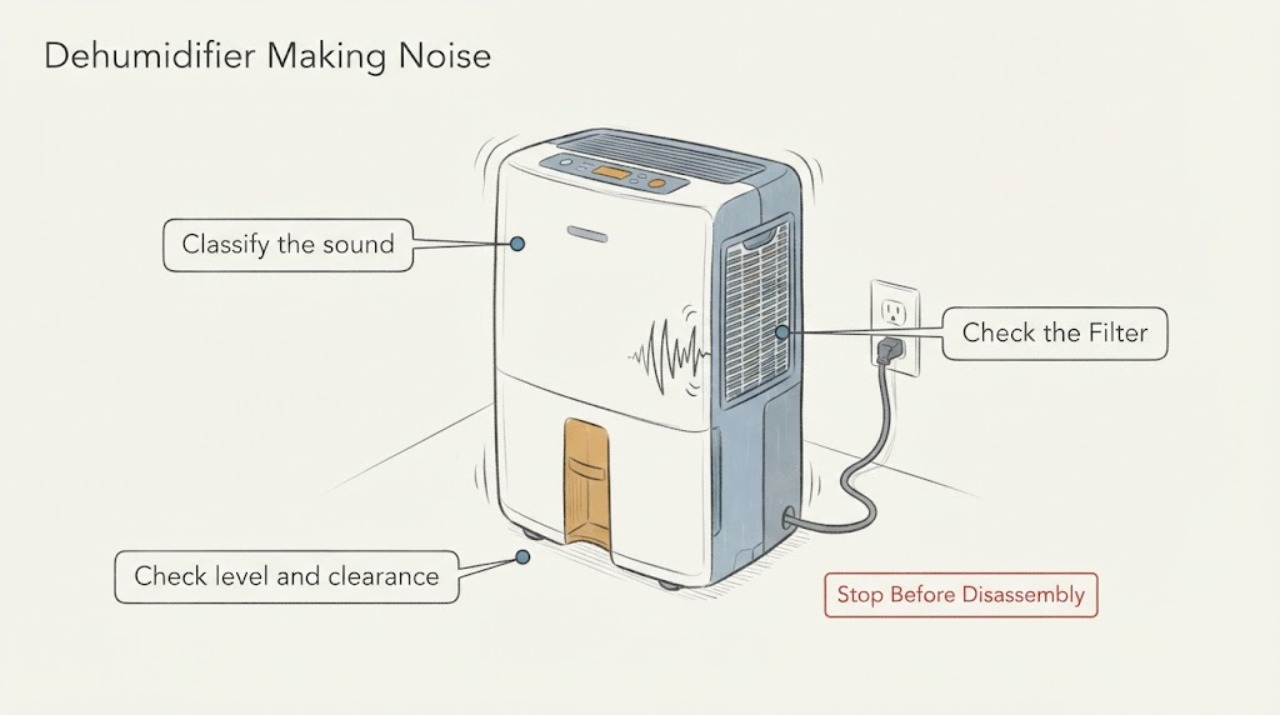
Dehumidifier Making Noise
For a dehumidifier making noise, identify whether the sound is fan airflow, compressor hum, vibration, rattling, or scraping. Check level, clearance, filter, bucket, and hose externally after unplugging. Persistent loud noise, overheating, leak, or damaged fan needs service.
-
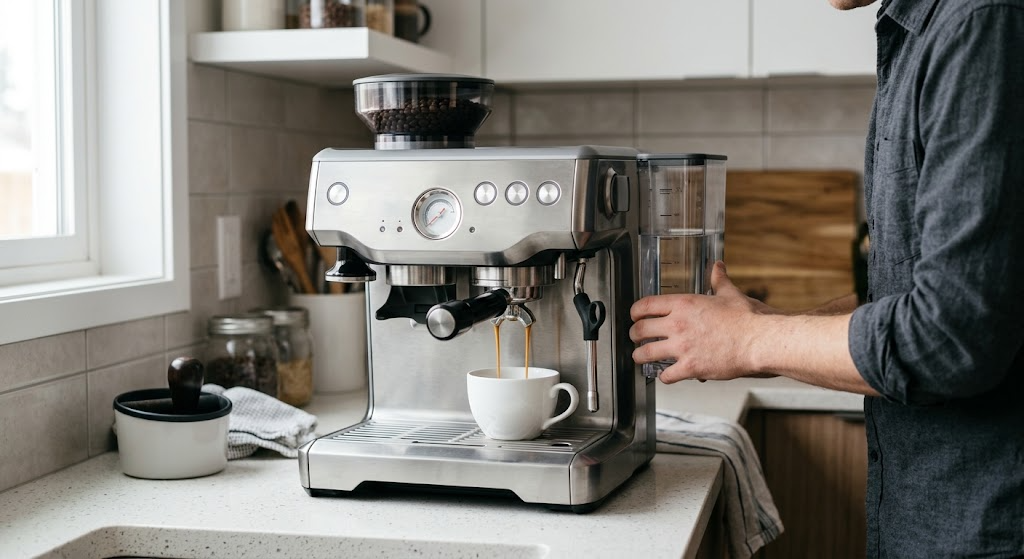
DeLonghi Coffee Maker Making Noise: Separate Normal Cycles from a Fault
A DeLonghi coffee maker can make different sounds during grinding, pumping, rinsing, steaming, and heating, so identify when the noise starts before treating it as a failure. A brief pump hum or vibration during water delivery may be normal, but first make sure the machine is on a stable surface, the water tank is full and seated so its valve opens, and the filter, brew outlet, or coffee path is not blocked.
-
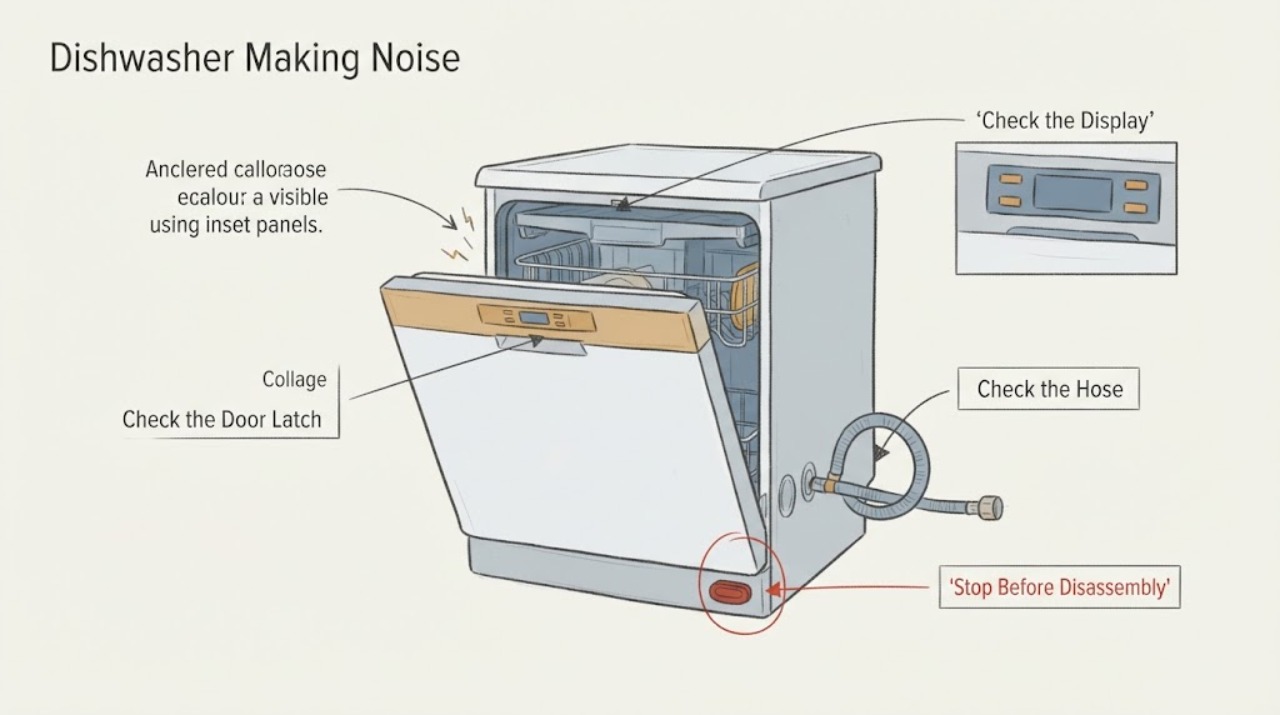
Dishwasher Making Noise
To troubleshoot a dishwasher that is making noise, first identify the exact stage and accompanying signs, then make only the safe external checks supported by the owner guidance. Stop for hazards or recurrence and arrange qualified service.
-
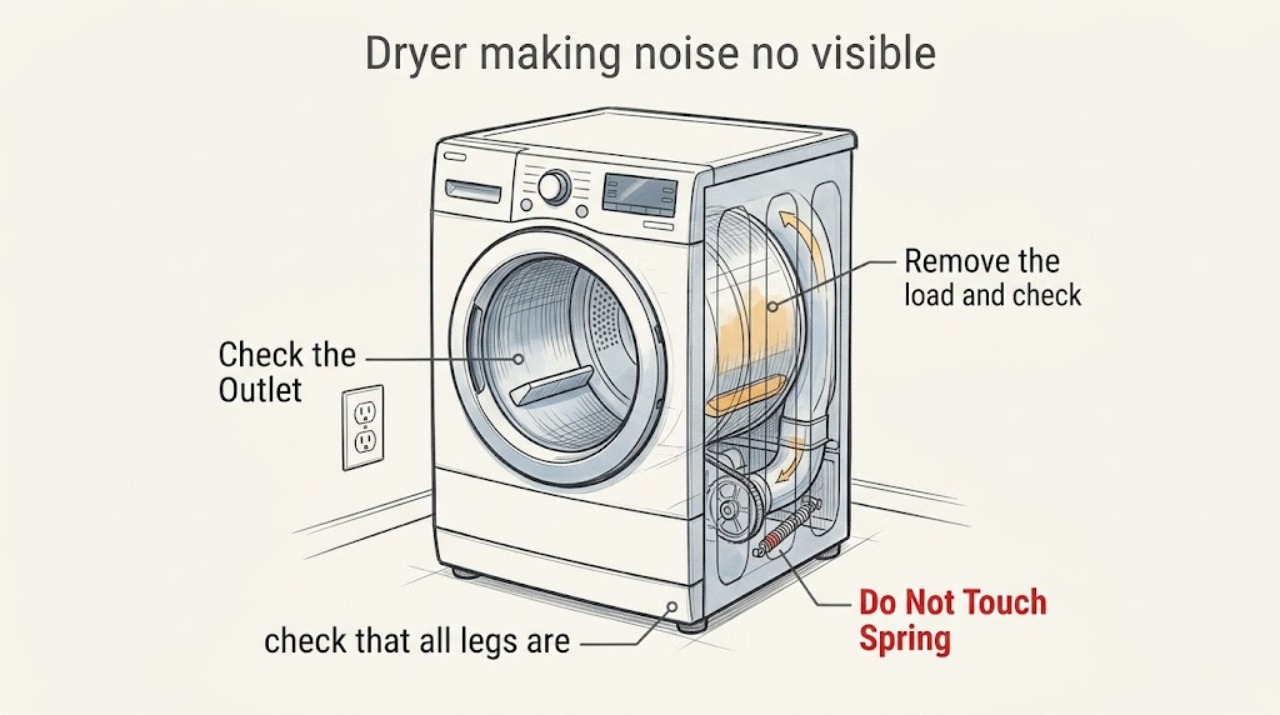
Dryer making noise no visible damage: What to Check and What to Do Next
A dryer can make noise even when no damage is visible from the outside. Common explanations include a twisted load, coins or fasteners in the drum seam, a missing or unlevel leg, an exhaust tube or pedestal vibrating, rollers that temporarily flatten after storage, or internal wear in the drum rollers, glides, idler pulley, belt, motor, blower wheel, or bearings.
-
Dryer Making Noise While It Still Tumbles: What to Check and What to Do Next
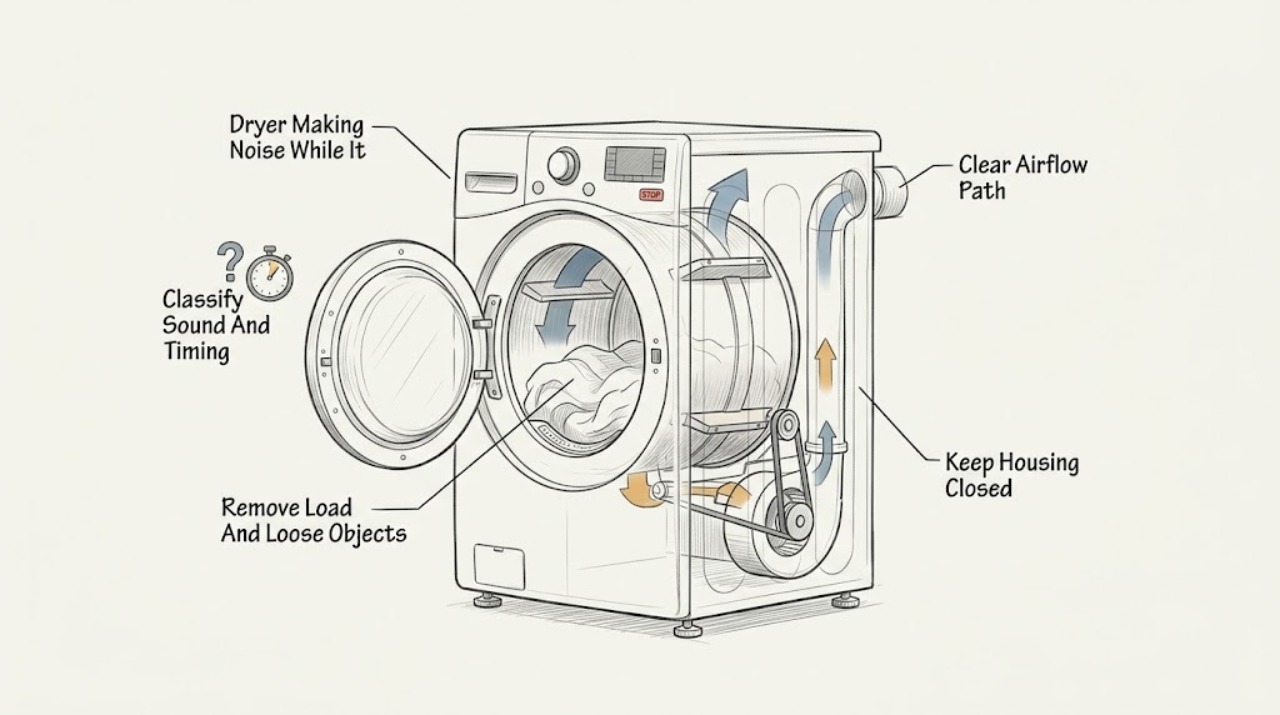
A dryer that still tumbles can make harmless load or cabinet noises, but a new or worsening sound can also be an early sign of worn drum supports, an idler, belt, blower wheel, or motor. First identify whether the sound is clicking, thumping, rattling, scraping, squealing, grinding, rumbling, or humming and when it occurs.
-
Dryer making noise that changes with drum speed: What to check next
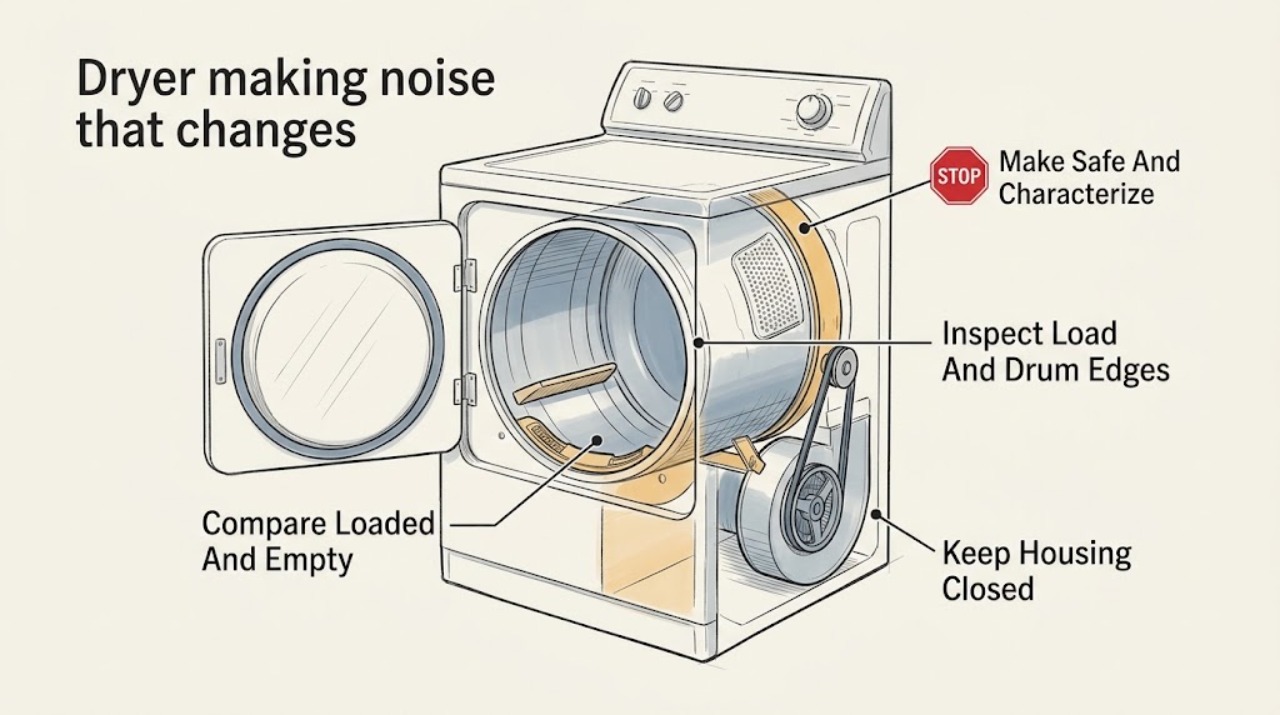
When a dryer noise speeds up, slows down, or repeats with the rotating drum, first treat it as a rotation-related symptom rather than guessing at a single part. Stop the cycle, remove the load, and check for loose objects at the drum edges, a tangled or heavy load, contact with the cabinet or vent, and an unlevel dryer.
-
Dryer Making Noise: Identify the Sound Before Replacing Parts
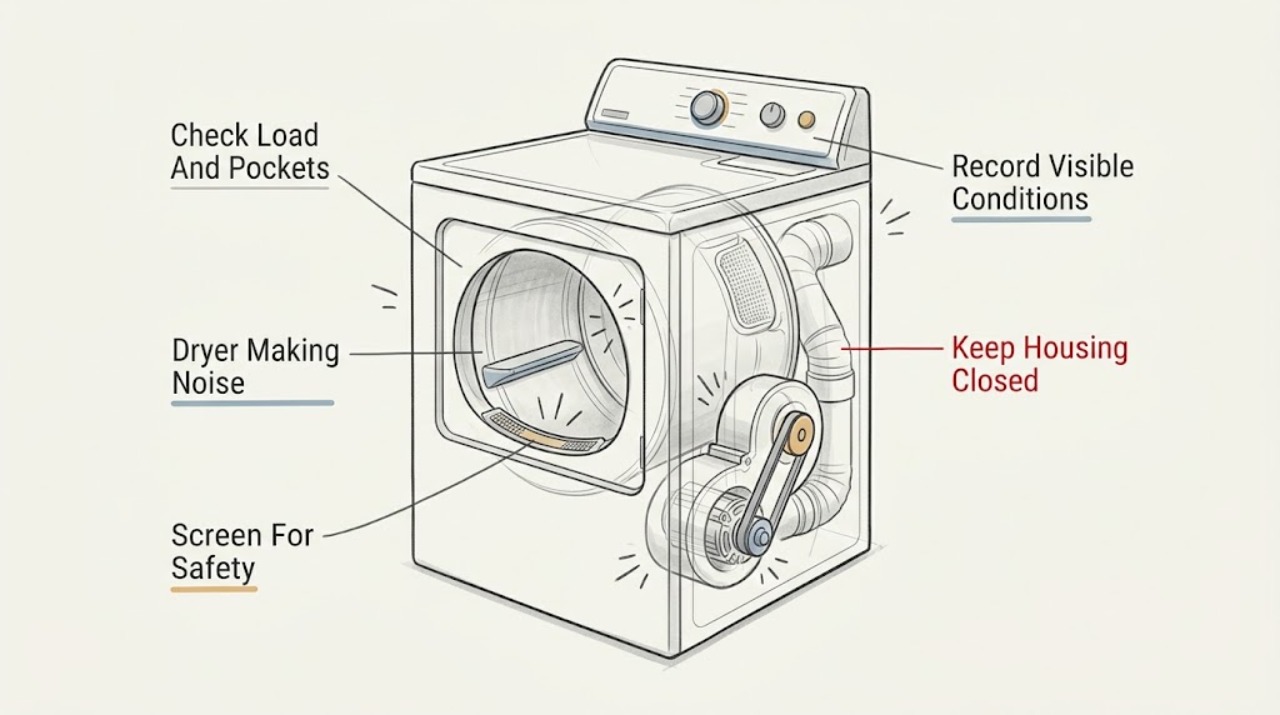
A dryer making noise should be diagnosed by sound type, timing, location, and whether the drum is empty or loaded. Rattling often points to pockets, zippers, the exhaust duct, a loose object, or the cabinet touching something; thumping can come from a balled-up load, an unlevel floor, or rollers after storage; humming may be a normal blower or, on models equipped with one, a condensation pump.
-
Dyson Vacuum Cleaner Making Noise: Safe Checks by Sound
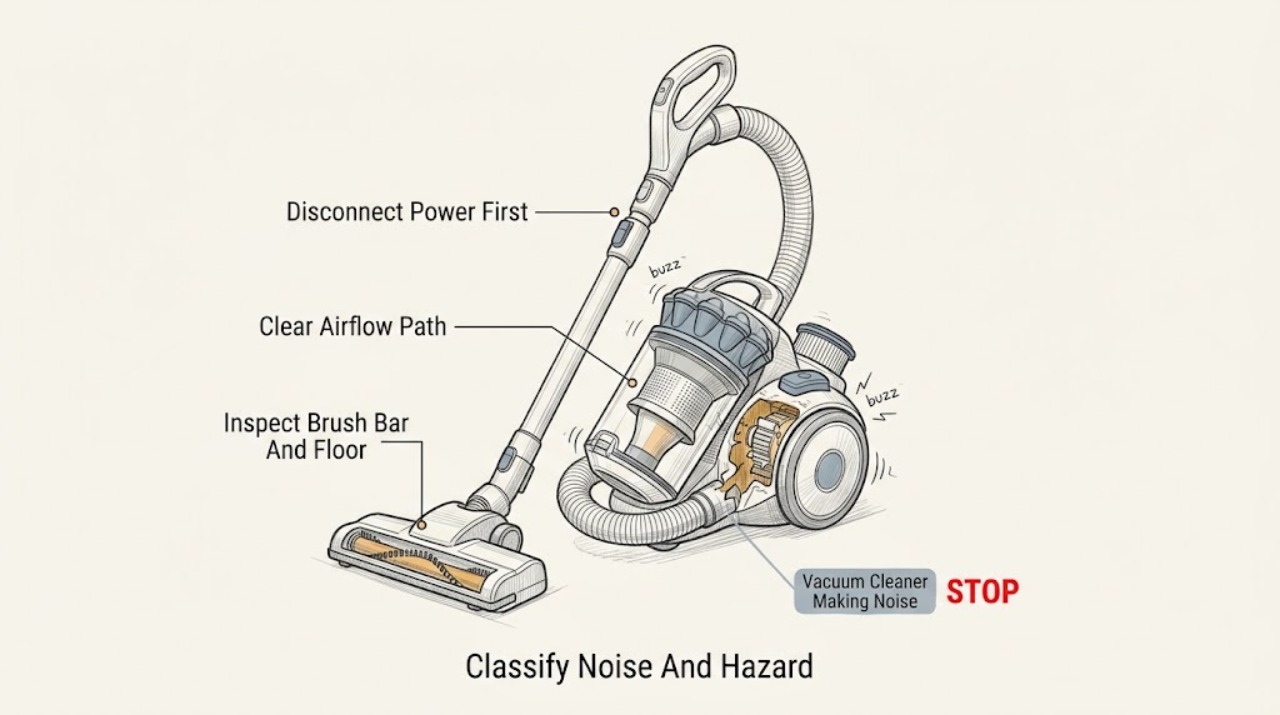
A Dyson vacuum making noise should be diagnosed by the sound and by what changes when the detachable air path or floor tool is isolated. A whistle or hiss commonly makes a blockage or damaged or missing seal more likely; a ratcheting, clicking, or chattering sound at the cleaner head makes hair, threads, or another brush-bar obstruction more likely; pulsing or surging makes a blockage or clogged filter more likely.
-
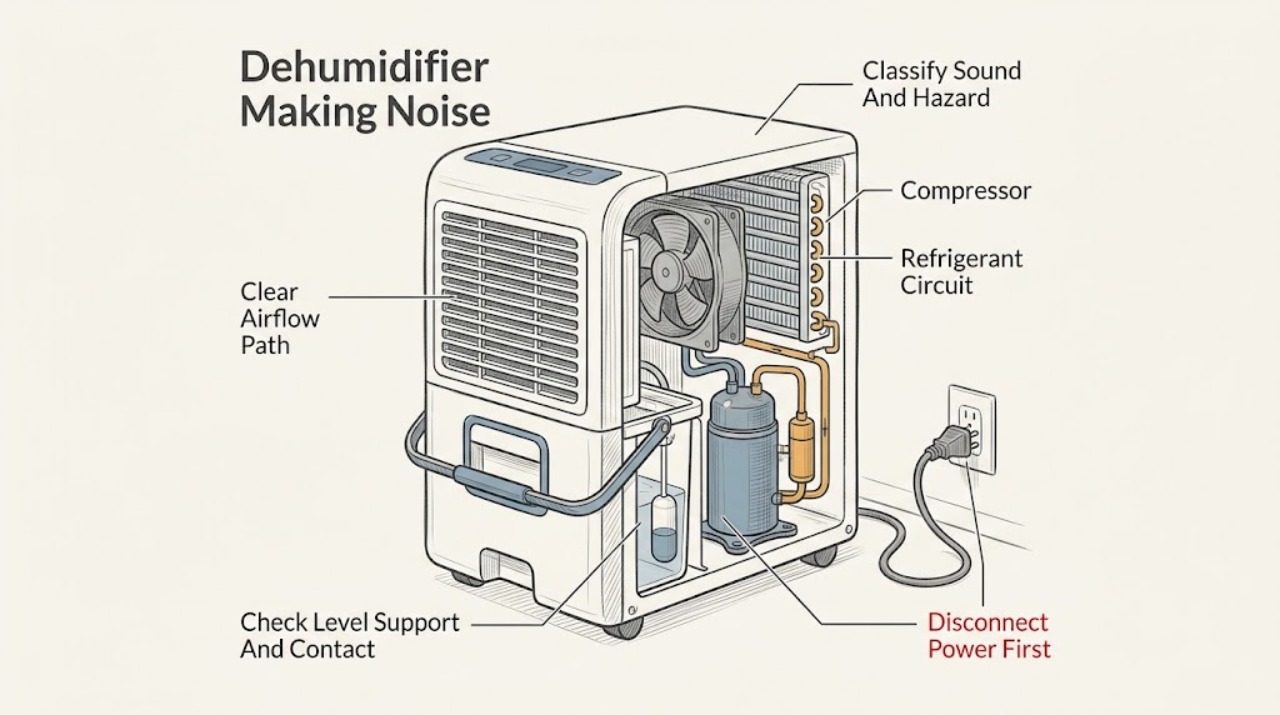
Electrolux Dehumidifier Making Noise: Normal Sounds, Vibration, and Safe Checks
First identify when the sound occurs and whether it matches normal operation. Electrolux dehumidifier manuals describe rushing air from the fan, dripping water during dehumidification, gurgling or hissing from refrigerant movement, and a high-pitched compressor chatter as normal model-family sounds.
-
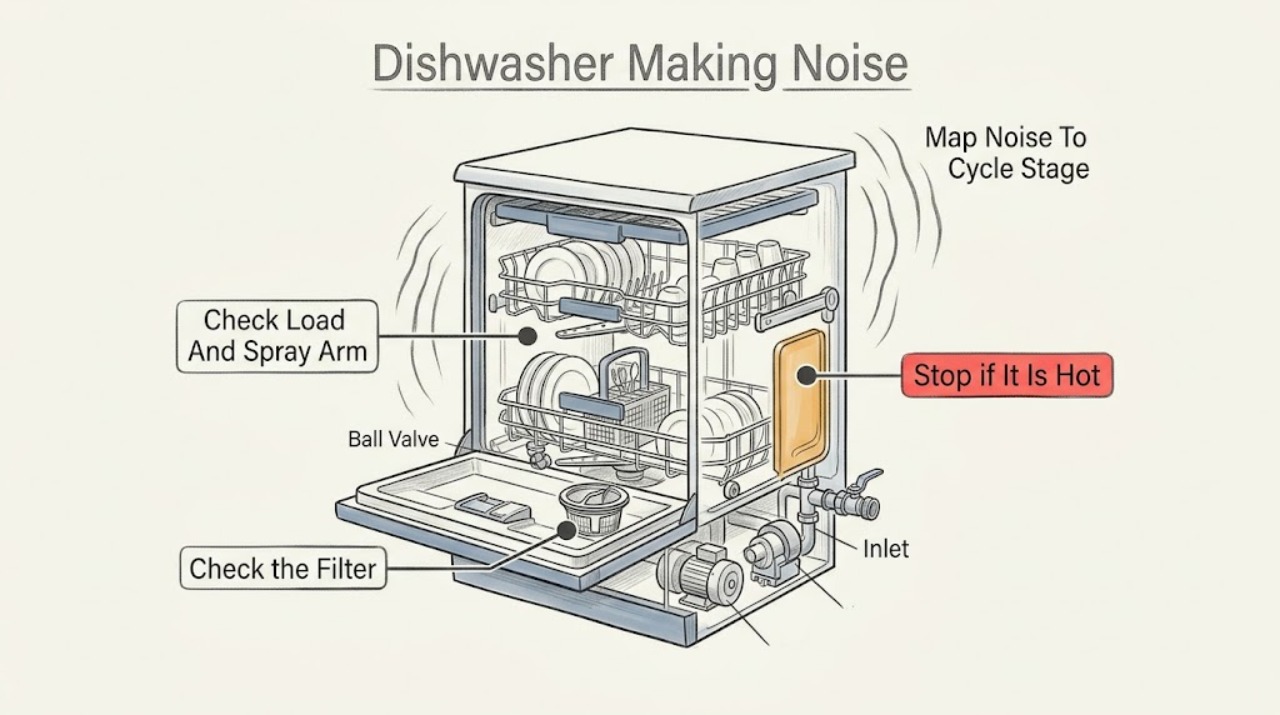
Electrolux Dishwasher Making Noise: Tell Normal Wash Sounds from a Fault
Identify when the Electrolux dishwasher makes the noise before treating it as a failure. Hissing during fill, water whooshing as spray arms alternate, a wash-pump hum, a drain-pump hum that changes as water leaves, a detergent-dispenser clunk, and a drying-fan sound on models equipped with that feature can be normal.
-
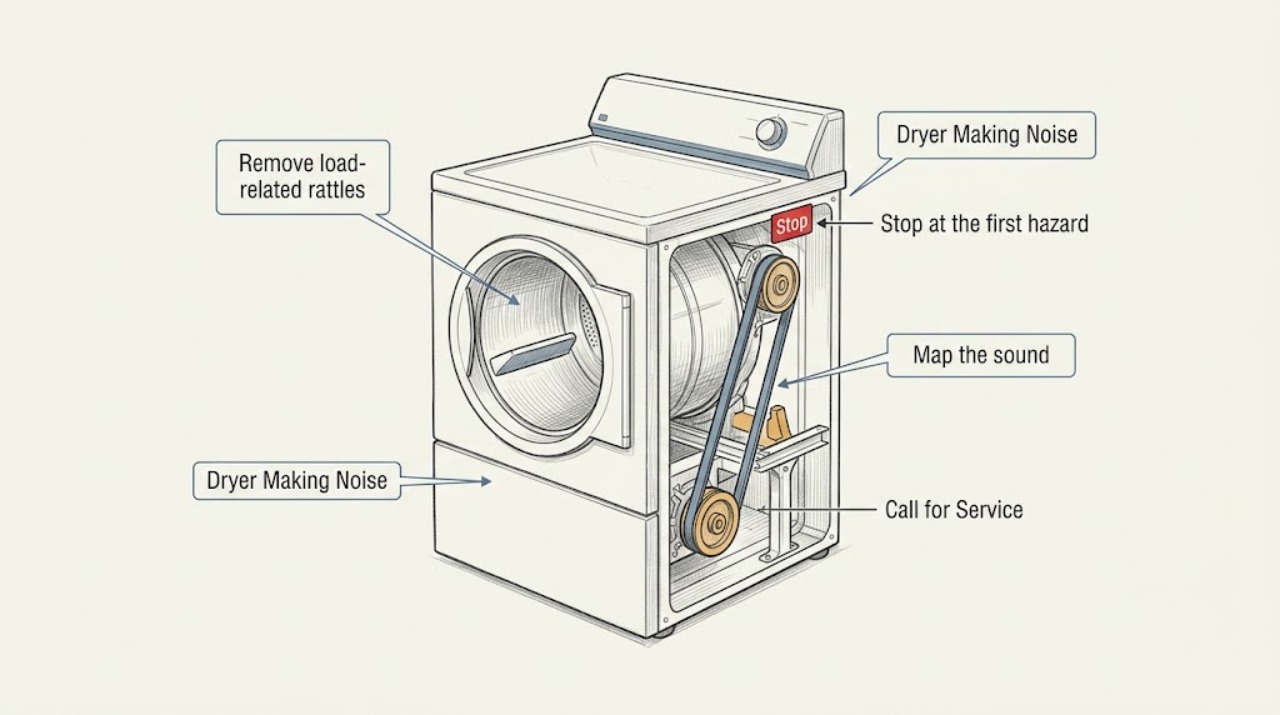
Electrolux Dryer Making Noise
Stop the dryer if the sound is accompanied by scraping, burning odor, smoke, a hot electrical connection, a gas odor, or a drum that is not turning normally. With the dryer off and cool, empty pockets and inspect the drum for loose objects or fasteners, then identify whether the sound follows the load or remains with the appliance.
-
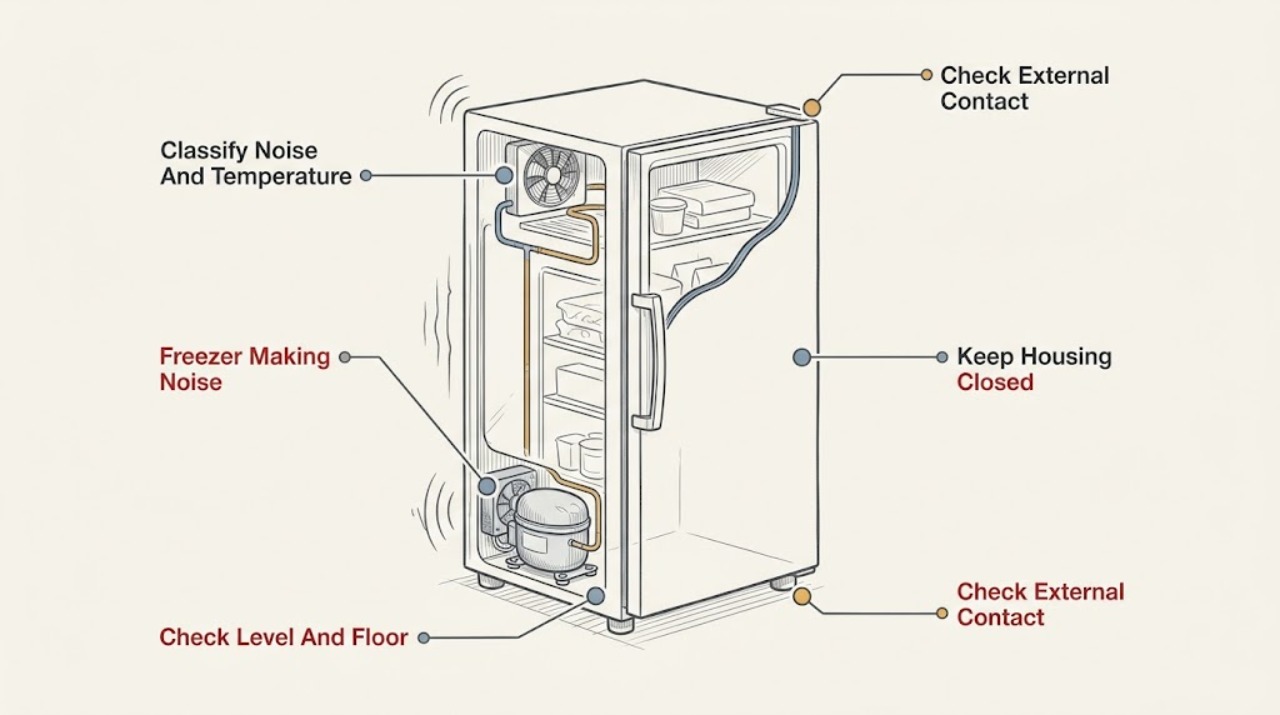
Electrolux Freezer Making Noise: Identify Normal Sounds and Stop Safely
First identify the sound and whether the freezer is holding temperature. Electrolux says popping or cracking when the compressor starts can be normal as metal changes temperature or refrigerant circulates, and that vibration or rattling can come from an unlevel freezer, contact with a wall, items on top, or items inside.
-
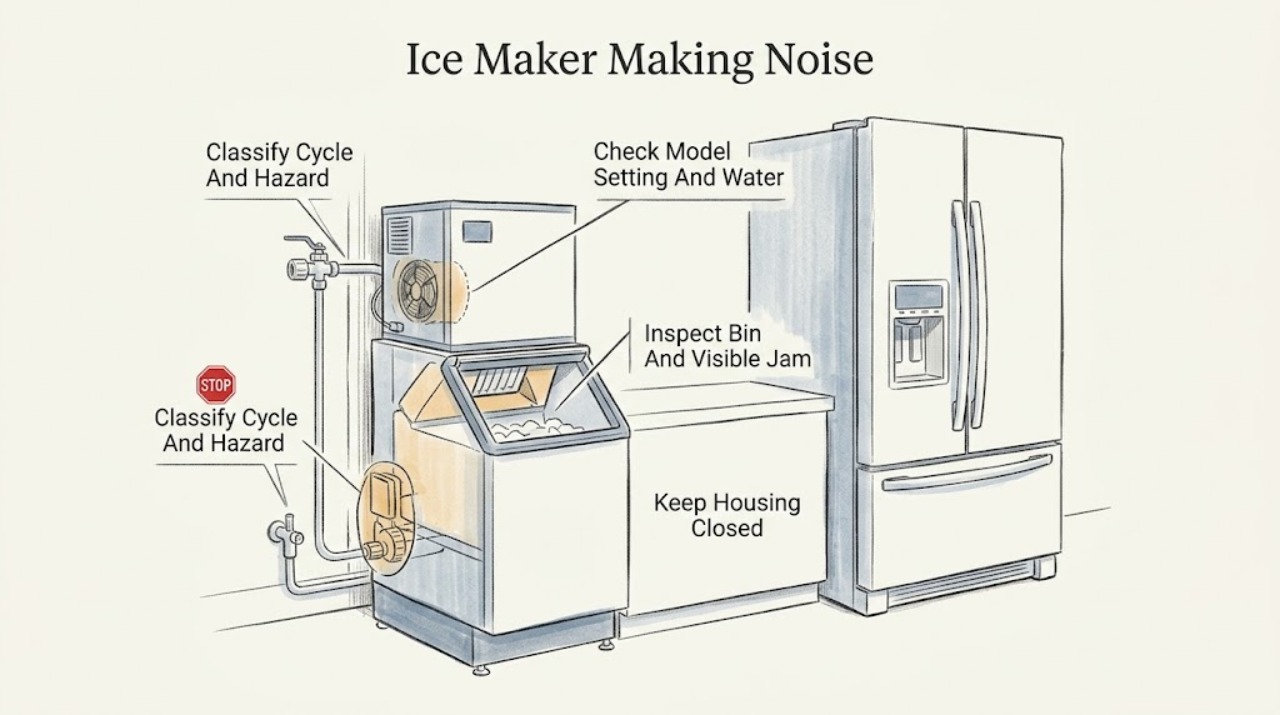
Electrolux Ice Maker Making Noise: Normal Cycles and Safe Checks
First identify when the noise occurs and whether the ice maker is actually making or dispensing ice. Electrolux says that a buzz can occur when the water valve fills the ice maker, a clunk or water-running sound can occur as cubes fall into the bin, and the ice-maker fan, valve, and refrigerant can make sounds during an ice-making cycle.
-
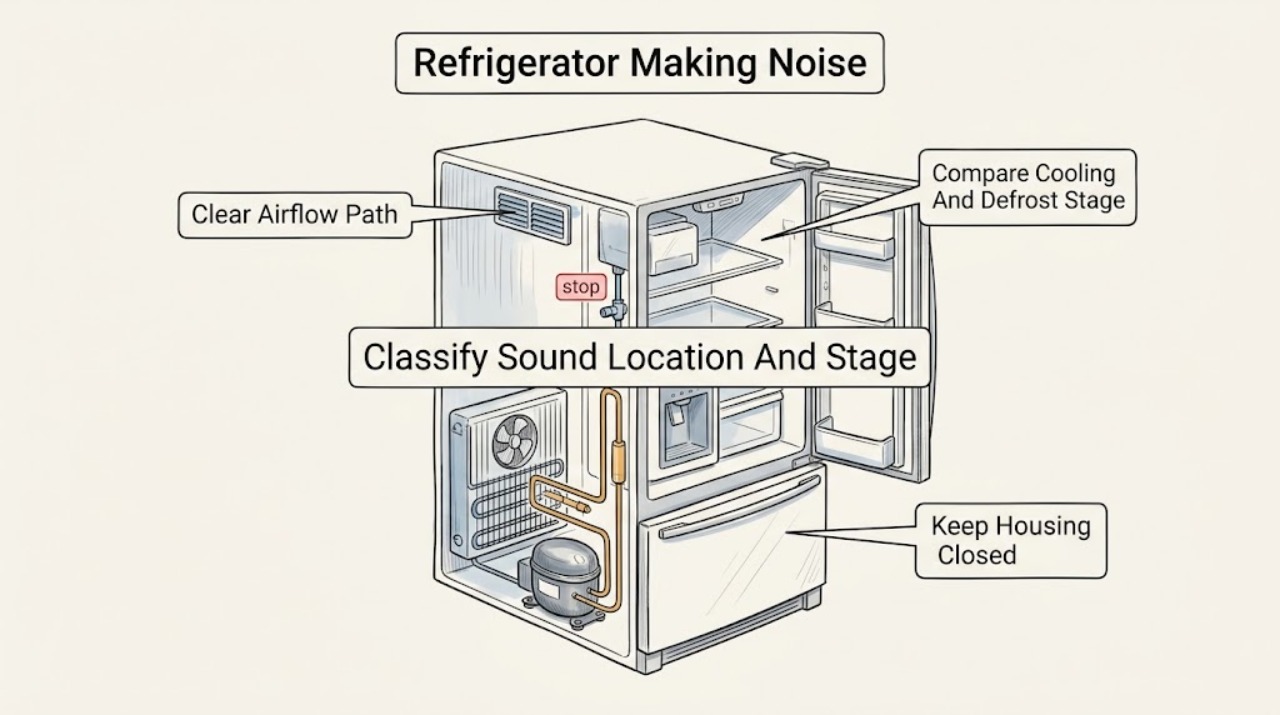
Electrolux Refrigerator Making Noise: Use Location and Run Stage to Narrow It Down
Start with where the Electrolux refrigerator noise comes from and when it occurs. A low hum or vibration during cooling can come from the compressor; rushing, blowing, or whistling can come from evaporator or condenser airflow; gurgling can be refrigerant moving through the evaporator; hissing or sizzling followed by a pop can occur during defrost; clicking, clunking, buzzing, or water sounds can occur during ice making or dispensing.
-
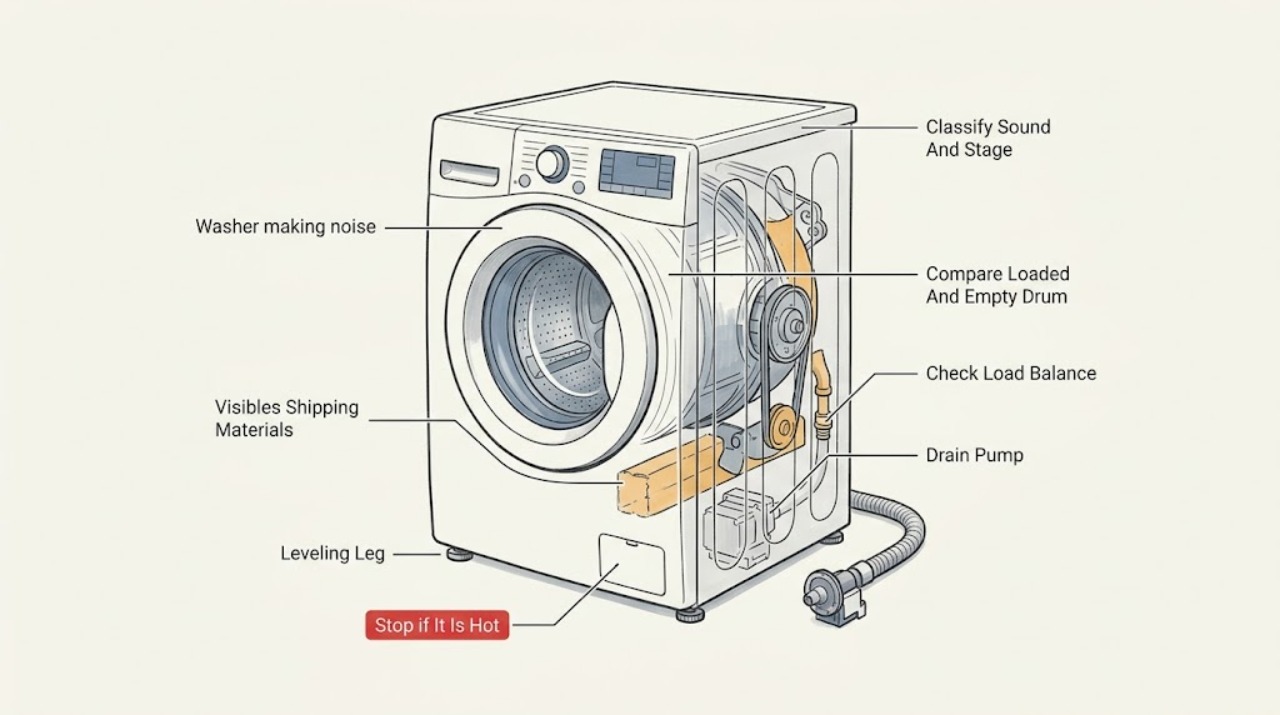
Electrolux washer making noise: What to Check and What to Do Next
First classify the Electrolux washer noise by sound and cycle stage. Water rushing while filling, gurgling while draining, a low hum from the drain pump, clicks from the door lock or water valve, and a high-pitched spin sound can be normal for the relevant stage.
-
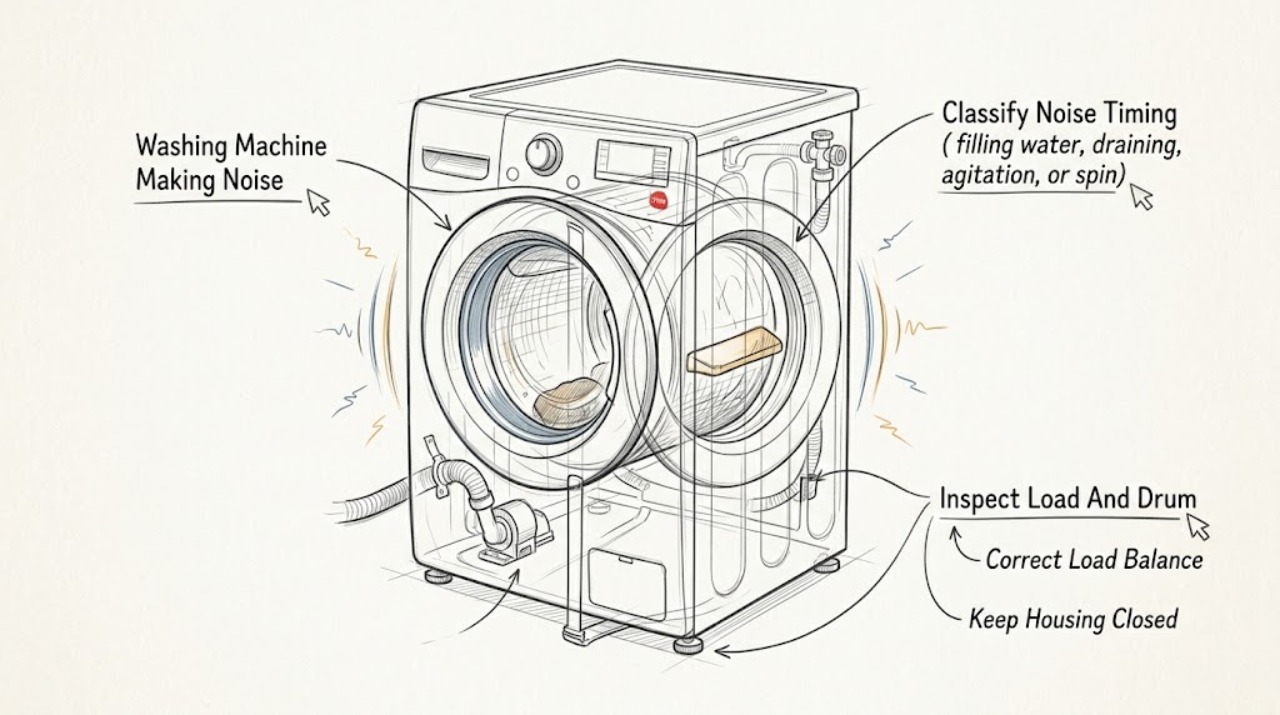
Electrolux Washing Machine Making Noise
An Electrolux washer can make normal clicks, water-filling sounds, draining gurgles, pump hum, or a high-pitched spin sound, but persistent rattling, clanking, knocking, shaking, or metal-on-metal noise needs isolation before you keep running it. Stop the cycle safely, wait for the door or lid to unlock, and remove loose objects from the drum and clothing fasteners.
-
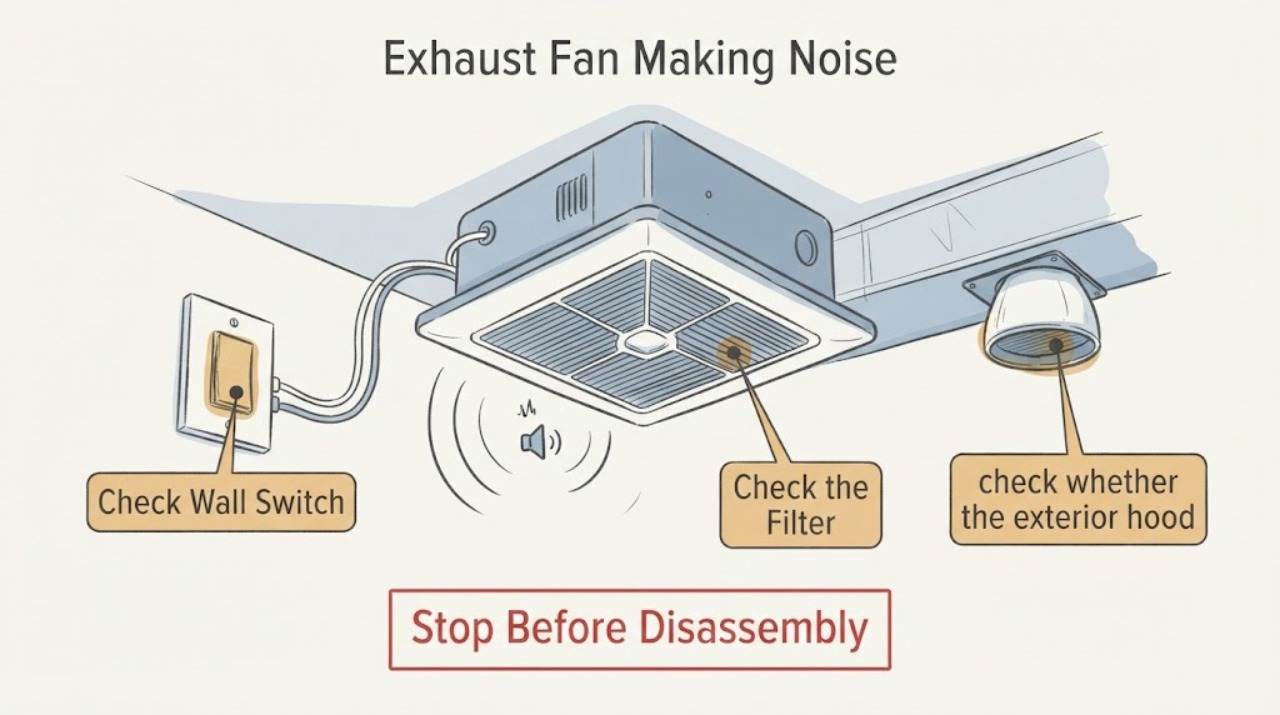
Exhaust Fan Making Noise: Separate Grille Vibration from Motor Faults
An exhaust fan making noise should be classified by whether the sound is a loose grille or vibration, a rattling flap or duct, a rubbing or grinding motor, or normal airflow. Turn it off before touching the grille, check only visible fasteners and the room-side grille, and confirm the outlet is not blocked from a safe location. If noise persists, airflow stops, the fan overheats, or wiring is exposed, isolate it safely and arrange qualified service.
-
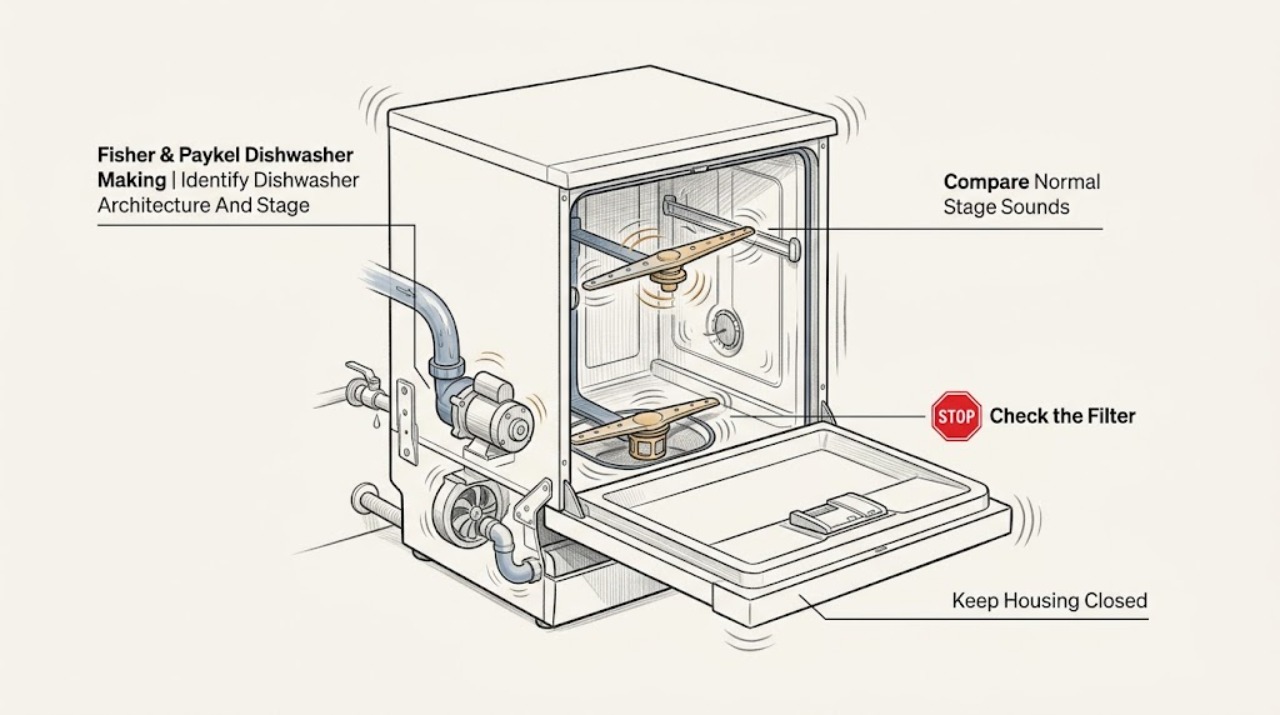
Fisher & Paykel Dishwasher Making Noise: Normal Sounds vs. Faults
First identify whether your Fisher & Paykel dishwasher is a single or double DishDrawer, an integrated or built-under installation, and when the sound occurs. A fan running after a wash, a quiet phase during a program, a pulsing sound while rinse aid dispenses, and some water-softener or drain sounds can be normal on the DishDrawer models covered by Fisher & Paykel guides.
-
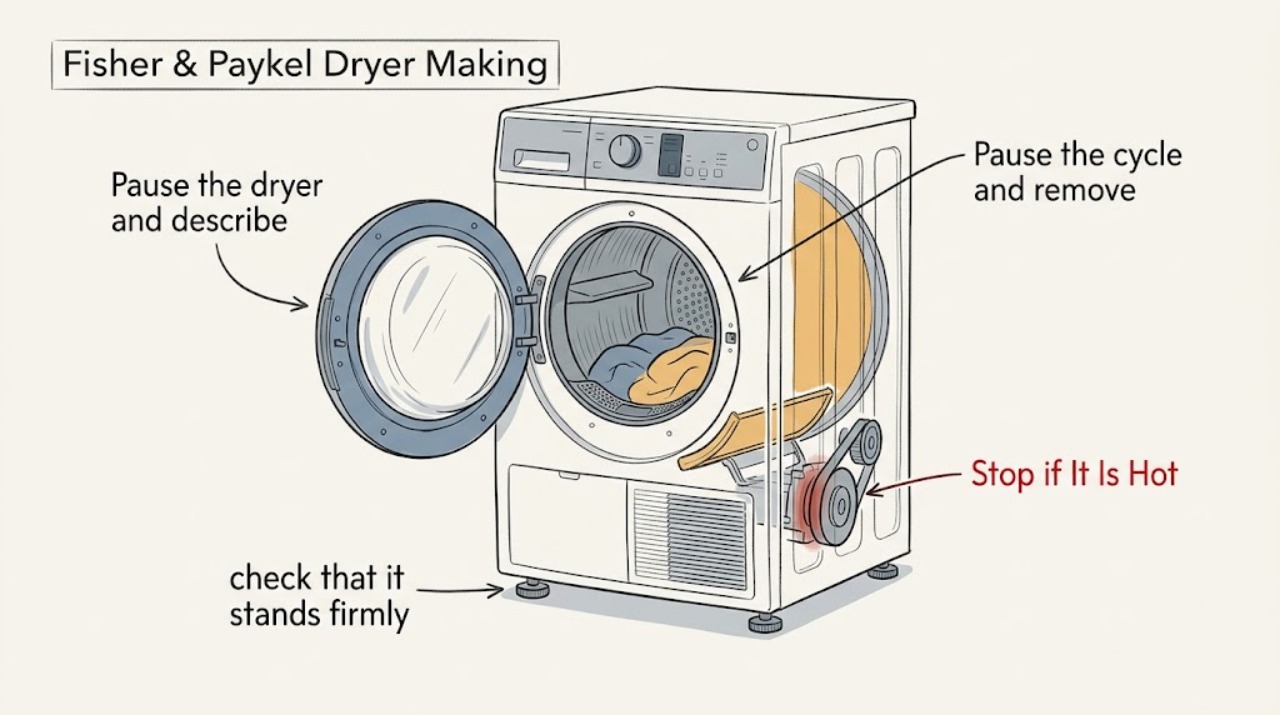
Fisher & Paykel Dryer Making Noise
Pause the Fisher & Paykel dryer and identify whether the noise is vibration, rattling, scraping, or a repeated alarm. The manufacturer's dryer guide lists an overloaded load, an unlevel dryer, the end of a cycle, or a dryer fault as possible explanations for vibrating or making noises.
-
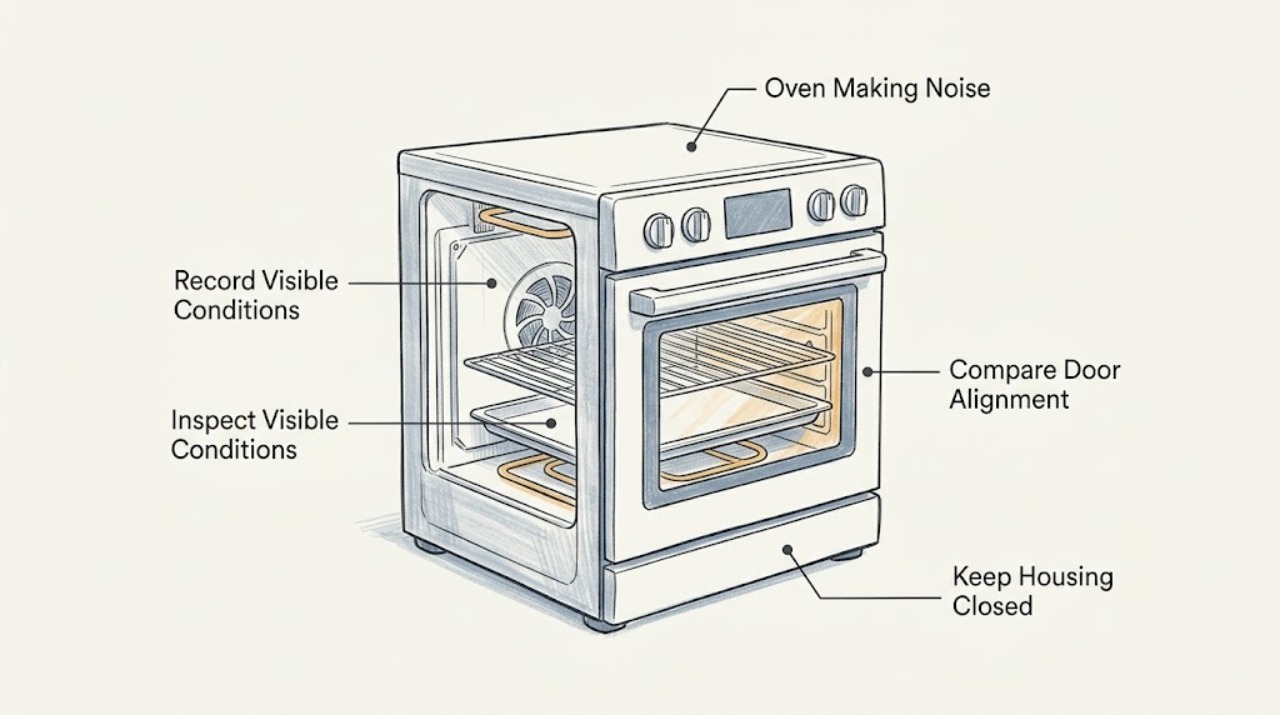
Fisher & Paykel Oven Making Noise
If a Fisher & Paykel oven is making noise, first record when the sound occurs: a cooling fan may run during cooking and after shutoff, and the oven fan may run during preheating on matching models. A loose rack or tray can also rattle.
-
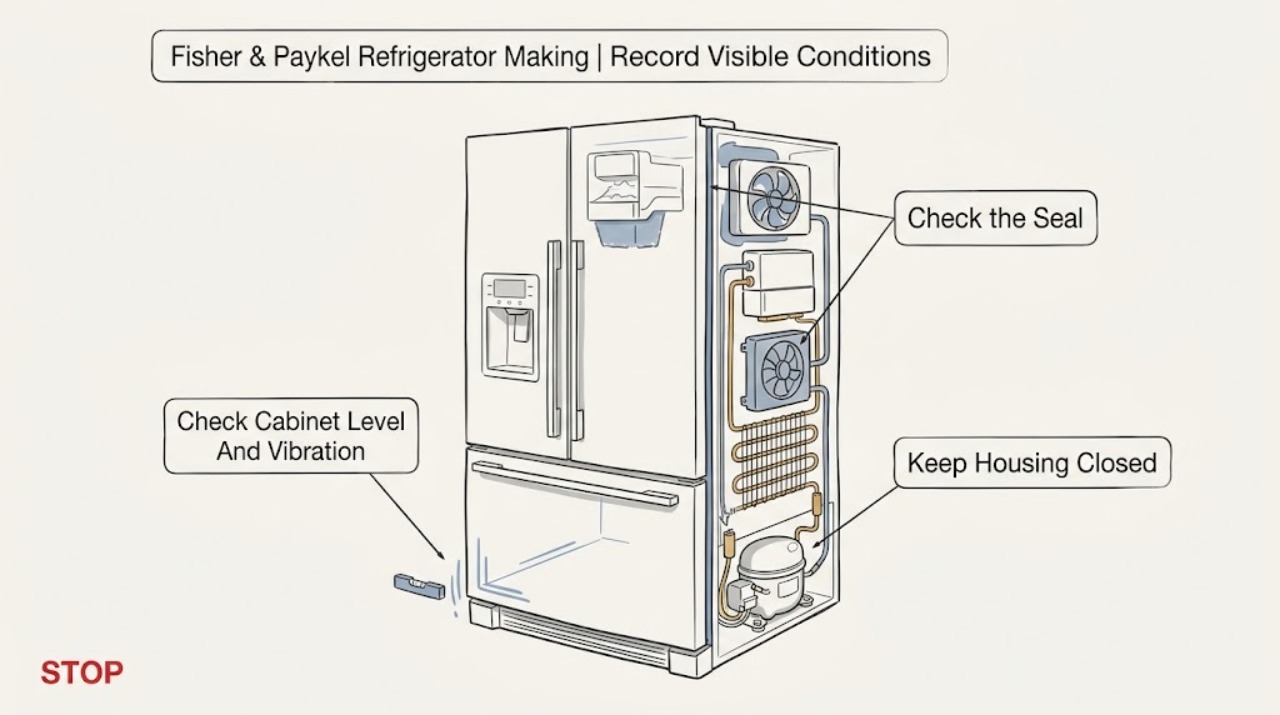
Fisher & Paykel Refrigerator Making Noise: Match the Sound to Its Location
First record where the Fisher & Paykel refrigerator noise comes from, when it occurs, and whether cooling, the display, or an alarm is also affected.
-
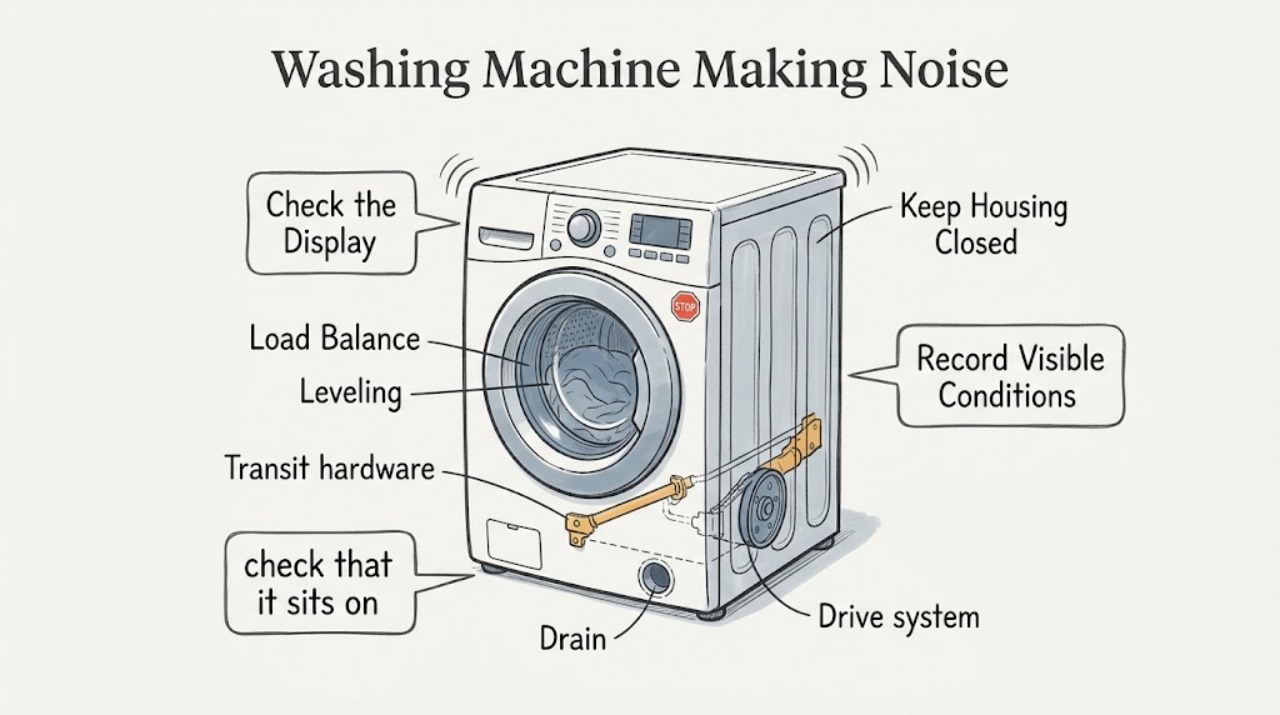
Fisher & Paykel Washing Machine Making Noise: Find the Load or Installation Cause
A Fisher & Paykel washing machine can make normal drain, fill, motor, or warning sounds, but banging and new vibration usually deserve a load and installation check first. Pause normally and redistribute the load, reduce an overloaded or bulky load, confirm the machine is level and stable, and verify that front-load transit bolts were removed after installation.
-
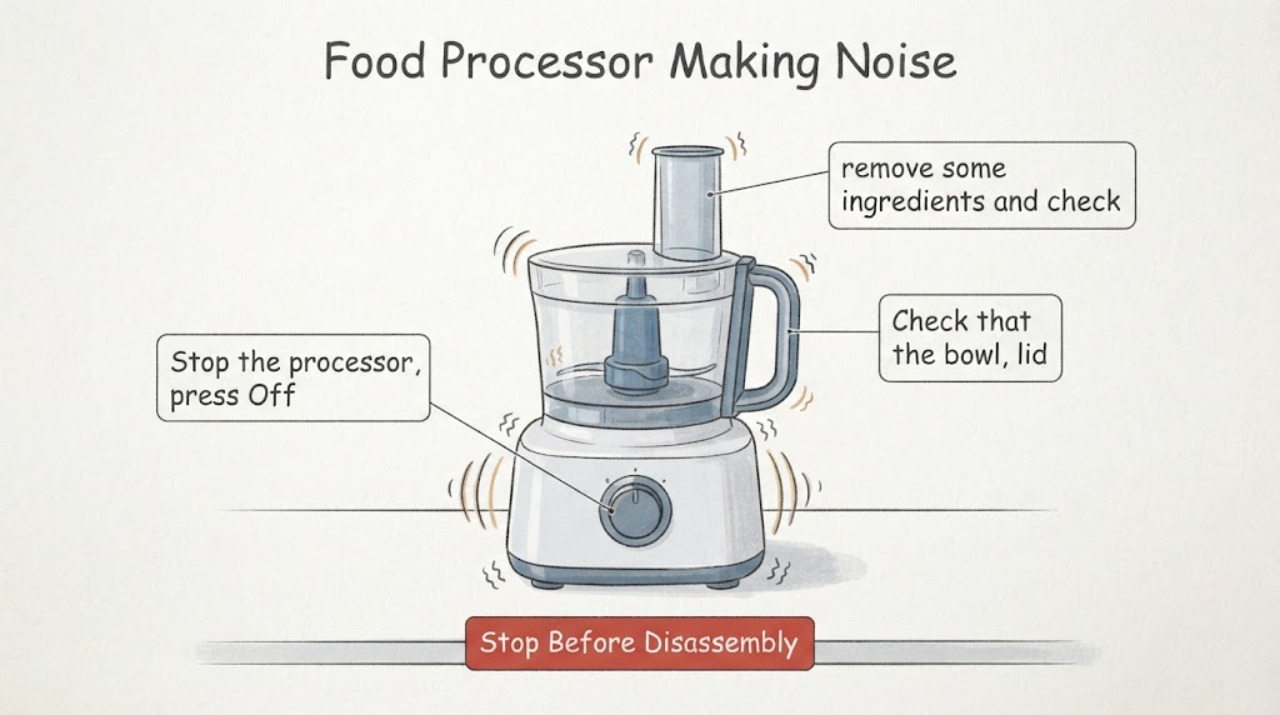
Food Processor Making Noise
A food processor’s noise pattern matters. A brief click or pop under a dense load can be clutch engagement, while repeated grinding, scraping, metal-on-metal noise, burning odor, or worsening movement is a stop-use signal. Turn it off and unplug it before touching the bowl, blade, or lid; then check load size, hard seeds or foreign pieces, assembly, and the level surface. If the noise returns with an empty correctly assembled bowl, arrange service.
-
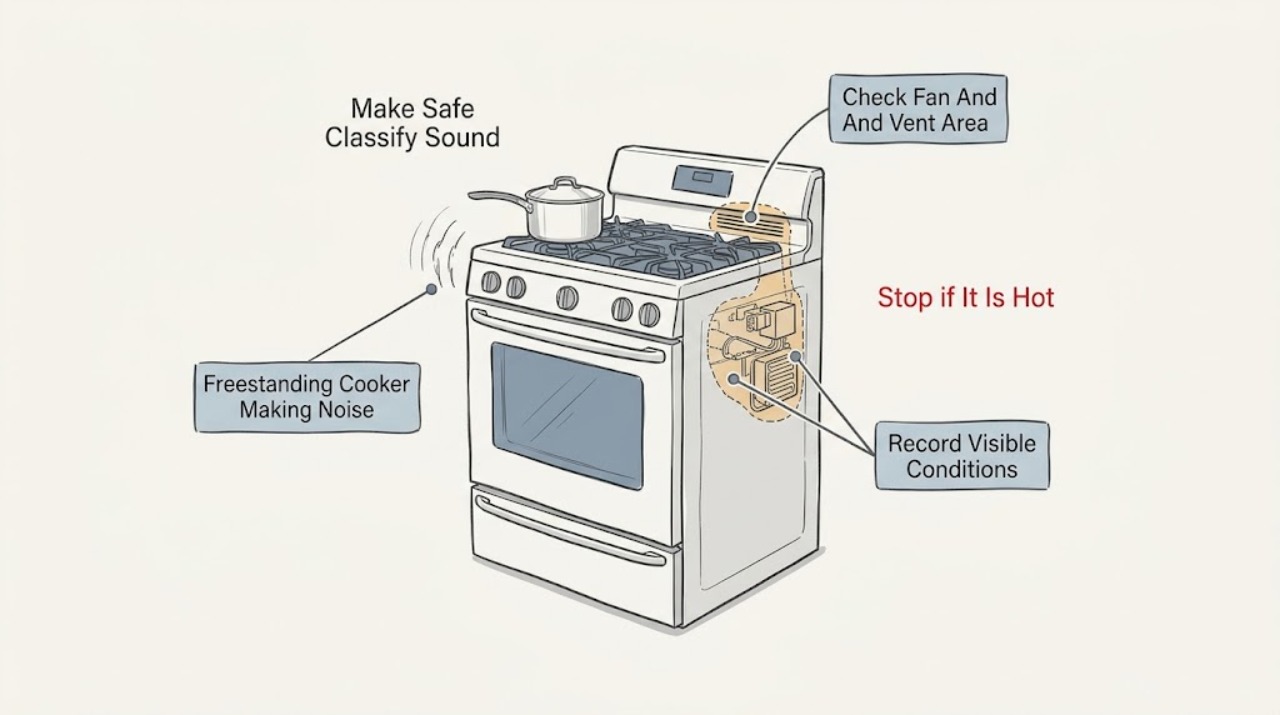
Freestanding Cooker Making Noise: Separate Normal Operation From a Dangerous Fault
First identify the cooker type and when the sound occurs: a fan during or after oven use, a relay or temperature-control click, metal popping as the appliance heats or cools, and short gas ignition clicks can be normal on suitable models. Continuous clicking after ignition, grinding or scraping, a loud electrical buzz, repeated arcing, an abnormal flame, smoke, a burning or gas odor, a hot control area, or a circuit trip is not a normal operating sound.