
On this page
Start here
Quick answer
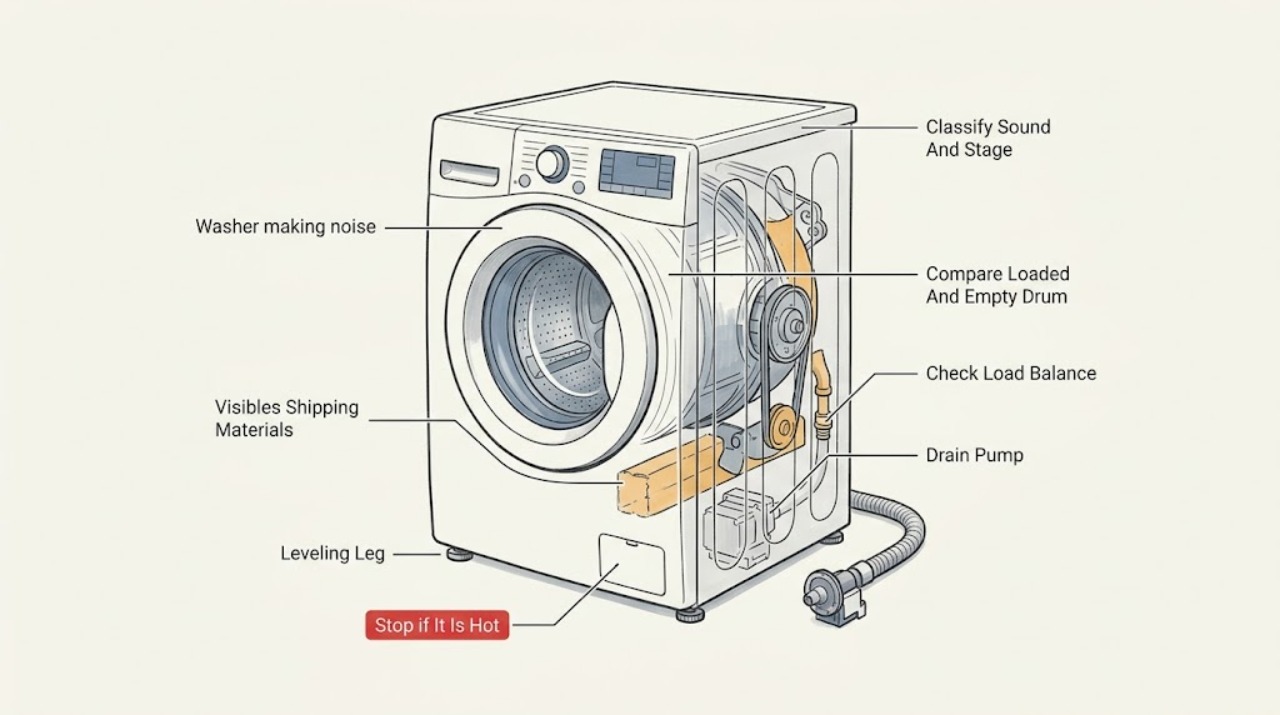
First classify the Electrolux washer noise by sound and cycle stage. Water rushing while filling, gurgling while draining, a low hum from the drain pump, clicks from the door lock or water valve, and a high-pitched spin sound can be normal for the relevant stage. Rattling or clanking may come from coins or metal fasteners, while thumping or shaking can follow a heavy or unbalanced load, shipping material left after installation, an unlevel floor, or loose drain-hose contact. Stop the washer and wait until the tub is stationary before checking laundry or redistributing a load. Do not keep running it for banging, metal-on-metal contact, violent walking, smoke, burning odor, a hot cord, or a water leak. If the noise continues during a model-permitted empty test after safe load and installation checks, arrange qualified service instead of guessing at a bearing, pump, or suspension part.
Work through in order
Diagnostic checks
Use only checks that match the exact appliance or system and its official guide.
-
Check 1
Stop changing settings and record the noise in plain words—click, hum, gurgle, rushing, rattle, clank, thump, scrape, or bang—along with whether it occurs during fill, wash, drain, or spin. Watch from a safe position for violent walking, smoke, burning odor, a hot cord, or a leak.
Expected result: The sound occurs only during a named stage and matches a normal operating sound, follows the load into spin, is metallic or scraping, or is accompanied by movement or a hazard.
Next step: Stop immediately for banging, metal scraping, violent walking, smoke, burning odor, a hot cord, or a leak. Otherwise use the matching check below and do not run repeated cycles just to reproduce a concerning sound.
Why this matters
Why: Stage-specific water, valve, lock, pump, or spin sounds may be normal. A load-dependent thump suggests balance or clothing; persistent metallic contact or violent movement is not an ordinary cycle sound.
-
Check 2
After the washer has stopped completely, remove loose items from pockets and inspect the visible drum for coins or other foreign objects. Fasten belt buckles and metal fasteners or turn garments inside out. Only if there is no banging, scraping, leak, or other hazard, use one empty cycle or model-approved short check to compare the sound.
Expected result: The noise disappears after an object or fastener is removed, occurs only with a particular load, or remains with the drum empty.
Next step: Keep the washer off for a foreign object that cannot be safely reached, metal contact, or a persistent empty-drum noise, and arrange service. Do not reach into a moving drum or remove panels.
Why this matters
Why: A load-specific rattle or clank is more consistent with clothing hardware or a loose object. Noise that remains in an empty drum shifts suspicion to the washer installation, pump, suspension, bearing, or drive path and cannot be diagnosed by sound alone.
-
Check 3
If the sound is a thump or the cabinet shakes during spin, stop the cycle and wait for the lid or door to unlock and all motion to stop. Redistribute clothing evenly; do not continue with a severely overloaded, single bulky, or already violent load.
Expected result: The tub is loaded heavily on one side, the noise occurs at the beginning of spin, the washer settles after redistribution, or it still shakes with a balanced load.
Next step: Run one suitable balanced load only if the washer is stable and quiet by observation. Stop and arrange service for repeated shaking, cabinet impact, walking, or a noise that remains with a balanced load.
Why this matters
Why: Electrolux associates occasional beginning-of-spin thumping with heavy loads and vibration with an unbalanced load. Continued shaking after a balanced load makes leveling, floor stability, suspension, or drive trouble more likely.
-
Check 4
For a new, moved, or stacked Electrolux washer, inspect only visible installation conditions: shipping materials or bolts still present, a washer that rocks, feet not firmly on the floor, loose stacking brackets, an unstable floor, or a drain hose striking or rubbing the cabinet. Do not move a heavy appliance while hoses or the power cord are connected.
Expected result: Shipping material remains, the unit rocks or sits on an unstable surface, stacking hardware is loose, or the drain hose slaps the cabinet; installation looks solid but the noise persists.
Next step: Use only the exact model's safe leveling or installation procedure and have assistance for any movement. Secure accessible hose contact only as the installation guide permits. Arrange service for persistent noise, loose hardware that cannot be safely corrected, or suspected internal contact.
Why this matters
Why: Electrolux lists shipping materials, level and solid floors, stacking hardware, and drain-hose contact as separate installation-related noise causes. A stable installation with persistent noise points beyond a simple leveling correction.
-
Check 5
If the sound occurs while water enters or leaves, observe whether it is rushing during fill, gurgling or bubbling during drain, a low hum from the pump, or a new grinding or rattling sound. Check only that the visible drain hose is not rubbing or unsecured; do not open the pump area.
Expected result: The sound matches the fill or drain stage, the drain hose hits the cabinet, the washer drains slowly or leaves water, or the sound is a new grinding or metal contact.
Next step: Secure only visible hose contact under the model instructions. Stop for grinding, metal contact, retained water, a leak, or a noise that worsens, and arrange qualified service rather than opening the pump or cabinet.
Why this matters
Why: Rushing, gurgling, and a low pump hum can be normal stage sounds. Hose contact can cause knocking. A new grinding sound or noise with slow drainage may indicate a foreign object or pump-side fault that needs model-specific diagnosis.
-
Check 6
Record the complete Electrolux model, washer style, cycle, load type, sound timing, whether an empty check changed it, and any code, leak, or movement. Keep the cabinet closed and compare the recording with the exact model guidance before considering a component.
Expected result: The noise returns with an empty drum, occurs in every load, is accompanied by a leak or vibration, or cannot be localized without disassembly.
Next step: Leave the washer out of service for persistent, worsening, or hazardous noise and provide the model and symptom pattern to a qualified technician. Do not order or install a part based only on the sound label.
Why this matters
Why: A persistent or empty-drum noise is less likely to be a clothing item and more likely to require an appliance diagnosis. Sound alone cannot confirm a shock absorber, drain pump, bearing, or drive component.
Use your observations
Decision map
Find the observation that best matches what you see, then follow the next safe action.
-
PATH 01Next step
What you see
Do this next
Continue only if the washer remains stable, dry, and free of scraping or burning symptoms. Reassess if the sound changes, becomes metallic, or continues after the relevant stage.
-
PATH 02Next step
What you see
Do this next
Fasten or turn garments inside out and keep loose objects out of the drum. Stop and arrange service if the object is trapped, the sound remains with an empty drum, or metal contact is heard.
-
PATH 03Next step
What you see
Do this next
Wait for the tub to stop, correct only the model-permitted load or installation condition, and stop for repeated walking, cabinet impact, or vibration that remains with a balanced load.
-
PATH 04Next step
What you see
Do this next
Correct only visible hose contact under the model instructions. Do not open the pump area; stop and arrange service for retained water, grinding, leak, or worsening noise.
-
PATH 05Next step
What you see
Do this next
Stop immediately, keep clear until all motion ends, and isolate power only from a safe dry location. Arrange qualified service or emergency help as appropriate; do not restart, reach into the drum, or open the cabinet.
Helpful context
Understand the symptom
A noise is only meaningful with its timing
A washer can make several normal sounds during one cycle. Water rushing during fill and gurgling during drain are different from a repeated metallic rattle or a bang that worsens in spin. Record the sound, the stage, whether the tub is empty or loaded, and any movement or leak before changing more than one condition.
Separate load and installation causes before considering parts
Coins, belt buckles, and other fasteners can rattle in the drum. Heavy or uneven loads can thump or shake, while shipping materials, an unlevel floor, loose stacking hardware, or a drain hose hitting the cabinet can make a newly installed washer noisy. These checks do not prove a failed bearing, pump, or shock absorber; persistent noise during an empty, model-permitted check needs service diagnosis.
Banging or metal contact is a stop-use boundary
Stop the machine if it walks violently, bangs repeatedly, scrapes metal, smells burned, smokes, trips protection, has a hot cord, or leaks. Wait for all motion to stop and isolate power only from a safe, dry location. Do not open the cabinet, reach into a moving drum, or test live electrical parts.
Only after diagnosis
Potential parts
- washer shock absorber
Consider this only after a qualified diagnosis links persistent spin vibration or banging to a failed suspension component rather than load balance, leveling, shipping material, or floor conditions.
Suspension design and fit vary by model. Confirm the complete Electrolux model and manufacturer's fit information before ordering. - washer drain pump
Consider this only when persistent drain-stage noise, retained water, or a drain fault is confirmed as pump-related after visible hose and plumbing checks.
Pump design and access vary by model. Confirm the complete Electrolux model and service diagnosis before ordering. - washer drum bearing
Consider this only after qualified service confirms a persistent empty-drum rumble or mechanical noise is bearing-related; a noise label alone cannot establish bearing failure.
Bearing assemblies and repair procedures vary by model. Confirm the complete Electrolux model and manufacturer's fit information before ordering.
When checks do not resolve it
Need a professional?
Stop using the Electrolux washer for banging, metal-on-metal scraping, violent walking, smoke, burning odor, a hot or damaged cord, or a water leak. Arrange qualified service for a persistent empty-drum noise, repeated vibration after safe balance and installation checks, retained water with abnormal noise, or any issue requiring cabinet access. Never reach into a moving drum or test live electrical parts.
Common questions
FAQ
Which Electrolux washer noises are normal?
Clicks during locking or valve operation, rushing water during fill, gurgling during drain, a low pump hum, and a high-pitched spin sound can match normal stages. A new bang, scrape, or violent movement is not a sound to ignore.
Why is my Electrolux washer rattling or clanking?
Stop the washer after motion ends and check the visible drum and clothing for coins, buckles, or other metal fasteners. If the sound remains with an empty drum or involves metal contact, leave it off and arrange service.
Why does my Electrolux washer thump during spin?
A heavy or uneven load can thump at the beginning of spin. Wait until the tub stops, redistribute the load, and stop using the washer if it still shakes, walks, or hits the cabinet with a balanced load.
Why does my new Electrolux washer vibrate or knock?
Check only visible installation conditions: shipping materials, level and solid flooring, stacking hardware, and a drain hose that may slap the cabinet. Use the exact model installation instructions, and arrange service if the unit remains unstable or noisy.
Why does my washer make a low humming or gurgling sound?
Electrolux associates a low hum with the drain pump and gurgling or bubbling with draining. If the washer also leaves water, grinds, leaks, or becomes louder, stop and arrange service rather than opening the pump area.
Should I run my Electrolux washer empty to find the noise?
Only after the drum is stopped and there is no banging, scraping, leak, burning odor, smoke, or violent movement. Electrolux suggests an empty-load comparison when a foreign object or clothing fastener is suspected; stop if the noise remains.
Do I need a drum bearing or shock absorber because my washer is noisy?
Not based on sound alone. First separate normal stage sounds, objects, load balance, leveling, shipping materials, and drain-hose contact. A persistent empty-drum or repeated vibration symptom needs qualified diagnosis before a part is chosen.
When should I stop using an Electrolux washer making noise?
Stop for banging, metal scraping, violent walking, smoke, burning odor, a hot or damaged cord, or water leakage. Keep the cabinet closed and arrange qualified service for persistent empty-drum noise, retained water with abnormal sound, or any internal diagnosis.
Read the exact guide
Official sources
- Is it normal for my washer to make sounds or noises?Electrolux · Electrolux guidance on normal thumping, clothing fasteners, foreign objects, and empty-load comparison
- Laundry Water Supply GuideElectrolux · Electrolux washer water inlet and hose installation guidance relevant to valve and filling sounds
- Laundry Washers Noises GuideElectrolux · Electrolux guidance for all laundry washer noise types, installation, load balance, leveling, shipping materials, and drain-hose contact
- Laundry front loading washer is leaking water.Electrolux · Electrolux front-load washer leak and stop-use checks when abnormal noise is accompanied by water
Community feedback
Share a repair observation
Share a plain-text repair observation. Accepted observations are published automatically; this page may take a moment to update.