
On this page
Start here
Quick answer
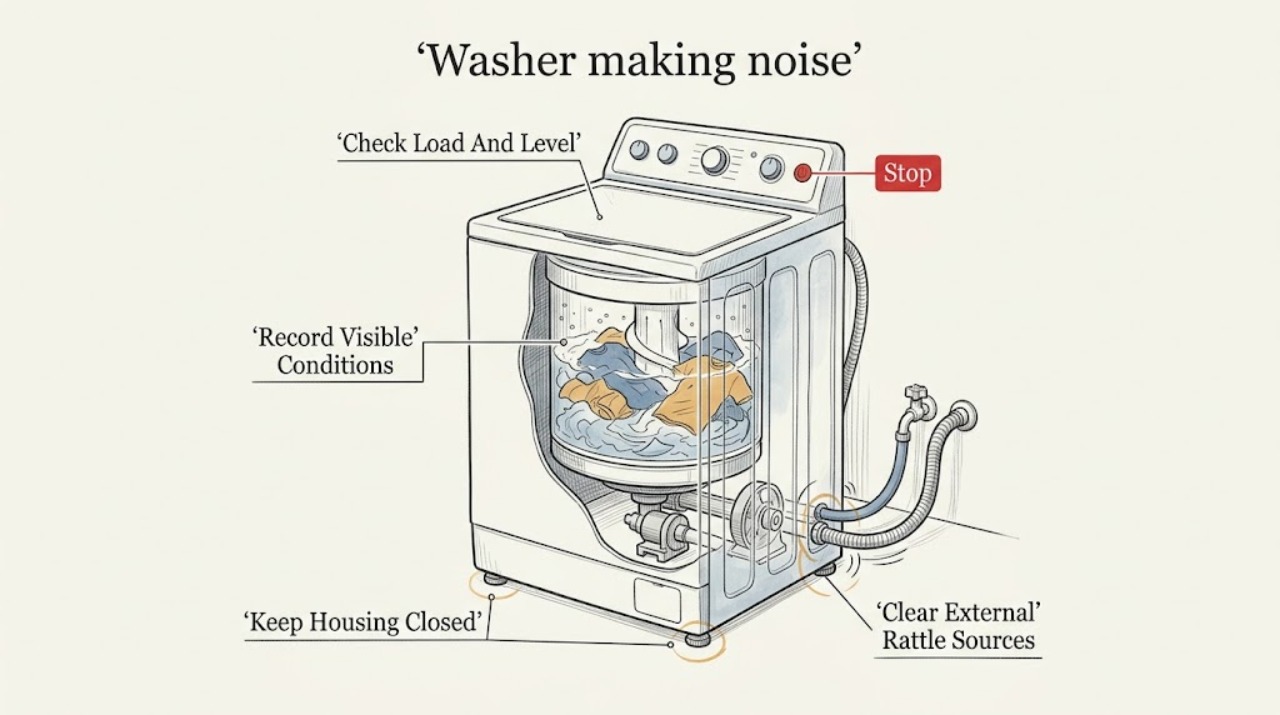
First record the Maytag washer model, whether it is top-load or front-load, the exact sound, and the cycle stage when it occurs. Humming from the motor during wash or spin, water movement during fill, pump humming or gurgling during drain, and a brief click when a lid locks can be normal on some models. With the washer stopped, check for coins or other loose objects, items resting on the cabinet, hoses striking the rear panel, an overloaded or single bulky load, and a washer that rocks. Redistribute the load and correct only an obvious external leveling or hose issue using the model instructions. For a new or persistent grinding, scraping, loud banging, violent walking, smoke, burning odor, sparks, leak, or noise that remains with an empty balanced load, stop using the washer and arrange qualified service; do not open the cabinet or reach into moving parts.
Before you begin
Safety first
- This article supports sound classification, stopped-machine external checks, safe load redistribution, visible hose inspection, and model-directed leveling observations. It does not authorize cabinet disassembly, live electrical testing, moving a water-filled appliance, lock bypass, internal foreign-object retrieval, pressurized plumbing work, or operation after a hazardous symptom.
Work through in order
Diagnostic checks
Use only checks that match the exact appliance or system and its official guide.
-
Check 1
Stop and listen from a safe standing position, then record the Maytag model, top-load or front-load type, selected cycle, exact sound (click, rattle, knock, thump, hum, gurgle, scrape, squeal, or grind), and whether it happens during fill, wash, spin, drain, or lid/door locking.
Expected result: The sound is brief at lock, water-related during fill, motor-related during wash or spin, pump-related during drain, or a new impact, scrape, squeal, grind, or noise that continues outside one stage.
Next step: Use the matching external check below. Keep the washer off for smoke, burning odor, sparks, a hot cord, uncontrolled water, violent movement, or a noise that suggests parts are striking each other.
Stop if: Do not put your hands near the basket, open a locked lid or door, or keep testing a noise accompanied by smoke, burning, sparks, a leak, or violent movement.
Why this matters
Why: Maytag identifies several stage-specific sounds as normal on some models, while stage-independent or worsening mechanical noise is less likely to be a normal operating sound. The model and timing determine which checks apply.
-
Check 2
With the washer stopped, empty the top and clear nearby brooms, racks, hangers, detergent containers, and other objects. Inspect the visible drain and inlet hoses where they pass behind the cabinet; secure a hose that is visibly striking the cabinet only as the model instructions or supplied restraint allow.
Expected result: The noise stops when an object is removed, a hose has contact marks or enough slack to hit the cabinet, something is leaning against the washer, or no external source is found.
Next step: Remove the loose object or correct the accessible hose position without disconnecting plumbing. Run no more than one supervised test with a safe load; if the sound remains or an object may be inside the tub or pump path, stop and arrange service.
Stop if: Do not pull the washer across a wet floor, disconnect water or drain hoses, reach behind energized equipment, or open the cabinet to retrieve an object.
Why this matters
Why: Maytag links clicking, rattling, tapping, and knocking to loose objects and hoses moving against the cabinet, especially during high spin. No external source shifts concern toward load balance, installation, drain, or an internal component.
-
Check 3
After the basket has fully stopped and the lid or door is safely released, inspect the load. Avoid tightly packing the tub or washing one bulky item alone; redistribute clothing evenly. From outside, gently rock the cabinet diagonally to see whether all four feet stay firmly on the floor, and check front-load shipping-material and pedestal requirements against the installation instructions.
Expected result: The load is bunched, overloaded, or a single blanket or heavy item; the washer rocks; a drain pan is contacting the tub; the unit is newly installed with shipping bolts not confirmed removed; or the load and installation look correct.
Next step: Redistribute or reduce the load and correct only an accessible leveling issue per the model instructions. If shipping bolts, pedestal mounting, a damaged pan, or structural movement is involved, stop the test and have installation or appliance service correct it.
Stop if: Do not lift, tilt, jack, or move a water-filled washer, remove shipping hardware by guesswork, place it on an improvised platform, or continue with violent walking or cabinet impact.
Why this matters
Why: Maytag associates spin noise and vibration with an unbalanced or bulky load, an unlevel washer, drain-pan contact, and shipping material left in a front-load installation. A correct load and stable installation make a persistent noise less likely to be a simple balance issue.
-
Check 4
If the sound is a hum, whir, gurgle, or pulsing noise during drain, observe whether water is actually leaving and whether the visible drain hose is kinked, improperly routed, or too far into the standpipe. Do not remove a pump cover or reach into the drain path unless the exact manual identifies a safe user-accessible procedure.
Expected result: The pump hums while water drains and the sound ends with the cycle, gurgling continues with standing water, the drain hose installation is suspect, or the sound is grinding or scraping rather than a drain hum.
Next step: Correct only an obvious external hose-routing issue using the installation manual. If water remains, drainage is slow, the noise is harsh, or the sound continues after draining, leave the washer off and arrange service.
Stop if: Do not pour chemicals into the washer, disconnect a water-filled hose, tip the appliance, or continue a drain test when there is a leak, hot water, electrical risk, or severe mechanical noise.
Why this matters
Why: Maytag describes pump humming and periodic gurgling as possible drain operation, but standing water, siphoning, a kink, or a grinding sound points toward a drain-path or component problem rather than normal water movement.
-
Check 5
If the noise remains after the external-object, hose, load, level, and drain checks, stop routine testing and document whether it also occurs with an empty basket or a small balanced load. Note any error, leak, wet clothing, reduced spin, electrical odor, or change in sound over time.
Expected result: The noise disappears after the correction, occurs only with a particular load or cycle, remains with an empty or balanced load, or is accompanied by a leak, error, smoke, burning smell, sparks, or severe vibration.
Next step: Arrange qualified Maytag appliance service for persistent or abnormal noise and provide the recording, model, stage, load, external findings, and drain result. Keep the washer off immediately for smoke, burning, sparks, a hot cord, uncontrolled water, or violent movement.
Stop if: Do not open the cabinet, bypass a lid or door lock, perform live electrical testing, lubricate unknown parts, or keep operating to reproduce a persistent or hazardous noise.
Why this matters
Why: A corrected load or external contact supports a setup-related cause. Persistent noise with a suitable load, or noise with a safety or performance symptom, is more consistent with a pump, drive, suspension, bearing, control, wiring, or other model-specific fault.
Use your observations
Decision map
Find the observation that best matches what you see, then follow the next safe action.
-
PATH 01Safety boundary
What you see
The sound is a brief lock click, a motor hum or whir during wash or spin, water movement during fill, or a pump hum or gurgle during drain; the washer remains stable and completes the cycle without a leak or error.
Do this next
Record the model and stage, keep the washer properly loaded, and monitor for a new or worsening change. Arrange service if the sound becomes harsh, persists outside the expected stage, or is joined by poor washing, draining, or spinning.
Why this path and its safety boundary
Why it matters: Maytag describes these sounds as possible normal operation, with exact behavior varying by model.
Safety stop: Do not treat smoke, burning odor, sparks, a leak, or violent movement as a normal sound.
-
PATH 02Safety boundary
What you see
The noise is a rattle, tap, click, or knock and an object is on or against the washer, a hose touches the rear cabinet, or a nearby item vibrates at spin speed.
Do this next
Clear the item and secure only the visibly contacting hose with the supplied restraint or model-approved method. Test once; service is needed if the sound remains or an object may have entered the tub or pump path.
Why this path and its safety boundary
Why it matters: The external contact is more likely than an internal washer failure.
Safety stop: Do not reach into the tub or pump, disconnect hoses, or run the washer with a loose object that could strike the basket.
-
PATH 03Safety boundary
What you see
Banging or thumping is concentrated in agitation or spin, the tub hits the cabinet, the washer shakes or walks, clothing is bunched or wet, or the machine rocks on its feet.
Do this next
When the basket stops, redistribute the load or use the model's bulky-item cycle, then correct leveling per the installation instructions. Persistent vibration with an ordinary load requires service and should not be repeatedly tested.
Why this path and its safety boundary
Why it matters: An unbalanced or bulky load, overload, unlevel installation, or unstable floor is more likely.
Safety stop: Stop for violent movement, cabinet impact, a damaged floor or drain pan, or a washer that cannot remain stable; do not hold the cabinet while it spins.
-
PATH 04Safety boundary
What you see
A coin, button, zipper, or other object is seen in the basket, a metallic rattle continues with the load removed, or the sound suggests an object between the basket and tub or in the pump path.
Do this next
Remove only a loose object that is plainly reachable without tools and with the washer disconnected from power. Leave the washer off and arrange service for an object that is trapped, inaccessible, or associated with poor drainage or scraping.
Why this path and its safety boundary
Why it matters: A foreign object may be contacting moving parts or restricting the drain path; visibility from the opening does not establish that it is safe to retrieve.
Safety stop: Do not use tools, pry the basket, remove panels, reach into a pump, or operate the washer to move the object.
-
PATH 05Safety boundary
What you see
The noise is a hum, gurgle, or pulsing sound during drain and water leaves normally, or the washer gurgles with standing water, a kinked hose, or questionable standpipe routing.
Do this next
Check only visible hose routing and the household drain. Arrange service when water remains, the sound becomes grinding or squealing, or the external path is clear but draining is poor.
Why this path and its safety boundary
Why it matters: Normal pump operation is possible when draining completes, but restricted flow, siphoning, or a pump problem is more likely when water remains or the sound is harsh.
Safety stop: Do not use drain chemicals, disconnect a water-filled line, tip the washer, or continue operation with a leak or severe noise.
-
PATH 06Safety boundary
What you see
Grinding, scraping, squealing, or loud impact remains with a balanced load or empty basket, worsens over time, reduces spin or drainage, or occurs with smoke, burning odor, sparks, a hot cord, a leak, or an error.
Do this next
Stop using the washer and arrange qualified appliance service. Isolate power only from a dry, safe location for an electrical or burning symptom, and seek emergency help for fire or active smoke. Provide the model, sound recording, stage, load, and safety observations.
Why this path and its safety boundary
Why it matters: A drive, motor, suspension, bearing, pump, wiring, control, structural, or other model-specific fault is more likely than normal operating sound.
Safety stop: Do not restart to reproduce the noise, open the cabinet, bypass a lock, touch a wet or hot cord, or perform live electrical testing.
Helpful context
Understand the symptom
The sound and the cycle stage are the diagnosis
A Maytag washer can make different sounds while filling, agitating, spinning, draining, or locking. A pump may hum or briefly gurgle as it removes the last water; a motor can change direction during agitation; and a short click at the beginning can be the lid lock. A new metallic scrape, repeated impact, or noise paired with shaking, leaking, smoke, or a hot smell is a different problem. Record a short description and when it starts before changing the load.
Start outside the cabinet
Maytag specifically directs owners to check loose items on top of or leaning against the washer and hoses that knock against the rear cabinet. Coins, buttons, zippers, and other pocket items can rattle or clunk. With the machine stopped, clear the surrounding area and inspect only what is visible; an object between the basket and tub or in the pump path is a service issue, not a reason to pry the appliance open.
Spin noise often follows load or installation
A bunched load, a tightly packed tub, one bulky item, a washer that rocks, a damaged drain pan, or shipping bolts left in a front-load installation can amplify vibration. A front-load pedestal also has its own mounting and foot requirements. Redistribute clothing only after the basket has stopped; check level from the outside and follow the exact installation instructions for adjustments.
Know when normal sound ends
The same word—grinding, humming, or banging—can describe both normal operation and a fault. A sound limited to the expected stage and unchanged with a suitable load is more consistent with normal operation. A noise that is new, worsening, present with an empty basket, accompanied by standing water or an error, or associated with smoke, burning, sparks, or a leak requires the washer to remain off while service investigates the drive, pump, suspension, bearings, wiring, or another model-specific component.
Safety boundary
Stop conditions
- Stop immediately for smoke, fire, sparks, a hot or melted cord or receptacle, burning odor, uncontrolled water, violent walking, or the basket striking the cabinet; isolate power only from a dry, safe location and arrange qualified help.
- Do not open the cabinet, bypass a lid or door lock, reach into a moving basket or pump, perform live electrical testing, lubricate unknown parts, or move a water-filled washer.
- Do not disconnect pressurized or water-filled hoses, pour drain chemicals into the washer, or continue a drain test when a leak or electrical risk is present.
- Do not remove shipping bolts, pedestal hardware, leveling feet, or internal parts by guesswork. Use the exact Maytag installation or owner's manual for model-specific procedures.
- Arrange qualified Maytag appliance service for noise that persists with a stable installation and suitable load, an inaccessible foreign object, repeated poor drainage or spin, an error, or any internal component concern.
Only after diagnosis
Potential parts
- Maytag washer leveling foot, jam nut, pedestal pad, or shipping hardware
Consider this category only when the exact installation inspection identifies a missing, damaged, or non-seated installation component and the noise or vibration follows that finding.
Confirm the complete model and installation type; front-load pedestal and shipping hardware are not interchangeable across models. - Maytag washer drain hose or drain pump
Consider this category only when standing water, poor drainage, or a persistent harsh pump sound remains after the visible hose and household drain are clear and the manual or technician identifies the component.
Hose routing and pump access vary by model; confirm the exact model and have hidden drain work performed by qualified service. - Maytag washer suspension, tub, bearing, drive, or motor component
Consider this category only after a persistent scrape, grind, squeal, impact, or severe vibration is reproduced with a suitable load and external setup causes have been ruled out by the manual or technician.
Do not infer a failed part from sound alone; verify the exact model and diagnosis before ordering or opening the cabinet.
When checks do not resolve it
Need a professional?
Arrange qualified Maytag appliance service when grinding, scraping, squealing, or loud impact persists with an empty or balanced load; when the washer walks despite correct external leveling; when a foreign object is inaccessible; when water remains or spin performance falls; or when the noise is accompanied by an error, leak, smoke, burning odor, sparks, or a hot cord. Keep the washer off for hazardous symptoms and provide the exact model, recording, sound stage, load, hose and level checks, drainage result, and any recent installation or power event.
Safety scope: This article supports sound classification, stopped-machine external checks, safe load redistribution, visible hose inspection, and model-directed leveling observations. It does not authorize cabinet disassembly, live electrical testing, moving a water-filled appliance, lock bypass, internal foreign-object retrieval, pressurized plumbing work, or operation after a hazardous symptom.
Common questions
FAQ
Why is my Maytag washer humming or whirling?
A motor can hum or whirl during wash and spin, and the drain pump can hum while removing water. If the sound is new, harsh, or accompanied by standing water, an error, a leak, or poor performance, stop and follow the drain and service checks rather than assuming it is normal.
Why does my Maytag washer bang during spin?
An unbalanced or bulky load, overload, unlevel feet, unstable floor, or an installation issue can make the tub move and bang. Stop the basket before redistributing the load, then check stability from outside. Persistent banging with an ordinary load needs service.
Could a coin or object cause my Maytag washer to rattle?
Yes. Maytag identifies coins, buttons, and other pocket items as possible sources of rattling or clunking. Remove only an object that is plainly reachable with the washer stopped and disconnected; leave the appliance off for an object trapped between the basket and tub or in the pump path.
When should I stop using a noisy Maytag washer?
Stop for smoke, sparks, burning odor, a hot or melted cord, an active leak, violent walking, the basket striking the cabinet, or a persistent grind, scrape, or squeal. Keep it off and arrange qualified service; do not open the cabinet or restart it to reproduce the sound.
Read the exact guide
Official sources
- Humming or Whirling - NoiseMaytag Product Help · Maytag top-load washer normal motor and drain-pump hum or whirling sounds
- Sounds: Clunk or Clunking Noise During SpinMaytag Product Help · Maytag top-load washer clunking, imbalance, foreign objects, normal drive transition, and service boundary
- Grinding or Rubbing Noise - WasherMaytag Product Help · Maytag washer grinding or rubbing, drive sounds, overload, leveling, and drain-pan contact guidance
- Not Spinning - WasherMaytag Product Help · Maytag top-load washer imbalance, wet clothes, standing water, drain-hose, and level checks
- Clicking or Clacking - NoiseMaytag Product Help · Maytag top-load washer clicking, lid-lock, loose-object, hose-contact, and surrounding-object checks
- Rattling or Tapping Noise - Front Load WasherMaytag Product Help · Maytag front-load washer rattling, hose contact, surrounding objects, and level checks
- Washer Walking and/or Vibrating - Front Load WasherMaytag Product Help · Maytag front-load washer walking, vibration, shipping materials, feet, level, overload, and bulky-load guidance
- Knocking or Thumping - NoiseMaytag Product Help · Maytag top-load washer knocking, thumping, hose contact, load balance, and leveling guidance
- Gurgling, Slurping or Humming Noise - Front Load WasherMaytag Product Help · Maytag front-load washer drain pump sounds, water-supply checks, and drain-hose routing
Community feedback
Share a repair observation
Share a plain-text repair observation. Accepted observations are published automatically; this page may take a moment to update.