
On this page
Start here
Quick answer
A cooktop noise is diagnosed by its type, source, timing, and effect on heat. A low induction hum or cookware crackle that changes with power or pan can be normal; a cooling fan that continues after electric or induction cooking can also be normal. Gas ignition can click during a start or re-ignite after a flame is disturbed, while a wet or mis-seated burner can pop or click. Stop immediately for gas odor, an abnormal flame, continuous clicking with controls off, electrical arcing, smoke, burning odor, a cracked glass surface, liquid at controls, extreme heat, or a breaker that trips again. If safe, identify the cooktop type, locate the sound, remove objects from the controls, let wet parts dry, check only cool visible burner parts, and use the exact manual. Persistent, worsening, or heat-affecting noise needs qualified service.
Work through in order
Diagnostic checks
Use only checks that match the exact appliance or system and its official guide.
-
Check 1
Turn all controls off and look from a safe position for gas odor, an abnormal flame, smoke, burning odor, visible electrical arcing, a cracked or lifting glass surface, liquid near controls, extreme heat, or a breaker that opens again.
Expected result: Any gas, fire, electrical, water, or structural hazard is present, or the noise continues with controls off and appears to come from wiring or a control area.
Next step: Stop using the cooktop. Do not relight gas, touch wet controls, repeatedly reset protection, or remove panels. Leave the area for smoke, fire, or gas danger and follow local emergency or gas-supplier instructions from a safe location; obtain qualified service.
Why this matters
Why: This is a safety stop, not a normal operating sound or a cleaning adjustment.
-
Check 2
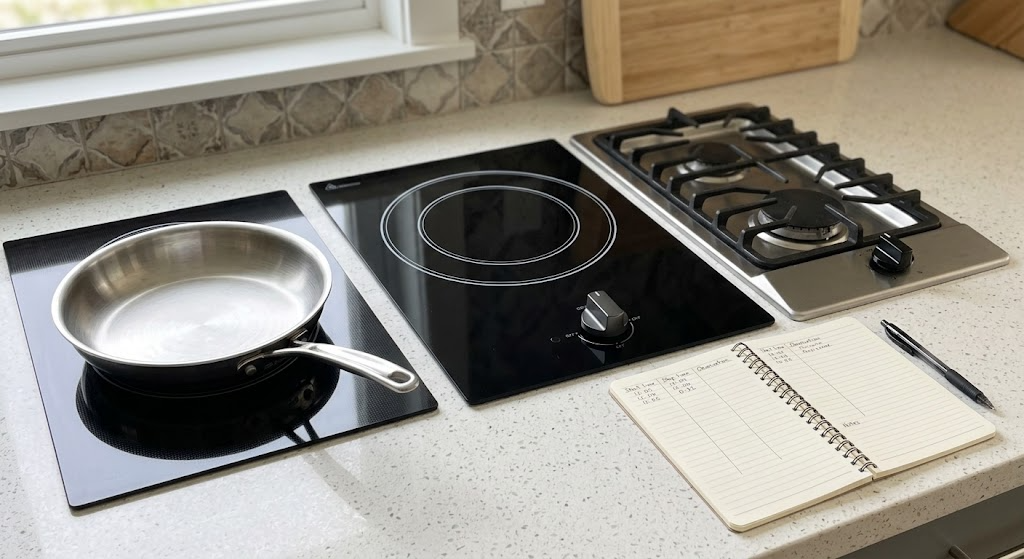
Identify whether the surface is gas, radiant electric, induction, or a combination. Record whether the noise is a hum, buzz, crackle, click, pop, beep, fan whir, scraping sound, or a vibration, and whether it starts at power-on, during heating, when a pan is moved, or after shutoff.
Expected result: The sound is tied to a pan and power level, to a burner ignition or flame change, to a cooling period, to a touch panel, or to a mechanical rubbing point.
Next step: Follow the matching type branch below. Do not apply a gas-burner check to an induction zone or a pan-noise explanation to a radiant element.
Why this matters
Why: Cookware and magnetic-field sounds are type-specific; gas ignition and re-ignition are flame-related; fan noise can continue after heat ends; scraping or rubbing is not explained by those normal patterns.
-
Check 3
For induction, with a stable pan on one zone, lower the power briefly and compare a different suitable pan only if the surface is safe. For radiant electric, lower the setting and note whether the sound follows the element. Keep cookware dry and do not heat an empty pan.
Expected result: The hum or crackle quiets at lower power, changes with pan material or construction, or remains loud and unrelated to cookware; a radiant element cycles or makes a new mechanical sound.
Next step: Use the manual's cookware and power guidance when the sound is stable and performance is normal. Stop for smoke, sparks, a damaged surface, or a noise that worsens or affects heating; arrange service for an unexplained persistent sound.
Why this matters
Why: Induction energy and layered cookware can create normal hum or crackle that varies with power and pan. A sound that is new, harsh, rubbing, or unrelated to heat is less consistent with normal cookware behavior.
-
Check 4
For gas, observe only from the normal user position whether a click occurs when the intended burner is turned to its ignition position, whether the flame establishes, and whether clicking stops after the flame is stable. Do not open the oven or reach toward a burner during a delayed start.
Expected result: The click is brief and start-linked, all burners click when one is selected, a burner re-ignites after a spill or draft, clicking continues with the control off, or no stable flame appears.
Next step: Turn the gas control off for any failed, delayed, unstable, or unexplained ignition. If odor remains, do not operate switches; leave the area and follow local gas-safety instructions. Request qualified gas-appliance service for continued clicking or no stable flame.
Why this matters
Why: Start or re-ignition clicking can be normal on some models; clicking at rest, spark without flame, delayed ignition, or an abnormal flame indicates moisture, alignment, supply, ignition, or control risk.
-
Check 5
When a gas surface burner is fully off and cool, inspect only its visible cap and head for moisture, residue, or an obviously incorrect seating position. For any electric or induction model, wipe the cool control panel dry and remove utensils or objects from the touch area.
Expected result: The noise began after cleaning or a spill, a cap is visibly shifted, an object or liquid is pressing a touch panel, or the visible areas are clean and correctly seated.
Next step: Clean and dry only as the exact manual directs, refit only clearly user-removable parts, and make one normal test when there is no hazard. Do not insert tools into ports, pour cleaner into gaps, or remove covers.
Why this matters
Why: Moisture, residue, mis-seated gas parts, and objects on controls can create popping, clicking, or beeping. A clean, dry surface with continuing noise points toward internal ignition, fan, element, or control hardware.
-
Check 6
If the sound is a fan or airflow hum, note whether it begins during heating and continues after shutoff. Check only the external ventilation openings for stored items and compare the sound with the unit cool and unused; do not reach into a fan opening.
Expected result: The fan runs after cooking and then stops as the unit cools, ventilation is blocked, the fan scrapes or vibrates, or the sound persists while the cooktop is cool and unused.
Next step: Keep external openings clear and allow normal cooling. Stop for smoke, extreme heat, a fan that rubs, or repeated overheating; arrange qualified service rather than removing the fan cover.
Why this matters
Why: Cooling fans can run after heat ends to protect electronics. Blocked ventilation can contribute to overheating or longer heating, while scraping, vibration, or a new persistent fan noise suggests a mechanical or internal fault.
-
Check 7
After the safe visible checks, perform at most one model-approved power reset if the cooktop is dry, cool, and free of gas or fire symptoms. Test one zone or burner once and record whether the noise, heat output, display, or flame behavior changes.
Expected result: The sound disappears, returns at the same operating point, continues with controls off, a display or control error returns, or the breaker opens again.
Next step: Stop after this single test. Provide the model, cooktop type, noise description and location, timing, heat or flame result, cookware or burner state, and any safety symptom to qualified appliance service.
Why this matters
Why: A reset may clear a temporary control state but cannot prove that an element, ignition module, fan, wiring, touch control, or power supply is safe.
Use your observations
Decision map
Find the observation that best matches what you see, then follow the next safe action.
-
PATH 01Next step
What you see
Gas odor, abnormal flame, delayed ignition, flare-up, smoke, burning odor, visible arc, cracked glass, liquid at controls, extreme heat, or a repeat breaker trip occurs.
Do this next
Stop immediately. Do not relight, touch wet controls, operate switches near gas, or repeatedly reset protection. Leave the area as appropriate and obtain qualified emergency, gas, electrical, or appliance help.
-
PATH 02Next step
What you see
A low induction hum or crackle changes with power or pan material and heating remains normal.
Do this next
Use the exact manual's cookware guidance and a dry, suitable pan. Lower power or change cookware only as a comparison; service is needed if the sound becomes harsh, new, or performance changes.
-
PATH 03Next step
What you see
A radiant electric element or its fan hums during heating or for a period after shutoff, without smoke, damage, or performance loss.
Do this next
Allow normal cooling and keep external ventilation clear. If the sound changes to scraping, vibration, or repeated loud noise, stop and request service.
-
PATH 04Next step
What you see
A gas burner clicks only during ignition or re-ignition and stops after a stable flame is established.
Do this next
Treat it as a model-dependent operating behavior and verify the exact manual. Stop if clicking continues with controls off, the flame is unstable, or ignition is delayed.
-
PATH 05Next step
What you see
Gas clicking or popping began after cleaning or a spill and a cool visible cap is wet or mis-seated.
Do this next
Turn the control off, let the visible parts dry fully, and reseat only as the manual permits. Make one normal test without odor; persistent clicking or any abnormal flame needs qualified service.
-
PATH 06Next step
What you see
A beeping or audio tone occurs on an electric or induction control panel while an object, liquid, or residue is present.
Do this next
Remove the object and clean and dry the control surface as the manual directs. If the tone persists after one approved reset, stop and arrange service.
-
PATH 07Next step
What you see
A fan scrapes, a noise persists while cool and unused, the sound becomes louder, or heating or flame behavior changes.
Do this next
Stop using the cooktop and do not remove covers or reach into moving parts. Give the technician the sound recording, location, operating state, and model information.
Helpful context
Understand the symptom
Do not diagnose a cooktop by volume alone. A hum, buzz, crackle, click, pop, beep, or fan sound may be tied to an induction field, cookware, a gas ignition sequence, a cooling fan, or a touch control. First note whether the sound occurs while heating, when a pan is moved, after the controls are off, or with no heat at all. That timing separates an operating sound from a fault that needs a stop.
This is a type-first guide because cooktops are built differently. Gas burners, radiant electric elements, and induction zones have different normal sounds and different hazards. Use the exact owner manual for your model, and keep checks to controls and cool, visible, user-accessible parts. Never open a gas path, probe live wiring, bypass a safety device, or use a cracked glass surface.
Only after diagnosis
Potential parts
- cooling fan or fan support
Relevant only when a qualified technician confirms scraping, vibration, or a failed fan after external ventilation is clear and normal cooling behavior has been excluded.
Fan design and fit vary by cooktop type and model; confirm the complete appliance identity before replacement. - gas igniter, electrode, or spark module
Relevant only when qualified testing isolates persistent clicking, misplaced arcing, or failed ignition to the ignition circuit after safe drying and seating checks.
Gas ignition parts are model-specific and require qualified diagnosis and installation. - radiant element or induction coil assembly
Relevant only when a new noise follows one heating zone and professional testing isolates the element or coil rather than cookware or normal cycling.
Element and coil geometry, ratings, and connectors vary by model; do not infer fit from appearance. - touch control, relay, or power module
Relevant only when a control-off noise, persistent beep, erratic switching, or repeat reset failure is traced to internal control hardware.
Internal electrical work requires a qualified technician and exact model confirmation.
When checks do not resolve it
Need a professional?
Stop and seek qualified help for gas odor, abnormal flame, delayed ignition, continuous clicking with controls off, smoke, burning odor, visible arcing, cracked or lifting glass, liquid near controls, extreme heat, scraping or grinding fan noise, a repeat breaker trip, a noise that becomes louder, or any sound accompanied by lost heating or erratic controls. Do not open the cooktop, alter gas fittings, bypass an ignition or thermal safety, reach into a fan, or perform live electrical tests.
Common questions
FAQ
Is a humming or buzzing cooktop normal?
It can be normal when tied to induction power and cookware, a high-power electric setting, or a cooling or downdraft fan. Lower power only as a comparison and use the exact manual. A new, harsh, scraping, or performance-affecting sound needs service.
Why does an induction cooktop crackle with one pan but not another?
Official guidance says layered cookware can vibrate and create a crackle, and pan construction can change induction sound and recognition. Compare a dry, suitable pan and a lower power setting; stop if the sound becomes harsh or heating changes.
Why does a gas cooktop keep clicking?
A gas igniter can click during ignition or re-ignition, including after a flame is disturbed. Moisture can also cause clicking. If clicking continues with controls off, no stable flame appears, ignition is delayed, or gas odor is present, turn the control off and obtain qualified service.
Why does a cooktop fan keep running after it is turned off?
Electric and induction cooktops may keep a cooling fan running after heating ends while internal parts cool. Keep the external ventilation path clear. Scraping, vibration, extreme heat, or a fan that never returns to normal needs service.
When is cooktop noise unsafe?
Stop for gas odor, abnormal flame, delayed ignition, smoke, burning odor, visible arcing, a cracked glass surface, liquid at controls, extreme heat, continuous clicking with controls off, or a repeat breaker trip. Do not open the appliance or bypass a safety device.
Read the exact guide
Official sources
- Fan Noise - Induction CooktopWhirlpool Product Help · Official multi-brand induction cooktop guidance on cooling fan noise, post-use operation, ventilation, and overheating
- Popping Noise - Gas CooktopWhirlpool Product Help · Official multi-brand gas cooktop guidance on wet burners, burner-cap seating, and service
- Click or clicking - Induction CooktopWhirlpool Product Help · Official multi-brand induction cooktop guidance on cookware, click or crackle, and pan recognition
- Crackling - Electric CooktopWhirlpool Product Help · Official multi-brand electric cooktop guidance on cookware-related crackle and manual-specific cookware information
- Humming - Electric CooktopWhirlpool Product Help · Official multi-brand electric cooktop guidance on high-power hum, automatic cooling fans, and downdraft vent hum
- Burner(s) Sparking or Clicking - Gas CooktopWhirlpool Product Help · Official multi-brand gas cooktop guidance on ignition clicking, damp burners, and re-ignition
- Beeping/Audio Tones - Electric CooktopWhirlpool Product Help · Official multi-brand electric cooktop guidance on control lock and objects left on an element
- Humming or Crackling Noise on an Induction CooktopWhirlpool Product Help · Official multi-brand induction cooktop guidance on hum, crackle, power level, and cookware behavior
- Beeping and Audio Tones - Induction CooktopWhirlpool Product Help · Official multi-brand induction cooktop guidance on continuous beeping, objects or liquid on controls, reset, and service
Community feedback
Share a repair observation
Share a plain-text repair observation. Accepted observations are published automatically; this page may take a moment to update.