
On this page
Start here
Quick answer
First identify whether the sound is a low hum, crackle, fan noise, clicking, popping, or a noisy flame, and whether the cooktop is electric, induction, or gas. A low hum or crackle that changes with power or cookware, or a cooling or downdraft fan that runs during or after use, can be normal. On a gas model, clicking during ignition or after a spill can be related to ignition or moisture. Stop using the cooktop for gas smell, uncontrolled sparking, abnormal or yellow flames, smoke, electrical burning smell, cracked glass, or a noise that comes with overheating; do not open the appliance or work on gas connections.
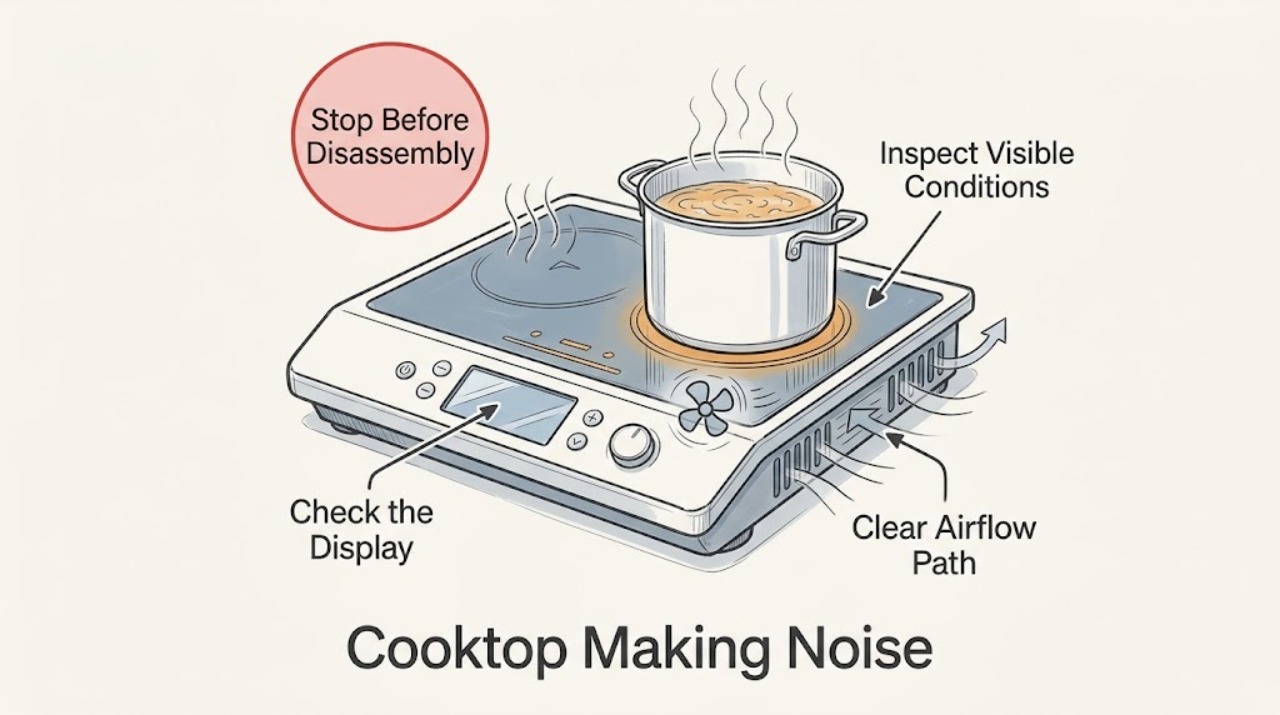
Work through in order
Diagnostic checks
Use only checks that match the exact appliance or system and its official guide.
-
Check 1
Make the cooktop safe and note the technology before testing: electric smooth-top, induction, or gas. Turn all controls off and check for gas odor, smoke, electrical burning smell, uncontrolled sparks, abnormal or yellow flames, cracked glass, or heat that remains abnormal after shutoff.
Expected result: The noise is present with the controls off, or a listed hazard is present; otherwise the sound occurs only during a particular burner, pan, power level, or fan operation.
Next step: If there is gas odor, smoke, sparking, abnormal flame behavior, cracked glass, or electrical burning smell, stop using the cooktop and obtain qualified help. If not, continue with the technology-specific check below.
Why this matters
Why: A hazard or a noise that continues independently of normal operation is not a routine cookware or fan sound and should not be investigated by opening the cooktop.
-
Check 2
Describe the sound and its timing without placing hands near a hot surface: low hum, crackle, whistle, buzz, fan airflow, click, tick, pop, or a noisy flame; note whether it starts at power-up, changes with heat level, continues after cooking, or occurs with every control off.
Expected result: The sound tracks a high power setting, cookware, fan or downdraft operation, gas ignition, a spill or cleaning event, or it has no clear trigger.
Next step: Use the matching electric, induction, fan, or gas branch; do not compare the sound with a different cooktop technology or assume that every click is an igniter fault.
Why this matters
Why: Timing separates energy-and-cookware noise, cooling or ventilation noise, and ignition or moisture noise from a mechanical or electrical fault that needs assessment.
-
Check 3
On an electric or induction cooktop, lower the selected power one step while the pan remains safely positioned and observe the sound; on induction, if the sound is a crackle, repeat only with a different suitable pan described in the model manual.
Expected result: The hum quiets at lower power, or the crackle changes or disappears with a different pan; the noise does not change with either low-risk adjustment.
Next step: If the sound follows power or cookware, use the quieter setting or model-approved cookware. If it remains unchanged, is harsh or grinding, or comes with poor heating, stop using that zone and arrange service.
Why this matters
Why: KitchenAid attributes a low hum to energy transmitted to cookware and a crackle to vibrations in cookware made from different materials. A predictable response supports normal operating noise, not a confirmed component failure.
-
Check 4
Check whether the noise is airflow from an automatic cooling fan or downdraft vent. Listen from a safe distance during heating and after the controls are off, and note whether air movement matches the sound.
Expected result: The sound is a steady airflow hum during or after heating or while the downdraft is running, or it is a new scraping, rattling, electrical, or intermittent sound with no corresponding airflow.
Next step: Allow a normal cooling fan to finish without obstructing vents. If the sound is abnormal, persists after the appliance is cool, or affects operation, leave the cooktop off and request service.
Why this matters
Why: KitchenAid states that cooling fans may run during or after heating and that a downdraft can hum in operation. A noise without normal airflow or with a new mechanical character is not explained by that guidance.
-
Check 5
On a gas cooktop, observe only the visible ignition and flame behavior. If clicking followed cleaning or a spill, leave the burner area and control area to dry fully; do not operate the burner while it is wet. If a burner flame is present, turn the control off if it does not ignite normally.
Expected result: Clicking stops after the burner is dry or after the flame is established, or clicking continues with all burners off, the flame is noisy or abnormal, or ignition does not behave normally.
Next step: If the sound stops when dry and the flame is stable, use the cooktop normally while monitoring it. If clicking persists, the flame is yellow, lifting, noisy, or cannot be controlled, turn the gas control off, avoid further testing, and arrange qualified service.
Why this matters
Why: KitchenAid notes that moisture can cause clicking and that reignition can click after a flame is extinguished by a spill, wind, or draft. Persistent clicking with controls off or abnormal flame behavior needs service rather than repeated ignition attempts.
-
Check 6
After the low-risk check, record whether the same zone heats normally, whether the sound returns with a repeatable trigger, and whether any control clicks, fan noise, flame change, or smell remains when the cooktop is off.
Expected result: The sound is predictable and harmless with normal heating, or it is persistent, worsening, unrelated to operation, or paired with a performance or safety symptom.
Next step: For persistent or symptom-linked noise, keep the affected zone or cooktop off and arrange authorised appliance service. Provide the model number, technology, exact sound, timing, and results of the checks.
Why this matters
Why: Repeatable normal-operation noise can be monitored; persistent or symptom-linked noise may involve the ignition, fan, control, heating, or burner system and cannot be assigned to a part from sound alone.
Use your observations
Decision map
Find the observation that best matches what you see, then follow the next safe action.
-
PATH 01Next step
What you see
An electric or induction hum quiets when power is lowered, or induction crackle changes with suitable cookware
Do this next
Treat it as a likely operating sound, use the quieter power or model-approved cookware, and monitor. Arrange service if it becomes harsh, independent of cooking, or affects heating.
-
PATH 02Next step
What you see
A steady fan or downdraft hum occurs during or after heating and matches normal airflow
Do this next
Allow the cooling or vent cycle to finish and keep vents clear. If the sound is scraping, rattling, electrical, or remains after cooling without airflow, stop using the cooktop and request service.
-
PATH 03Next step
What you see
A gas cooktop clicks only during ignition or after a spill, then stops when the burner is dry and the flame is established
Do this next
Use the burner only after it is dry and the flame is stable. If clicking returns with all controls off or the flame does not behave normally, turn the control off and arrange qualified service.
-
PATH 04Next step
What you see
A gas burner is noisy, yellow, lifting, difficult to ignite, or keeps clicking with controls off
Do this next
Turn the gas control off, stop testing, and obtain qualified service. Do not adjust gas pressure or disassemble the gas system.
-
PATH 05Next step
What you see
The noise is accompanied by gas odor, smoke, sparking, electrical burning smell, cracked glass, uncontrolled heat, or other unsafe behavior
Do this next
Stop using the cooktop. If safe, turn controls off and isolate the appliance without touching damaged or live parts; leave gas-line and electrical diagnosis to a qualified professional and follow local emergency guidance for an active hazard.
Helpful context
Understand the symptom
The sound is the diagnostic clue
KitchenAid's guidance separates cooktop noise by technology and sound. Induction and electric models can hum or crackle because energy reaches the cookware, and a cooling or downdraft fan can be audible. Gas models can click while igniting or reigniting, while moisture or a burner condition can make clicking or popping persist. Do not apply an induction explanation to a gas flame or a gas ignition explanation to an electric control.
Safety before diagnosis
Turn every control off before listening closely. Do not remove a cooktop, probe live wiring, bypass an ignition or safety system, or adjust a gas regulator. If the sound is accompanied by gas odor, smoke, sparking that does not stop, abnormal flame behavior, or a hot or damaged glass surface, stop and arrange qualified service.
What a successful check means
A sound that changes predictably when power, cookware, fan operation, or moisture changes is more consistent with an operating condition. A noise that is independent of those conditions, persists with all controls off, or appears together with poor heating or unsafe flame behavior deserves a service assessment. These checks identify the path; they do not prove a part has failed.
Only after diagnosis
Potential parts
- cooling or downdraft fan assembly
Consider this category only if service confirms that the noise is from a fan and is abnormal after normal cooling or vent operation has been ruled out.
Fan assemblies vary by cooktop model and vent configuration; confirm the model and have the fault diagnosed before selecting a part. - gas ignition or spark-switch assembly
Consider this category only if a qualified diagnosis links persistent clicking with controls off to the ignition or switch circuit after the burner area is dry.
Ignition components are model-specific and gas work should be performed by a qualified professional. - surface burner head or cap
Consider this category only if the correct visible burner placement and cleaning have been checked and service identifies a damaged or unsuitable burner component causing abnormal flame noise.
Confirm the exact model and burner position; do not enlarge ports or infer compatibility from appearance.
When checks do not resolve it
Need a professional?
Stop and seek professional help for gas odor, uncontrolled sparking, smoke, electrical burning smell, abnormal or yellow flames, cracked glass, uncontrolled heat, persistent gas clicking with controls off, or a new mechanical noise that affects cooking.
Have this ready
- Provide the model number, cooktop technology, affected zone or burner, sound description, when it starts and stops, whether a pan or fan changes it, and whether the unit heats normally. Do not open the cooktop or work on gas connections before the visit.
Common questions
FAQ
Is a low hum from a KitchenAid cooktop normal?
It can be. KitchenAid describes a low hum at high power as energy being transmitted to cookware, and a cooling or downdraft fan can also hum. If the sound becomes harsh, independent of operation, or affects heating, stop using the cooktop and arrange service.
Why does an induction cooktop crackle or buzz?
KitchenAid says cookware made from different materials can vibrate and crackle, and the sound may change with the pan or power setting. Try only cookware and settings approved for the exact model; a noise with overheating or poor heating needs service.
Why does my gas KitchenAid cooktop keep clicking?
Moisture after cleaning or a spill can cause clicking, and a reignition system can click when a flame is extinguished by a spill, wind, or draft. Let the area dry fully. If clicking continues with all controls off, or the flame is abnormal, turn it off and obtain qualified service.
Should I take apart a noisy cooktop to find the source?
No. Do not open the cooktop, make live electrical checks, bypass safety or ignition systems, or adjust gas connections. Use the sound, timing, and visible operating checks to decide whether the noise is normal or needs a qualified technician.
Read the exact guide
Official sources
- Humming - Gas RangeKitchenAid Product Help · KitchenAid gas cooktops with downdraft ventilation; normal vent-related humming guidance
- Burner is Noisy - Natural Gas - CooktopKitchenAid Product Help · KitchenAid natural-gas cooktops; wet, clicking, and noisy-burner guidance
- UMIM-KitchenAid-01-EN-FR-ESKitchenAid · KitchenAid induction cooktop owner manual; cookware suitability and operating noise examples
- Humming or Crackling Noise on an Induction CooktopKitchenAid Product Help · KitchenAid induction cooktops; cookware-related hum and crackle guidance
- Clicking or Ticking - Gas CooktopKitchenAid Product Help · KitchenAid gas cooktops; ignition, moisture, and reignition clicking guidance
- Humming - Electric CooktopKitchenAid Product Help · KitchenAid electric cooktops; high-power hum, cooling fan, and downdraft guidance
Community feedback
Share a repair observation
Share a plain-text repair observation. Accepted observations are published automatically; this page may take a moment to update.