
Kitchenaid appliance guidance
Kitchenaid Cooktop Repair Guides
Troubleshooting and repair guidance for published Kitchenaid Cooktop problems, symptoms, and maintenance questions.
Published Kitchenaid Cooktop guides
Choose the guide whose symptom or condition most closely matches what you are seeing.
-
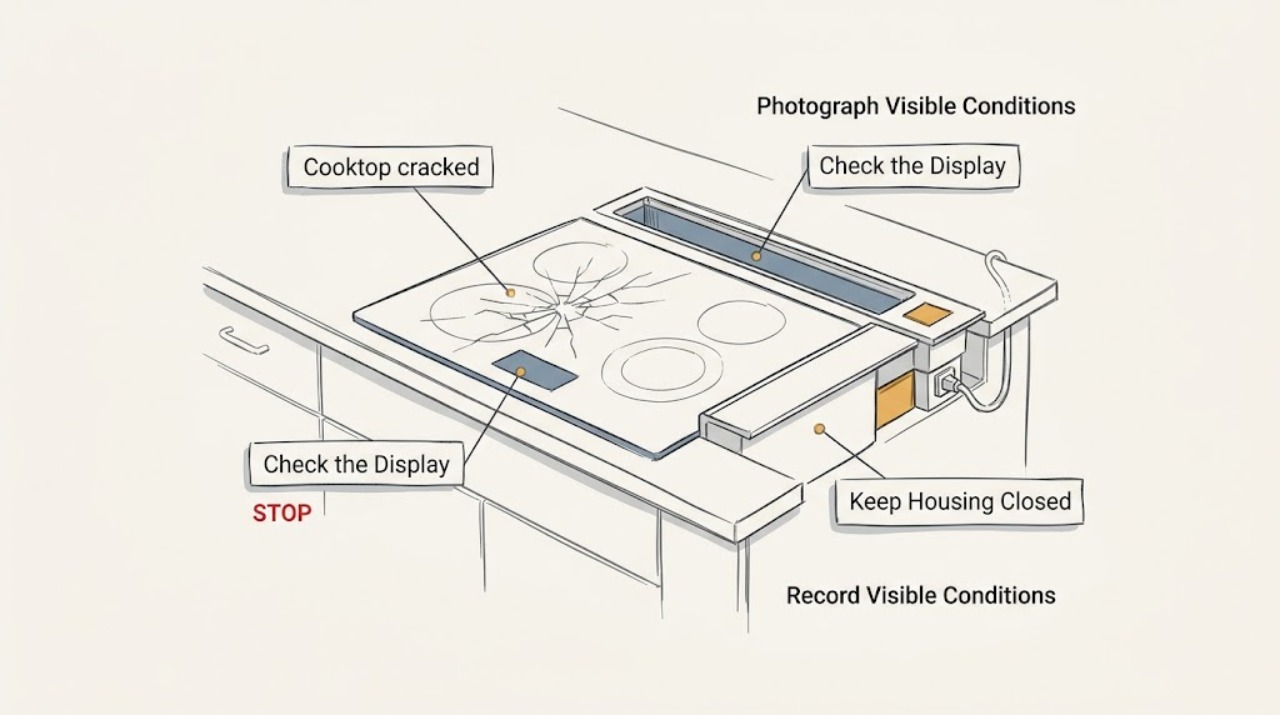
Cracked KitchenAid KECD806 Cooktop: Check the Cutout Before Replacement
Do not cook on a cracked KitchenAid KECD806 glass surface. KitchenAid's safety instructions say a broken cooktop can allow cleaning solutions or spills to penetrate and create an electric-shock risk, and direct the owner to a qualified technician.
-
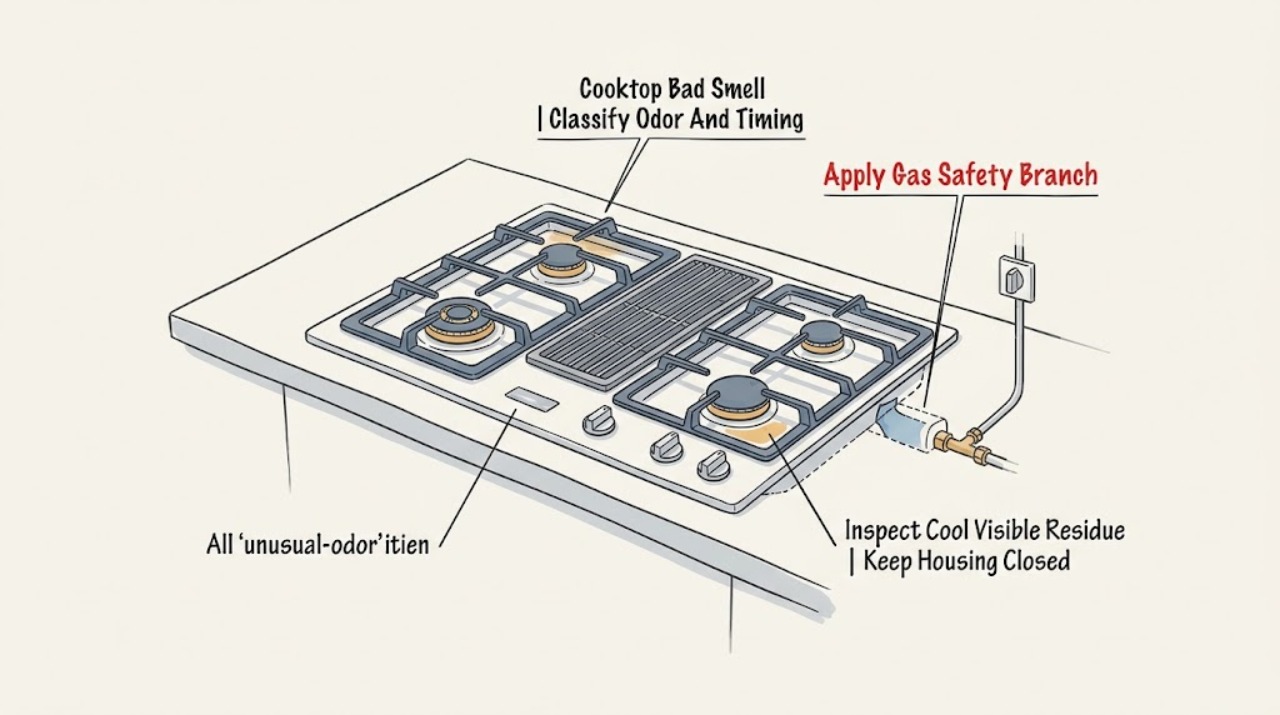
KitchenAid Cooktop Bad Smell: Tell Gas, Burnt Spill, Grease, and Electrical Odors Apart
A bad smell from a KitchenAid cooktop is safe to investigate only after you identify the odor and rule out gas or electrical danger. Turn the controls off and note whether the smell occurs only while cooking, remains when the cooktop is off, follows a spill or cleaning, comes from the downdraft filter, or resembles unburned gas or hot insulation.
-
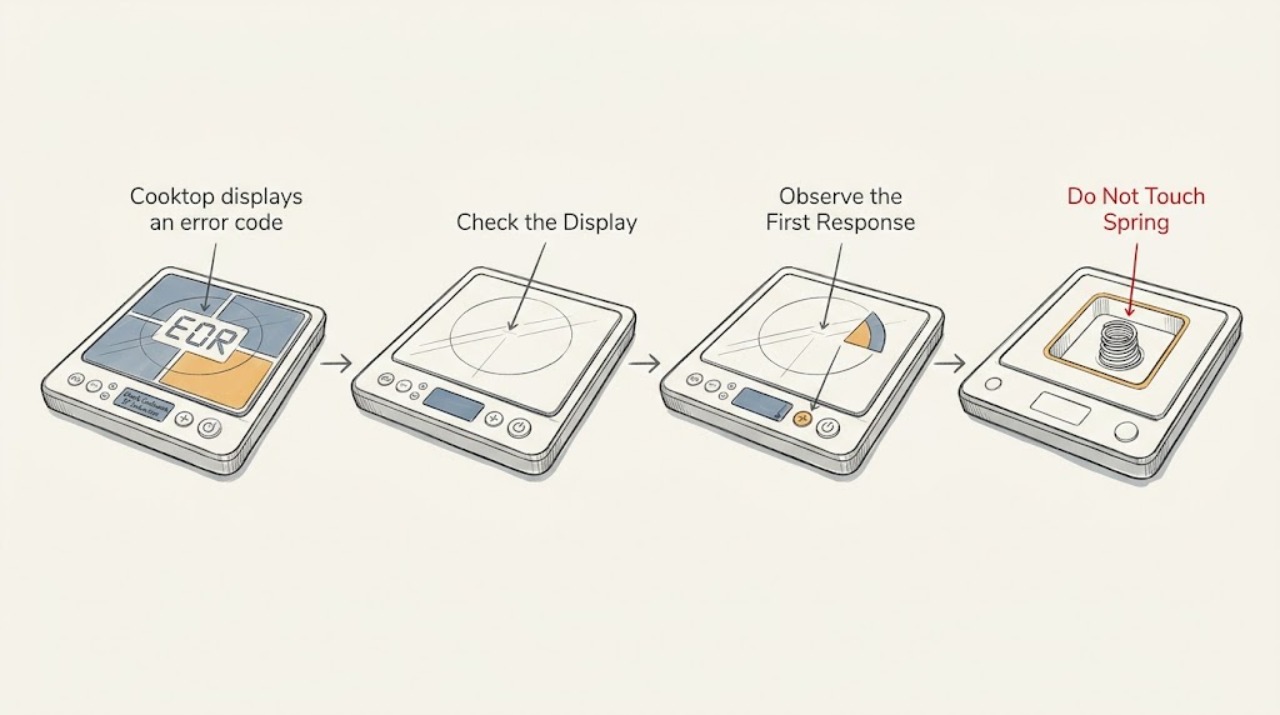
Kitchenaid cooktop displays an error code: What to Check and What to Do Next
A KitchenAid cooktop error display is a symptom, not one universal diagnosis: the meaning depends on the exact characters, whether the cooktop is electric or induction, and what the surface and controls were doing. Photograph or write down the complete code before clearing it, turn all controls off, remove objects or liquid from the touch-control area, and allow a hot surface or overheated unit to cool.
-
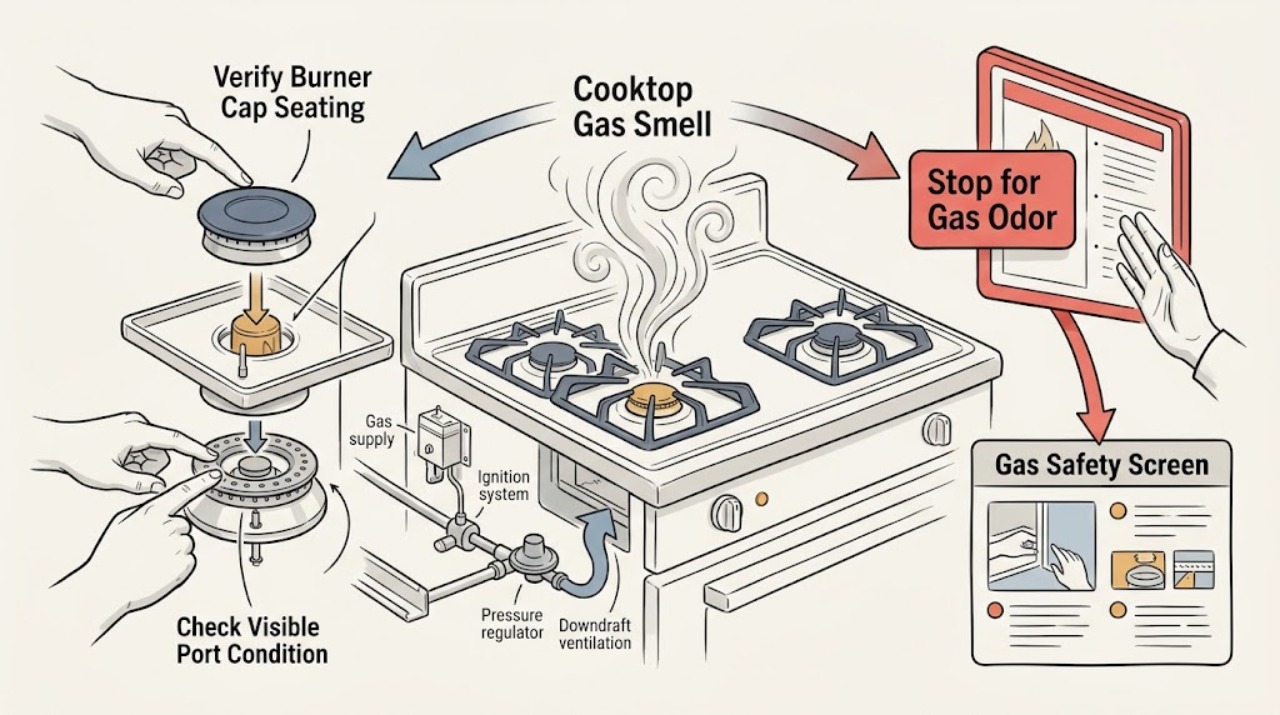
KitchenAid Cooktop Gas Smell: Use a Gas-Safety Stop Before Troubleshooting
A KitchenAid gas cooktop can give a brief gas odor while a burner is being lit, but gas smell when the cooktop is off or an odor that lingers is a stop condition. Turn every control to Off only if you can do so without approaching a hazard; do not light anything, operate electrical switches, or investigate a suspected leak.
-
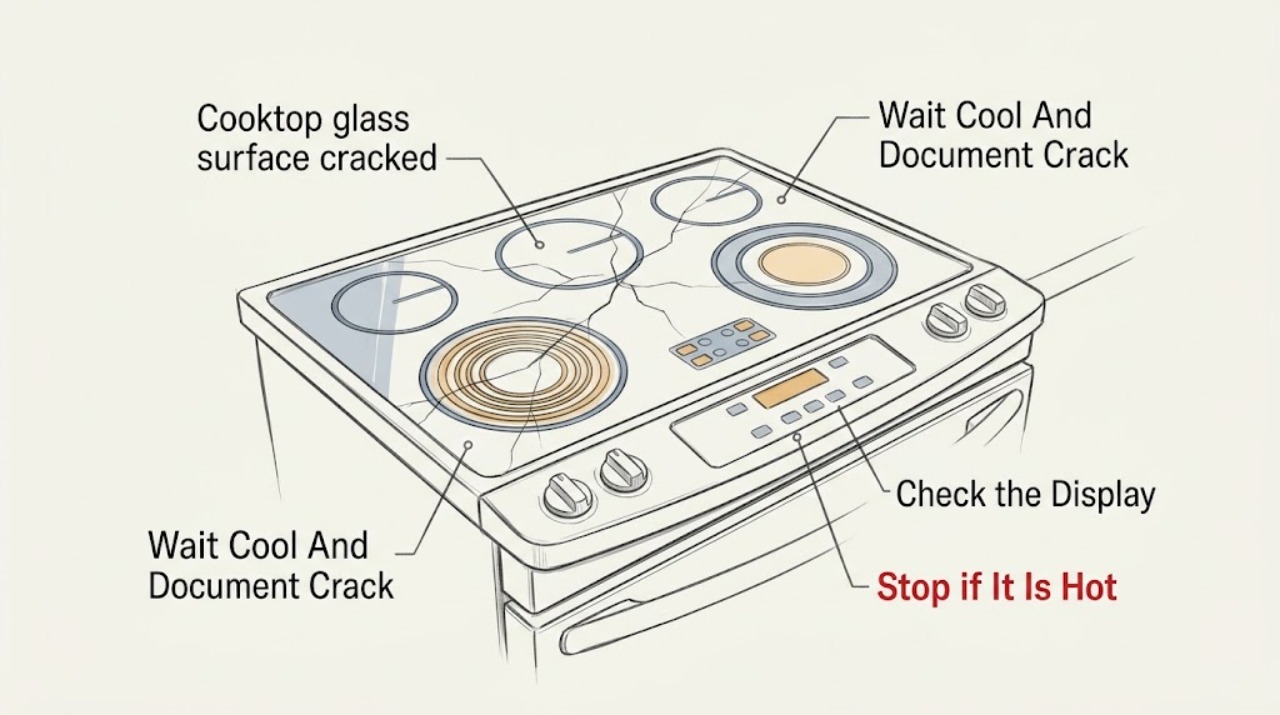
KitchenAid cooktop glass surface cracked: What to Check and What to Do Next
Do not cook on a KitchenAid cooktop with a cracked glass surface. KitchenAid's cooktop safety guidance warns that cleaning solutions and spillovers can penetrate a broken cooktop and create an electric-shock risk, and directs the owner to a qualified technician.
-
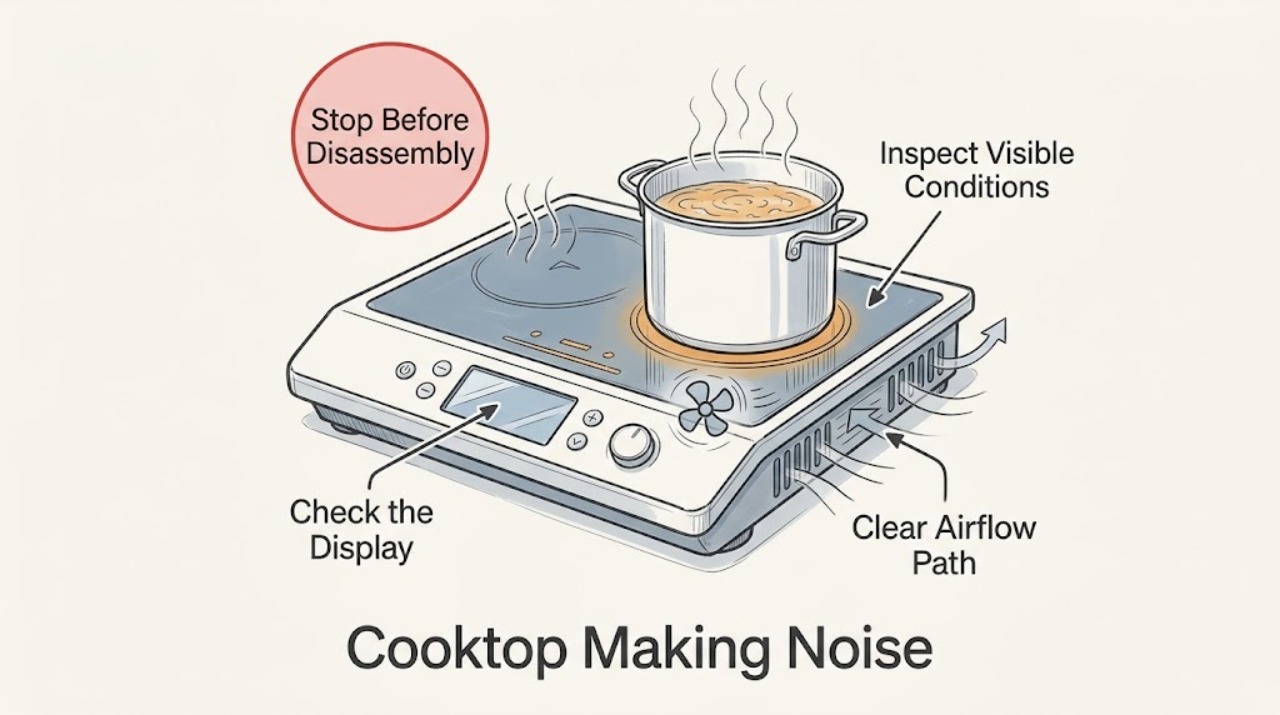
Kitchenaid Cooktop Making Noise: Identify the Sound and Choose a Safe Fix
First identify whether the sound is a low hum, crackle, fan noise, clicking, popping, or a noisy flame, and whether the cooktop is electric, induction, or gas. A low hum or crackle that changes with power or cookware, or a cooling or downdraft fan that runs during or after use, can be normal.
-
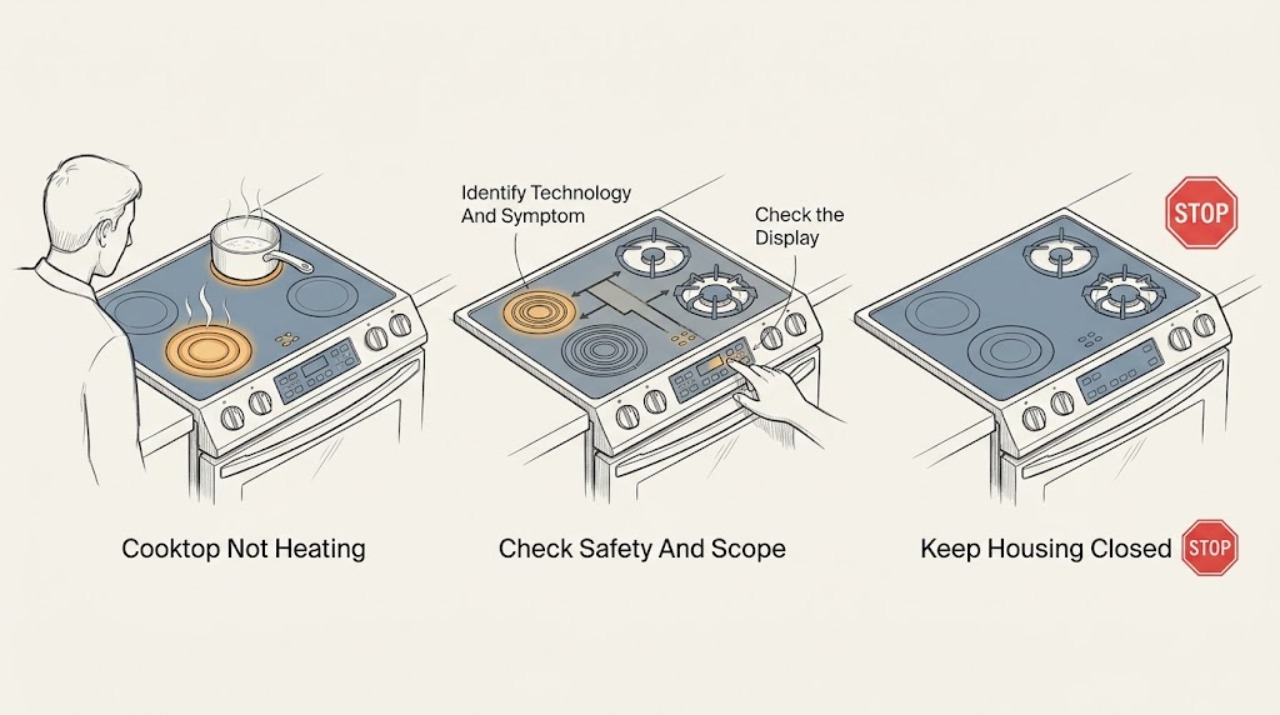
Kitchenaid Cooktop Not Heating
First identify whether the KitchenAid cooktop is gas, electric radiant, or induction and whether one zone or every zone is affected. Stop for a gas odor, smoke, sparks, arcing, a damaged cord or receptacle, a cracked glass surface, or controls that behave erratically.
-
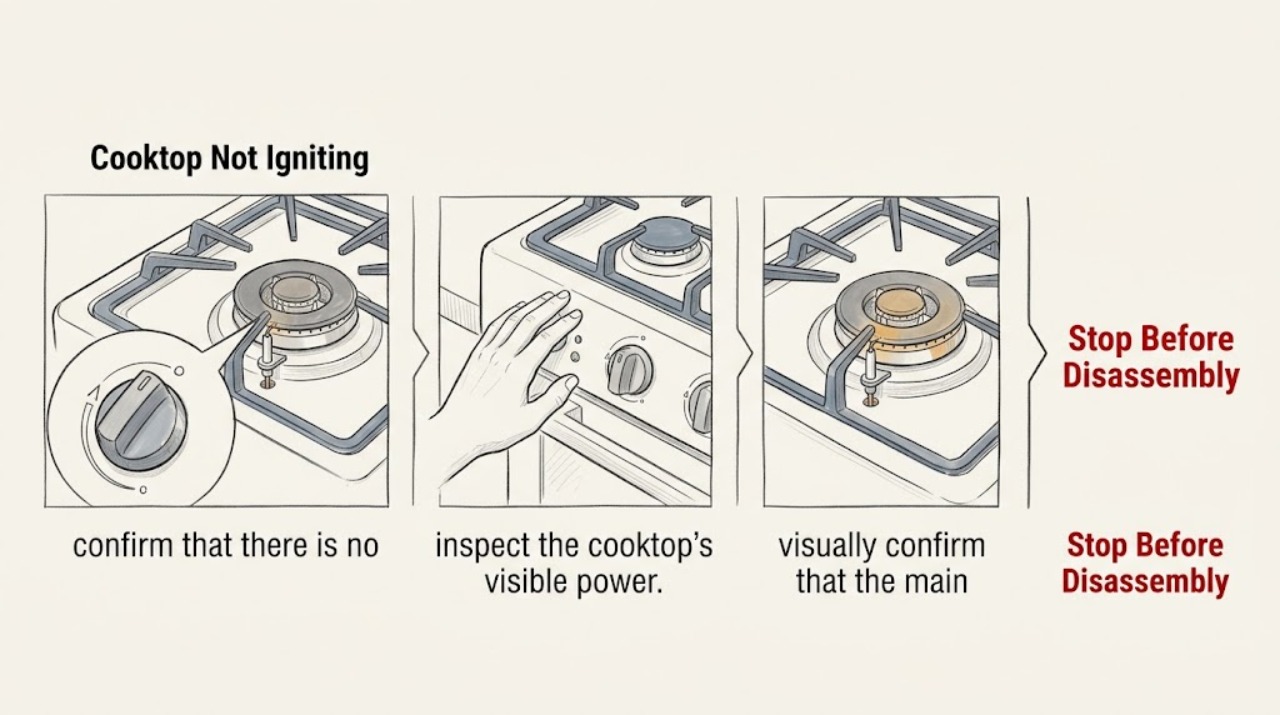
KitchenAid Cooktop Not Igniting
For a KitchenAid gas cooktop that will not ignite, first stop if you smell unburned gas. If there is no gas odor and the surface is cool, determine whether one burner or all burners fail.
-
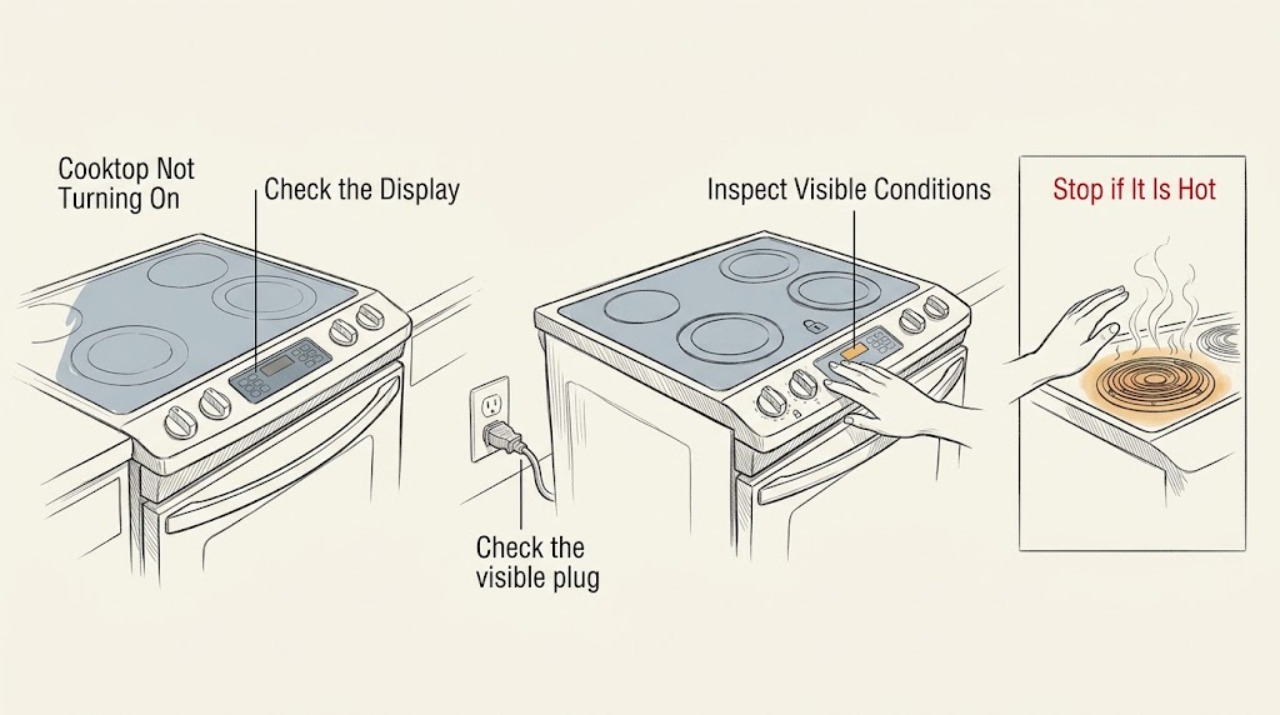
Kitchenaid Cooktop Not Turning On
If a KitchenAid cooktop will not turn on, first identify whether it is electric, induction, or gas and whether the whole control panel is dead or only one burner fails. Check the selected control, Control Lock or Cooktop Lockout, the visible power connection and breaker, and—on a gas model—the knob position, burner cap, gas supply, and igniter click.
-
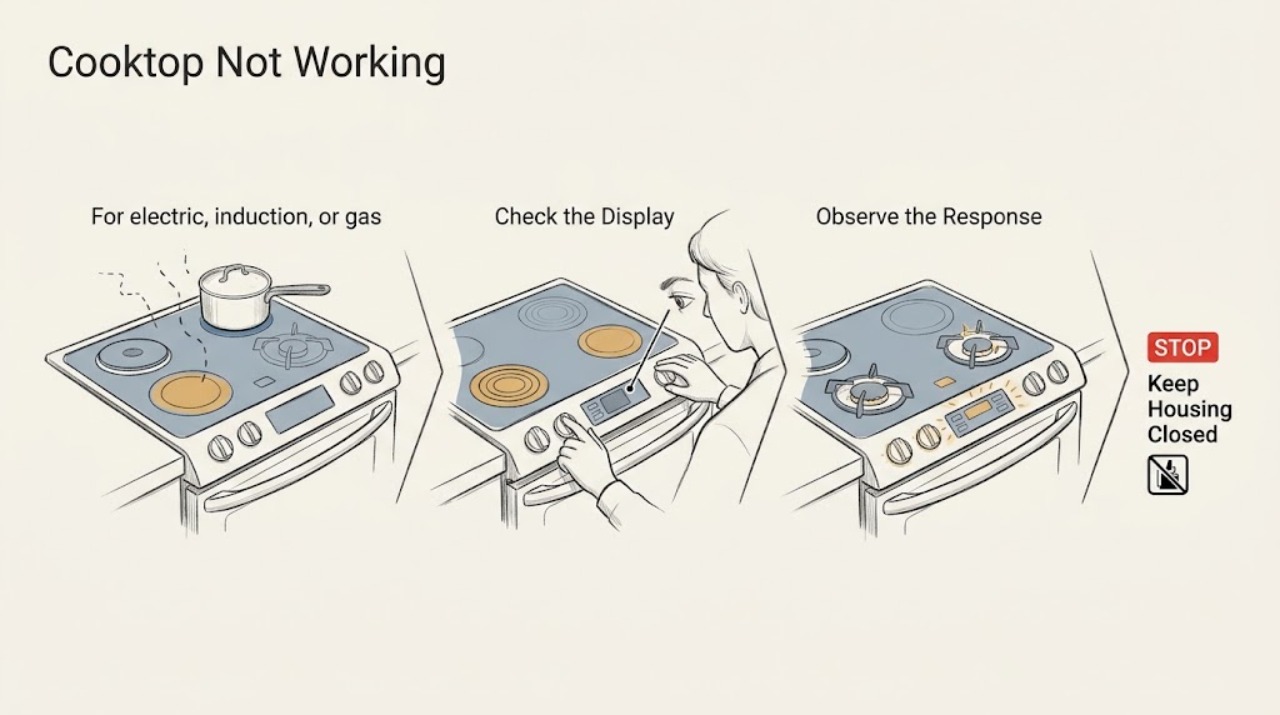
KitchenAid Cooktop Not Working: Find the Power, Lock, Gas, or Burner Fault
First identify whether your KitchenAid cooktop is gas, radiant electric, or induction. For any type, clear the control area, check the house breaker, and look for a control lock.
-
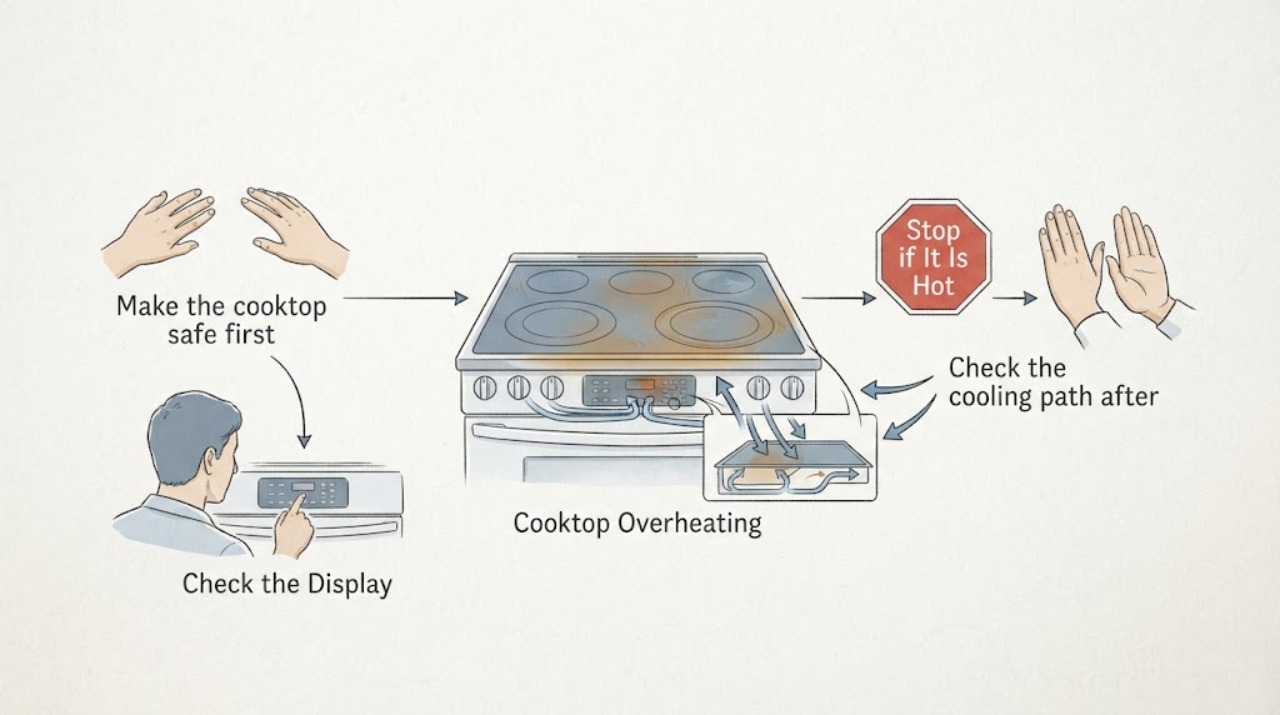
Kitchenaid Cooktop Overheating: Safe Checks Before Service
A KitchenAid cooktop can feel hot after cooking because a zone or a nearby hot pan is still transferring residual heat, and some models cycle their elements to control temperature. Turn every control off and keep hands and combustibles away while it cools.
-
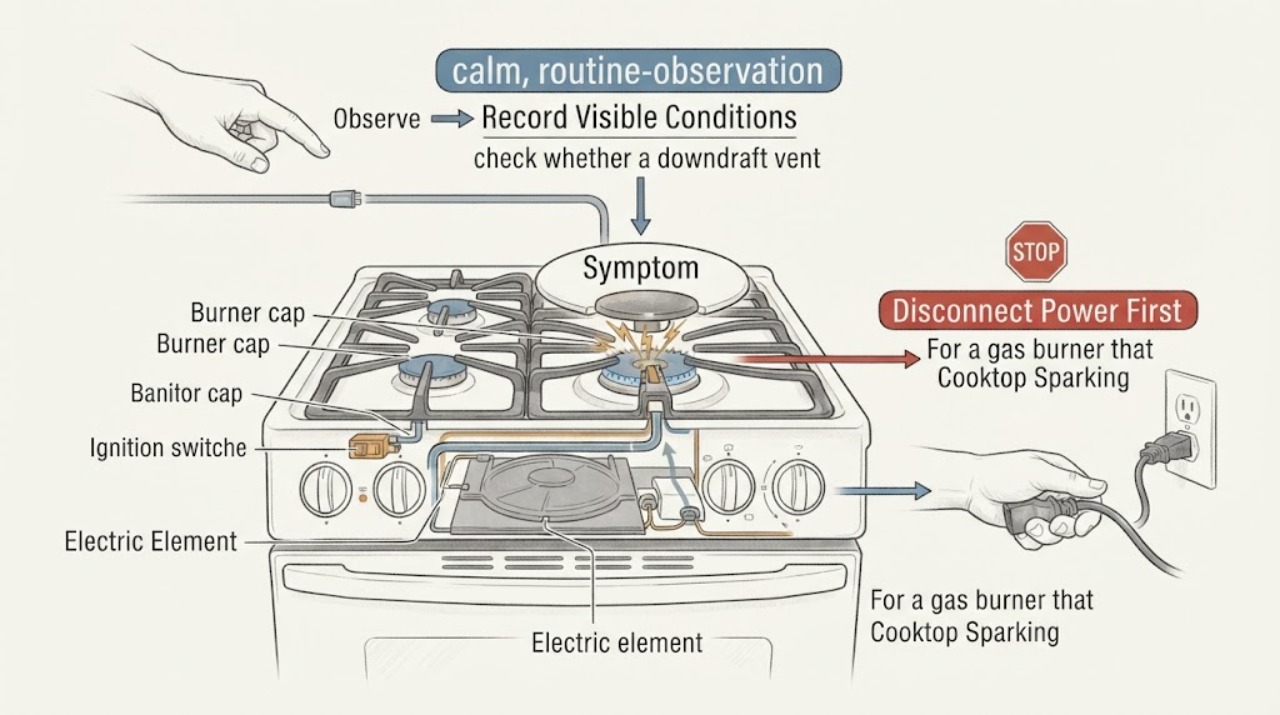
Kitchenaid Cooktop Sparking
A KitchenAid gas cooktop may spark or click briefly while a burner is being lit, and some flame-sensing models may spark again if a flame is blown out. Continuous sparking with all knobs off, sparking without a stable flame, an electric arc under the glass, or sparks with smoke, gas odor, scorching, or a tripped breaker is not a normal test condition.
-
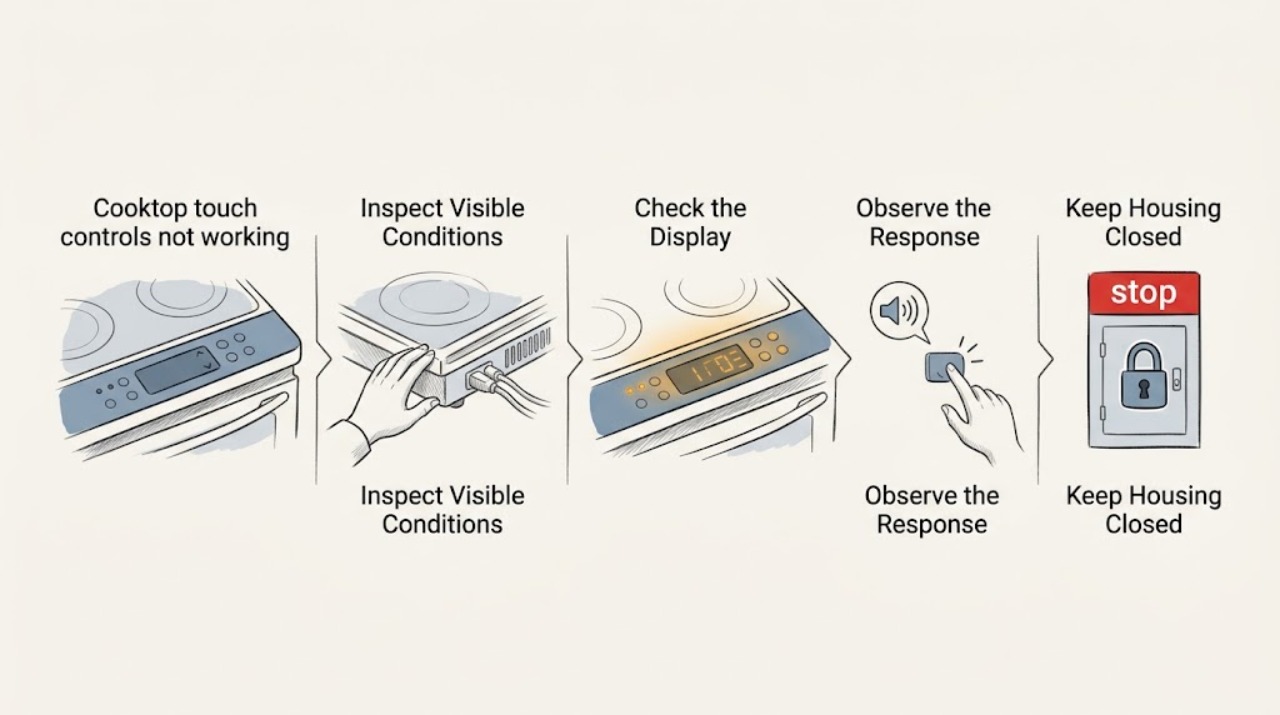
KitchenAid cooktop touch controls not working: What to Check and What to Do Next
When a KitchenAid cooktop touch panel does not respond, first turn all controls off and remove cookware or utensils from the control area. Let the surface cool, dry the panel and your hands, and clean away food or water film with the method in the model manual.