
On this page
Start here
Quick answer
A KitchenAid gas cooktop may spark or click briefly while a burner is being lit, and some flame-sensing models may spark again if a flame is blown out. Continuous sparking with all knobs off, sparking without a stable flame, an electric arc under the glass, or sparks with smoke, gas odor, scorching, or a tripped breaker is not a normal test condition. Turn the affected control off, keep the burner cap dry and correctly seated, remove moisture or objects from an electric or induction control area only when safe, and check the visible breaker once. Do not keep releasing gas without ignition, lift the cooktop, probe live wiring, bypass a lock, or use water on an energized surface. For any gas smell, electrical damage, cracked glass, repeated sparking, or repeated breaker trip, stop immediately and seek qualified gas, electrical, or appliance service.
Work through in order
Diagnostic checks
Use only checks that match the exact appliance or system and its official guide.
-
Check 1
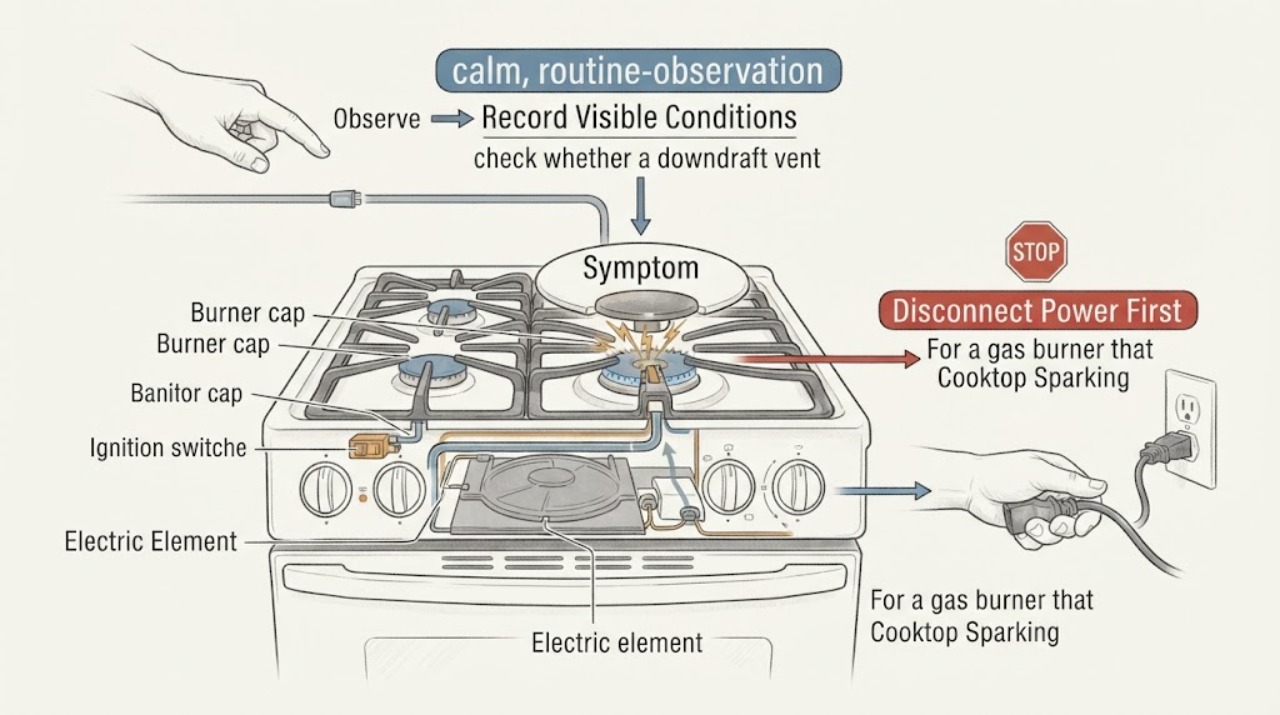
Classify the spark with all controls off first: record whether it is at a gas burner, under or around electric or induction glass, at the control panel, or at the plug or breaker. Note whether a flame is stable and whether any smell, heat, scorch, or code is present.
Expected result: The spark occurs only while a gas knob is at Ignite, continues after the knob is off, appears at a wet or dirty control area, appears under the glass, or is accompanied by gas odor, smoke, scorching, or a trip.
Next step: Follow the branch matching the cooktop type and spark location. Do not open the cooktop or repeatedly energize it to locate a hidden arc.
Why this matters
Why: Brief ignition sparking can be part of gas-burner operation, but sparking with controls off or an arc outside the intended igniter path is an abnormal electrical or ignition condition. The location determines whether a dry-and-seat check or an immediate service stop is appropriate.
-
Check 2
For a gas burner that sparks during lighting, turn the knob off if the flame does not appear promptly. When the surface is cool and the gas is off, check that the burner cap is dry, correctly seated, and free of spill residue; follow the Owner's Manual for permitted cleaning.
Expected result: The cap or burner area was wet or displaced, the burner lights and the sparking stops, the igniter does not click, or the burner continues to spark after the control is off.
Next step: Allow the area to dry thoroughly and reseat the cap as the manual shows, then try once. If there is no click, continued sparking, unstable flame, or any gas odor, turn the burner off and arrange qualified service.
Why this matters
Why: KitchenAid says moisture from cleaning or a spill can cause clicking, and the igniter should stop once the burner is lit or the control is moved away from Ignite. Sparking with the control off points to moisture in switches or an ignition fault rather than ordinary lighting.
-
Check 3
If a gas flame is lit but the igniter keeps sparking, check whether a downdraft vent or strong room draft is disturbing the flame. Use only the model-approved, stable flame setting and reduce the downdraft effect if the manual permits; never lean over an unstable flame.
Expected result: The flame is being blown away from the igniter, the flame is stable but sparking continues, or the burner cannot maintain a flame.
Next step: Remove the draft only through the documented vent setting and retry once. If sparking persists, the flame is unstable, or the vent cannot be adjusted safely, turn the burner off and call qualified service.
Why this matters
Why: KitchenAid explains that a downdraft can move a flame away from a flame-sensing igniter and cause repeated re-ignition sparking. A stable flame with continued sparking or a burner that will not stay lit needs model-specific service.
-
Check 4
For an electric, radiant, or induction cooktop, switch controls off and allow the surface to cool. Remove any object from the control area and wipe away liquid or soil with the appliance safely de-energized; do not put cookware, foil, or utensils over controls.
Expected result: Sparking or beeping stops after the control area is clear and dry, a lock or code remains, or the spark appears beneath the glass or returns with no surface contamination.
Next step: Use the exact manual to clear a lock or code and test once. If sparking returns on a clean, dry, intact surface, keep the cooktop off and arrange qualified service; do not lift the glass.
Why this matters
Why: KitchenAid says an object, liquid, or soil pressing on an induction control can cause continuous alerts, while a control lock can prevent operation. A visible arc beneath glass is not a surface-cleaning issue and can involve internal wiring or an element.
-
Check 5
Check the visible power connection and household breaker or fuse without opening the cooktop. If a breaker has tripped, restore it once only when there is no moisture, scorching, damaged cord, heat, odor, or visible arc.
Expected result: The breaker or fuse was interrupted once, the cooktop resumes without sparking, power appears normal but sparking continues, or the breaker trips again.
Next step: If safe, restore the external supply and verify operation once. If the breaker trips again, the supply is damaged, or sparking continues, leave the cooktop off and call a qualified electrician or appliance technician.
Why this matters
Why: KitchenAid lists a tripped breaker, blown fuse, or incorrect power connection as a cause of electric, induction, and gas-ignition problems. A repeat trip or continuing arc indicates an unresolved electrical fault.
-
Check 6
After the correct dry, cap, draft, control, and power checks, perform one supervised operation using the exact model manual. Watch for a stable gas flame or normal electric heat and stop immediately for smoke, gas odor, scorching, crackling outside the igniter, abnormal heat, or a repeated code.
Expected result: The cooktop operates normally, one burner or zone still sparks, sparking returns with all controls off, or a hazard sign appears.
Next step: Stop testing and arrange qualified KitchenAid service for a persistent spark or code. For gas odor, electrical arc, smoke, scorching, cracked glass, or repeated breaker trips, follow the immediate stop boundary and do not run another test.
Why this matters
Why: A one-time improvement after drying, reseating, clearing a control, or restoring power supports that external condition as the immediate cause. A persistent spark can involve an igniter, switch, burner valve, element, control, or wiring that cannot be safely identified from outside.
Use your observations
Decision map
Find the observation that best matches what you see, then follow the next safe action.
-
PATH 01Next step
What you see
A gas burner sparks only while the knob is at Ignite and stops after a stable flame appears.
Do this next
Treat the ignition spark as expected operation, provided the cap is dry and seated and there is no gas odor or unstable flame. Use the exact manual if the behavior changes.
-
PATH 02Next step
What you see
A gas burner clicks or sparks after cleaning, the cap is wet or displaced, or the flame fails to light.
Do this next
Turn the burner off, let the area dry, reseat the cap as instructed, and try once. Persistent sparking or no ignition needs qualified service.
-
PATH 03Next step
What you see
A flame-sensing gas model repeatedly sparks because a downdraft or room draft moves the flame away from the igniter.
Do this next
Remove the draft through the documented vent setting and retry once. Turn the burner off if the flame is unstable or sparking continues.
-
PATH 04Next step
What you see
An electric or induction control area is wet, dirty, or covered by an object and sparking or alerts stop when it is safely cleared and dry.
Do this next
Keep the control area clear and dry and follow the exact manual for lock or reset behavior. A return of sparking on a clean surface needs service.
-
PATH 05Next step
What you see
A spark appears beneath the electric or induction glass, continues with all controls off, or a breaker trips again.
Do this next
Stop using the cooktop, disconnect power only if safe, and arrange qualified appliance or electrical service. Do not lift the glass or test live wiring.
-
PATH 06Next step
What you see
Gas odor, smoke, scorching, cracked glass, abnormal heat, visible electrical damage, or sparks outside the intended igniter path occurs.
Do this next
Stop immediately. For gas odor, do not operate switches or create a spark; leave the area and contact emergency or gas service from a safe location. For electrical hazards, disconnect only if safe and obtain qualified service. Do not run another test.
Helpful context
Understand the symptom
Identify where the spark is coming from
A gas igniter spark at a burner is different from an arc beneath an electric or induction glass surface. Note whether one burner or all burners are affected, whether a flame is present, whether the controls are off, and whether the display shows a lock or code. Do not keep testing just to reproduce the sound.
Use an immediate stop boundary
If you smell gas, turn the burner control off if safe, do not operate electrical switches or create a spark, leave the area, and contact gas or emergency service from a safe location. For an electric arc, smoke, scorching, cracked glass, hot wiring, or repeated breaker trips, disconnect power only if safe and arrange qualified service.
When checks do not resolve it
Need a professional?
Book service for repeated sparking, a no-click or no-ignition condition, an arc under the glass, a returning code, unstable flame, or any repair beyond the exact KitchenAid Owner's Manual.
Common questions
FAQ
Is it normal for a KitchenAid gas cooktop to spark?
Brief sparking while a knob is at Ignite can be normal, and some flame-sensing models may spark again if a draft blows out the flame. Sparking with all controls off, an unstable flame, or a gas odor needs an immediate stop and service.
Why does my KitchenAid cooktop keep sparking after the burner is lit?
A wet burner or control area, a displaced cap, or a downdraft that disturbs a flame-sensing burner can cause repeated sparking. Turn the burner off, allow it to dry, correct only the documented external condition, and arrange service if sparking continues.
What should I do if my electric or induction KitchenAid cooktop sparks?
Turn it off and allow it to cool. Clear and dry the control area only when safe, then check the visible breaker once. A spark beneath the glass, repeated spark, scorch, crack, or breaker trip requires qualified service; do not lift the glass or test live wiring.
When should I stop using a sparking KitchenAid cooktop?
Stop for gas odor, smoke, scorching, cracked glass, abnormal heat, visible electrical damage, sparking outside the intended igniter path, or repeated breaker trips. For gas odor, do not operate switches or create a spark; leave the area and seek help from a safe location.
Read the exact guide
Official sources
- Gas Cooktop Clicking when Using a Retractable Downdraft Vent HoodKitchenAid Product Help · Use only for KitchenAid gas cooktops equipped with a retractable downdraft or flame-sensing ignition; exact controls vary by model.
- Nothing Will Work - Gas CooktopKitchenAid Product Help · Use when all KitchenAid gas burners fail or sparking is accompanied by a no-operation condition; exact model lockout varies.
- Not Powering On - Electric CooktopKitchenAid Product Help · Use for KitchenAid electric smooth-top cooktops; coil and induction models have additional model-specific checks.
- TROUBLESHOOTINGKitchenAid · Representative KitchenAid cooktop manual; confirm the exact model manual before applying controls, codes, or safety instructions.
- Burner(s) Sparking or Clicking - Gas CooktopKitchenAid Product Help · Use for KitchenAid gas cooktops; exact ignition and flame-sensing behavior varies by model.
- Beeping and Audio Tones - Induction CooktopKitchenAid Product Help · Use for KitchenAid induction control symptoms; this page does not diagnose an arc beneath glass.
- Lighting the Burners - Electronic IgnitionKitchenAid Product Help · Use for KitchenAid gas cooktops with electronic ignition; follow the exact model manual.
Community feedback
Share a repair observation
Share a plain-text repair observation. Accepted observations are published automatically; this page may take a moment to update.