
Repair problem
Sparking Troubleshooting Guides
Published FixGraph guidance for diagnosing and responding to sparking.
Matching published guides
Choose a guide that matches the service, equipment, and conditions you are seeing.
-
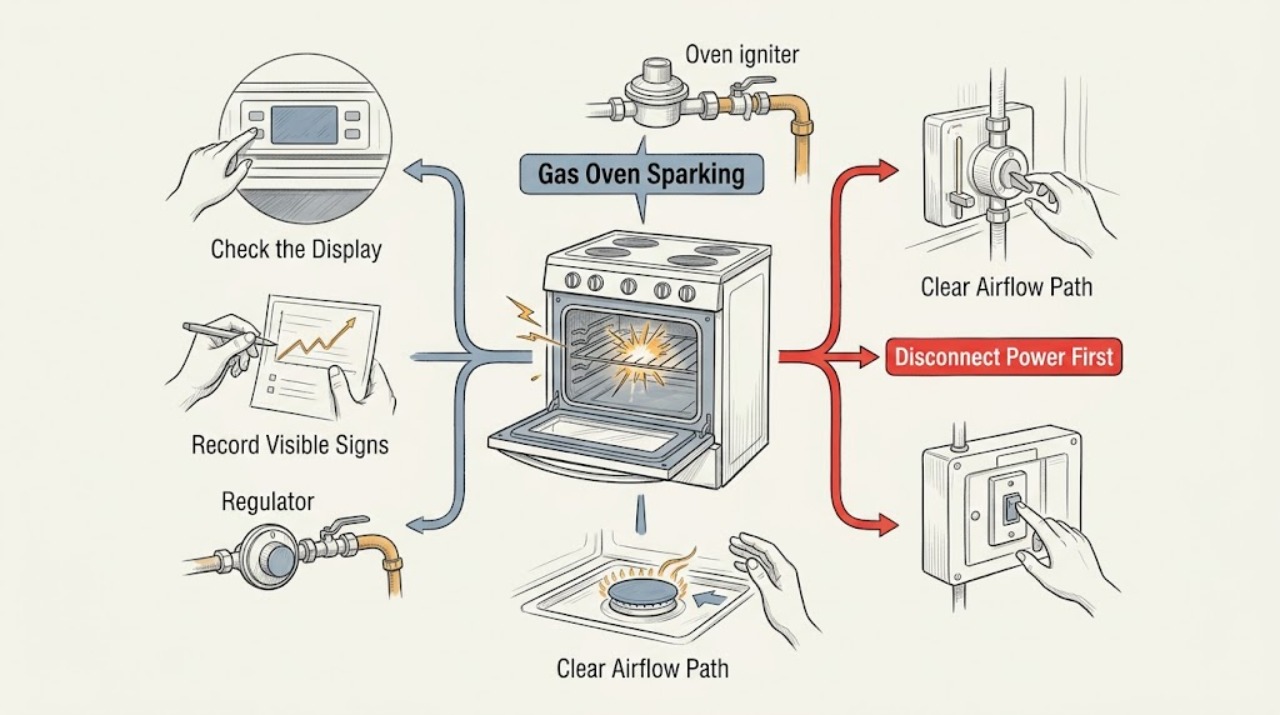
Amana Gas Oven Sparking: Tell Normal Ignition Clicking from a Fault
Short clicking or sparking while an Amana gas oven is starting can be normal because the igniter is trying to detect the flame. It should stop once ignition is detected.
-
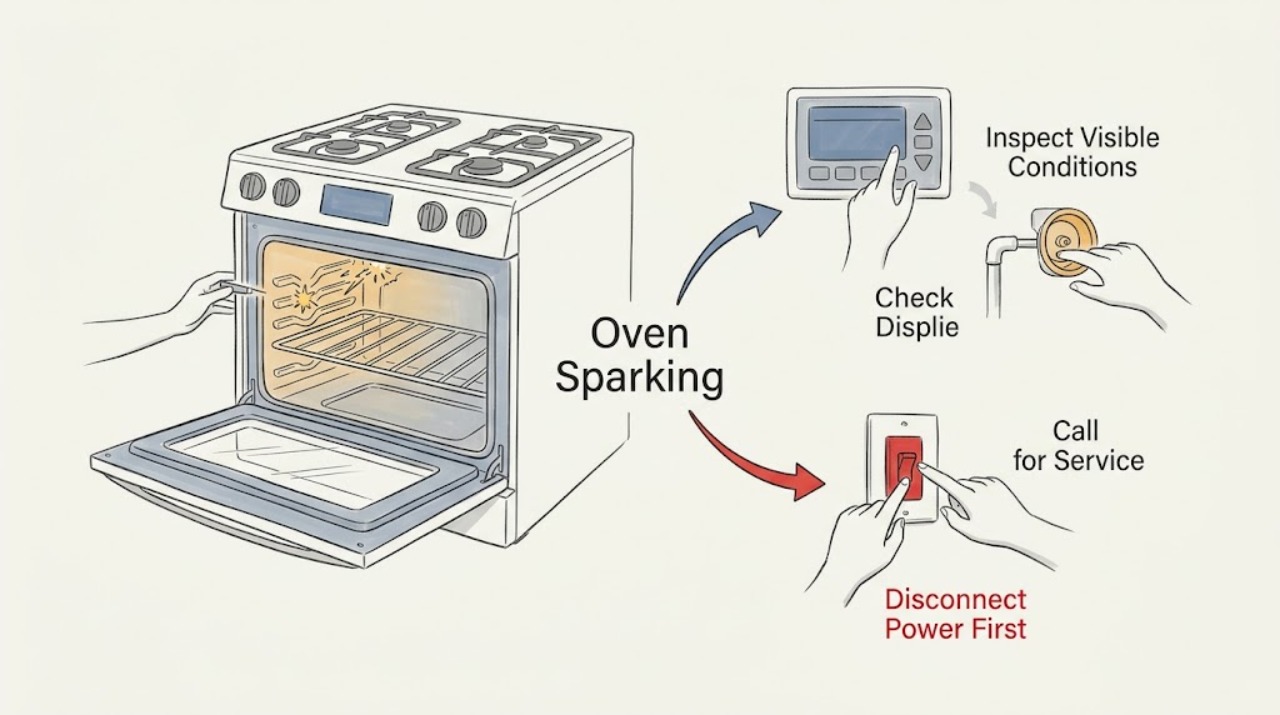
Amana Oven Sparking: Safe Checks and When to Stop
A brief click or snap while an Amana gas oven is trying to ignite can be part of normal ignition, but visible arcing inside the oven cavity, repeated sparking without a stable flame, sparks after ignition, or any gas odor is not a normal user-serviceable condition. Stop the oven, keep clear of the ignition and wiring, and arrange qualified appliance service; if you smell gas, leave the area and contact the gas supplier or emergency services from a safe location.
-
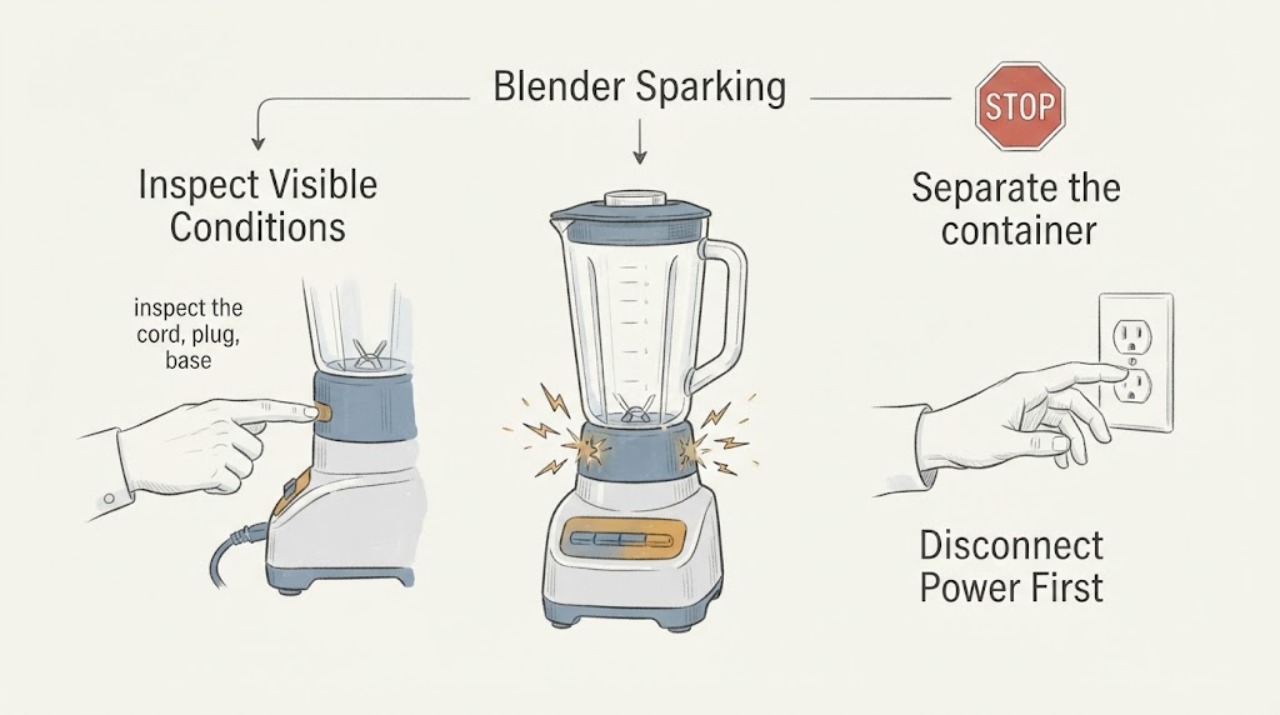
Blender Sparking: Stop Using It and Check Only External Signs
Visible sparking from a blender is an immediate stop symptom. Switch it off, disconnect power from a dry safe position, and keep the container and motor base apart until cool. Look only for external signs such as a damaged cord, burned smell, cracked drive socket, or liquid on the base; do not run it again to reproduce sparks. Arrange manufacturer or qualified small-appliance service.
-
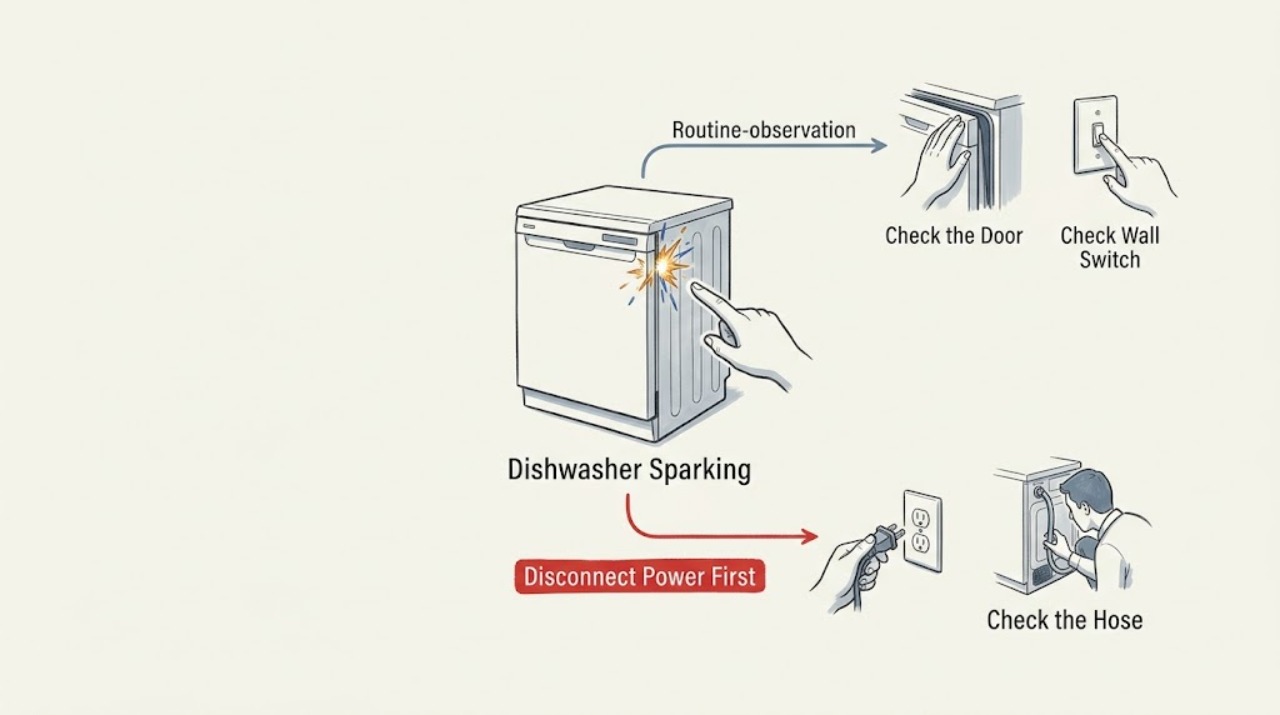
Bosch Dishwasher Sparking
Stop the Bosch dishwasher immediately and do not restart or reset it after seeing sparks. If there is smoke, flame, heat, or a burning smell, move away and contact emergency services from a safe location.
-
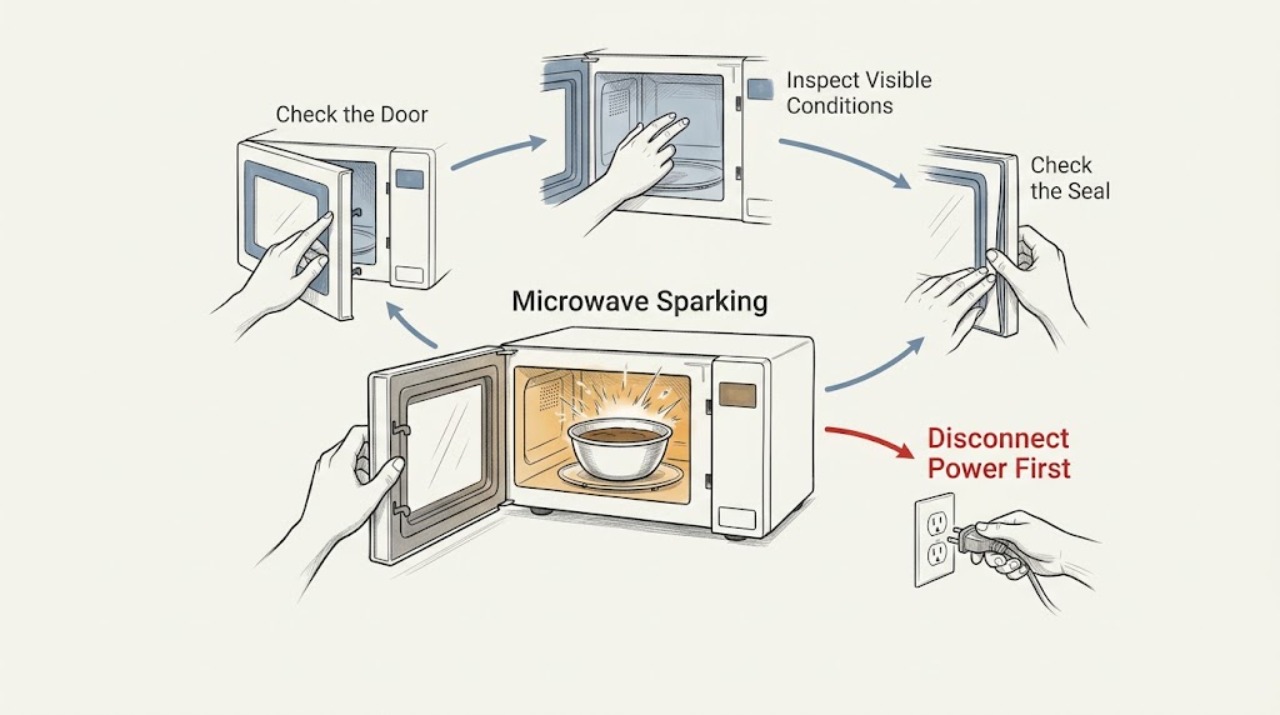
Bosch Microwave Sparking
If a Bosch microwave sparks or arcs, stop it immediately, keep the door closed if there is flame or smoke, disconnect power only when it is safe to do so, and do not run it again to test the result. After the cavity and cookware are cold and de-energized, remove only ordinary visible causes such as metal utensils, foil, metal twist ties, metallic trim, packaging, or burned food residue.
-
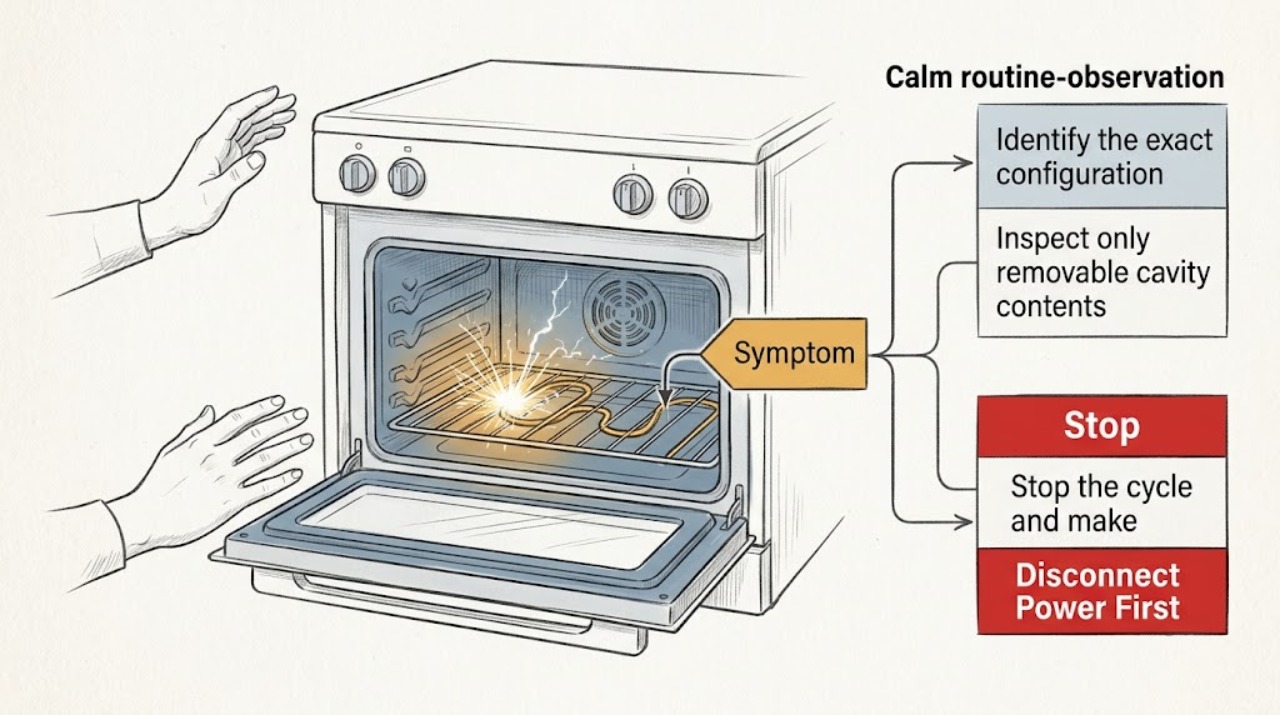
Bosch Oven Sparking
Turn the oven off and treat any continuing spark, smoke, flame outside the normal burner area, damaged cord, or gas odor as a stop condition. Once the oven is cool and isolated from power, record where and when the spark appears and check only for removable food, foil, or a visibly damaged element.
-
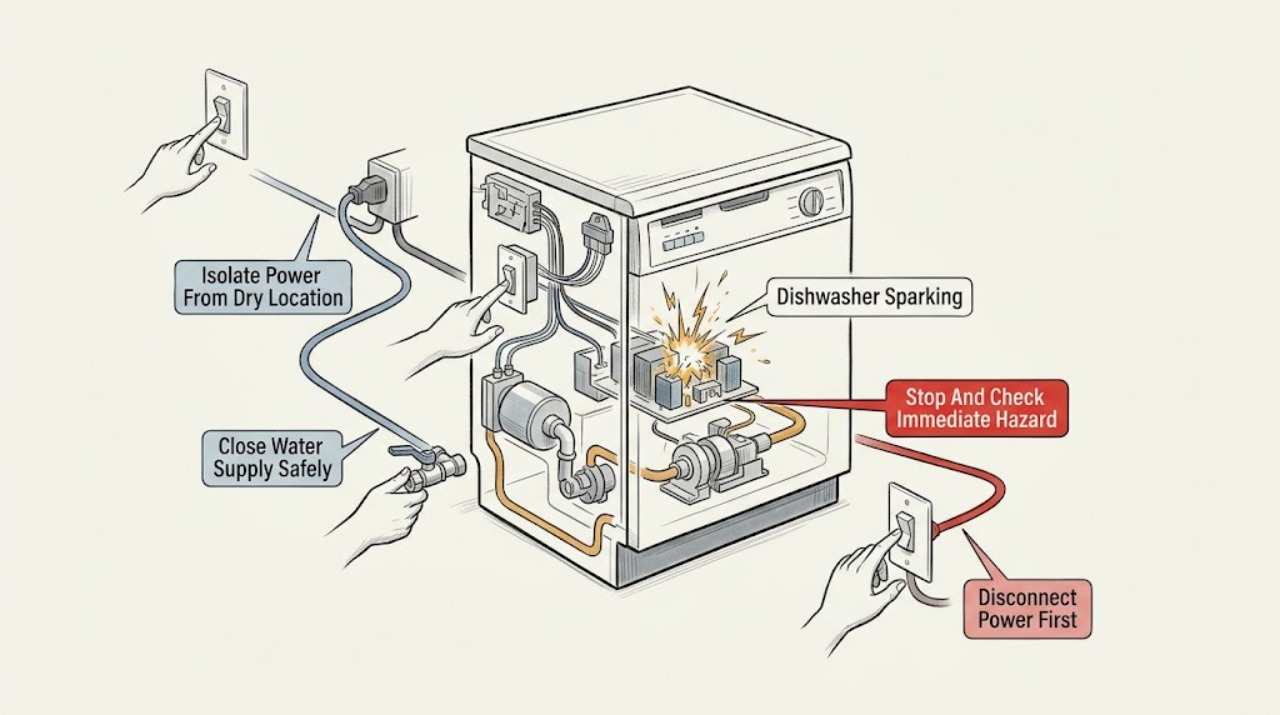
Candy Dishwasher Sparking: Stop-Use and Safe Service Guidance
Treat a Candy dishwasher that sparks as an electrical and possible water hazard, not as a normal error that can be cleared. Stop the cycle and keep away from the appliance if sparks, smoke, a burning smell, heat, or water at the floor or plug is present.
-
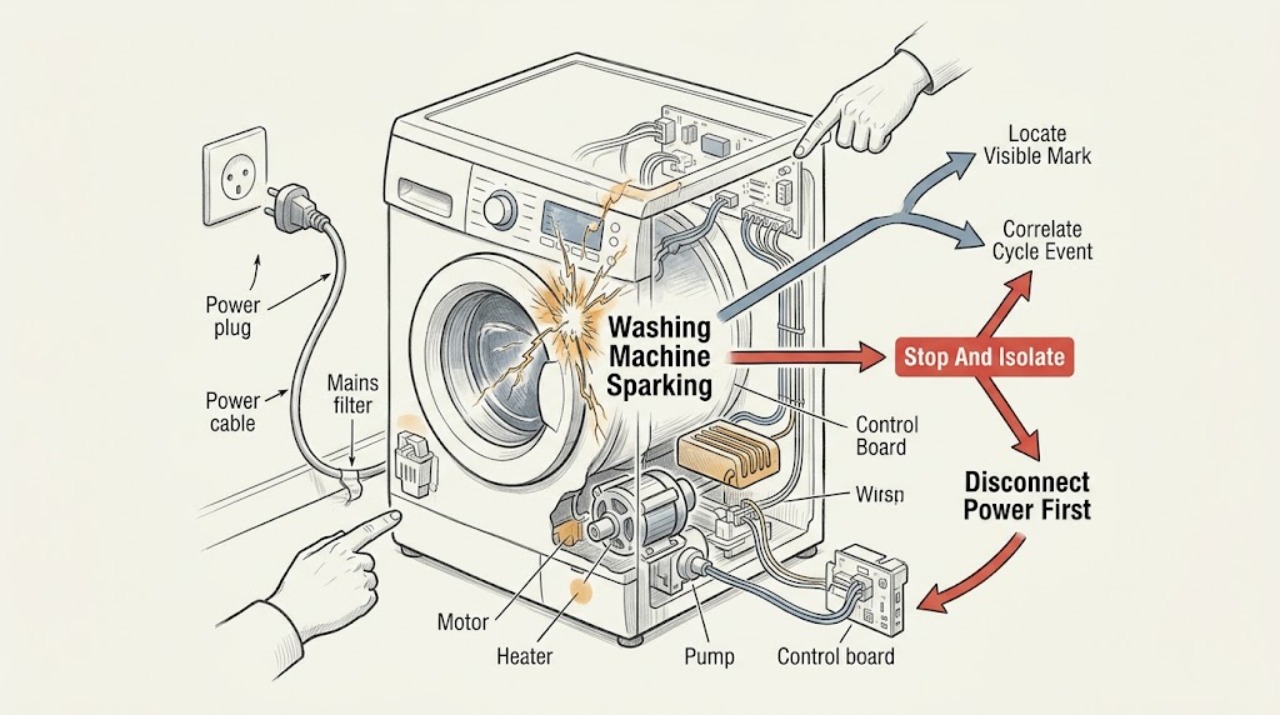
Candy Washing Machine Sparking: Stop Using It and Isolate the Electrical Risk
Visible sparks from a Candy washing machine, its plug, socket, cable, or interior are not a normal troubleshooting symptom. Stop the cycle, keep people away from water and exposed electrical parts, and isolate power only if the plug or switch can be reached without touching a hot, wet, damaged, smoking, or arcing area.
-
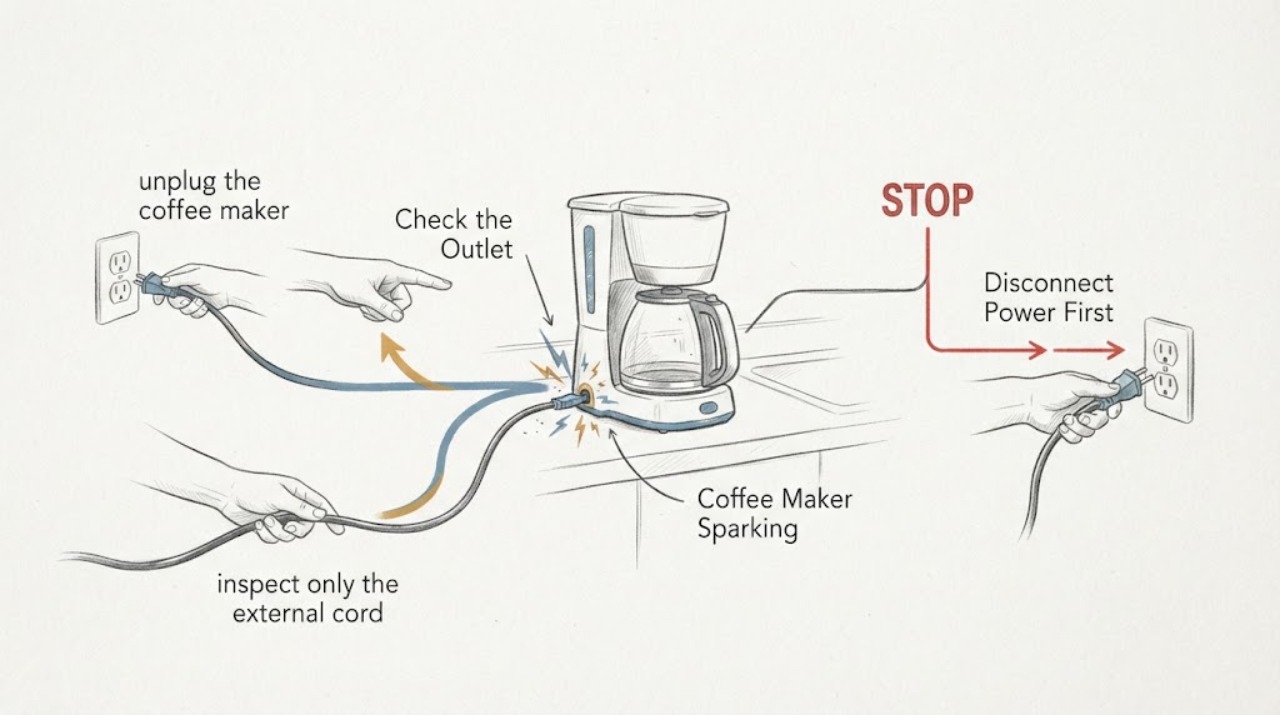
Coffee Maker Sparking
If a coffee maker sparks, stop using it immediately, unplug it only if the plug and outlet are dry and safe to touch, and keep it unplugged. Do not test it again, open the bottom cover, or operate it with a damaged cord or plug. After it is cool, record whether the spark came from the plug, outlet, cord, switch, or inside the machine; a repeat spark, scorch, smoke, heat, or water exposure needs qualified electrical or appliance service.
-
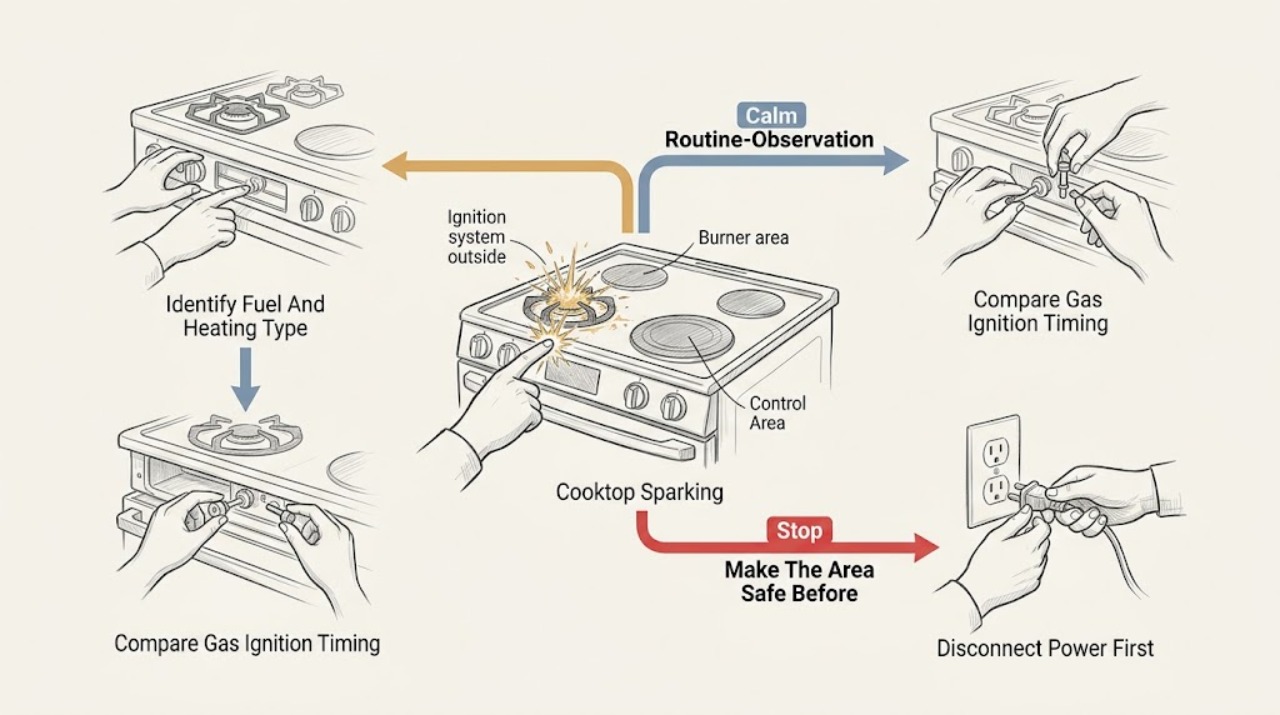
Cooktop Sparking: Tell Normal Gas Ignition from an Electrical Fault
A short spark at a gas burner while its control is deliberately turned to Ignite can be normal, and some gas cooktops make every igniter click or spark during one burner start. Sparking that continues after all controls are off, appears away from a designed gas igniter, follows a spill or cleaning, or is accompanied by gas odor, delayed ignition, an abnormal flame, smoke, heat damage, or a tripped breaker should not be repeatedly tested.
-
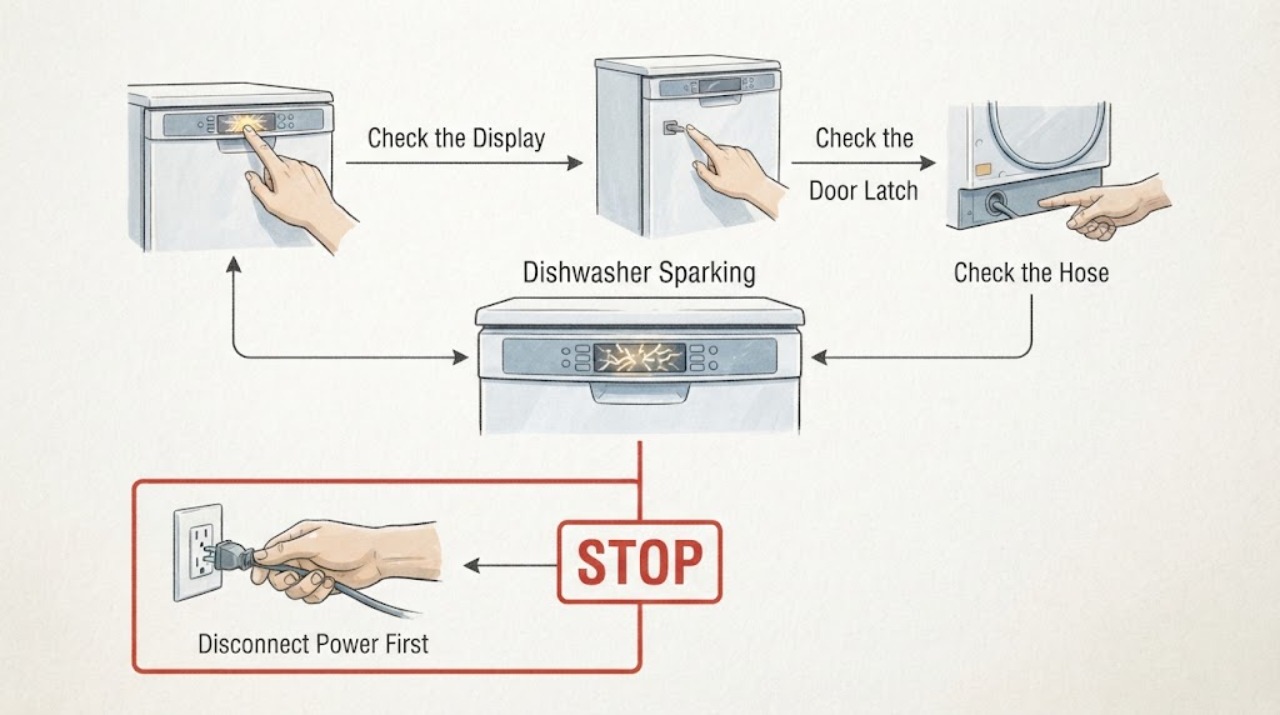
Dishwasher Sparking
To troubleshoot a dishwasher that is sparking, first identify the exact stage and accompanying signs, then make only the safe external checks supported by the owner guidance. Stop for hazards or recurrence and arrange qualified service.
-
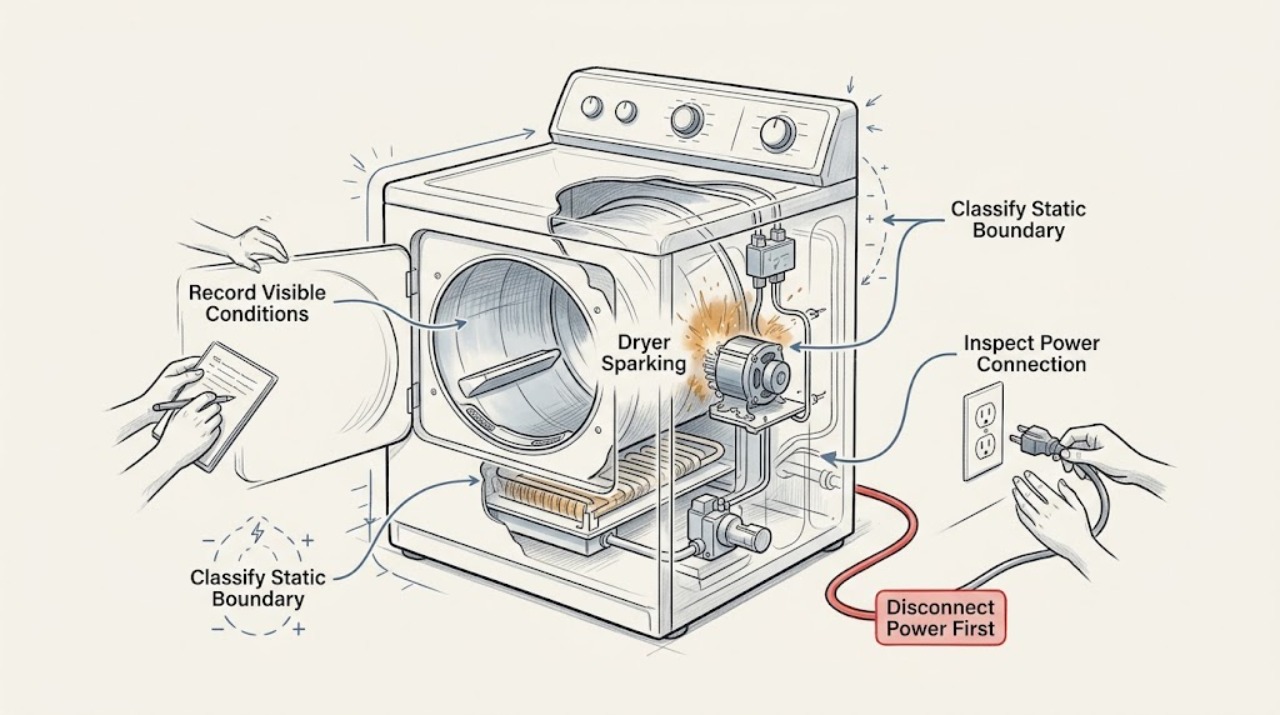
Dryer Sparking: Stop Use and Identify the Safe Next Step
A visible spark or arc from a dryer, its plug, outlet, cord, controls, cabinet, drum, or internal area is abnormal: stop the cycle, keep people away, and do not run the dryer again to see whether it repeats. If the machine is still operating and it is safe to do so from a dry position, turn its control off; isolate power only without touching a hot, wet, scorched, loose, or actively arcing connection.
-
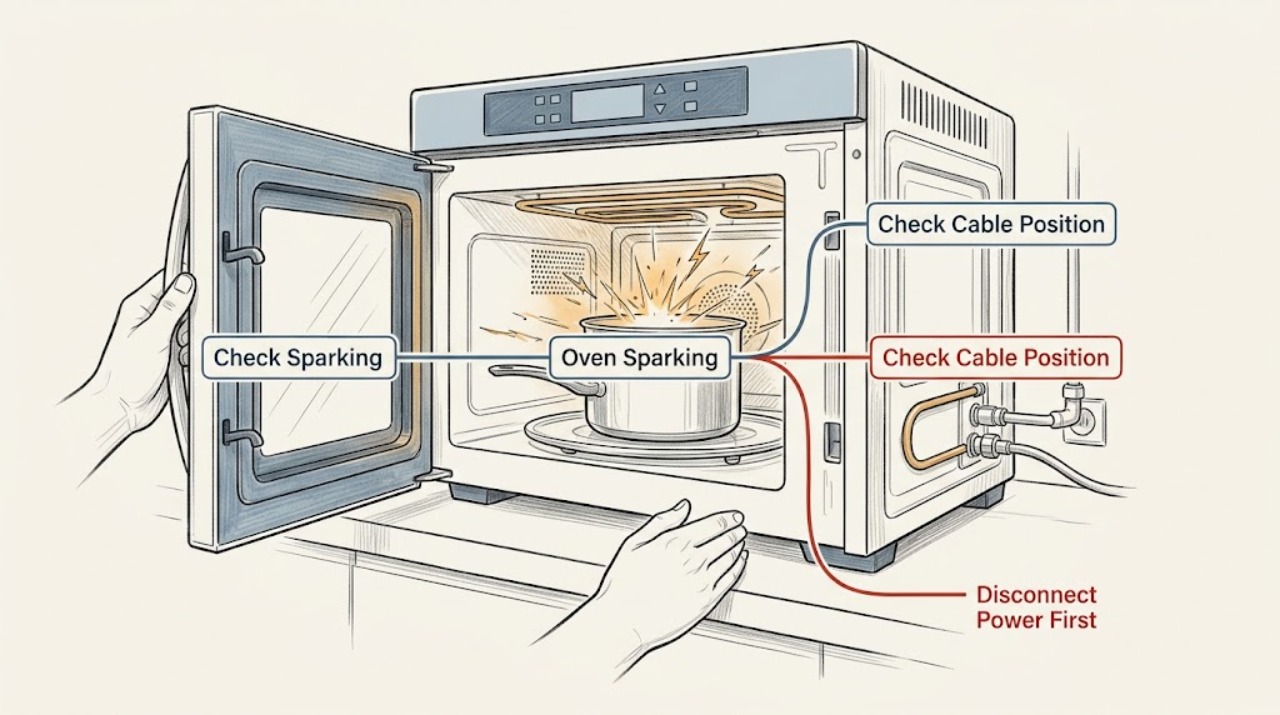
Fisher & Paykel Oven Sparking: Stop Safely and Check the Cooking Setup
Press Cancel/Off and stop the cooking cycle as soon as you see a spark. Keep the door closed if there is smoke or a flame, and disconnect power or switch off the circuit only if it is safe.
-
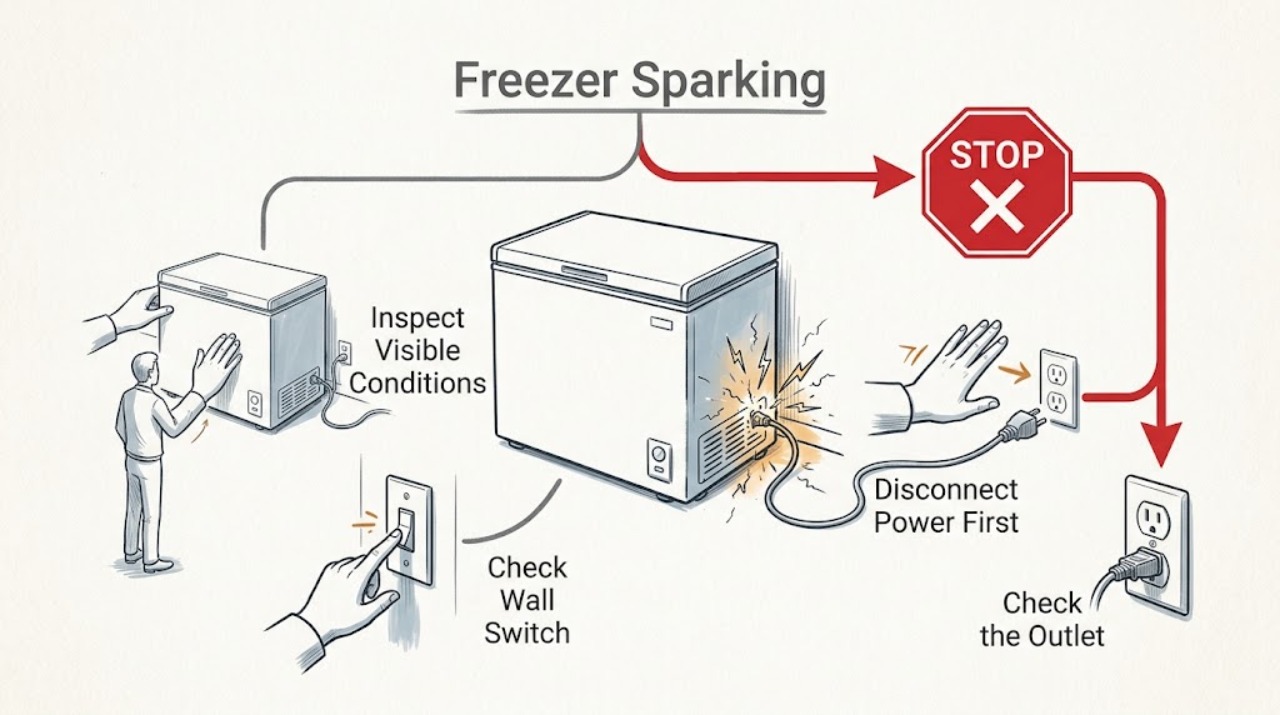
Freezer Sparking: Safe Power-Off Triage
Treat a visible spark, flash, arc, smoke, burning smell, heat, or charred material as an electrical safety event. From a dry, safe position, switch the freezer off or unplug it only if the plug is reachable without approaching the suspected fault; otherwise turn off the freezer circuit at the breaker.
-
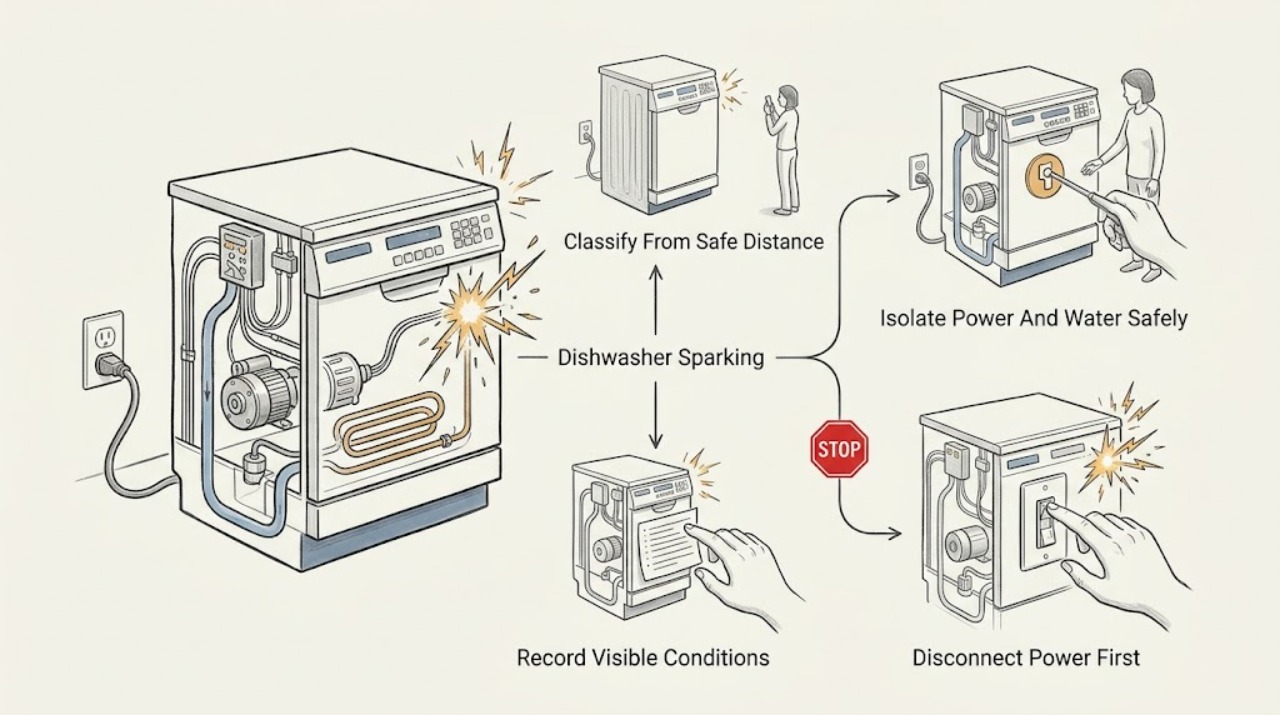
Frigidaire Dishwasher Sparking: Stop Use and Separate Arc, Light, and Sound Reports
If you saw an actual spark or arc, smelled burning, saw smoke or melted plastic, heard electrical crackling, or the breaker tripped, stop the dishwasher immediately and do not start it again to reproduce the event. Keep away from water and the appliance, and isolate power at the breaker or unplug only if the path is dry and safe; if the plug, outlet, or floor is wet, do not touch it.
-
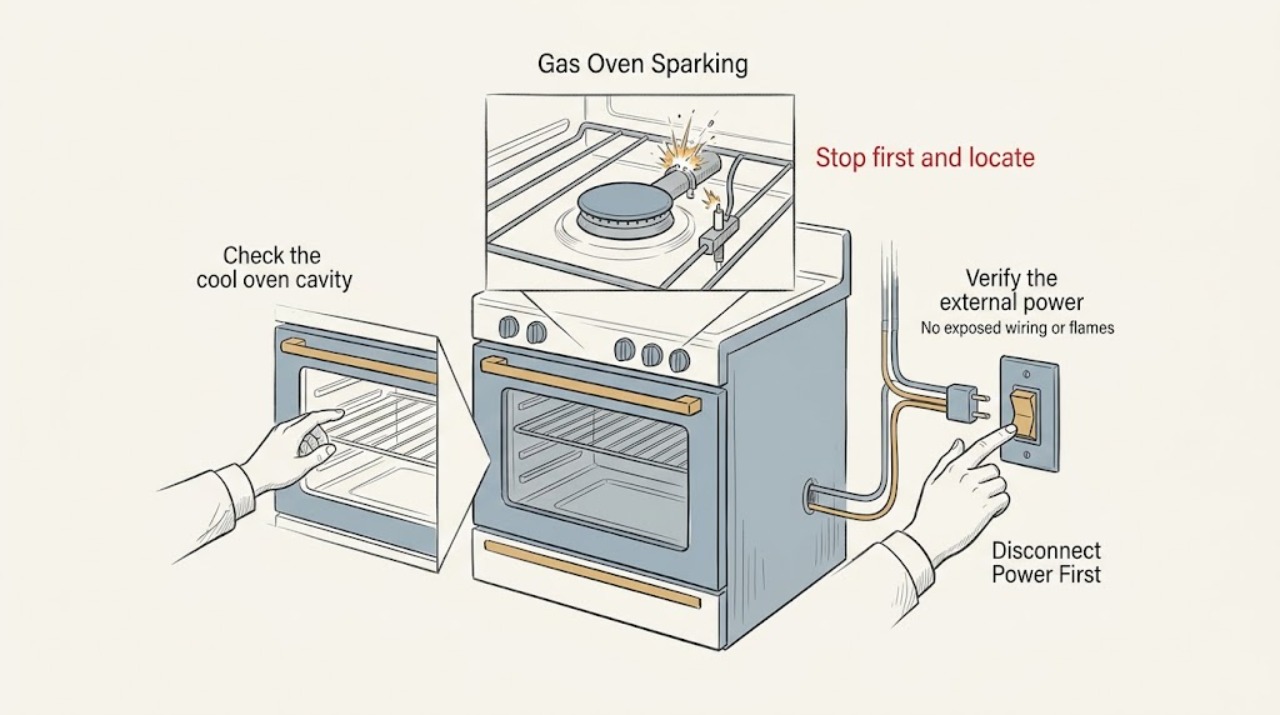
Frigidaire Gas Oven Sparking: What to Check and When to Stop
A Frigidaire gas oven's electric oven igniter is expected to glow during a normal ignition sequence; a visible electrical arc or repeated spark in the oven cavity is not something to keep testing. Turn the oven and all surface controls OFF, stop immediately for a gas odor, smoke, burning smell, uncontrolled flame, or continuing sparks, and do not touch the burner, igniter, wiring, or gas fittings.
-
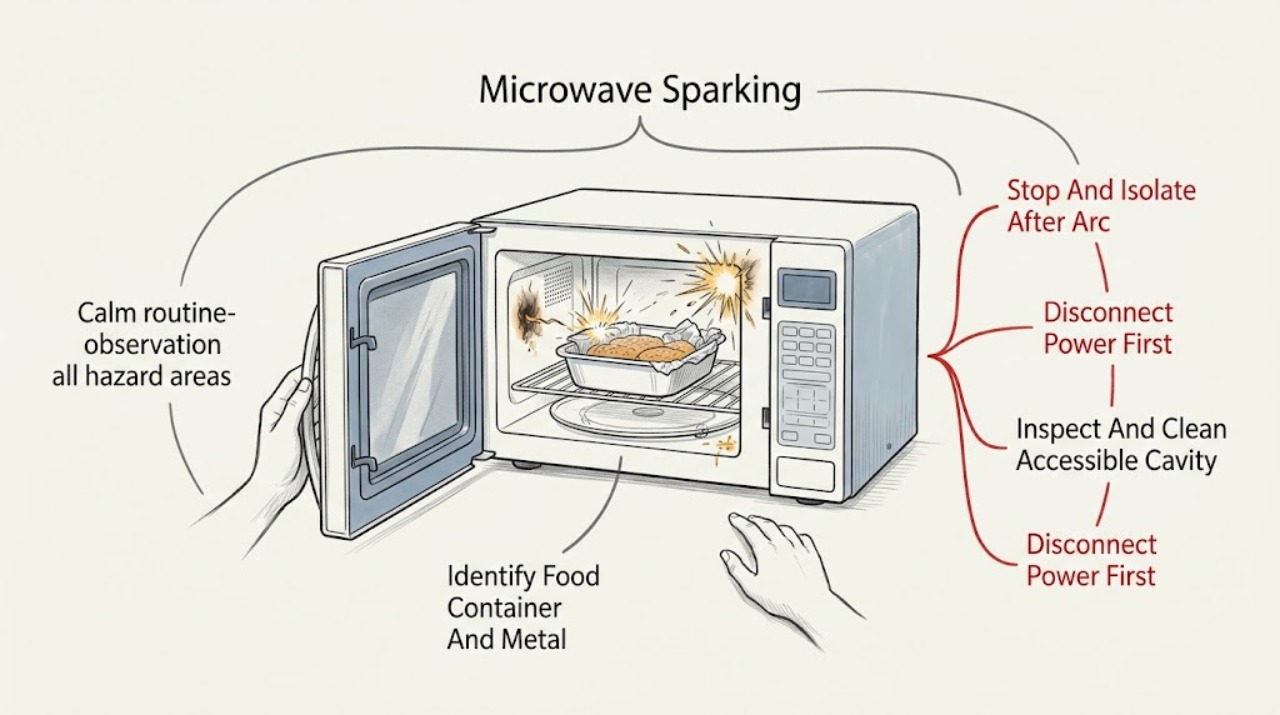
Frigidaire Microwave Sparking: Stop First, Then Check the Food, Container, and Cavity
Stop the microwave immediately when you see sparks or arcing, cancel the cycle if the controls respond, and disconnect power from a safe position after the interior has stopped. Do not repeat the event to see whether it happens again.
-
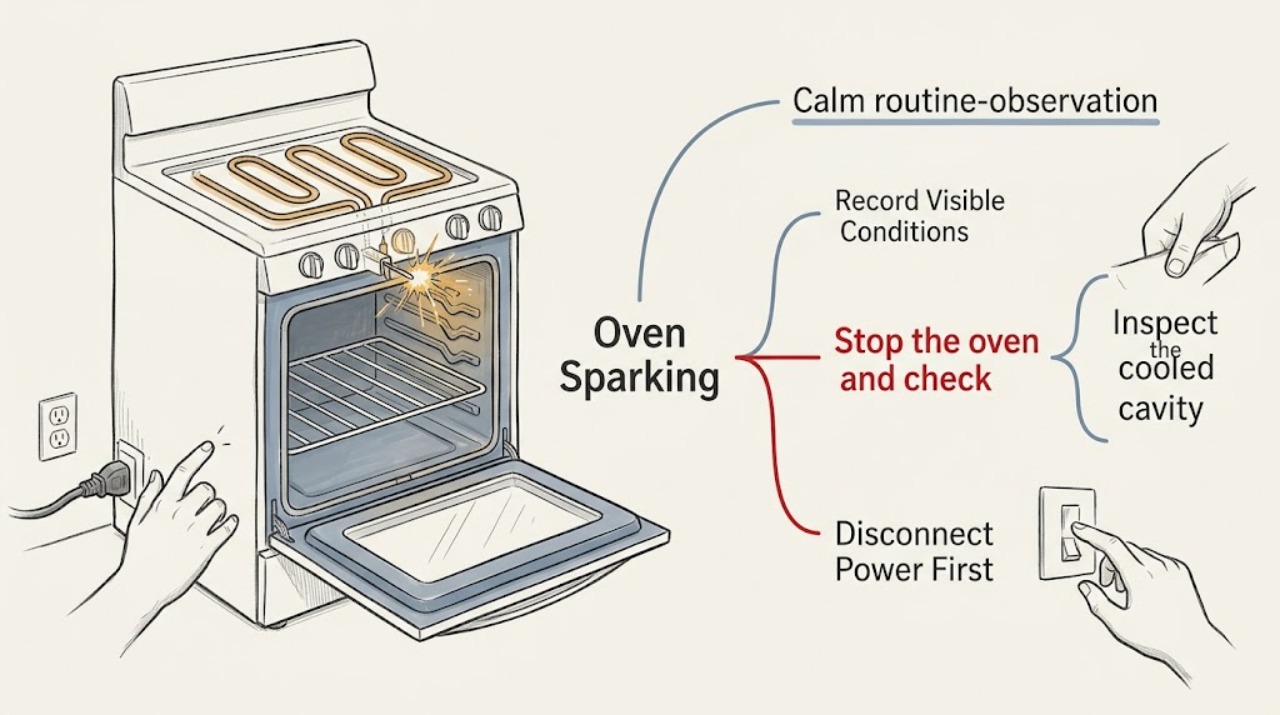
Frigidaire Oven Sparking: What to Check Safely and When to Stop
Treat visible sparking from a Frigidaire oven as an abnormal event until the exact model manual explains otherwise. Turn the oven off from a safe position and do not keep cycling it to reproduce the spark.
-
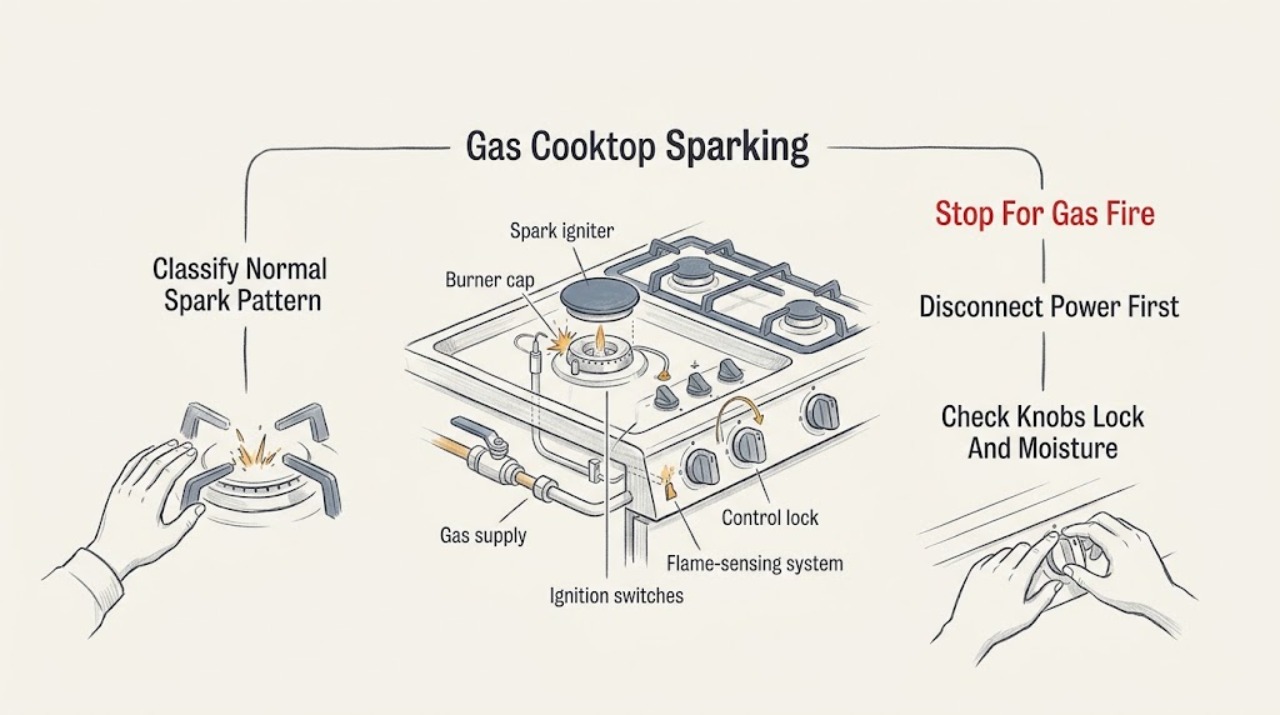
Gas Cooktop Sparking: Tell Normal Ignition from Continuous Clicking or Arcing
A gas cooktop normally clicks and sparks while a knob is pushed in and turned to Ignite, and some sealed-burner designs make all burners spark when one burner is selected. Sparking should stop after a stable flame appears and all knobs are returned fully to OFF.
-
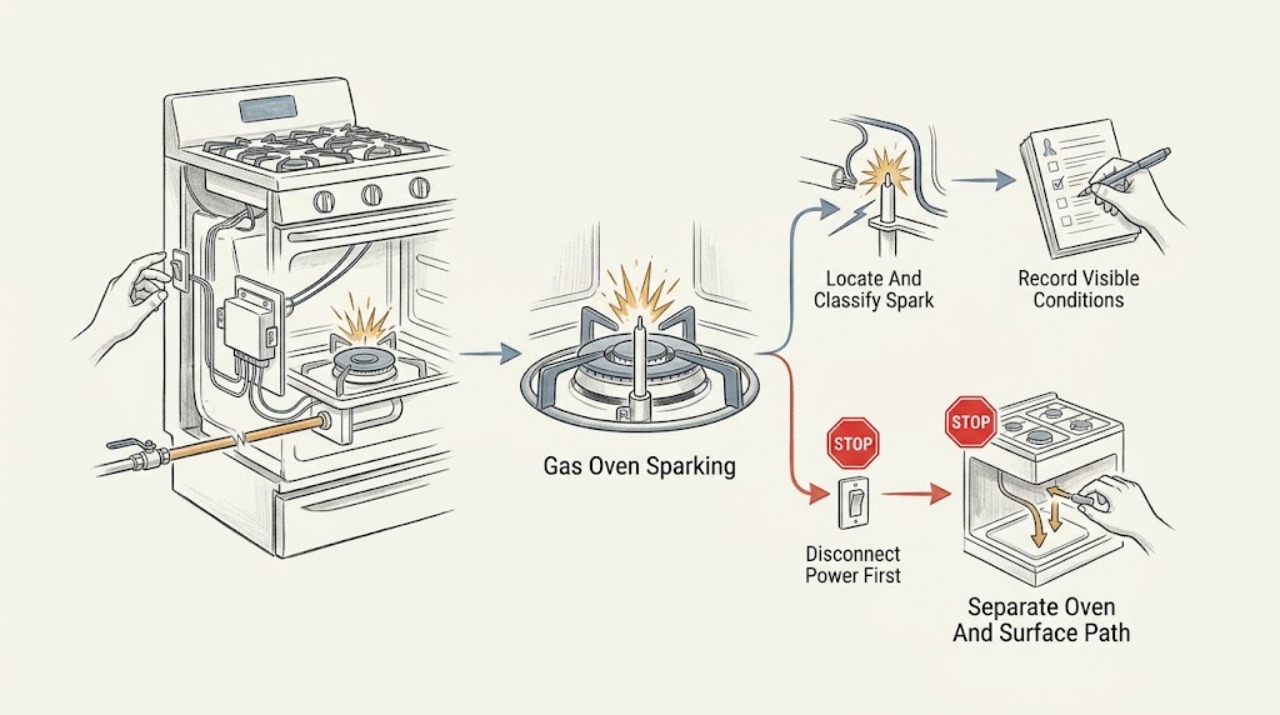
Gas Oven Sparking: Tell Normal Ignition From an Unsafe Arc
A gas oven may make a brief, controlled spark while its ignition system is starting, but a spark that continues without a stable flame, jumps outside the intended ignition point, appears behind the control panel, or occurs with gas odor is not a user repair. First identify the exact model, whether the spark is at the oven burner or elsewhere, whether it happens only during a normal start, and whether the flame follows promptly and normally.
-
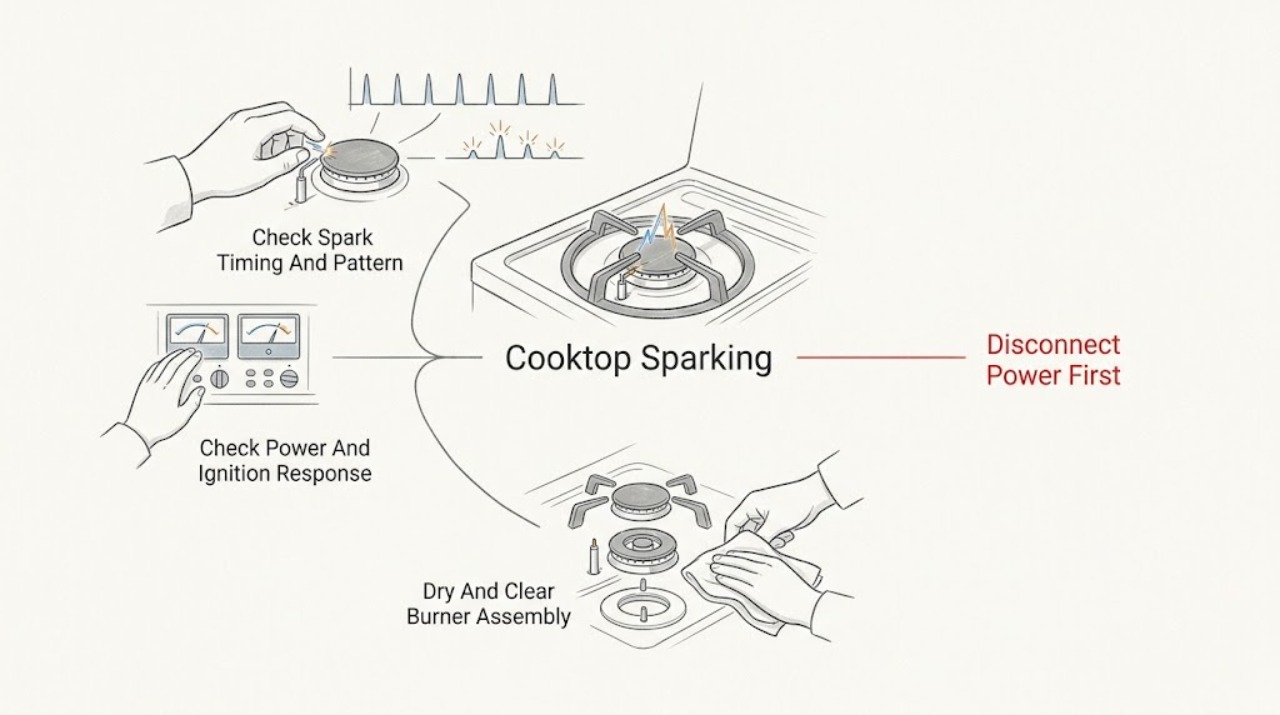
GE Cooktop Sparking: What Is Normal and What to Check
A GE gas cooktop normally makes repeated sparks while a burner knob is at Lite and the burner is igniting; on many sealed-burner models, several igniters may spark together by design. Sparking that continues after every knob is Off, or sparks without a flame, is not something to keep operating.
-
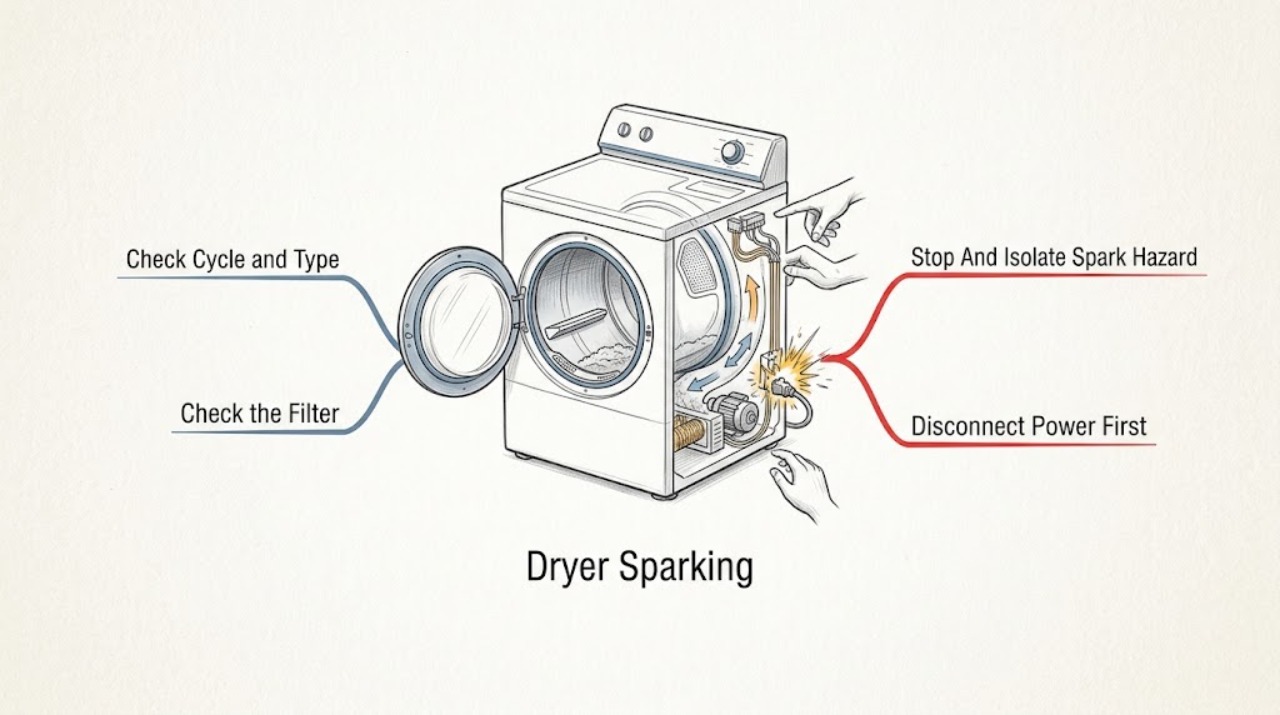
GE Dryer Sparking: Stop Safely and Check the Fire Risks
Stop the GE dryer immediately when you see sparks, a flash, smoke, a burning smell, or a hot connection. Remove clothing only if the drum has stopped and it is safe, then disconnect power from a safe accessible control or switch off the dryer circuit without touching a damaged cord or wet area.
-
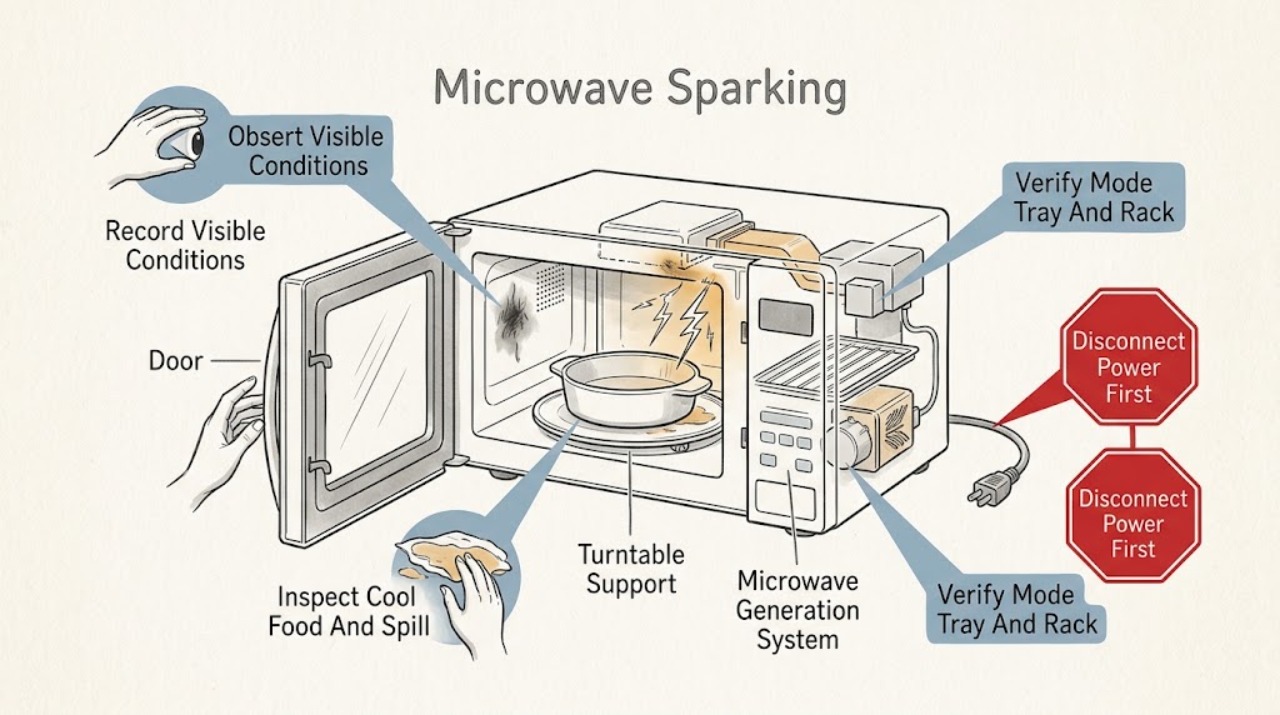
GE Microwave Sparking: Stop, Identify the Cause, and Check the Cavity
If a GE microwave sparks, stop the cycle immediately with Clear/Off or Cancel/Off if safe. Do not continue cooking to see whether it stops, and never run the microwave empty.
-
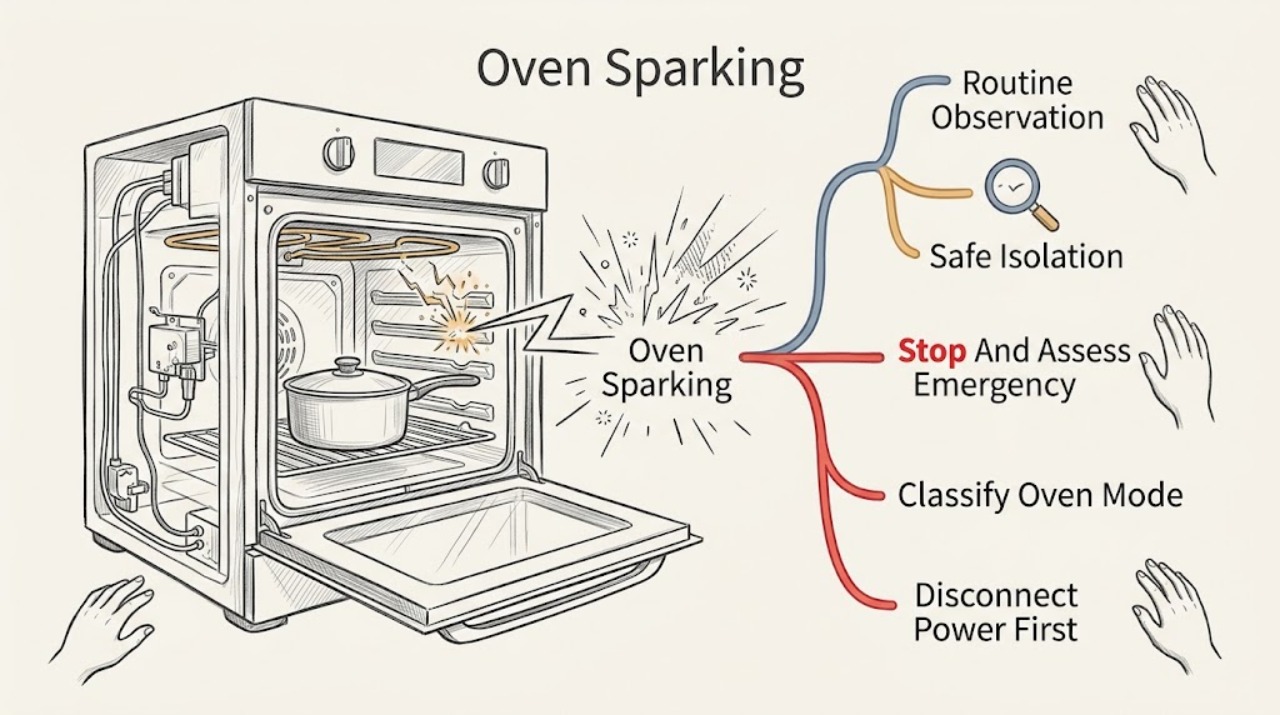
GE Oven Sparking: Stop Safely and Separate Food Arcing from an Appliance Fault
If a GE oven sparks, stop the cooking cycle immediately and keep clear of the hot cavity. For an electric or gas oven, turn the oven control off; if the area is dry and the disconnect can be reached without touching a hot, wet, damaged, or arcing appliance, isolate power safely.
-
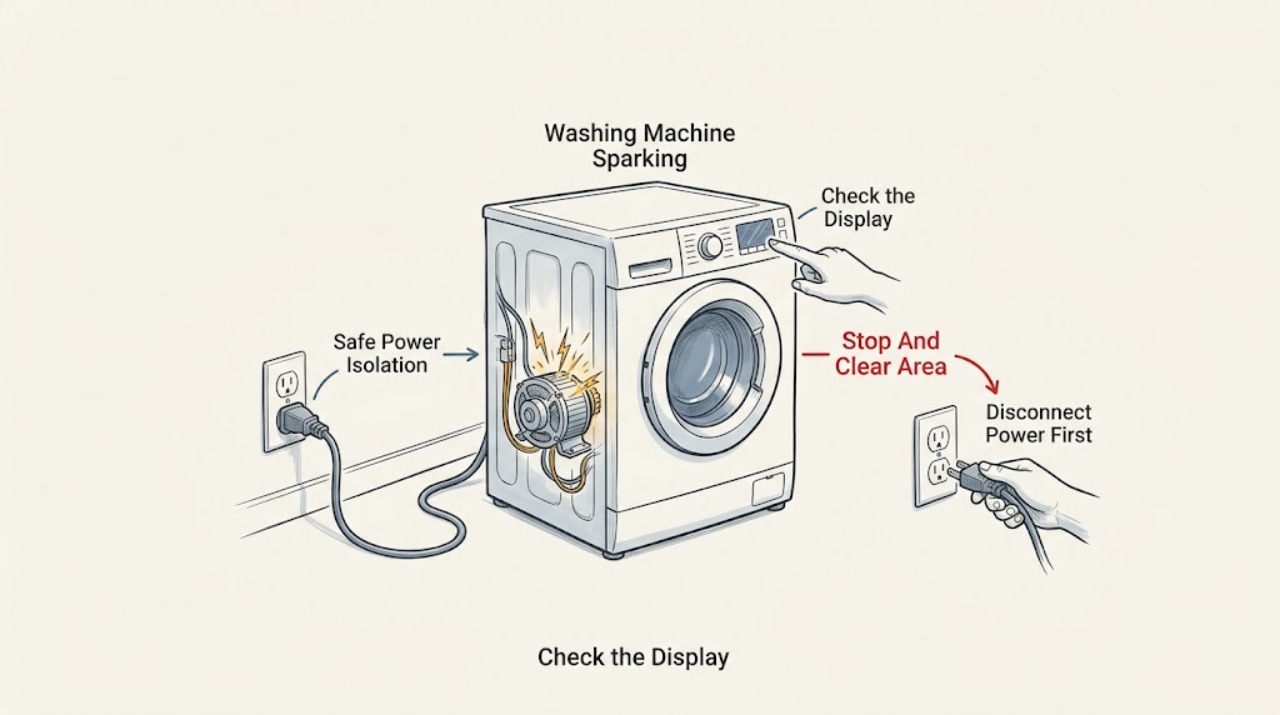
GE Washing Machine Sparking: Stop Using It and Make the Area Safe
If a GE washing machine is sparking, stop the cycle immediately and keep people away. Do not run it again, touch the cord, plug, receptacle, water, or exposed metal, and do not stand in water to reach a disconnect.
-
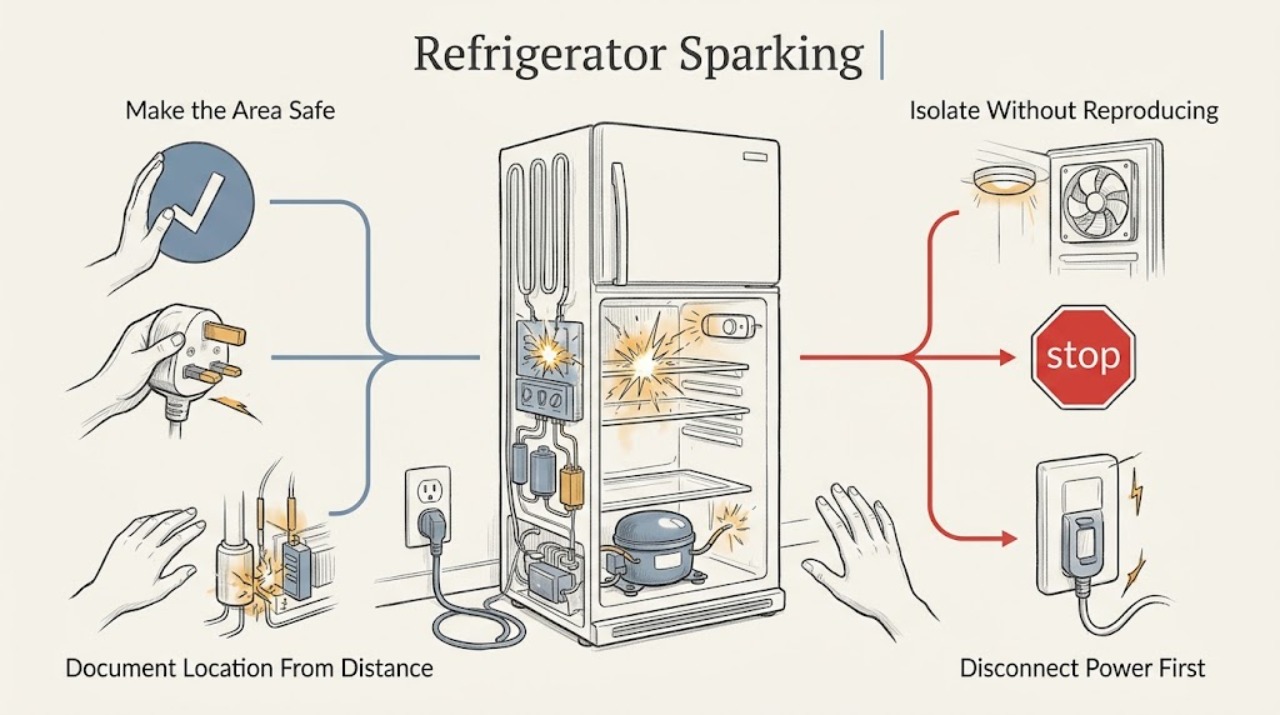
Hotpoint Refrigerator Sparking
Treat any spark, flash, arc, or electrical crackle from a Hotpoint refrigerator as an active electrical hazard, not as a symptom to reproduce. Move people away, keep flames and other ignition sources away, and do not touch the appliance, plug, socket, wet floor, or cord if doing so could expose you to shock.
-
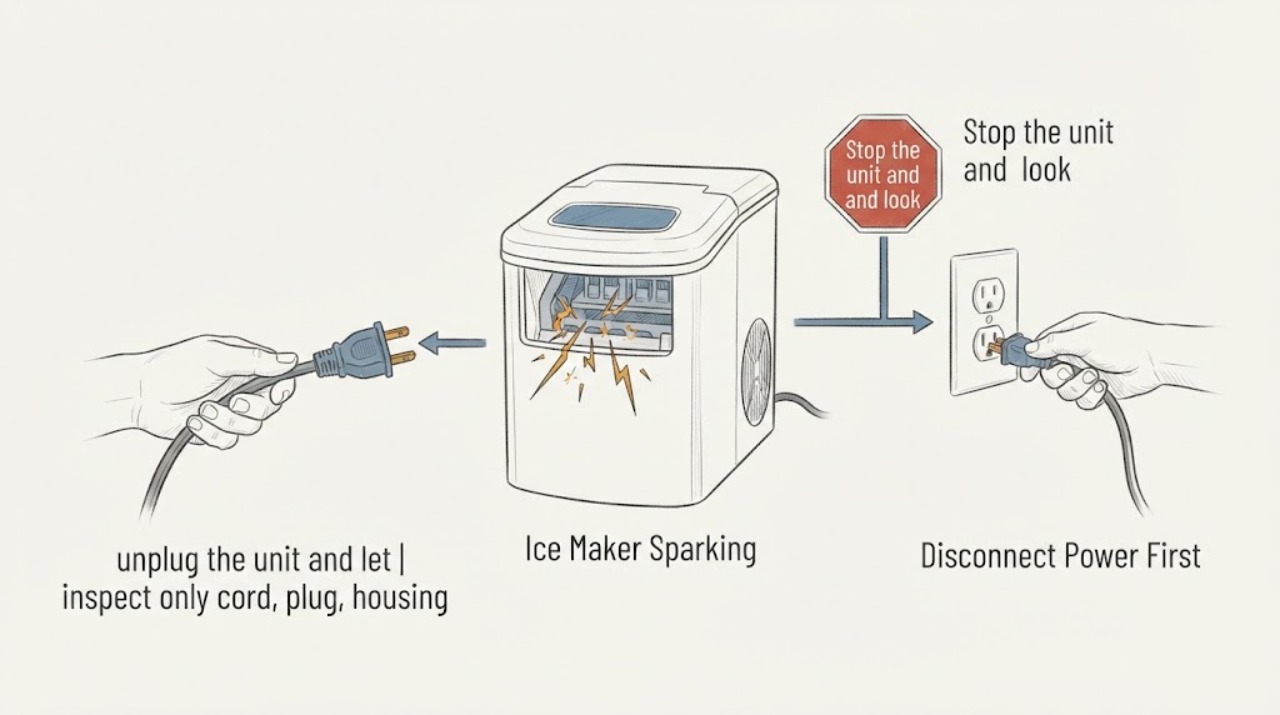
Ice Maker Sparking
If an ice maker sparks, stop using it and disconnect power only from a dry safe position. Do not reach into the mechanism or test it again. Once cool and isolated, record whether the spark came from the outlet/cord, control area, or ice-making mechanism; a repeat spark, scorch, smoke, or water exposure needs qualified service.
-
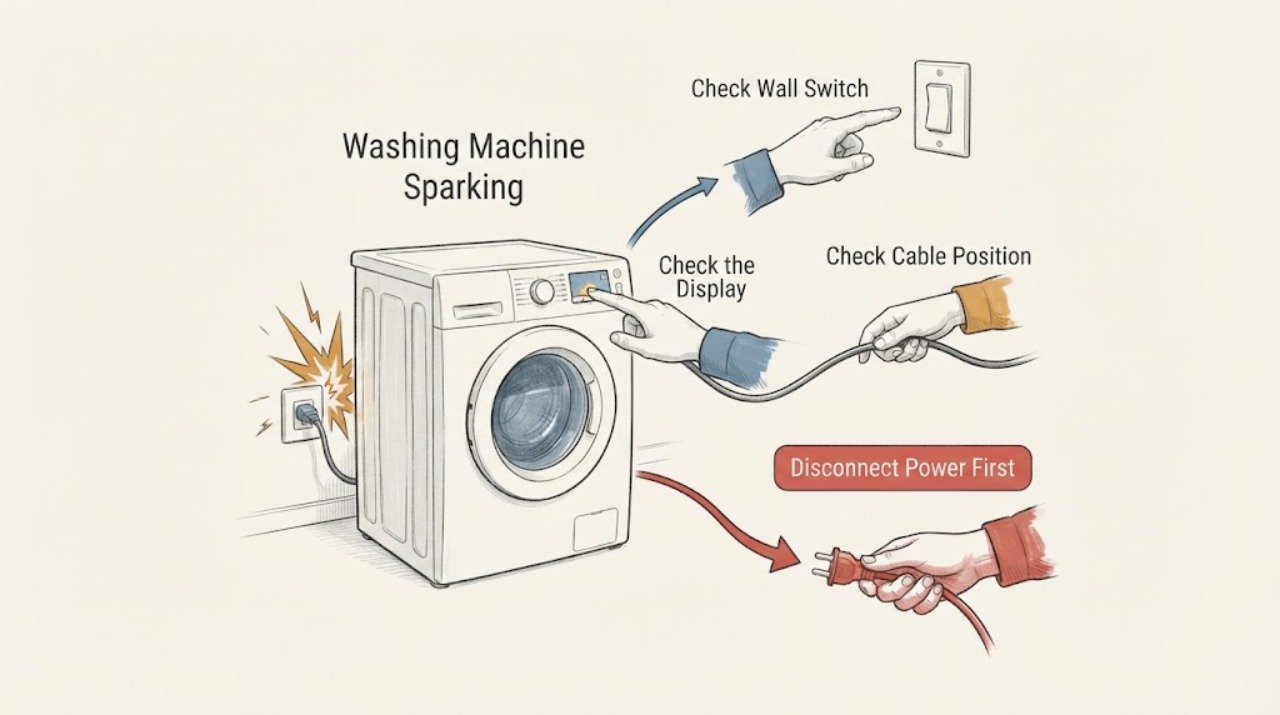
Indesit Washing Machine Sparking: Stop Safely and Identify the Source
Stop the Indesit washing machine immediately if you saw a spark, arc, smoke, a burning smell, a hot or marked plug/socket, or a breaker trip. Do not restart it to see whether the spark returns.
-
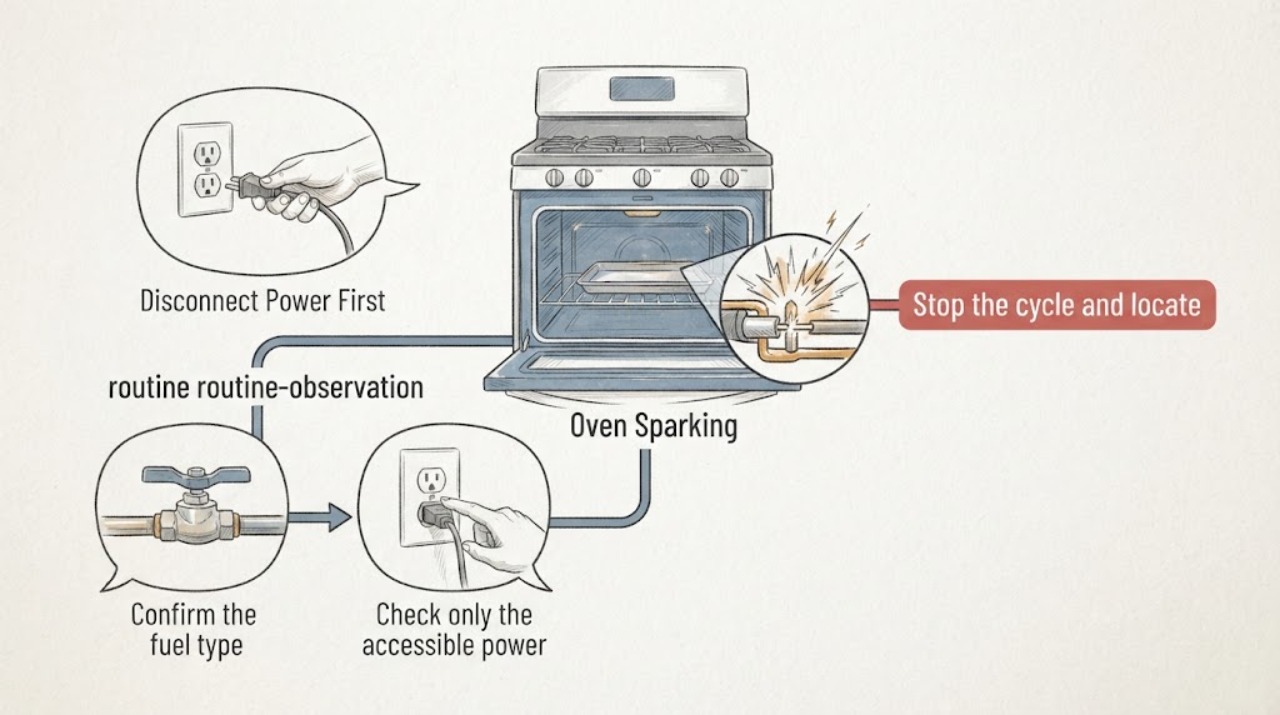
JennAir Oven Sparking: Stop Safely and Separate Ignition from Arcing
Treat a visible spark from a JennAir oven as a stop-use symptom until you know exactly where it came from. A brief ignition spark in the burner area of a gas model can be part of lighting, but it should lead promptly to a safe flame; a spark or blue arc in the cavity, at the control panel, cord, plug, outlet, or behind the appliance is not a normal cooking result.
-
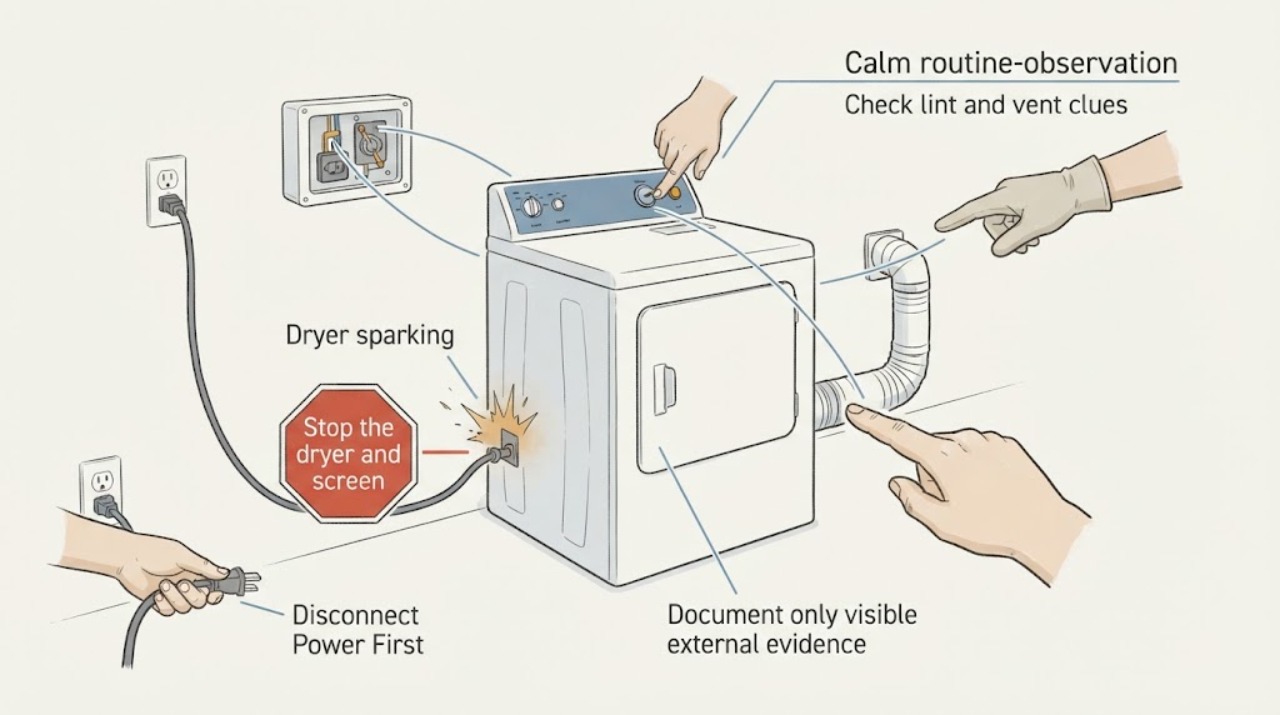
Kenmore dryer sparking: stop using it and check only from a safe distance
Stop the Kenmore dryer immediately if you see a spark, arc, flash, or glowing electrical connection. Do not run another cycle to reproduce it.
-
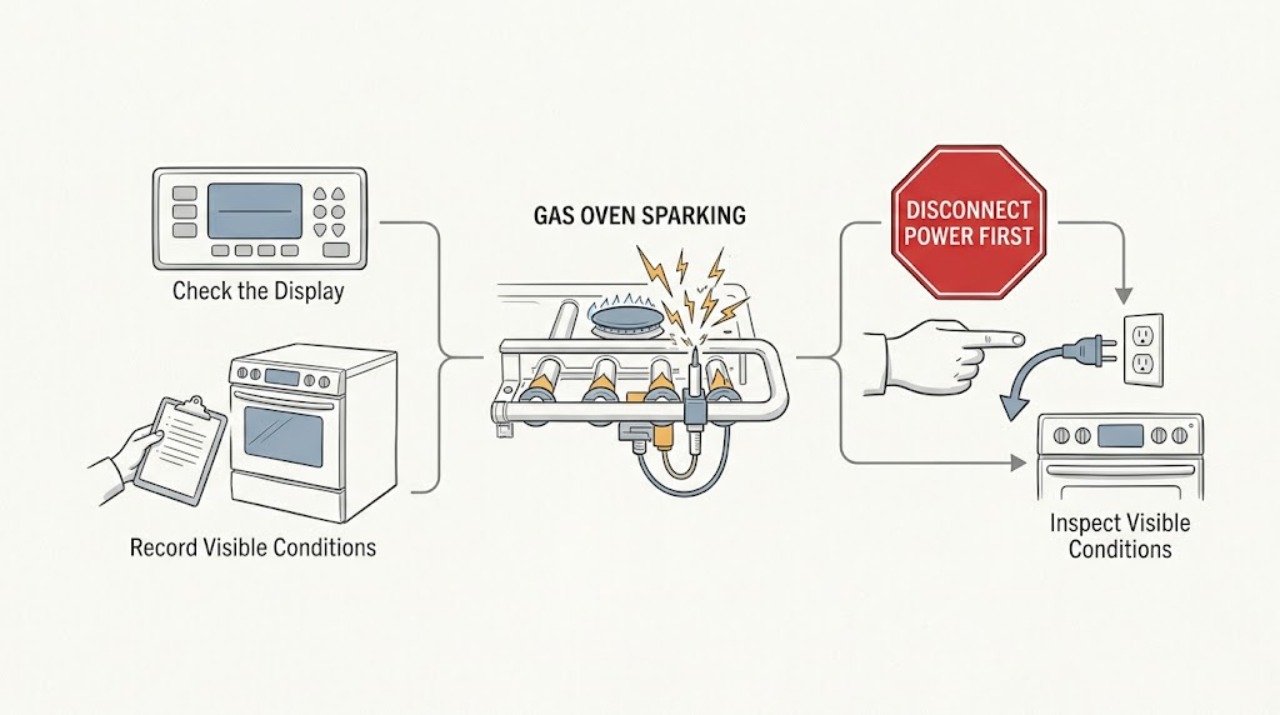
Kenmore Gas Oven Sparking: Separate Normal Ignition From a Safety Fault
A Kenmore gas oven can make a brief ignition sound or visible spark during a normal start or re-ignition, but a spark that continues with the control off, jumps to the cabinet, appears with smoke or a burning odor, or occurs after unburned gas has collected is not a routine adjustment. Stop immediately for a gas odor, delayed whoosh, abnormal flame, flare-up, smoke, scorching, visible arcing, water at electrical controls, or a breaker that trips again.
-
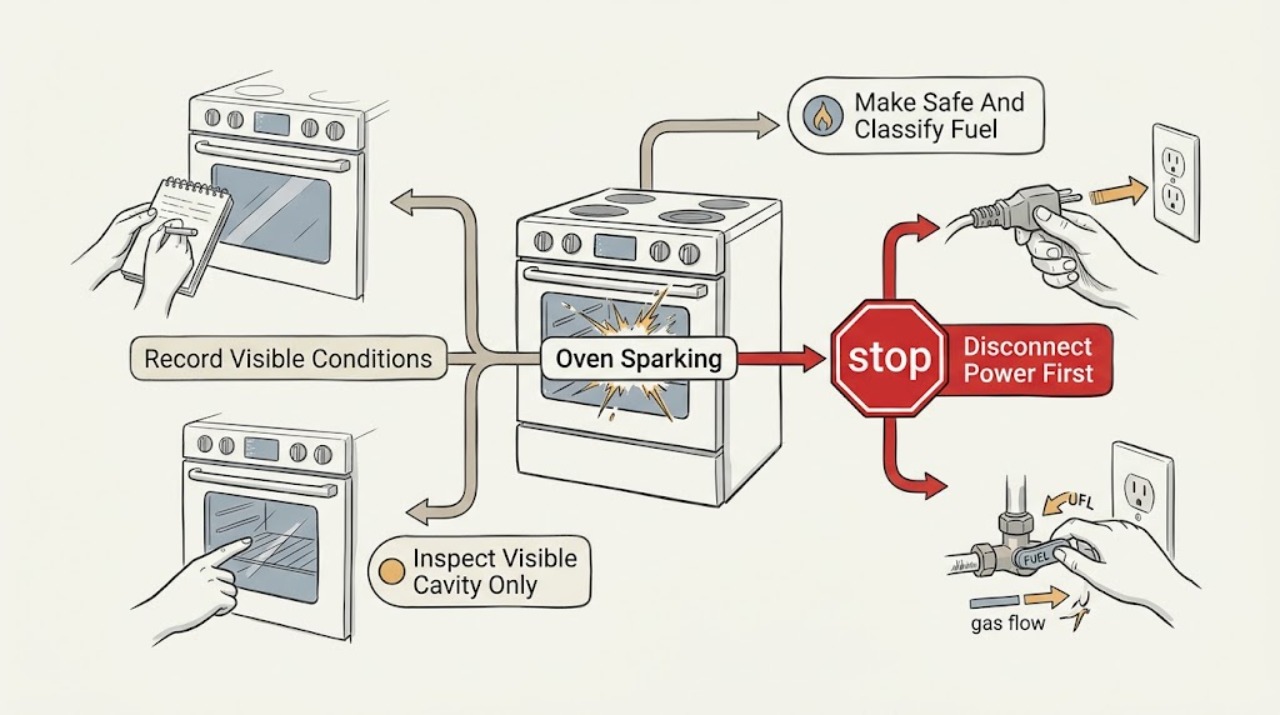
Kenmore Oven Sparking
Treat any Kenmore oven spark as a safety decision before a repair clue. Stop the oven and keep clear if the spark is persistent, appears away from a designed gas-ignition point, is accompanied by a gas smell, delayed ignition, abnormal flame, smoke, burning smell, damaged cord, hot outlet, or a breaker trip.
-
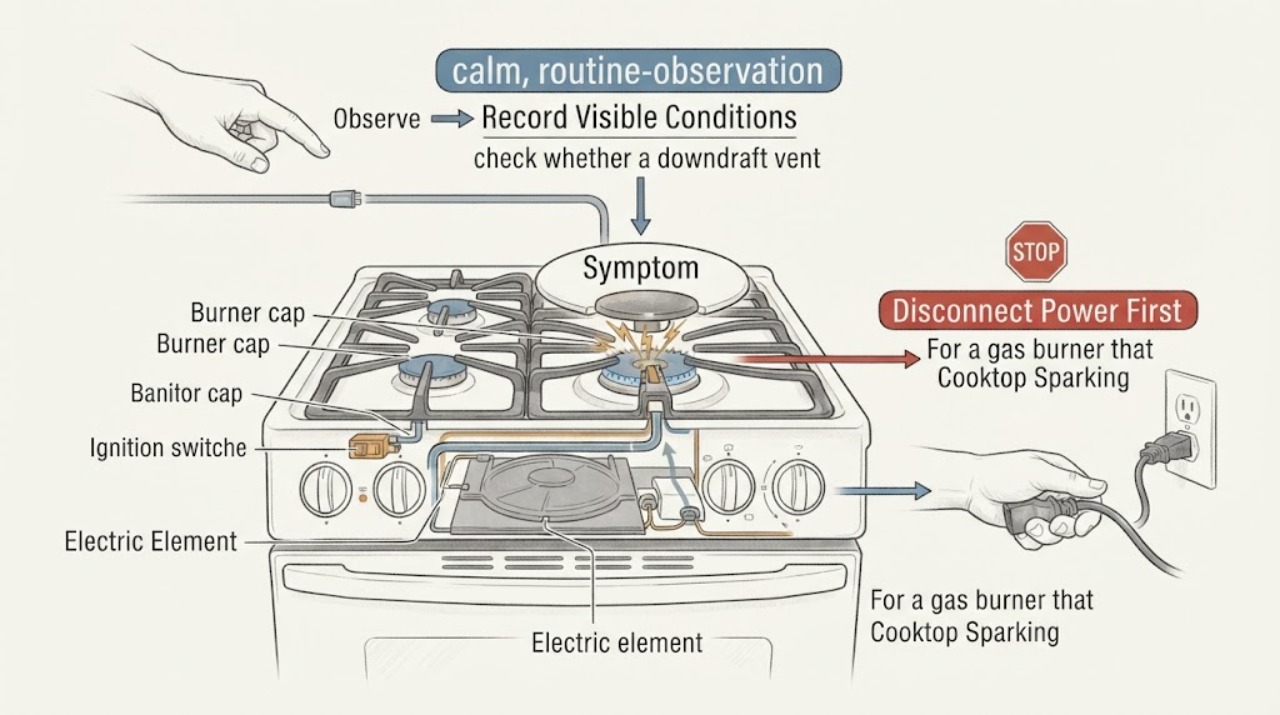
Kitchenaid Cooktop Sparking
A KitchenAid gas cooktop may spark or click briefly while a burner is being lit, and some flame-sensing models may spark again if a flame is blown out. Continuous sparking with all knobs off, sparking without a stable flame, an electric arc under the glass, or sparks with smoke, gas odor, scorching, or a tripped breaker is not a normal test condition.
-
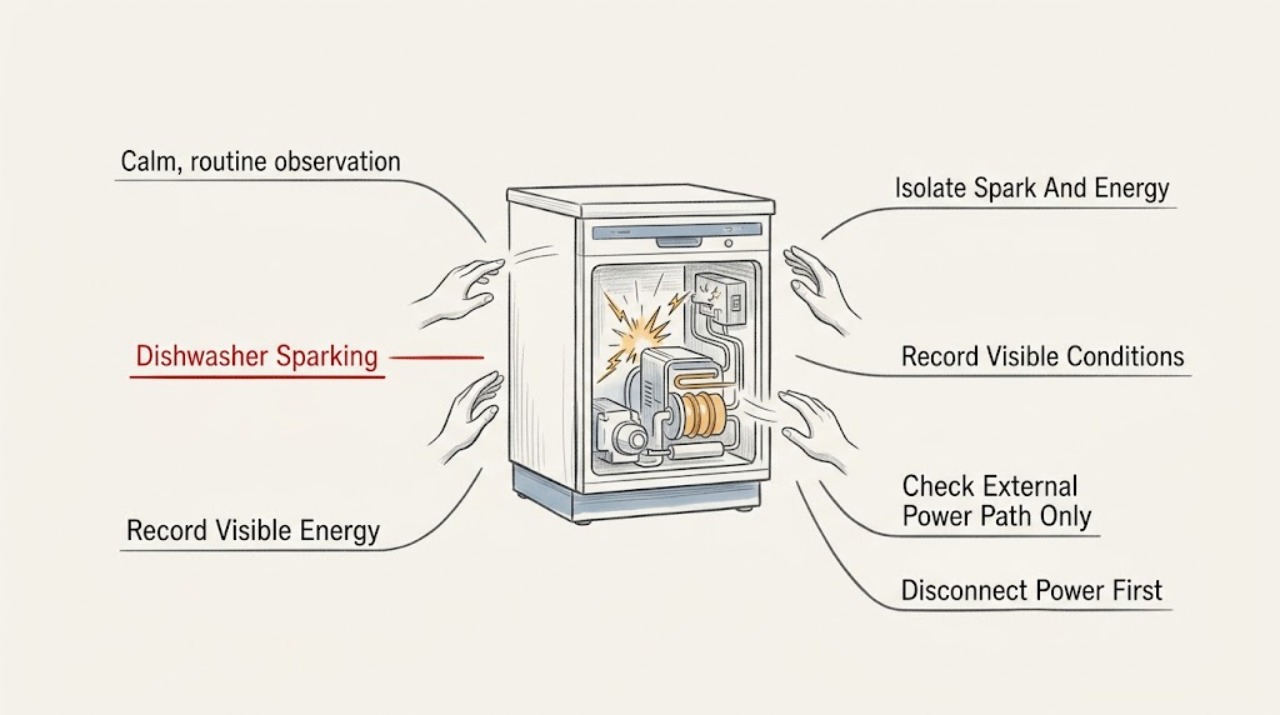
KitchenAid Dishwasher Sparking: Stop Use and Identify the Safe Service Boundary
A visible spark, flash, arc, or crackling from a KitchenAid dishwasher is a stop-use symptom, not a reason to run another cycle. If the controls respond and it is safe, cancel the cycle; from a dry, safe position switch off the dishwasher breaker and close the water supply if water is also involved.
-
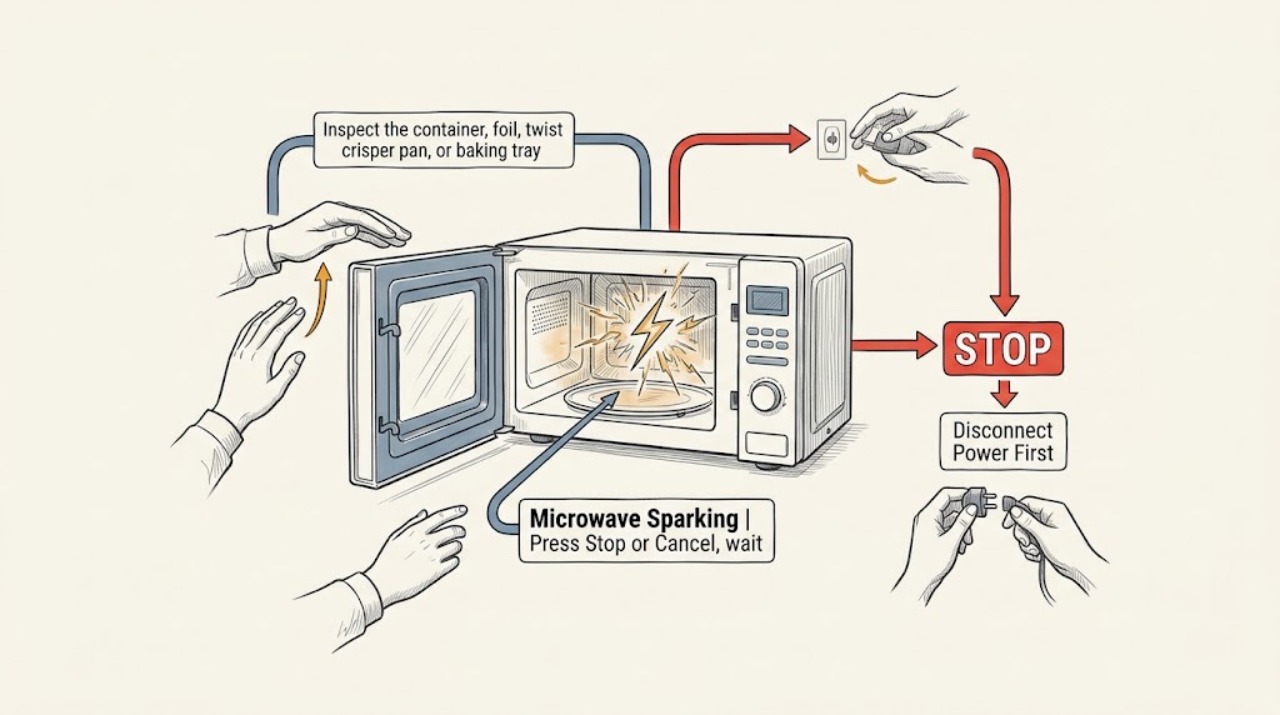
KitchenAid Microwave Sparking
Stop the cycle and remove the food or utensil that is arcing. Check for metal, foil, a rack or tray touching the cavity, and baked-on soil before a brief retest with a microwave-safe container. Persistent arcing, a scorched cavity, or damage near the door requires service.
-
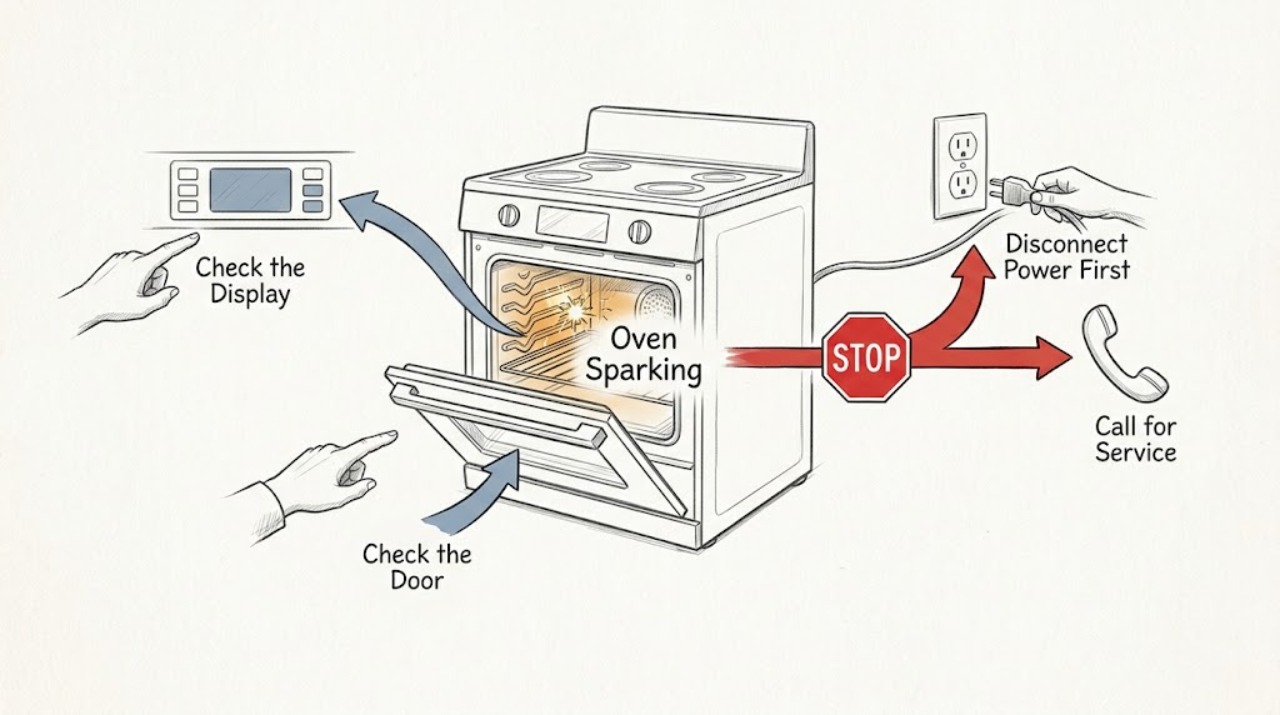
KitchenAid Oven Sparking: Separate Normal Ignition Clicks from Dangerous Arcing
First identify whether the spark is the brief, repeated igniter click that a KitchenAid gas oven can make while establishing a flame, a surface-burner ignition symptom, or a visible electrical arc inside or around the oven. A normal gas-oven click should stop after flame detection; it is not the same as a flash, arc, popping sound, burning odor, or spark that continues with the controls off.
-
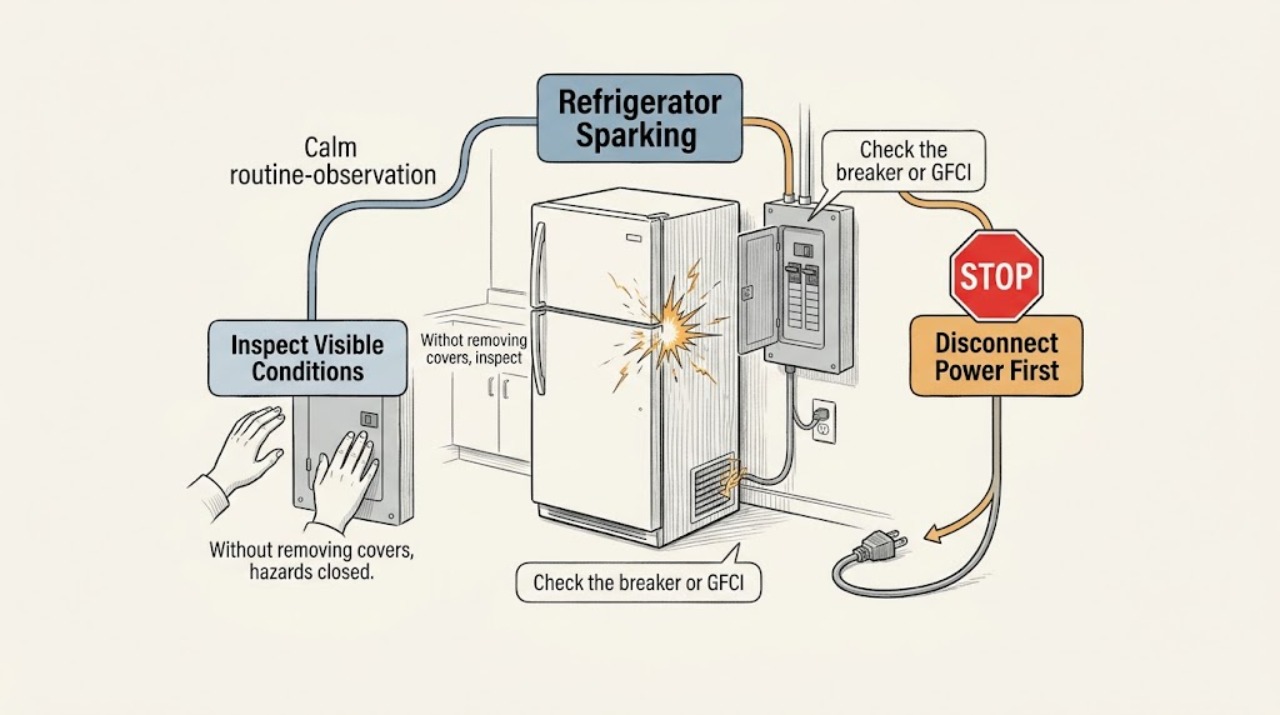
KitchenAid Refrigerator Sparking
Treat sparks, smoke, a burning smell, heat, or a discolored plug as an electrical hazard. From a dry safe position, isolate power at the plug or breaker, keep the refrigerator off, and arrange qualified electrical or appliance service.
-
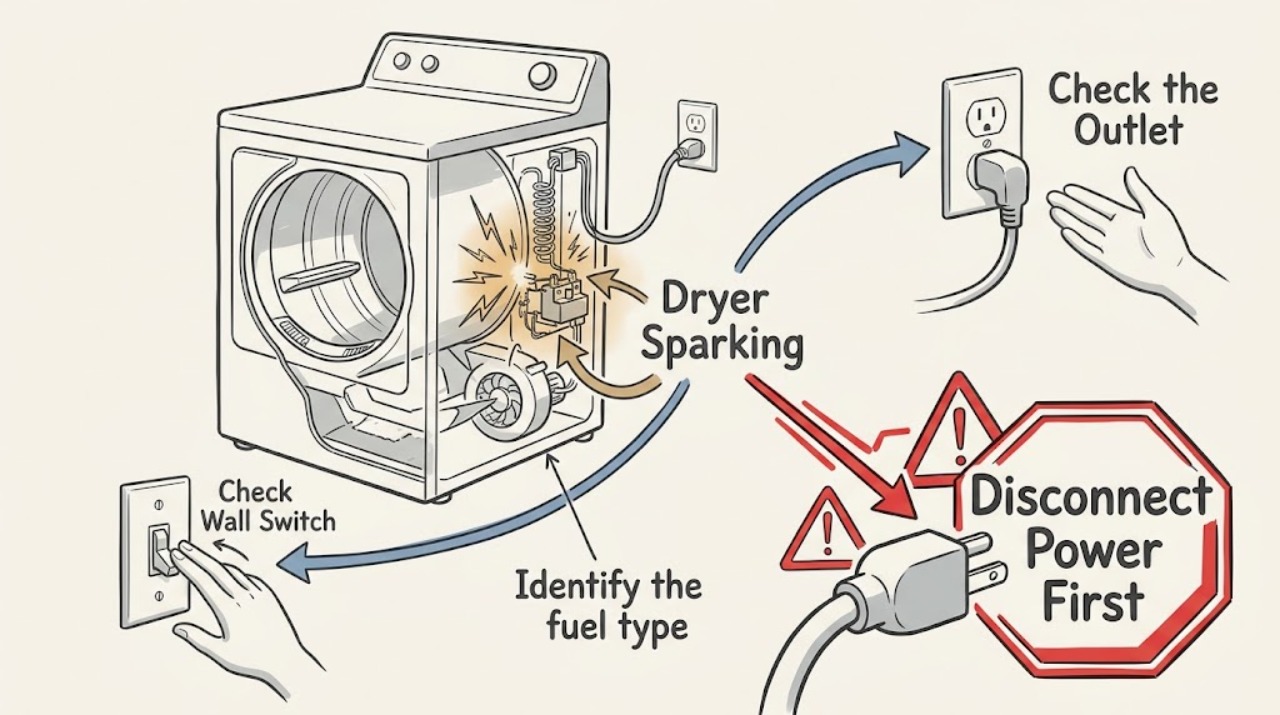
LG Dryer Sparking: Stop Use and Find the Safe Service Path
Stop the LG dryer immediately and do not run another test cycle. If the control, plug, and breaker are safely reachable and there is no arcing, heat, smoke, water, or visible damage at the connection, switch the dryer off and isolate its power at the plug or breaker; do not touch a sparking connection.
-
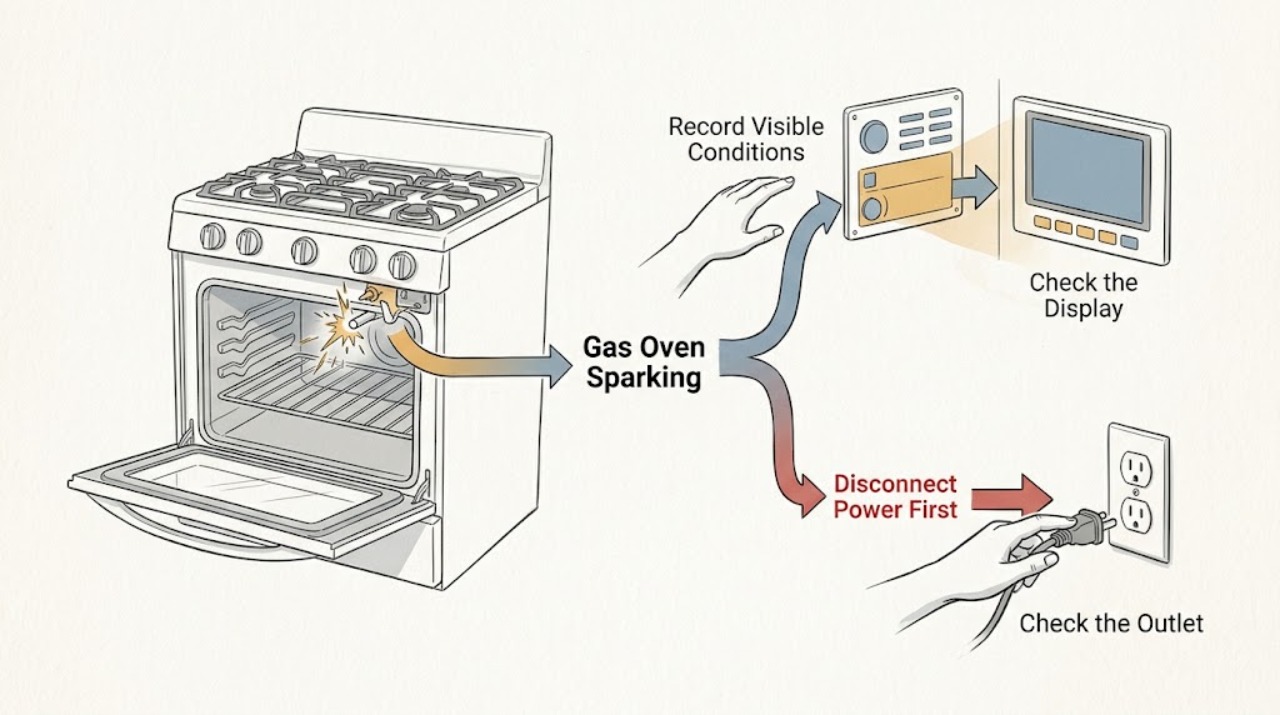
LG Gas Oven Sparking: Separate Normal Ignition Clicks from a Fault
Stop using an LG gas oven if you see a spark where the oven igniter should operate, hear continuous clicking after controls are off, smell gas, see delayed ignition or an abnormal flame, or notice smoke, a carbon-monoxide alarm, or an electrical arc. A brief click while a surface burner is intentionally being lit can be normal, but it does not make persistent sparking safe.
-
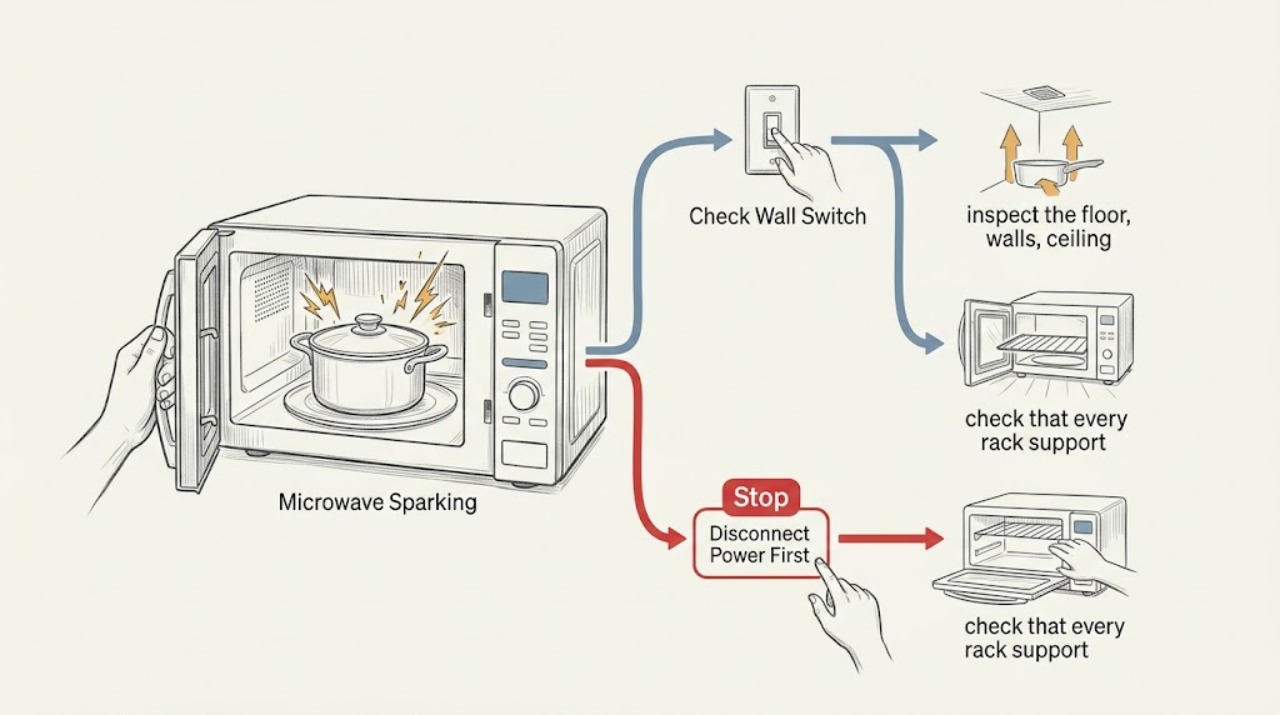
LG Microwave Sparking: Check the Load, Rack, and Cavity
Stop the cycle and let the LG microwave cool. Remove any metal or non-microwave-safe item, look for food residue or cavity damage, and check that an included rack sits on all of its supports. A clean cavity that still sparks, or any charring or damaged interior, needs qualified service rather than repeated testing.
-
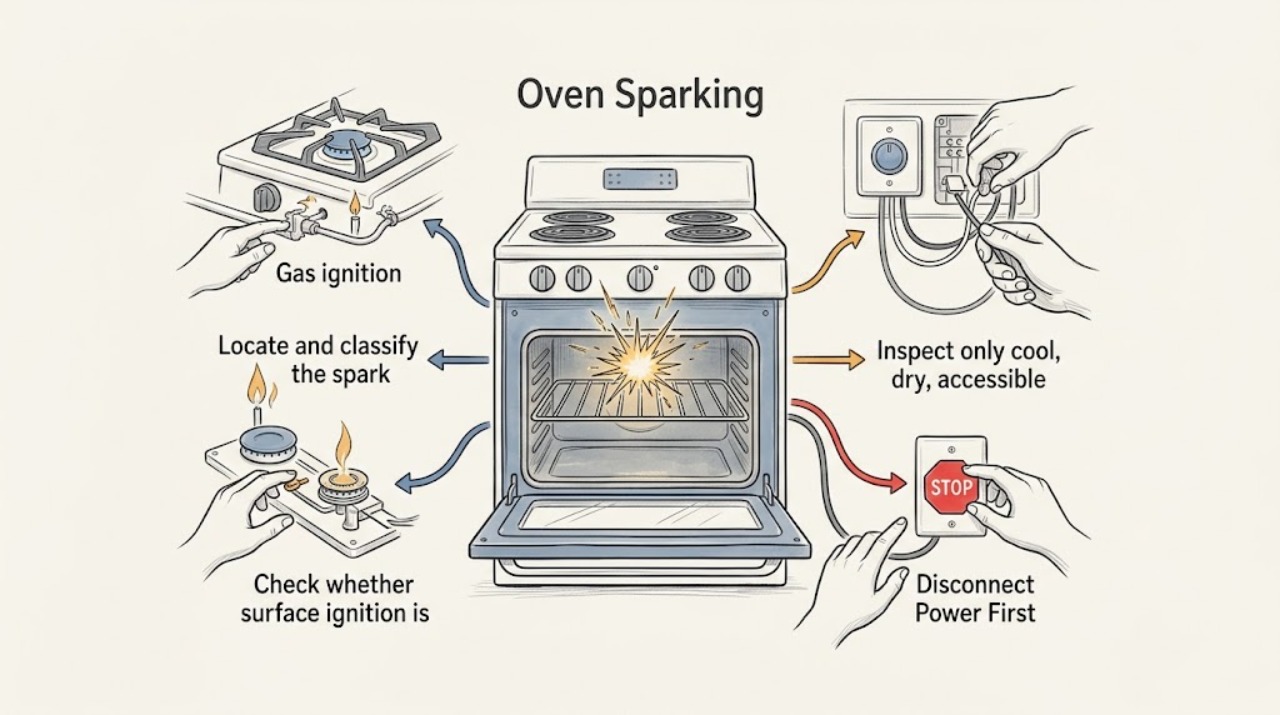
LG Oven Sparking: Tell Normal Gas Ignition from a Dangerous Arc
First locate the spark. On an LG gas range, a brief click and spark at a surface-burner electrode while a knob is turned to LITE can be normal ignition behavior; it should stop after the burner lights and the control is returned from LITE.
-
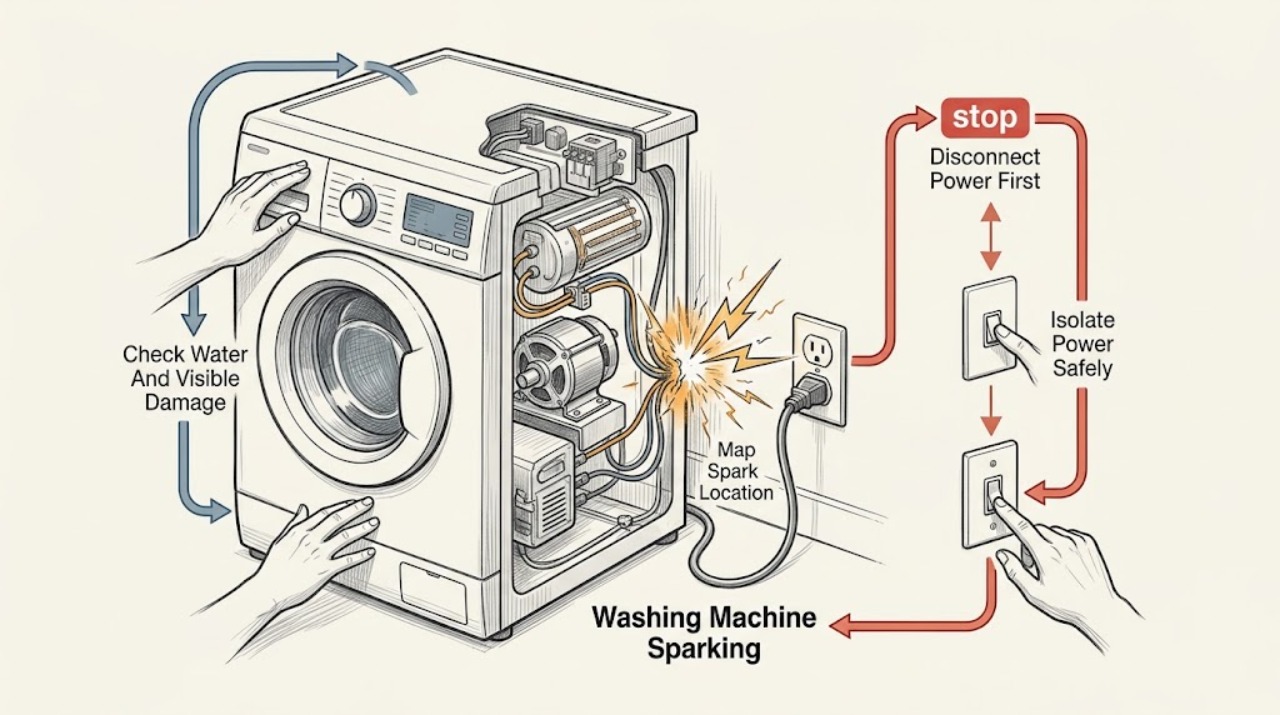
LG Washing Machine Sparking: Stop Safely Before Diagnosing the Cause
Treat any visible spark or electrical arc from an LG washing machine as a stop-use event. Do not run another cycle, press controls near the spark, touch a hot or damaged plug or outlet, or open the cabinet to find the source.
-
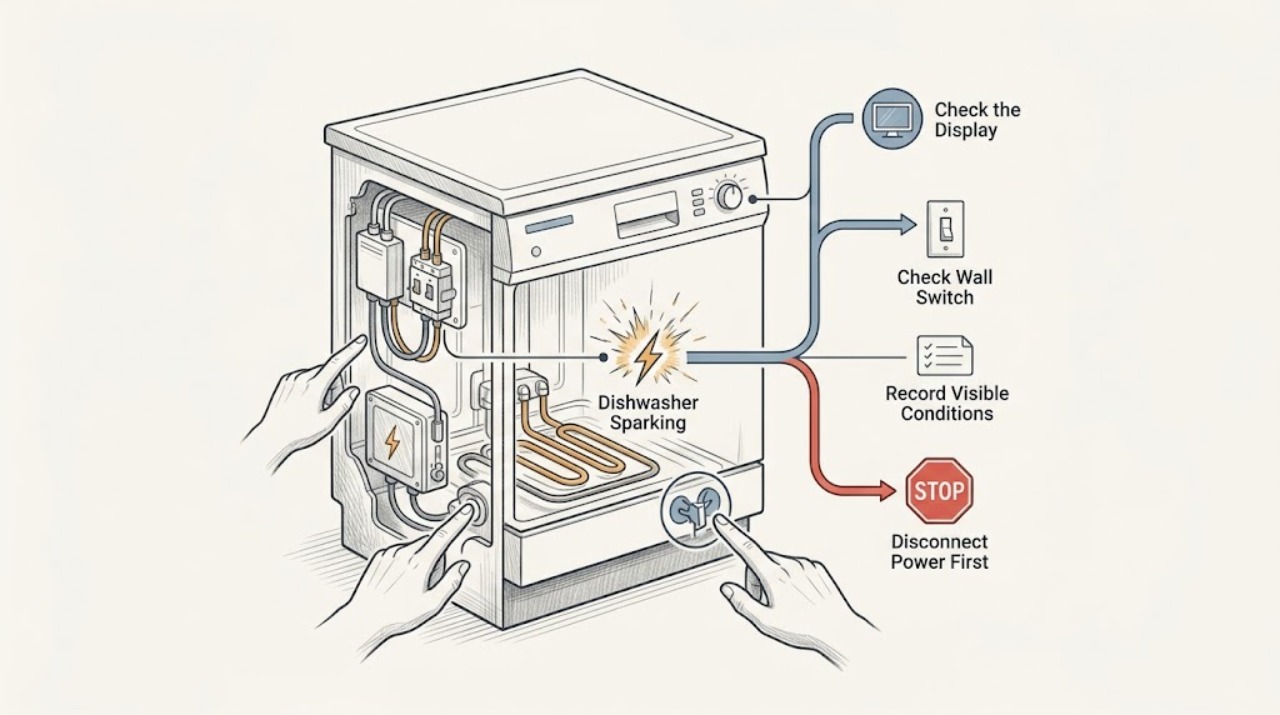
Maytag Dishwasher Sparking: Stop the Cycle and Isolate the Hazard
Visible sparks, a flash, or a crackling sound from a Maytag dishwasher is not a normal cleaning symptom. Stop the cycle, keep hands away from the tub and controls, and disconnect power at the breaker only if you can do so without approaching heat, smoke, or water. Do not restart the dishwasher or open panels; arrange qualified service and treat any repeat breaker trip or burning odor as an immediate electrical hazard.
-
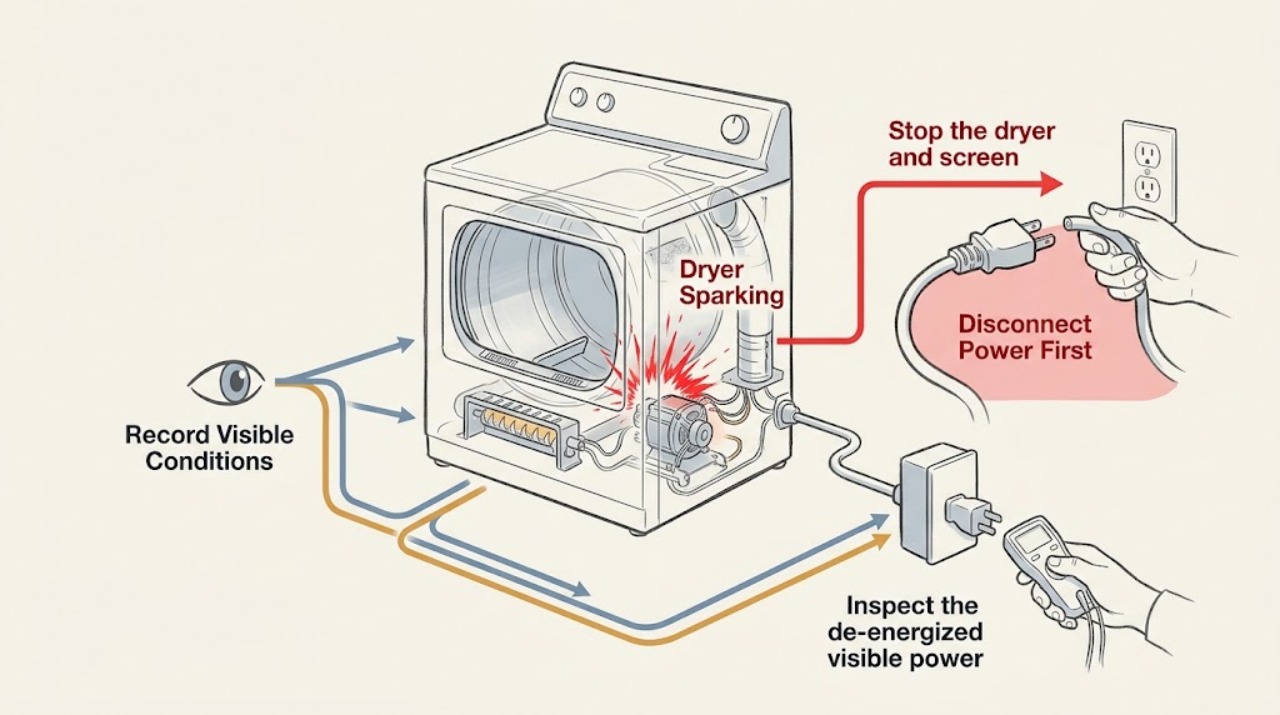
Maytag Dryer Sparking: Stop Using It and Identify the Safe Service Path
A visible spark or arc from a Maytag dryer is a stop-use event, not a fault to test repeatedly. Stop the cycle immediately; if the power connection is dry, cool, and safely reachable, isolate power without touching damaged parts.
-
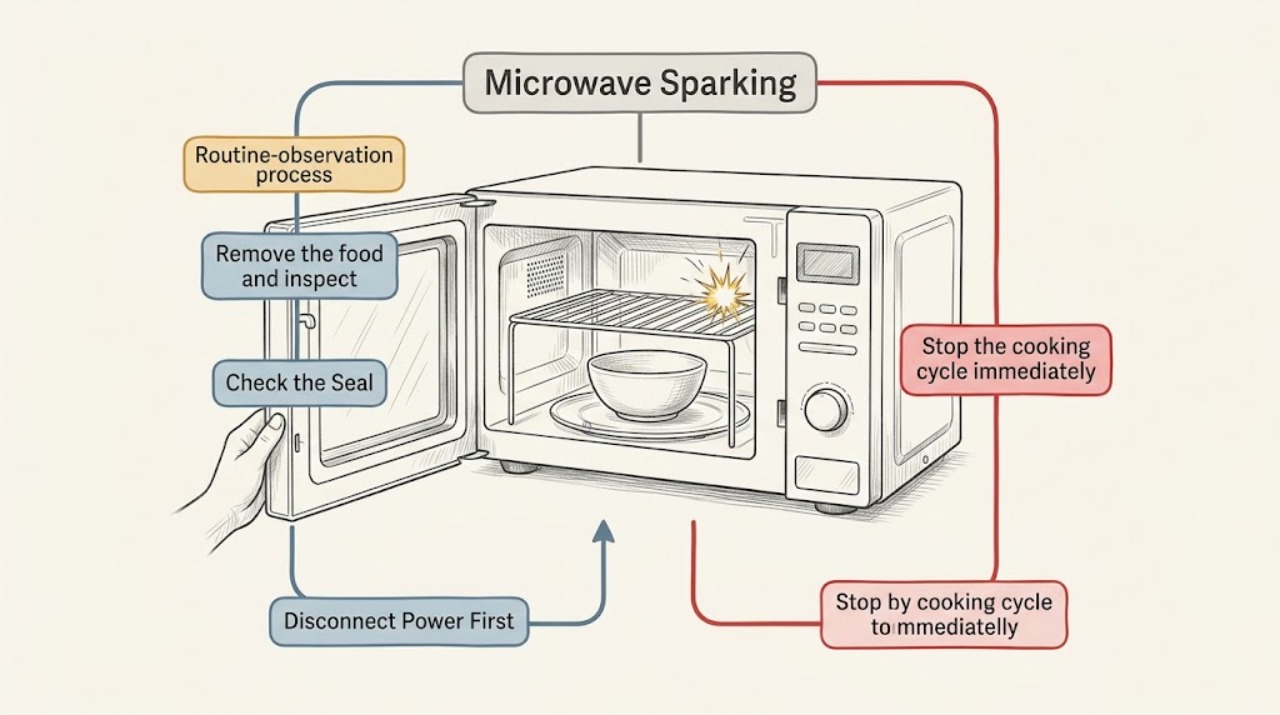
Maytag Microwave Sparking: Stop the Cycle and Remove the Trigger
If a Maytag microwave sparks, stop the cycle immediately and identify whether metal, foil, an accessory touching the cavity, food residue, or a damaged interior surface is involved. Remove only the accessible item after the oven is off and cool, clean residue with the model-approved method, and use only cookware and accessories allowed by the manual.
-
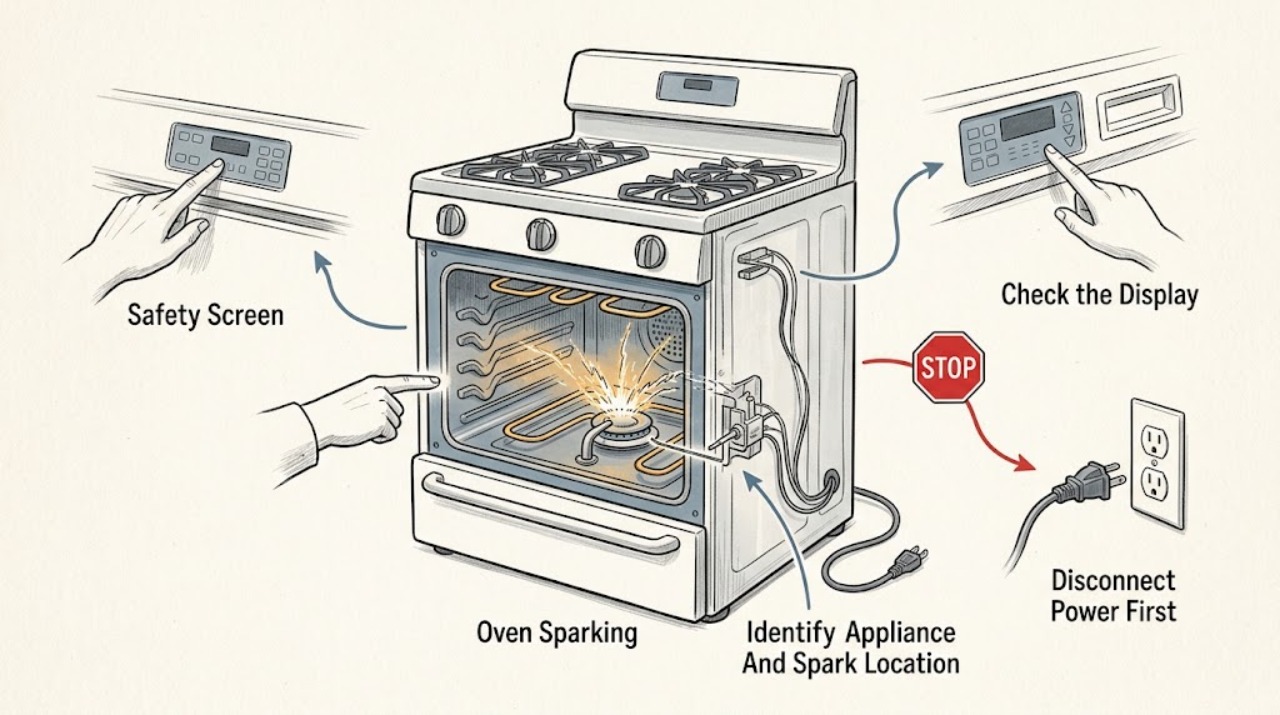
Maytag Oven Sparking: Tell Normal Ignition Clicks from Dangerous Arcing
A Maytag gas oven may make short igniter clicks while it detects a flame, but a visible spark in the wrong place, continuous clicking without ignition, a delayed bang, abnormal flame, or any electrical flash is not a normal test result. First identify whether the appliance is gas, dual-fuel, electric, or a microwave combination, and record exactly where and when the spark appears.
-
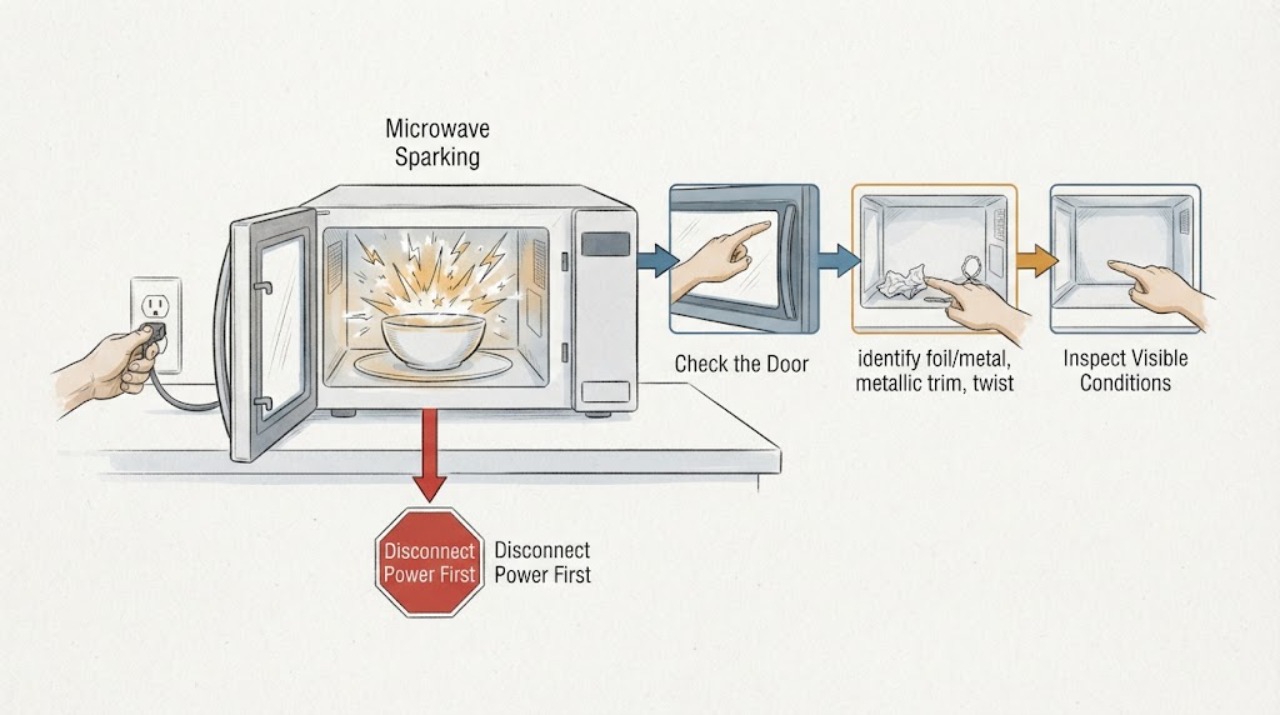
Microwave Sparking
If a microwave sparks, stop the cycle and inspect the food and cookware only after the oven is off. A one-time spark from unsuitable metal, dirty cavity, or food with intact skin differs from repeated arcing, scorch marks, smoke, or damage. Whirlpool gives food/cookware prevention guidance; GE directs internal microwave faults to service.
-
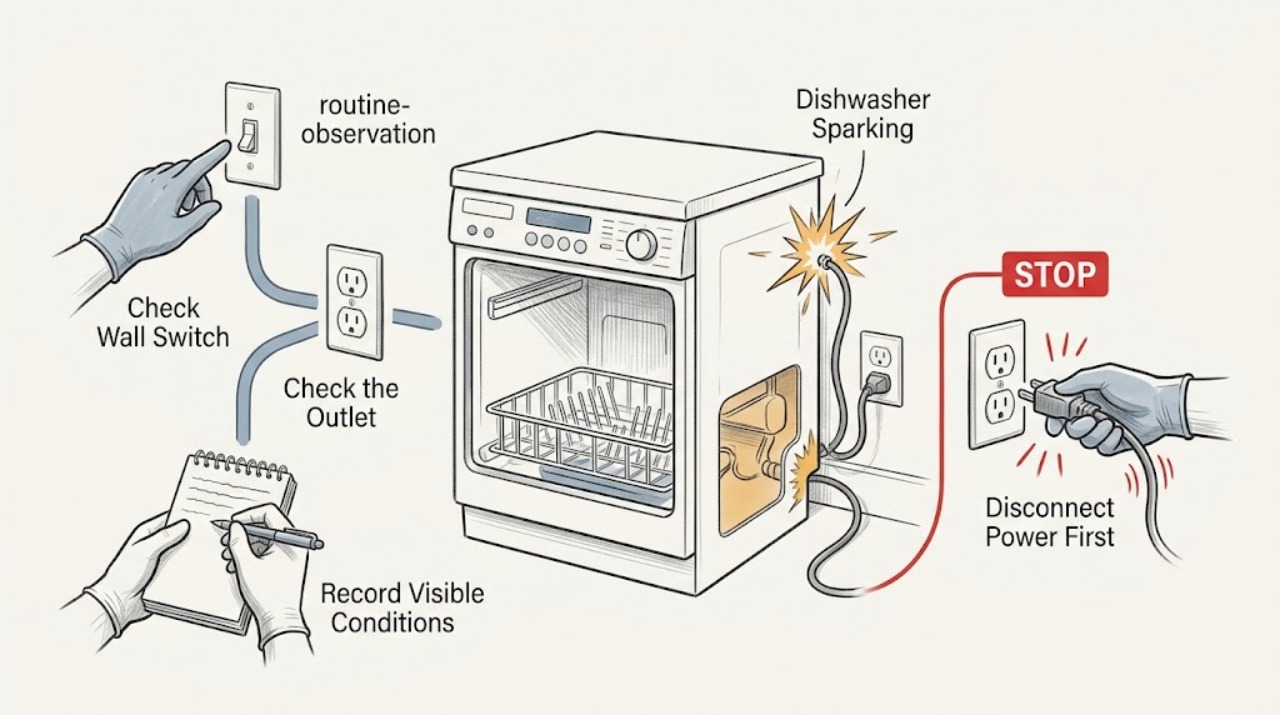
Miele Dishwasher Sparking
Visible sparks, a flash, or a crackling sound from a Miele dishwasher is not a normal cleaning symptom. Stop the program, keep the appliance off, and isolate power only from a dry, accessible control point. Do not open the housing or keep testing it; first record whether the event came from the outlet, cord, controls, or wash chamber, then arrange qualified electrical or Miele service.