
On this page
Start here
Quick answer
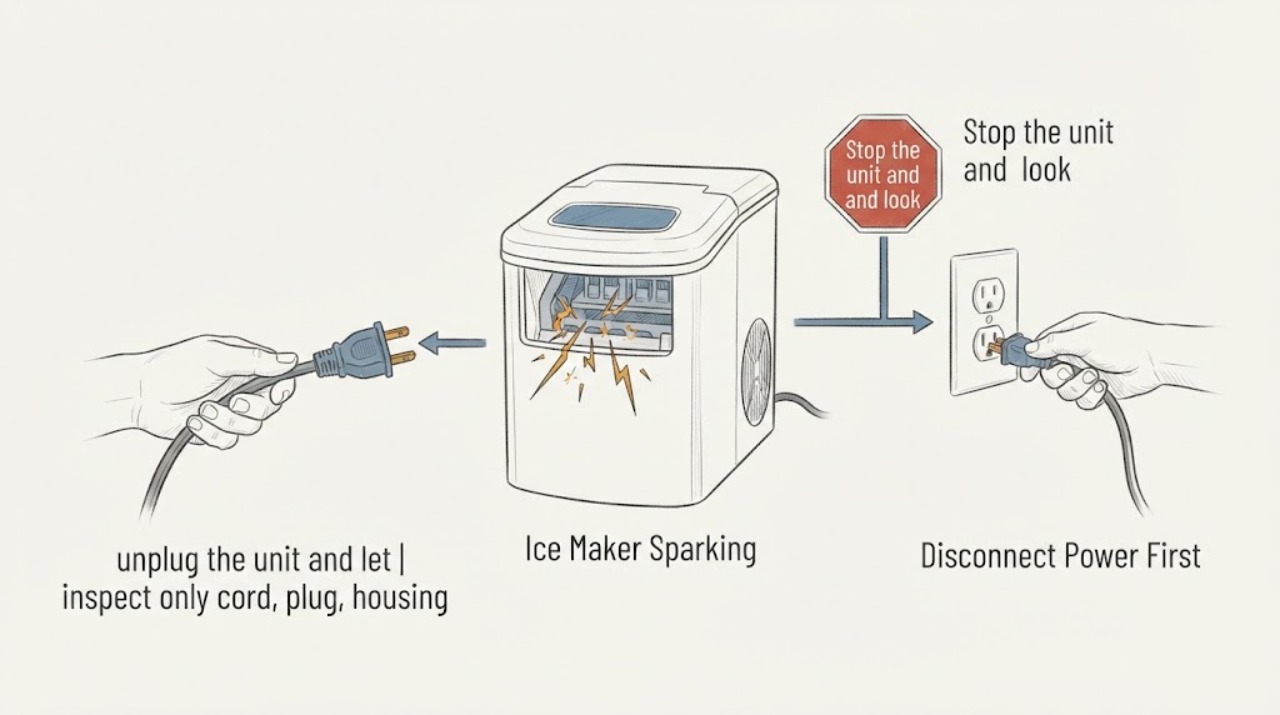
If an ice maker sparks, stop using it and disconnect power only from a dry safe position. Do not reach into the mechanism or test it again. Once cool and isolated, record whether the spark came from the outlet/cord, control area, or ice-making mechanism; a repeat spark, scorch, smoke, or water exposure needs qualified service.
Work through in order
Diagnostic checks
Use only checks that match the exact appliance or system and its official guide.
-
Check 1
Stop the unit and look from a distance for smoke, flame, scorch, hot plug, water, or active arcing.
Expected result: Any of those signs is present.
Next step: Isolate power if safe and arrange qualified emergency, electrical, or appliance help.
Stop if: Stop if there is a safety hazard or internal access would be required.
Why this matters
Why: This is an electrical/fire hazard, not a cleaning or reset issue.
-
Check 2
If the outlet and plug are dry and no longer arcing, unplug the unit and let it cool fully.
Expected result: The spark was at the plug/outlet, cord, control, or inside the mechanism.
Next step: Leave it disconnected and give service the model and spark location.
Stop if: Stop if there is a safety hazard or internal access would be required.
Why this matters
Why: Location routes service but does not make live testing safe.
-
Check 3
With power disconnected, inspect only cord, plug, housing, water area, and bin for liquid or damage.
Expected result: Liquid entered the base, the cord is damaged, or no external cause is visible.
Next step: Do not reconnect; arrange qualified appliance service or electrical help.
Stop if: Stop if there is a safety hazard or internal access would be required.
Why this matters
Why: GE prohibits contact with moving/heating mechanism parts while powered; unexplained damage needs service.
-
Check 4
After professional advice, distinguish a one-time outlet event from a repeat appliance spark without using another outlet as a test.
Expected result: The spark recurs, protection trips, or the unit smells hot/remains dead.
Next step: Keep it disconnected and follow service or replacement advice.
Stop if: Stop if there is a safety hazard or internal access would be required.
Why this matters
Why: Recurrence makes continued use unsafe.
Use your observations
Decision map
Find the observation that best matches what you see, then follow the next safe action.
-
PATH 01Next step
What you see
Spark/scorch is at the outlet or plug
Do this next
Leave it disconnected and call a qualified electrician.
Why this path and its safety boundary
Why it matters: The supply connection or cord is the immediate hazard.
-
PATH 02Next step
What you see
Spark is inside or followed water entry
Do this next
Keep it unplugged and arrange appliance service.
Why this path and its safety boundary
Why it matters: An internal fault or moisture exposure is possible.
-
PATH 03Next step
What you see
A spark recurs after the unit is dry
Do this next
Stop use and obtain qualified service.
Why this path and its safety boundary
Why it matters: A user reset cannot clear the risk.
Helpful context
Understand the symptom
How to read the result
If an ice maker sparks, stop using it and disconnect power only from a dry safe position. Do not reach into the mechanism or test it again. Once cool and isolated, record whether the spark came from the outlet/cord, control area, or ice-making mechanism; a repeat spark, scorch, smoke, or water exposure needs qualified service.
When checks do not resolve it
Need a professional?
Use qualified electrical help for a sparking outlet/cord and appliance service for an internal spark or recurrence. Seek emergency help for smoke, flame, or active arcing.
Common questions
FAQ
Can I plug it in again to see if it sparks?
No. Keep it disconnected because repeated arcing can worsen the hazard.
Can I clean the mechanism while it is plugged in?
No. GE says to unplug before cleaning and avoid ejector/heater parts.
Read the exact guide
Official sources
- ICE MAKER SAFETYWhirlpool · ice maker electrical safety
- Tips for Ice Maker Cleaning and MaintenanceGE Appliances · ice maker cleaning safety
Community feedback
Share a repair observation
Share a plain-text repair observation. Accepted observations are published automatically; this page may take a moment to update.