
Brand-independent appliance guidance
General Ice Maker Repair Guides
Brand-independent troubleshooting and repair guidance for common ice maker problems and maintenance questions.
General ice maker guides
Use these guides when the problem is not limited to a specific manufacturer.
-
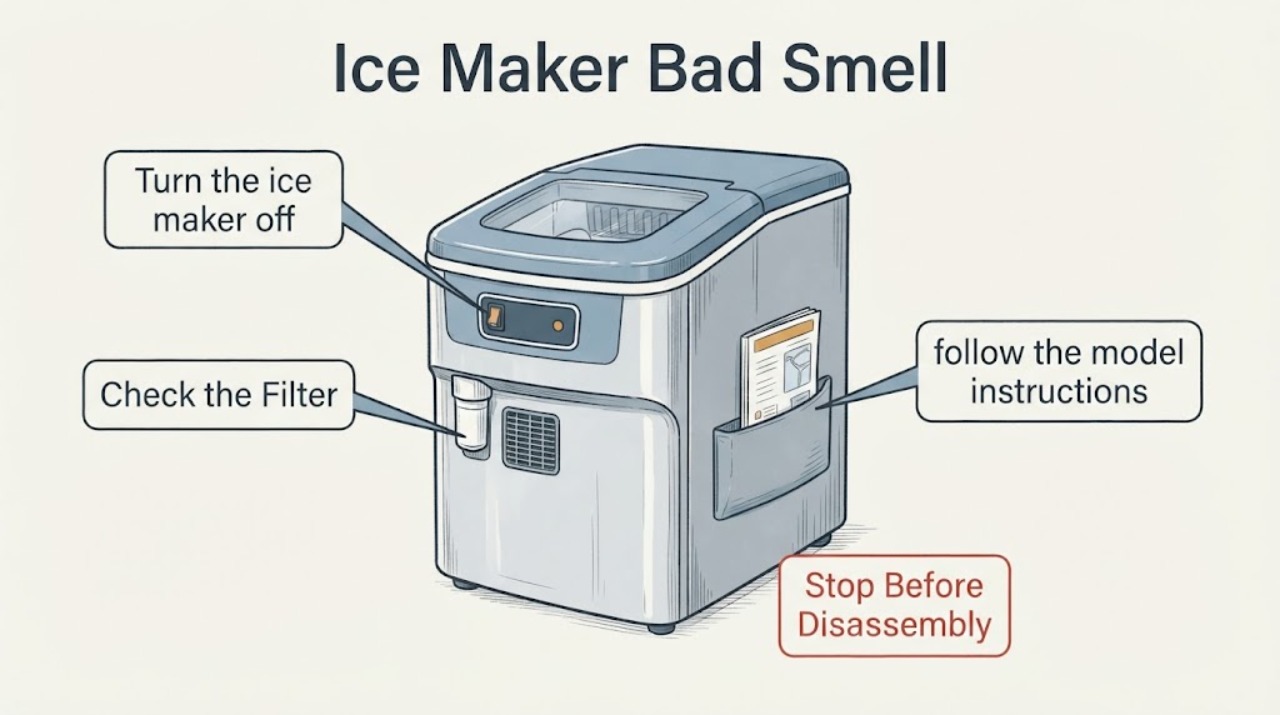
Ice Maker Bad Smell
A bad smell in ice usually comes from odor transfer from uncovered food, stale ice, or an unflushed new water system. Cover strong-smelling food, discard the existing ice, clean the bin, and let the maker produce fresh ice. If the odor remains after fresh ice and a correctly installed filter, isolate whether it is in the water, bin, or refrigerator and arrange appliance service. Stop using ice for drinking if it has a chemical, fuel, sewage, or burning odor.
-
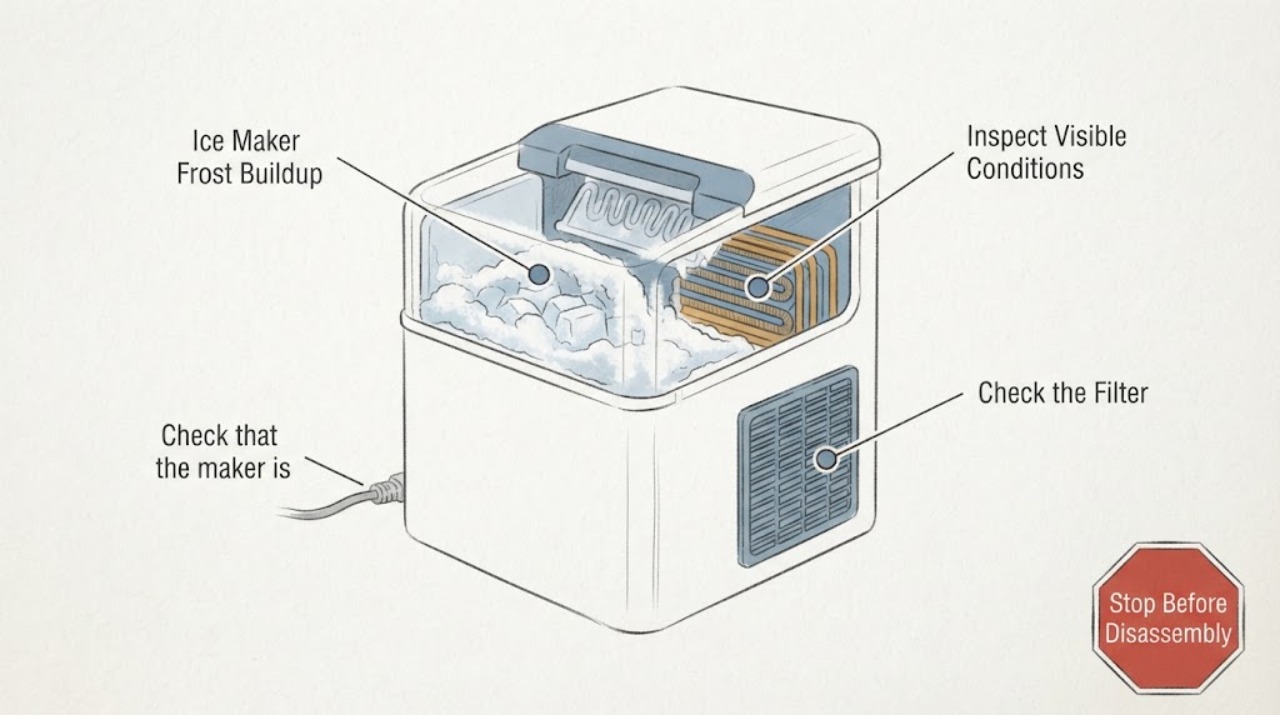
Ice Maker Frost Buildup
To troubleshoot a ice maker that is frost buildup, first identify the exact stage and accompanying signs, then make only the safe external checks supported by the owner guidance. Stop for hazards or recurrence and arrange qualified service.
-
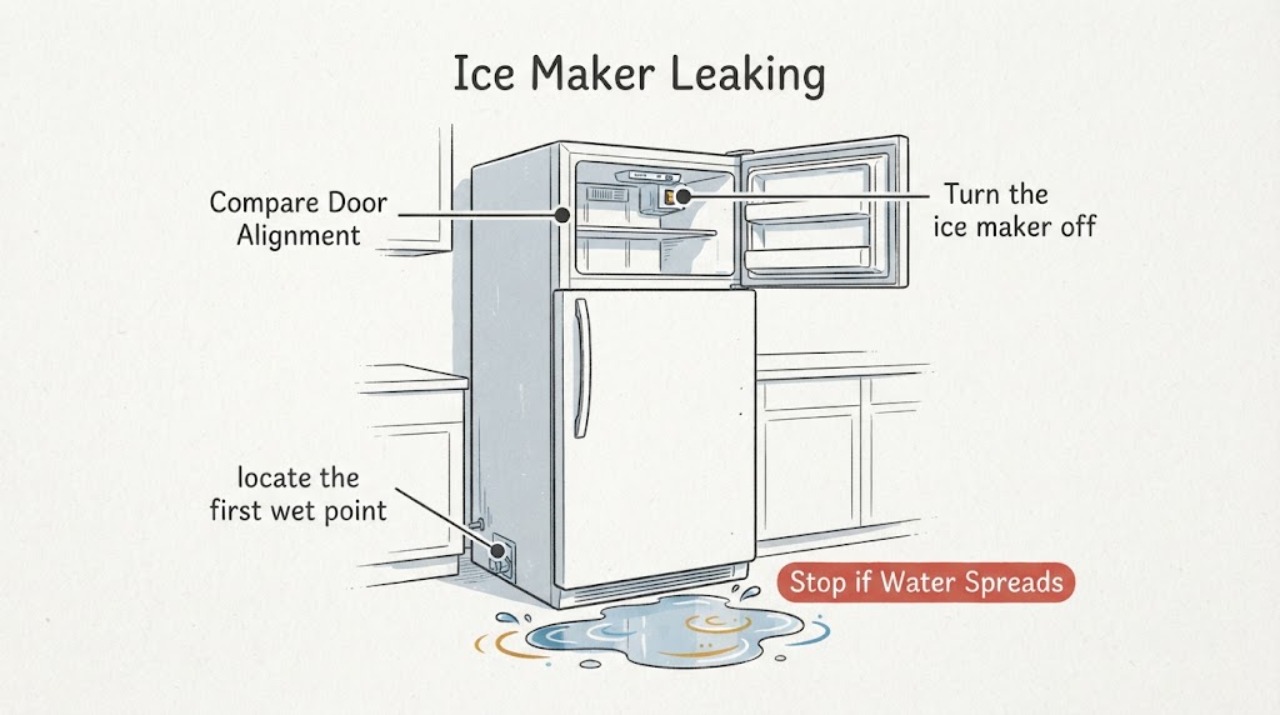
Ice Maker Leaking
When an ice maker leaks, turn it off and keep water away from electricity, then locate the first wet point: reservoir or drain, hose connection, or fill/ice area. GE and Whirlpool identify loose drain parts, misaligned or damaged hoses, an unlevel unit, and a blocked household drain as distinct possibilities, so the source location determines the next safe check.
-
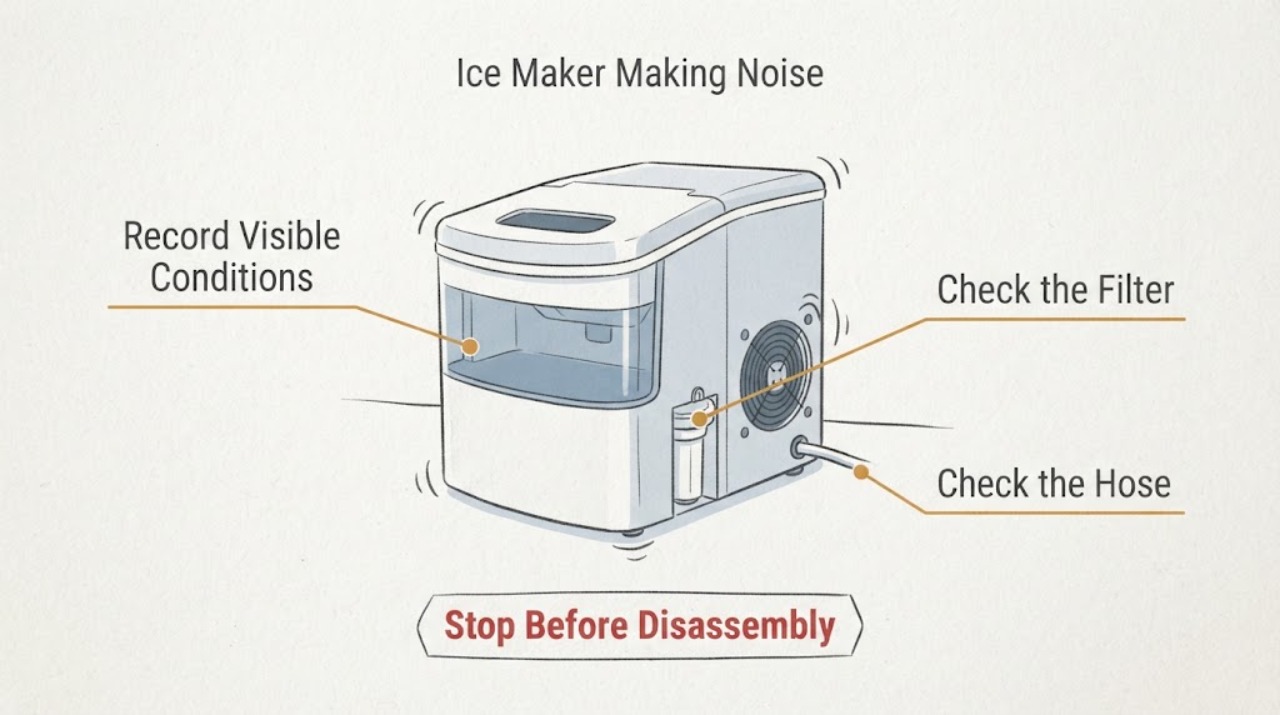
Ice Maker Making Noise
A noisy ice maker is often making a water-fill, circulation, or ice-drop sound, but a new scrape, grinding sound, repeated buzz, or noise with poor ice production needs diagnosis. Stop the cycle, note when the sound occurs, check that the unit is level and has clearances, and inspect only accessible filter and bin areas. Keep it unplugged and arrange service for electrical odor, leaking water, a jammed cutter, or a noise that persists after these checks.
-
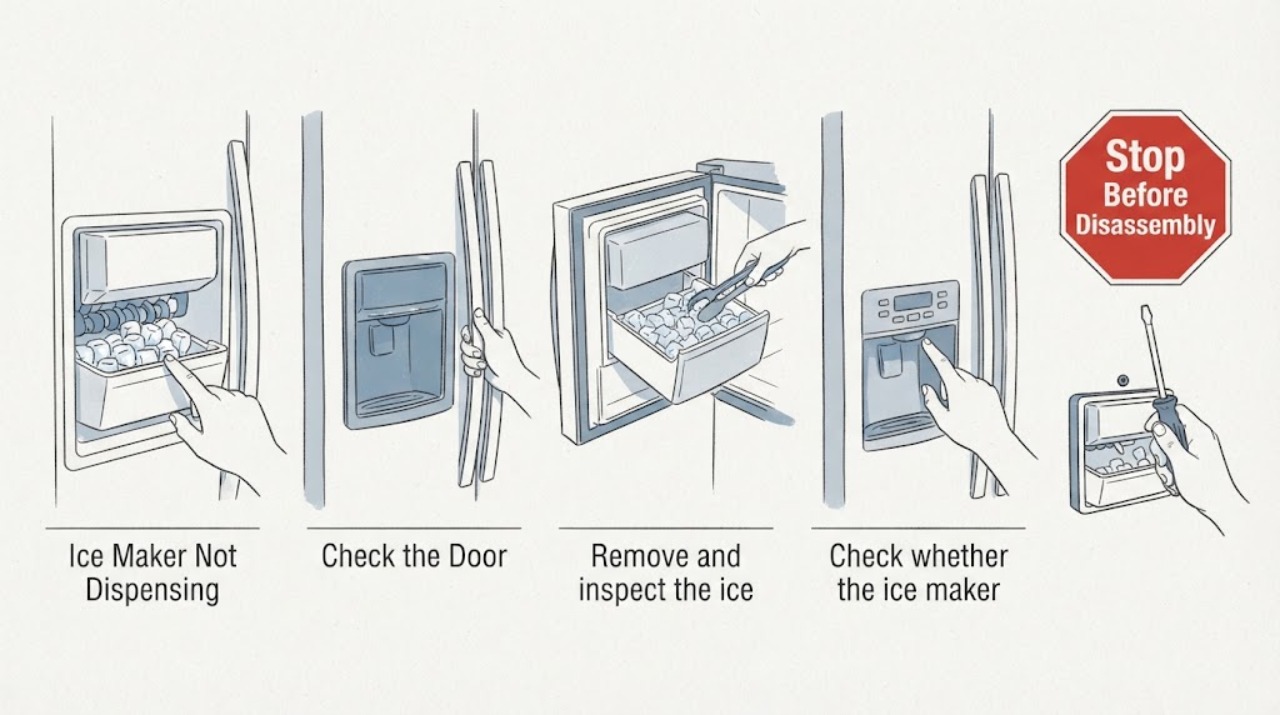
Ice Maker Not Dispensing
Confirm the dispenser is unlocked, the door is closed, the paddle is fully engaged, and the ice bin and chute are clear and seated. If water works but ice still does not move after these checks, service may be needed for the auger, switch, or interlock.
-
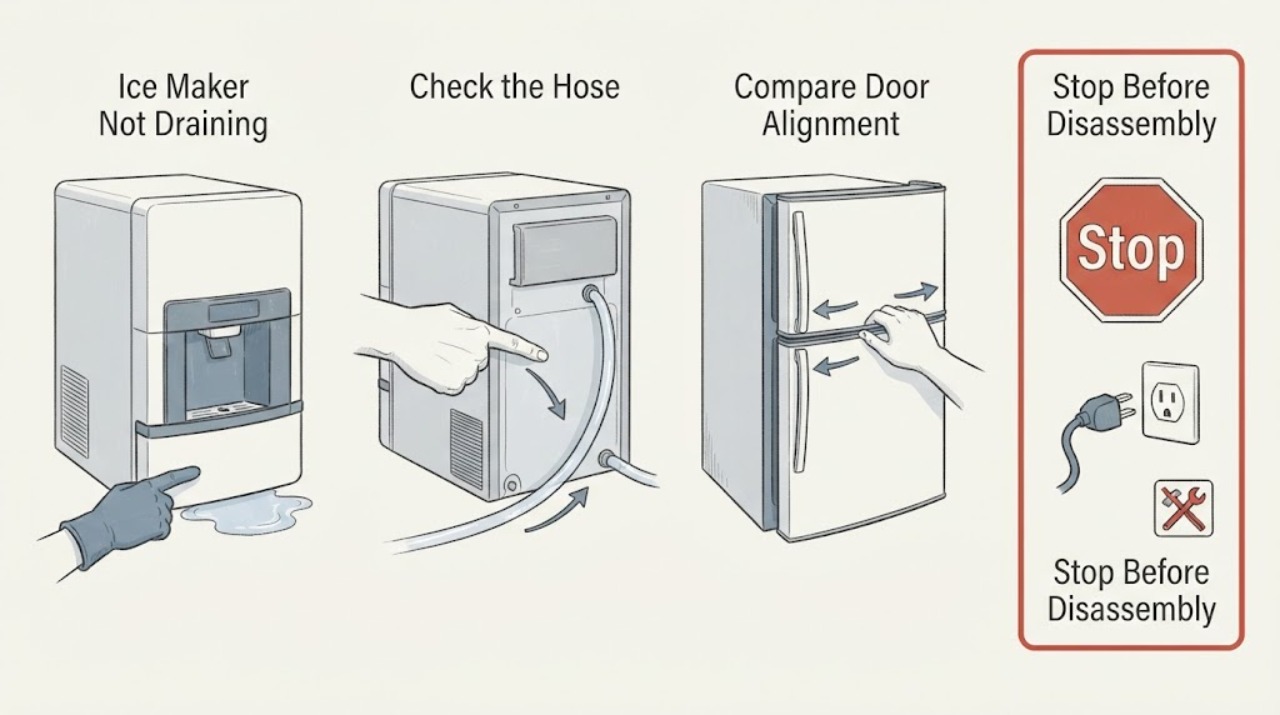
Ice Maker Not Draining
An ice maker that is not draining is usually a drain-path problem until proven otherwise. Identify whether it uses gravity or a pump, then inspect the accessible hose for alignment, twists, blockage and incorrect routing. Whirlpool routes external plumbing problems to a qualified plumber and persistent appliance faults to service.
-
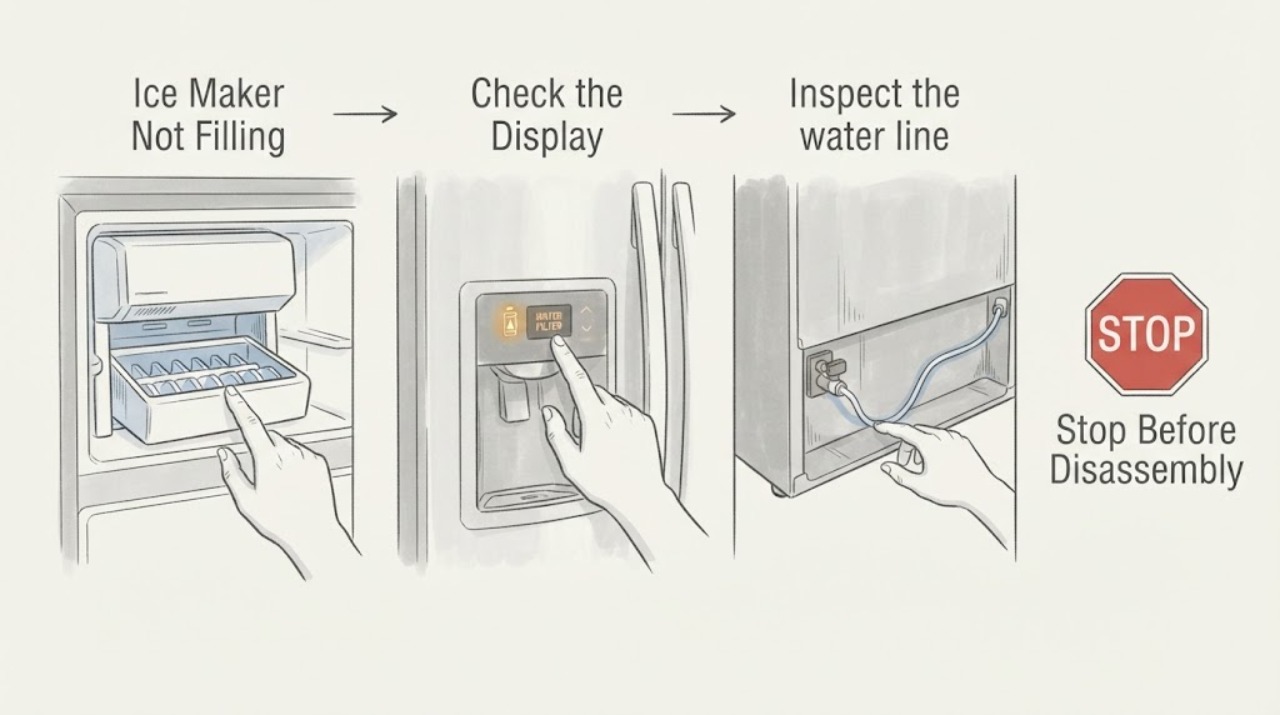
Ice Maker Not Filling
An ice maker that is not filling needs water-flow and operating-state checks before a part diagnosis. Confirm the supply valve is open and the line is not kinked, verify the freezer is cold enough, confirm the ice maker is on, and check a recently installed or clogged filter.
-
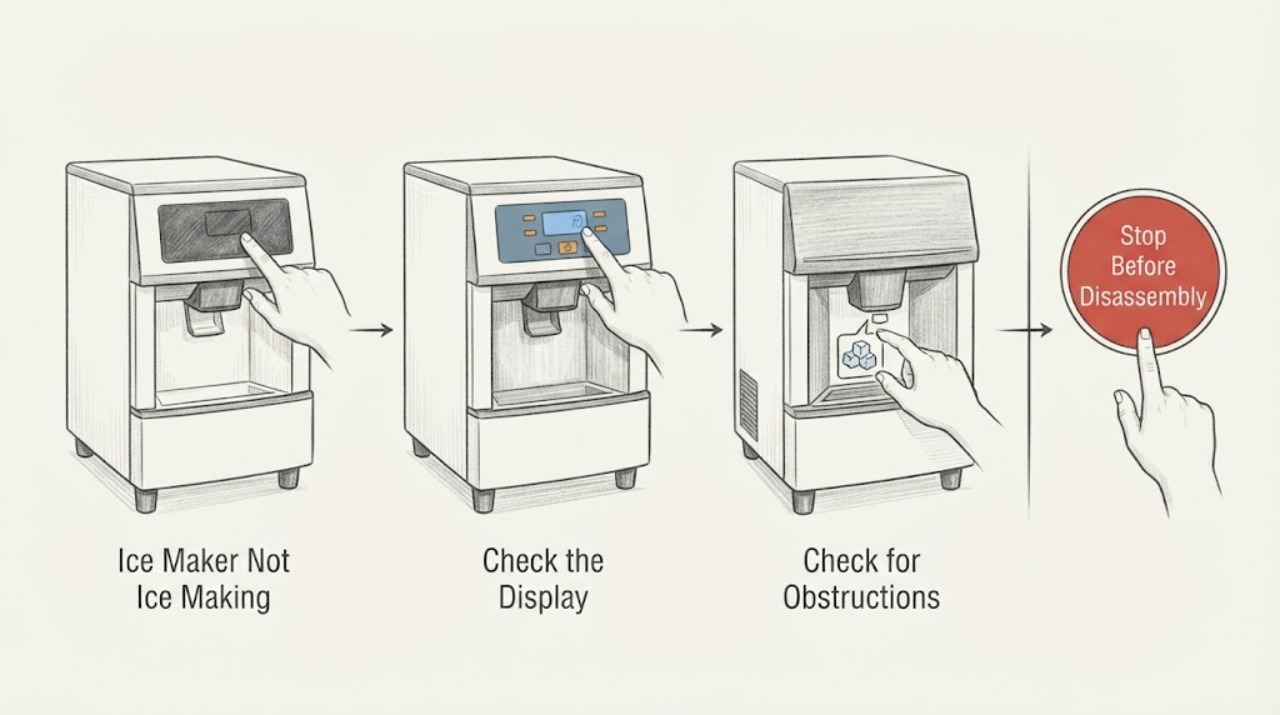
Ice Maker Not Ice Making
An ice maker that is not making ice should be checked in this order: confirm it is enabled, verify the freezer is cold enough, then check the water line and filter. Use the model manual for the exact control or reset location. If water supply and controls are correct but no harvest or fill occurs, arrange service instead of forcing the mechanism.
-
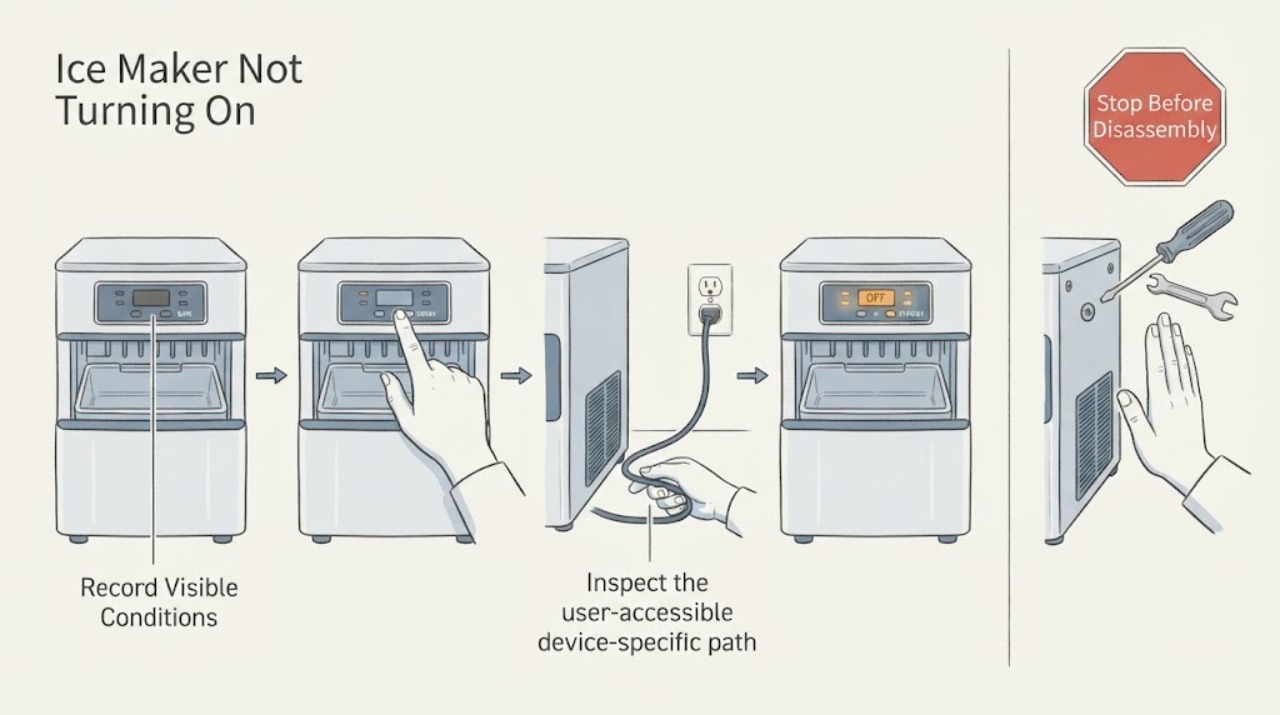
Ice Maker Not Turning On
For an ice maker that will not turn on, check the grounded outlet, control switch, breaker, room temperature, water line, drain hose, filter, and drain cap as the exact manual permits. Whirlpool notes low room temperature, a kinked drain hose, or a loose drain cap can stop operation. Persistent no power needs service.
-
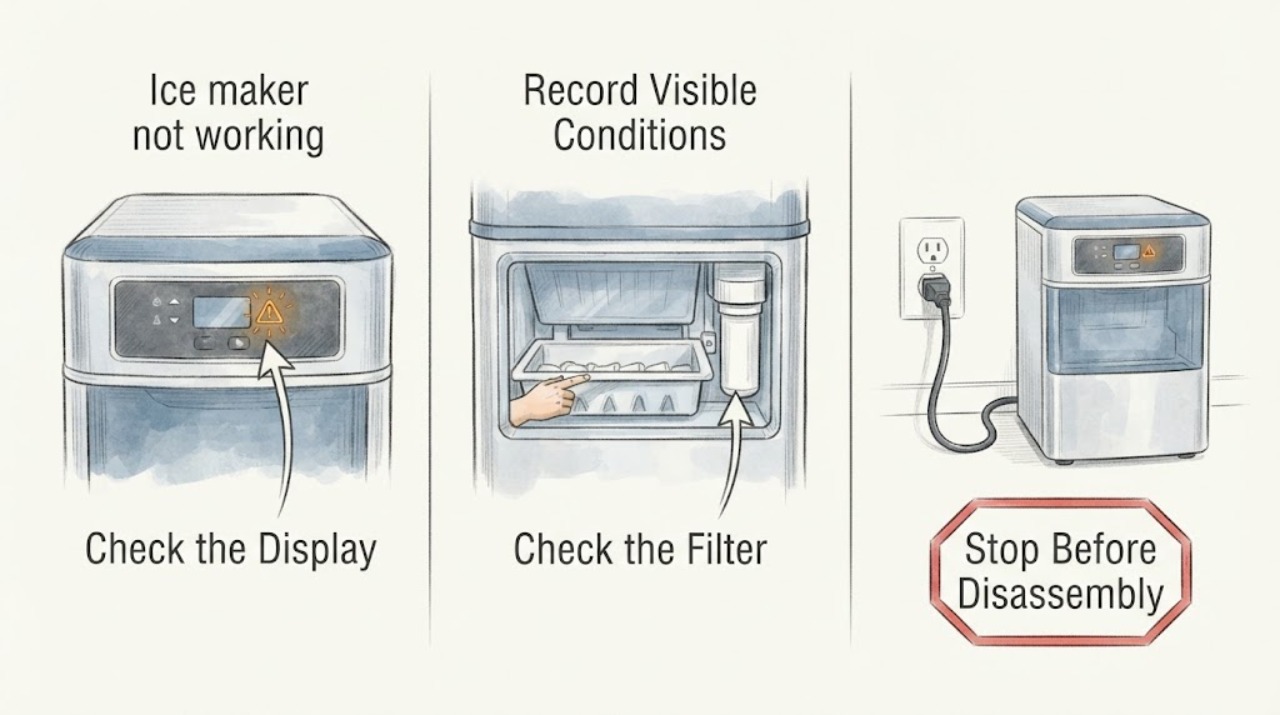
Ice maker not working
An ice maker that is not working should be checked for an enabled maker, correct bin position, a closed refrigerator door, a cold freezer, and an available water supply. Clear only an accessible ice jam as the model manual allows. If the maker remains inactive after those checks, or the water line leaks, arrange qualified refrigerator service.
-
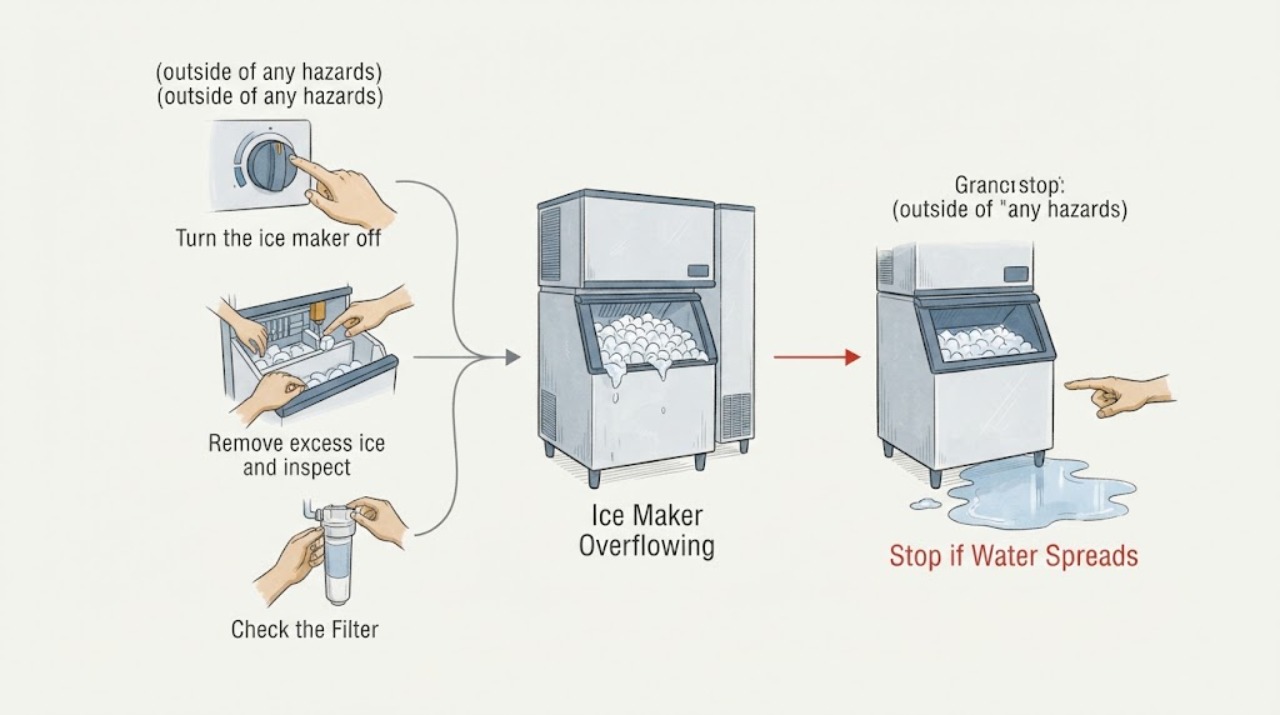
Ice Maker Overflowing
First stop the ice maker and protect the floor from water. Determine whether overflow is loose ice in the bin, water from the fill tube or filter, a chute blockage, or a continuous fill fault. Check the bin/chute and accessible water connections without opening sealed components; if water keeps entering, there is a cracked line or filter, or the maker refills continuously, leave it off and arrange service.
-
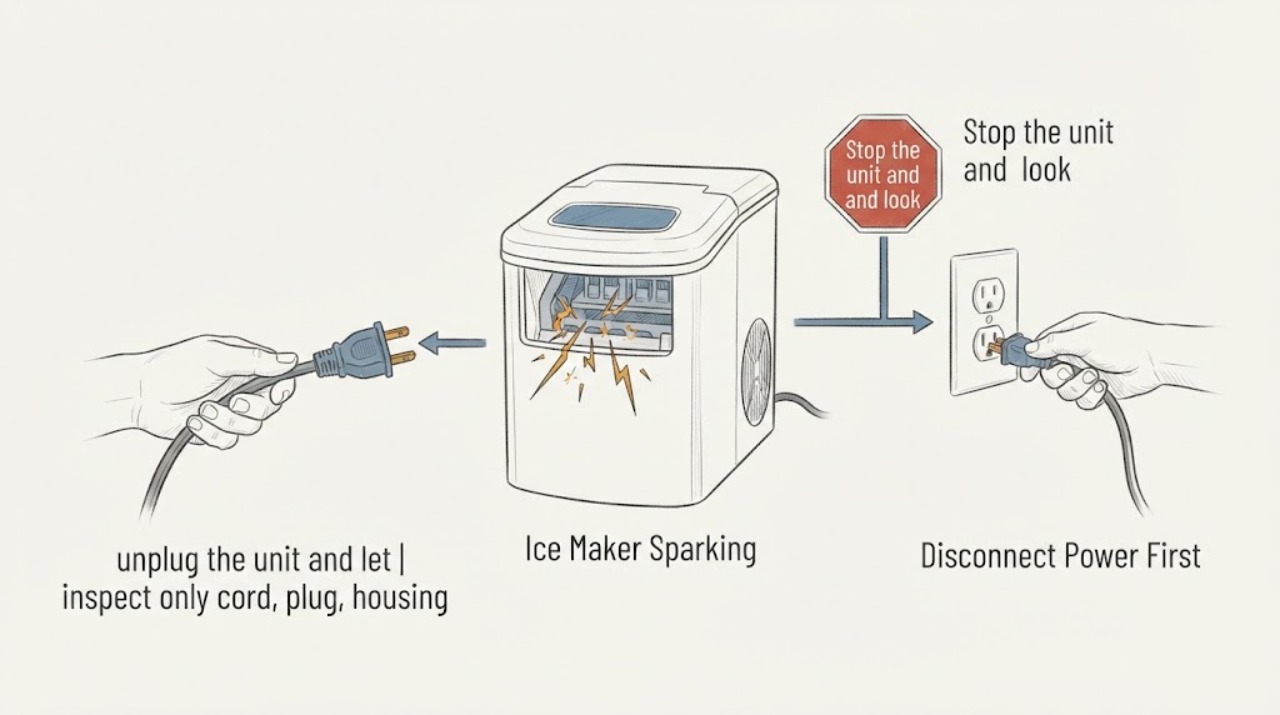
Ice Maker Sparking
If an ice maker sparks, stop using it and disconnect power only from a dry safe position. Do not reach into the mechanism or test it again. Once cool and isolated, record whether the spark came from the outlet/cord, control area, or ice-making mechanism; a repeat spark, scorch, smoke, or water exposure needs qualified service.