
On this page
Start here
Quick answer
A bad smell in ice usually comes from odor transfer from uncovered food, stale ice, or an unflushed new water system. Cover strong-smelling food, discard the existing ice, clean the bin, and let the maker produce fresh ice. If the odor remains after fresh ice and a correctly installed filter, isolate whether it is in the water, bin, or refrigerator and arrange appliance service. Stop using ice for drinking if it has a chemical, fuel, sewage, or burning odor.
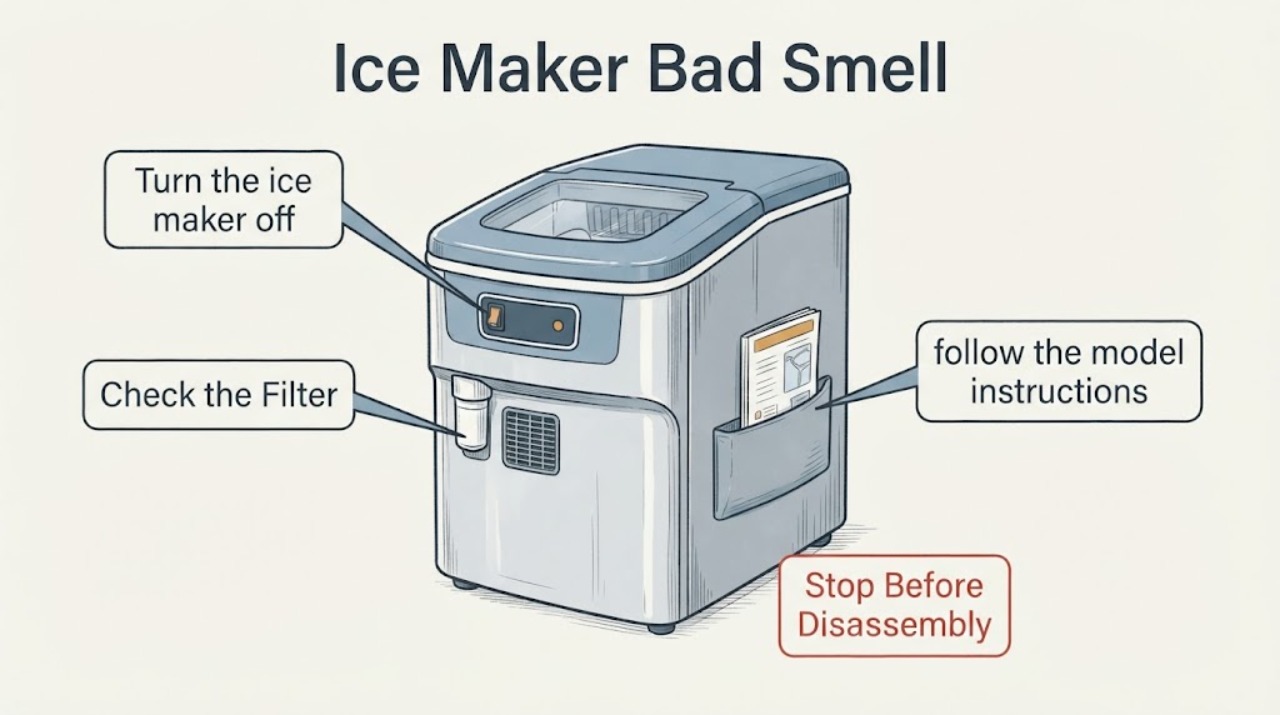
Work through in order
Diagnostic checks
Use only checks that match the exact appliance or system and its official guide.
-
Check 1
Turn the ice maker off, remove the ice bin, and discard the old ice. Wipe the empty bin and nearby chute with a clean damp cloth, then dry it fully before reinstalling it.
Expected result: The smell disappears from the empty bin, remains on the refrigerator interior, or is present in a newly made batch.
Next step: If the bin was the source, reinstall it and make a supervised fresh batch. If new ice still smells, continue with the food, filter, and water checks.
Why this matters
Why: A smell confined to old ice or the bin points to stored ice or transferred odor; a smell in new ice points to the water path, filter, or refrigerator environment.
-
Check 2
Inspect all uncovered foods and containers near the ice maker, then cover or remove strong-smelling items and check the refrigerator air filter if the model has one.
Expected result: The refrigerator compartment or air filter has the same odor as the ice.
Next step: Remove spoiled food, replace a serviceable air filter according to the model instructions, and discard the next affected ice batch.
Why this matters
Why: The ice may be absorbing an odor from the refrigerator air rather than producing one itself.
-
Check 3
If the refrigerator was recently installed or the water filter was recently changed, follow the model instructions to prime or flush the water system before collecting drinking ice.
Expected result: Only the first few batches smell odd, or the taste improves after flushing and fresh production.
Next step: Discard the affected ice and allow fresh production; do not bypass a filter or use a filter that is cracked or not seated.
Why this matters
Why: Air or residual material in a new or recently serviced water path can affect early ice quality.
-
Check 4
Compare the smell of a fresh ice sample with water from the refrigerator dispenser and with the refrigerator interior without tasting questionable samples.
Expected result: Only ice smells, both water and ice smell, or the refrigerator interior also smells.
Next step: Keep affected ice out of food and drinks. Arrange service if the odor is chemical, fuel-like, sewage-like, burnt, or persists after a clean bin, fresh ice, and correct filter/flush steps.
Why this matters
Why: Only-ice odor suggests the bin/chute or ice exposure; matching water odor suggests the supply/filter path; matching interior odor suggests food or air contamination.
Use your observations
Decision map
Find the observation that best matches what you see, then follow the next safe action.
-
PATH 01Next step
What you see
Old ice or the ice bin smells, while the refrigerator interior and incoming water do not.
Do this next
Discard the ice, clean and dry the bin, then make a fresh batch.
Why this path and its safety boundary
Why it matters: Stored ice or an odor-absorbing bin is the likely source.
-
PATH 02Next step
What you see
The refrigerator interior and ice share a food or musty odor.
Do this next
Remove spoiled food, cover strong odors, inspect or replace the air filter if fitted, and discard affected ice.
Why this path and its safety boundary
Why it matters: Odor is likely transferring through the refrigerator air or uncovered food.
-
PATH 03Next step
What you see
The refrigerator was newly installed or the water filter was just changed and only early batches smell odd.
Do this next
Prime or flush according to the product instructions, discard affected ice, and reassess a fresh batch.
Why this path and its safety boundary
Why it matters: An unprimed or unflushed water system is a plausible installation-related cause.
-
PATH 04Next step
What you see
Fresh ice continues to have a chemical, fuel, sewage, or burning odor.
Do this next
Do not consume the ice; keep the maker off and arrange qualified appliance service.
Why this path and its safety boundary
Why it matters: This is not a normal stale-ice complaint and the source may be unsafe or internal.
Helpful context
Understand the symptom
Treat a bad smell as a source-identification problem. Compare the smell in the ice with the smell in the refrigerator compartment and, if safe, with a glass of the incoming water. Do not taste ice that smells chemical, fuel-like, sewage-like, or burnt.
Start with the ice and storage environment
Strong uncovered food can transfer odor to ice, and old ice can develop a stale taste. A clean bin and a fresh batch provide a useful before-and-after test.
When checks do not resolve it
Need a professional?
Stop using affected ice and have the ice maker, water path, filter housing, and bin inspected when an abnormal odor persists or is chemical, fuel-like, sewage-like, or burnt. Do not disassemble sealed refrigeration or water components.
Common questions
FAQ
Can ice absorb food odors?
Yes. Frigidaire says ice can absorb odors and tastes from strong-smelling uncovered food, so cover or remove those foods and discard affected ice.
How long should I keep the first ice after installation?
Do not use the first affected batches for drinks if they have an odd flavor. Frigidaire recommends priming the water system and notes that the first cubes can be discolored or odd-tasting when the system is not flushed.
What if fresh ice still smells burnt or chemical?
Do not taste or consume it. Turn the ice maker off and arrange qualified service to inspect the water path, filter housing, and appliance.
Read the exact guide
Official sources
- Refrigerator Taste and Odor GuideFrigidaire · refrigerator ice taste and odor troubleshooting
- My refrigerator was just installed and the ice maker is not working, how do I fix it?Frigidaire · new refrigerator ice-maker setup and first ice quality
Community feedback
Share a repair observation
Share a plain-text repair observation. Accepted observations are published automatically; this page may take a moment to update.