
Repair problem
Sparking Troubleshooting Guides – Page 2
Published FixGraph guidance for diagnosing and responding to sparking.
Matching published guides
Choose a guide that matches the service, equipment, and conditions you are seeing.
-
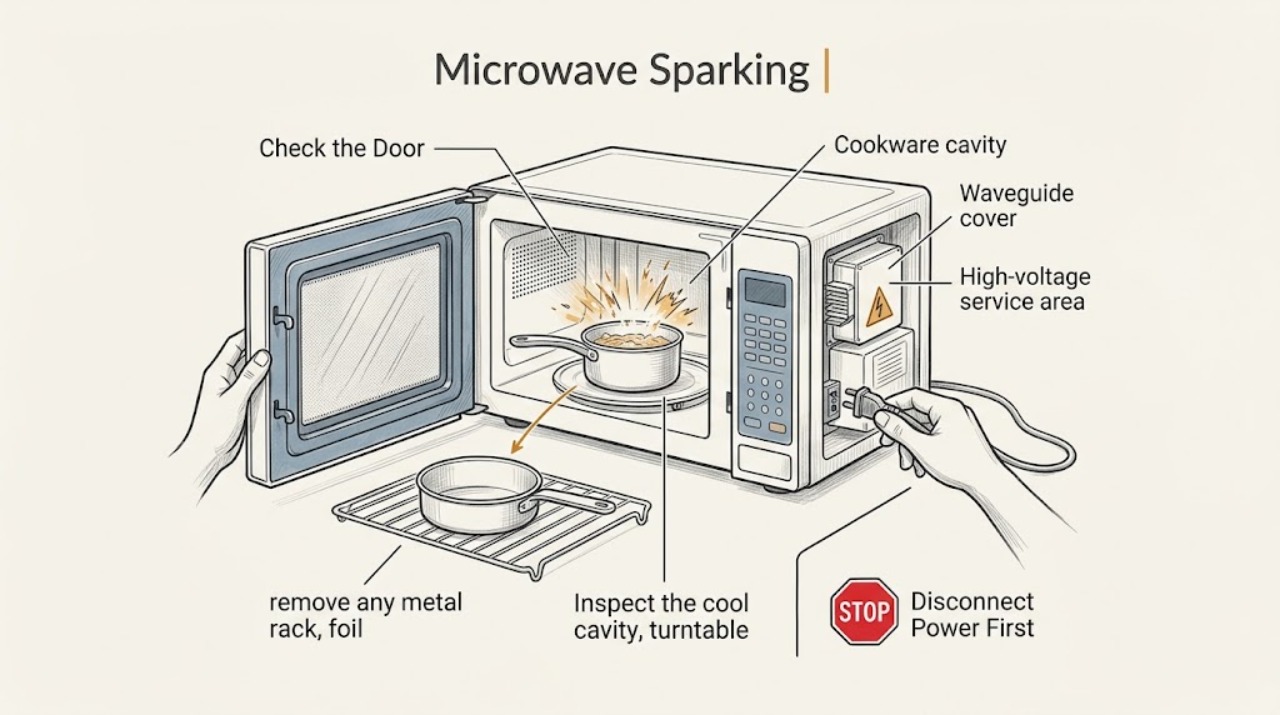
Monogram Microwave Sparking: Stop the Cycle and Identify Safe External Causes
Stop the microwave as soon as you see sparks. If there is flame or smoke, keep the door closed and disconnect power only if it is safe. Once cool, remove metal or foil cookware and inspect the cavity for burnt food or visible damage; do not run it empty, bypass the door, or remove internal panels. Persistent arcing or a damaged cavity needs Monogram service.
-
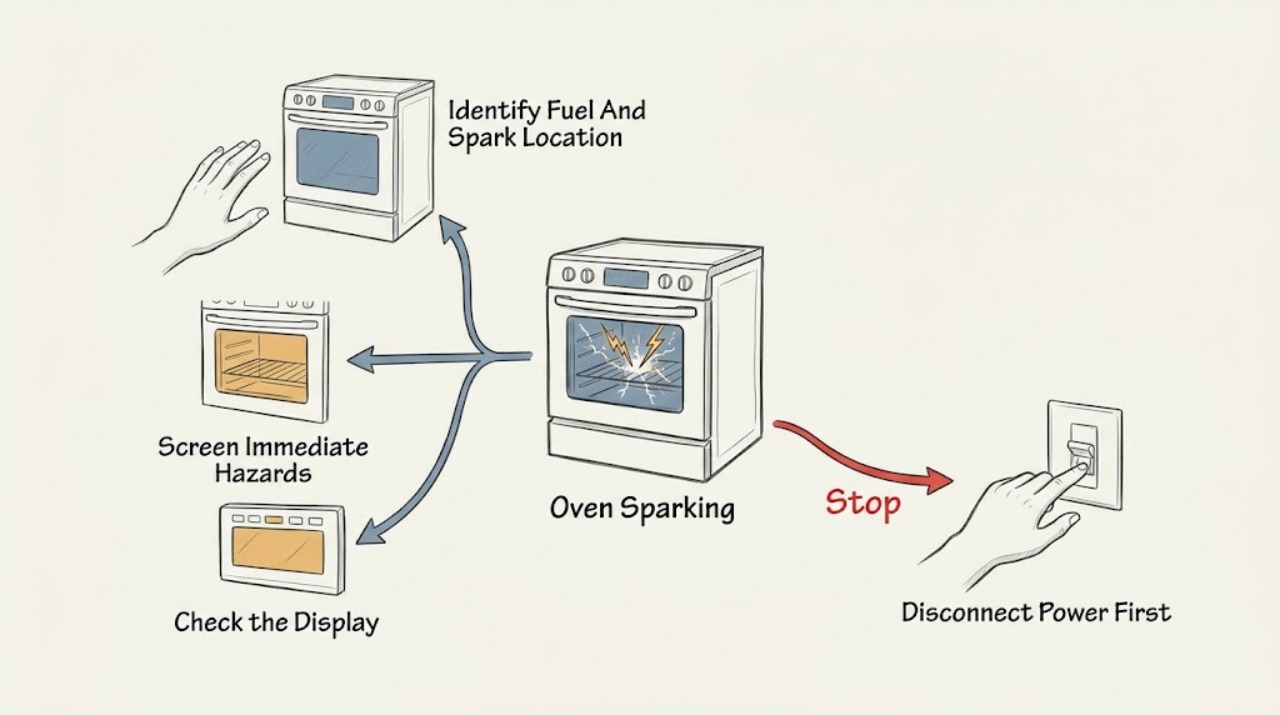
Oven Sparking: Separate Normal Gas Ignition From Dangerous Arcing
An oven spark can be normal only in a model-documented gas ignition sequence and only when it is brief, localized, and followed by stable combustion. A spark, flash, crackle, or arc from the cavity, control area, cord, outlet, element, or wiring is not a normal test result.
-
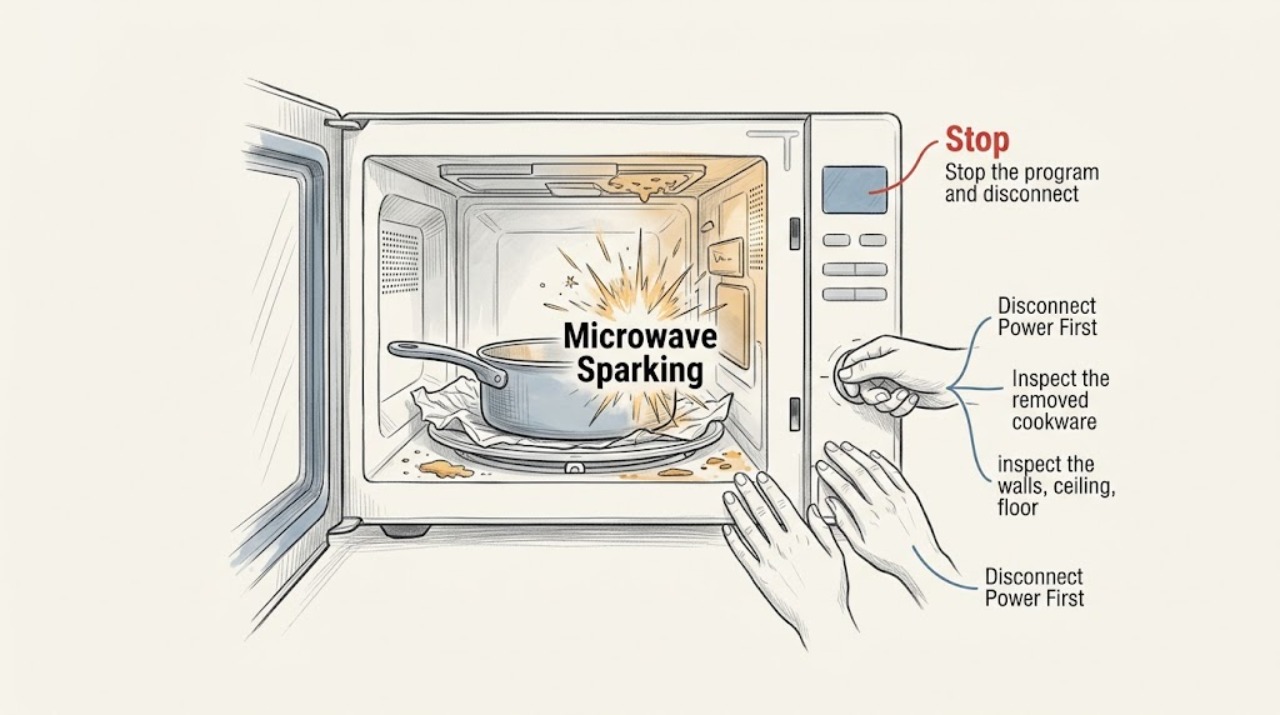
Panasonic Microwave Sparking: Remove Metal and Stop if Arcing Continues
Stop the Panasonic microwave immediately when sparks appear. After it is safe and cool, remove metal containers, foil, twist ties, metal trim, and damaged cookware; inspect and clean visible food residue. If sparking returns with microwave-safe cookware or an empty clean cavity, leave the unit out of service and contact authorized Panasonic support.
-
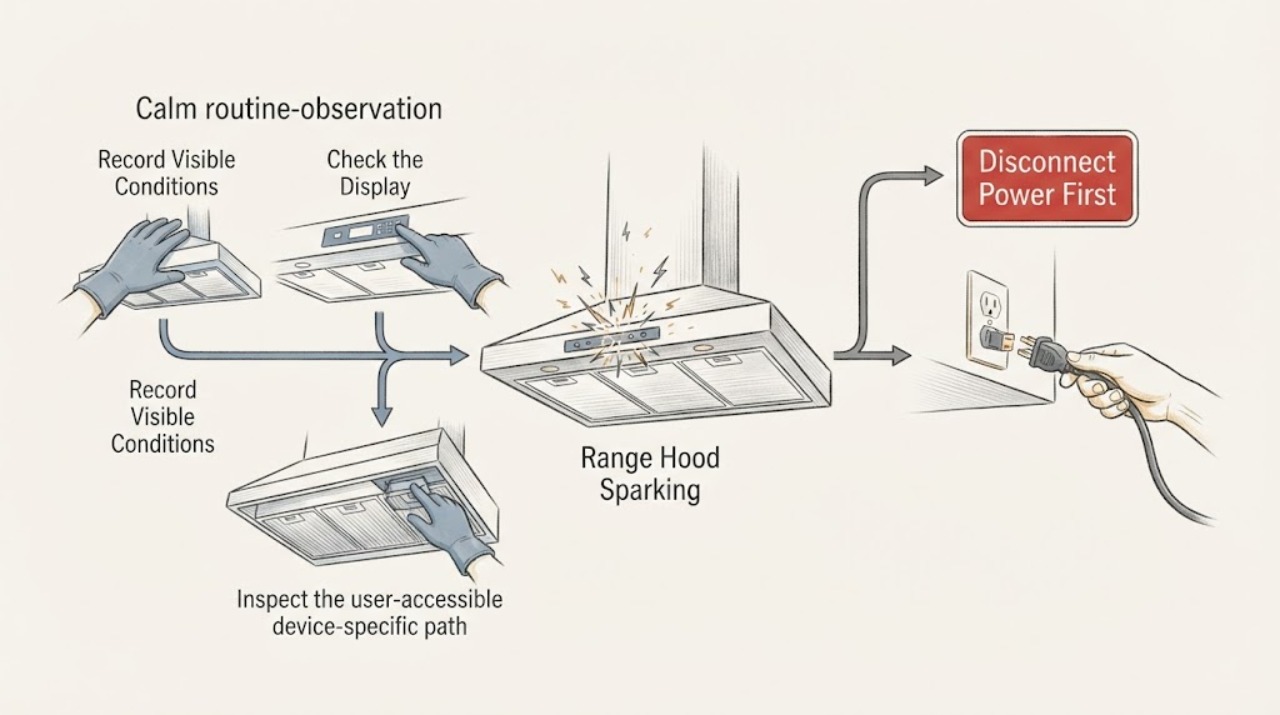
Range Hood Sparking
If a range hood sparks, switch it off and disconnect power at the breaker if safe. Do not use it with smoke, burning odor, exposed wiring, grease fire, or arcing. Check only the external filter, fan obstruction, and switch; recurring sparks need qualified electrical service.
-
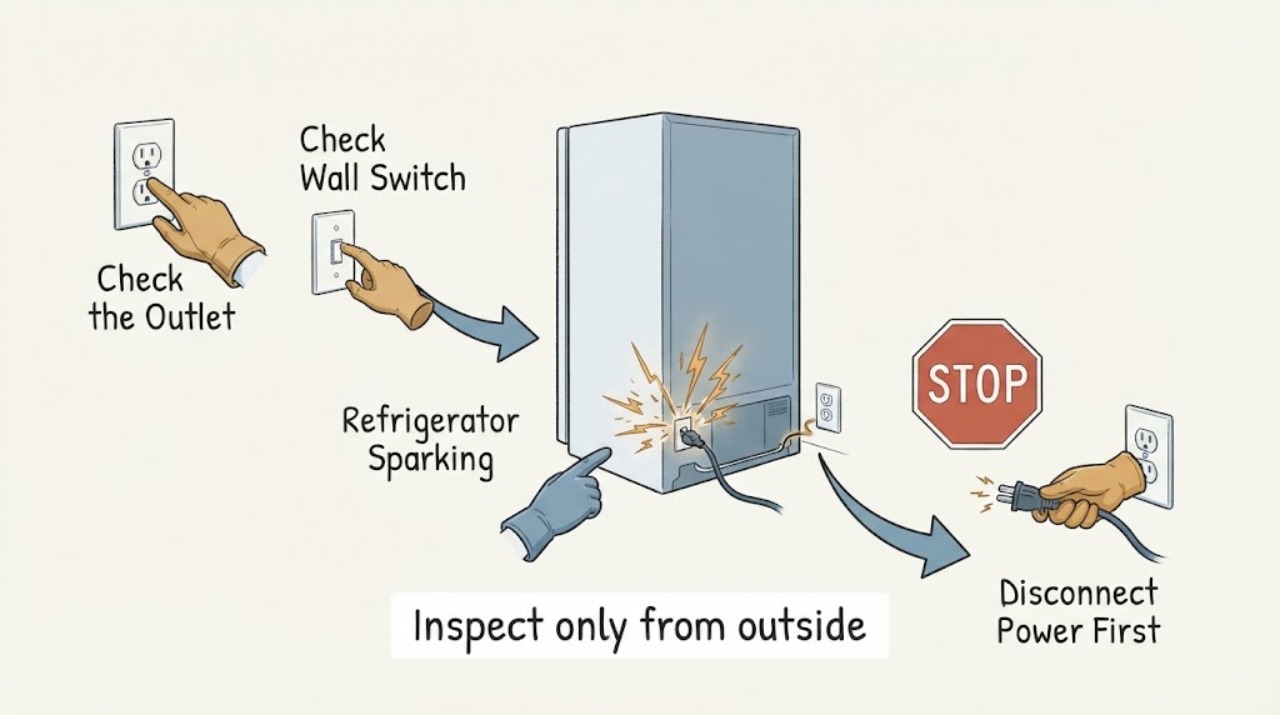
Refrigerator Sparking
A refrigerator that sparks is an electrical safety event, even if cooling continues. Stop using it, keep hands and water away, and disconnect power only if the plug or upstream switch can be reached safely without touching a wet or damaged connection. The opened refrigerator safety guidance says not to operate a damaged or abnormal appliance and not to disassemble it; arrange qualified appliance or electrical service.
-
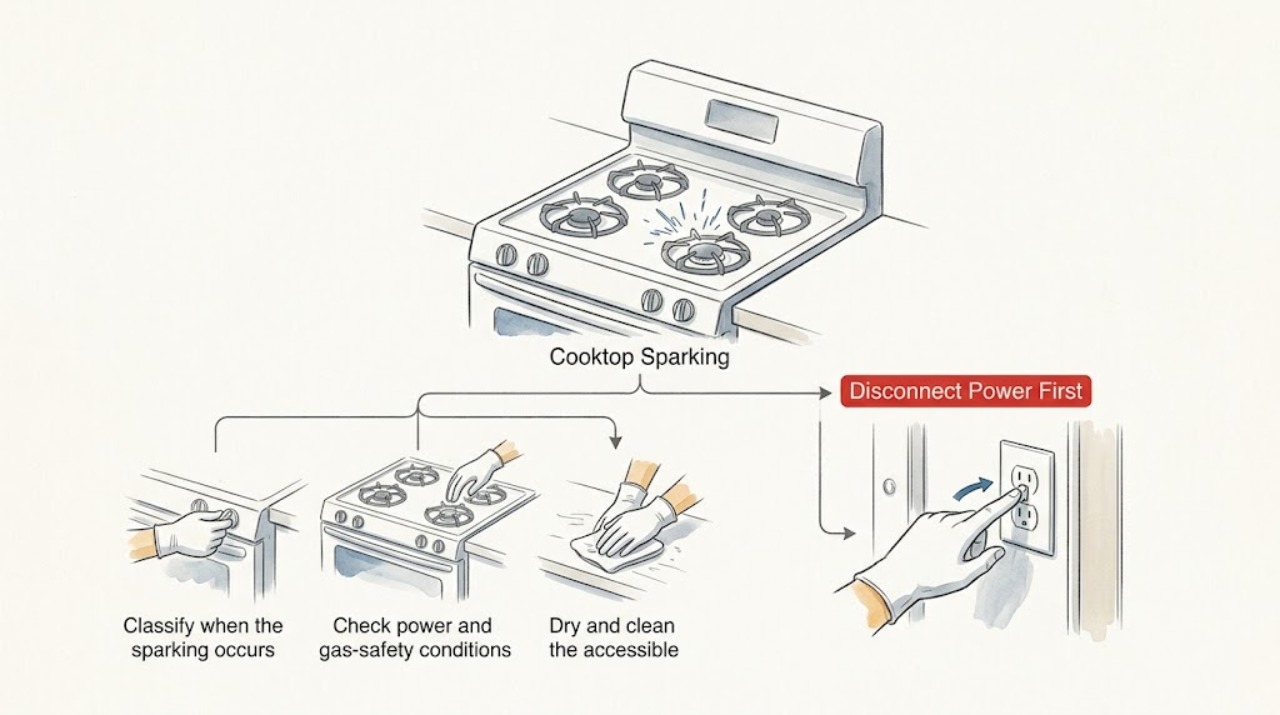
Samsung Cooktop Sparking: Stop Continuous Ignition Safely
A click or spark while a Samsung gas burner is being lit can be normal, and all burners may spark when one knob is set to Lite. Continuous sparking after every knob is Off usually points to moisture or contamination around the ignition switches, while a burner that sparks but does not light can involve a wet or incorrectly seated burner head, blocked port, or interrupted gas supply.
-
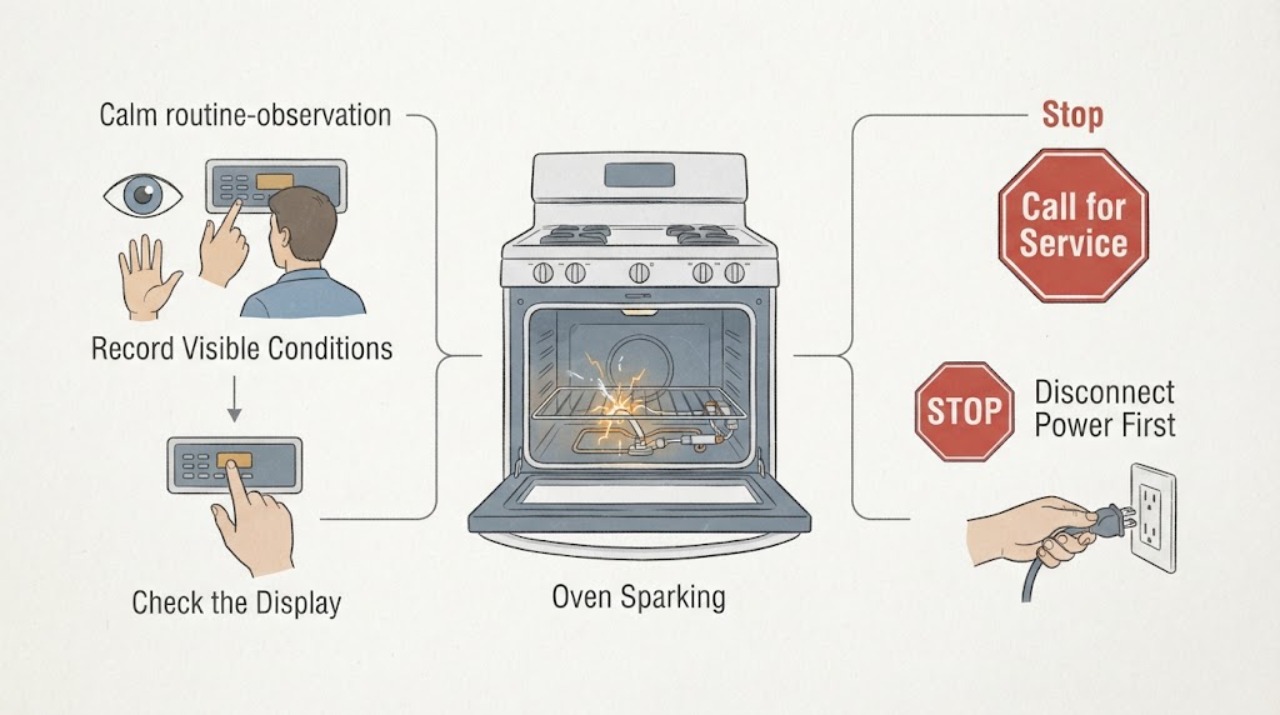
Samsung Oven Sparking: Separate Normal Gas Ignition from a Dangerous Arc
A Samsung gas range can make a brief, controlled clicking sound while an igniter lights a burner, but a visible spark in the oven cavity, at the outlet or cord, or around the control area is not a normal oven operating condition. Continuous clicking after all gas controls are off, smoke, a gas odor, delayed ignition, an abnormal flame, heat damage, or repeated breaker trips means stop using the range and arrange qualified service.
-
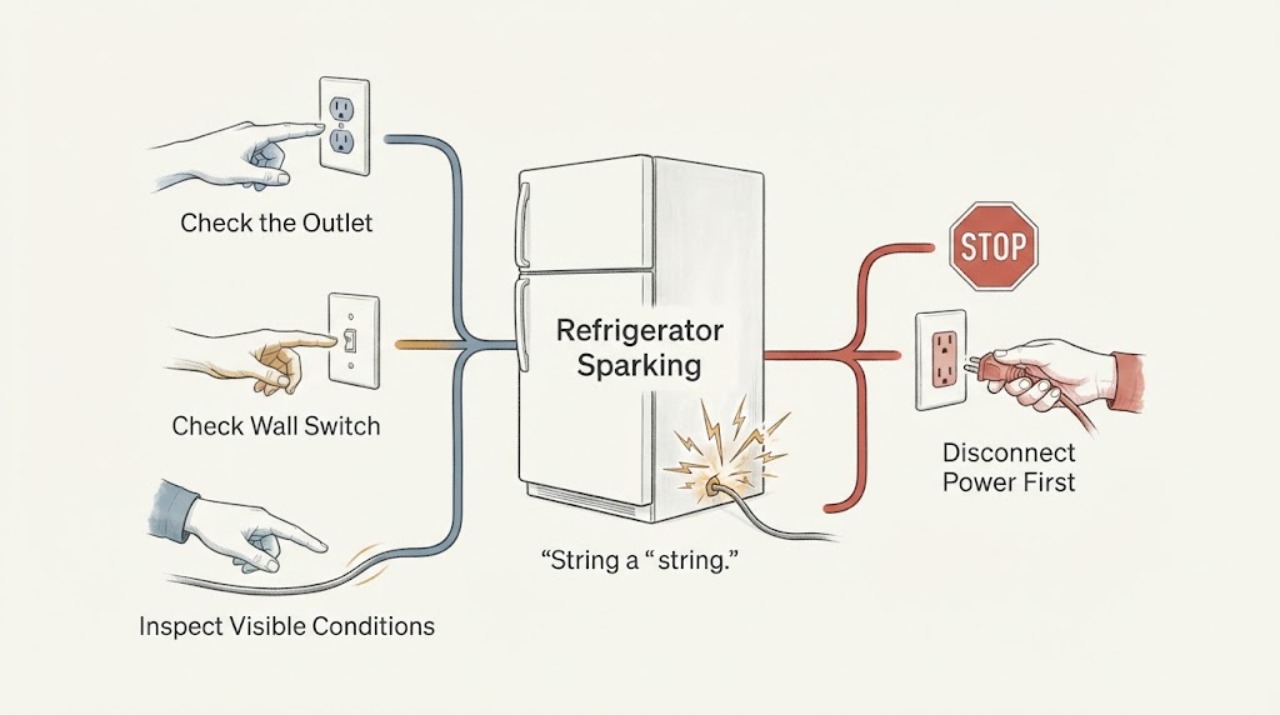
Samsung Refrigerator Sparking: What to Do Before You Use It Again
Visible sparking from a Samsung refrigerator, its plug, cord, or outlet is a stop-use symptom. From a safe position, cut power at the circuit breaker if you can do so without touching a smoking, wet, hot, or actively arcing appliance; otherwise leave it alone and get qualified help.
-
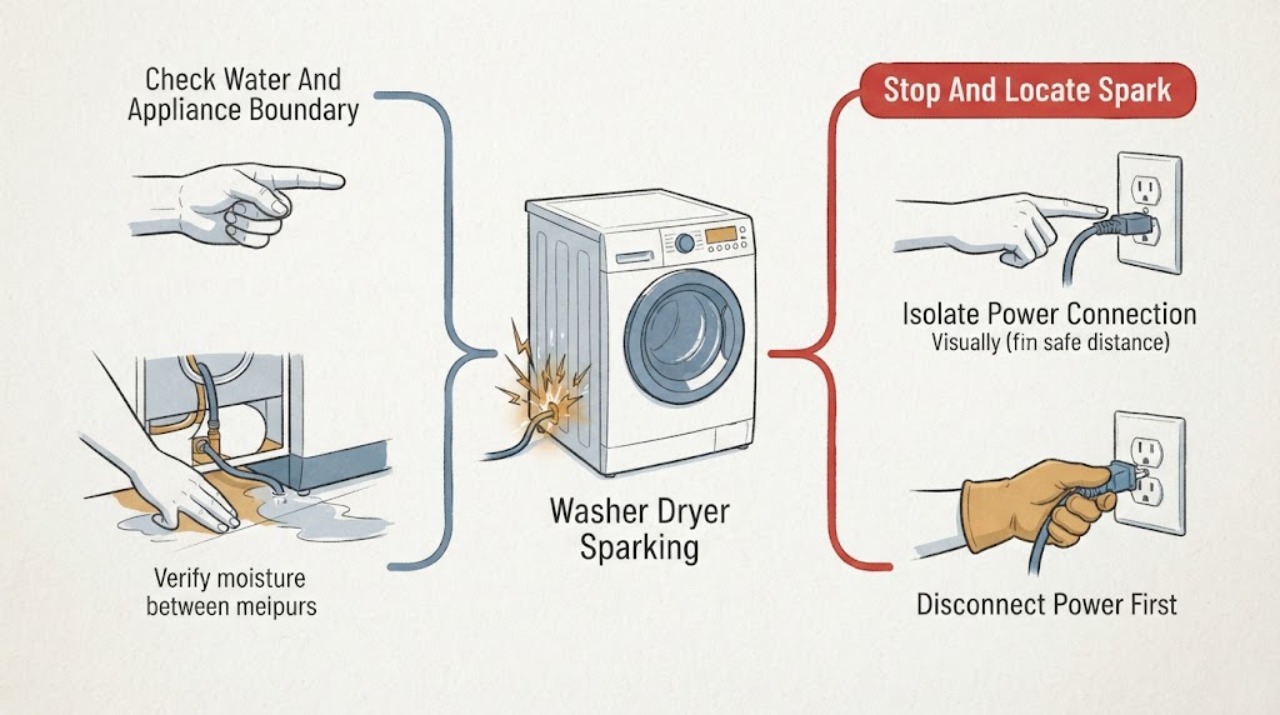
Samsung Washer Dryer Sparking
Visible sparks from a Samsung washer-dryer are an immediate stop condition, not a normal cycle symptom. Stop the washer or dryer, keep people away, and disconnect power only from a safe position; if there is smoke, a burning or electrical smell, scorch marks, heat, or an active fire, use local emergency guidance and do not operate switches or reinsert the plug.
-
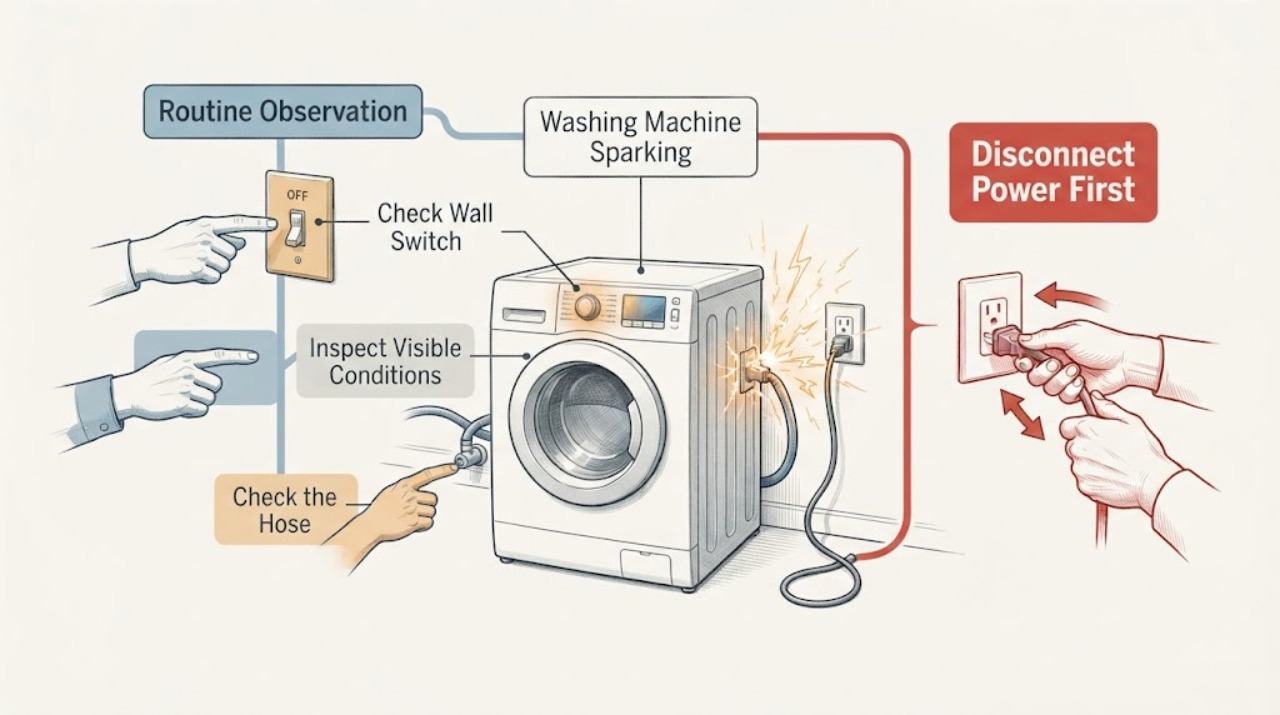
Samsung Washing Machine Sparking: Stop Safely and Locate the Risk
Treat any visible spark from a Samsung washer as an abnormal electrical event until its location and cause are clear. Stop the cycle, keep away from water and moving parts, and disconnect power only from a dry, safe position.
-
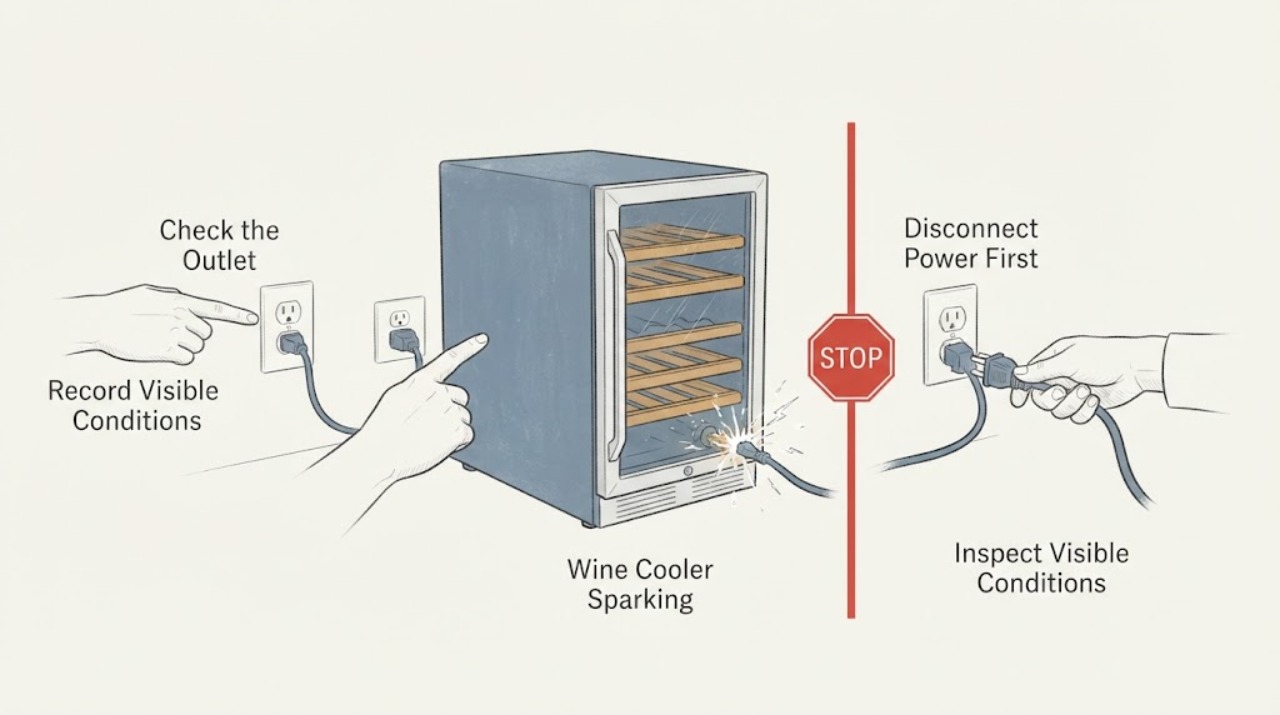
Samsung Wine Cooler Sparking
Sparking from a Samsung wine cooler is an electrical safety issue. Stop operation, note whether the spark came from the plug, cord, outlet, or cabinet, and isolate power only if safe. Do not restart it to reproduce the event.
-
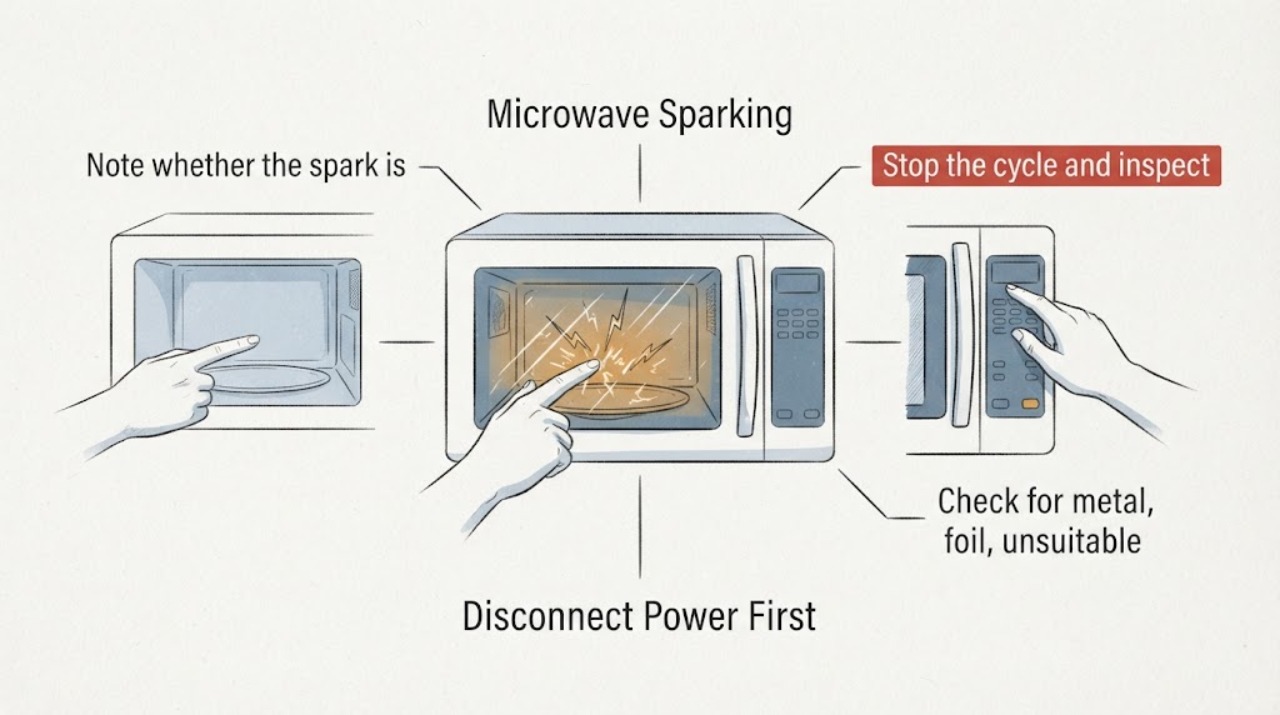
Sharp Microwave Sparking
Sparking in a Sharp microwave requires immediate stop. Keep the door closed if material ignites, press Stop/Clear if safe, and disconnect power only when safe. Inspect only for approved cookware, metal, residue, or a damaged waveguide cover.
-
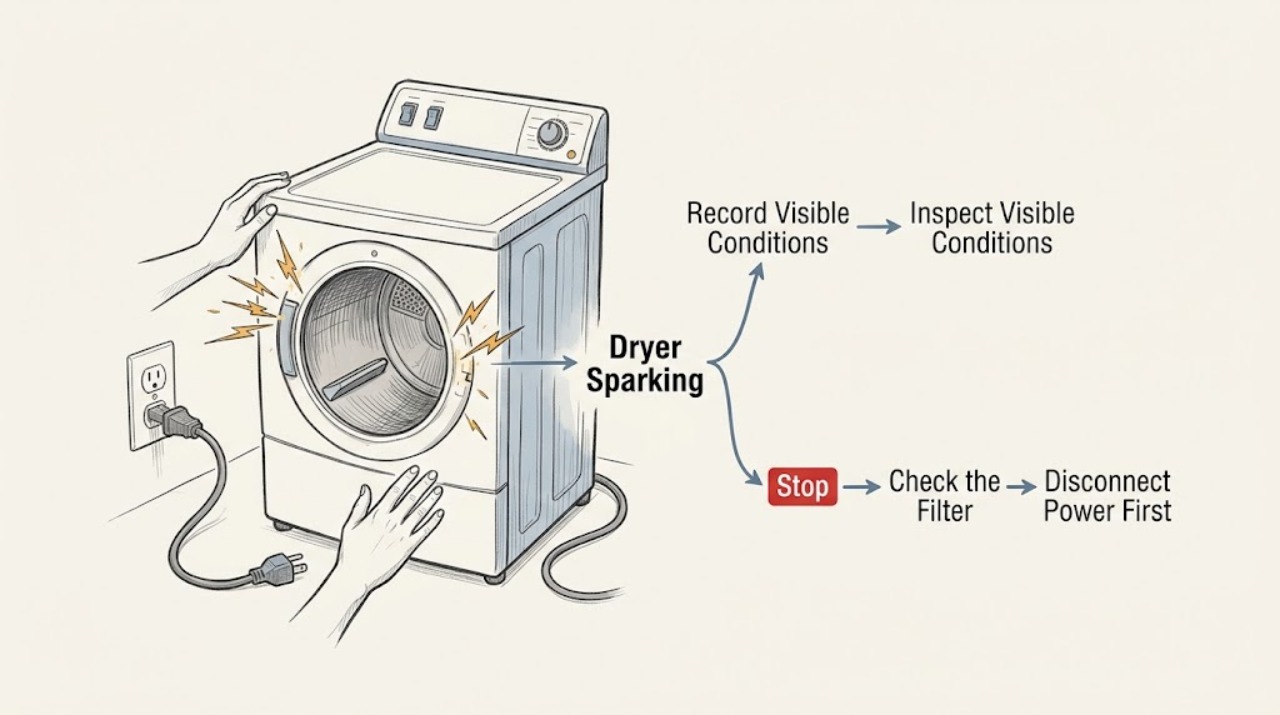
Siemens Dryer Sparking: Stop First, Then Identify the Safe Boundary
Treat any visible spark or arc from a Siemens tumble dryer as abnormal and stop using it immediately; do not run another cycle to see whether it happens again. A brief static snap from synthetic clothing away from the dryer is different from a spark at the drum, plug, cord, receptacle, control panel or cabinet, but an appliance spark cannot be safely diagnosed while energized.
-
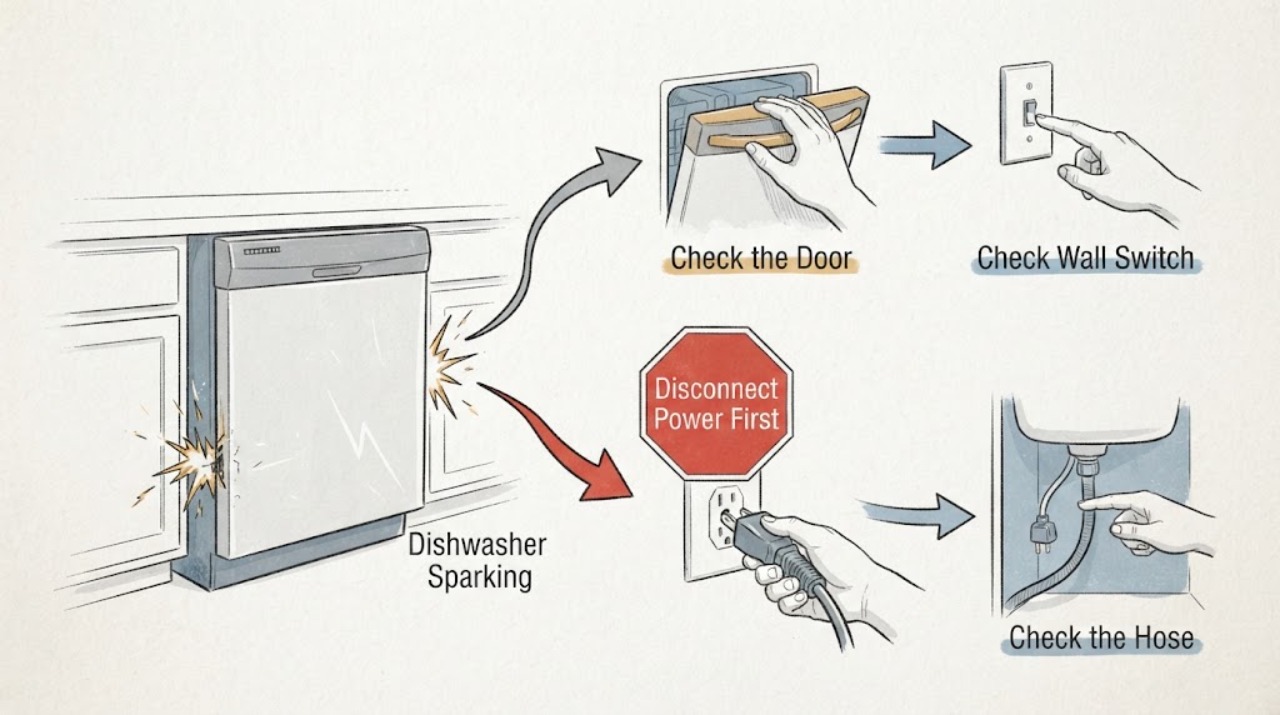
Smeg Dishwasher Sparking
Treat visible sparks, an electrical flash, crackling, or a flash followed by a trip as an electrical safety event. Stop the Smeg dishwasher and do not start another cycle or reach into the tub, under the appliance, or behind a panel.
-
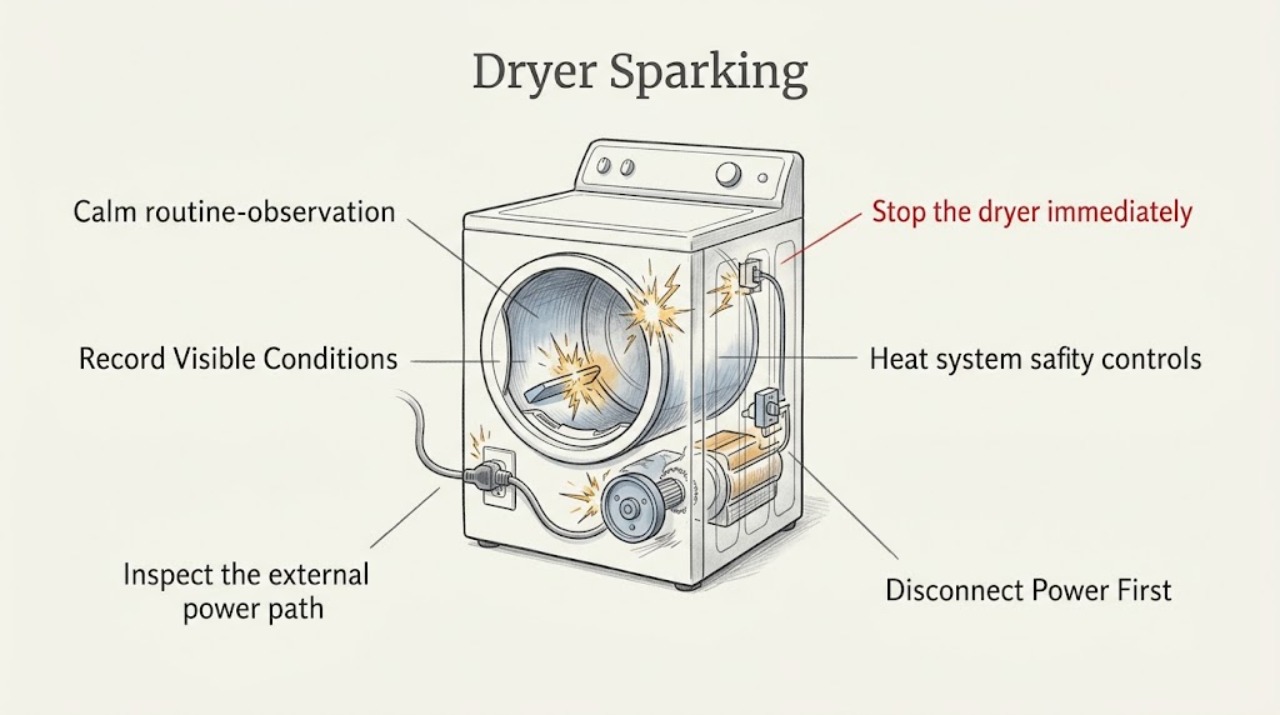
Speed Queen Dryer Sparking: Stop Use and Identify the Safe Service Path
Any visible spark or arc from a Speed Queen dryer, inside the drum, at the plug or receptacle, or from the cabinet is abnormal: stop the cycle immediately, isolate power only from a safe dry position, and do not run the dryer again to check it.
-
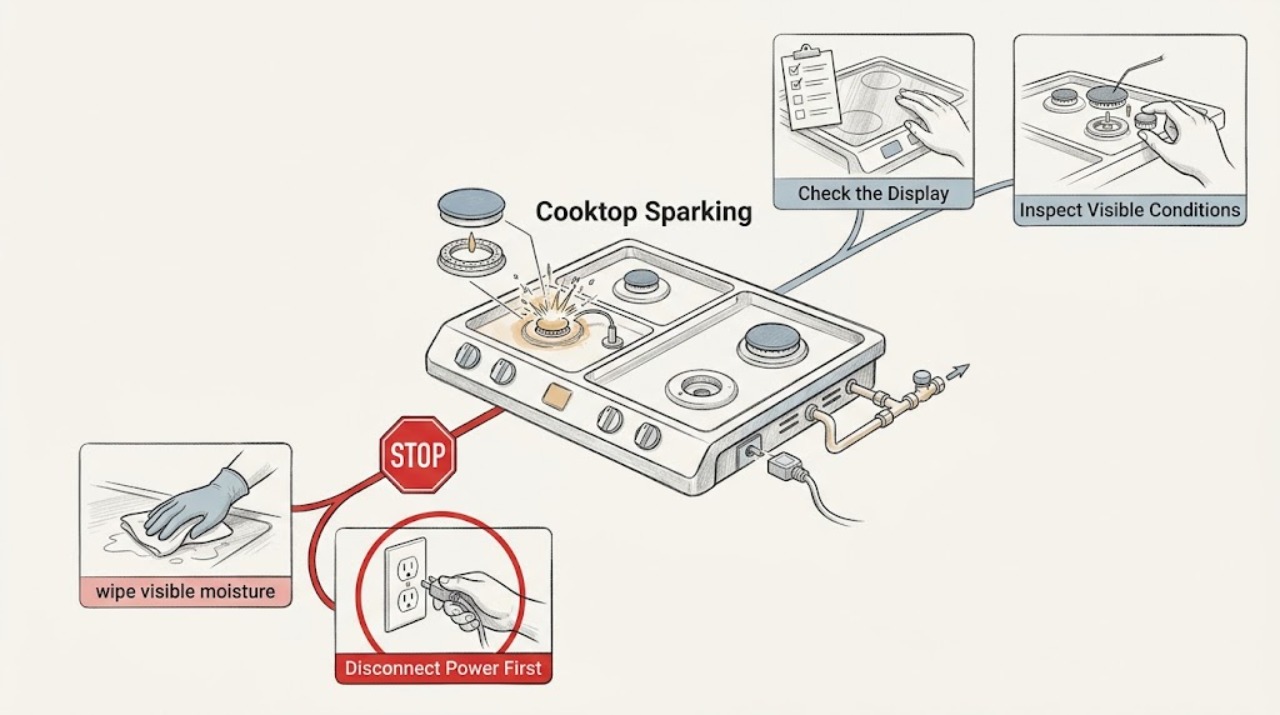
Thermador Cooktop Sparking: Separate Normal Ignition from a Fault Safely
A Thermador gas cooktop normally sparks while a burner knob is being turned to ignite a burner, and some ExtraLow models click as the flame cycles. Sparking that continues after every knob is OFF, occurs without a knob being pressed, or appears after a spill or wet cleaning surface may come from a damp or dirty igniter, a misplaced burner cap, clogged or wet burner ports, a draft, a stuck knob, or a fault that needs service.
-
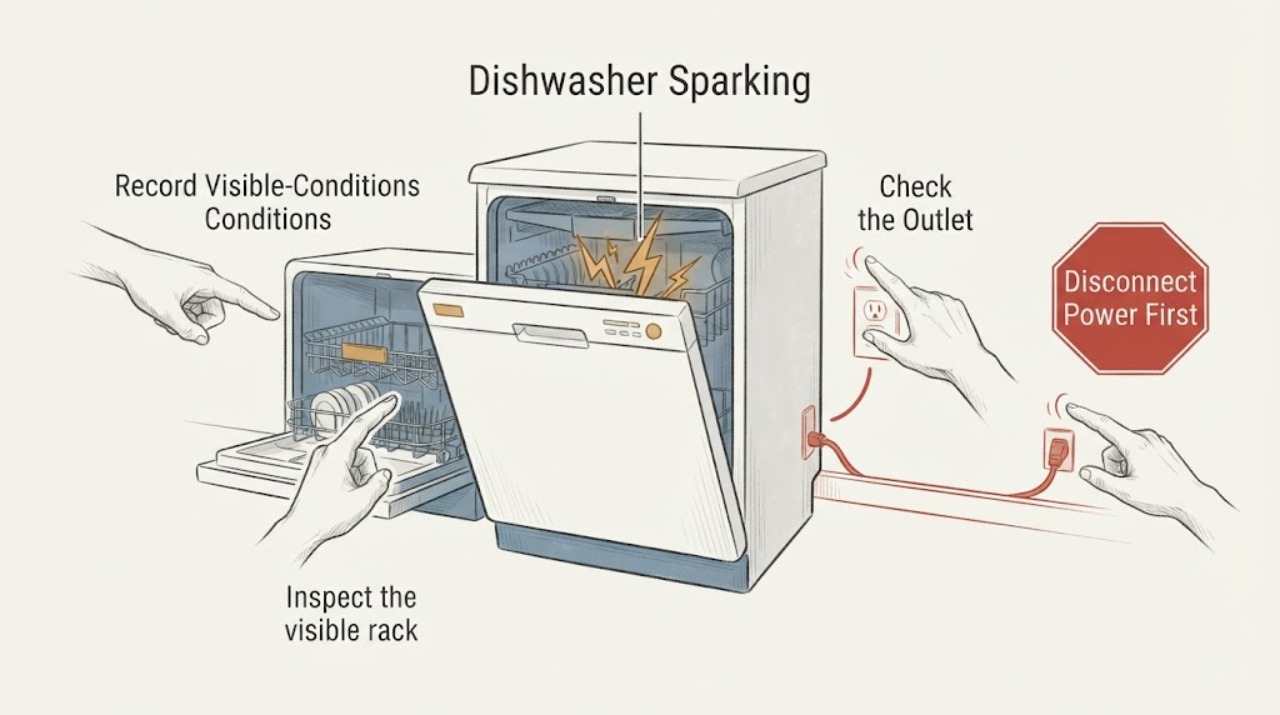
Thermador Dishwasher Sparking
Visible sparking inside or around a Thermador dishwasher is not a normal wash-cycle sound. Stop the cycle, keep the door closed until the appliance is safe to approach, and disconnect power at the breaker only if this can be done without touching a wet or damaged appliance.
-
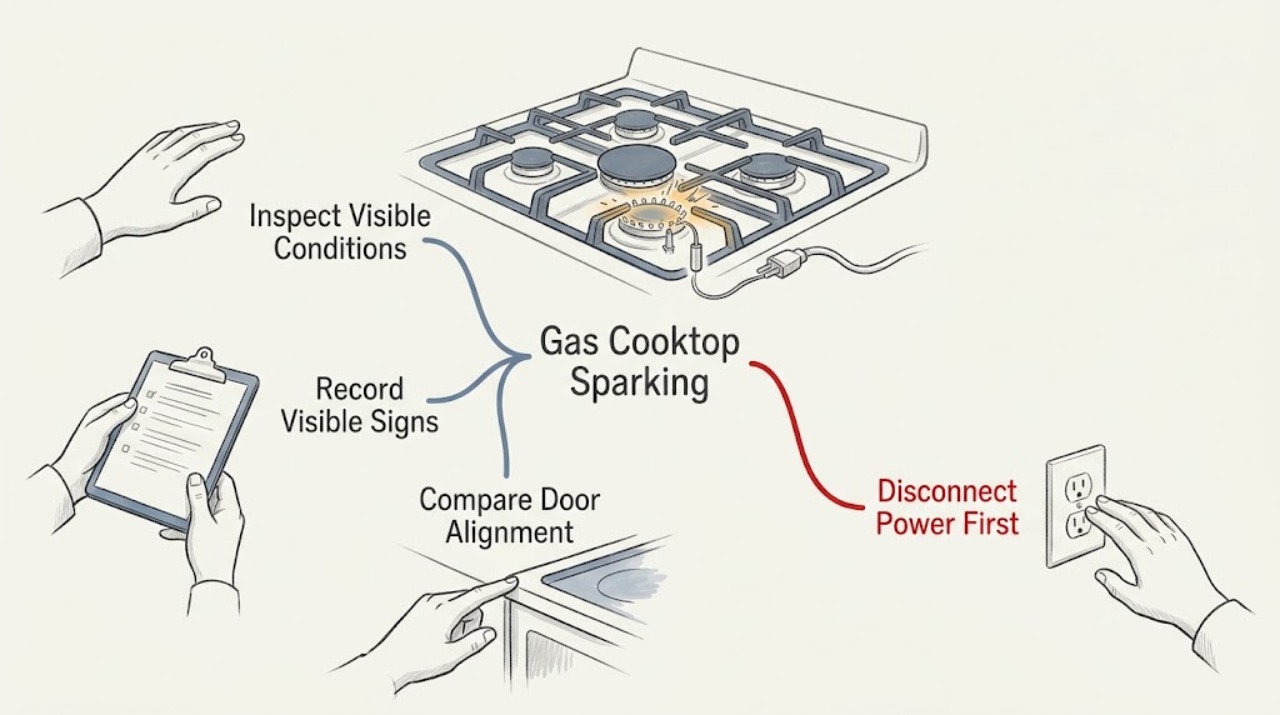
Thermador Gas Cooktop Sparking: Separate Normal Ignition from a Fault
Some sparking is normal while a Thermador gas cooktop is being turned on, and ExtraLow® models may click as the flame cycles. Sparking that continues with every control in OFF, persists after a burner is lit, or is accompanied by gas odor, smoke, arcing, or an abnormal flame is not a normal cooking sound.
-
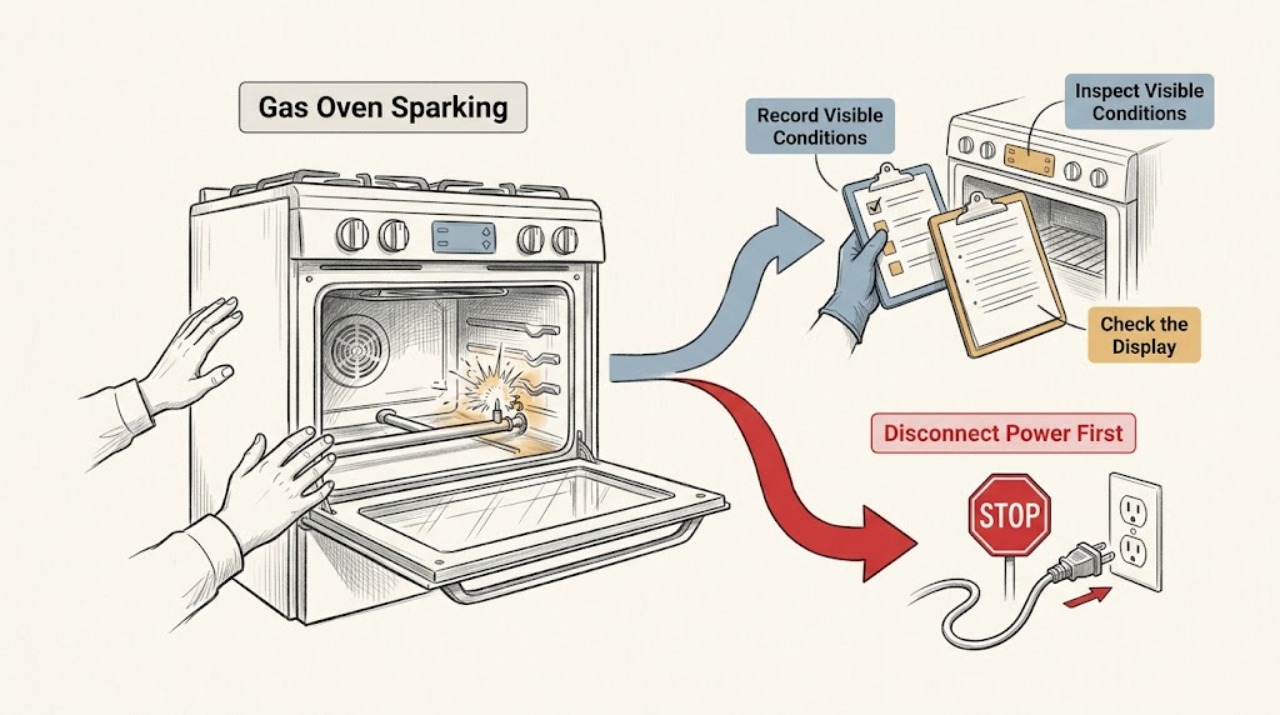
Thermador Gas Oven Sparking: Separate Normal Ignition from an Arc
A brief, controlled click or spark at a surface gas burner while its control is intentionally being turned on can be part of ignition on a Thermador gas range, but that does not make a visible spark in the oven cavity, control area, outlet, cord, or cabinet normal. A spark that continues with controls off, smoke, a gas odor, delayed ignition, an abnormal flame, heat damage, or a repeated breaker trip is a stop-use condition.
-
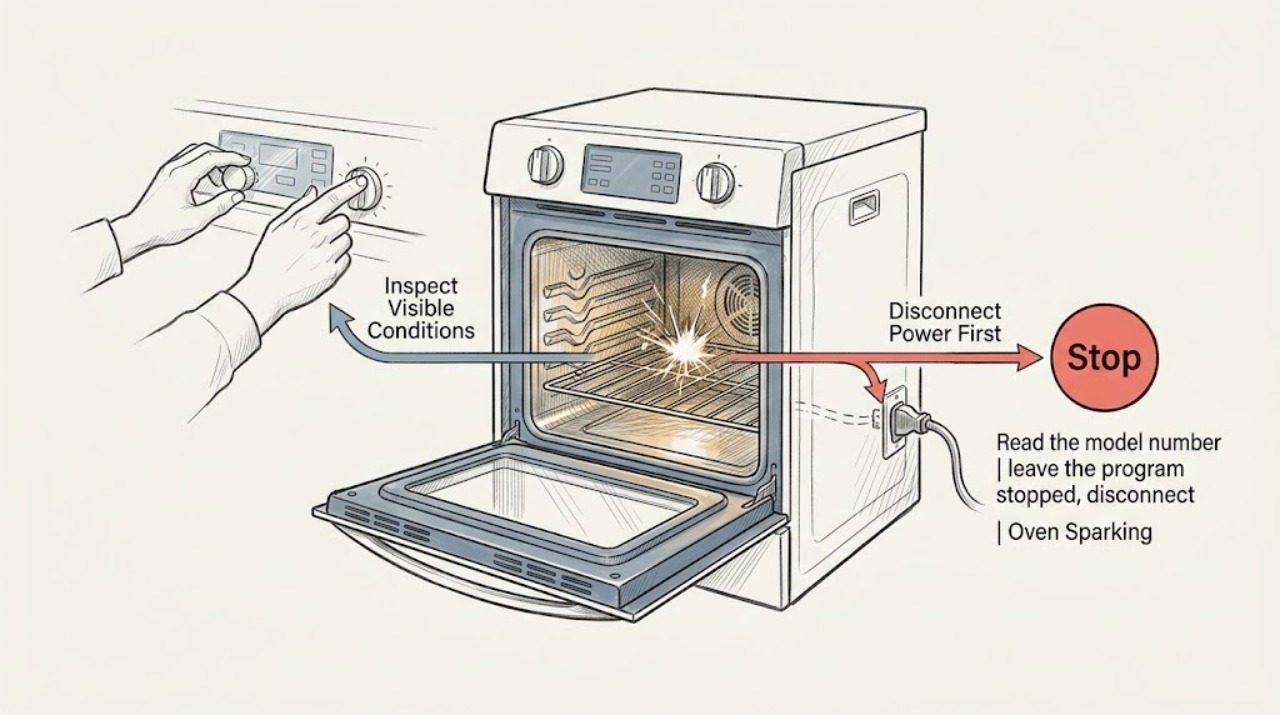
Thermador Oven Sparking: Tell Normal Gas Ignition From an Electrical Arc
Treat a visible spark as a stop signal until you know exactly what produced it. A Thermador gas or dual-fuel appliance may have model-specific ignition behavior, but a spark in the cooking cavity, at the control panel, cord, outlet, or wiring is not a normal user test.
-
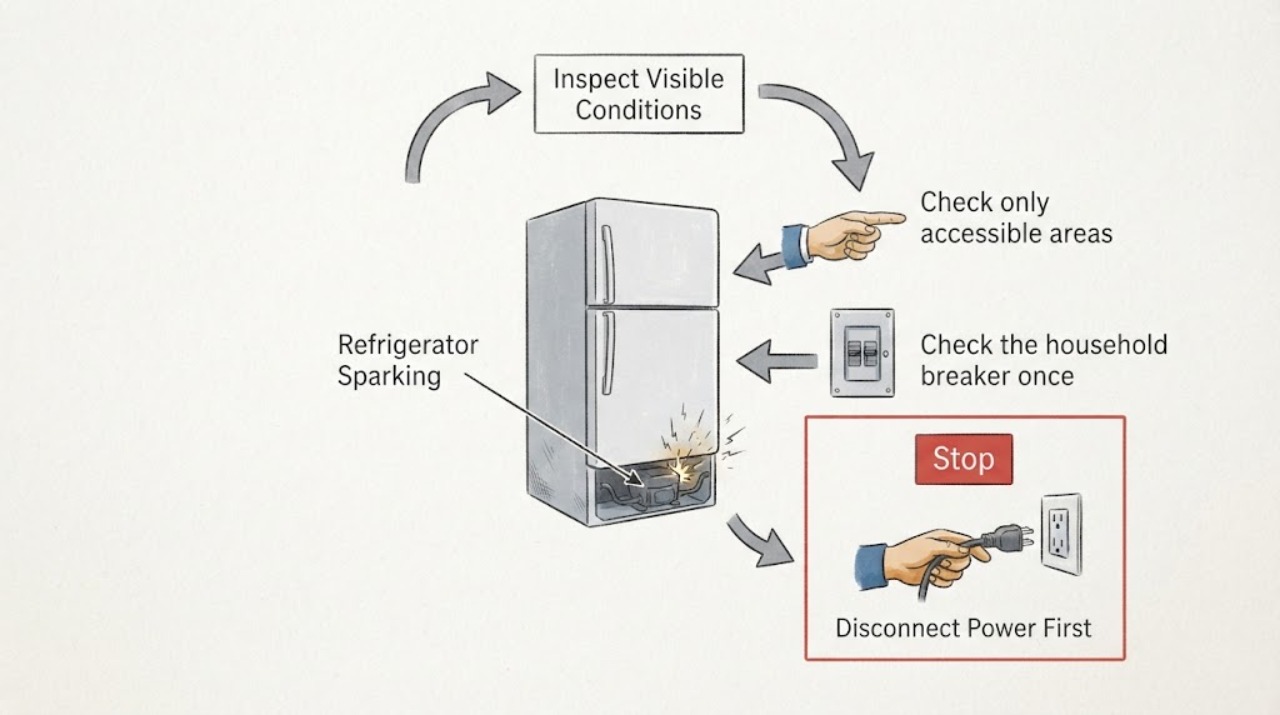
Thermador Refrigerator Sparking
For a Thermador refrigerator that is sparking, stop using it and isolate power only when safe. Do not touch wiring, remove panels, or repeatedly reset a breaker; visible arcing or a burning odor needs urgent qualified service.
-
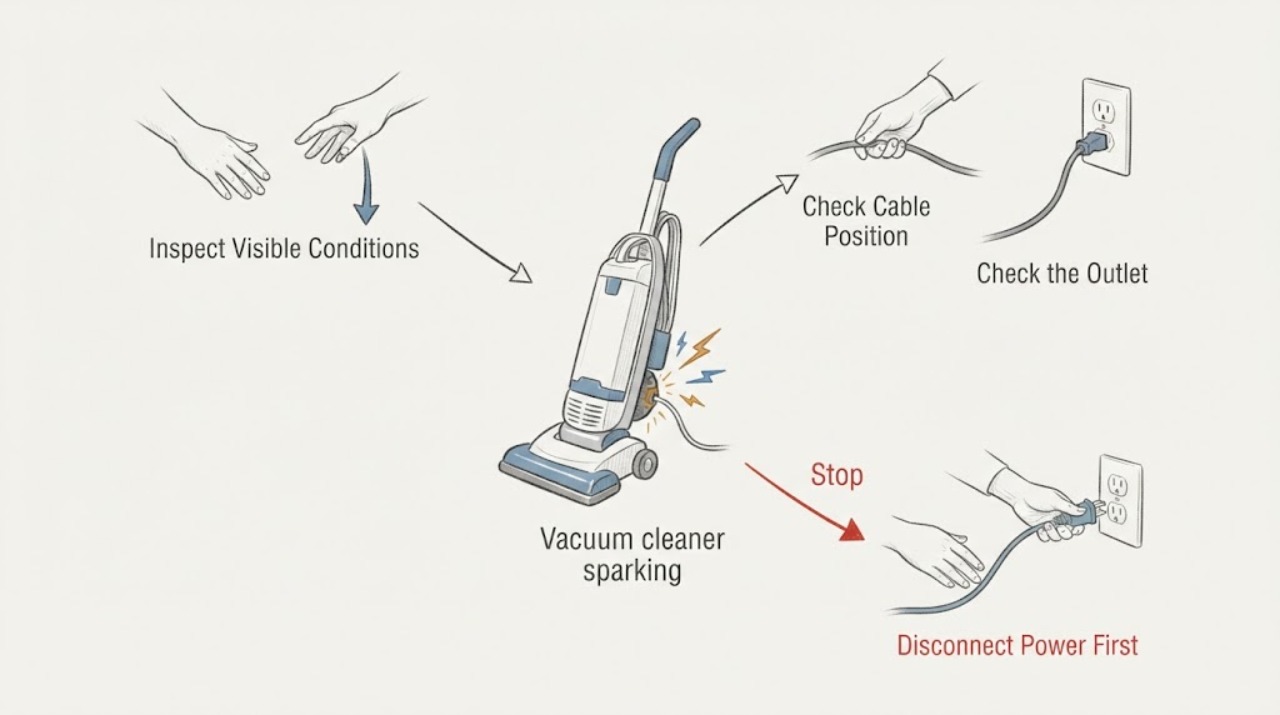
Vacuum cleaner sparking
Sparks from a vacuum cleaner are an immediate stop-use condition. Turn it off, unplug or remove the battery only if safe, and keep it away from combustible material. Do not retry it to locate the source. After it is cool and isolated, record whether sparks came from the plug, cord, motor area, brushroll, or battery and arrange qualified service or manufacturer support.
-
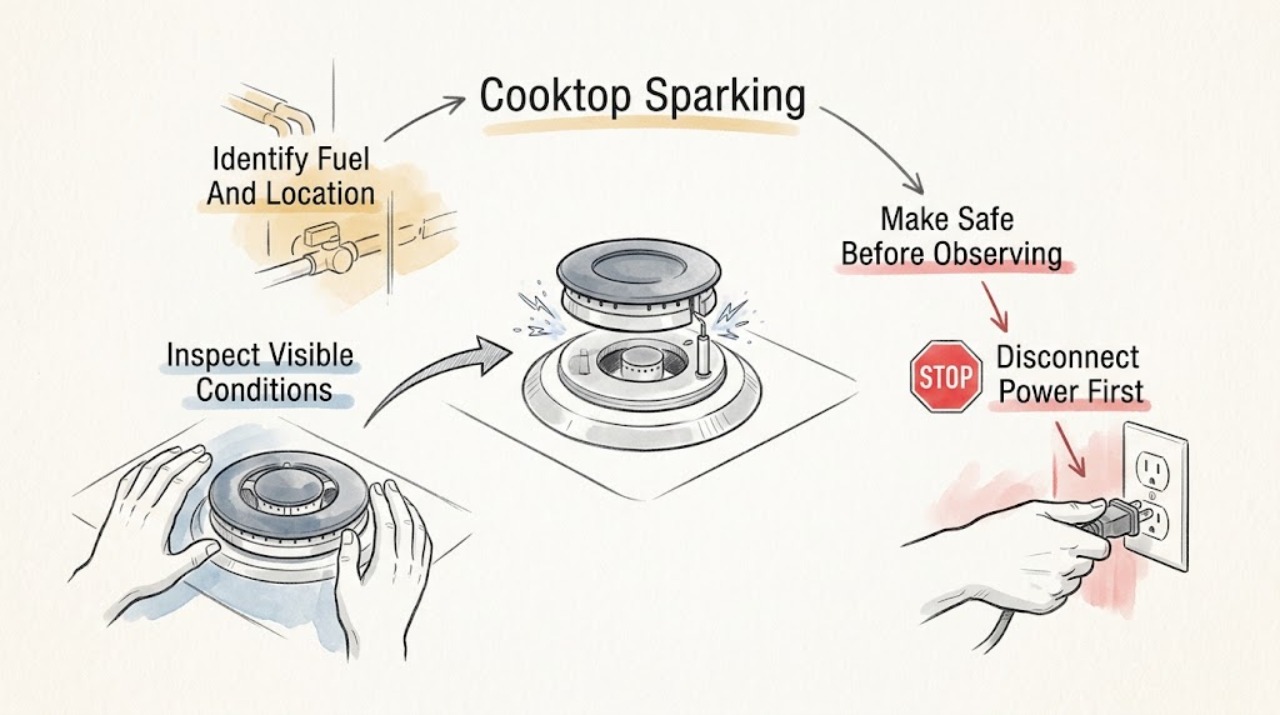
Viking Cooktop Sparking: Separate Normal Ignition Clicks from an Unsafe Fault
On a Viking gas cooktop, a short series of clicks and visible sparks while a burner is being turned on can be normal, and some Viking models automatically re-ignite if a flame goes out. Sparking that continues after a stable flame, appears with the control Off, jumps away from the burner, or occurs with a gas odor, smoke, fire, a cracked surface, or a tripped breaker is not a normal cooking condition.
-
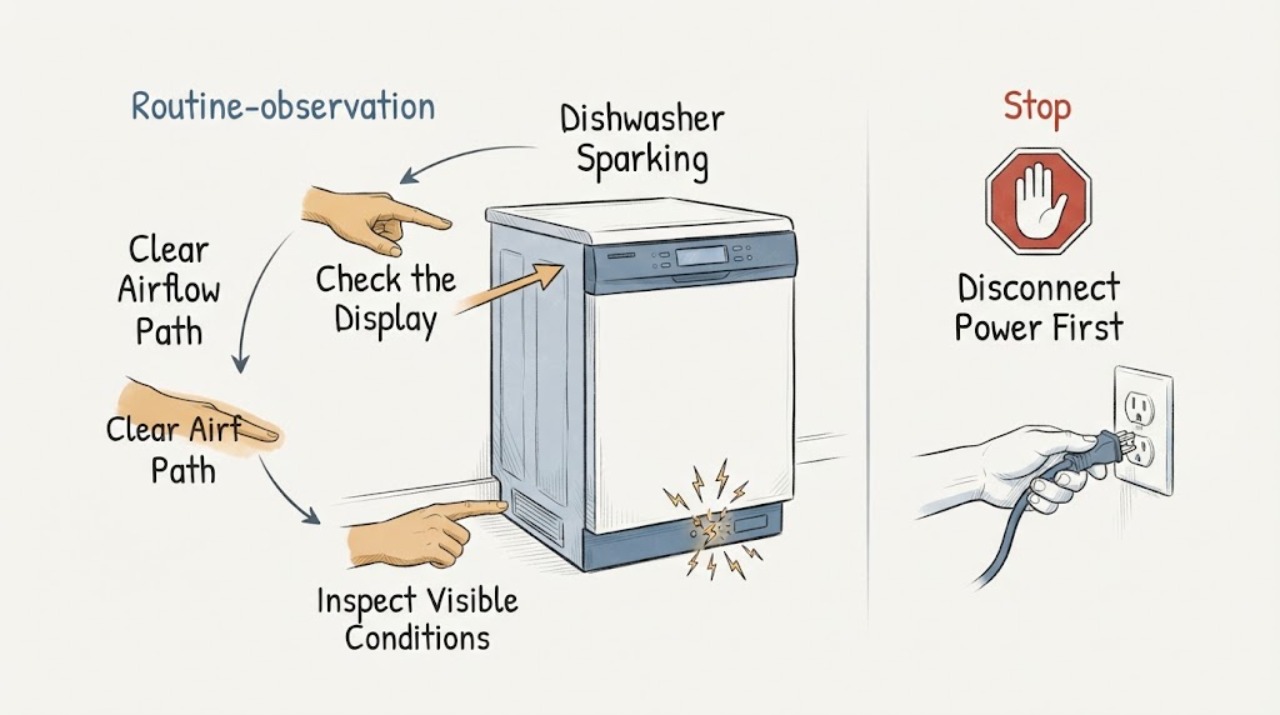
Viking Dishwasher Sparking
For a Viking dishwasher with sparking, start with the external control, closure, setting and user-accessible path checks for this model. Note exactly when the symptom appears and what changes after one safe check. If the appliance shows smoke, sparking, a burning smell, abnormal heat, flooding near electrics, damaged wiring or repeated breaker operation, stop using it and arrange qualified service.
-
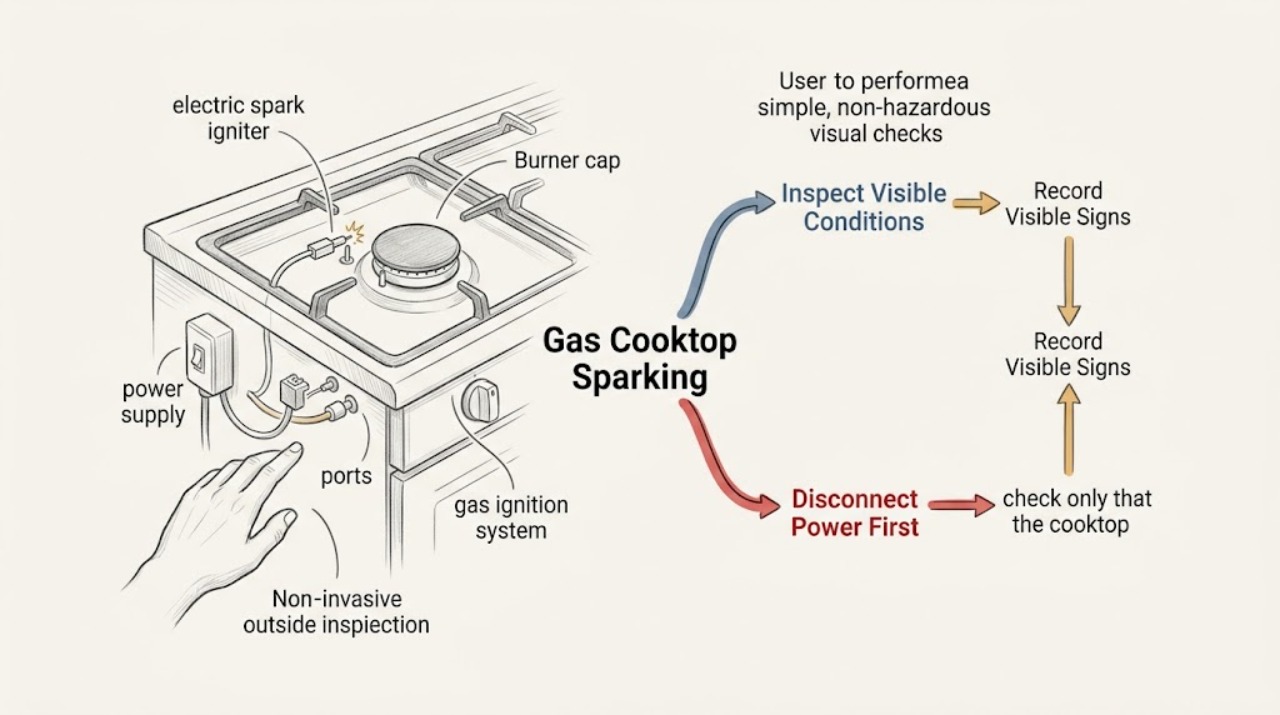
Viking Gas Cooktop Sparking: Normal Ignition or a Fault?
A brief clicking or visible spark while a Viking burner is being turned on is part of its electric spark ignition; the spark should stop once a stable flame is established. If the igniter keeps clicking after the flame is lit, turn the control off and let the cooled burner area dry, then check for a wet or dirty burner cap and an obvious burner-cap alignment problem.
-
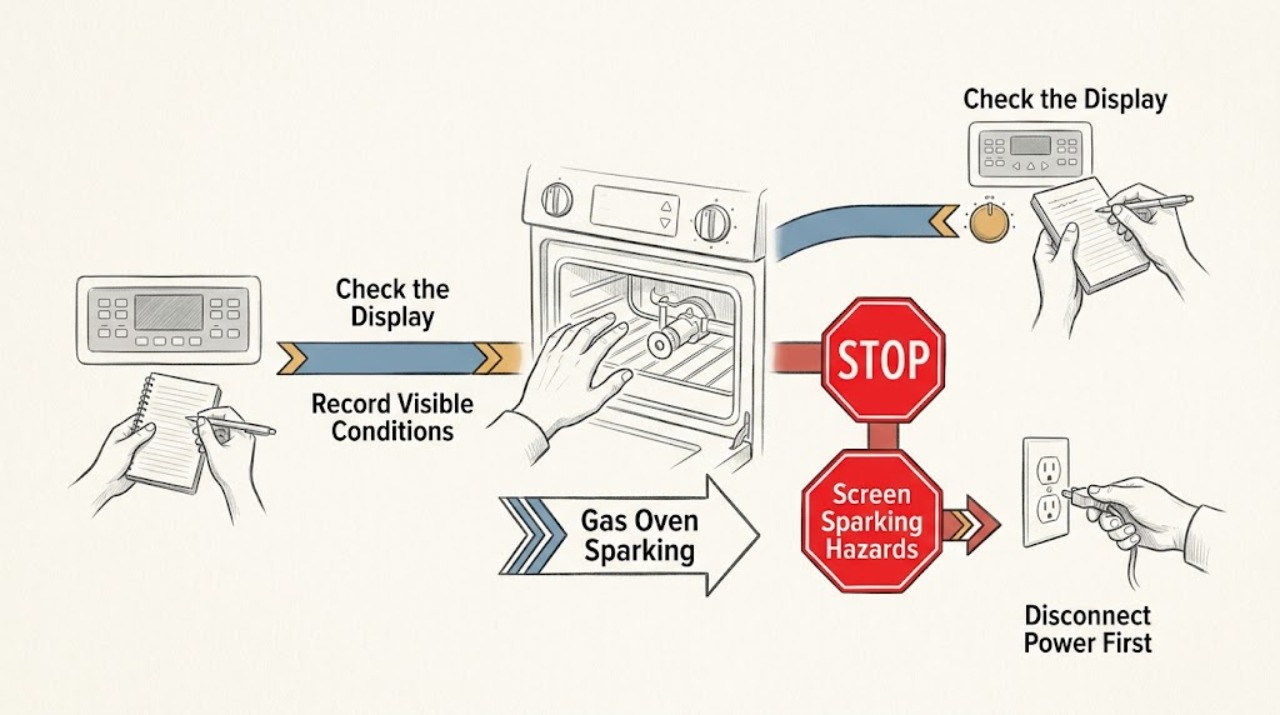
Viking Gas Oven Sparking: Tell Normal Ignition Clicking from an Unsafe Fault
A Viking gas oven may make a brief, model-authorized ignition click or spark while it lights, but visible sparking that continues, occurs away from the intended igniter, is accompanied by no flame, delayed ignition, a boom, an abnormal flame, gas smell, smoke, burning odor, carbon-monoxide alarm, or breaker trip is not a normal cooking sound. Stop the oven and do not repeat the ignition attempt.
-
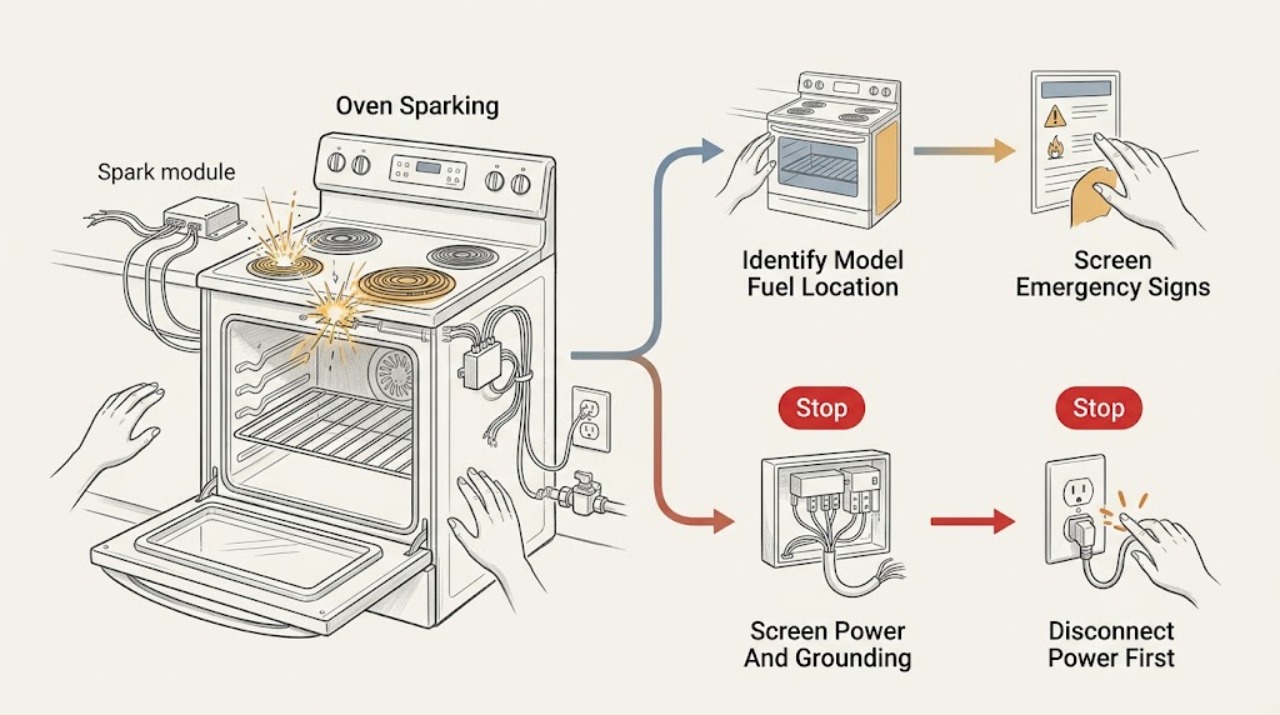
Viking Oven Sparking: Separate Normal Ignition From Dangerous Arcing
A brief click or visible spark can be part of normal burner ignition on some Viking gas or dual-fuel models, but sparking anywhere else or sparking that continues after a flame appears is not a safe user-level test. First identify the exact model, fuel configuration, oven cavity, and location of the spark.
-
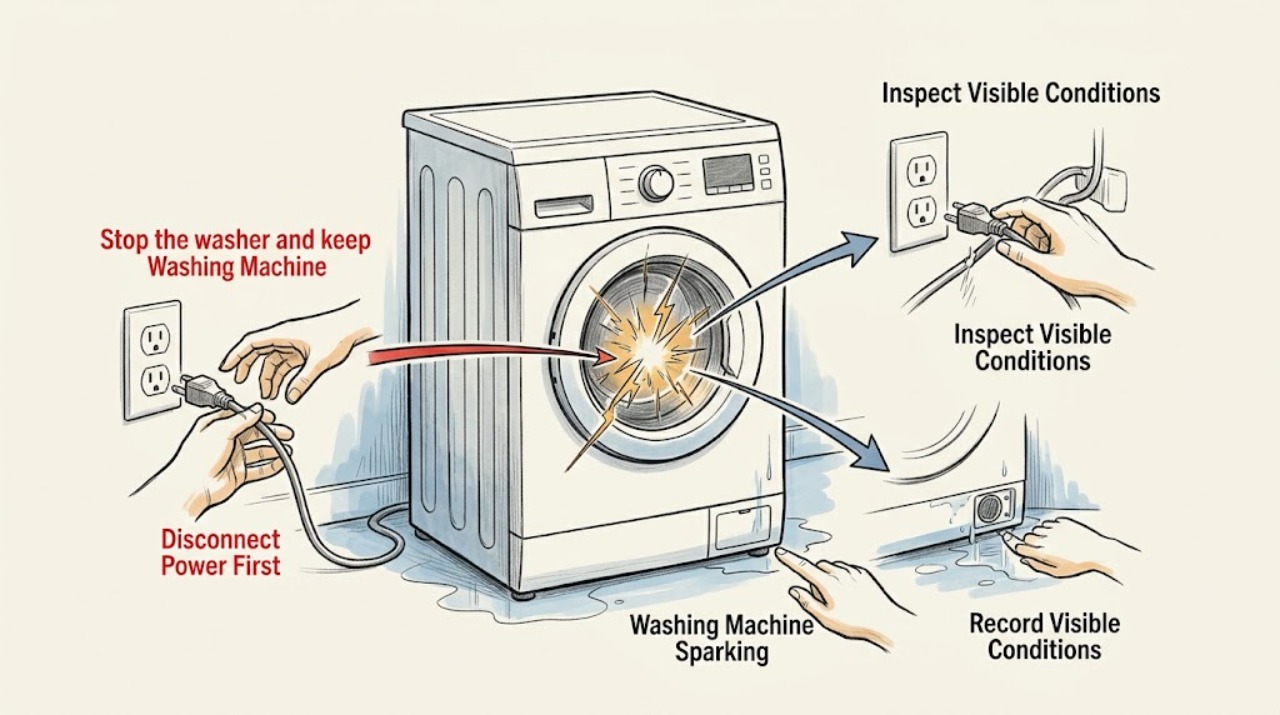
Washing Machine Sparking: Stop Safely and Find the Right Service
Visible sparking from a washing machine, its plug, cord, outlet, controls, or interior is not a normal operating symptom. Stop the cycle and keep people away; use the normal power control only if the area and controls are dry and there is no immediate arc, smoke, heat, flame, shock, or damaged cord.
-
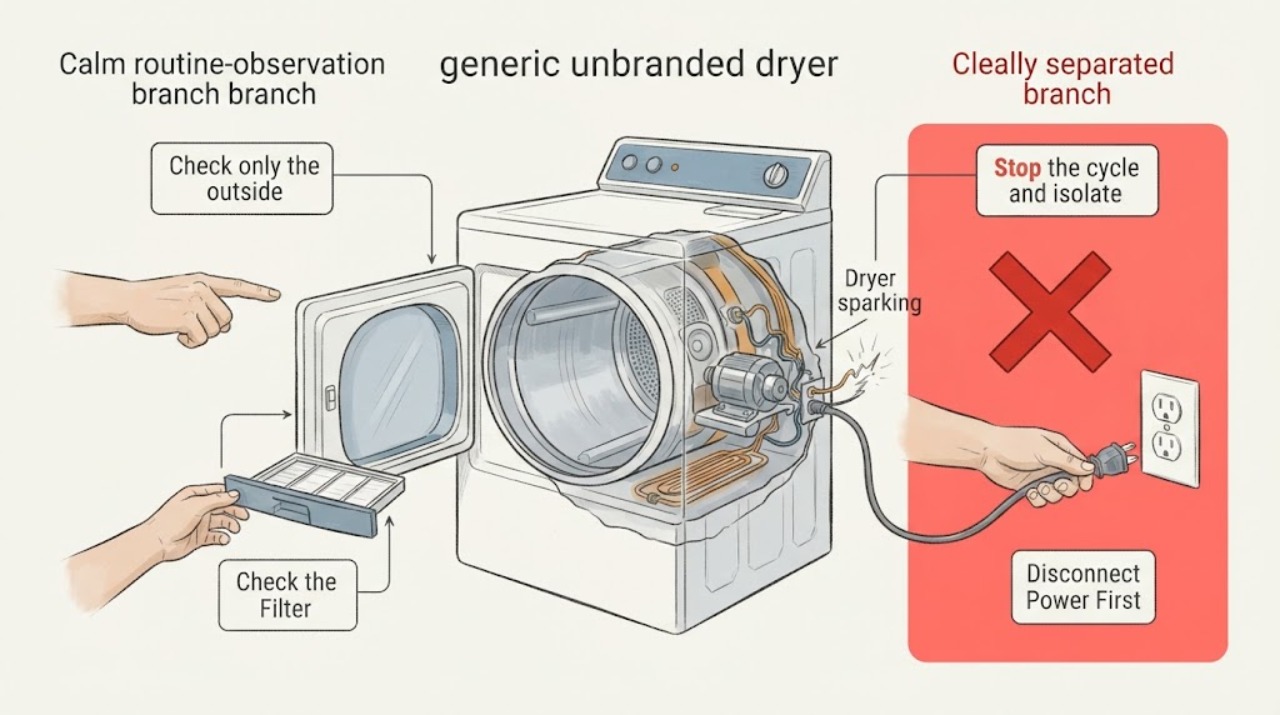
What to Do if Your Hoover Dryer Is Sparking
Visible sparks, flashes, arcing, or a crackling sound from a Hoover dryer are an electrical and fire hazard, not a normal part of drying. Stop the cycle immediately, keep clear of smoke or fire, and disconnect the mains only if the plug and route are safe to reach.
-
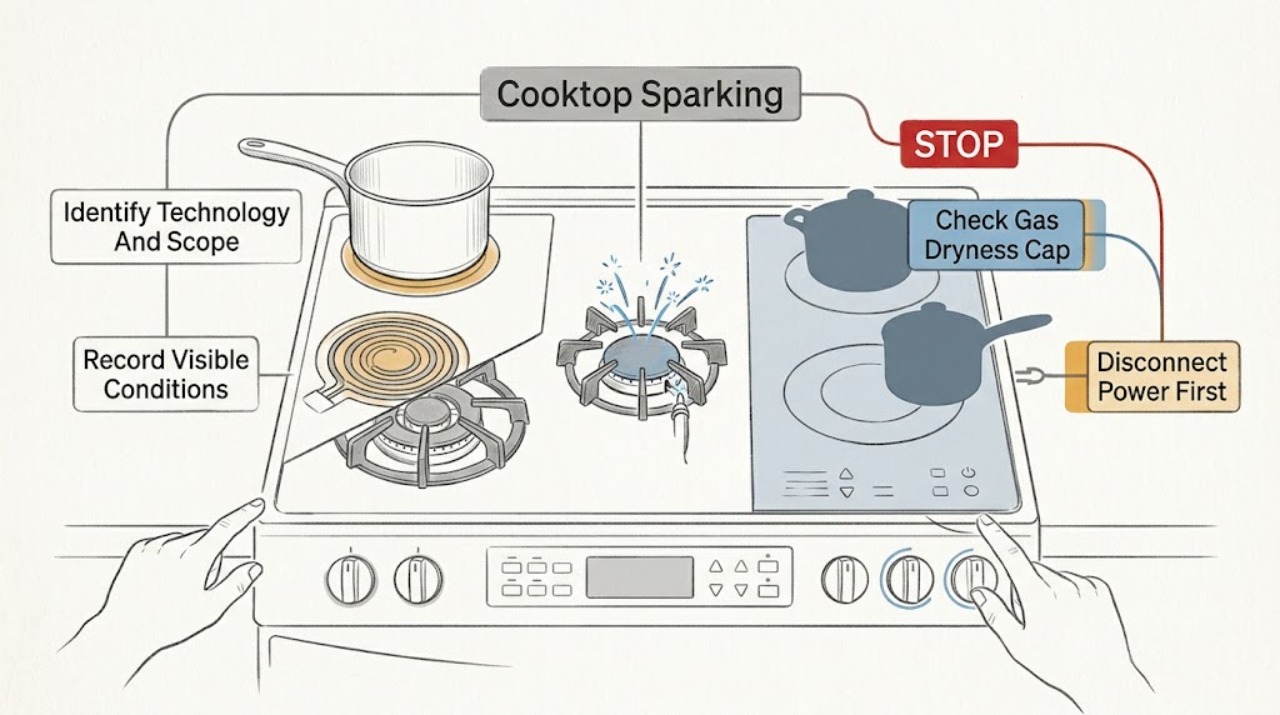
Whirlpool Cooktop Sparking: Separate Normal Gas Ignition from an Electrical Hazard
First identify whether the Whirlpool cooktop is gas, radiant electric, or induction. On a gas model, a spark or click while a knob is being turned to Ignite can be normal, and some models may briefly re-ignite a flame after a spill, draft, or low setting.
-
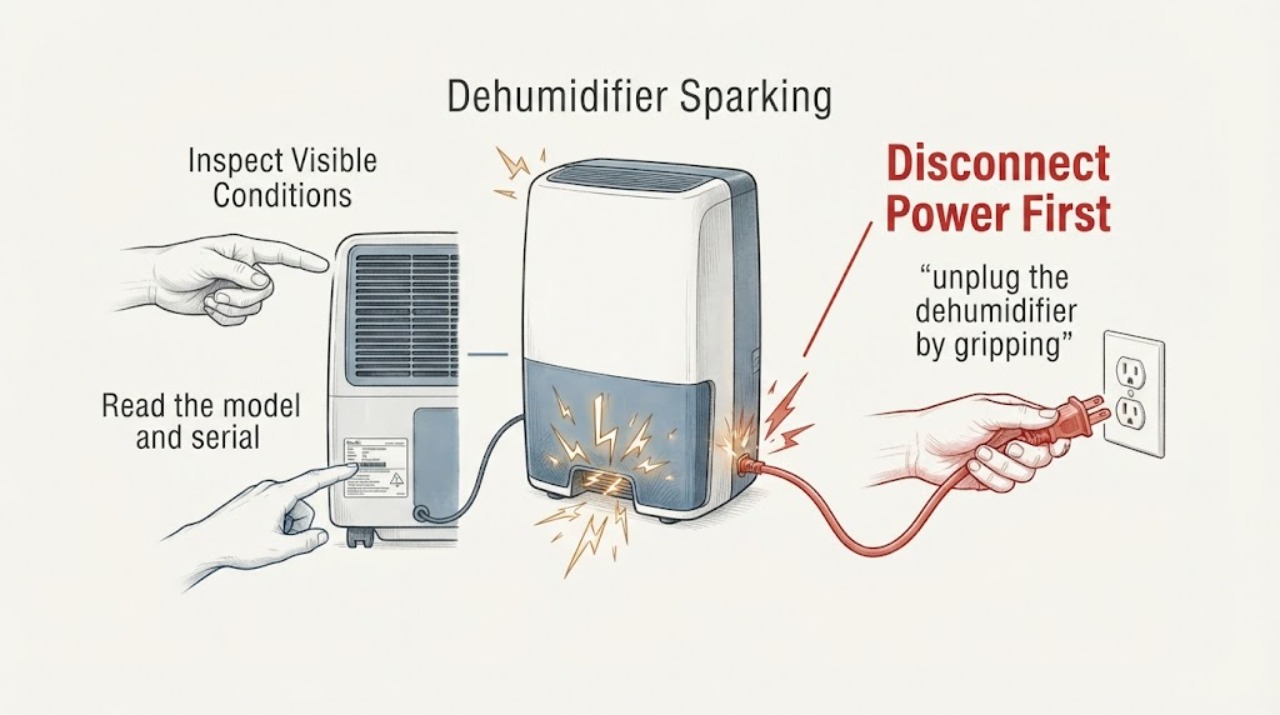
Whirlpool Dehumidifier Sparking: Stop Use and Check Recall Status
Sparking from a Whirlpool dehumidifier is an immediate stop-use symptom. Unplug it only if you can do so without approaching a wet, hot, or arcing connection, keep people away, and do not reset or test it again.
-
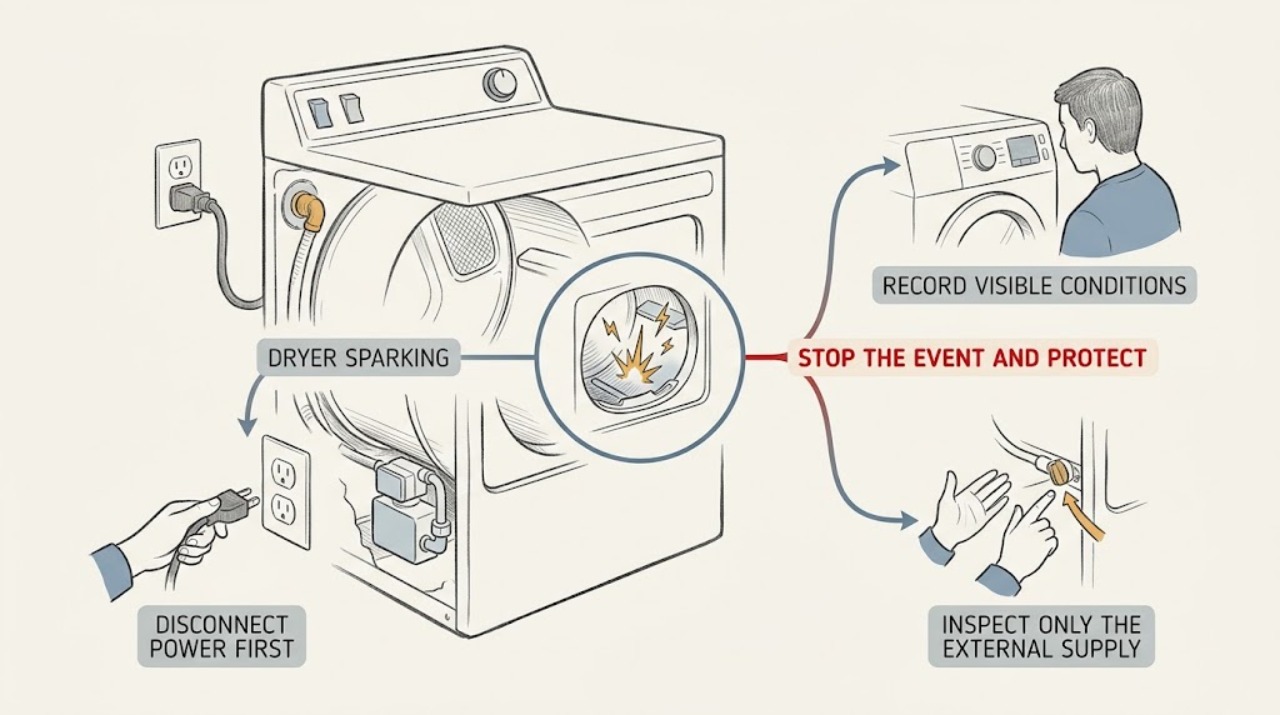
Whirlpool Dryer Sparking: Stop Safely and Find the Right Service Path
Treat any visible spark or arc from a Whirlpool dryer as abnormal. Stop the cycle immediately, keep clear of the drum and damaged connection, and only if it is dry and safe use the normal stop control or an accessible power disconnect; do not run another cycle to reproduce the event.
-
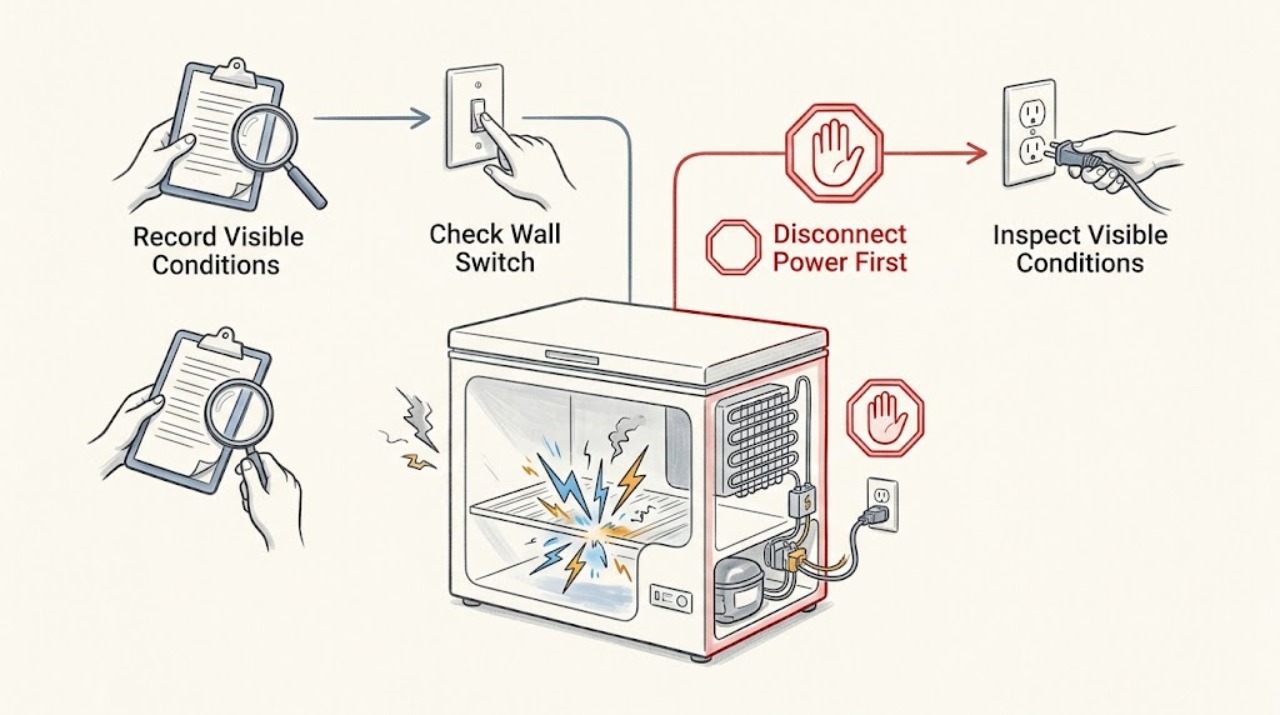
Whirlpool Freezer Sparking: Stop and Distinguish a Defrost Sound
Treat visible sparks, arcing, smoke, a burning smell, or a flash as an electrical safety event: stop using the Whirlpool freezer and disconnect power only from a dry, safe position, or switch off the freezer circuit if the plug cannot be reached safely. Do not open the cabinet or perform any energized inspection.
-
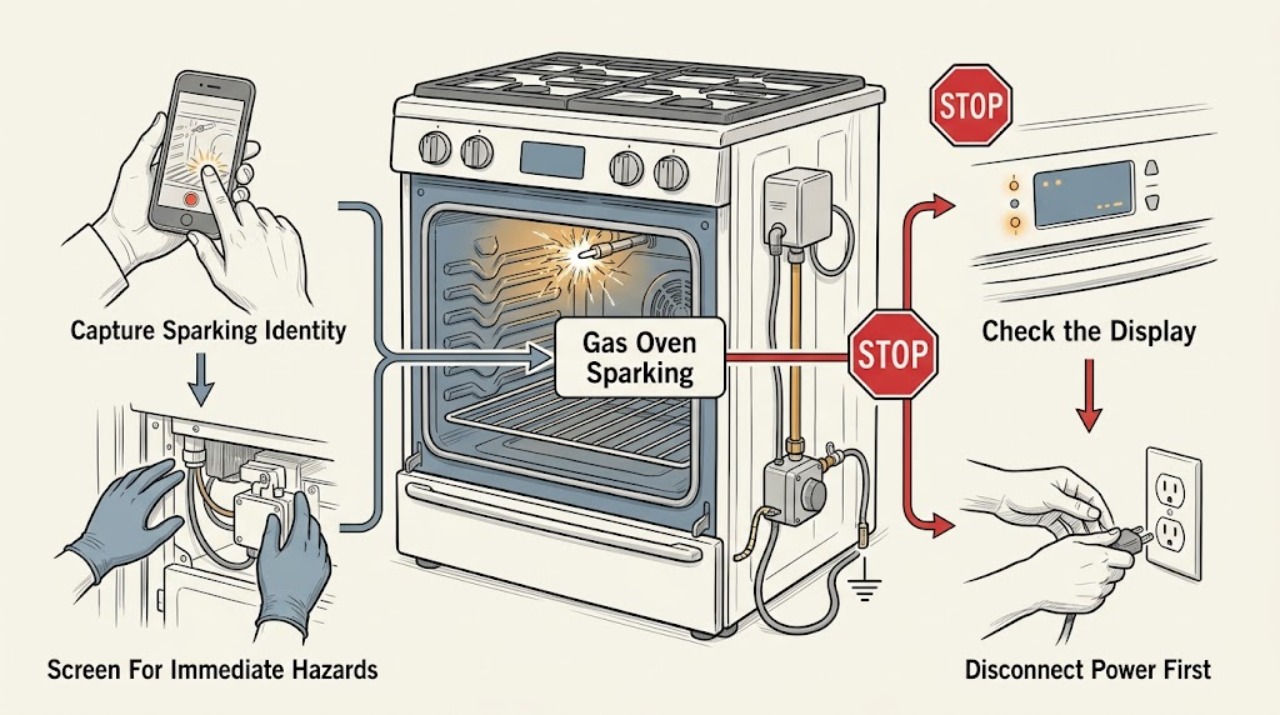
Whirlpool Gas Oven Sparking: Separate Normal Ignition Clicks from a Hazard
A Whirlpool gas oven may make short ignition clicks while its igniter is trying to establish a flame; Whirlpool describes several clicks until flame detection as normal. Visible sparks outside the intended ignition area, sparks that continue after a stable flame, repeated clicking without heat, an abnormal flame, gas odor, a delayed whoosh or boom, smoke, carbon-monoxide alarm, arcing, or a tripping circuit is not a condition to keep testing.
-
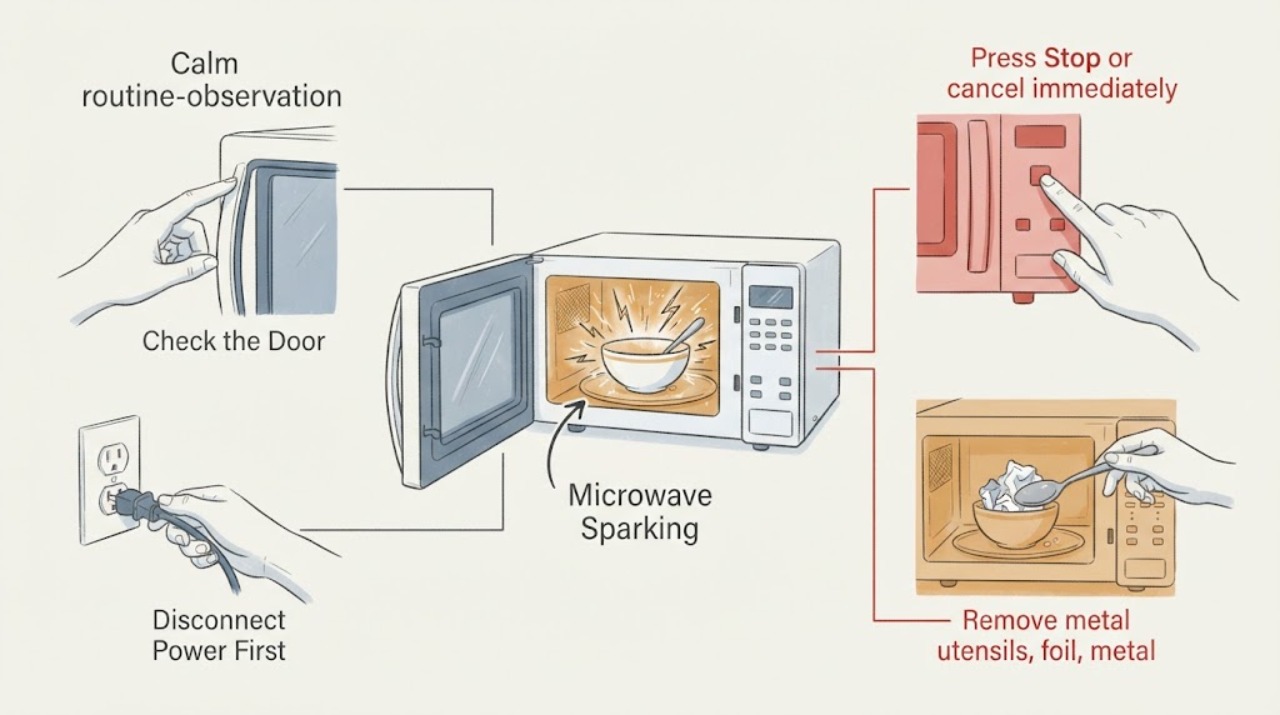
Whirlpool Microwave Sparking
Stop a Whirlpool microwave immediately when arcing or sparking appears. Whirlpool’s official guidance identifies metal or foil contact, a rack or crisper pan touching the cavity, food-related arcing, and soil buildup near the microwave cover or door area; persistent arcing or cavity damage needs service.
-
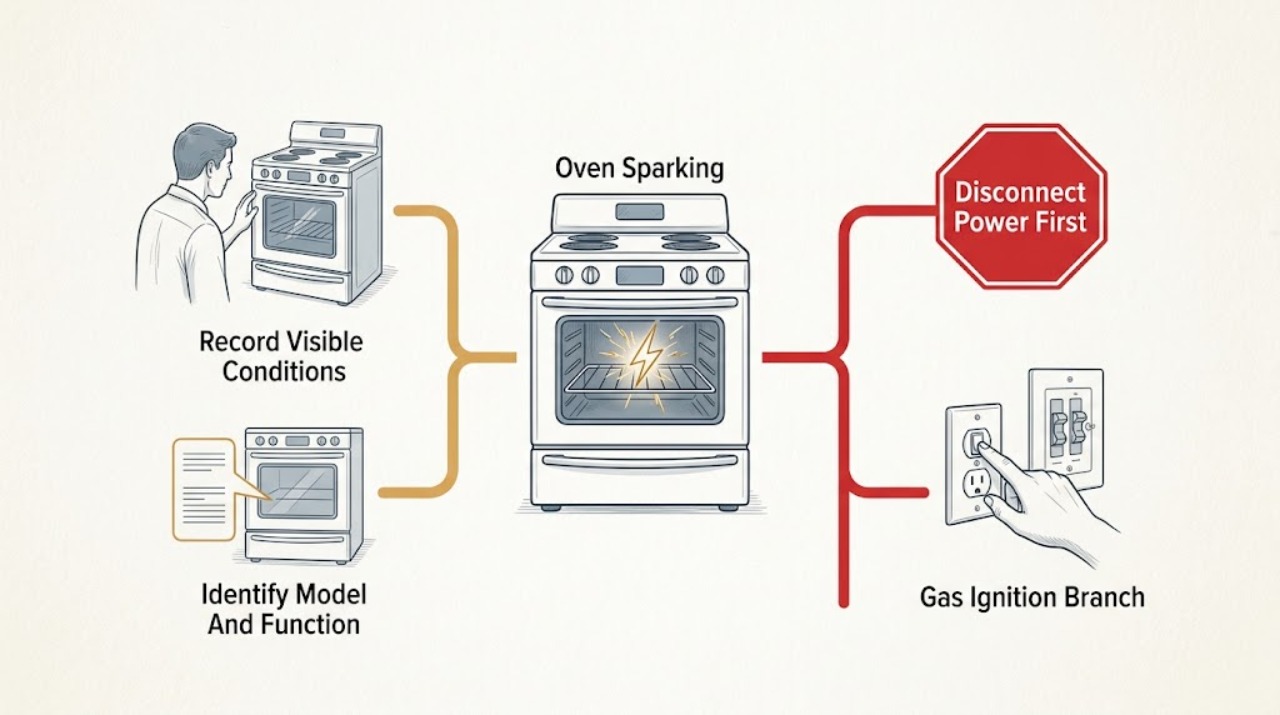
Whirlpool Oven Sparking: Stop First, Then Identify the Safe Branch
Visible arcing or a spark outside the normal gas-ignition sequence is not a keep-testing symptom. Turn the Whirlpool oven off immediately and do not restart it to reproduce the event.
-
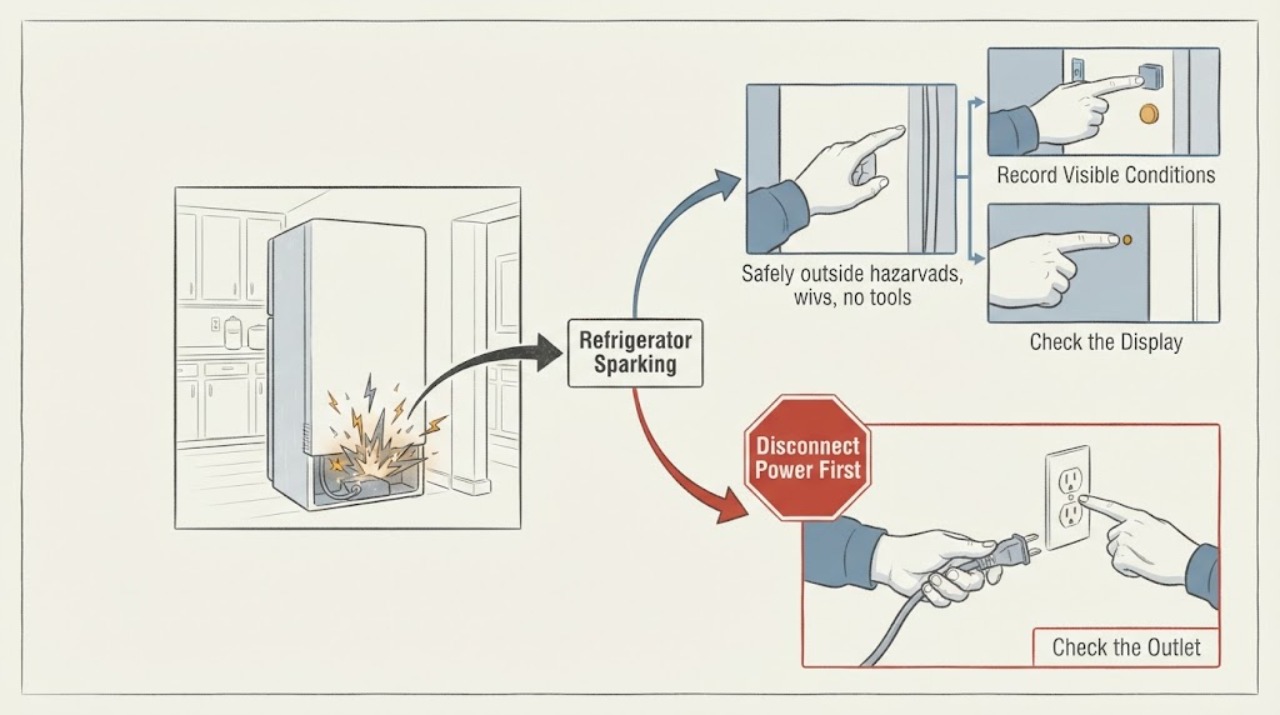
Whirlpool Refrigerator Sparking: Safe Checks Before Service
Stop using a Whirlpool refrigerator that produces visible sparks, arcing, smoke, or a burning smell. If it is safe to reach the plug without touching damaged parts, disconnect it, keep clear of the outlet, and do not repeatedly reset power. Check only the accessible cord, plug, outlet, and visible interior area; internal voltage testing and panel removal require an authorized technician.
-
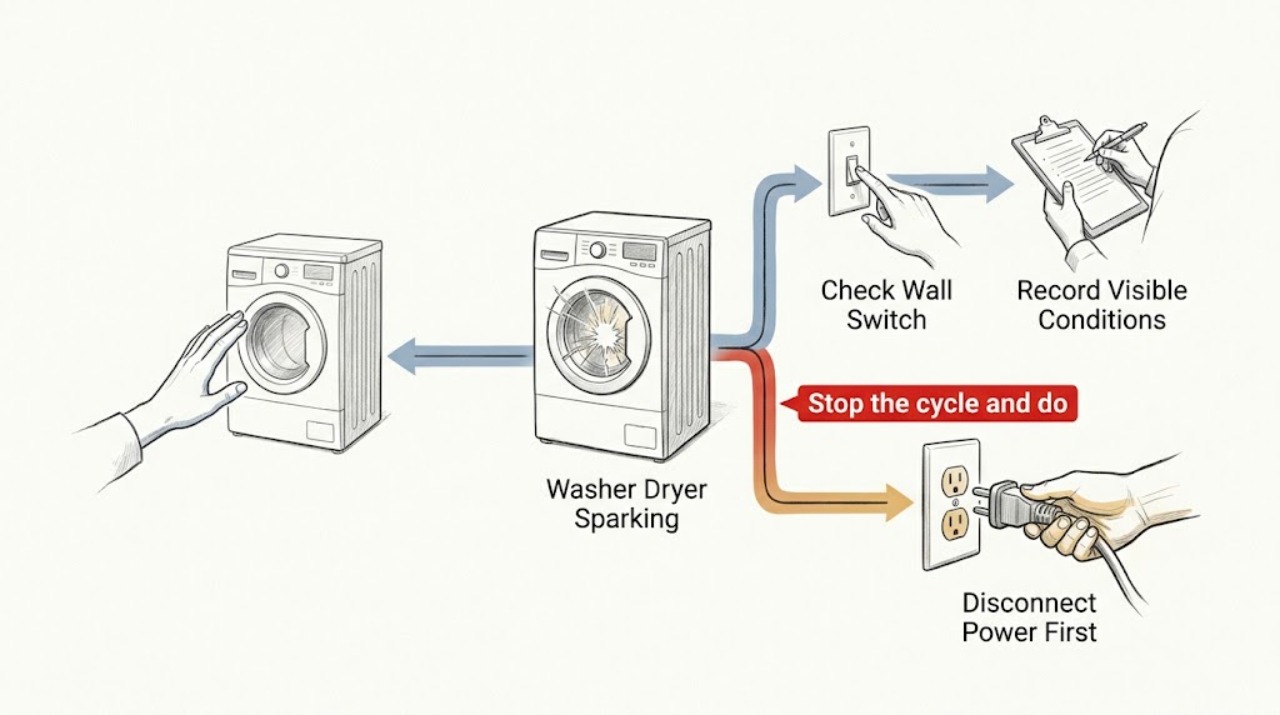
Whirlpool Washer Dryer Sparking: Stop Safely and Find the Source
Treat visible sparks, an arc, smoke, a burning smell, or a tripped breaker on a Whirlpool washer-dryer as an electrical and fire hazard. Do not run another cycle, repeatedly reset the breaker, or open the cabinet.
-
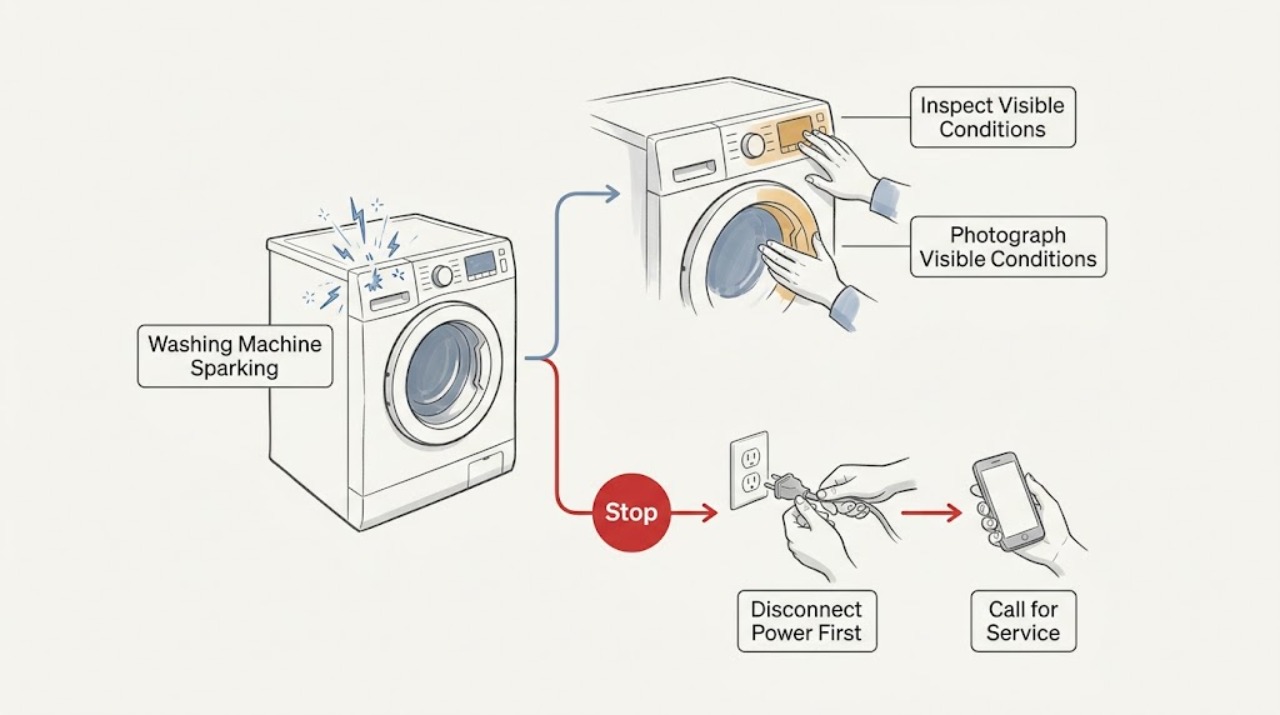
Whirlpool Washing Machine Sparking: Stop, Isolate, and Find the Safe Next Step
Any visible spark or arc from a Whirlpool washing machine, its plug, outlet, cord, control area, or wet cabinet is abnormal. Stop the cycle and keep people away; do not run another load, reset a breaker repeatedly, use an extension cord, or open the washer.
-
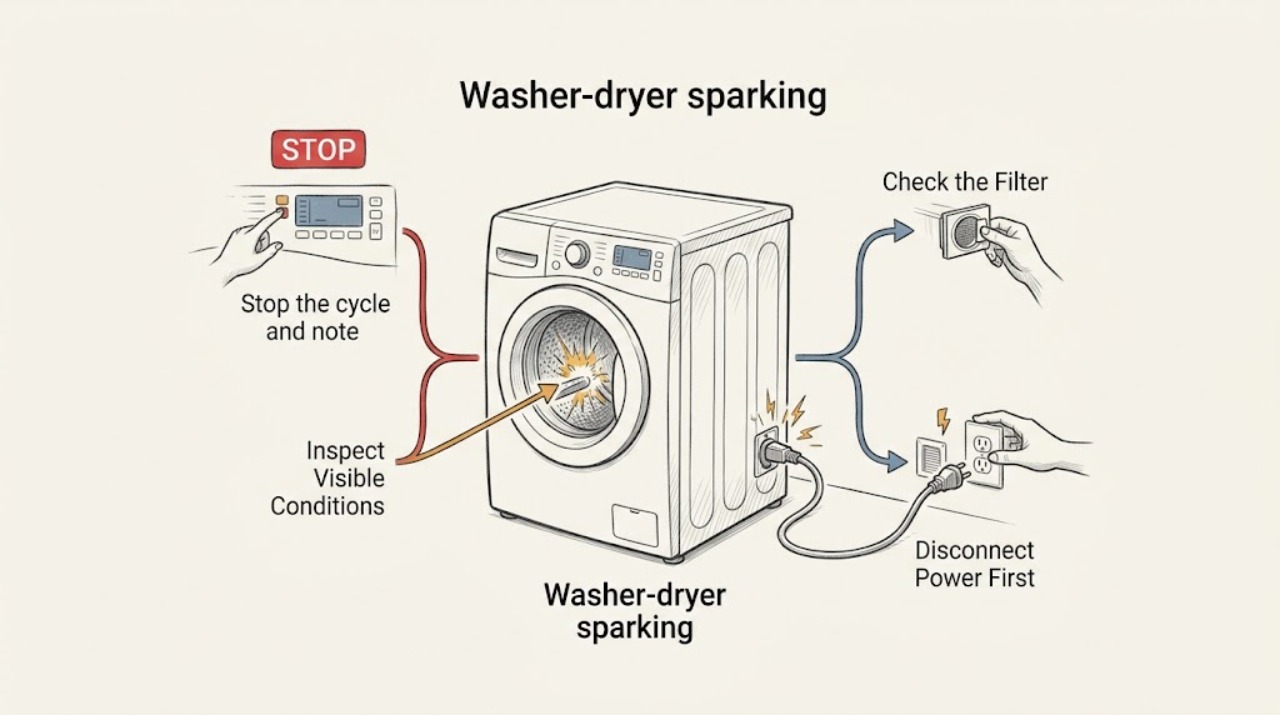
Why an LG Washer Dryer Is Sparking
Stop the LG washer dryer as soon as you see a spark or arc. Do not keep restarting it to see whether the spark returns.
-
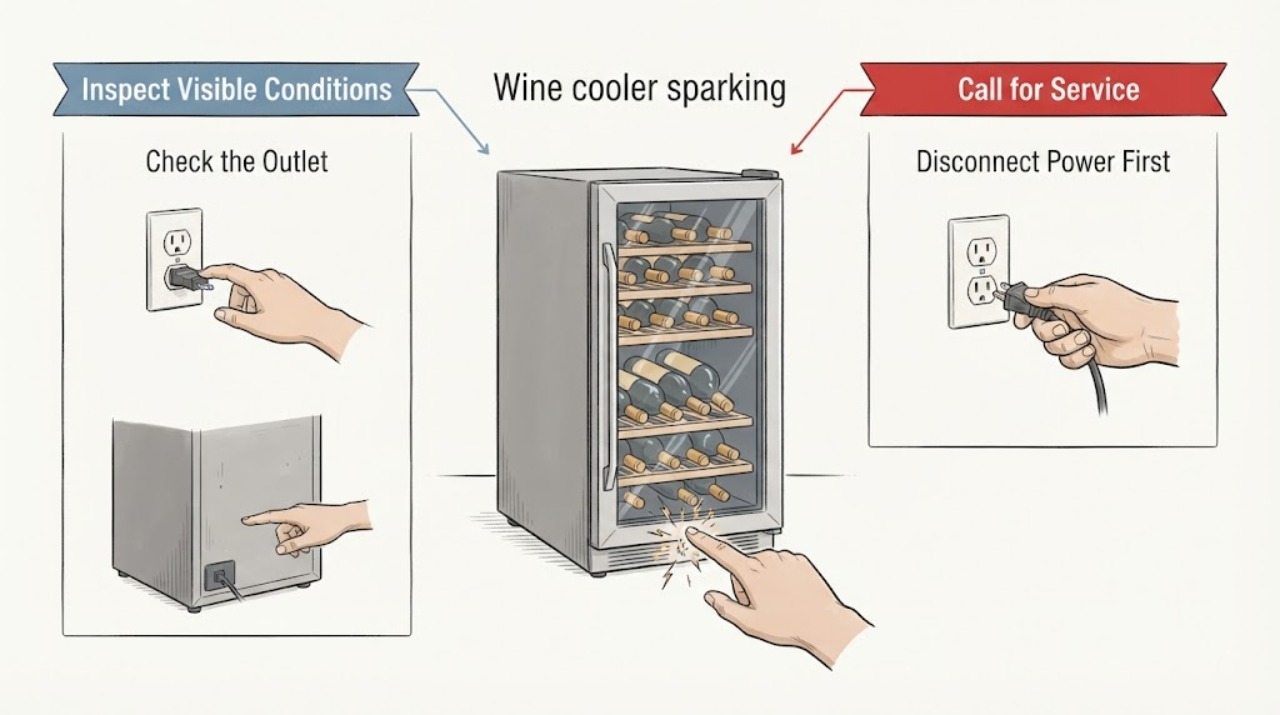
Wine cooler sparking
Sparks from a wine cooler are an immediate stop-use condition. Unplug it or isolate the circuit only if safe, keep the cabinet dry and away from combustibles, and do not retry it to locate the fault. After cooling, record whether the spark came from the plug, cord, control, interior light, compressor area, or an external outlet and arrange qualified appliance/electrical service.
-
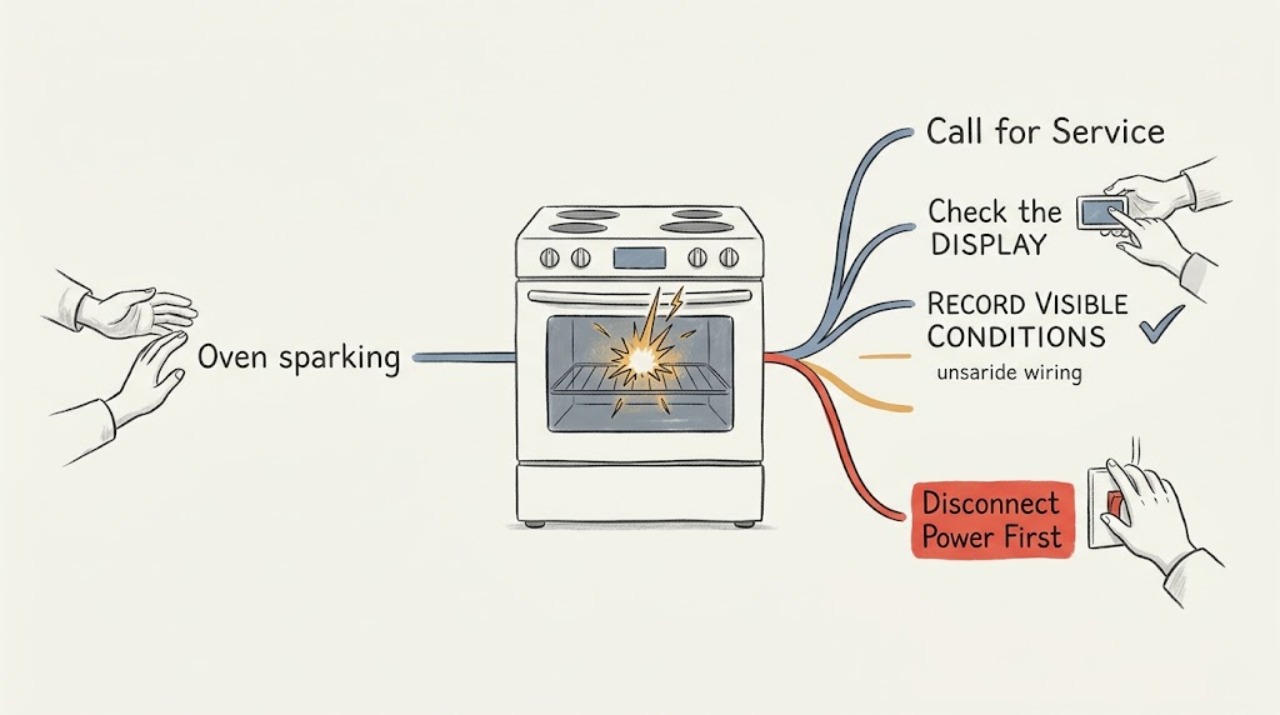
Wolf oven sparking: stop use and identify the safe service path
Treat a visible spark or arc from a Wolf oven as abnormal unless you can clearly establish, from a safe position, that it was the normal spark from a separate gas surface burner during its brief ignition. Wolf says sparks visible inside the oven or outside the unit require immediate discontinuation of use and shutdown at the circuit breaker, followed by Factory Certified Service.
-
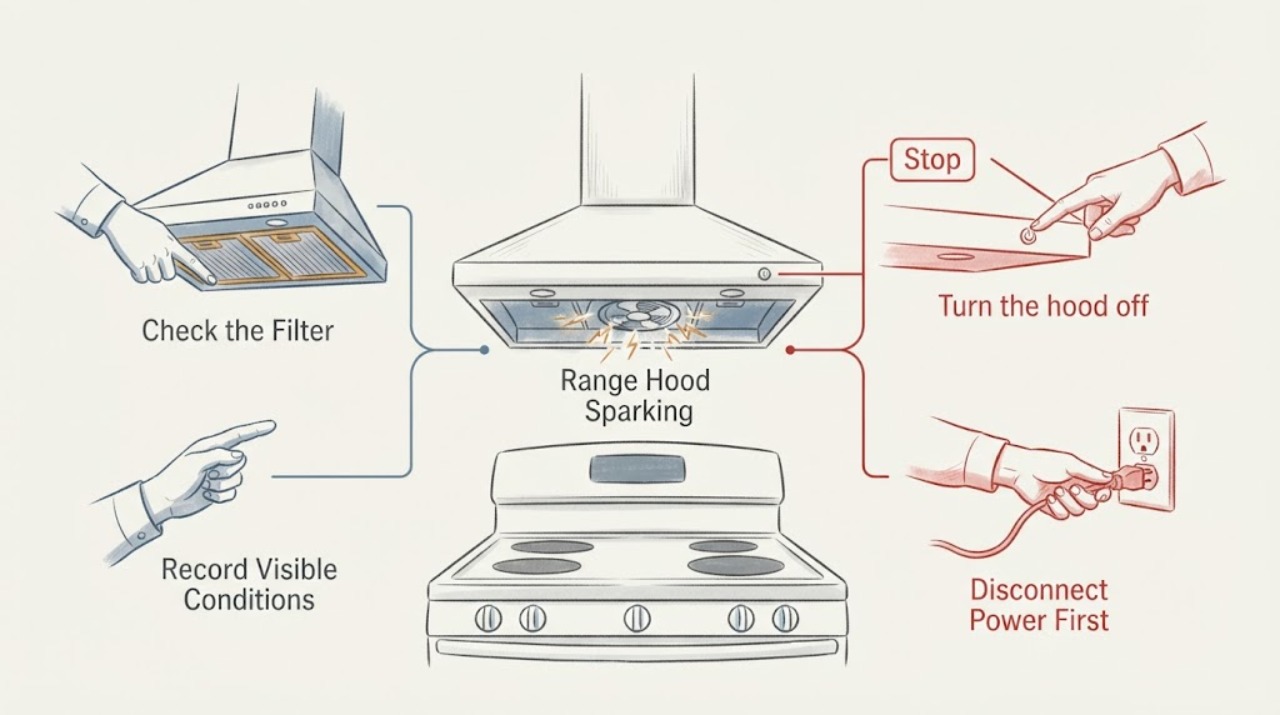
Wolf Range Hood Sparking
Visible sparking from a Wolf range hood is an electrical or fire safety symptom. Turn the hood off, disconnect power at the service panel only when safe, and stop cooking beneath it until the cause is inspected. Do not remove the blower or control cover; grease buildup, a wet motor, damaged wiring, or a failed component requires qualified Wolf service.