
On this page
Start here
Quick answer
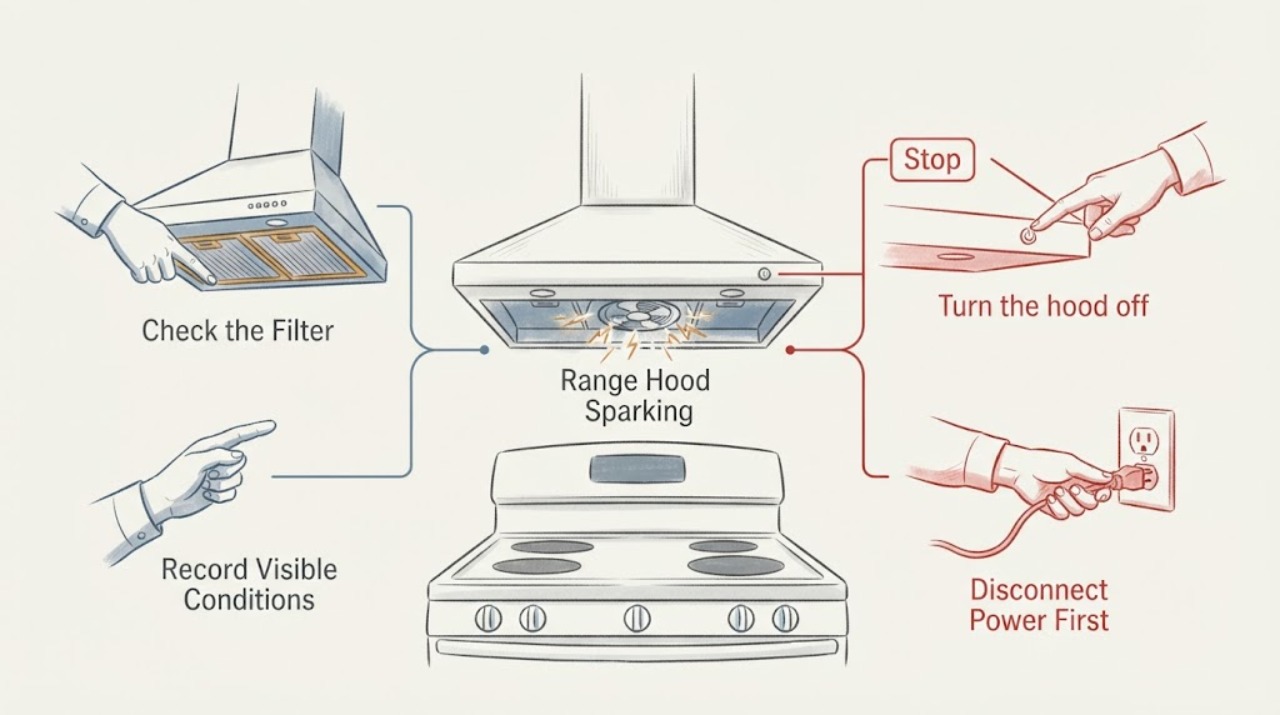
Visible sparking from a Wolf range hood is an electrical or fire safety symptom. Turn the hood off, disconnect power at the service panel only when safe, and stop cooking beneath it until the cause is inspected. Do not remove the blower or control cover; grease buildup, a wet motor, damaged wiring, or a failed component requires qualified Wolf service.
Work through in order
Diagnostic checks
Use only checks that match the exact appliance or system and its official guide.
-
Check 1
Turn the hood off and stop cooking; if smoke or flame is present, leave the area and call emergency services, and if safe isolate the hood circuit at the panel.
Expected result: Sparking repeats, smoke/odor is present, a breaker trips, or the event was a single flash with no other symptom.
Next step: Keep the hood off and arrange qualified service before use. Do not restore power merely to reproduce the spark.
Why this matters
Why: Repeated arcing or smoke indicates an electrical/fire hazard; a single flash is not proven harmless.
-
Check 2
After power is isolated and the hood is cool, inspect only the visible grease filters, lamp lens, and exterior for heavy grease, moisture, or damage; do not remove wiring, blower covers, or controls.
Expected result: Filters are grease-loaded, the lamp area is wet/damaged, or visible surfaces are clean and dry.
Next step: Clean only user-removable filters as the guide directs. Treat any damaged lamp area or recurring spark as a service issue.
Why this matters
Why: Grease or moisture can contribute to arcing risk, while a clean exterior leaves an internal fault possible.
-
Check 3
Record the model and whether the blower, light, or controls were operating when the spark occurred; compare only with the exact use-and-care guide.
Expected result: The spark is tied to one function or the location remains uncertain.
Next step: Provide the record to Wolf service and leave the hood disconnected until inspected.
Why this matters
Why: Function and location help service distinguish light, motor, control, and wiring paths without unsafe testing.
Use your observations
Decision map
Find the observation that best matches what you see, then follow the next safe action.
-
PATH 01Next step
What you see
Smoke, burning odor, repeated spark, grease flame, or breaker trip occurs.
Do this next
Keep power isolated and obtain qualified service; call emergency services for active fire.
Why this path and its safety boundary
Why it matters: An electrical/fire hazard is present.
-
PATH 02Next step
What you see
Only heavy grease is visible on removable filters and no electrical damage is present.
Do this next
Clean filters as documented and do not use the hood until a recurring spark is ruled out.
Why this path and its safety boundary
Why it matters: Grease contamination may contribute, but the spark still needs evaluation.
-
PATH 03Next step
What you see
The spark comes from controls, blower, wiring, or a damaged lamp area.
Do this next
Do not open the hood; arrange Wolf qualified service.
Why this path and its safety boundary
Why it matters: An internal electrical fault is more likely.
Helpful context
Understand the symptom
Record whether the spark came from the light, controls, blower, filter area, or an external outlet, and whether there was smoke, odor, grease flame, or breaker operation.
Wolf ventilation guidance emphasizes frequent grease-filter cleaning and qualified service for repairs. It does not authorize opening a live hood to locate an arc.
When checks do not resolve it
Need a professional?
Arrange Wolf qualified service for any visible spark, smoke, odor, breaker trip, wet/damaged lamp area, or spark from controls, blower, or wiring.
Common questions
FAQ
Can I keep the fan running after a spark?
No. Leave the hood off and isolate power when safe until qualified service determines the cause.
Read the exact guide
Official sources
- Safety PrecautionsSub-Zero, Wolf, and Cove · Wolf ventilation-hood electrical and grease safety
- Use & Care GuideSub-Zero, Wolf, and Cove · Wolf range-hood safety, grease filters, electrical precautions, and qualified service
Community feedback
Share a repair observation
Share a plain-text repair observation. Accepted observations are published automatically; this page may take a moment to update.