
On this page
Start here
Quick answer
A Wolf range hood making noise should be separated into airflow, damper, duct, and blower symptoms. Check visible duct routing, cap blockage, filters, and remote-blower connections against Wolf guidance. Persistent abnormal blower noise needs Wolf service or HVAC review.
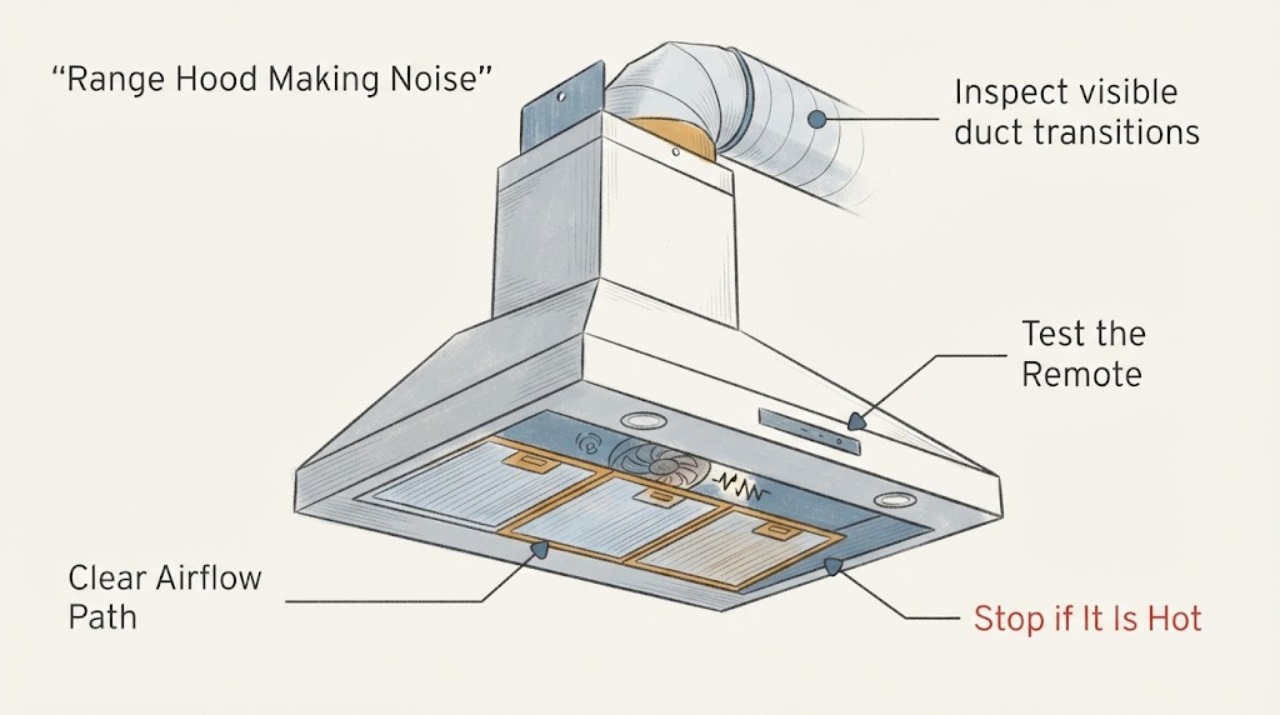
Work through in order
Diagnostic checks
Use only checks that match the exact appliance or system and its official guide.
-
Check 1
Classify the sound as airflow hum, metal tap, whistle, rattle, or motor noise and note the speed.
Expected result: The sound changes with airflow, damper movement, or blower speed.
Next step: Continue with visible duct and damper checks.
Stop if: Stop for burning odor, sparks, or rubbing fan parts.
Why this matters
Why: Sound tied to duct or damper conditions points to ventilation installation; noise at every speed can indicate blower trouble.
-
Check 2
Inspect visible duct transitions and the end cap for sharp bends, multiple transitions, blockage, or flexible duct.
Expected result: The duct is nonconforming or blocked.
Next step: Have a qualified HVAC professional review it.
Stop if: Do not reach into the duct.
Why this matters
Why: Wolf identifies duct geometry and material as noise contributors.
-
Check 3
If equipped, check accessible remote-blower plugs and wiring for secure connections.
Expected result: A plug is loose or wiring is exposed.
Next step: Turn off power and arrange qualified service.
Stop if: Do not touch live wiring.
Why this matters
Why: A connection problem needs installation review.
-
Check 4
Run one brief test at each speed only if the hood is safe and intact.
Expected result: Noise remains abnormal with compliant ducting.
Next step: Contact Wolf Factory Certified Service.
Stop if: Do not open the blower housing.
Why this matters
Why: A functional blower fault is possible.
Use your observations
Decision map
Find the observation that best matches what you see, then follow the next safe action.
-
PATH 01Next step
What you see
The sound changes with airflow, damper movement, or blower speed.
Do this next
Continue with visible duct and damper checks.
Why this path and its safety boundary
Why it matters: Sound tied to duct or damper conditions points to ventilation installation; noise at every speed can indicate blower trouble.
-
PATH 02Next step
What you see
The duct is nonconforming or blocked.
Do this next
Have a qualified HVAC professional review it.
Why this path and its safety boundary
Why it matters: Wolf identifies duct geometry and material as noise contributors.
-
PATH 03Next step
What you see
A plug is loose or wiring is exposed.
Do this next
Turn off power and arrange qualified service.
Why this path and its safety boundary
Why it matters: A connection problem needs installation review.
Helpful context
Understand the symptom
Start with the observable symptom
A Wolf range hood making noise should be separated into airflow, damper, duct, and blower symptoms. Check visible duct routing, cap blockage, filters, and remote-blower connections against Wolf guidance. Persistent abnormal blower noise needs Wolf service or HVAC review.
Use the exact model guidance
Appliance models differ in controls, access, and parts. Record the model and serial information before any replacement or service request.
When checks do not resolve it
Need a professional?
Provide the exact model, serial information, symptom timing, and observations to the manufacturer or a qualified service provider. Do not open gas, refrigerant, high-voltage, or sealed assemblies.
Common questions
FAQ
What should I do first?
A Wolf range hood making noise should be separated into airflow, damper, duct, and blower symptoms. Check visible duct routing, cap blockage, filters, and remote-blower connections against Wolf guidance. Persistent abnormal blower noise needs Wolf service or HVAC review.
When should I call service?
Use qualified service when the accessible checks fail or a safety hazard is present.
Read the exact guide
Official sources
- Ventilation Hood Noisy | Wolf FAQSub-Zero, Wolf, and Cove · Wolf range-hood noise causes and service boundary
Community feedback
Share a repair observation
Share a plain-text repair observation. Accepted observations are published automatically; this page may take a moment to update.