
On this page
Start here
Quick answer
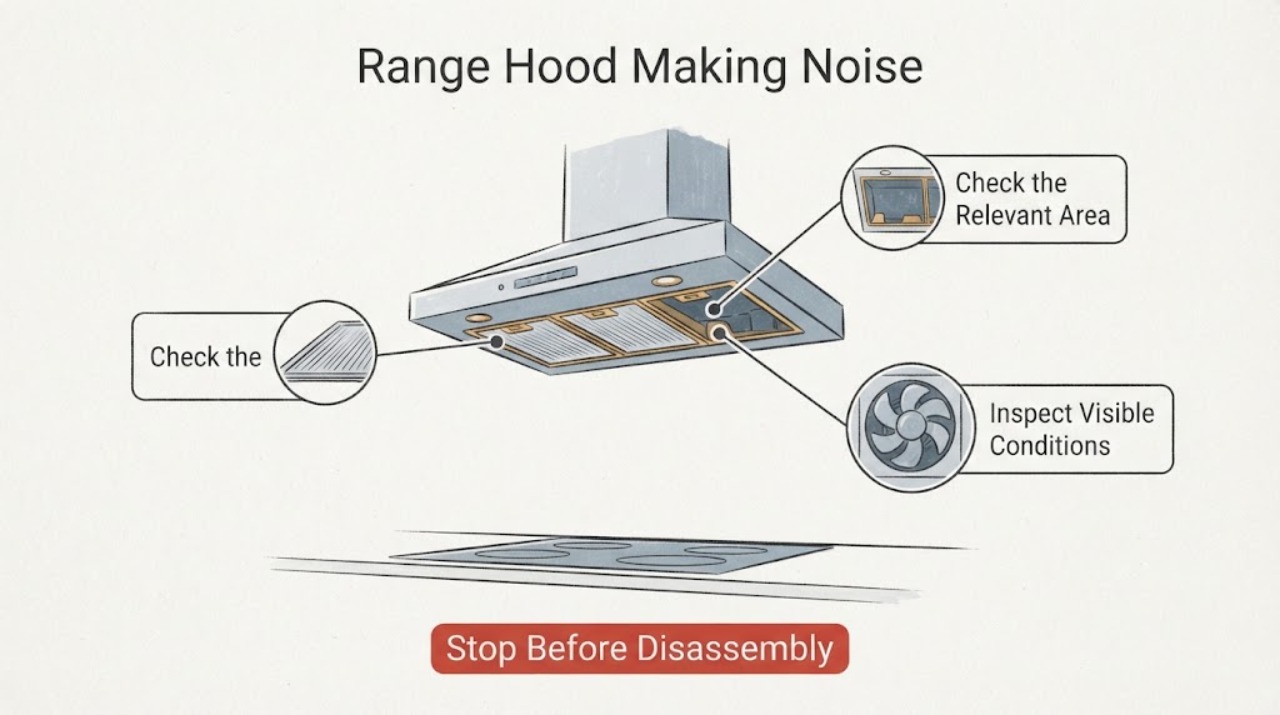
Turn the hood off and cool it, locate whether the sound follows the blower or airflow, then inspect only the removable filter and visible duct opening. A grinding, scraping, electrical, or worsening rattle needs qualified service.
Work through in order
Diagnostic checks
Use only checks that match the exact appliance or system and its official guide.
-
Check 1
Turn the hood off, let it cool, and identify whether the noise is from the blower, filter area, duct, or a rattling panel; do not reach into the fan.
Expected result: The sound changes with fan speed, starts only with airflow, or continues as scraping, grinding, or electrical buzzing.
Next step: Continue only with power-off filter and visible duct checks.
Why this matters
Why: Speed-linked airflow noise can be normal or restriction-related; scraping or electrical noise suggests a loose, obstructed, or failing component.
-
Check 2
Remove and clean the removable grease filter only when the hood is cool and controls are off; ensure it is dry and seated flat afterward.
Expected result: Noise decreases, the filter was greasy/bent/loose, or the filter still vibrates or will not seat.
Next step: Replace a damaged filter with the model-specified type; do not operate with a loose filter.
Why this matters
Why: A dirty or mis-seated filter can restrict air and rattle against the housing.
-
Check 3
With the hood running briefly, perform the manufacturer tissue airflow check and observe the duct or damper only from outside.
Expected result: The tissue is held evenly, airflow is weak, or the sound includes duct vibration or a stuck damper.
Next step: Correct only visible installation issues and arrange service for persistent abnormal noise or inaccessible duct/fan work.
Why this matters
Why: Good draw makes a gross blockage less likely; weak or uneven draw points to installation, duct, filter, or damper restriction.
Use your observations
Decision map
Find the observation that best matches what you see, then follow the next safe action.
-
PATH 01Next step
What you see
Noise changes with speed and the tissue test shows strong, even suction after the filter is seated.
Do this next
Monitor it; service is appropriate if the sound worsens or becomes grinding.
Why this path and its safety boundary
Why it matters: The sound may be a normal fan characteristic or a light panel resonance rather than a blocked motor.
-
PATH 02Next step
What you see
The hood rattles, has weak/uneven suction, or the fan scrapes after the filter and visible panels are secure.
Do this next
Turn it off and schedule qualified hood service; do not work inside the blower housing.
Why this path and its safety boundary
Why it matters: Restriction, duct installation, loose hardware, or blower wear is more likely.
Helpful context
Understand the symptom
This guide focuses on range hood making noise and uses the observed symptom to choose the next safe check.
When checks do not resolve it
Need a professional?
Arrange qualified service if the checks do not restore normal operation or if the appliance shows damaged wiring, burning smell, smoke, gas odor, sparking, or repeated tripping.
Common questions
FAQ
Can I remove the filter while the hood is running?
No. Turn controls off and let the hood cool before removing the filter.
Why did the hood get louder after a filter change?
A filter that is bent, loose, or not seated can rattle or restrict airflow; reseat it only with the hood off.
What does the tissue test tell me?
GE says high-speed suction should hold a tissue evenly; weak draw points to ductwork or service.
Read the exact guide
Official sources
- Cleaning or Replacing the Filters in a Vent HoodWhirlpool · range hood filter cleaning
- Vent Hood System - Air DrawGE Appliances · range hood airflow and service
Community feedback
Share a repair observation
Share a plain-text repair observation. Accepted observations are published automatically; this page may take a moment to update.