
On this page
Start here
Quick answer
Turn the range hood off and let it cool, then identify whether the odor is trapped grease/food, a saturated charcoal filter, duct backdraft, or an electrical/burning smell. Clean the removable grease filter with warm water and detergent as the manufacturer directs; a recirculating hood needs a replaceable charcoal filter, not a washable one. Stop immediately for smoke, melting, sparks, or a burning electrical odor and arrange service.
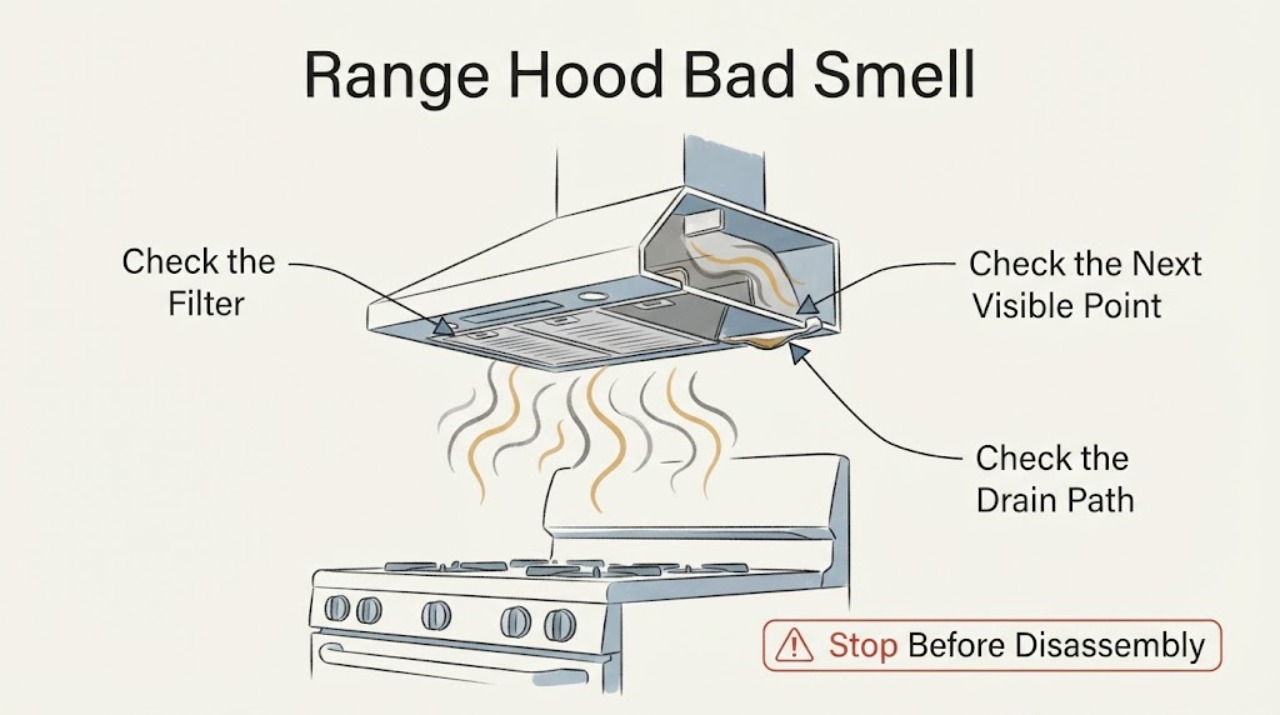
Work through in order
Diagnostic checks
Use only checks that match the exact appliance or system and its official guide.
-
Check 1
Turn the hood controls off, stop cooking, and let the hood and filters cool before touching or removing anything.
Expected result: The smell fades with heat removed, remains while the hood is off, or includes smoke/burning plastic/electrical notes.
Next step: Do not operate again for smoke, sparks, melting, or burning-electrical odor; disconnect power if safe and arrange service.
Why this matters
Why: Heat-related cooking odor may be residue; an odor that persists while off or is electrical needs escalation.
-
Check 2
Remove the accessible metal grease filter according to the manual and inspect it for sticky grease, food debris, discoloration, or damage.
Expected result: The filter is visibly saturated/dirty, or it is clean but the odor remains.
Next step: Clean the filter with warm water and detergent, rinse/dry, and reinstall only when fully dry. Replace damaged filters.
Why this matters
Why: A saturated grease filter can retain cooking odors and grease; a clean filter shifts attention to charcoal filtration, ducting, or electrical parts.
-
Check 3
Determine whether the hood vents outdoors or recirculates, then inspect the accessible charcoal filter if fitted.
Expected result: The hood recirculates and the charcoal filter is old/saturated, or the hood vents outdoors.
Next step: Replace a recirculating charcoal filter per the model manual; do not wash a disposable charcoal filter.
Why this matters
Why: Charcoal filtration is a consumable odor-control element in recirculating installations; outdoor ducting shifts the check to duct and backdraft conditions.
-
Check 4
With power off, inspect the fan area, duct entrance, and surrounding cabinetry for grease accumulation, trapped food, moisture, or a foreign object without reaching into the motor.
Expected result: Residue or blockage is visible, or the motor/controls show heat damage or the odor returns when the fan runs.
Next step: Clean only accessible surfaces as directed. Isolate and service the hood for motor, wiring, switch, or control symptoms.
Why this matters
Why: Accessible residue can retain odor; fan-triggered burning odor suggests motor/wiring failure.
-
Check 5
After filters are dry and correctly installed, run the hood briefly while observing sound, airflow, heat, and odor from a safe distance.
Expected result: Odor is gone, returns only during cooking, or returns as a burning/electrical smell when the fan runs.
Next step: Stop and disconnect power for any electrical or smoke symptom and arrange qualified service.
Why this matters
Why: A resolved odor supports filter/residue cause; recurring cooking odor may reflect source/duct capture; fan-linked burning odor is unsafe.
Use your observations
Decision map
Find the observation that best matches what you see, then follow the next safe action.
-
PATH 01Next step
What you see
A stale cooking/grease odor is present and the metal filter is visibly dirty.
Do this next
Clean the metal filter and accessible hood surfaces after cooling, then retest.
Why this path and its safety boundary
Why it matters: Captured grease or food residue is the most likely source.
-
PATH 02Next step
What you see
The hood recirculates and its charcoal filter is saturated or overdue.
Do this next
Replace the charcoal filter according to the model manual; do not wash it unless that manual explicitly says it is washable.
Why this path and its safety boundary
Why it matters: The odor filter has reached its service limit.
-
PATH 03Next step
What you see
The odor is burning plastic/electrical, accompanied by smoke, sparks, melting, or starts when the fan runs.
Do this next
Turn it off, disconnect power if safe, and arrange qualified electrical/appliance service.
Why this path and its safety boundary
Why it matters: The hood is unsafe to continue operating.
-
PATH 04Next step
What you see
Filters are clean/replaced but odor persists while idle or returns with poor airflow.
Do this next
Keep use limited and arrange inspection of ducting and the hood assembly; do not open the motor housing.
Why this path and its safety boundary
Why it matters: Duct/backdraft contamination, hidden grease, or a motor/control problem remains possible.
Helpful context
Understand the symptom
A range hood can smell because it has captured grease or food odor, because a charcoal filter is saturated, or because an electrical component is overheating. Treat a burning-plastic or electrical smell as a safety issue, not a cleaning task.
Classify the odor before cleaning
Note whether the smell appears only during cooking, when the fan starts, after the hood is switched off, or while the hood is idle. This timing helps distinguish cooking residue from the motor, wiring, or airflow path.
When checks do not resolve it
Need a professional?
Stop using the hood for smoke, sparks, melting, burning electrical odor, a hot plug/cord, or abnormal motor heat/noise. Disconnect power if safe and arrange qualified service.
Common questions
FAQ
Can a range hood charcoal filter be washed?
Whirlpool distinguishes recirculating charcoal filters from removable metal grease filters; follow the model manual and replace a disposable charcoal filter rather than washing it.
How should I clean a metal grease filter?
Turn controls off and let the hood cool, remove the filter, clean it in warm water with detergent or as the manual directs, then replace it once dry.
What if the smell is burnt plastic or electrical?
Stop the hood, disconnect power if safe, and arrange qualified service. Do not keep running it to see whether the odor clears.
Read the exact guide
Official sources
- Owner’s Manual W10526058Whirlpool · vent hood maintenance and charcoal filter interval
- Clean or Replace Filters - Vent HoodWhirlpool · range/vent hood grease and recirculation filters
Community feedback
Share a repair observation
Share a plain-text repair observation. Accepted observations are published automatically; this page may take a moment to update.