
On this page
Start here
Quick answer
Sparks from a wine cooler are an immediate stop-use condition. Unplug it or isolate the circuit only if safe, keep the cabinet dry and away from combustibles, and do not retry it to locate the fault. After cooling, record whether the spark came from the plug, cord, control, interior light, compressor area, or an external outlet and arrange qualified appliance/electrical service.
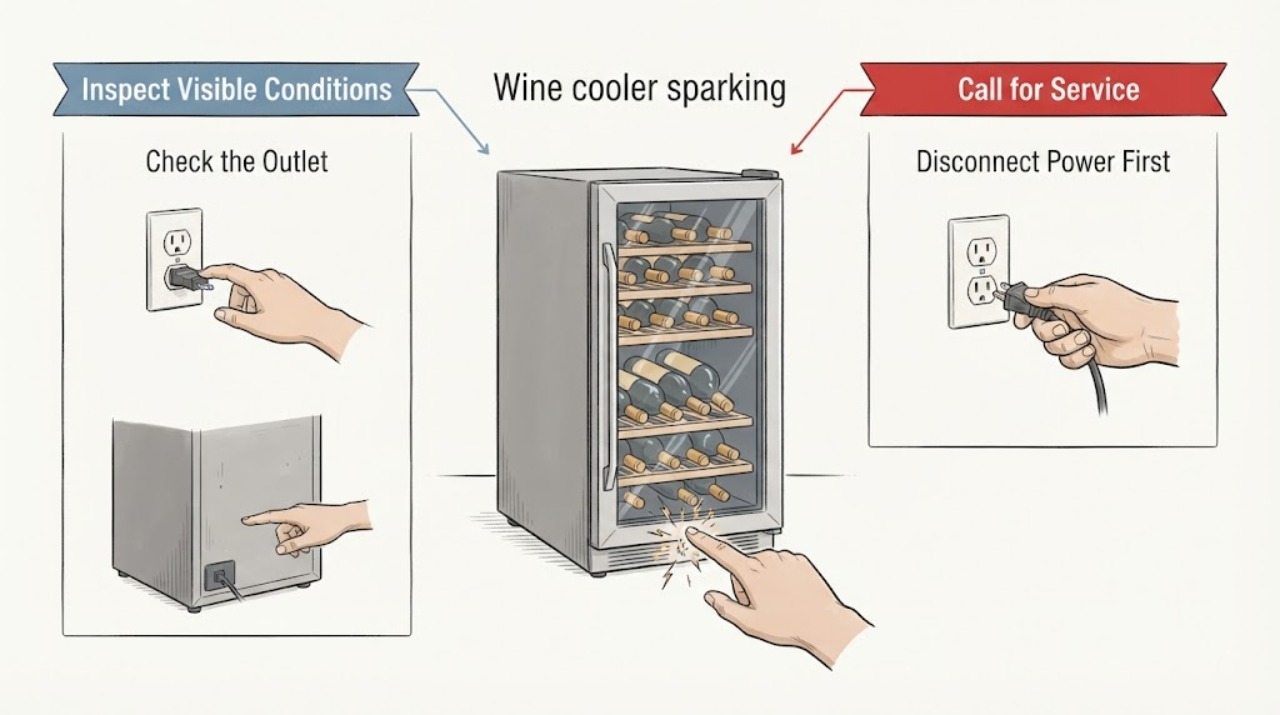
Work through in order
Diagnostic checks
Use only checks that match the exact appliance or system and its official guide.
-
Check 1
Stop operation and observe only from a safe distance whether the spark came from outlet/plug, cord, interior control/light, or cabinet base.
Expected result: Spark stops after power isolation, continues at outlet, or smoke/heat/smell is present.
Next step: Do not touch a hot or damaged cord/outlet; isolate only if safe.
Why this matters
Why: Supply and appliance faults differ, but all spark sources require stop-use.
-
Check 2
After cooling and isolation, inspect exterior cord, plug, outlet, control surface, light area, and accessible water/condensation for scorch or wetness.
Expected result: Melted plastic, scorch, moisture, exposed wire, or no visible damage.
Next step: Do not remove panels or reach the compressor/control wiring.
Why this matters
Why: Visible damage supports service/replacement; no visible damage does not clear internal arcing.
-
Check 3
Check whether the outlet/cord alone is damaged without plugging the wine cooler back in.
Expected result: Outlet/cord is damaged or only the cooler sparked.
Next step: Leave the circuit/appliance off and obtain qualified electrical/appliance service.
Why this matters
Why: A supply fault can reoccur with another device; an appliance fault needs model diagnosis.
-
Check 4
Provide model/serial, spark location, cooling state, noise, condensation, and any odor/heat to service.
Expected result: Sparking recurred or no recurrence after isolation.
Next step: Keep the wine cooler out of use until professionally inspected.
Why this matters
Why: No recurrence is not proof of safety; intermittent arcing remains possible.
Use your observations
Decision map
Find the observation that best matches what you see, then follow the next safe action.
-
PATH 01Next step
What you see
Spark came from outlet, plug, or cord.
Do this next
Do not use that outlet/cord; call qualified electrical service.
Why this path and its safety boundary
Why it matters: Household electrical supply or connection fault is possible.
-
PATH 02Next step
What you see
Spark came from interior light/control or cabinet.
Do this next
Keep unplugged and arrange qualified service; do not open the cabinet.
Why this path and its safety boundary
Why it matters: Appliance wiring/control fault needs diagnosis.
-
PATH 03Next step
What you see
Spark included smoke, burning odor, heat, or melted material.
Do this next
Isolate power only if safe and obtain urgent qualified service.
Why this path and its safety boundary
Why it matters: Immediate fire/electrical boundary.
-
PATH 04Next step
What you see
No damage is visible and unit appears normal after restart.
Do this next
Do not resume normal use; arrange inspection.
Why this path and its safety boundary
Why it matters: Intermittent arcing remains possible.
Helpful context
Understand the symptom
A spark can be at the household outlet, cord/plug, interior light/control, or compressor/fan area. Location helps service but does not make a retry safe.
Normal compressor clicking or buzzing is not sparking; do not confuse the two.
When checks do not resolve it
Need a professional?
Arrange qualified wine-cooler/electrical service after any sparking, especially for cabinet, control, compressor, cord, or outlet involvement.
Common questions
FAQ
Can a wine cooler keep running after a spark?
No. Isolate power if safe and arrange inspection; a later normal run does not clear intermittent arcing.
Can compressor clicks be mistaken for sparks?
Refrigerators can click or buzz normally, but a visible electrical spark is a separate stop-use event.
Should I open the rear panel?
No. Electrical, compressor, fan, and sealed-system work require qualified service.
Read the exact guide
Official sources
- WHYNTER 20 Bottle Thermoelectric Wine CoolerWhynter · Whynter wine cooler electrical safety, damaged cords, grounding, unplugging, and qualified service
Community feedback
Share a repair observation
Share a plain-text repair observation. Accepted observations are published automatically; this page may take a moment to update.