
Brand-independent appliance guidance
General Wine Cooler Repair Guides
Brand-independent troubleshooting and repair guidance for common wine cooler problems and maintenance questions.
General wine cooler guides
Use these guides when the problem is not limited to a specific manufacturer.
-
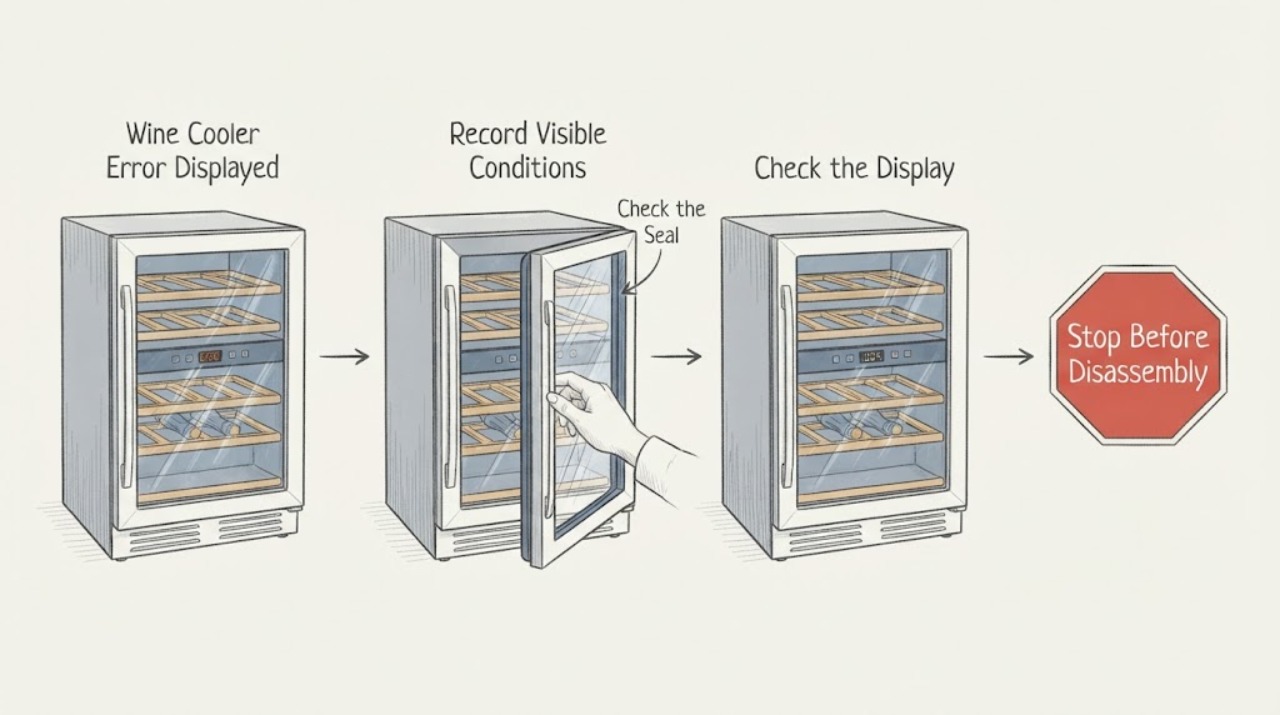
Wine Cooler Error Displayed
Record the exact wine-cooler display before resetting it. Error meanings differ by series, and Haier says a wine cooler showing an error code should be serviced rather than diagnosed from a generic code list. Check only visible door, temperature, and power conditions from the manual.
-
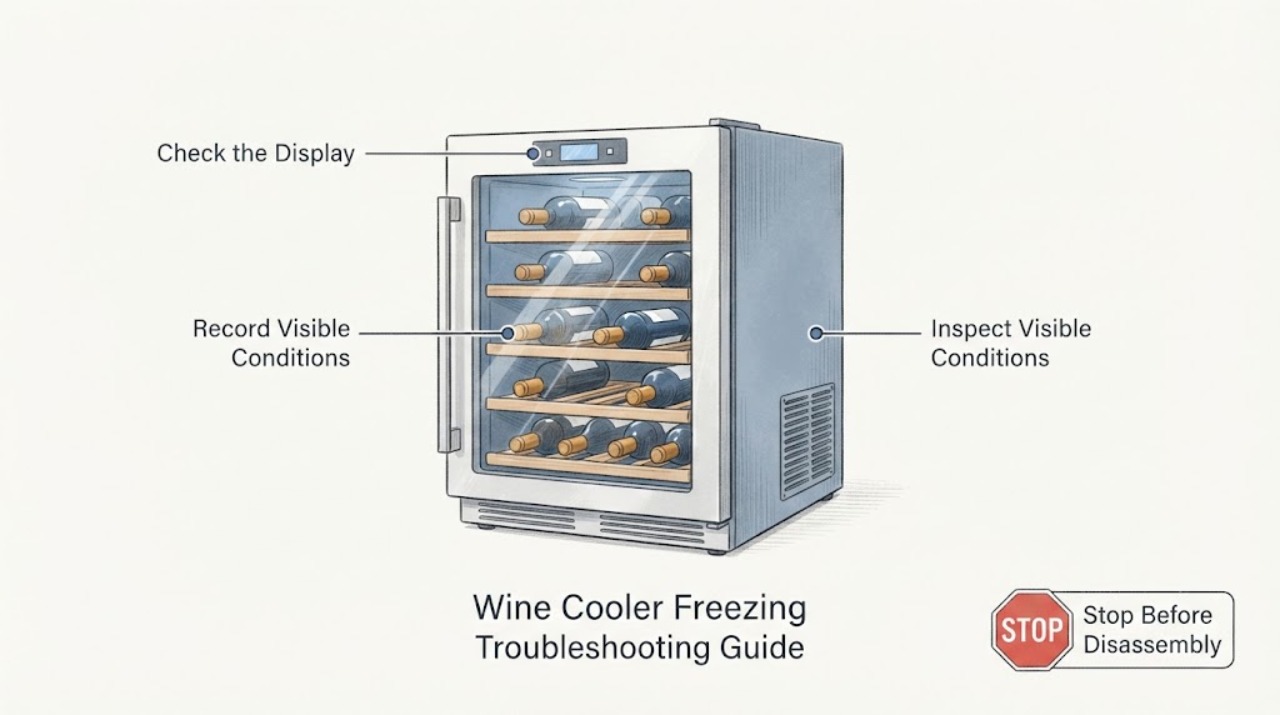
Wine Cooler Freezing Troubleshooting Guide
If a wine cooler is freezing, first measure the cabinet temperature and identify whether only bottles beside the evaporator or the whole cabinet is too cold. Check the documented temperature setting, door seal, and bottle spacing; if frost is present, use the model's safe defrost procedure and never chip the evaporator. A setting that will not hold, a display mismatch, or rapidly returning ice needs qualified refrigeration service.
-
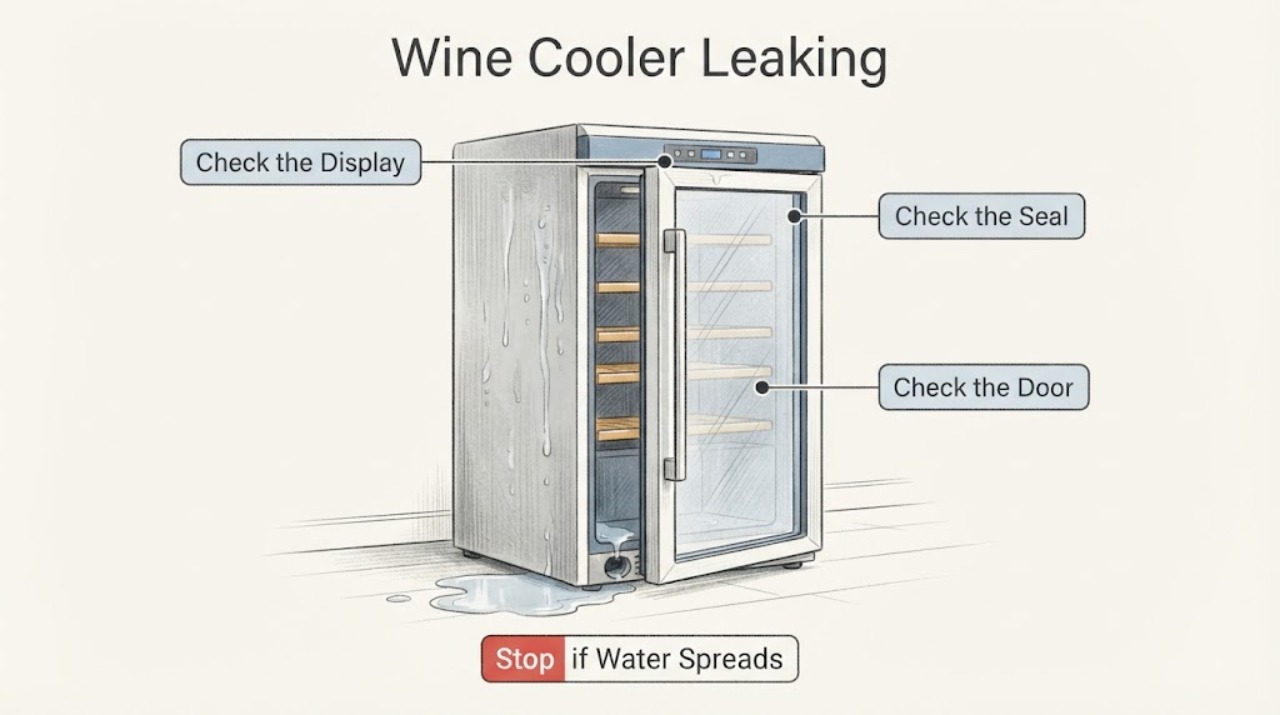
Wine Cooler Leaking: Check Moisture, Door, and Drain Areas
A wine cooler can appear to leak when humid room air condenses inside or outside the cabinet, especially after frequent door openings. Wipe moisture, limit door openings, confirm the door closes and seals, and keep the base grille clear.
-
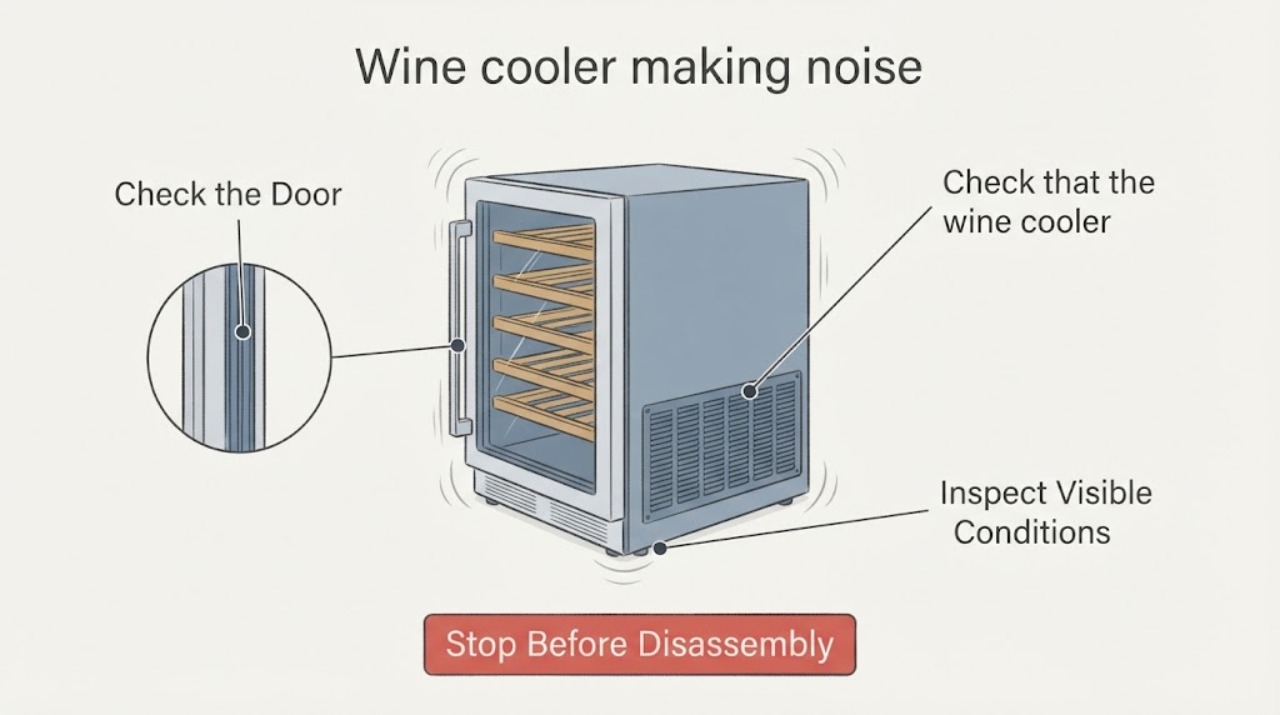
Wine cooler making noise
A wine cooler can make normal compressor, fan, refrigerant, or defrost sounds, but a new, loud, grinding, rattling, or performance-linked noise needs diagnosis. Record when the sound occurs and whether cooling is normal, check that the cabinet is level and not touching nearby surfaces, and clean only accessible airflow areas. Arrange service for fan contact, persistent noise, poor cooling, or electrical warning signs.
-
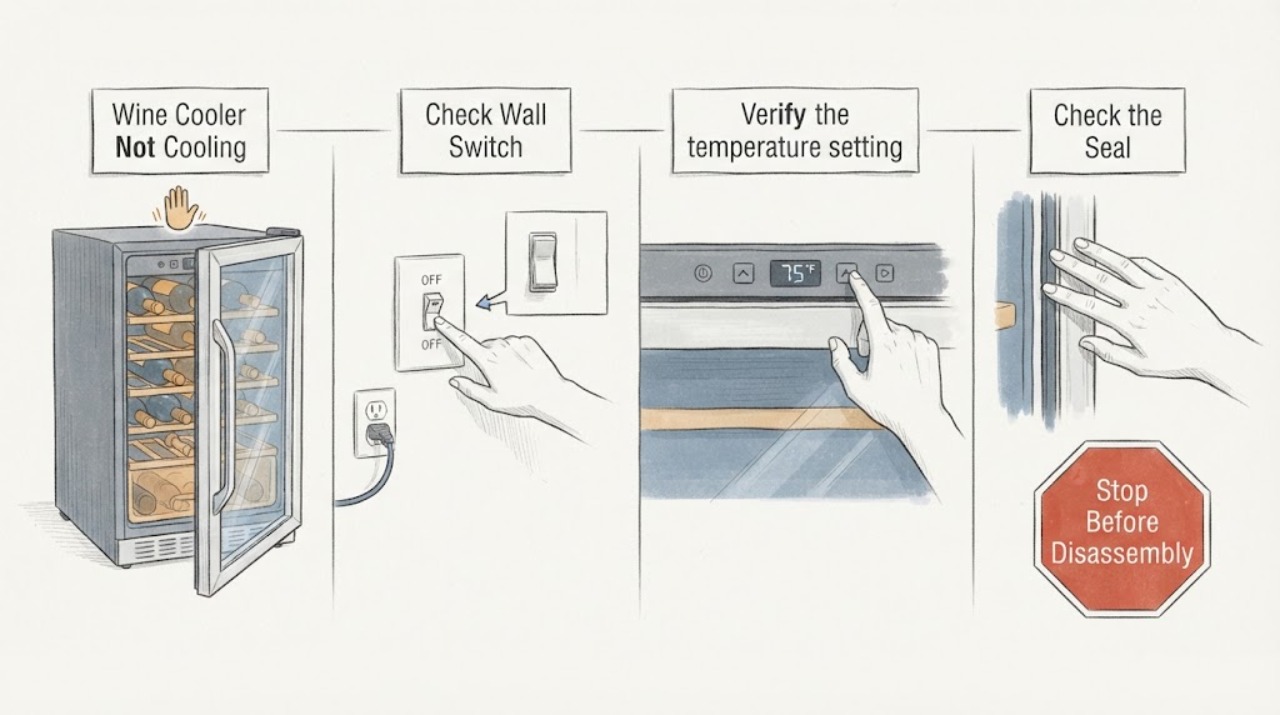
Wine Cooler Not Cooling
Check that the wine cooler is powered on, has stood upright after transport as its manual requires, and has clear ventilation. Verify the temperature setting, door seal, bottle loading, room conditions, and fan airflow. A compressor may run frequently under heat load, but a cooler that stays warm after these checks, makes repeated trips, or shows oil/leak or electrical symptoms needs service; do not open the sealed refrigeration circuit.
-
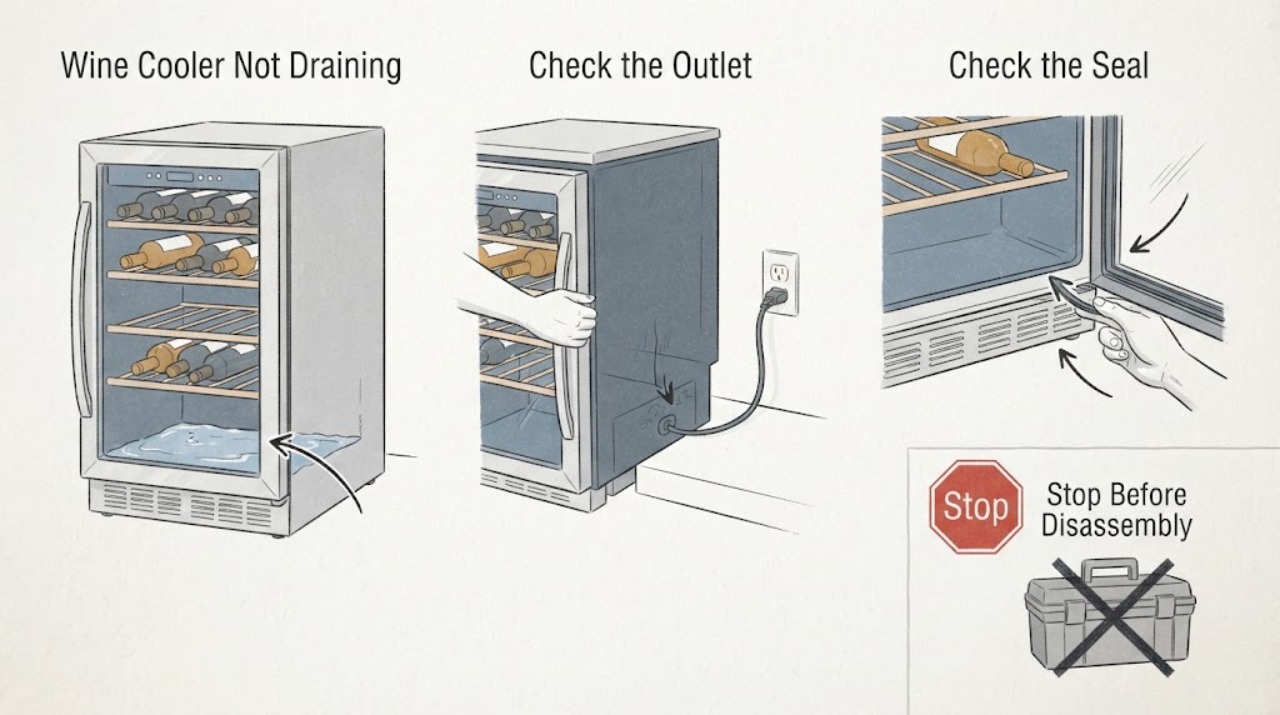
Wine Cooler Not Draining
A wine cooler that is not draining usually has water from normal defrost that cannot reach or evaporate from the drain pan because the door stayed open, frost is excessive, the unit is not level, or the drain path is obstructed. Check the door seal and closure, keep bottles from touching the back wall, reduce repeated openings, and wipe accessible water. Do not chip ice or remove panels; persistent pooling or water near electrics needs service.
-
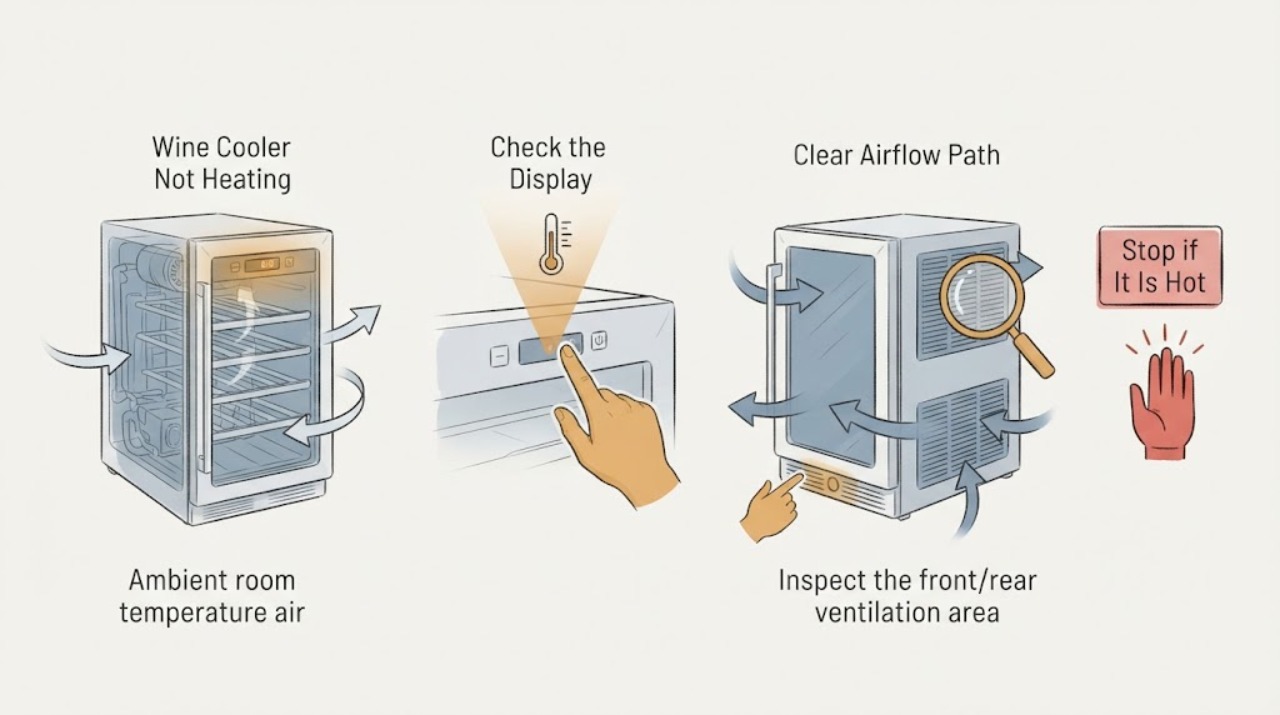
Wine Cooler Not Heating
A wine cooler reported as “not heating” should first be clarified as not cooling enough or actually warming above its setpoint. Check power, set temperature, heat sources, door gasket, ventilation, ambient conditions, and recent loading. If it remains warm on a powered, ventilated unit with a sealed door, protect the wine and arrange refrigeration service; do not open the sealed system.
-
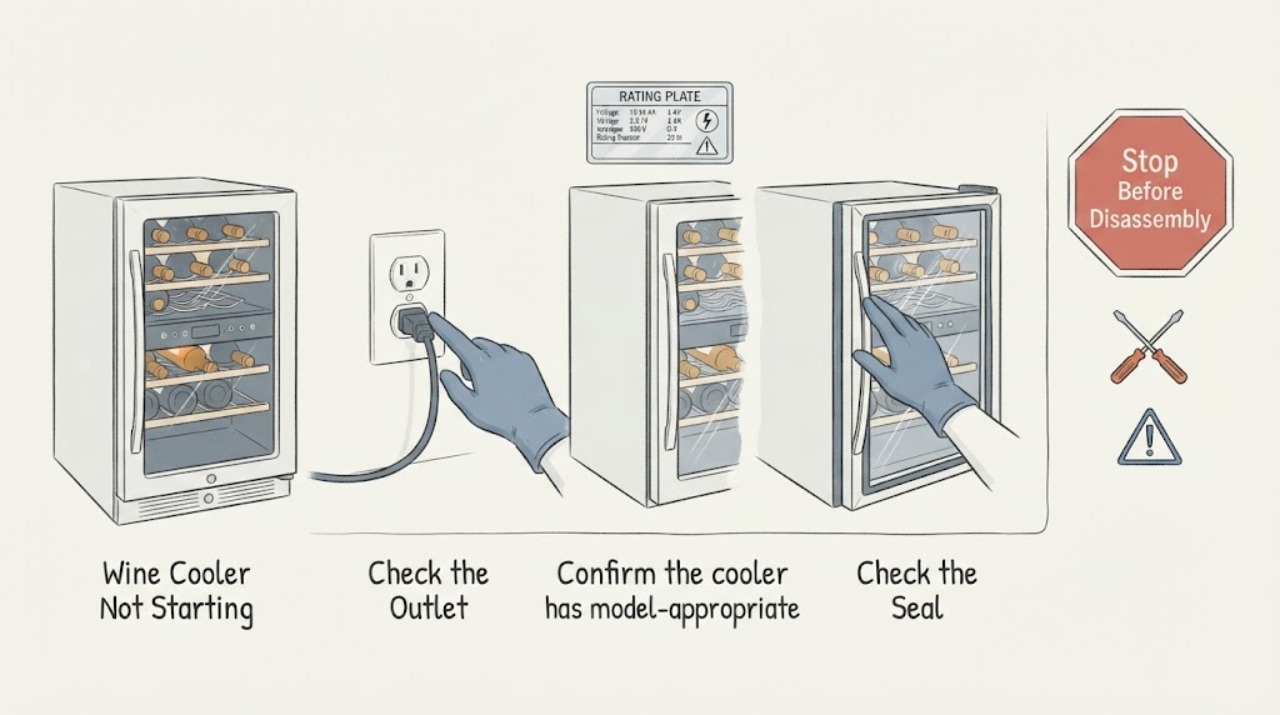
Wine Cooler Not Starting
Check the outlet, display, control lockout, and compressor response, then verify ventilation and setpoint. A wine cooler that remains dead or warm after safe reset, correct clearance, and stabilization needs qualified refrigeration service.
-
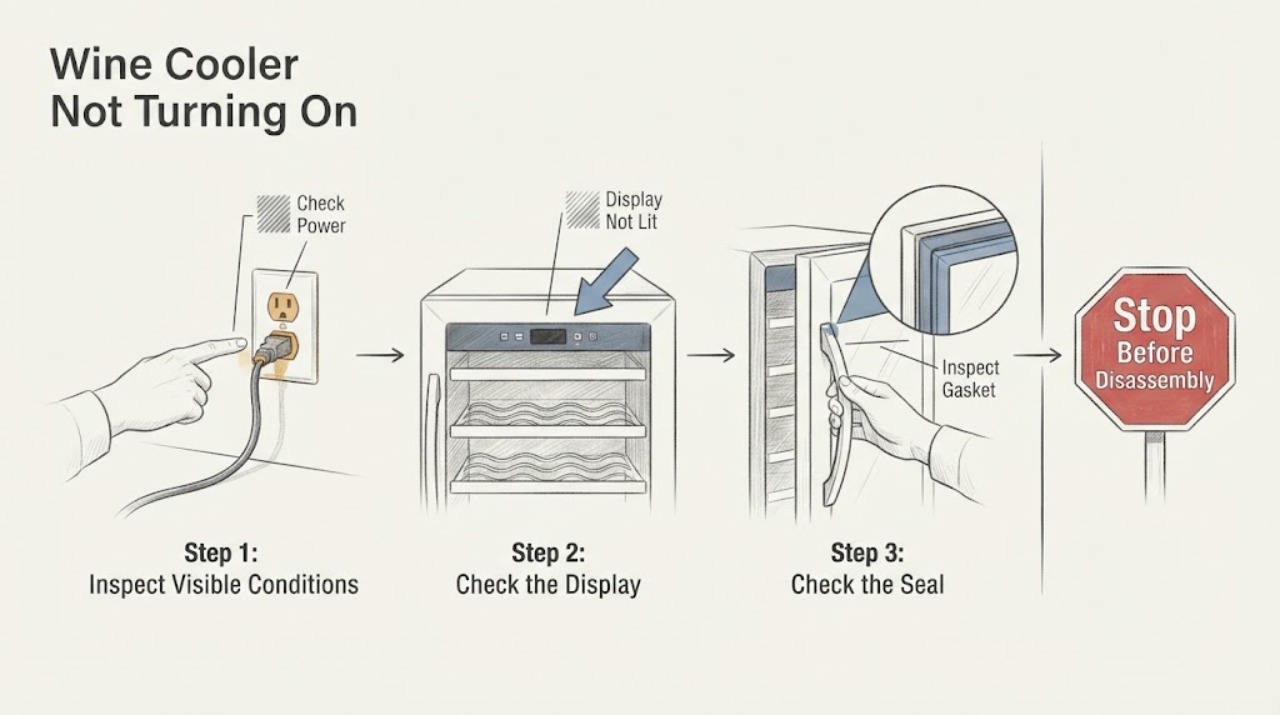
Wine Cooler Not Turning On
For a wine cooler that will not turn on, separate no power from a control or cooling symptom. Check the outlet, plug, breaker, and on/off control from outside; confirm the door closes and the unit is installed on a stable surface. Do not repeatedly reset a breaker or open the refrigeration system.
-
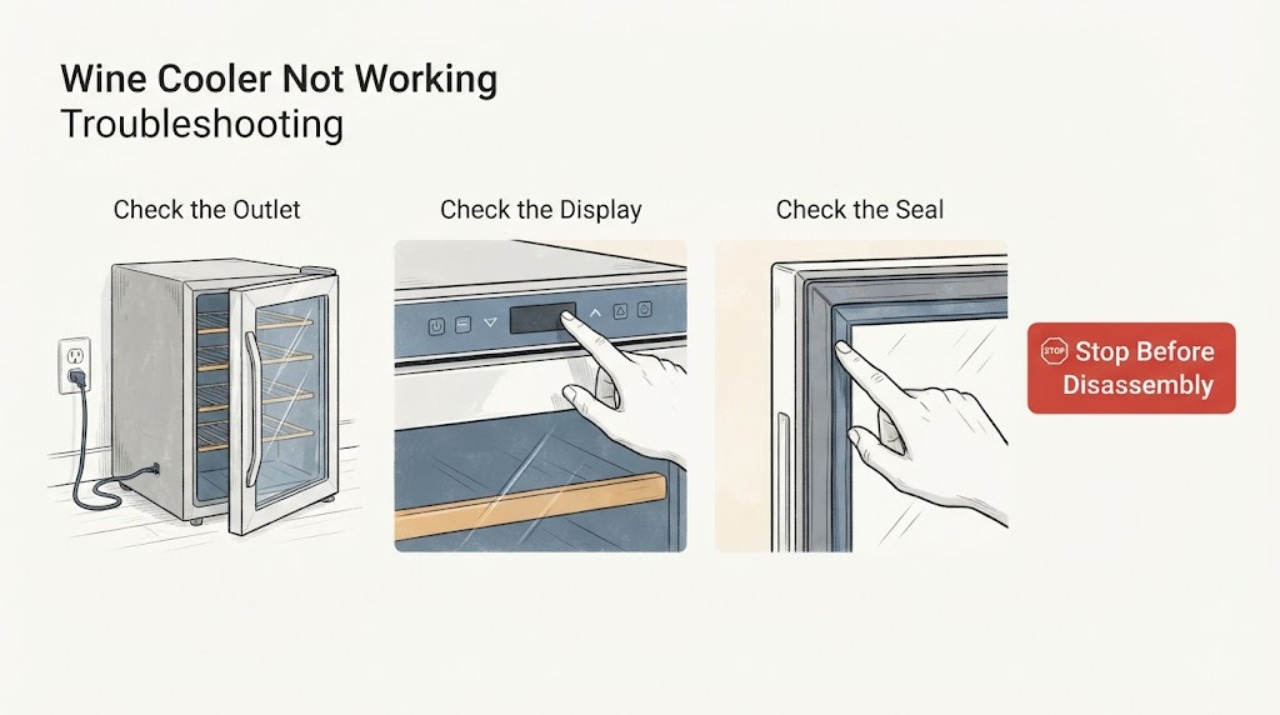
Wine Cooler Not Working Troubleshooting Guide
For a wine cooler that is not working, first separate no power, an off or locked control, and a powered cooler that runs without cooling. Verify the outlet and documented control state, then inspect the accessible door seal, exhaust clearance, and loading. If the display is active but the compressor or fan does not respond, cooling never starts, or the unit has a damaged cord or refrigerant concern, stop testing and arrange qualified refrigeration service.
-
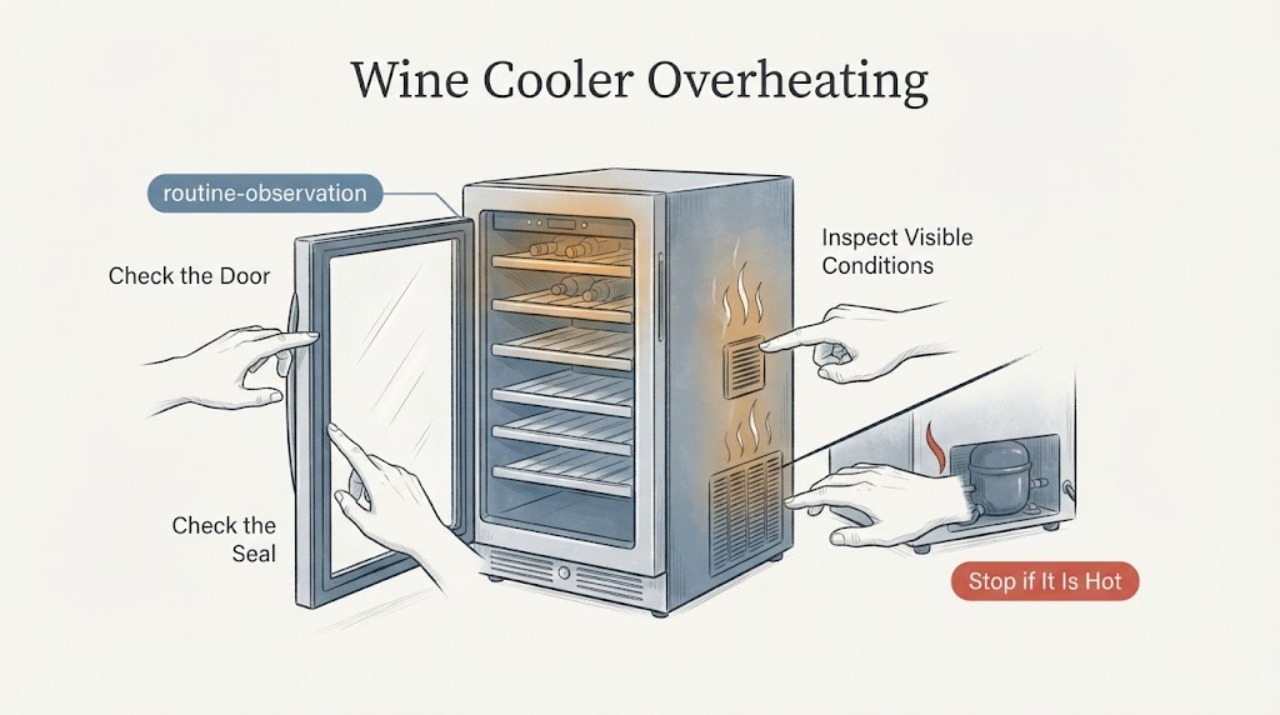
Wine Cooler Overheating: Check Ventilation, Door, and Temperature
A wine cooler that feels hot or runs continuously may be working harder because the room is warm, the door is opened often, warm bottles were added, the controls are set too cold, or the base grille and surrounding clearance are blocked. Check those external conditions and allow time for temperature to stabilize.
-
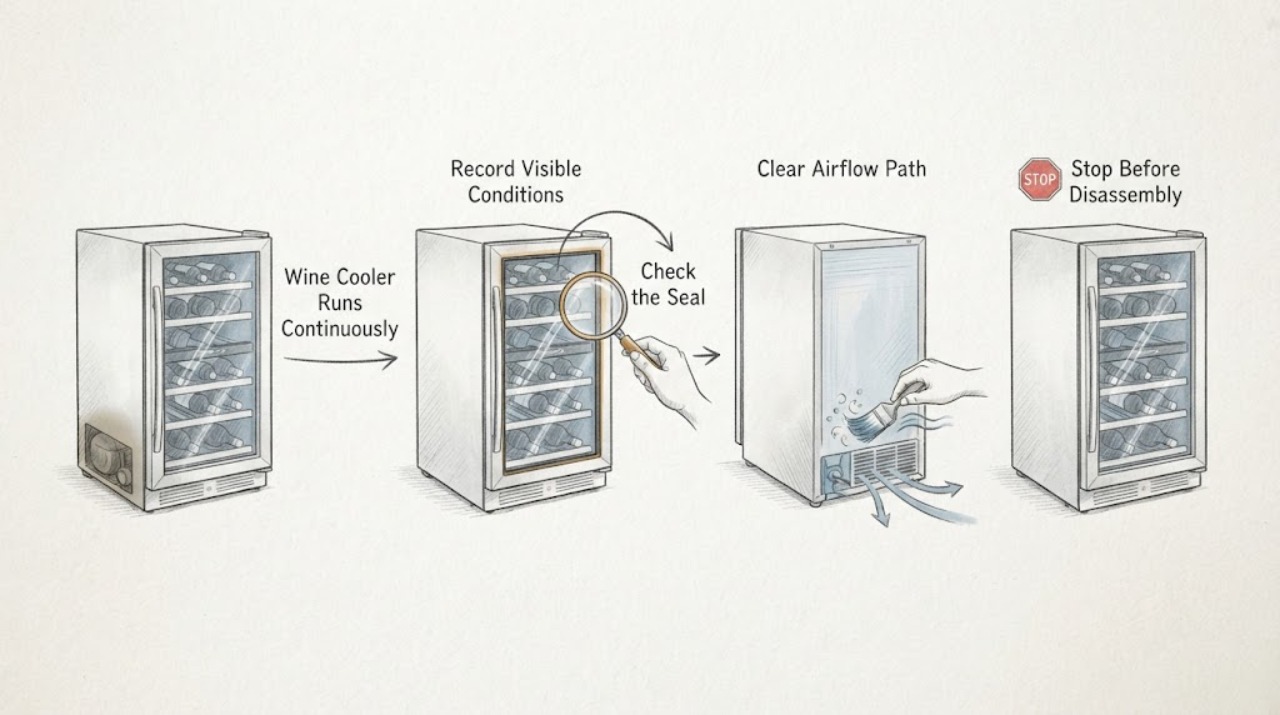
Wine Cooler Runs Continuously: Check Cooling Demand and Airflow
A wine cooler may run for a long initial pull-down or in a warm room, but continuous running with poor temperature control calls for checks of temperature setting, door seal, airflow, frost, and ambient conditions. Do not access refrigerant or sealed-system components; those require qualified service.
-
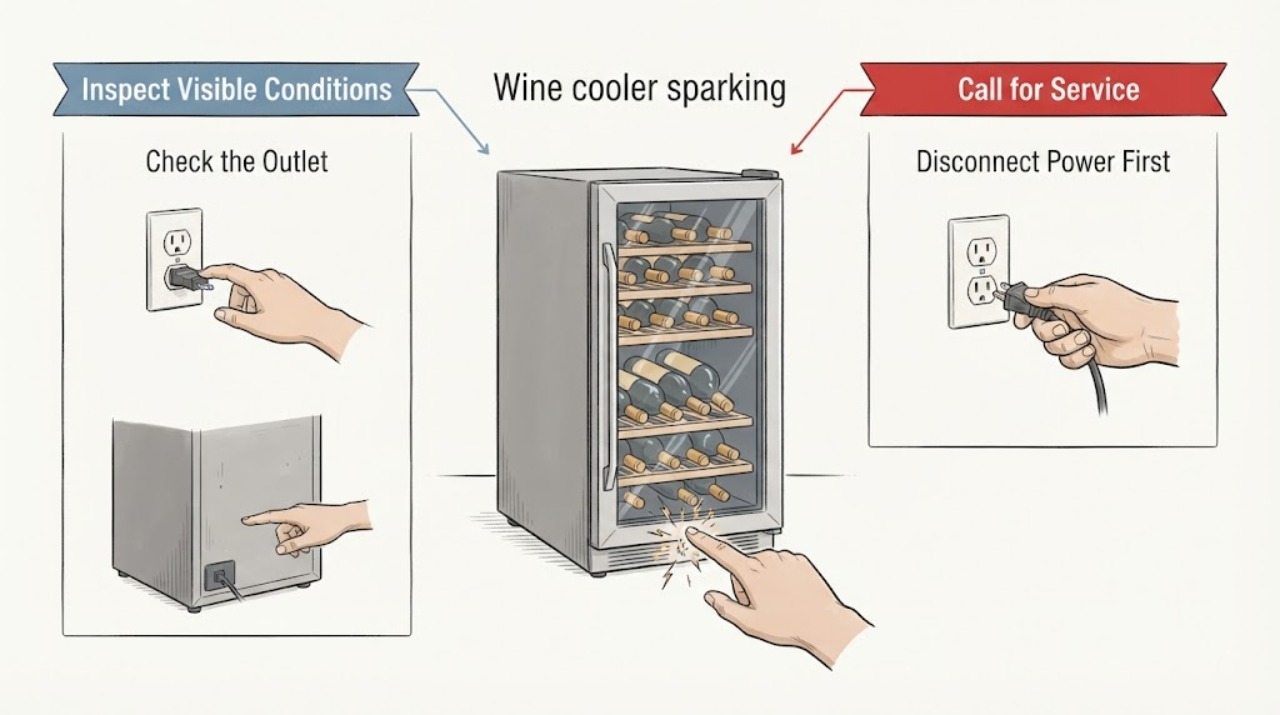
Wine cooler sparking
Sparks from a wine cooler are an immediate stop-use condition. Unplug it or isolate the circuit only if safe, keep the cabinet dry and away from combustibles, and do not retry it to locate the fault. After cooling, record whether the spark came from the plug, cord, control, interior light, compressor area, or an external outlet and arrange qualified appliance/electrical service.