
On this page
Start here
Quick answer
A wine cooler can appear to leak when humid room air condenses inside or outside the cabinet, especially after frequent door openings. Wipe moisture, limit door openings, confirm the door closes and seals, and keep the base grille clear. If water is pooling repeatedly, comes from a cracked hose or cabinet, reaches electrical parts, or appears with poor cooling, unplug the cooler if safe and arrange appliance service. Do not tip the unit or remove sealed refrigeration components.
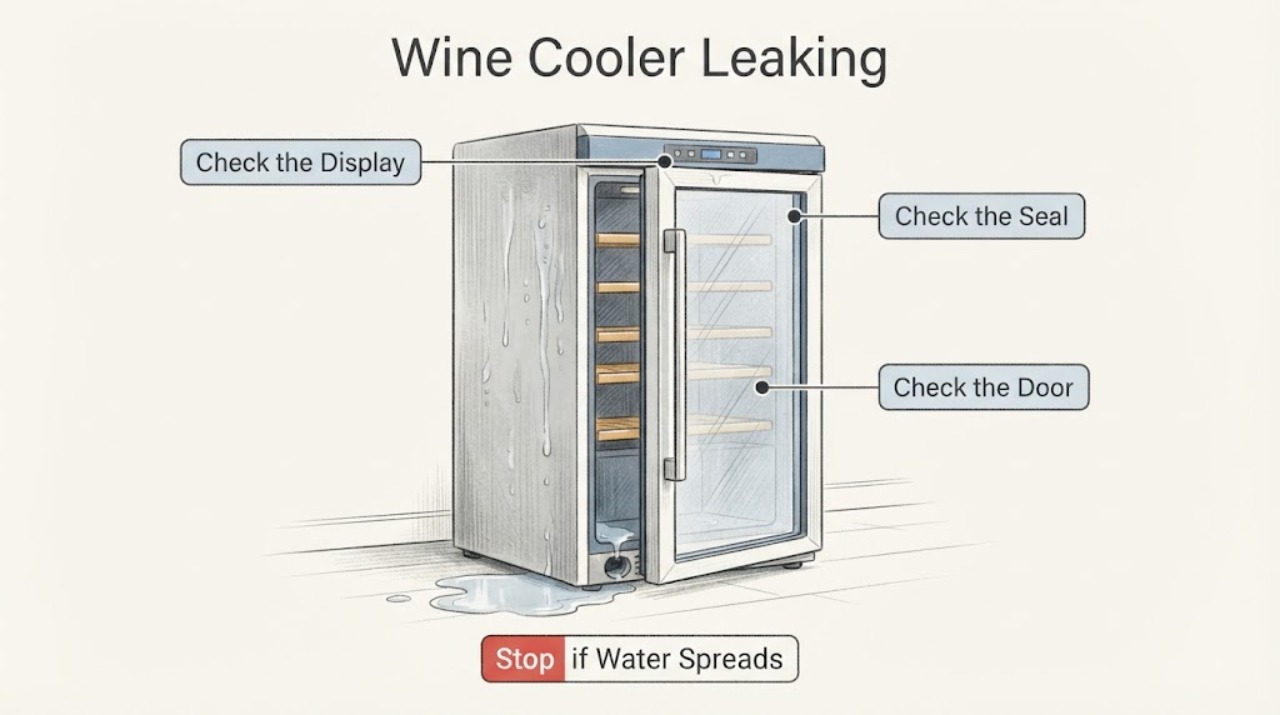
Work through in order
Diagnostic checks
Use only checks that match the exact appliance or system and its official guide.
-
Check 1
Dry the visible moisture and note whether it returns inside the cabinet, on the door or side, beneath the front grille, or at the rear connection. Keep water away from the control and plug.
Expected result: Moisture returns only on humid surfaces, collects inside, or forms a distinct puddle at a base or rear point.
Next step: Continue with the humidity and door checks for condensation, but stop and isolate power if water approaches electrical parts.
Why this matters
Why: Surface condensation is more likely in humid conditions; a localized puddle suggests a drain, seal, or component leak that needs closer diagnosis.
-
Check 2
Check that the door closes fully and the gasket contacts the cabinet evenly, without forcing or removing the seal. Minimize openings while observing whether moisture returns.
Expected result: The door is frequently opened, the gasket has a gap or damage, or it closes evenly.
Next step: Correct loading or alignment only as the model manual permits; arrange service for a damaged gasket or door that will not seal.
Why this matters
Why: Whirlpool says room humidity enters whenever the door opens; a poor seal allows continued moisture entry and warm operation.
-
Check 3
Inspect the accessible base grille and surrounding clearance. Remove dust or objects only from the outside and do not install the cooler behind a closed cabinet door.
Expected result: The grille is blocked, or airflow and clearance are unobstructed.
Next step: Restore the model's required clearance and monitor temperature and moisture for several hours.
Why this matters
Why: A blocked grille can prevent airflow, impair cooling, and contribute to abnormal condensation or long run times.
-
Check 4
If water continues after the cooler is dry and the door and grille are normal, disconnect power if safe and record the puddle location, temperature, and whether the compressor runs. Do not remove refrigeration panels.
Expected result: The leak stops, returns, or is accompanied by poor cooling, unusual heat, or electrical moisture.
Next step: Keep the cooler disconnected when water reaches electrical parts or cooling is abnormal, and arrange qualified service.
Why this matters
Why: A recurring leak or leak with cooling or electrical symptoms is beyond normal condensation checks.
Use your observations
Decision map
Find the observation that best matches what you see, then follow the next safe action.
-
PATH 01Next step
What you see
A small amount of moisture appears on humid days and wipes away without a puddle
Do this next
Reduce openings, keep the door sealed, and monitor
Why this path and its safety boundary
Why it matters: Room humidity and door openings can explain condensation
-
PATH 02Next step
What you see
The gasket has a gap or the door will not close fully
Do this next
Stop loading pressure on the door and arrange model-specific door or gasket service
Why this path and its safety boundary
Why it matters: Warm humid air can enter continuously and create moisture
-
PATH 03Next step
What you see
Water forms beneath the unit or returns from one localized point
Do this next
Disconnect if safe and obtain qualified appliance service
Why this path and its safety boundary
Why it matters: A drain or component leak is more likely than surface condensation
-
PATH 04Next step
What you see
Leaking occurs with poor cooling or water near the plug or controls
Do this next
Leave the cooler disconnected and request service
Why this path and its safety boundary
Why it matters: The symptom involves refrigeration or electrical safety
Helpful context
Understand the symptom
First identify where the water is: inside the cabinet, on the exterior, under the front grille, or at the rear. Condensation from humidity behaves differently from a supply or drain leak, and the distinction determines whether a wipe-and-monitor step is reasonable.
The Whirlpool pages are general wine-cellar guidance; exact drain routing and installation clearances vary by model. Use the model manual before removing any panel or moving the cooler.
When checks do not resolve it
Need a professional?
Arrange qualified wine-cooler service for recurring puddles, damaged seals, water near electrical parts, a cabinet or hose leak, or leakage accompanied by poor cooling.
Common questions
FAQ
Is moisture inside a wine cooler always a leak?
No. Whirlpool says humid room air and frequent door openings can create interior moisture. A recurring puddle needs further diagnosis.
Can I cover the base grille?
No. Blocking it can prevent airflow and impair cooling.
Should I tip the cooler to find the leak?
No. Keep it upright and use the model manual or qualified service for access and drain checks.
When should I unplug it?
Disconnect power if water reaches the plug or controls, cooling becomes abnormal, or a distinct leak keeps returning.
Read the exact guide
Official sources
- Temperature is too Warm/Not Cooling Properly - Wine CellarWhirlpool · wine-cellar airflow, temperature, and installation troubleshooting
- Interior Moisture Buildup - Wine CellarWhirlpool · wine-cellar moisture and humidity troubleshooting
Community feedback
Share a repair observation
Share a plain-text repair observation. Accepted observations are published automatically; this page may take a moment to update.