
On this page
Start here
Quick answer
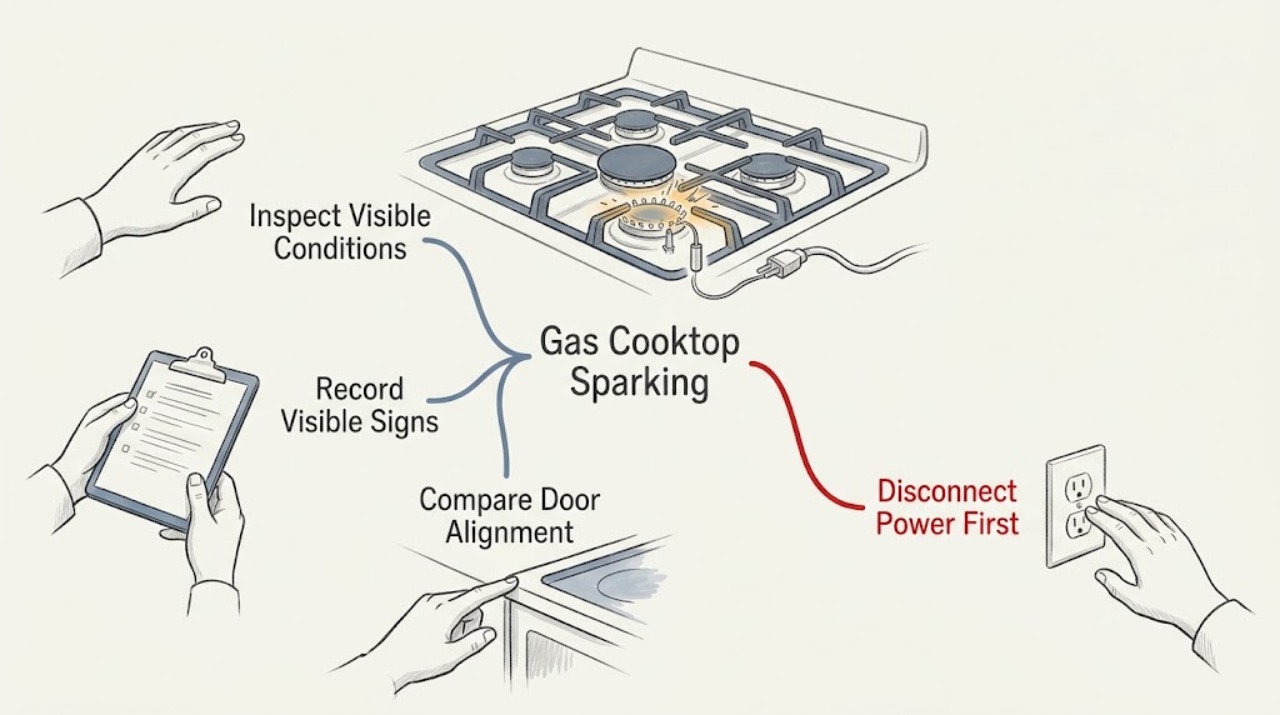
Some sparking is normal while a Thermador gas cooktop is being turned on, and ExtraLow® models may click as the flame cycles. Sparking that continues with every control in OFF, persists after a burner is lit, or is accompanied by gas odor, smoke, arcing, or an abnormal flame is not a normal cooking sound. Turn the controls off, keep hands away while an igniter is active, and let the surface cool. Then, only if there is no gas odor or other hazard, check that the burner cap is seated, the igniter and ports are dry and clean, and the cooktop is not exposed to a draft. Persistent sparking requires qualified electrical or appliance service; never dismantle a gas appliance or perform live wiring work.
Work through in order
Diagnostic checks
Use only checks that match the exact appliance or system and its official guide.
-
Check 1
Observe when the spark occurs from a safe distance, without touching the burner or igniter while it is active.
Expected result: The spark occurs only while a knob is being turned to ignite a burner, occurs periodically with an active ExtraLow® burner, continues after the flame is established, or occurs while every knob is in OFF.
Next step: Turn all controls to OFF. If sparking continues, or if there is gas odor, smoke, arcing, or an abnormal flame, stop using the cooktop and obtain qualified help from a safe location.
Why this matters
Why: A brief ignition spark or ExtraLow® cycling can be normal; persistent sparking after ignition or in the OFF position indicates a control, moisture, grounding, or ignition fault rather than ordinary operation.
-
Check 2
After the controls are OFF and the burners and surface are fully cool, look for moisture from cleaning or a boil-over around the igniter and burner area.
Expected result: The igniter or surrounding surface is damp, food residue is present, or the surface is dry and clean.
Next step: If there is no gas odor or other hazard, allow the area to dry and remove only loose surface residue with a dry cotton swab or the model-approved gentle cleaning method. Do not pour water into the burner area or use the cooktop to dry it.
Why this matters
Why: Thermador identifies damp or dirty igniters and burner ports as causes of intermittent sparking; a dry, clean surface shifts attention toward cap placement, draft, or electrical service.
-
Check 3
With the cooktop cool and all controls OFF, check that the affected burner cap sits flat on its matching base with no visible gap or sideways misalignment.
Expected result: The cap is shifted, tilted, or not matched to its base, or it is flat and correctly seated.
Next step: If the area is dry and safe, reposition the cap exactly as the model manual shows. Do not operate the burner without the cap and grate in place, and stop if the flame remains abnormal or gas is smelled.
Why this matters
Why: An incorrectly seated cap can cause delayed ignition, uneven flame, gas odor, or repeated re-ignition; correct seating makes the cap less likely to be the cause.
-
Check 4
Inspect the visible burner ports and the room around the cooktop for food blockage or a strong draft, without poking into the gas path or removing parts.
Expected result: Ports look blocked, a fan or open window is disturbing the flame, or no obstruction or draft is apparent.
Next step: Once cool and safe, clean only the accessible surface areas using the model instructions and eliminate an obvious draft. If the condition persists, stop using the burner and arrange service rather than opening the appliance.
Why this matters
Why: Thermador lists clogged ports and air movement as causes of intermittent ignition or flame disturbance; no visible issue makes an internal ignition or grounding fault more likely.
-
Check 5
Check whether the spark is isolated to one burner or affects several burners, and record whether it began after cleaning, a spill, a power interruption, or installation work.
Expected result: Only one burner is affected, several igniters spark together, sparking began after moisture or cleaning, or it occurs after power is restored or with all knobs OFF.
Next step: Keep the controls OFF and arrange qualified appliance service or electrical service for persistent or multi-burner sparking. Do not remove panels, test wiring, or bypass an ignition switch.
Why this matters
Why: A single-burner pattern is consistent with local moisture, ports, or cap alignment; several or OFF-position sparks can indicate shared power, grounding, switch, or control issues.
-
Check 6
If the burner does not light promptly, or the flame goes out and re-ignition begins, stop attempting ignition and note the flame and odor from a safe position.
Expected result: The flame is stable and the odor clears, the burner repeatedly fails to light, the flame is uneven or unusually high, or gas odor remains after the control is OFF.
Next step: For repeated failure or any persistent gas odor, do not relight or keep testing. Leave the area if needed, avoid switches and flames, and contact the gas supplier, fire department, or qualified servicer from a safe location.
Why this matters
Why: A stable flame with no continuing odor supports normal operation; repeated failure, uneven flame, or persistent odor can indicate cap, gas-supply, combustion, or service faults.
Use your observations
Decision map
Find the observation that best matches what you see, then follow the next safe action.
-
PATH 01Next step
What you see
Sparking occurs only during normal ignition and stops after the burner lights
Do this next
Treat the sound as expected ignition behavior, but keep hands away from the igniter and confirm the flame is stable and the cap is correctly seated.
-
PATH 02Next step
What you see
Clicking occurs periodically while an ExtraLow® burner is actively maintaining a low flame
Do this next
This cycling can be normal. Stop and seek service if the knob is OFF, the flame is abnormal, or gas odor persists.
-
PATH 03Next step
What you see
One burner intermittently sparks after a spill, cleaning, or cap movement
Do this next
With controls OFF and the cooktop cool, let the area dry and check cap seating and accessible residue. Do not add water or dismantle the burner.
-
PATH 04Next step
What you see
Sparking continues with knobs OFF, several burners spark together, or arcing is visible
Do this next
Stop using the cooktop and arrange qualified appliance or electrical service. Do not perform live electrical tests or open the gas appliance.
-
PATH 05Next step
What you see
Gas odor remains, smoke appears, the flame is abnormal, or a burner repeatedly fails to ignite
Do this next
Stop ignition attempts, avoid flames and electrical switches, leave the area as appropriate, and contact the gas supplier or fire department from a safe location.
Helpful context
Understand the symptom
When clicking can be normal
An igniter normally sparks while its burner is being lit. On models with ExtraLow®, the flame can cycle on and off to hold a very low setting, so a periodic click can accompany that operation. A short click during a normal ignition sequence is different from sparking after the knob is OFF, continuous sparking, or an ignition that never settles.
Why moisture and alignment matter
A wet or dirty ceramic igniter, food in the burner ports, or a cap that is not flat on its base can make ignition intermittent and trigger re-ignition. These are cool-surface observations only. If the problem remains after the safe external checks, the cause can involve grounding, power polarity, wiring, or an internal ignition control and needs qualified service.
When checks do not resolve it
Need a professional?
Call a qualified servicer when sparking is continuous, occurs with controls OFF, affects several burners, persists after the safe cool-and-dry and cap checks, or is paired with a failed ignition or abnormal flame. Treat gas odor, smoke, arcing, or repeated ignition failure as an immediate stop-use condition.
Common questions
FAQ
Is clicking from a Thermador gas cooktop always a fault?
No. A brief spark during ignition and periodic clicking while an ExtraLow® burner cycles can be normal. Sparking in the OFF position or after ignition settles is not normal and needs service if it persists.
Can a wet igniter cause intermittent sparking?
Yes. Thermador lists a damp or dirty igniter and wet or clogged burner ports as possible causes. Turn the controls OFF, let the cool surface dry, and use only the model-approved gentle external cleaning method.
What should I do if the cooktop sparks while it is OFF?
Stop using it and arrange qualified appliance or electrical service. Do not remove panels or perform live wiring tests, and escalate immediately if there is gas odor, smoke, arcing, or an abnormal flame.
Read the exact guide
Official sources
- Troubleshooting | Gas Cooktops & Rangetops Support | ThermadorThermador · Thermador gas cooktop and rangetop clicking, intermittent sparking, continuous sparking, flame, gas odor, and service guidance
- Use and Care Manual PRD48WDSGC, PRD48WDSGU, PRD48WISGC,Thermador · Thermador gas rangetop ignition, burner cap placement, automatic re-ignition, ExtraLow® cycling, and gas safety
Community feedback
Share a repair observation
Share a plain-text repair observation. Accepted observations are published automatically; this page may take a moment to update.