
Brand-independent appliance guidance
General Cooktop Repair Guides
Brand-independent troubleshooting and repair guidance for common cooktop problems and maintenance questions.
General cooktop guides
Use these guides when the problem is not limited to a specific manufacturer.
-
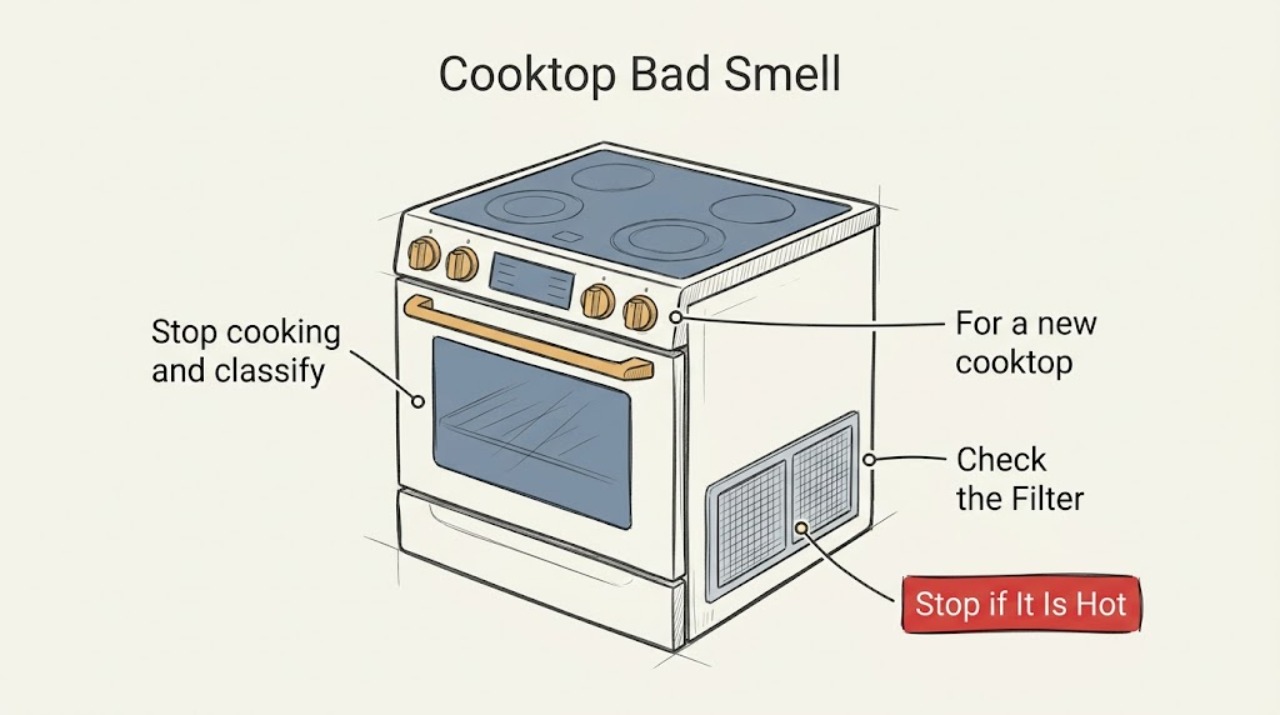
Cooktop Bad Smell: Identify Gas, Burnt Residue, and Electrical Risk
Do not treat every cooktop smell as the same problem. First identify whether the cooktop is gas, radiant electric, or induction, and whether the smell is new-appliance odor, food or cleaner residue, melted plastic, a sharp burning/electrical odor, or gas/exhaust.
-
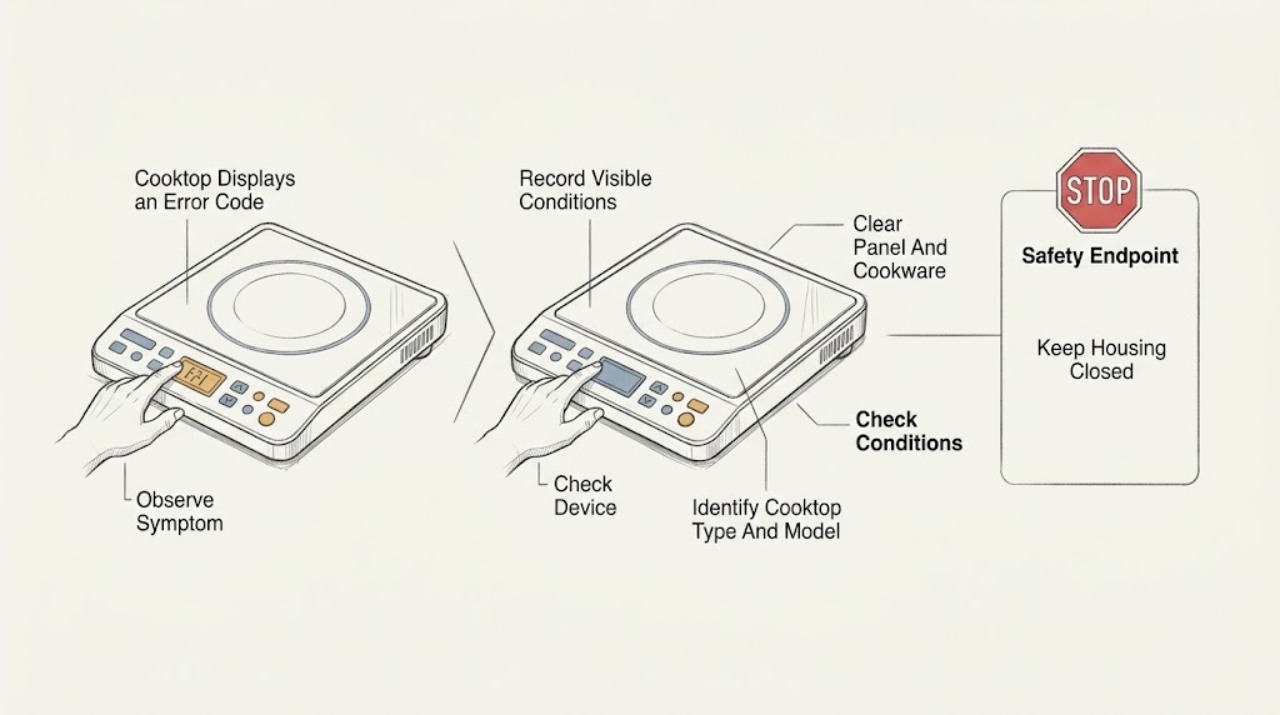
Cooktop Displays an Error Code (Code Is Visible): What to Check and What to Do Next
A visible cooktop error code is a symptom, not a universal diagnosis. First photograph or transcribe the complete code, identify whether the cooktop is electric, induction, or gas, and record which zone or control is affected.
-
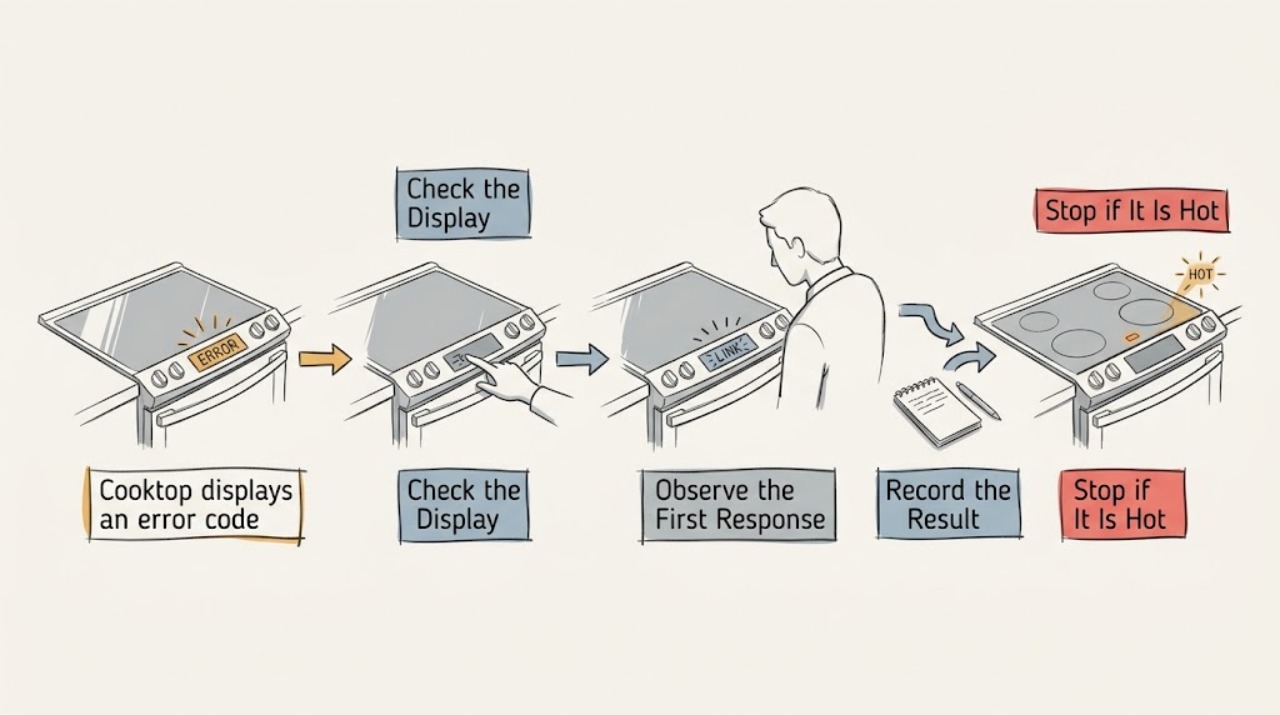
Cooktop displays an error code power reset may clear: What to Check and What to Do Next
A cooktop error code can be a temporary control lockout, overheating condition, wet or obstructed touch panel, supply-power problem, or a persistent electronics, sensor, wiring, or heating fault. A power reset may clear a one-time code, but it does not identify or repair the underlying cause.
-
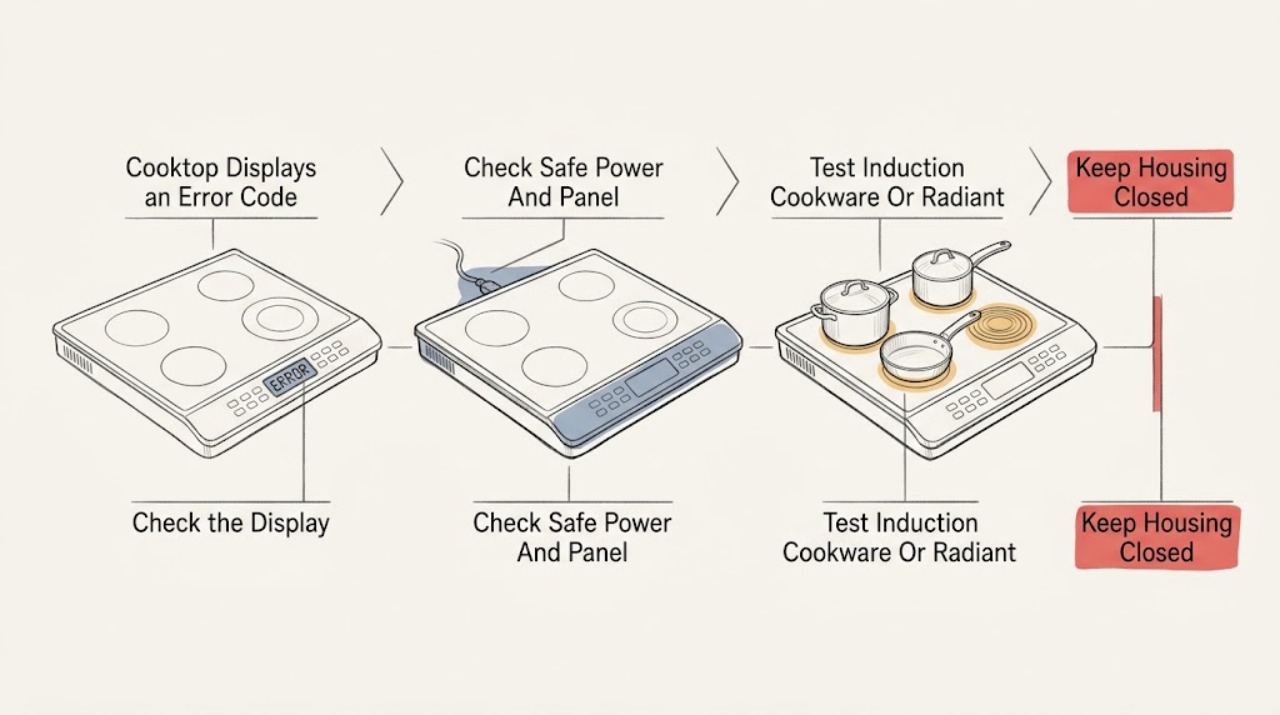
Cooktop Displays an Error Code, One Zone or All Zones Fail: What to Check and What to Do Next
Treat the code and the number of failed cooking zones as separate clues. First photograph or write the complete display exactly as shown, identify whether the cooktop is gas, radiant electric, or induction, and find the matching manual; code meanings and reset intervals are model- and region-specific.
-
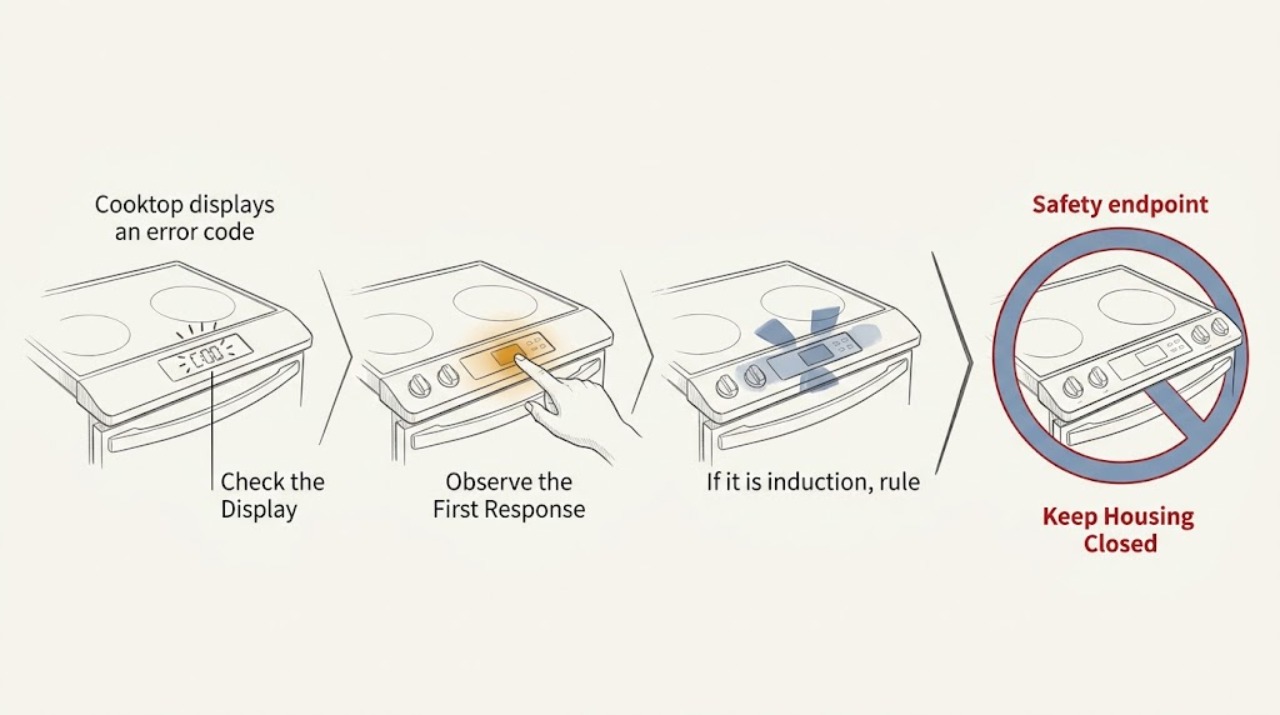
Cooktop displays an error code: What to Check and What to Do Next
A cooktop error code is a model-specific diagnostic message, so do not assume that a code has the same meaning on every brand. First record every character exactly, then clear and dry the touch controls and remove anything resting on them.
-
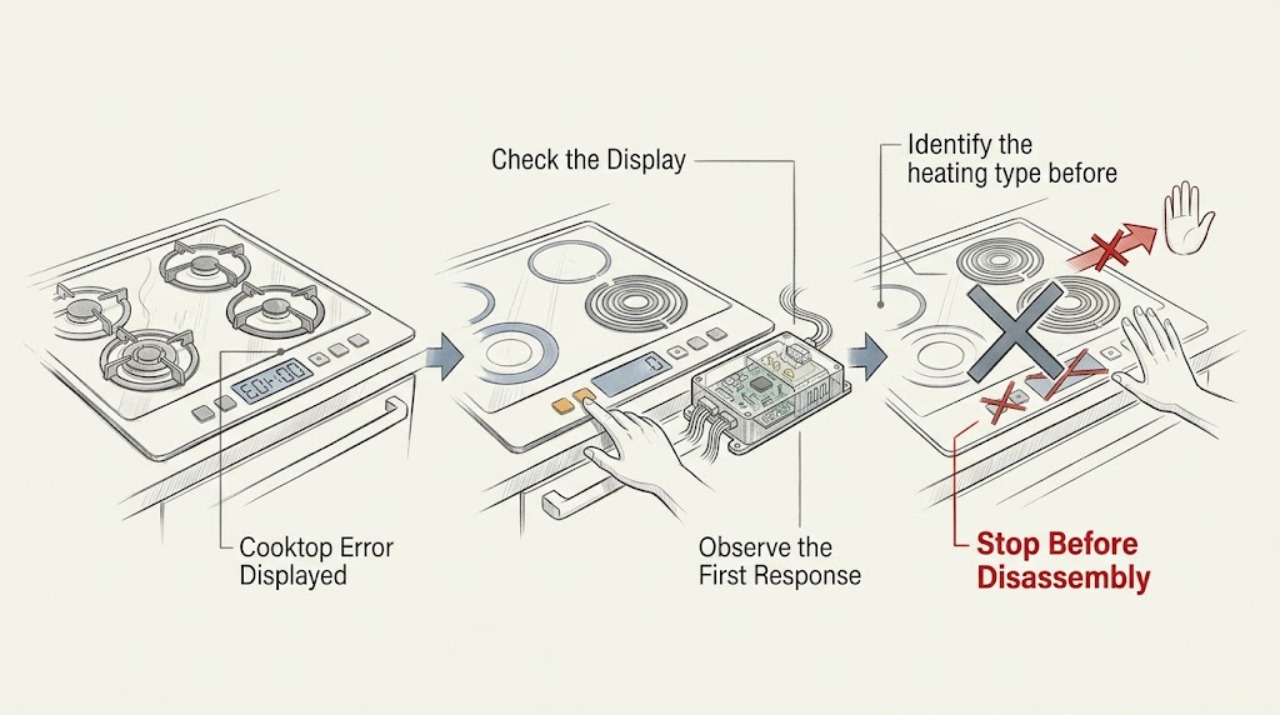
Cooktop Error Displayed: Identify the Code Without Guessing
A cooktop error display is not a universal code: record every character exactly, the appliance model, whether it is gas, electric radiant, or induction, and what was happening when the message appeared. Use that model's instructions to interpret it.
-
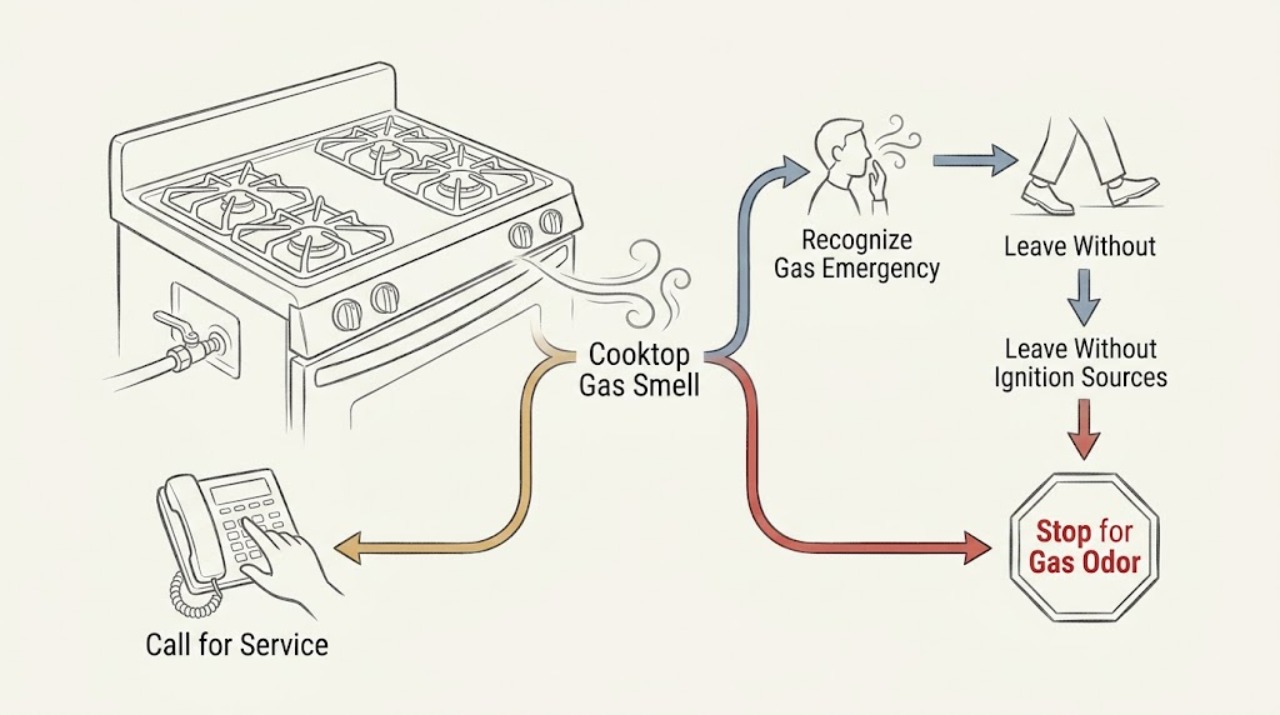
Cooktop Gas Smell: Leave Safely and Do Not Search for the Leak
Treat a gas smell at a cooktop as a possible gas emergency, not a routine appliance fault. Do not light anything, operate electrical switches or phones in the area, or try to find the leak.
-
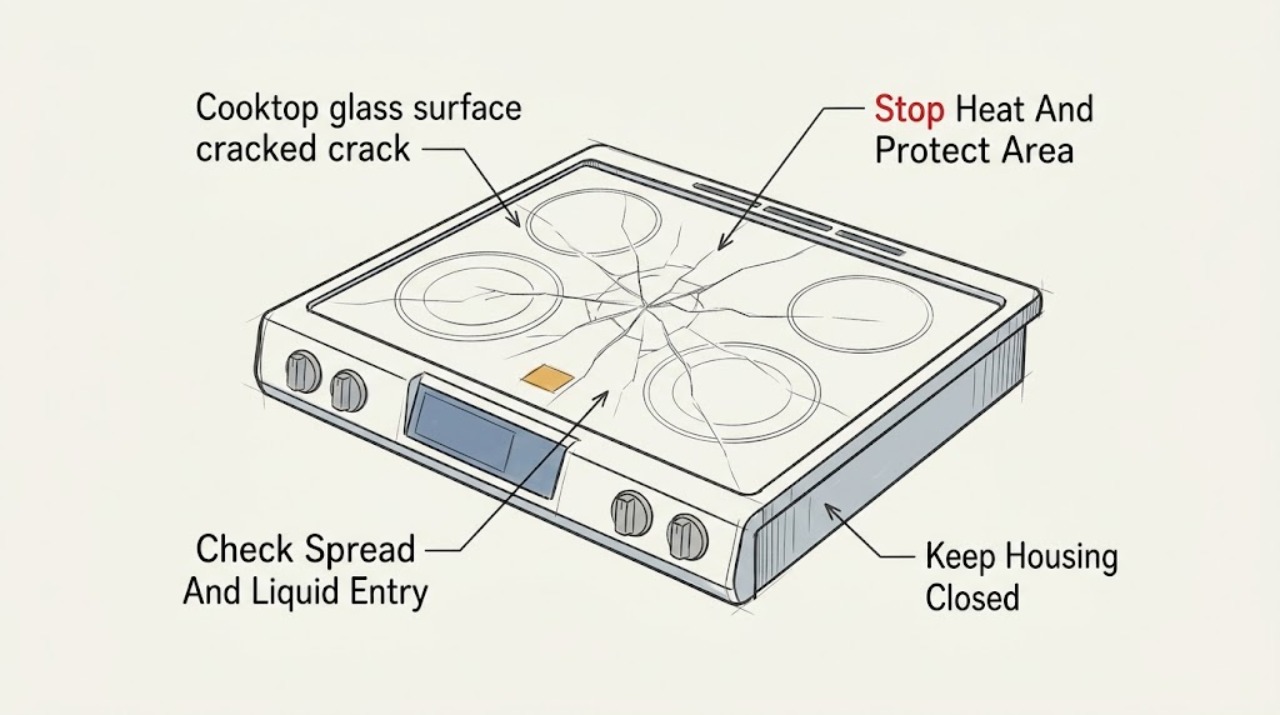
Cooktop glass surface cracked crack is visible: What to Check and What to Do Next
Treat a visible crack, split, or chip that reaches through a glass or ceramic cooktop surface as a stop-use condition, not a cosmetic cleaning problem. Turn all cooking zones off, keep people away from the damaged area, and let the surface cool without touching or cleaning the crack.
-
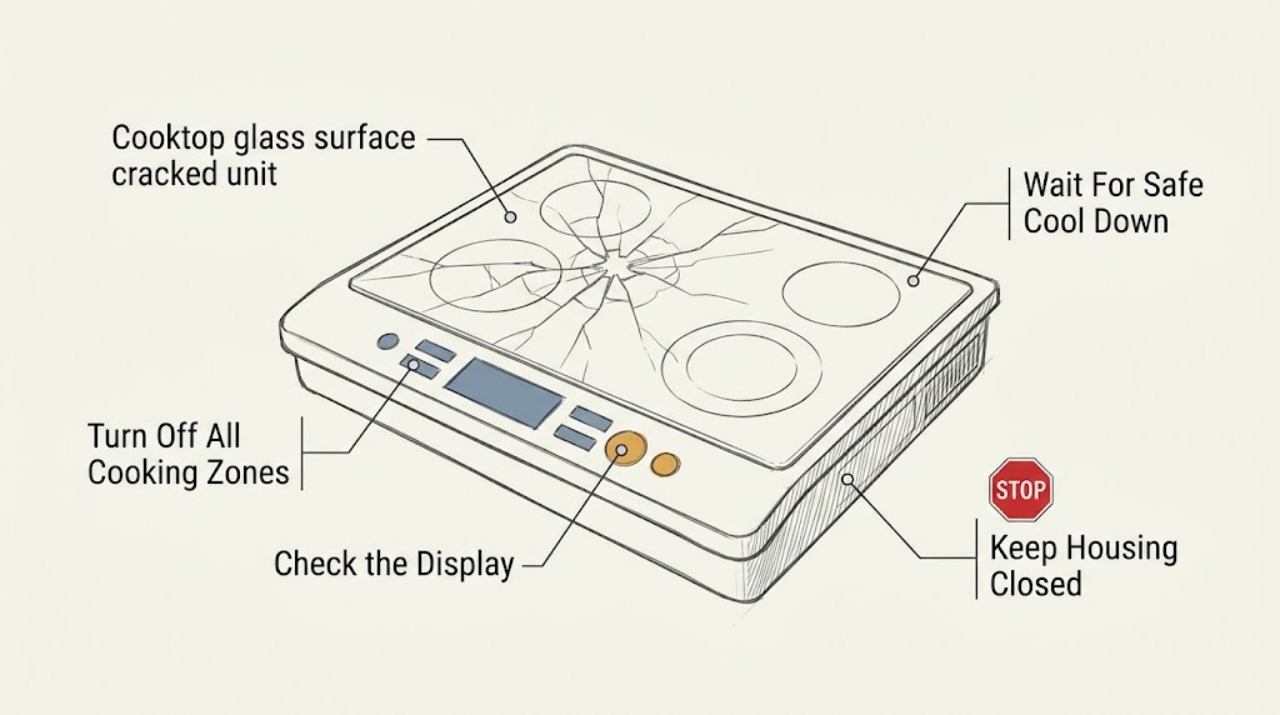
Cooktop glass surface cracked unit is powered: What to Check and What to Do Next
If a cooktop's glass surface is visibly cracked while the unit is still powered, turn all cooking zones off immediately and stop using the appliance. Do not touch, clean, scrape, press, or cover the crack while the surface is hot.
-
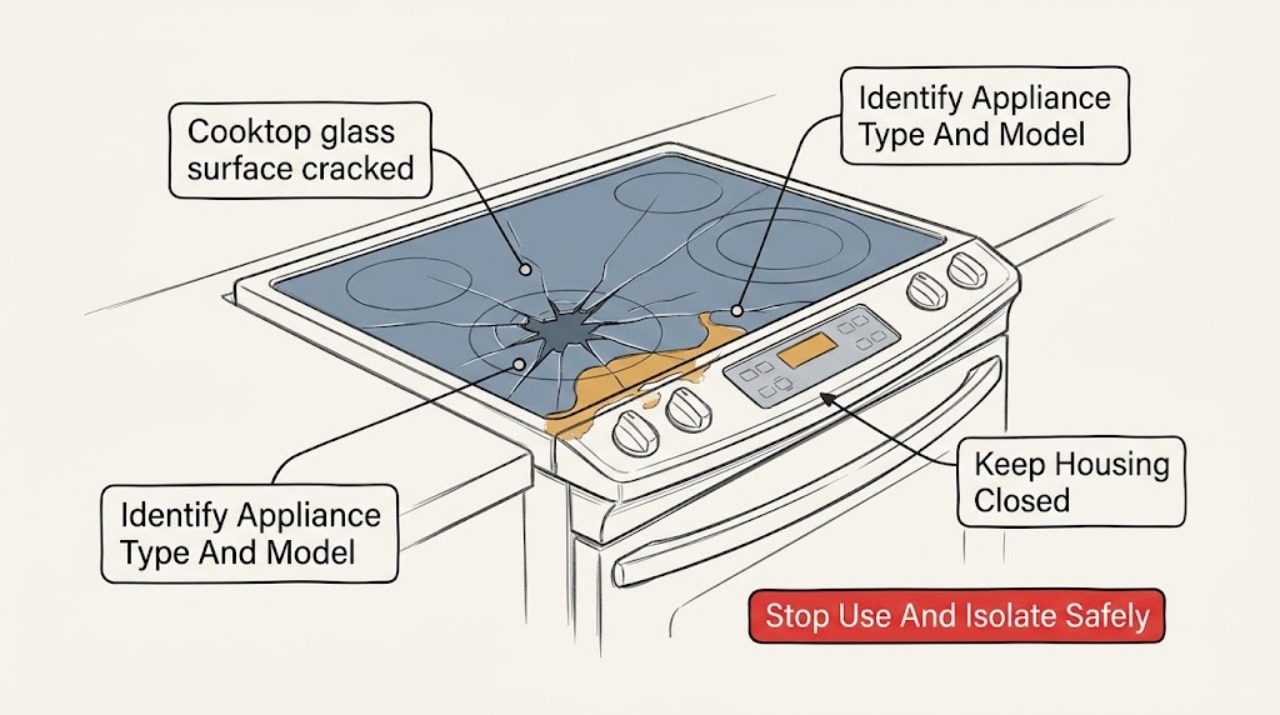
Cooktop glass surface cracked with liquid could enter controls: What to Check and What to Do Next
Treat a confirmed crack in a glass cooktop as a stop-use condition, especially when liquid could reach the controls or the opening below the glass. Turn all cooking zones off, keep hands and cookware away, and disconnect the appliance from power only if the connection can be safely reached without touching wet parts, opening panels, or entering a hazardous area.
-
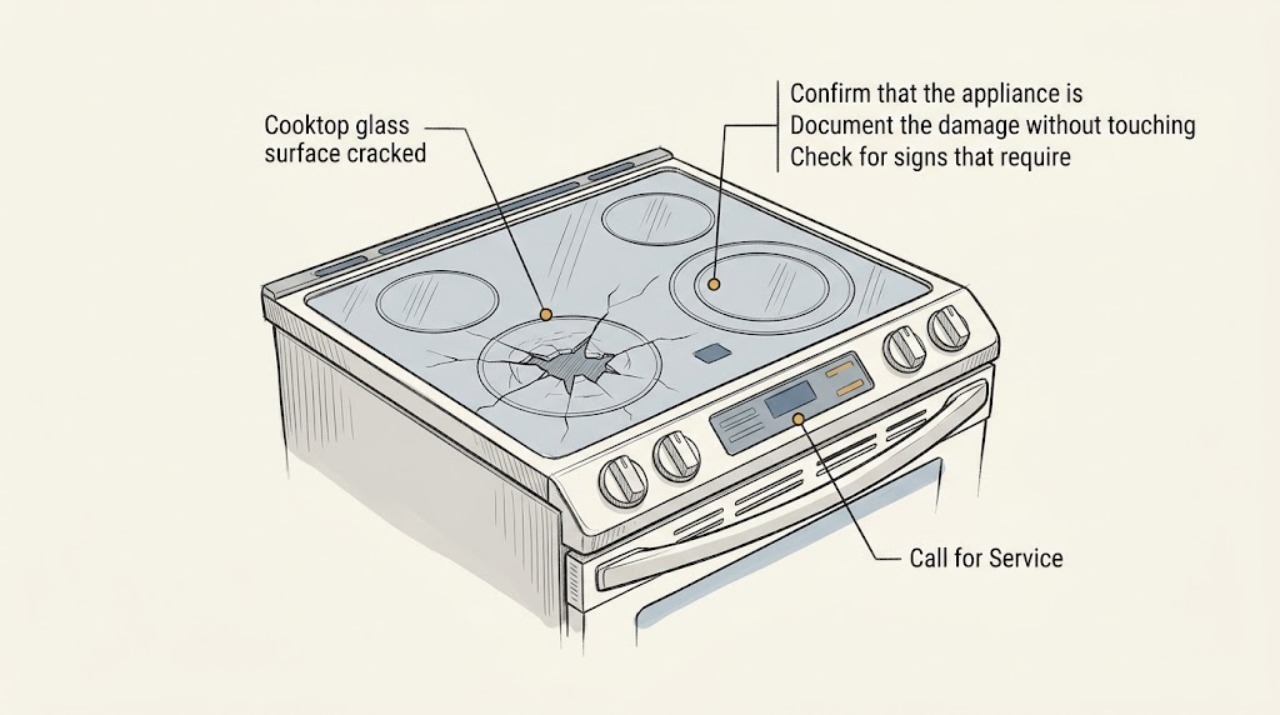
Cooktop glass surface cracked: What to Check and What to Do Next
Stop using a cooktop as soon as its glass surface is cracked, split, or broken. Do not cook on it, clean it, pour liquid on it, or test a burner; a spill can penetrate the damaged surface and create an electric-shock or burn hazard, and a gas-on-glass model can still have heat or ignition hazards.
-
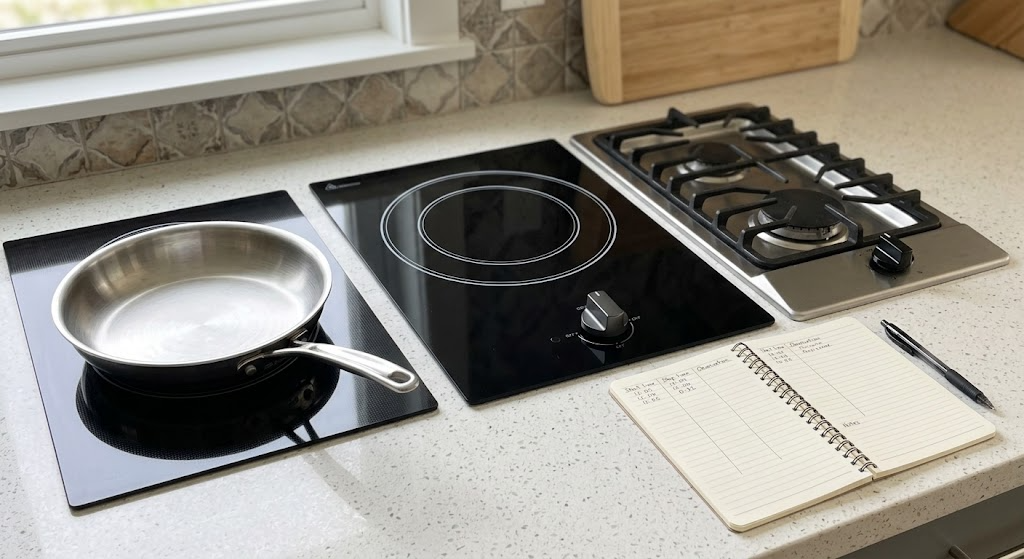
Cooktop Making Noise: Sort Normal Hums, Clicks, Fans, and Unsafe Arcing
A cooktop noise is diagnosed by its type, source, timing, and effect on heat. A low induction hum or cookware crackle that changes with power or pan can be normal; a cooling fan that continues after electric or induction cooking can also be normal.
-
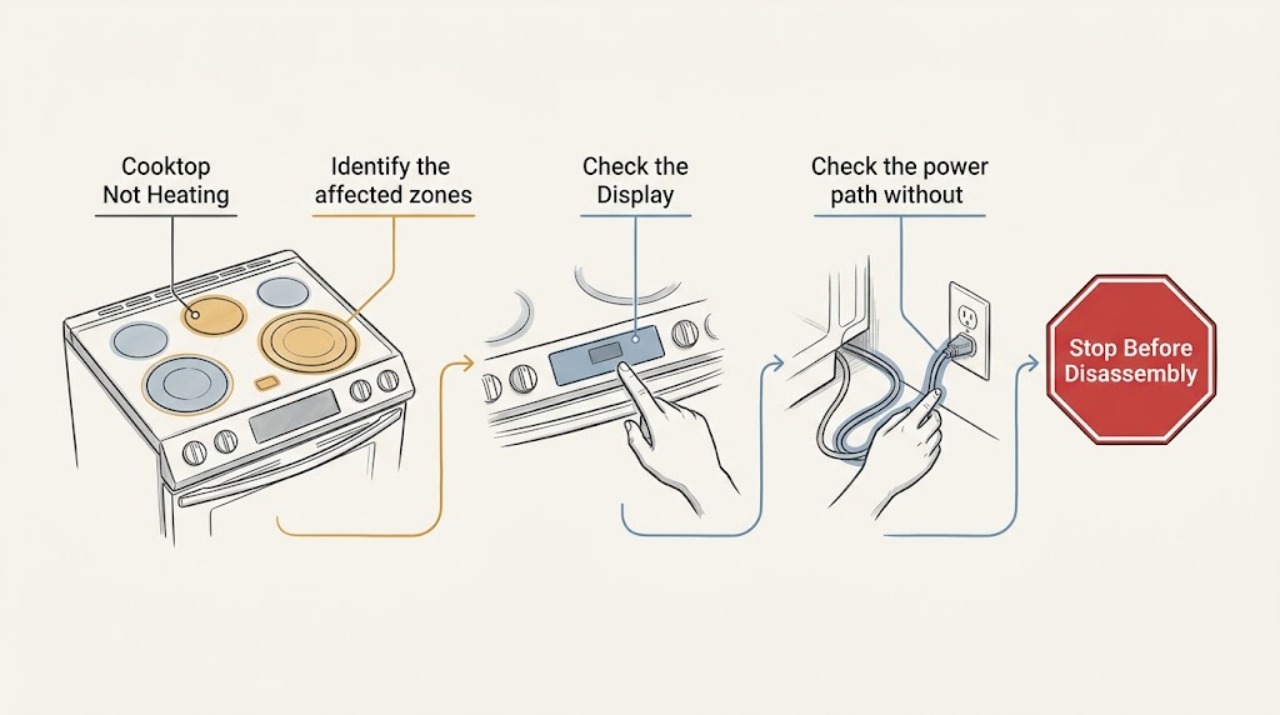
Cooktop Not Heating: Separate Power, Controls, Cookware, and Burner Faults
First identify whether the cooktop is gas, electric radiant, or induction, because a cold burner, a cycling radiant element, and a pan that an induction zone cannot detect need different checks. Confirm the selected zone and setting, check the appliance's power or gas supply from a safe external position, and look for a lock, pause state, error display, wet controls, or cookware mismatch.
-
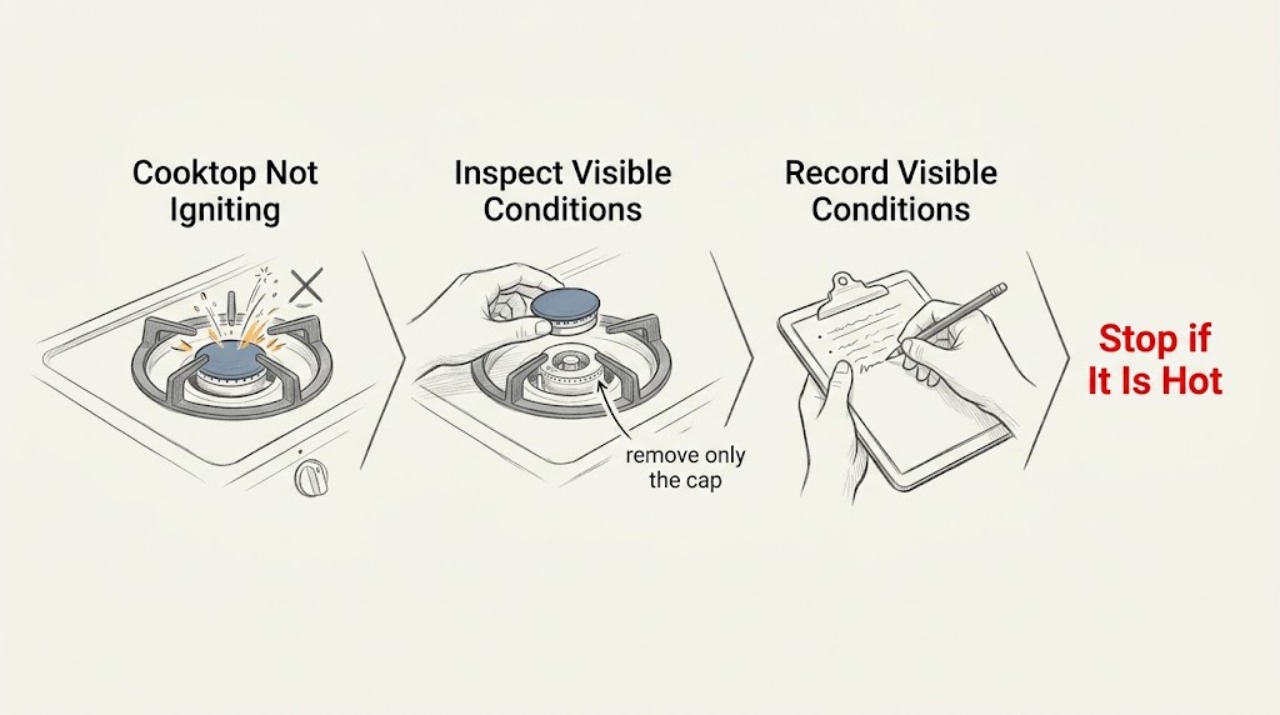
Cooktop Not Igniting: Confirm Gas Operation, Spark, and Burner Setup
"Not igniting" applies to a gas cooktop; radiant electric and induction cooktops do not create a gas flame, so their equivalent symptom is a zone not heating. First confirm the energy type and model.
-
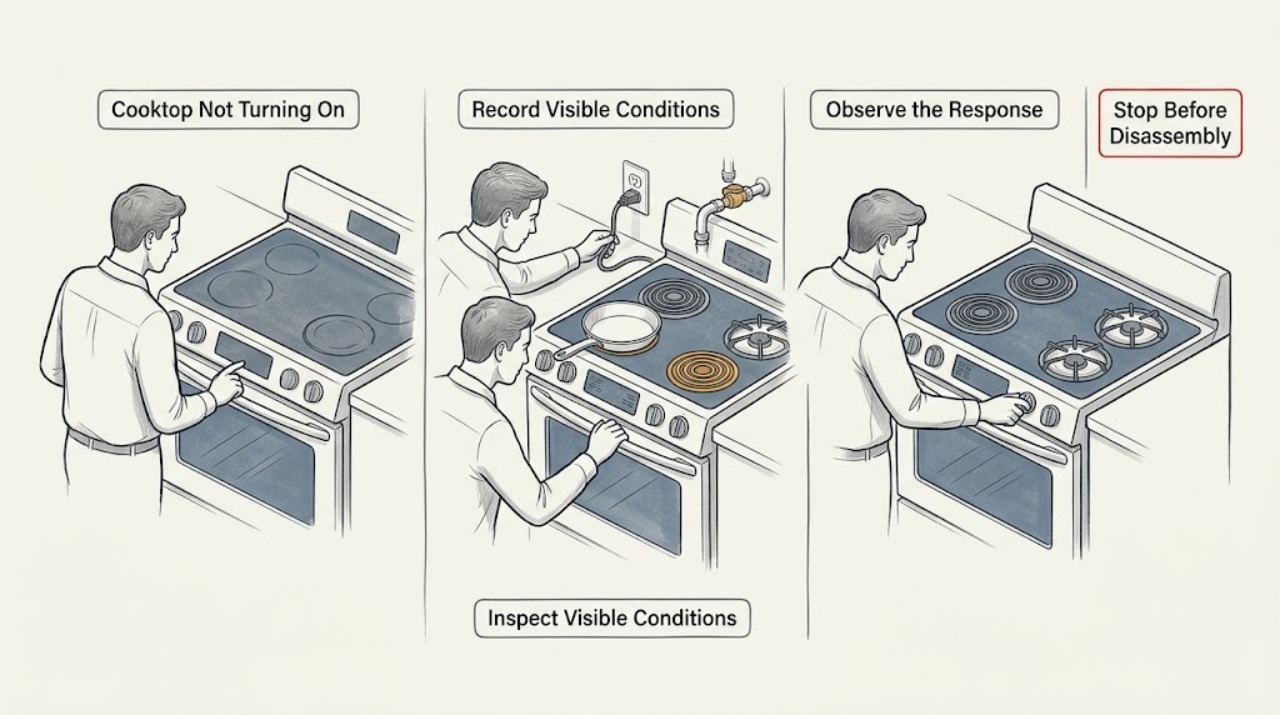
Cooktop Not Turning On: Separate Power, Lock, Gas, and Induction Causes
First identify whether the appliance is gas, radiant electric, or induction; do not assume that a blank display, a locked touch panel, a burner that will not ignite, and an induction pan warning have the same cause. For an electric or induction cooktop, check the model instructions for the On/Off control, then inspect the dry, accessible control panel for a lock icon, spill, object, or error display.
-
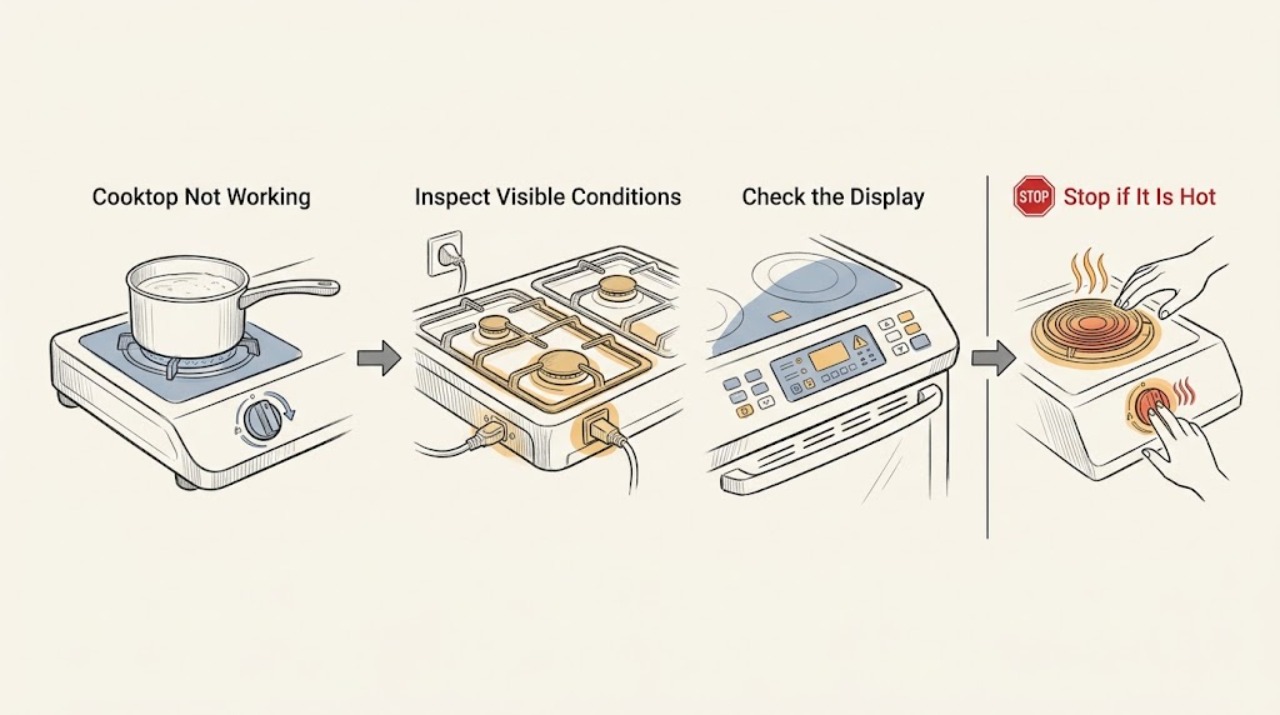
Cooktop Not Working
First separate a cooktop with no display or no power from one where only a burner or zone fails. From a dry, safe position, check for an outage, control lock, incorrect setting, or tripped supply protection; then identify whether the surface is gas, electric radiant or coil, or induction.
-
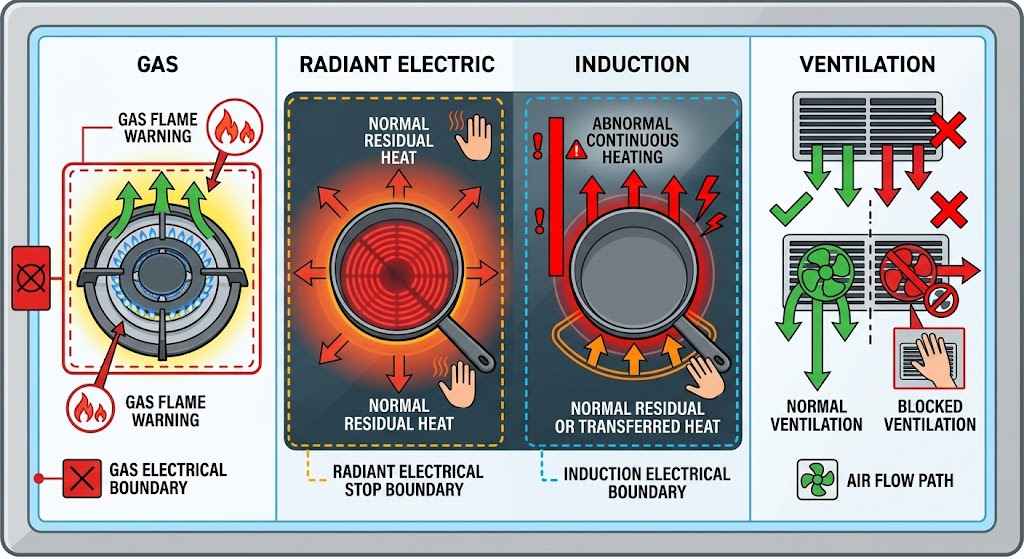
Cooktop Overheating: Tell Normal Residual Heat From a Dangerous Fault
First identify the cooktop type: gas, radiant electric, or induction. A glass surface or cookware that remains warm after switch-off can be normal residual or transferred heat, while a zone that stays energized, a gas flame that remains high, a control area that overheats, blocked ventilation, smoke, scorching, sparking, a cracked glass surface, or a gas odor is not a normal check.
-
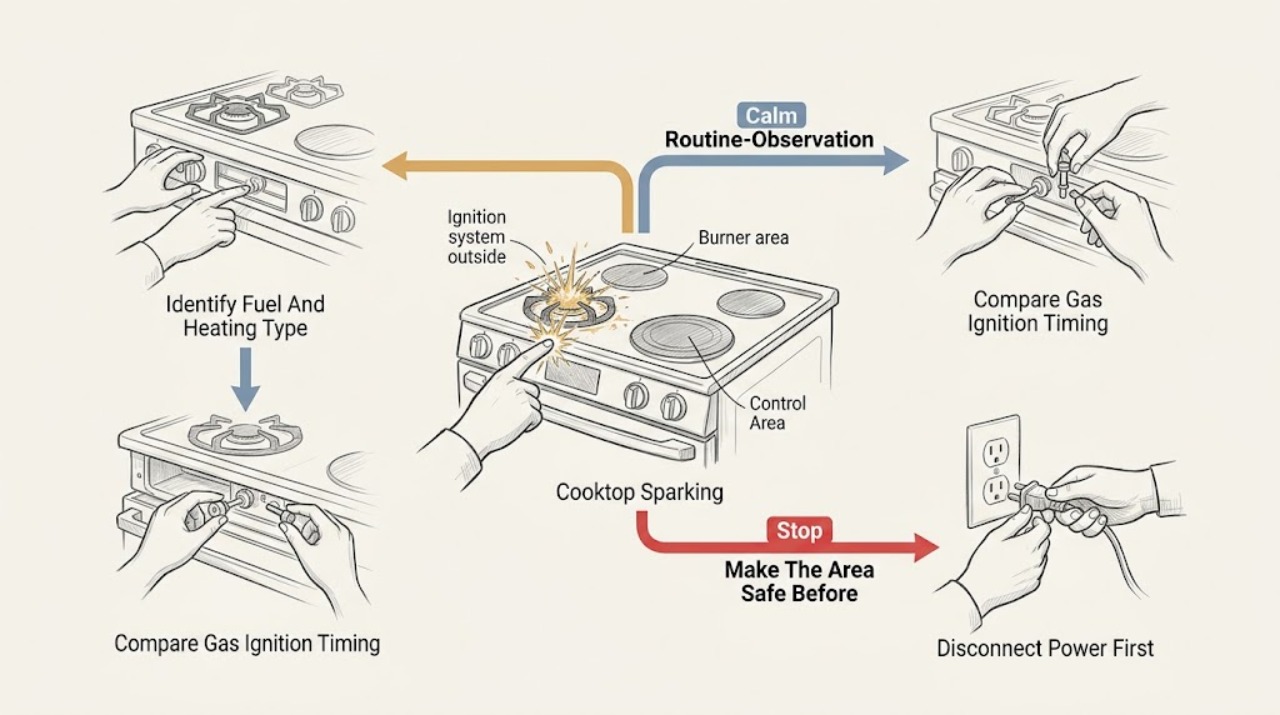
Cooktop Sparking: Tell Normal Gas Ignition from an Electrical Fault
A short spark at a gas burner while its control is deliberately turned to Ignite can be normal, and some gas cooktops make every igniter click or spark during one burner start. Sparking that continues after all controls are off, appears away from a designed gas igniter, follows a spill or cleaning, or is accompanied by gas odor, delayed ignition, an abnormal flame, smoke, heat damage, or a tripped breaker should not be repeatedly tested.
-
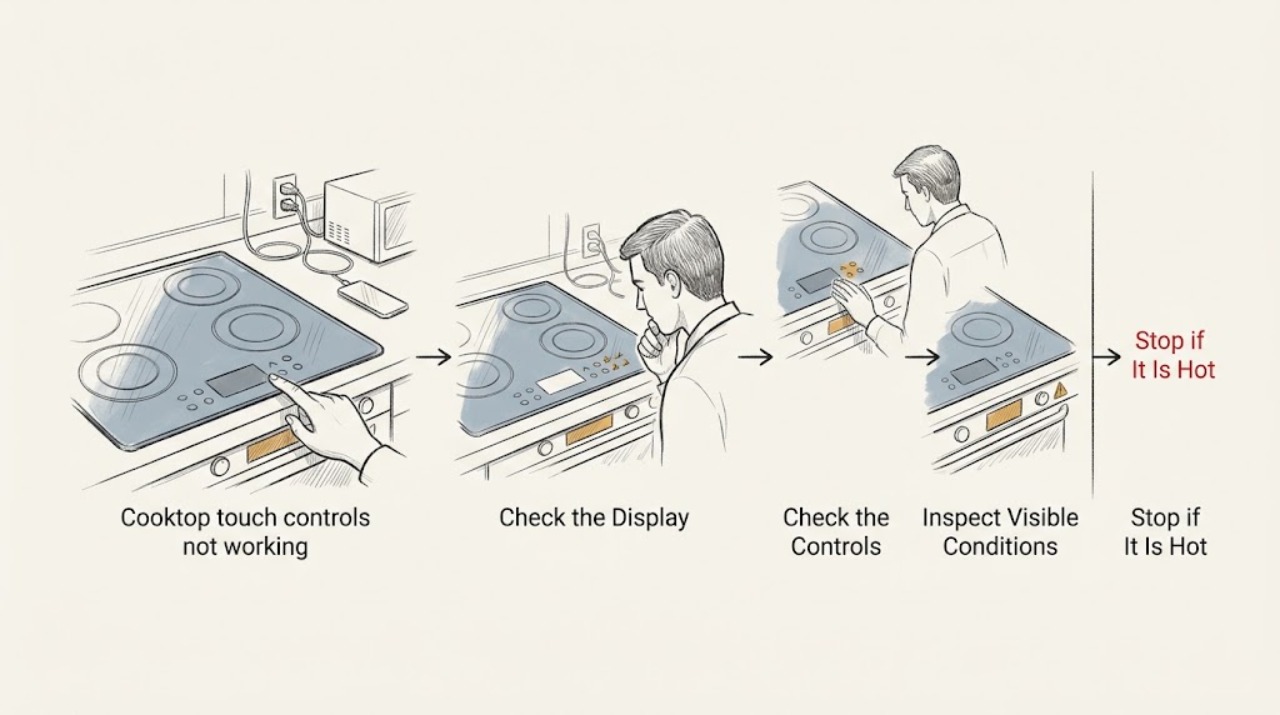
Cooktop touch controls not working power is available: What to Check and What to Do Next
When a cooktop has power but its touch controls do not respond, the most common safe-to-check possibilities are a control lock or wipe-protection state, moisture or an object on the panel, an overheated surface or electronics, incorrect touch technique, or an induction-pan condition that affects a zone rather than the whole panel.
-
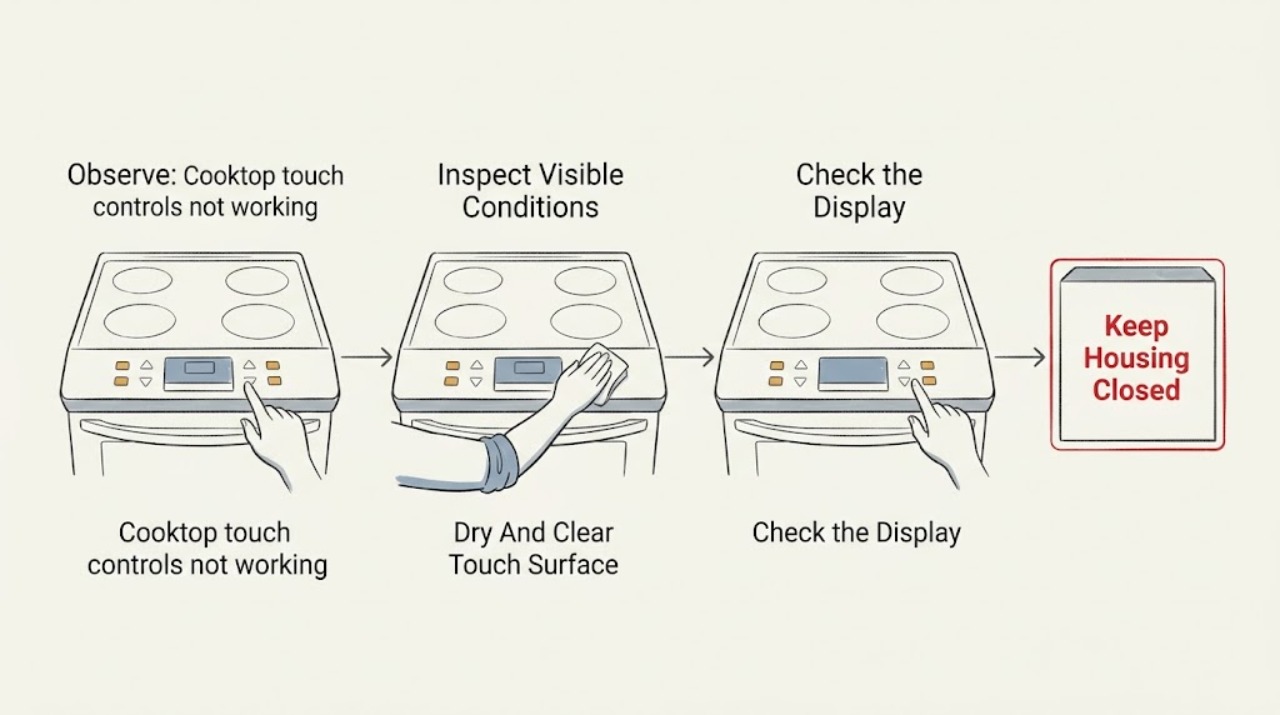
Cooktop touch controls not working, display is blank or frozen: What to Check and What to Do Next
A cooktop touch panel that does not respond with a blank or frozen display may be locked, wet or dirty, still initializing after power was restored, or not receiving power. It can also have a failed touch panel, display, fuse, wiring connection, or control board.
-
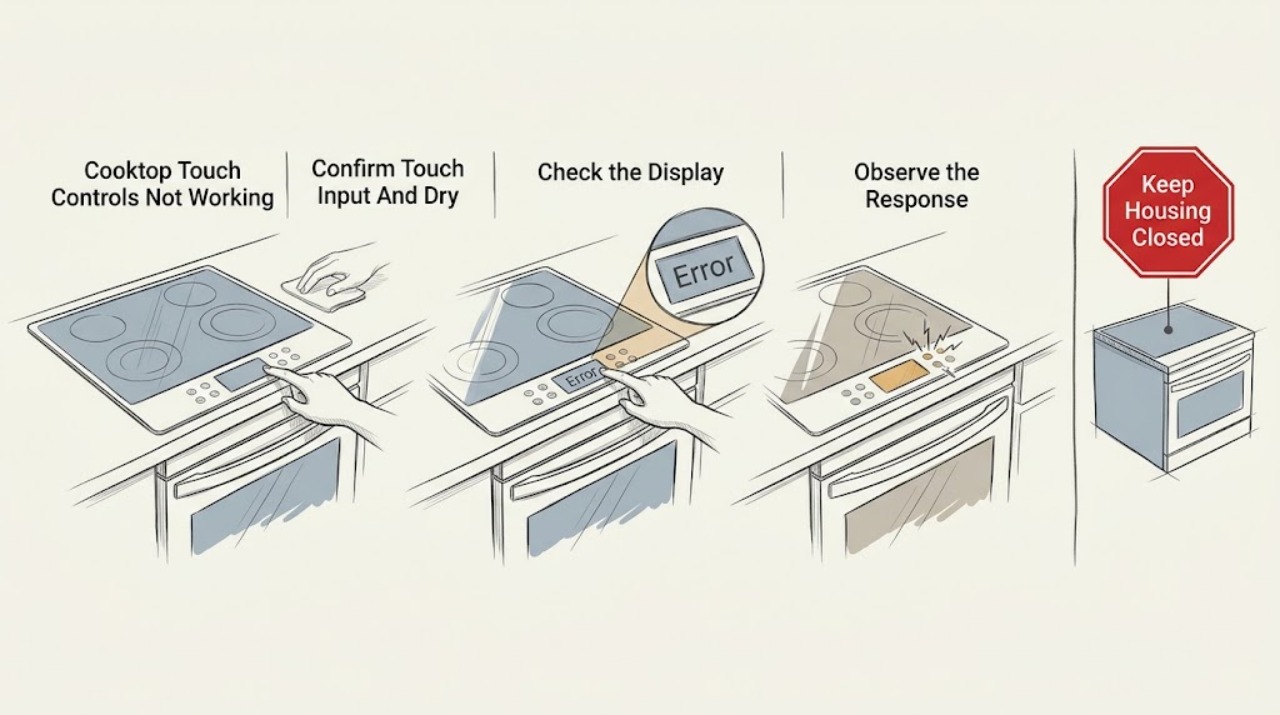
Cooktop Touch Controls Not Working, Surface Is Dry: What to Check and What to Do Next
If a cooktop's touch controls do not respond even though the surface is dry, first separate a locked or unavailable control state from a power or touch-panel failure. Use a bare, dry finger on the marked control area, remove any pan, utensil, food, or residue near the controls, and check for a lock symbol or message using the exact model manual.
-
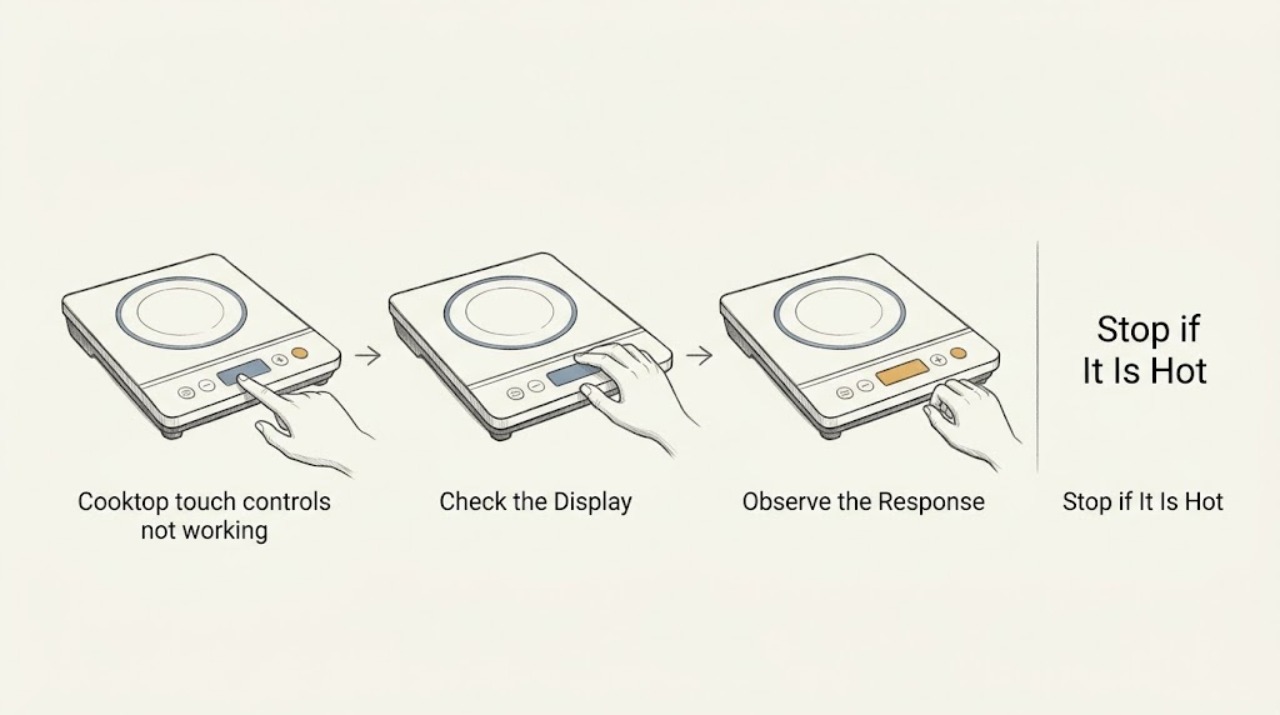
Cooktop touch controls not working: What to Check and What to Do Next
First make the cooktop safe: if the surface is hot, cracked, sparking, or wet, turn it off using a safely accessible normal control if possible and wait until it is cool and dry. Do not open the cooktop, access wiring, or repeatedly reset the breaker.
-
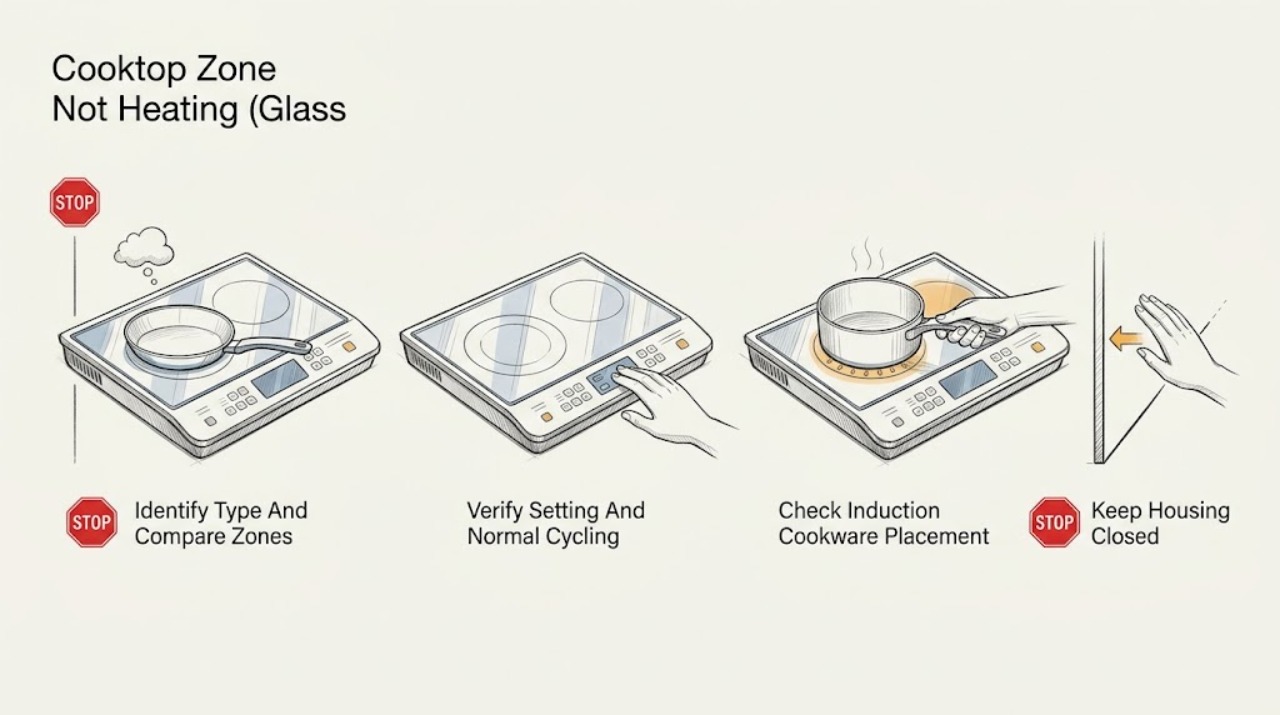
Cooktop Zone Not Heating (Glass Is Intact): What to Check and What to Do Next
When a cooktop zone will not heat but the glass is intact, first determine whether the zone is cycling normally, whether the selected control and cookware match the cooktop type, and whether the fault affects one zone or the whole appliance. Radiant and coil elements can cycle rather than glow continuously, while an induction zone may stay cool when it cannot detect suitable, centered cookware.
-
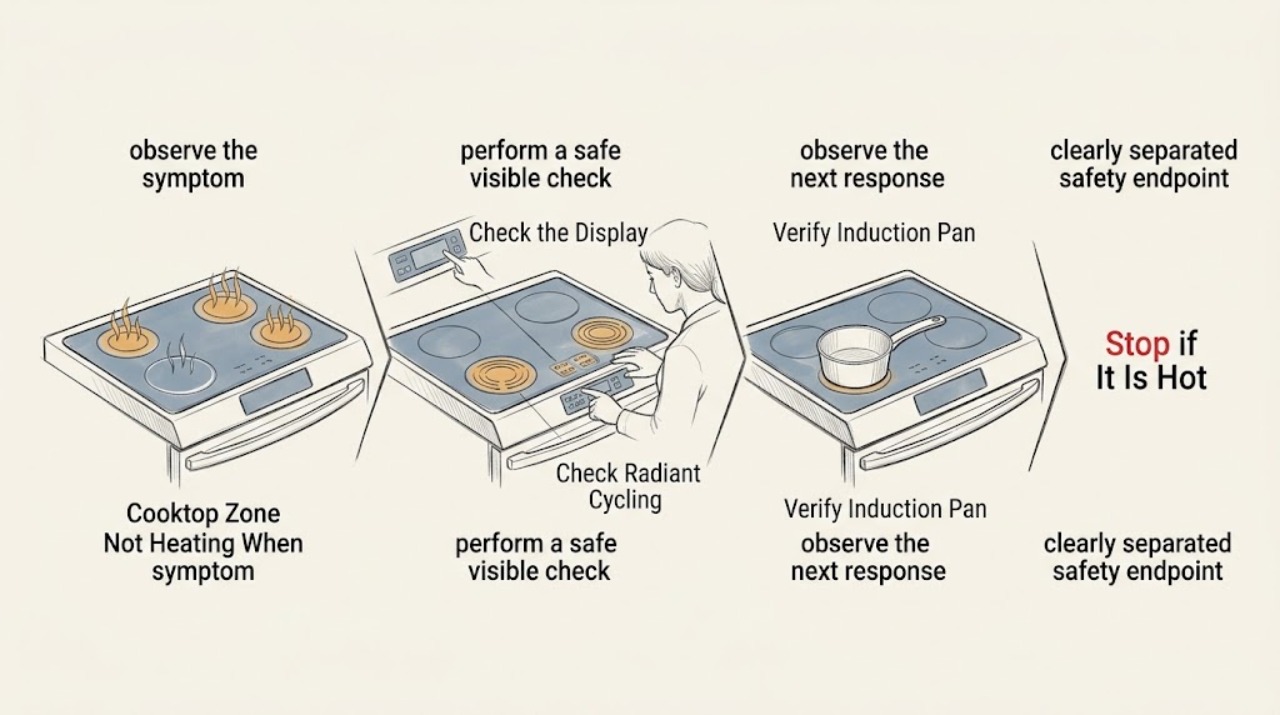
Cooktop Zone Not Heating When Other Zones Work: What to Check and What to Do Next
When one cooktop zone stays cool while the other zones work, first identify whether it is a radiant electric, removable-coil, or induction zone and confirm that the correct control is selected. Radiant elements can cycle on and off, and an induction zone may refuse to heat an empty, nonmagnetic, or incorrectly sized pan.
-
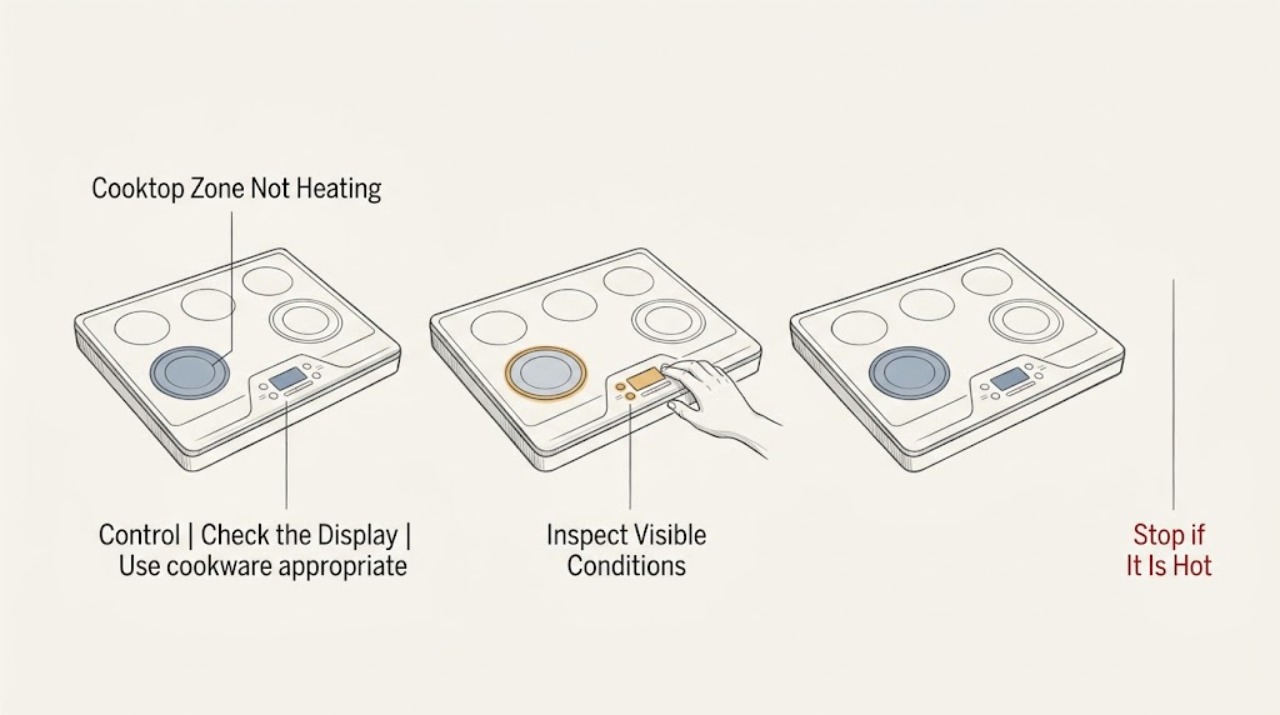
Cooktop Zone Not Heating, Control Responds: What to Check and What to Do Next
When a cooktop control responds but one zone does not heat, first identify whether the surface is radiant, plug-in coil, or induction and test the correct cookware and setting. A radiant zone may cycle on and off by design, and some areas may not glow red continuously; an induction zone needs a correctly sized, flat, compatible pan centered on the cooking area.
-
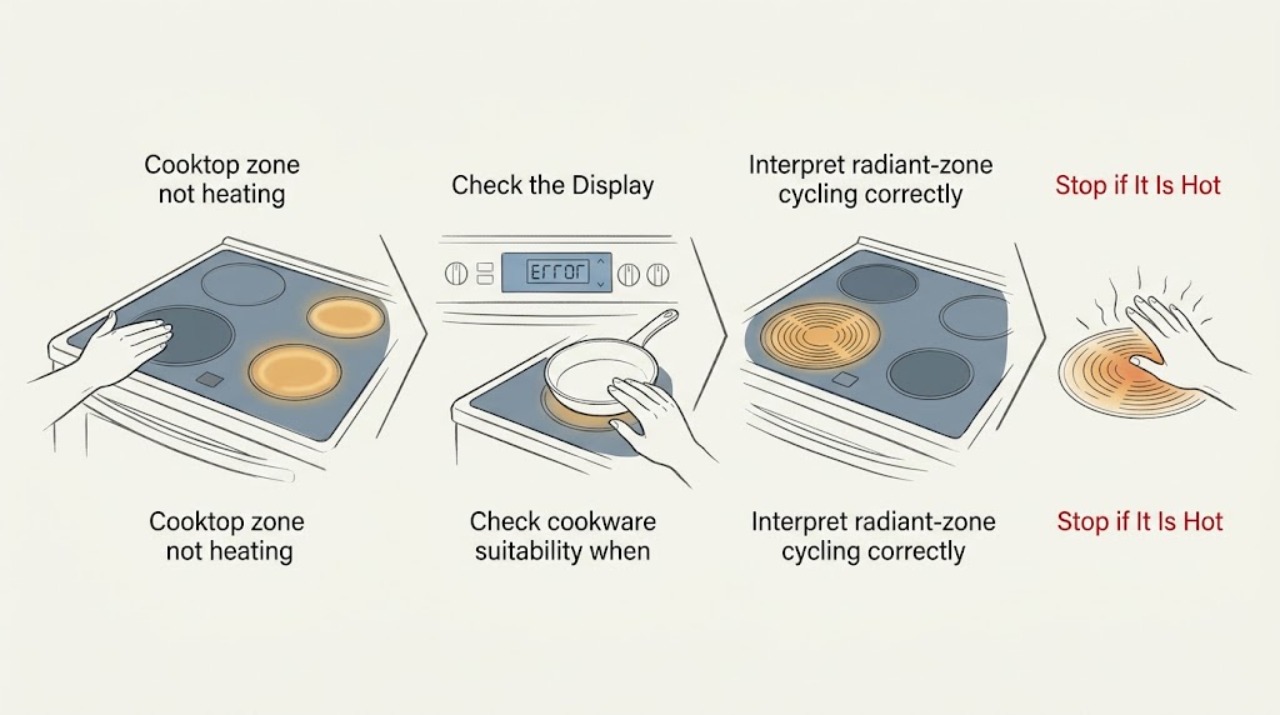
Cooktop zone not heating: What to Check and What to Do Next
First distinguish normal cycling or a control/cookware condition from a failed zone. With the cooktop cool and intact, confirm the intended zone and setting, check that the controls are clean and unlocked, and note any display or error behavior.