
On this page
Start here
Quick answer
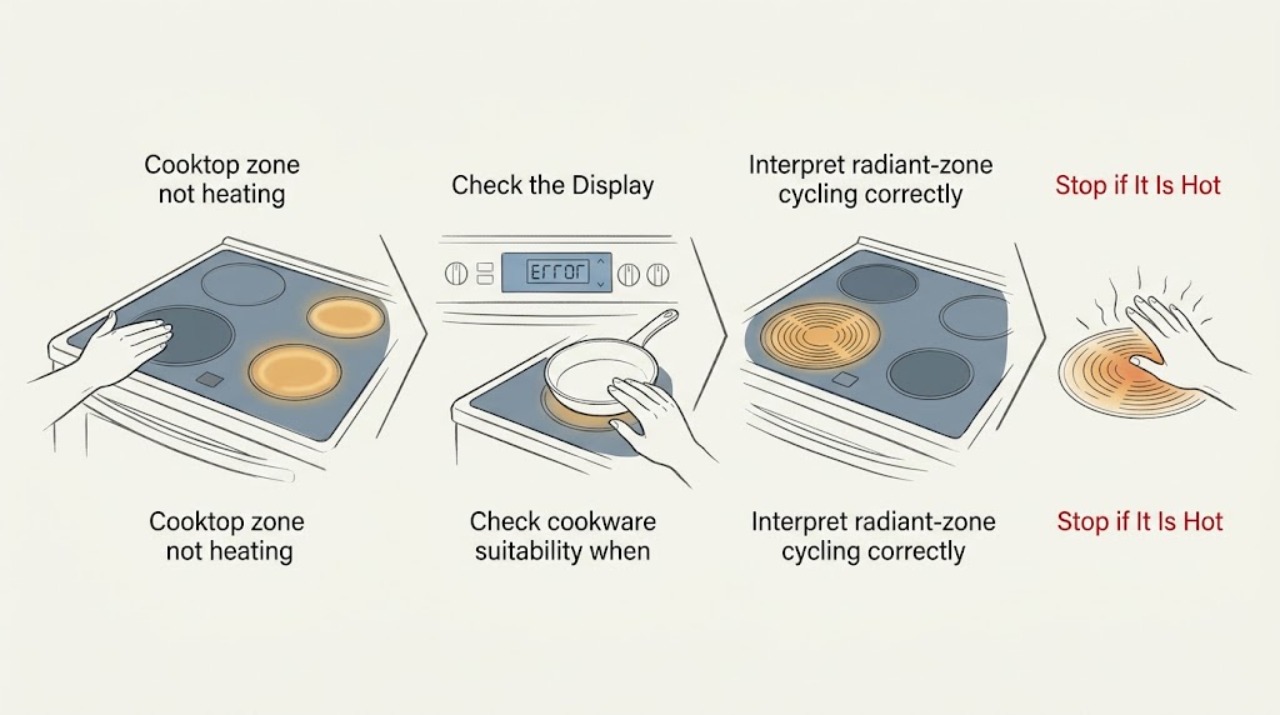
First distinguish normal cycling or a control/cookware condition from a failed zone. With the cooktop cool and intact, confirm the intended zone and setting, check that the controls are clean and unlocked, and note any display or error behavior. For induction, use only compatible cookware that fits the zone. A radiant zone may cycle and may not glow continuously. If one zone still stays cold, or if the surface is cracked, hot in an abnormal way, smoking, sparking, or damaged, stop using the cooktop and arrange qualified appliance service; do not open it or perform live electrical tests.
Work through in order
Diagnostic checks
Use only checks that match the exact appliance or system and its official guide.
-
Confirm the intended zone and user controls
With the surface cool and visibly intact, confirm that the control is selecting the affected zone, the intended heat setting is shown, Control Lock is not active, and the control area is clean and dry; do not open the cooktop or access wiring.
Expected result: The zone may have been mis-selected, the controls may show a lock or error, the panel may not respond, or the display may look normal while only one zone remains cold.
Next step: Follow only the model manual's user-level control guidance for a lock or displayed error. If the control is unresponsive or the single zone remains cold, stop troubleshooting and request appliance service.
Stop if: Stop immediately if the surface is cracked, wet in a way that cannot be safely dried, unusually hot, smoking, sparking, or otherwise damaged; do not operate the cooktop.
Why this matters
Why: A wrong zone, lock state, moisture, or a visible error can prevent heating without proving that the heating component has failed. A normal control response with one cold zone points toward a localized zone issue if safe cookware and normal operation have been ruled out.
-
Check cookware suitability when the cooktop is induction
Only if the cooktop is an intact, cool induction model, use the normal user control with cookware that the manual identifies as compatible, magnetic, and appropriately sized for the affected zone; do not use an empty pan or deliberately stress the appliance.
Expected result: The zone may detect the pan and display normal heating behavior, show a pan-detection warning, or remain inactive with cookware that is incompatible, too small, or poorly positioned.
Next step: Use the manual's cookware guidance if detection is the only issue. If compatible cookware is detected but the zone remains cold, stop using that zone and provide the display behavior and cookware details to a qualified technician.
Stop if: Do not test if the glass is cracked, the surface is still hot, the cookware or cord is damaged, or the cooktop shows smoke, sparks, or abnormal heat.
Why this matters
Why: Induction heating depends on compatible cookware and correct placement, so a detection warning can explain a cold zone without a failed coil. If suitable cookware is detected but the zone still does not heat, the issue is more likely to need service.
-
Interpret radiant-zone cycling correctly
If the cooktop is radiant electric, observe the zone only during ordinary safe use and note whether it cycles on and off or whether it never produces heat; do not turn the setting up repeatedly, remove hot cookware by hand, or use glow color as the only test.
Expected result: The element may cycle normally, may warm without every portion glowing red, or may stay cold while other zones behave normally.
Next step: If the zone shows normal cycling, use the manual's cookware and setting guidance. If it remains cold or behaves erratically, stop using that zone and request qualified service.
Stop if: Stop the observation if the surface becomes abnormally hot, cracks, smokes, sparks, smells burnt, or shows visible damage.
Why this matters
Why: Cycling and incomplete glow can be normal temperature-limiter behavior. A zone that stays cold rather than cycling, especially when the controls respond normally, is a service symptom rather than a reason to disassemble the appliance.
-
Compare the symptom with known normal behavior
Without deliberately running repeated tests, record whether the other zones were already working normally and whether the affected zone stopped after a spill, impact, power event, cookware change, or appearance of an error; use only information from safe ordinary use.
Expected result: Only one zone may be affected, several zones may be affected, or the timing and scope may be unclear.
Next step: Give the scope and timing to appliance service, along with the model and displayed code if already visible. Do not access the electrical connection or attempt a reset cycle beyond the model's explicit user instructions.
Stop if: Stop if resolving the question would require opening the appliance, testing energized components, repeated resets, or operating a cracked or damaged cooktop.
Why this matters
Why: One isolated cold zone suggests a localized control, element, or induction-coil issue after basic user conditions are excluded. Several zones or a whole cooktop problem points toward a broader power, control, or safety condition that needs professional assessment.
Use your observations
Decision map
Find the observation that best matches what you see, then follow the next safe action.
-
PATH 01Next step
What you see
The glass is cracked, the cooktop is damaged, or there is smoke, sparking, burning odor, or abnormal heat.
Do this next
Stop using the cooktop, keep clear of the damaged area, and arrange urgent qualified appliance or electrical service; use emergency help for active fire or dangerous sparking.
-
PATH 02Next step
What you see
The affected zone has a lock state, moisture-related control issue, or visible error that user documentation explains.
Do this next
After the surface is safe and cool, follow only the model's documented user-level control guidance. If the indication remains, request service rather than opening the cooktop.
-
PATH 03Next step
What you see
An induction zone does not detect the cookware or reports a cookware/size condition.
Do this next
Use compatible, correctly sized cookware as specified by the manual. If a suitable pan is detected but the zone remains cold, stop and request service.
-
PATH 04Next step
What you see
The controls respond, suitable user conditions are present, other zones are known to work, and one zone remains cold.
Do this next
Treat it as a localized appliance fault and arrange qualified service; do not replace an element, coil, or control yourself.
-
PATH 05Next step
What you see
Several zones or the complete cooktop are affected, or the cause followed a power event.
Do this next
Stop repeated testing and provide the scope and timing to qualified appliance service; electrical supply work is not a user repair.
Helpful context
Understand the symptom
A dark element is not always a failed element
Radiant electric elements can cycle on and off to control temperature, and parts of a smooth surface may not glow red even while heat is being produced. A warming or simmer area may also be designed not to glow red. Judge the symptom by whether the zone produces expected heat during normal, safe use rather than by glow alone.
Keep the inspection non-invasive
These checks are limited to user controls, visible displays, compatible cookware, and the condition of the surface. Do not lift the cooktop, remove a cover, probe wiring, replace a control or element, or keep trying a zone that is cracked, wet, hot in an unusual way, smoking, or sparking.
What service needs to know
Record the affected zone, cooktop type, selected setting, display or error behavior, whether other zones behave normally, and whether the problem began after a spill, impact, power event, or cookware change. Include the model information from the rating label or manual if it is already accessible without opening the appliance.
Only after diagnosis
Potential parts
- cooktop surface element
Consider this only after a technician confirms that a radiant surface element is the failed component rather than a control, wiring, or power issue.
Match the exact cooktop model, element style, electrical rating, and mounting arrangement; do not infer fit from appearance. - induction coil
This is relevant only if qualified diagnosis identifies the induction coil or its related assembly as failed after cookware and controls are ruled out.
Confirm exact model fit and service procedures with the manufacturer or technician; the glass and energized components are not a DIY access point. - cooktop zone control
Consider a zone control part only when service diagnosis links the symptom to that control rather than to cookware, a heating element, a coil, or the power supply.
Control boards and interfaces are model-specific; verify the complete model and revision before any professional replacement.
When checks do not resolve it
Need a professional?
Call promptly for a persistent dead zone, an unresponsive control, repeated error indications, or a problem affecting several zones. Stop immediately and seek urgent help for a crack, smoke, sparks, burning odor, or abnormal heat.
Common questions
FAQ
Why is one cooktop zone not heating?
A wrong control state, incompatible induction cookware, normal radiant cycling, or a localized element, coil, or control fault can all look similar. Safe observations help determine whether service is needed, but do not identify an internal component without diagnosis.
Does a radiant element need to glow red continuously?
No. Radiant elements can cycle on and off, and some portions or warming areas may not glow red. A zone that never heats or behaves abnormally still needs service.
What cookware does an induction zone need?
It needs cookware compatible with the model, generally magnetic and correctly sized and positioned for the zone. If suitable cookware is detected but the zone stays cold, stop using it and request service.
Can I replace the cooktop element or coil myself?
Do not open the cooktop or work on energized components. A qualified technician should confirm the failed part and its exact model compatibility, particularly for glass and induction assemblies.
Read the exact guide
Official sources
- Cooktop Not Working - Electric CooktopWhirlpool Product Help · Generic electric radiant cooktop symptom where one zone appears not to heat
- Samsung Cooktop FAQsSamsung Support · User-level checks for a cooktop that does not heat or respond as expected
- One burner on the Samsung cooktop does not workSamsung Support · A single cooktop zone that does not heat, including induction cookware detection
Community feedback
Share a repair observation
Share a plain-text repair observation. Accepted observations are published automatically; this page may take a moment to update.