
On this page
Start here
Quick answer
If cooking makes the kitchen uncomfortably hot in summer, induction generally releases less waste heat into the room than gas or conventional electric cooking because it heats compatible cookware directly. A conventional electric surface can stay hot after the pan is removed, while gas adds flame and combustion heat that must be properly vented. Before blaming a cooktop fault, identify whether the heat is normal residual heat at the cookware/surface or unusual heat with controls off, then check the hood and cooking setup. For an induction changeover, test cookware with a magnet and have the electrical capacity and dedicated circuit assessed; do not assume a portable or built-in model has the same requirements. Use a properly sized hood vented outdoors, especially with gas, and stop using the appliance for abnormal glowing, damaged glass, gas odor, smoke, or a carbon-monoxide alarm until a qualified professional checks it.
Work through in order
Diagnostic checks
Use only checks that match the exact appliance or system and its official guide.
-
Check 1
Classify the heat before comparing technologies: with the control off and the cookware removed, observe whether only the pan and nearby surface remain warm, or whether a burner, glass zone, flame, odor, smoke, or cabinet area continues producing unusual heat.
Expected result: Heat is limited to the recently used pan/surface, or heat/odor/smoke continues with controls off or appears in an unexpected area.
Next step: For abnormal heat, smoke, damaged glass, gas odor, or a carbon-monoxide alarm, stop using the cooktop, leave the area when necessary, and obtain qualified appliance or combustion service. Do not repeat the test or open the appliance.
Why this matters
Why: Residual heat from cookware or a conventional electric surface can be normal. Continued or misplaced heat is not explained by the normal induction-versus-electric-versus-gas efficiency comparison and may indicate a control, installation, ventilation, or combustion problem.
-
Check 2
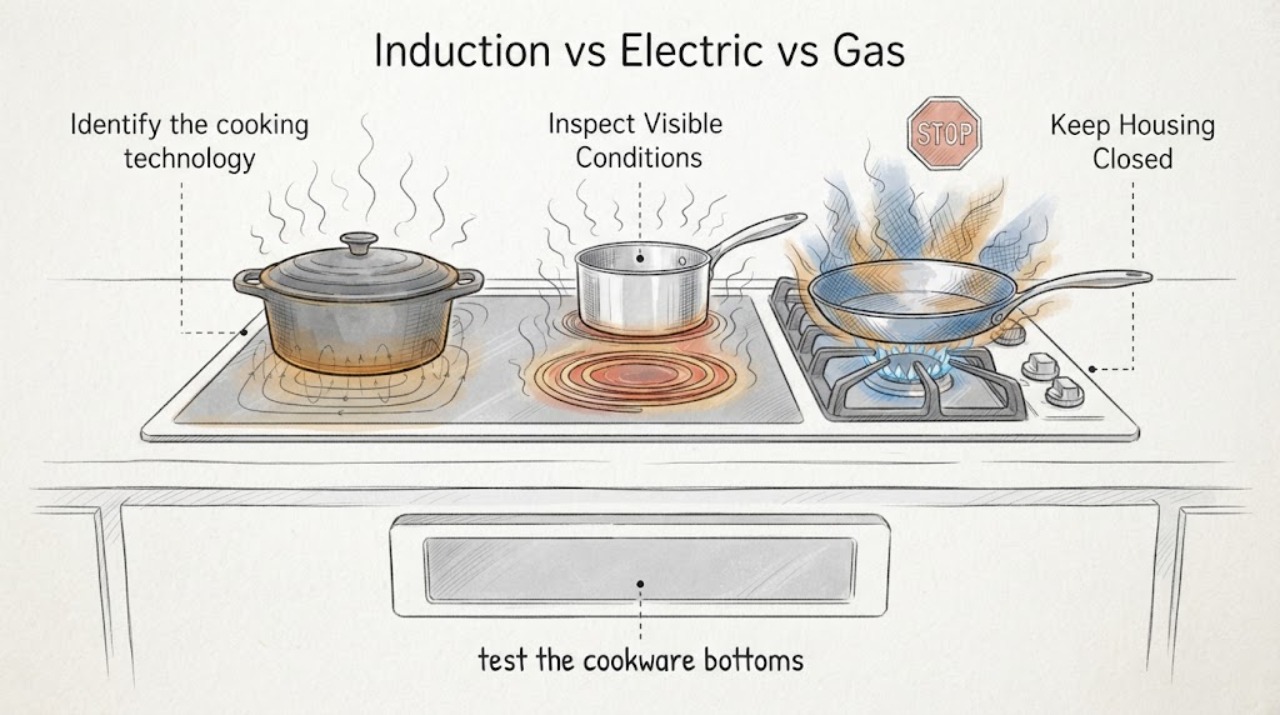
Identify the cooking technology and where the summer heat is going: gas flame and combustion products, conventional electric radiant/coil heat, or induction heating a compatible pan. Note whether the room heats mainly during active cooking or remains hot afterward.
Expected result: The cooktop is gas, conventional electric, or induction, and the heat pattern matches active flame/element use or persists after the control is off.
Next step: For a comfort-focused replacement, compare induction against the existing gas or conventional electric setup. If the heat persists after controls are off, treat that as a fault or installation branch rather than a reason to select a different technology.
Why this matters
Why: ENERGY STAR and DOE describe induction as transferring more heat directly into cookware and less into surrounding air; gas and standard electric cooking release more heat to the kitchen, while the pan remains a heat source with any technology.
-
Check 3
If considering induction, test the cookware bottoms with a refrigerator magnet and check the planned location, product type, and electrical capacity with the owner documentation and a licensed electrician before purchase or installation.
Expected result: The magnet sticks to the pan and the home has a suitable circuit confirmed for the selected cooktop, or the cookware is nonmagnetic/compatibility and electrical capacity are unresolved.
Next step: Use only the cookware and electrical arrangement approved for the exact model. If compatibility or capacity is unresolved, do not improvise adapters, extension cords, breakers, or wiring; have the installation reviewed professionally.
Why this matters
Why: A magnet test is a simple compatibility screen for ferromagnetic cookware, but it does not prove that every pan size or the appliance installation is suitable. Induction replacement can add electrical demand and may require a circuit or outlet assessment.
-
Check 4
Check the ventilation path while cooking: use the range hood during cooking, verify that it vents outdoors when possible, use the back burners when practical, and keep the hood running for the period recommended by the ventilation guidance. With gas, confirm that the hood and combustion appliance installation are professionally sized and maintained.
Expected result: The hood recirculates only, has weak capture, does not vent outdoors, or gas cooking is used without a properly sized outdoor-vented hood; alternatively, the hood captures and exhausts normally.
Next step: Use the existing hood as designed and ask a qualified professional to assess ducting, makeup air and combustion safety before changing airflow or installing a gas hood. Do not block a combustion appliance vent or use an unvented gas setup as a summer-cooling strategy.
Why this matters
Why: Ventilation removes cooking heat, moisture and particles from the room. EPA warns that an oversized exhaust can depressurize a home and cause combustion backdrafting, so simply using a stronger fan is not always safer with gas appliances.
-
Check 5
Reduce unnecessary heat during a normal cooking session by matching the pan to the cooking zone, covering pots when appropriate, lowering the setting once food reaches the needed temperature, and keeping the oven door closed if an oven is used with the cooktop.
Expected result: The pan is much smaller than the zone, food is boiling over or burning, the lid is off for a long simmer, or the oven door is opened repeatedly; alternatively, the cookware and settings are already matched.
Next step: Adjust the cooking setup within the cookware and appliance instructions. If the room still receives abnormal heat with the control off or the appliance shows damage, stop and request service.
Why this matters
Why: Heat that misses the pan or escapes through open cookware and oven doors adds to room heat and cooking particles. These operating choices do not diagnose a cooktop component, but they can materially change summer comfort.
Use your observations
Decision map
Find the observation that best matches what you see, then follow the next safe action.
-
PATH 01Next step
What you see
Only the pan and recently used surface remain warm, and the heat stops when cooking ends.
Do this next
Use the hood, cover pots when suitable, match pan to the zone, and compare technologies using the efficiency and cookware checks below if summer comfort remains poor.
Why this path and its safety boundary
Why it matters: This pattern is consistent with normal residual heat rather than a cooktop continuing to generate heat on its own.
-
PATH 02Next step
What you see
Induction, conventional electric or gas cooking all make the room hot mainly during active cooking, with no abnormal odor, smoke or continued heating after controls are off.
Do this next
Improve capture and cooking habits first, then compare an induction model with confirmed cookware and electrical capacity if replacement is being considered.
Why this path and its safety boundary
Why it matters: The main issue is likely cooking heat and ventilation rather than a single identified failed component; induction generally sends less waste heat to the room, while the pan still releases heat.
-
PATH 03Next step
What you see
A gas cooktop is used with poor outdoor capture, unusual flame/odor, smoke, or a carbon-monoxide concern, or a new hood causes draft problems.
Do this next
Stop using the appliance when unsafe, ventilate or leave the area as appropriate, and obtain qualified combustion and ventilation inspection. Do not adjust gas controls or hood ducting yourself.
Why this path and its safety boundary
Why it matters: The issue has a combustion and ventilation-safety dimension; a higher fan setting alone can worsen depressurization or backdrafting.
-
PATH 04Next step
What you see
Heat continues with controls off, glass is cracked or unexpectedly glowing, wiring is damaged, there is smoke or a burning odor, or a CO alarm activates.
Do this next
Stop using the cooktop, disconnect power or gas only when safe and accessible, leave the area for smoke or CO danger, and call qualified appliance/combustion service or emergency help as appropriate.
Why this path and its safety boundary
Why it matters: This is an abnormal appliance or immediate safety condition, not a normal technology comparison.
Helpful context
Understand the symptom
Summer heat from cooking has two different meanings. A hot pan and residual surface heat can be normal, while heat, smoke, or combustion products entering the room with the controls off or with poor ventilation indicate a safety or service problem. The technology comparison helps with comfort, but it does not replace an inspection of an abnormal appliance symptom.
Induction is usually the cooler choice for the room because the pan is the primary heated object. It still transfers heat from the pan and food to the kitchen, and a glass surface can remain hot after cooking. Gas and conventional electric cooktops can be used safely when installed and ventilated correctly; do not disable a hood or alter a gas or electrical connection to reduce heat.
When checks do not resolve it
Need a professional?
Call a qualified appliance or combustion professional if the cooktop continues heating with controls off, has a cracked or unexpectedly glowing surface, produces smoke or an unexplained odor, shows damaged wiring, or is connected to gas or ventilation that may be unsafe. Have electrical capacity and circuit work assessed before installing an induction cooktop, and have gas hood sizing, ducting and backdraft risk assessed before changing ventilation.
Common questions
FAQ
Is induction always cold in summer?
No. Induction generally releases less waste heat into the kitchen than gas or conventional electric cooking, but the pan, food and the glass surface can still be hot after cooking. A surface that stays hot or glows with the control off is an abnormal symptom requiring service.
Should I choose gas or a stronger hood to deal with summer heat?
Gas adds combustion heat and requires proper outdoor ventilation. EPA warns that excessive exhaust can depressurize a home and cause combustion backdrafting, so hood sizing and makeup air should be assessed professionally rather than solved by simply using a larger fan.
Will my current pans work on induction?
A magnet that sticks to the pan bottom is a basic compatibility screen, but confirm the exact cookware and appliance instructions before relying on it. Also confirm the home circuit and electrical capacity for the selected cooktop.
Read the exact guide
Official sources
- Making the Switch to Induction Stoves or CooktopsU.S. Department of Energy · DOE explanation of induction heating, residual surface behavior, magnetic cookware compatibility, relative efficiency and safety features; not a model-specific installation manual.
- Electric Cooking ProductsENERGY STAR / U.S. Environmental Protection Agency · ENERGY STAR residential electric and induction cooking-product guidance, including energy transfer, relative kitchen heat, cookware compatibility, surface safety and product-selection considerations.
- Sources of Indoor Particulate Matter (PM)U.S. Environmental Protection Agency · EPA cooking ventilation and combustion-safety guidance, including outdoor-vented hood use, back burners, lower settings, airflow selection and backdrafting caution.
- 2021-2022 Residential Induction Cooking TopsENERGY STAR / U.S. Environmental Protection Agency · ENERGY STAR technical comparison of residential induction, conventional resistance and gas cooking-top efficiency and surrounding-air heat; used as a technology comparison, not a specific product claim.
- Addressing Indoor Environmental Concerns During RemodelingU.S. Environmental Protection Agency · EPA kitchen ventilation and gas-range combustion-safety guidance, including properly sized outdoor-vented hood, backdrafting/depressurization and professional testing boundaries.
- Make Your Home Electric ReadyENERGY STAR · ENERGY STAR home electrical-readiness and comfort guidance, including summer waste-heat comparison for induction and the need to assess electrical capacity/circuits before adding electric cooking loads.
Community feedback
Share a repair observation
Share a plain-text repair observation. Accepted observations are published automatically; this page may take a moment to update.