
Repair problem
Making Noise Troubleshooting Guides – Page 3
Published FixGraph guidance for diagnosing and responding to making noise.
Matching published guides
Choose a guide that matches the service, equipment, and conditions you are seeing.
-
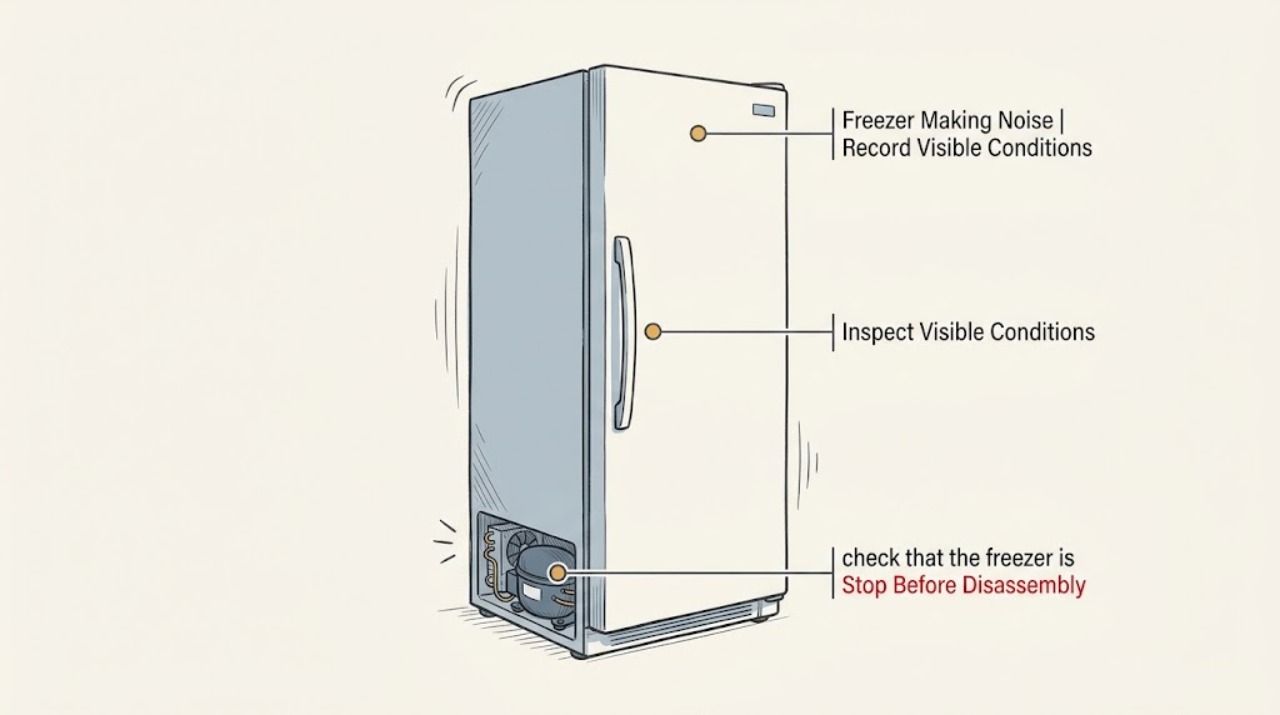
Freezer Making Noise: Identify Normal Cooling Sounds and Unsafe Changes
A freezer can hum, click, gurgle, pop, crackle, hiss, or make a brief water or ice-maker sound during normal cooling, defrost, and temperature regulation. The useful distinction is whether the sound is new or getting louder, where it comes from, whether it changes when a door opens, and whether the freezer is still holding temperature.
-
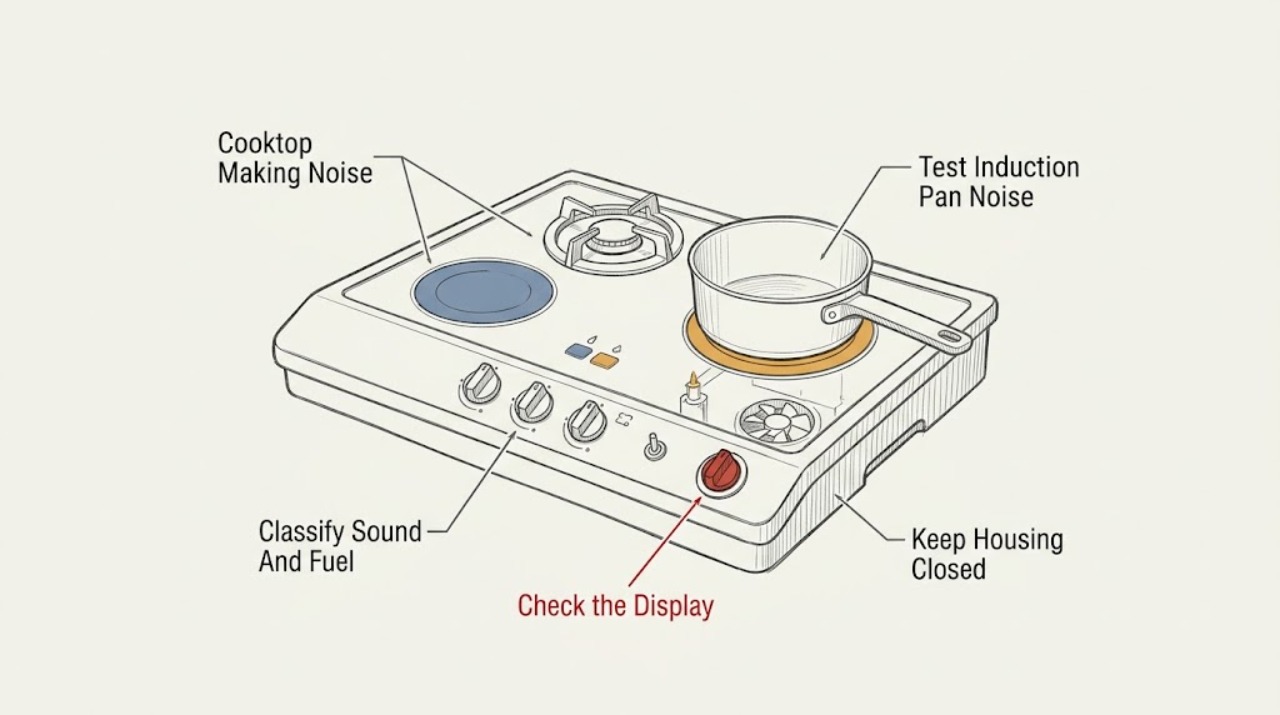
Frigidaire Cooktop Making Noise: Identify normal hums, clicks, and warning sounds
First identify whether the Frigidaire cooktop is induction, electric radiant, or gas, then note whether the sound follows the pan, a burner ignition attempt, a cooling cycle, or a particular control. Frigidaire says induction cookware can hum or buzz, controls can click while regulating temperature, temperature changes can cause expansion sounds, and fans can run to cool the appliance; those sounds are normally part of operation.
-
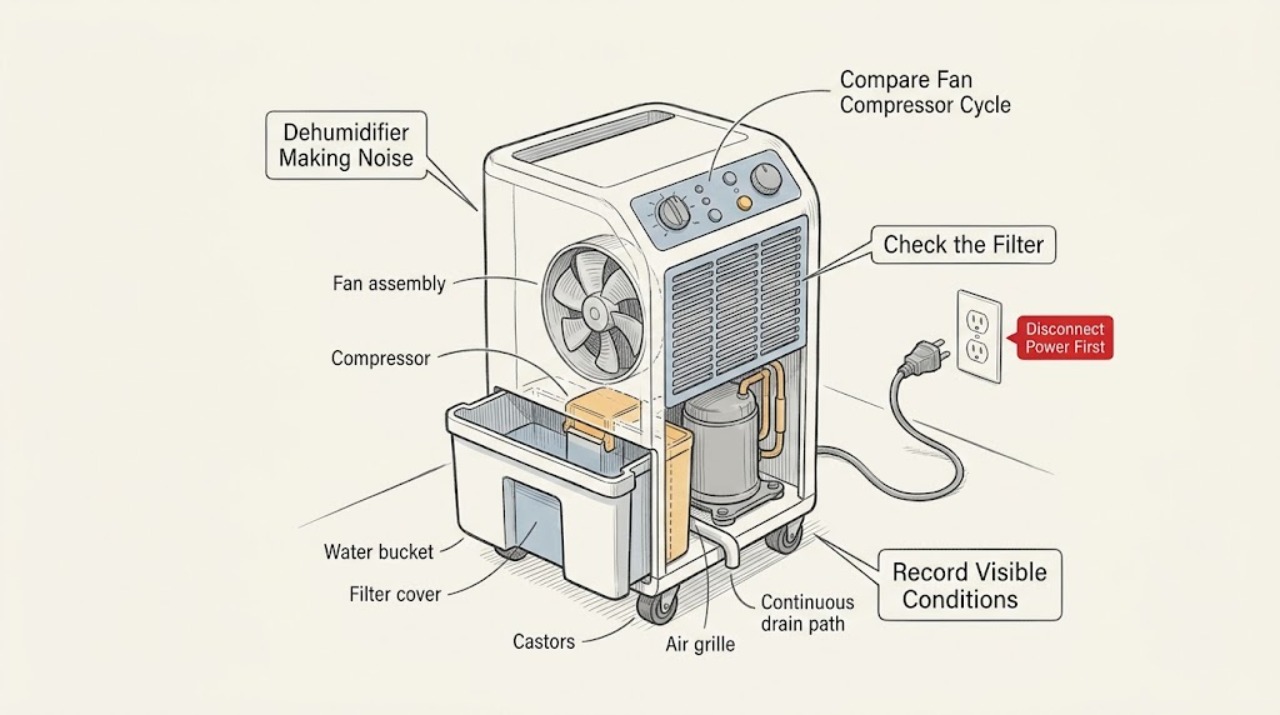
Frigidaire Dehumidifier Making Noise: Normal Cycles, Vibration, and Water Checks
A Frigidaire dehumidifier can make changing fan and compressor sounds during normal dehumidification: the fan may cycle with room humidity, and it may continue for a short period after the compressor stops. A rattle points first to the bucket or filter cover; humming or vibration calls for a flat, level floor with the castors supported evenly.
-
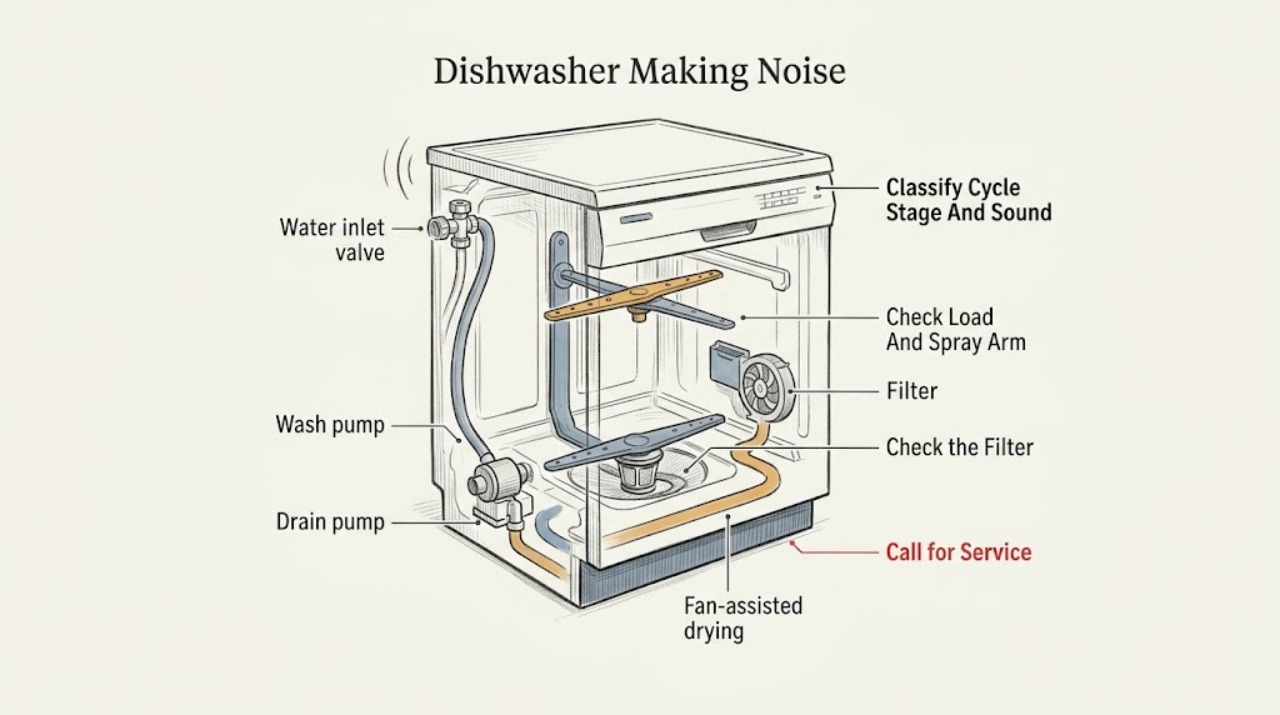
Frigidaire Dishwasher Making Noise: Normal Sounds and Safe Checks
Some Frigidaire dishwasher noise is expected: hissing can occur while the water valve fills, a wash-pump hum can start and stop as spray arms alternate, a drain-pump hum can change as water leaves, and a whoosh can change when spray arms switch levels. A single dispenser or ball-valve clunk can also occur during a cycle, and models equipped with Even Dry or Perfect Dry may run a fan.
-
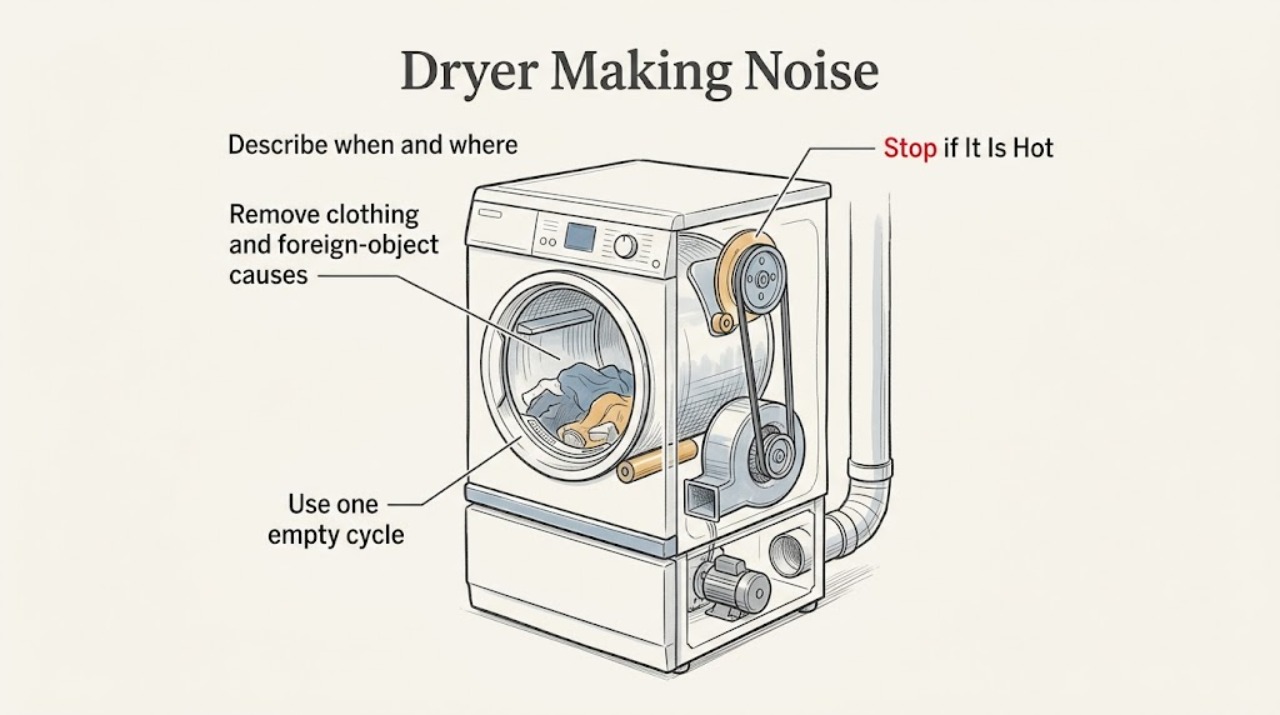
Frigidaire Dryer Making Noise: Safe Checks
Identify the sound before opening or moving the dryer. Stop it and check the pockets, fasteners, and drum for a loose object; Frigidaire also recommends an empty cycle to separate a clothing noise from a unit noise.
-
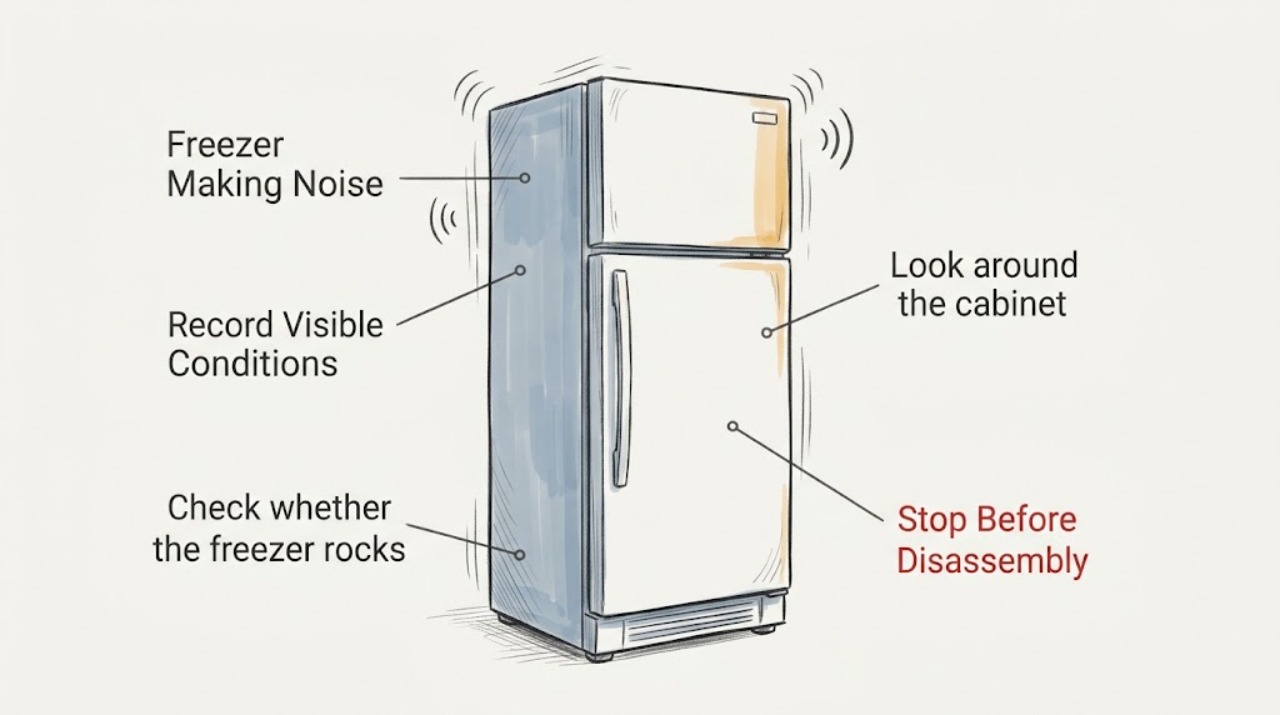
Frigidaire Freezer Making Noise: Tell Normal Sounds From a Fault
A Frigidaire freezer can normally hum, blow air, gurgle, or make brief popping and cracking sounds as the compressor, fans, refrigerant, and defrost system operate. First identify the sound and when it occurs, then level the freezer, keep it from touching the wall, remove vibrating items, and check that the door or lid seals and the freezer is still cold.
-
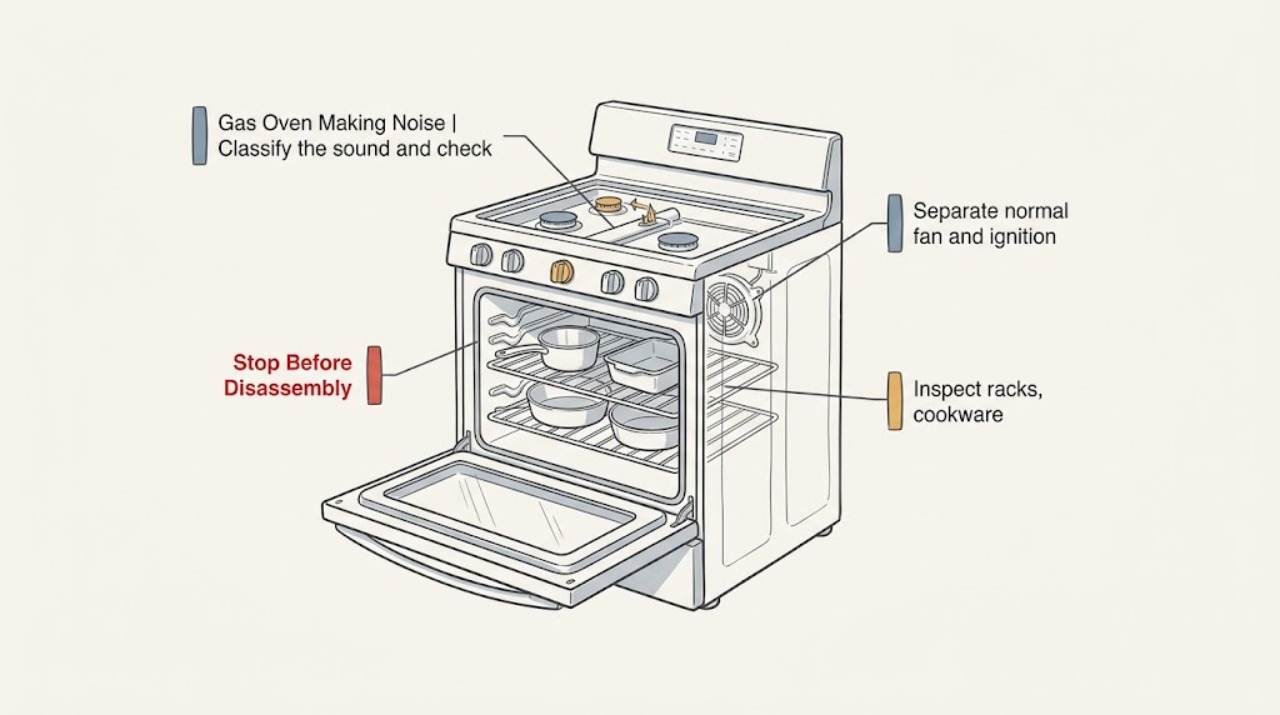
Frigidaire Gas Oven Making Noise: Safe Sound and Burner Checks
Some Frigidaire gas-oven sounds are expected: the igniter can click during lighting, a burner can make a soft whoosh once lit, and a cooling or convection fan can run during or after cooking. A new loud bang, grinding, scraping, rattling, repeated clicking without ignition, or noise with a gas smell, smoke, sparks, or abnormal flame is not a normal sound to keep testing.
-
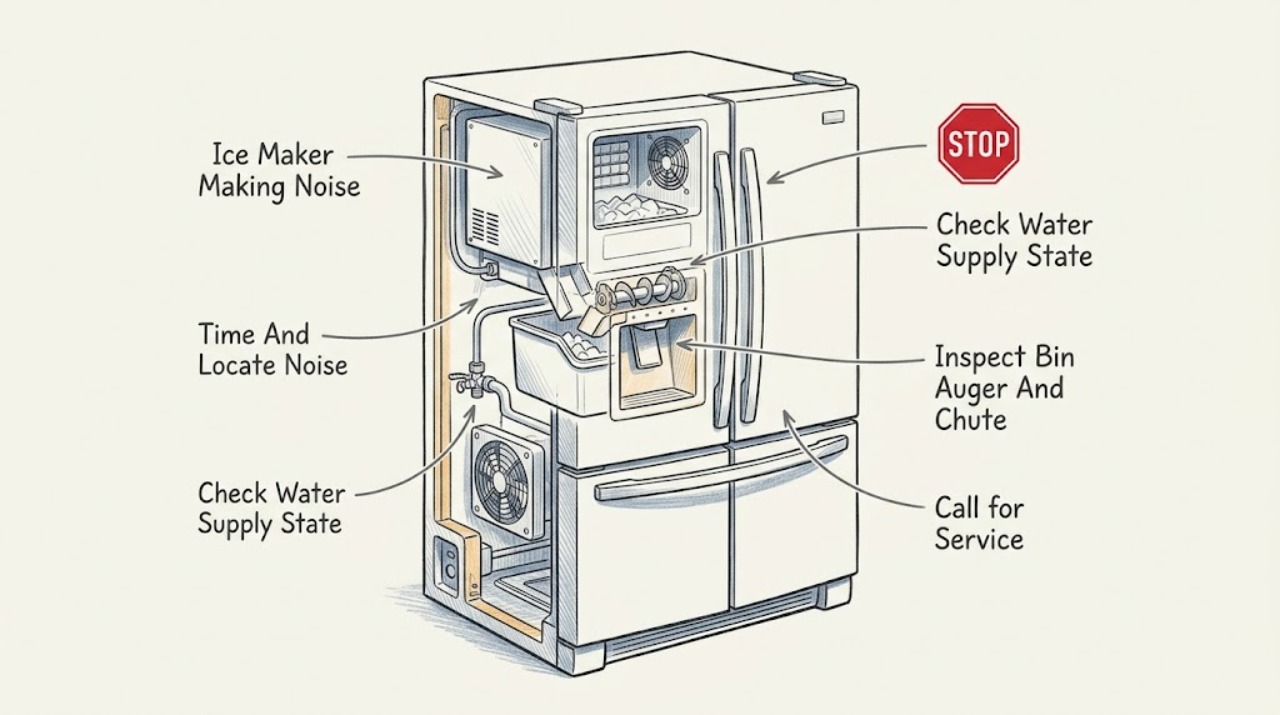
Frigidaire Ice Maker Making Noise: Tell Normal Fill and Harvest Sounds from Rattles
First identify when the noise happens. A short buzz while the tray fills, a motor or ice-loosening sound during a cycle, running water, or cubes dropping into the bin can be normal for a refrigerator's automatic ice maker.
-
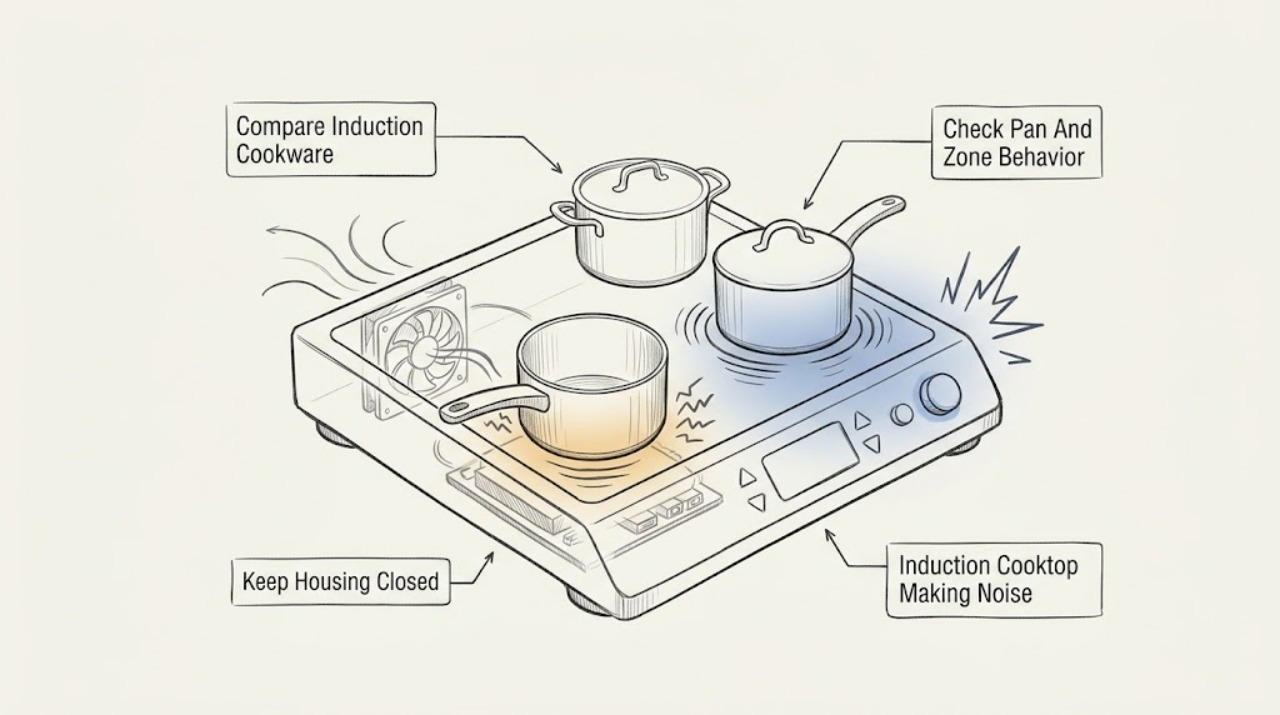
Frigidaire Induction Cooktop Making Noise: Normal Sounds and Safe Checks
Some noise from a Frigidaire induction cooktop is expected: cookware can hum or buzz, controls can make short operating sounds, parts can expand or contract as temperatures change, and cooling fans may continue after cooking. First identify whether the sound changes with one pan or one zone, and whether it stops after the appliance cools.
-
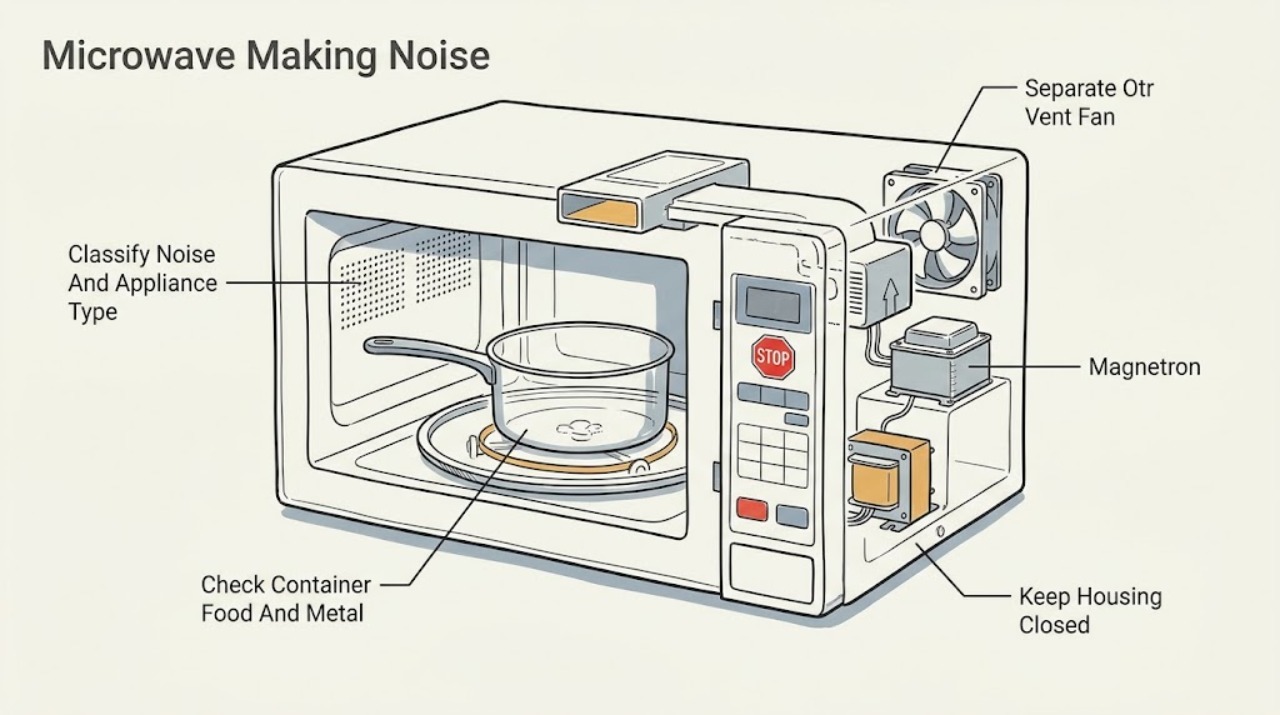
Frigidaire Microwave Making Noise: Separate Normal Fans, Turntable Sounds, and Arcing
Identify when the sound occurs and what still works before deciding that a Frigidaire microwave has failed. A steady airflow sound from an over-the-range (OTR) ventilation fan can be separate from the microwave heating circuit, and OTR models can recirculate air or use an external duct depending on installation.
-
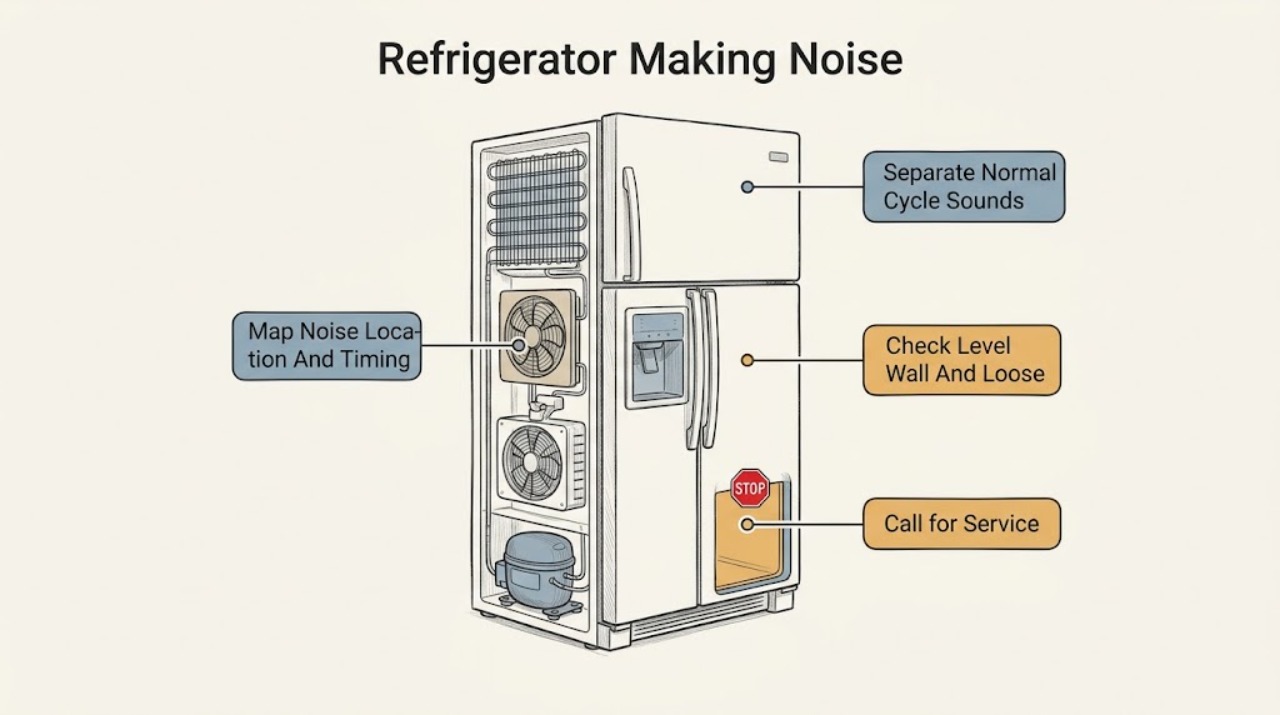
Frigidaire Refrigerator Making Noise: Identify Normal Cycles, Vibration, and Faults
Describe the noise by location and timing before assuming a failed part. Frigidaire manuals identify refrigerant gurgling, fan airflow, defrost hissing or sizzling, ice dropping, water-valve buzzing, dispenser clicks, and compressor hum or pulsation as possible operating sounds; a brief pop or crack when the compressor starts can also come from metal expansion or refrigerant circulation.
-
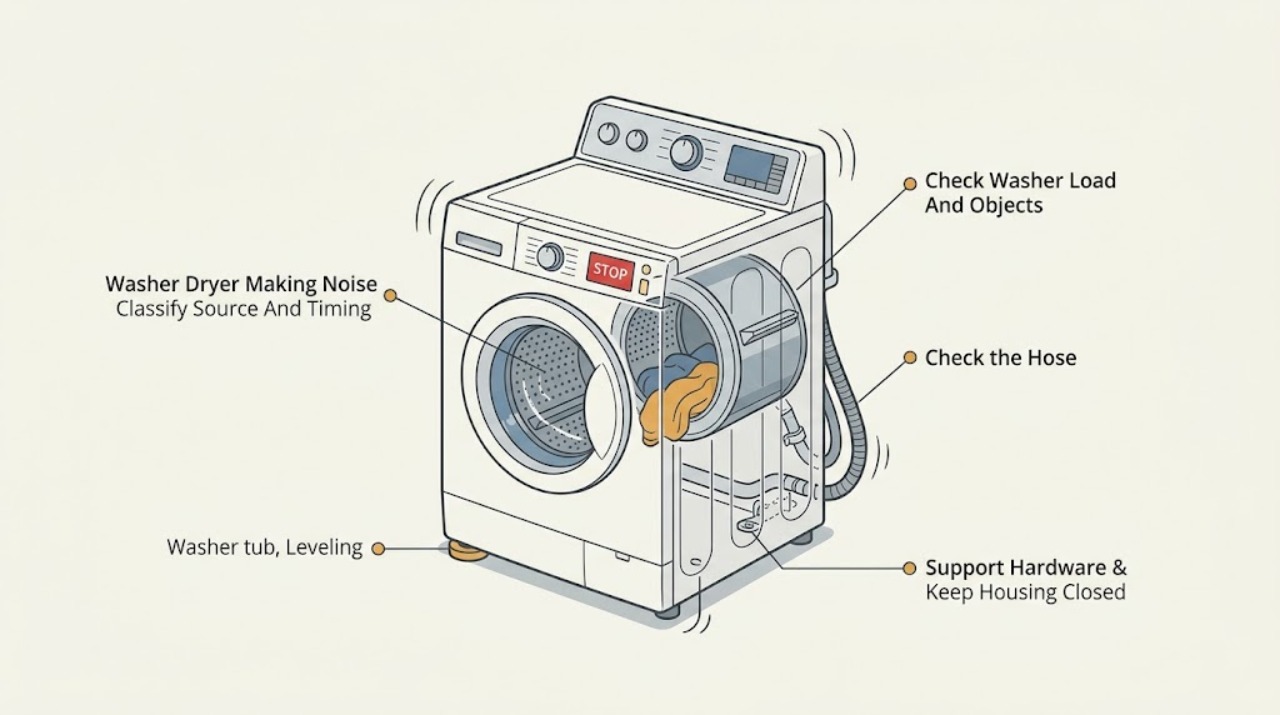
Frigidaire Washer Dryer Making Noise: Identify the Sound Before Calling for Service
First determine whether the sound comes from the washer or dryer and whether it occurs during filling, draining, spinning, or drum movement. Frigidaire lists clicks from a lid lock or water valve, gurgling during draining, water rushing during filling, and some dryer air or roller sounds as normal operating sounds.
-
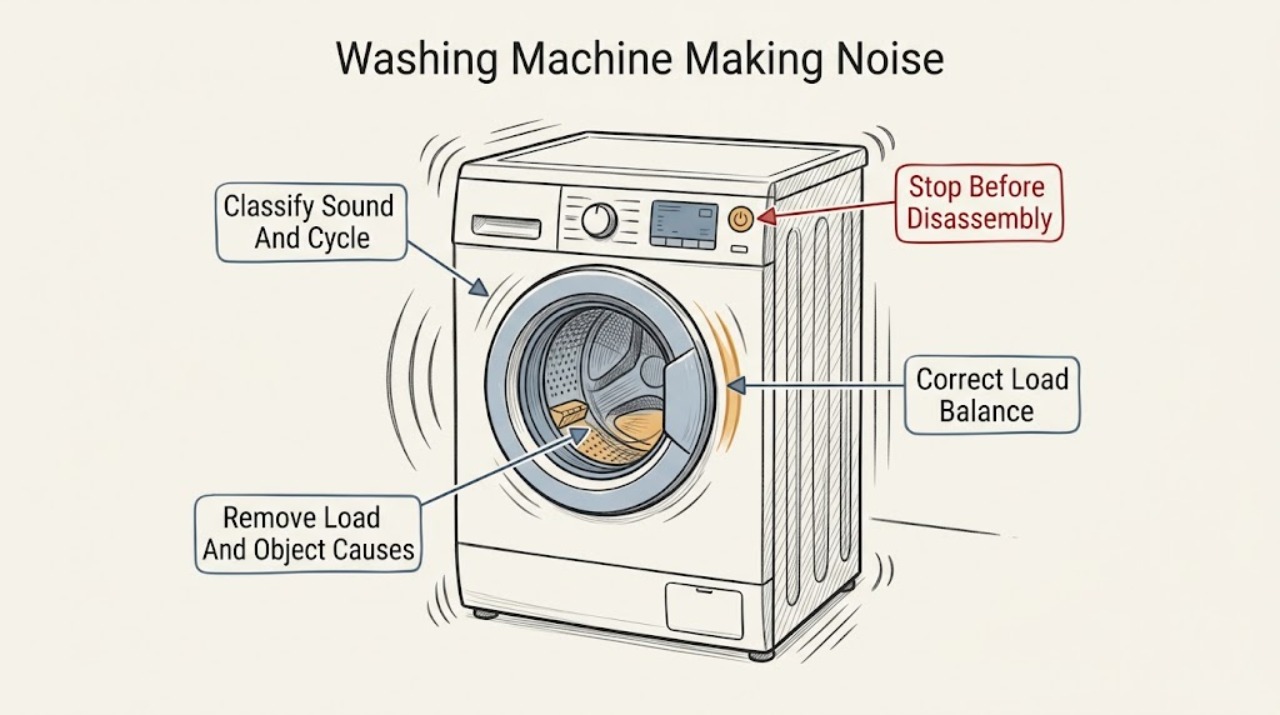
Frigidaire Washing Machine Making Noise
Some Frigidaire washer sounds are normal: a click can be the lid lock or water valve, a gurgle can be draining, a low hum can be the drain pump, and a brief thump can occur when a heavy load starts spinning. Rattling or clanking may come from coins, fasteners, or other loose items, while knocking can come from an unsecured drain hose.
-
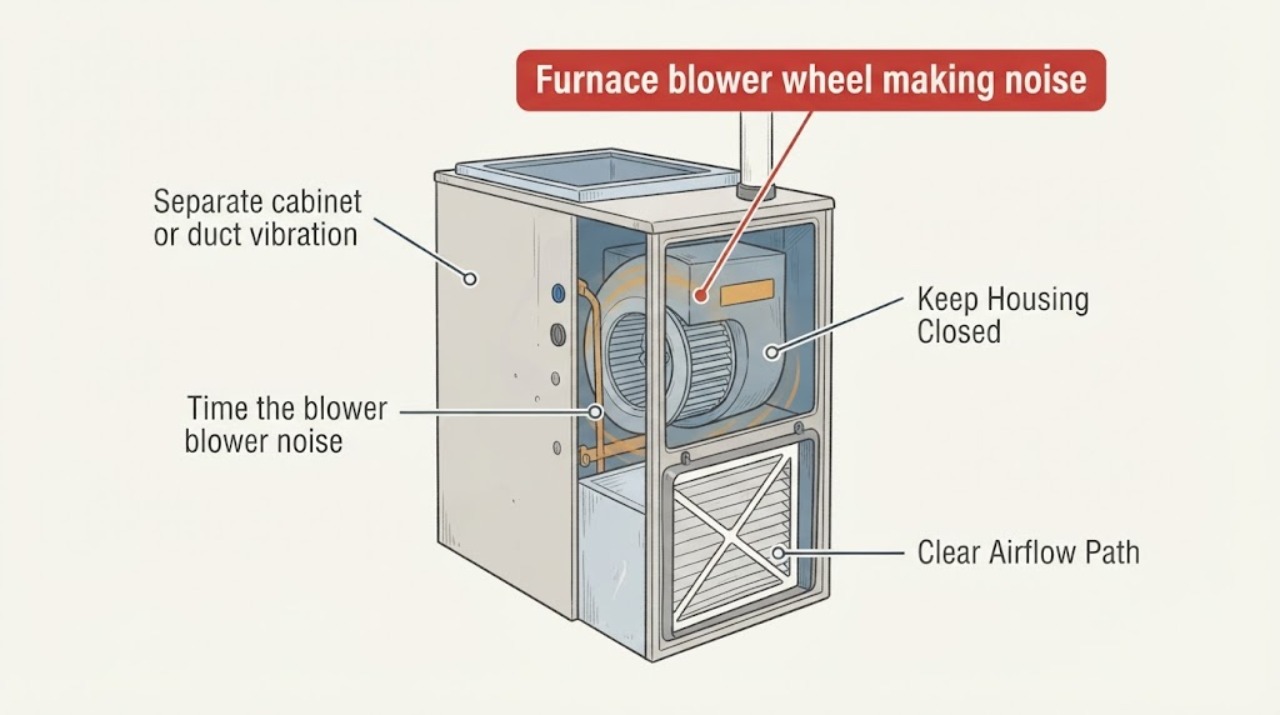
Furnace blower wheel making noise: What to Check and What to Do Next
A new rattle, scrape, vibration, squeal, or hum from a furnace blower wheel is a stop-and-observe symptom, not a safe invitation to reach inside the cabinet. From outside the closed furnace, record when the sound occurs, check only the accessible filter and registers, and look for external cabinet or duct vibration.
-
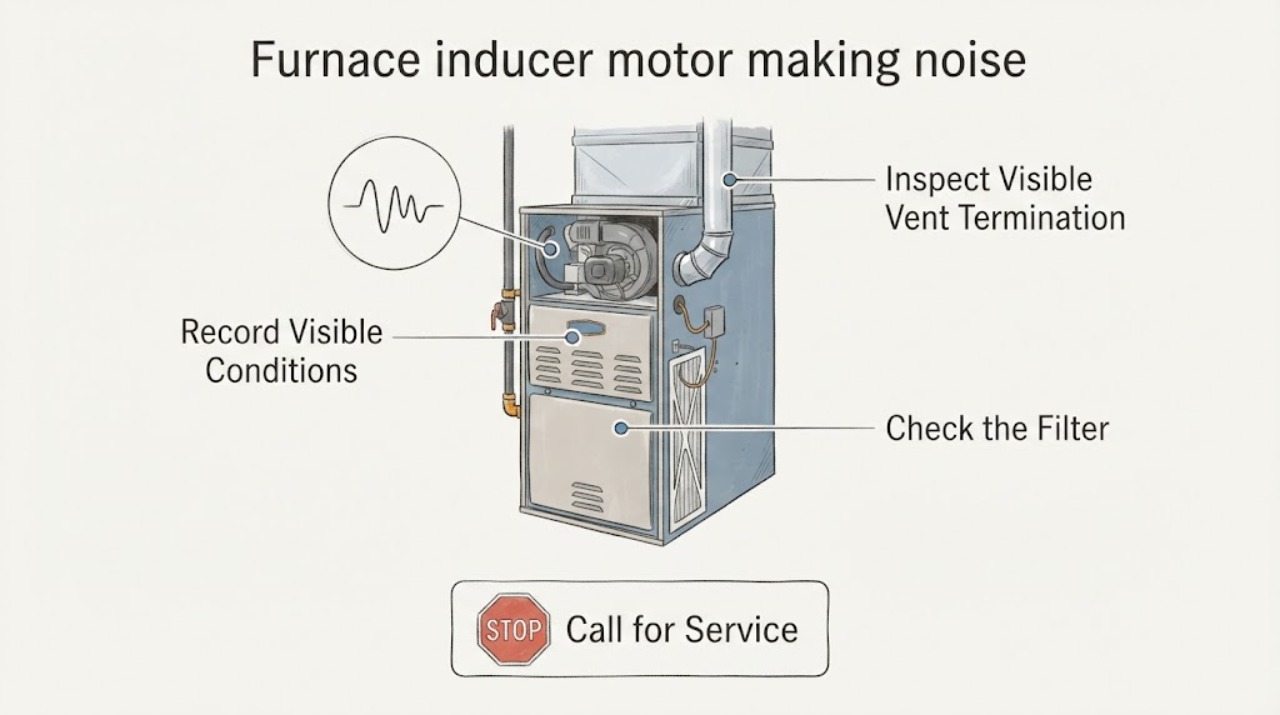
Furnace inducer motor making noise: What to Check and What to Do Next
A furnace inducer motor normally runs at the beginning of a heating sequence to establish draft, but a new or unusually loud whine, squeal, grind, rattle, or vibration should not be treated as normal. First record exactly when the sound occurs and whether the furnace completes ignition, then check only the thermostat setting, accessible air filter, open vents, and any visible vent obstruction from a safe position.
-
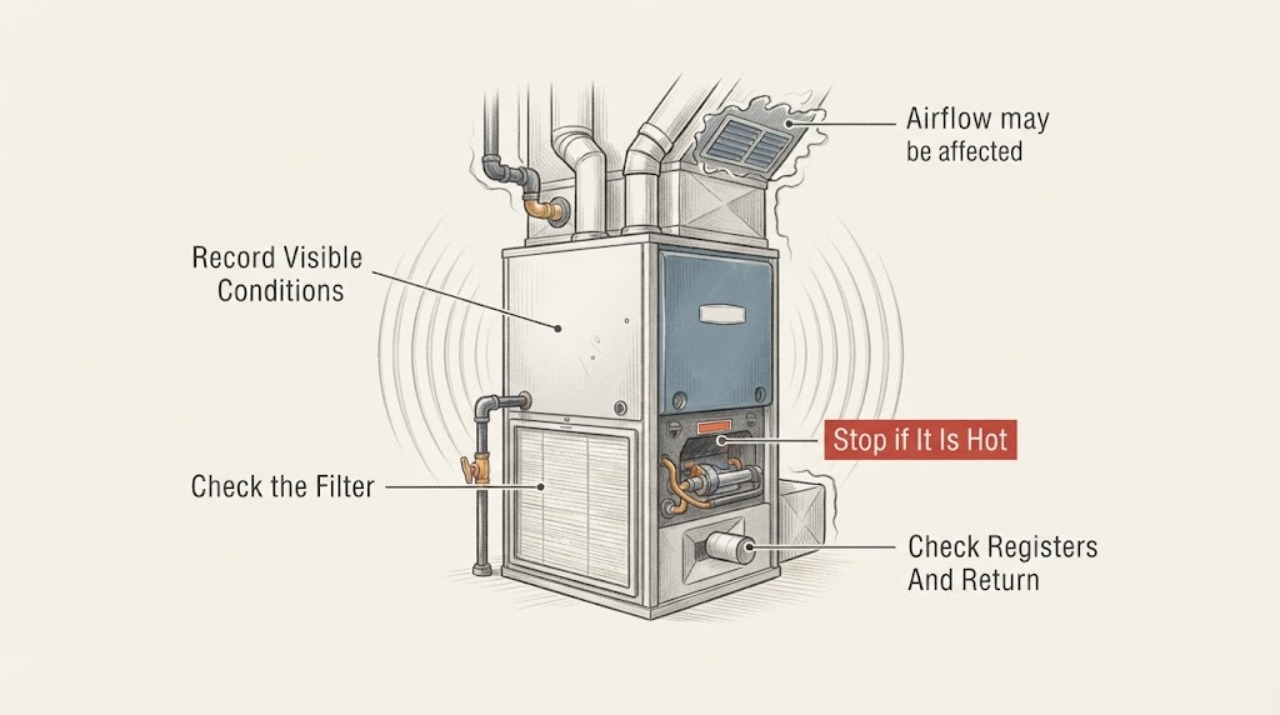
Furnace making noise airflow may change: What to Check and What to Do Next
If a furnace starts making an unfamiliar noise and airflow changes, first stop the heating call if the sound is metallic, scraping, grinding, banging, or accompanied by a burning smell. From a safe position, note whether the sound occurs at startup, while the blower runs, or as the system shuts down; inspect only the normally accessible filter and supply and return grilles.
-
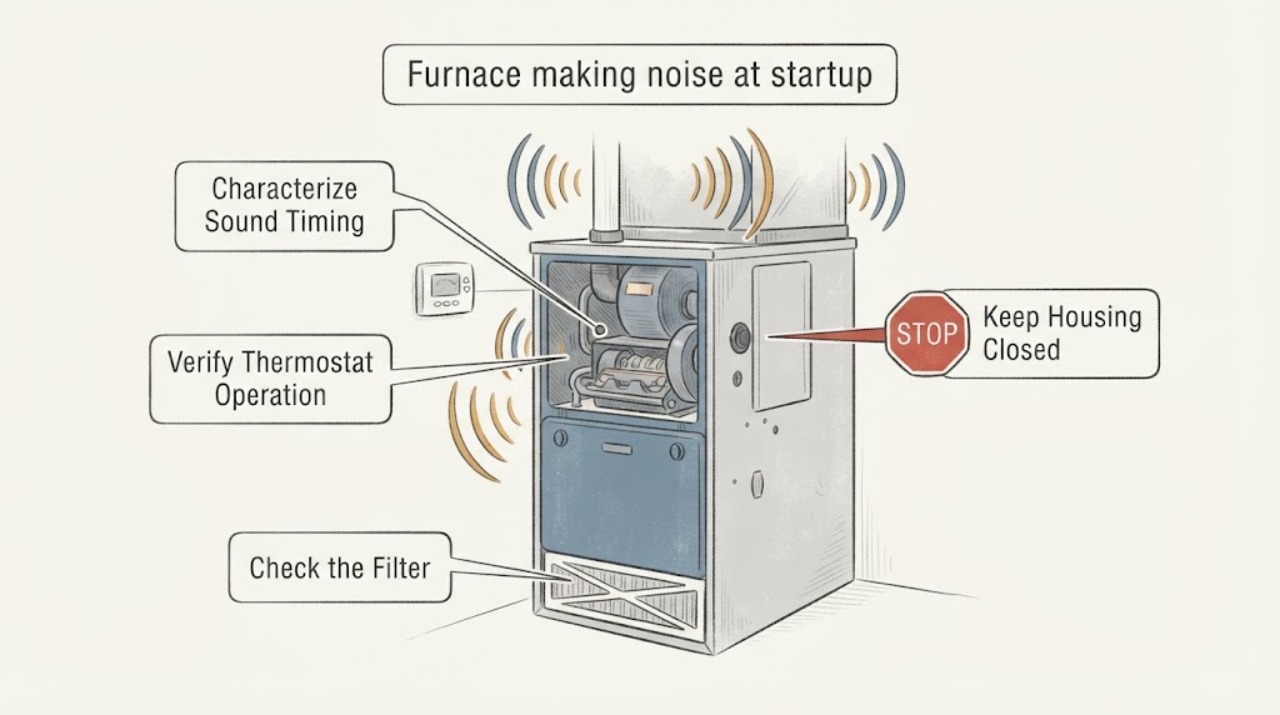
Furnace making noise at startup or during heat: What to Check and What to Do Next
A furnace can make a brief click before ignition, a soft hum, or a small duct ping as metal warms, but a new, loud, worsening, or unusual noise needs attention. The timing and character help separate airflow or duct vibration from a blower or inducer problem, loose panel, ignition fault, or electrical issue.
-
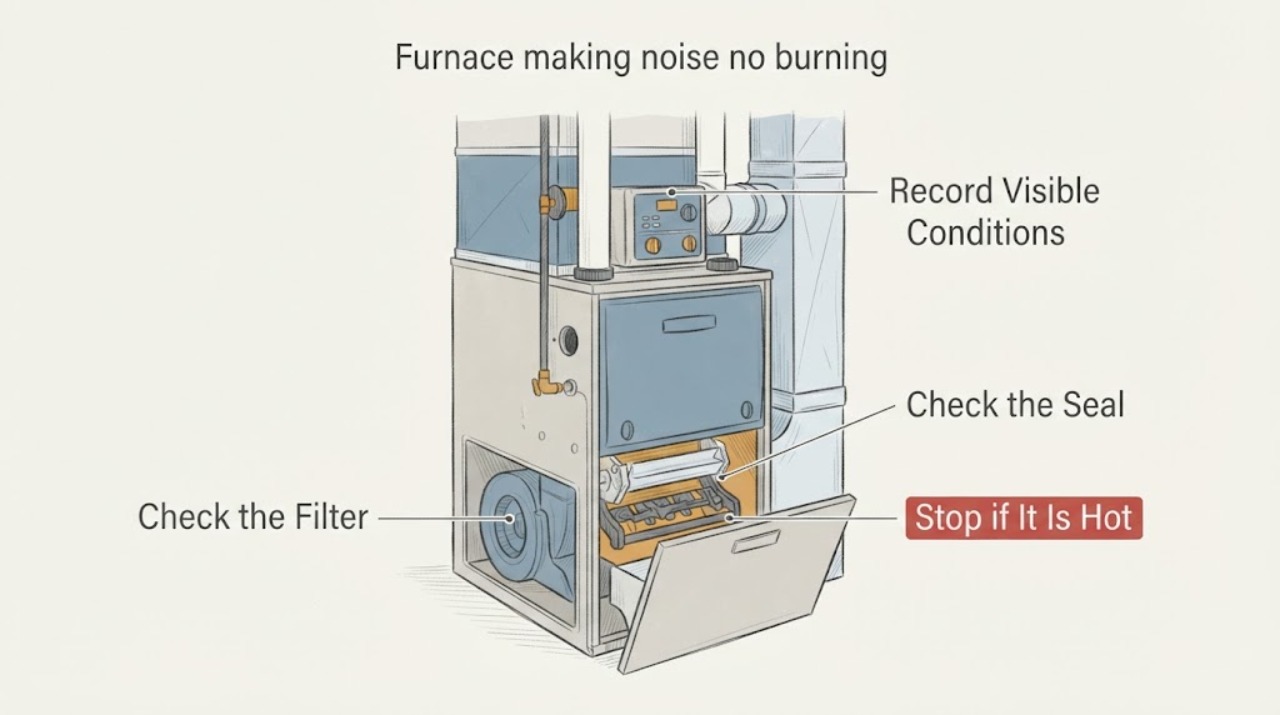
Furnace making noise no burning odor: What to Check and What to Do Next
A furnace can make normal brief clicks, airflow sounds, or light duct expansion noises, but a new loud, repeating, metallic, high-pitched, buzzing, rattling, whistling, or banging sound deserves attention even when there is no burning odor. From a safe distance, record when the sound occurs, whether it follows ignition or the blower, and whether airflow or heating changes.
-
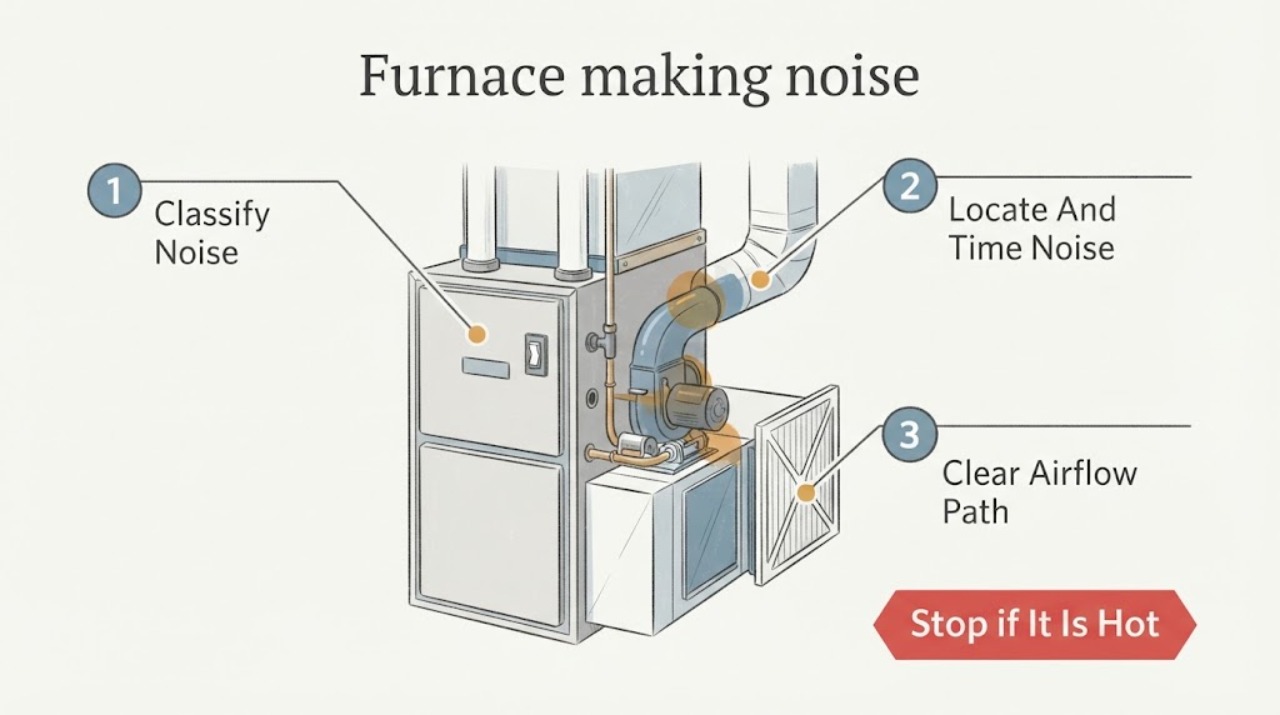
Furnace making noise: What to Check and What to Do Next
Do not open the furnace cabinet, touch combustion or electrical parts, bypass a safety control, or keep running the system to reproduce a dangerous sound. From a safe standing position, record whether the noise is a hum, buzz, rattle, squeal, whistle, bang, grinding, or hiss; where it is loudest; whether it occurs at startup, shutdown, or throughout a cycle; and whether there is burning odor, gas odor, smoke, vibration, poor airflow, or a carbon-monoxide alarm.
-
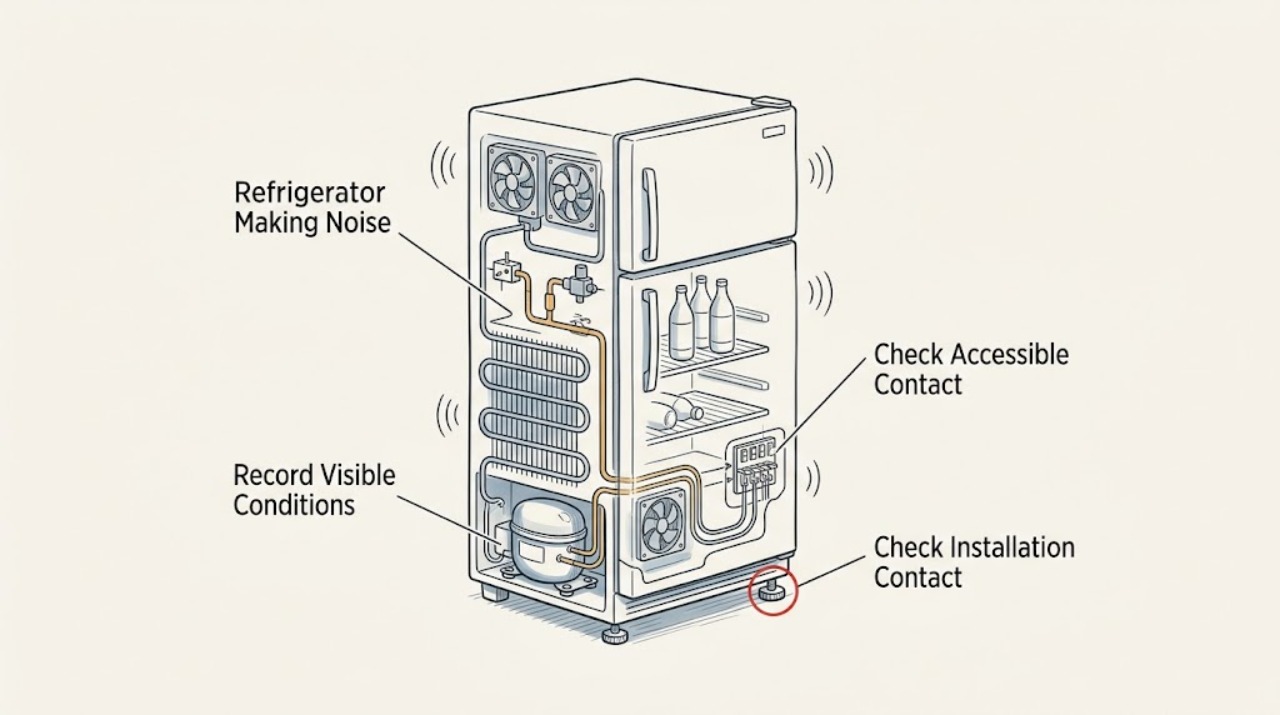
Gaggenau Refrigerator Making Noise
A Gaggenau refrigerator can make several sounds during ordinary cooling: a drone from the refrigeration unit or fan, bubbling or gurgling as refrigerant moves, clicks from motors, switches or valves, and cracking during automatic defrost. Fast-freezing can also make the appliance sound louder while that mode is active.
-
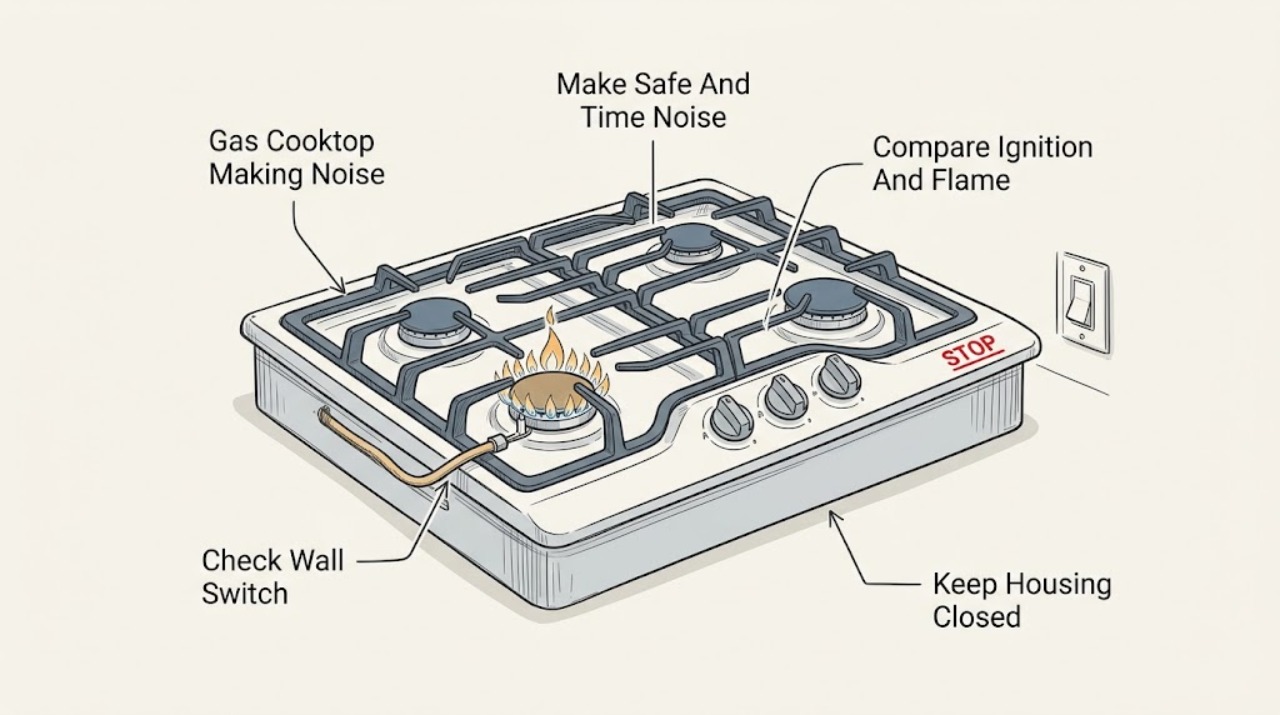
Gas Cooktop Making Noise: Tell normal ignition clicks from a burner fault
A gas cooktop can click briefly while electronic ignition lights a selected burner, and some models can click again when a draft or spill extinguishes a flame and reignition starts. A popping noise can follow a wet burner or a cap that is not seated correctly.
-
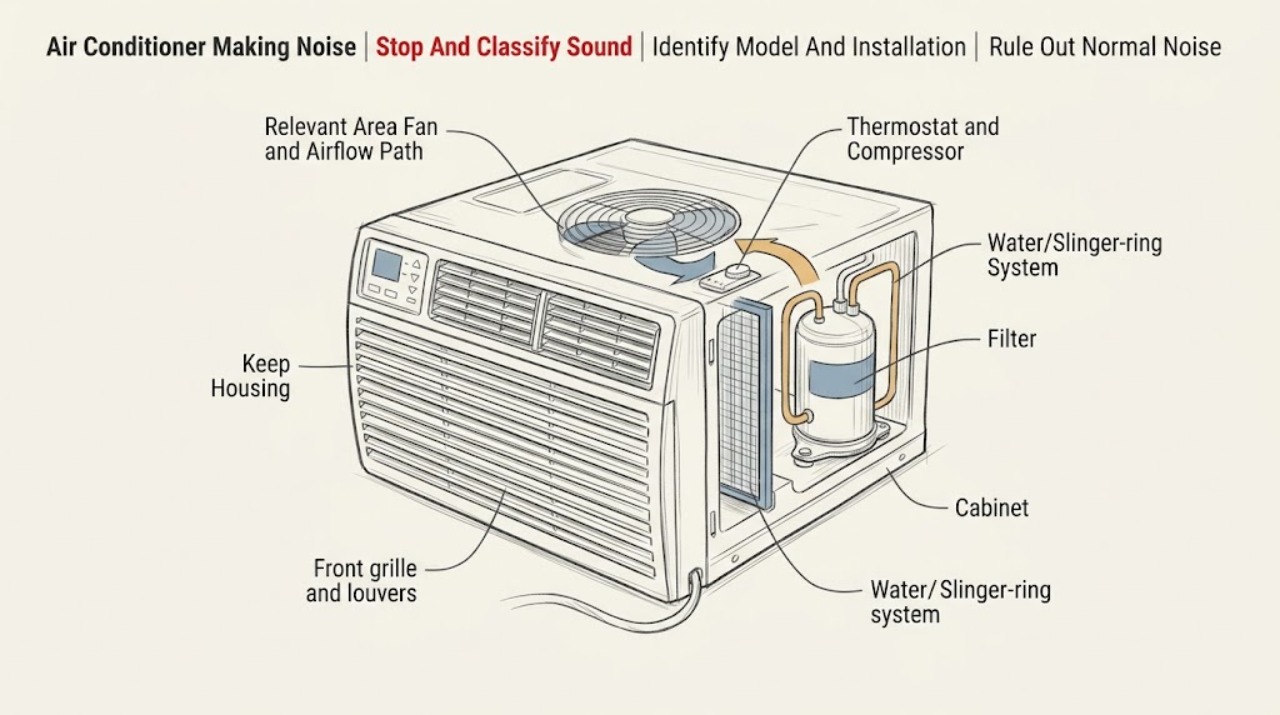
GE Air Conditioner Making Noise: Separate Normal Airflow From Rattling or Vibration
Identify the sound and when it occurs before calling it a failure. GE says airflow noise, a thermostat click as the compressor cycles, a fan running continuously in Cool or Fan, and some water dripping outside are normal room-air-conditioner sounds.
-
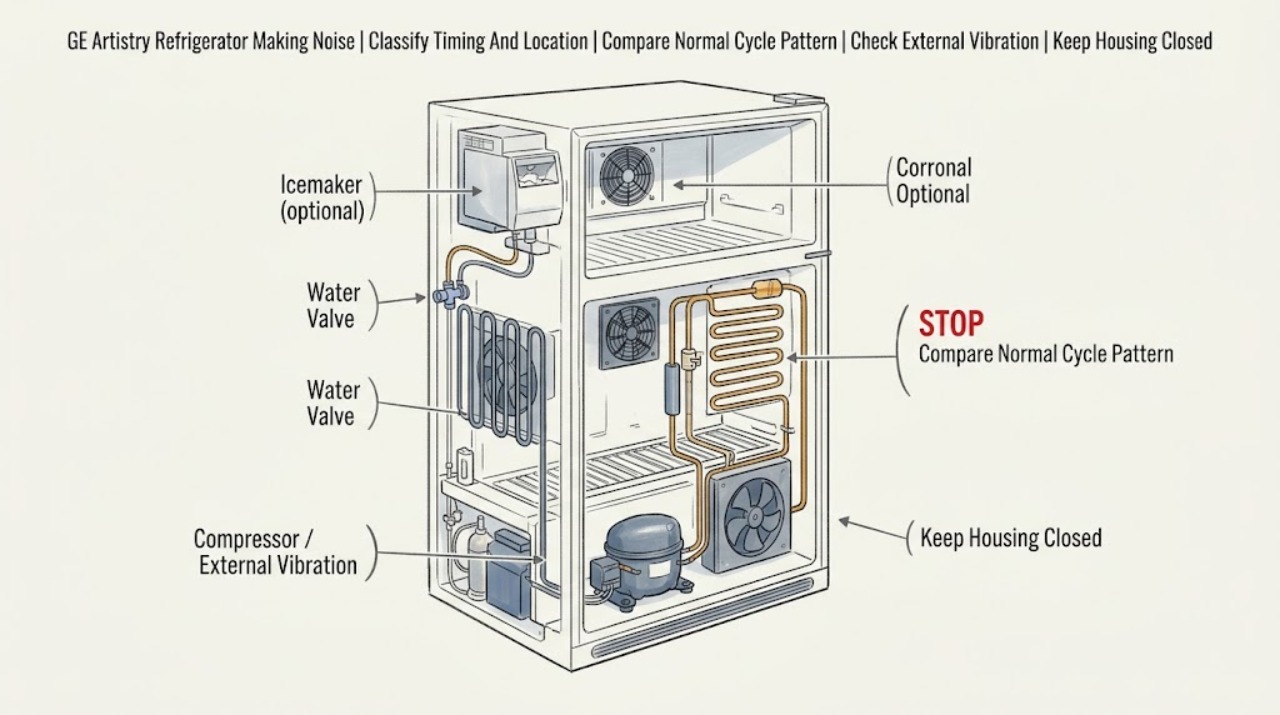
GE Artistry Refrigerator Making Noise: Identify Normal Sounds and Safe Next Steps
A GE Artistry refrigerator can normally hum or pulsate as the compressor runs, change fan speed after door openings, click during control or defrost events, gurgle as refrigerant or drain water moves, or make a short whoosh after a door closes. GE identifies these as normal refrigerator sounds; an exact Artistry example, model ABE20EGEBS, is a bottom-freezer refrigerator whose Owner Center links to the model manual.
-
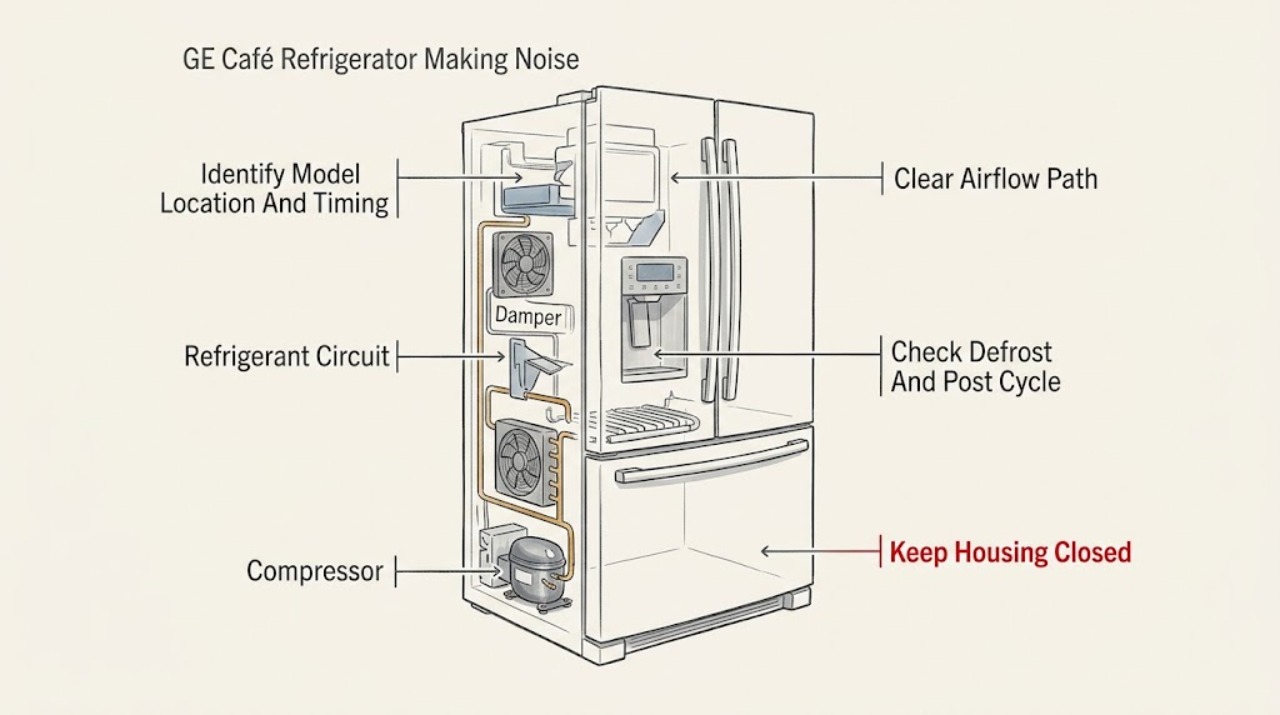
GE Café Refrigerator Making Noise: Separate Normal Cycles from a Fault
Start by recording where the sound comes from and when it occurs: after a door closes, during cooling, during defrost, during an icemaker fill or harvest, or when a dispenser is used. GE identifies many hums, fan-speed changes, clicks, refrigerant gurgles, defrost sizzling, and short icemaker or dispenser sounds as normal operating sounds on applicable refrigerators.
-
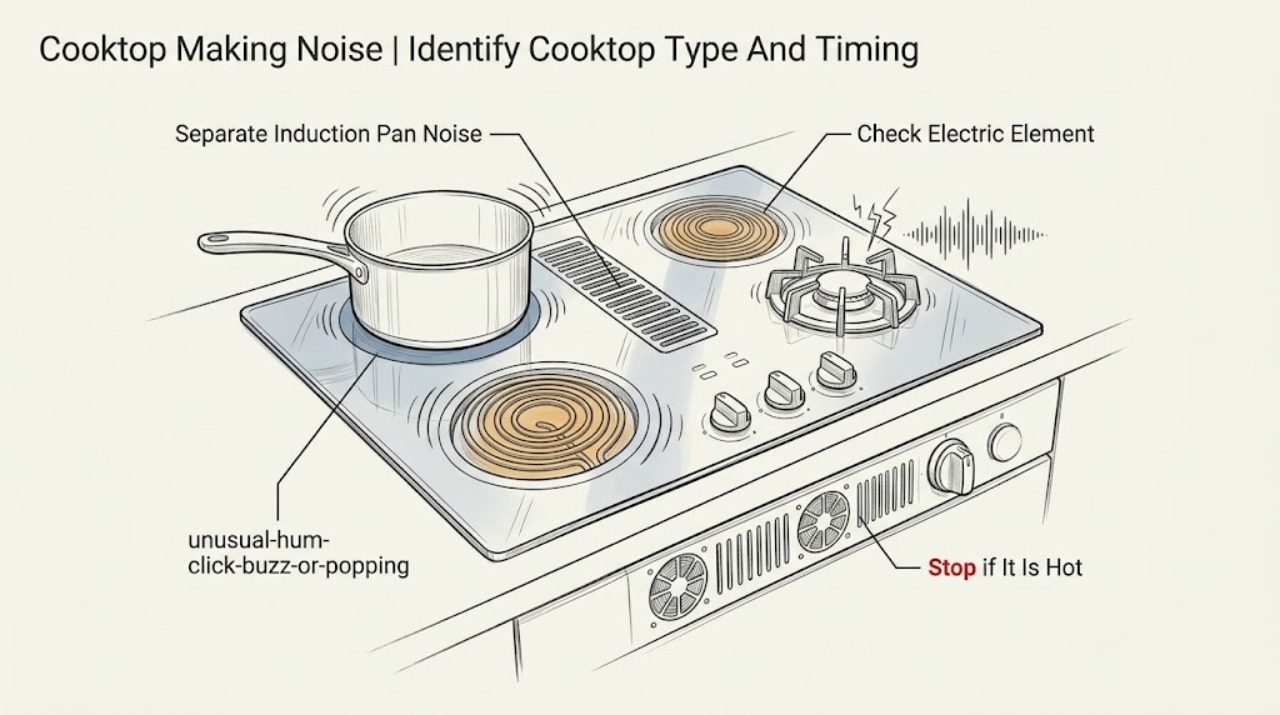
GE Cooktop Making Noise: Identify Normal Hums, Clicks, and Safety Stops
A GE cooktop can make a normal hum, buzz, click, or light pop when its heating system cycles or when induction cookware vibrates, but the right check depends on whether the cooktop is induction, radiant electric, electric coil, or gas. First record whether the sound occurs only while heating, after a setting changes, or while the controls are off.
-
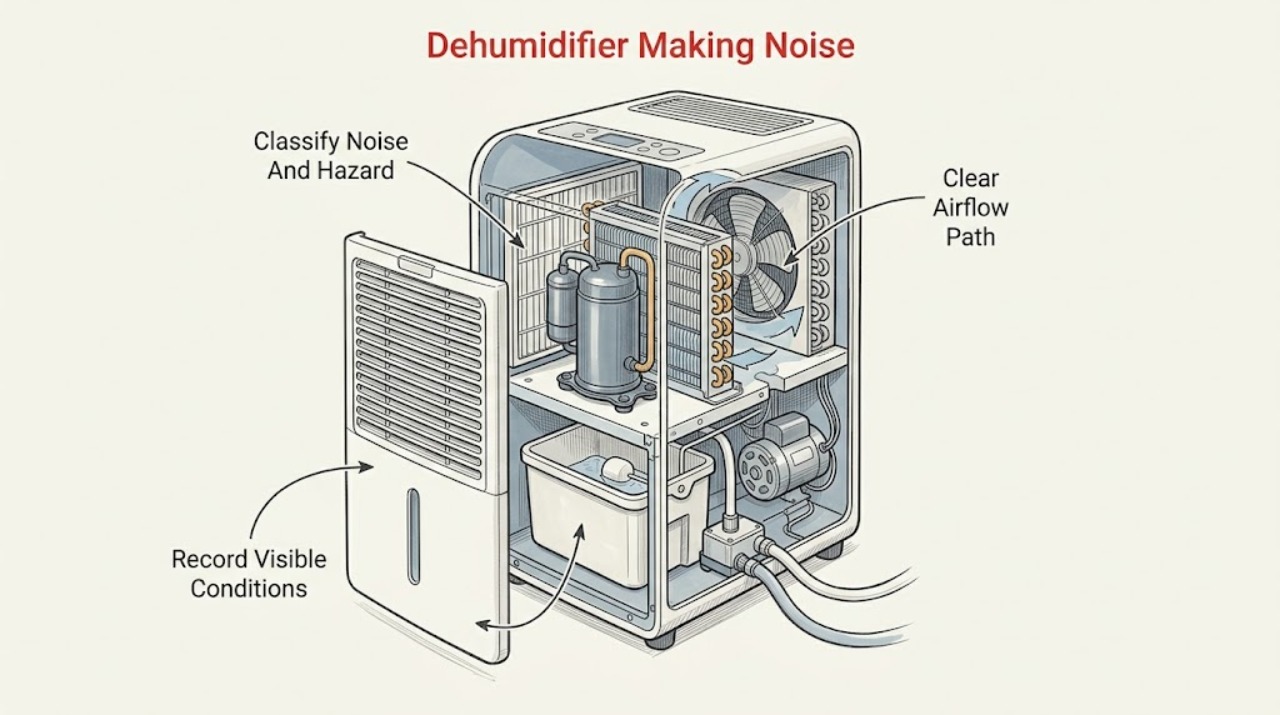
GE Dehumidifier Making Noise: Separate Normal Operation from a Fault
A GE dehumidifier normally makes compressor and condenser-fan sounds, may drip water into the bucket, cycles on and off, and exhausts warm air while removing moisture. First record whether the sound is a steady air rush/hum, a normal water drip or cycle change, a beep with a full bucket, or a new rubbing, grinding, rattling, buzzing, or repeated clicking sound.
-
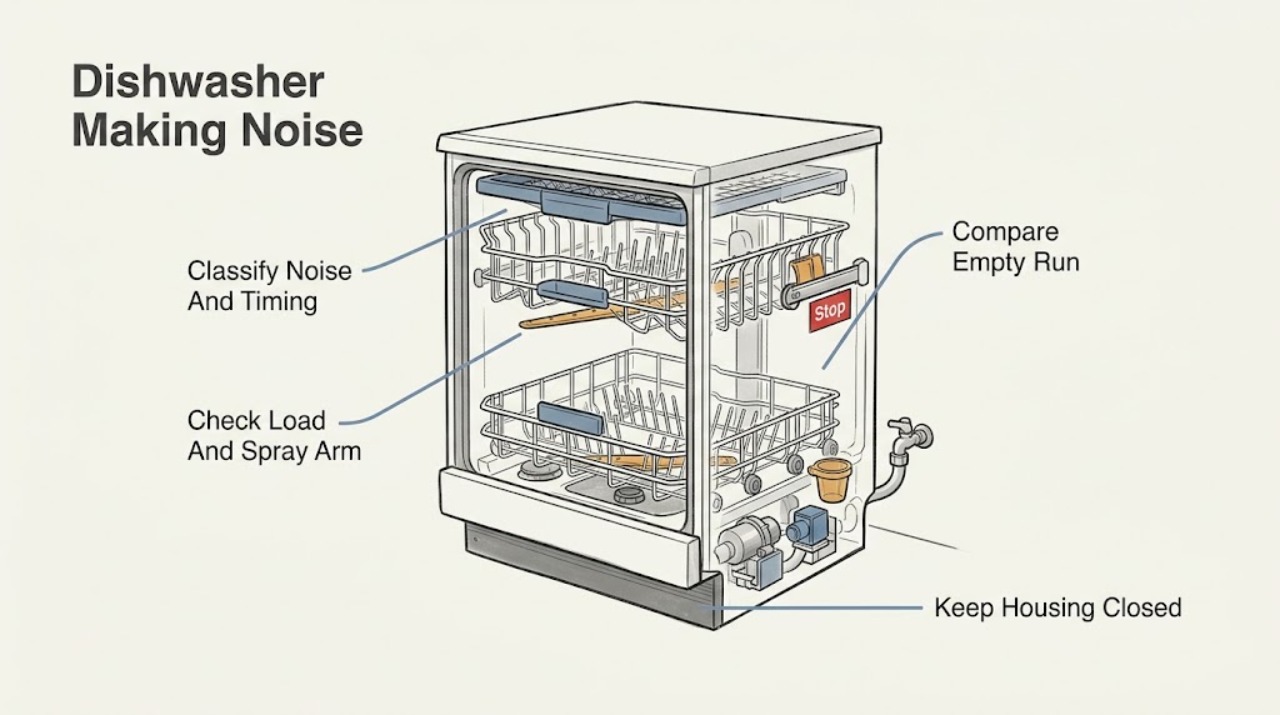
GE Dishwasher Making Noise: Find the Source Safely
A GE dishwasher can normally hum, swish, whine, click, snap, or pause as its pumps, spray system, drain valve, detergent cup, and controls operate. First note when the noise occurs and whether the racks are loaded; a rattle or rhythmic knock that disappears on an empty run usually points to dishes, utensils, or a spray arm striking the load.
-
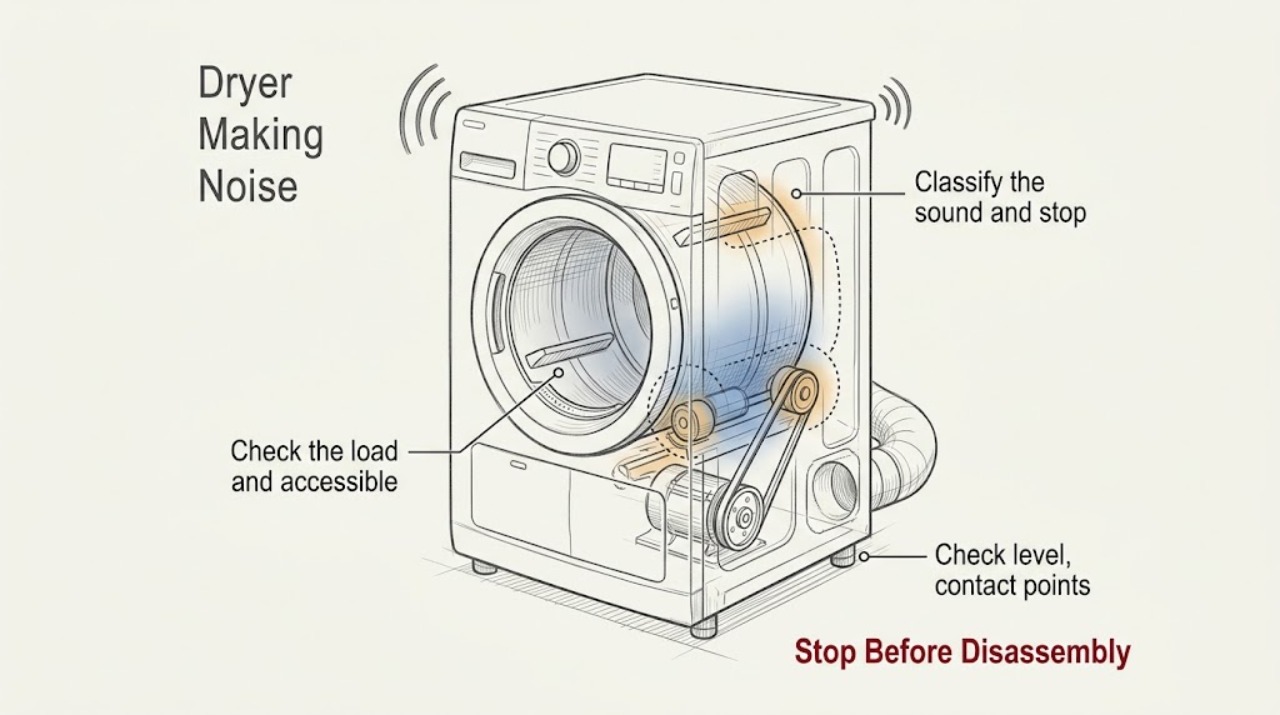
GE Dryer Making Noise: Identify Normal Sounds and Safe Next Steps
A GE dryer can make a brief startup squeak and the ordinary sound of the drum turning, but a thump, persistent squeak, chirp that repeats every few seconds, humming, scraping, or a new noise after heating deserves a check. Stop immediately for smoke, a burning or electrical smell, a gas odor, a hot cord or outlet, sparks, or a dryer that is excessively hot.
-
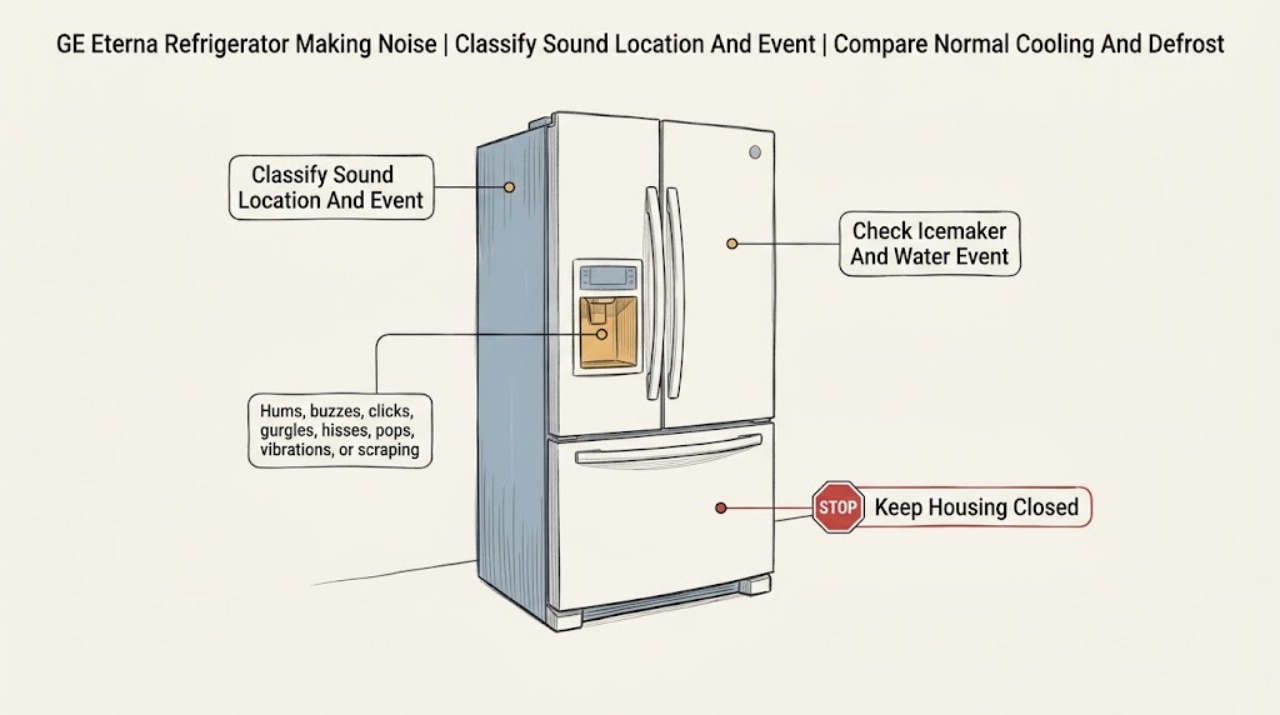
GE Eterna Refrigerator Making Noise: Match the Sound to the Event
Do not judge a GE Eterna refrigerator by volume alone; first match the sound to its timing and location. GE lists many normal sounds, including compressor or refrigerant hum and gurgle, defrost clicks and dripping, hissing or sizzling as defrost water reaches the heater, cracking or popping as coils change temperature, and short icemaker or water-valve sounds.
-
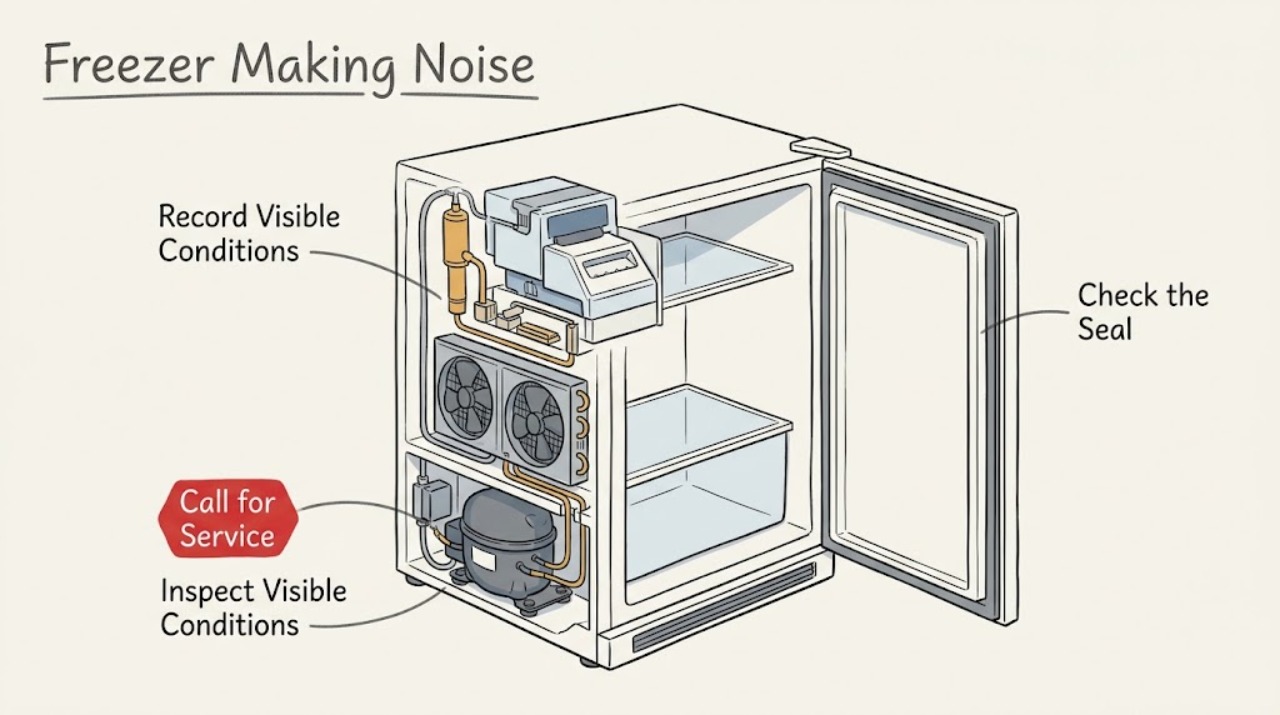
GE Freezer Making Noise
Some GE freezer noises are normal: a compressor hum or whine, refrigerant boiling or gurgling while the unit cools, brief popping or hissing during automatic defrost, and a short whoosh after opening the door or lid. First identify when and where the sound occurs, then check only accessible conditions such as a loose item, an unsecured door or lid, or an icemaker that is trying to fill without water.
-
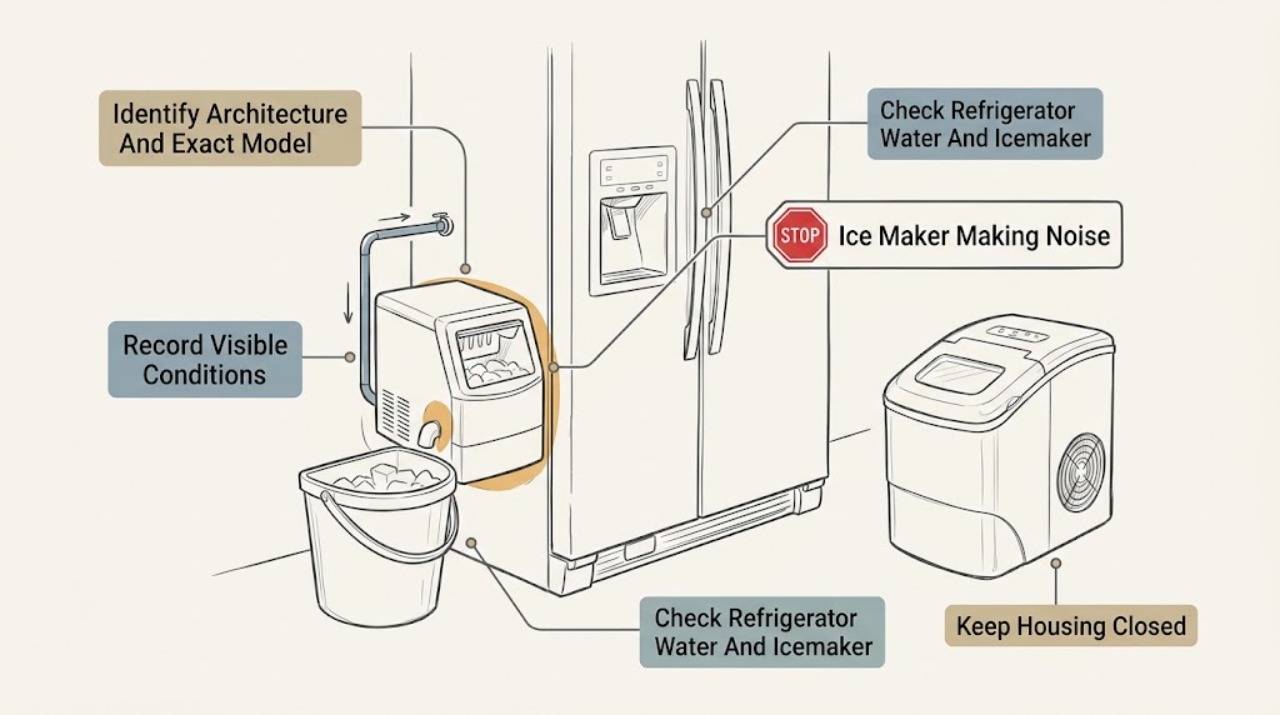
GE Ice Maker Making Noise: Separate a Refrigerator Icemaker from an Opal
First identify the machine: a refrigerator-installed icemaker, a standalone GE ice maker, or a GE Profile Opal nugget-ice maker. For a refrigerator icemaker, GE describes ice dropping into the bucket, a brief fill hum or click, and a buzz about every 15 minutes when the icemaker is on but its water supply is off as possible operating patterns; turn the installed icemaker off using its documented control if water is unavailable.
-
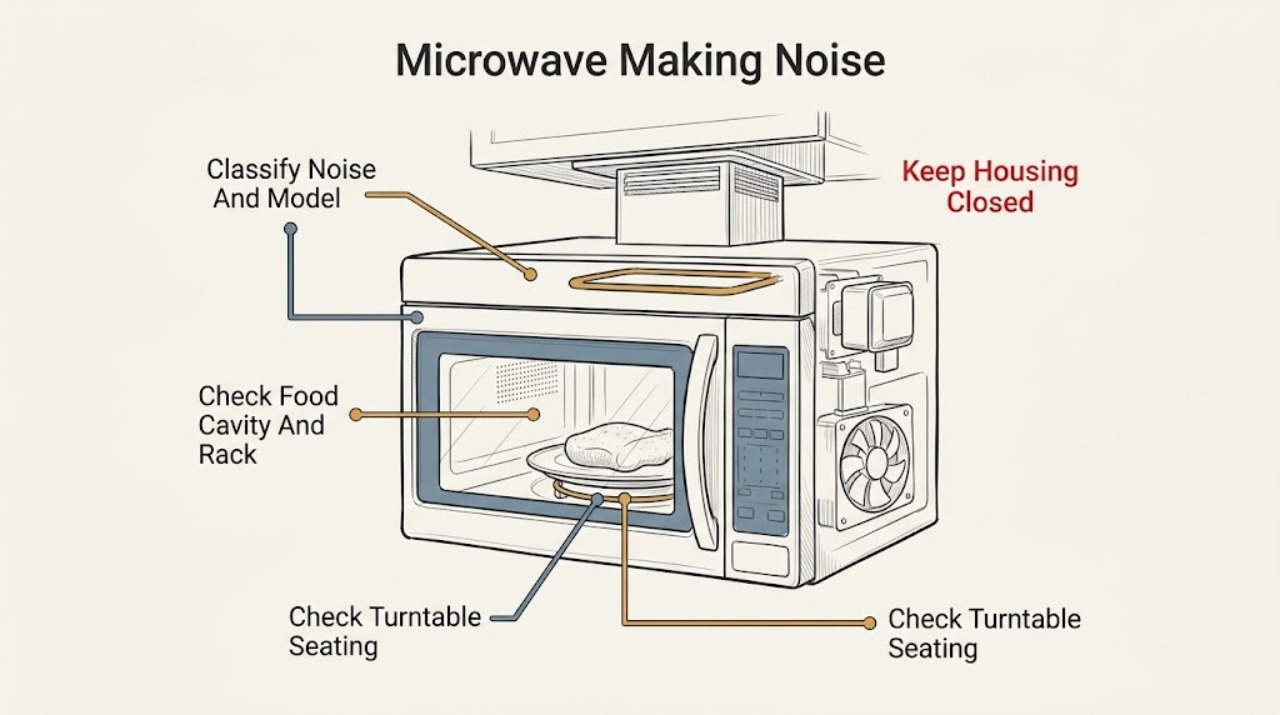
GE Microwave Making Noise: Normal Sounds and Safe Checks
A GE microwave may normally click or hum as the magnetron cycles at lower power, click when relays operate, run an internal cooling fan during cooking, or run an over-the-range vent fan automatically when the underside gets hot. A turntable may hesitate, jerk, drag, or change direction normally.
-
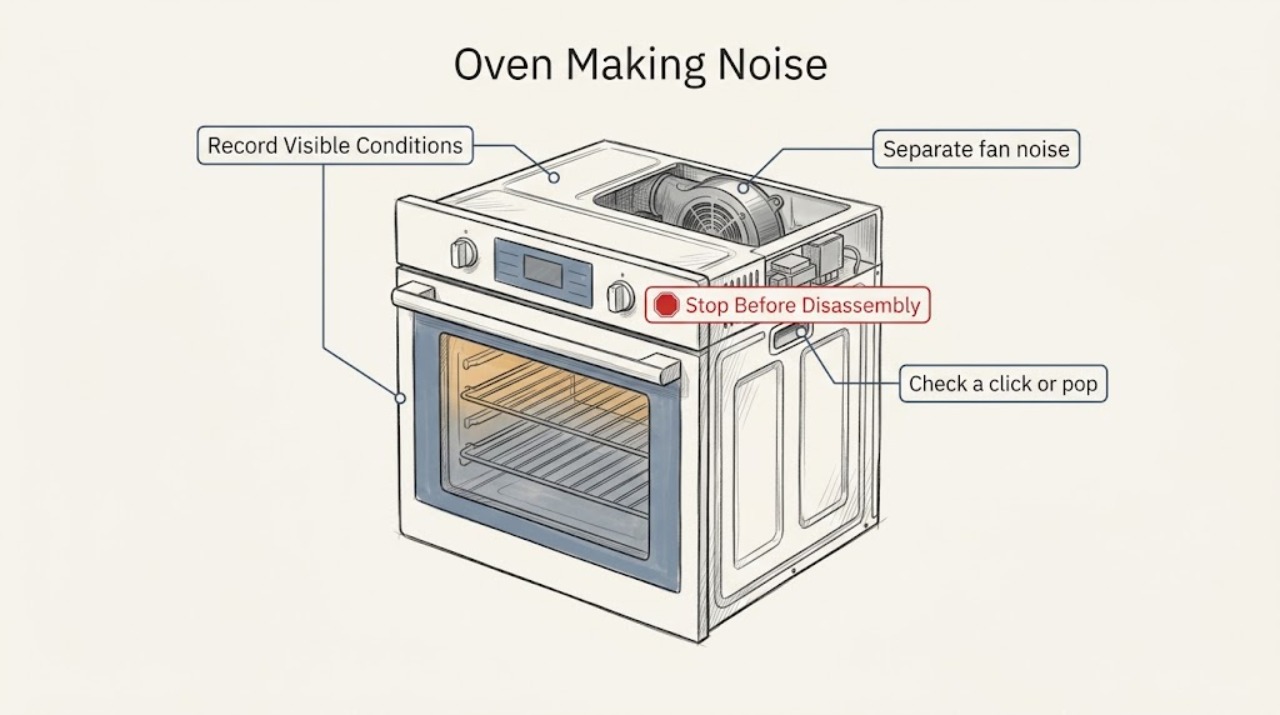
Ge Oven Making Noise
Many GE oven noises are normal: a cooling or convection fan, temperature-control clicks, and occasional popping or crackling as metal heats and cools. First identify whether the sound is tied to preheat, a heating cycle, convection, self-clean, or the fan running after cooking.
-
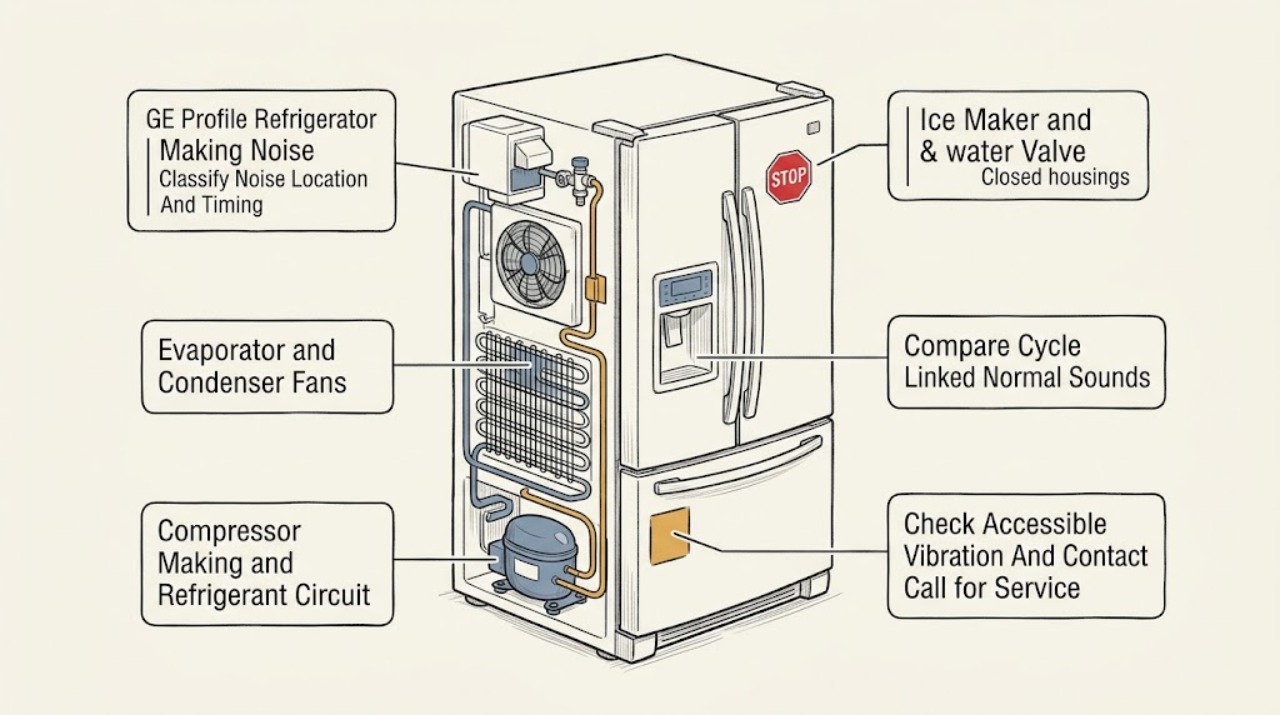
GE Profile Refrigerator Making Noise: Normal Sounds and Safe Checks
First identify where the sound comes from and when it occurs. GE Appliances says many GE refrigerator sounds are normal: a hum or pulsation from the compressor, air movement from changing fan speeds, gurgling from refrigerant or drain water, clicks from controls or dampers, cracking or popping around defrost, and ice-maker or water-valve sounds during a fill or harvest.
-
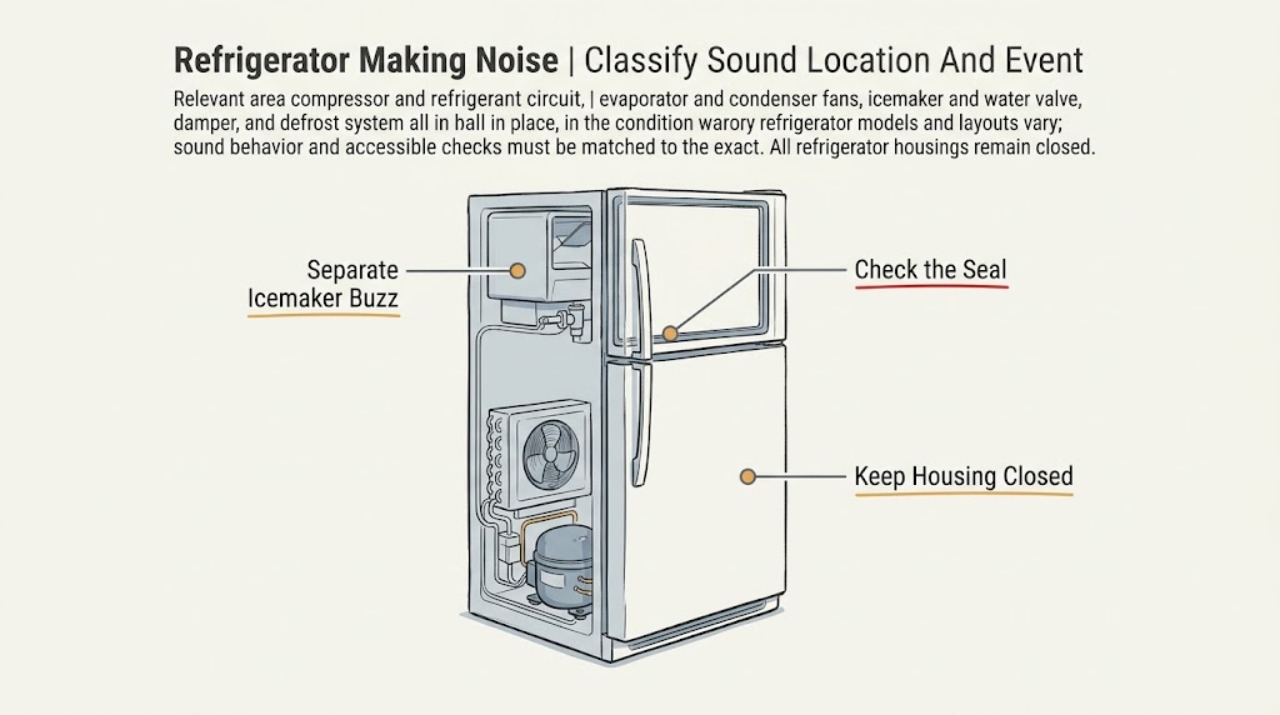
GE Refrigerator Making Noise: Normal Sounds and Safe Checks
Many GE refrigerator sounds are normal: refrigerant can gurgle or knock, fans can change speed, the defrost timer or temperature control can click, an icemaker can hum while filling or thump as cubes drop, and a new door gasket can whistle or squeak briefly. First record where and when the sound occurs—freezer, fresh-food section, underneath, water dispenser, icemaker, or plumbing—and whether cooling is normal.
-
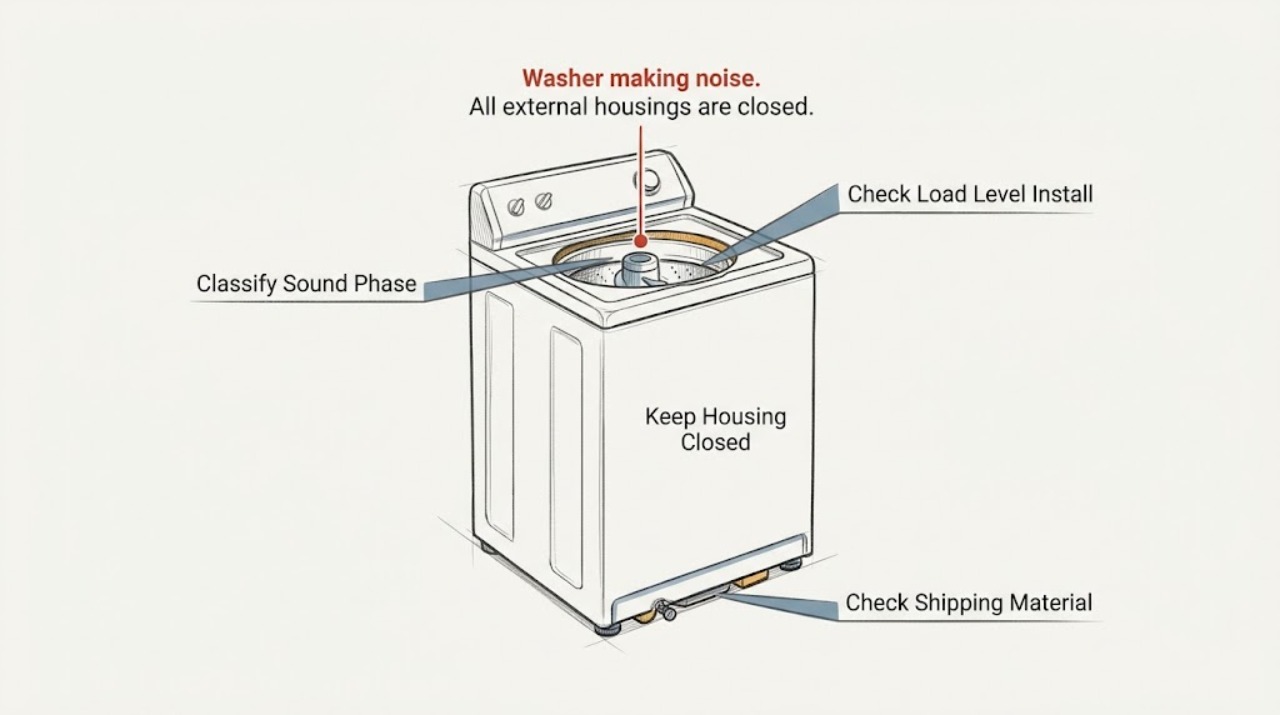
GE washer making noise: What to Check and What to Do Next
A GE washer can make normal clicks, water sounds, humming, short grinding or pulsing during fill, agitation, drain, or spin, but a new or worsening noise must be matched to its phase, sound, and model. Record whether the noise is a click, gurgle, bang, squeak, scrape, roar, or electrical sound; check that the load is not badly unbalanced, the washer is level, shipping material was removed after installation or moving, and accessible hoses are secured.
-
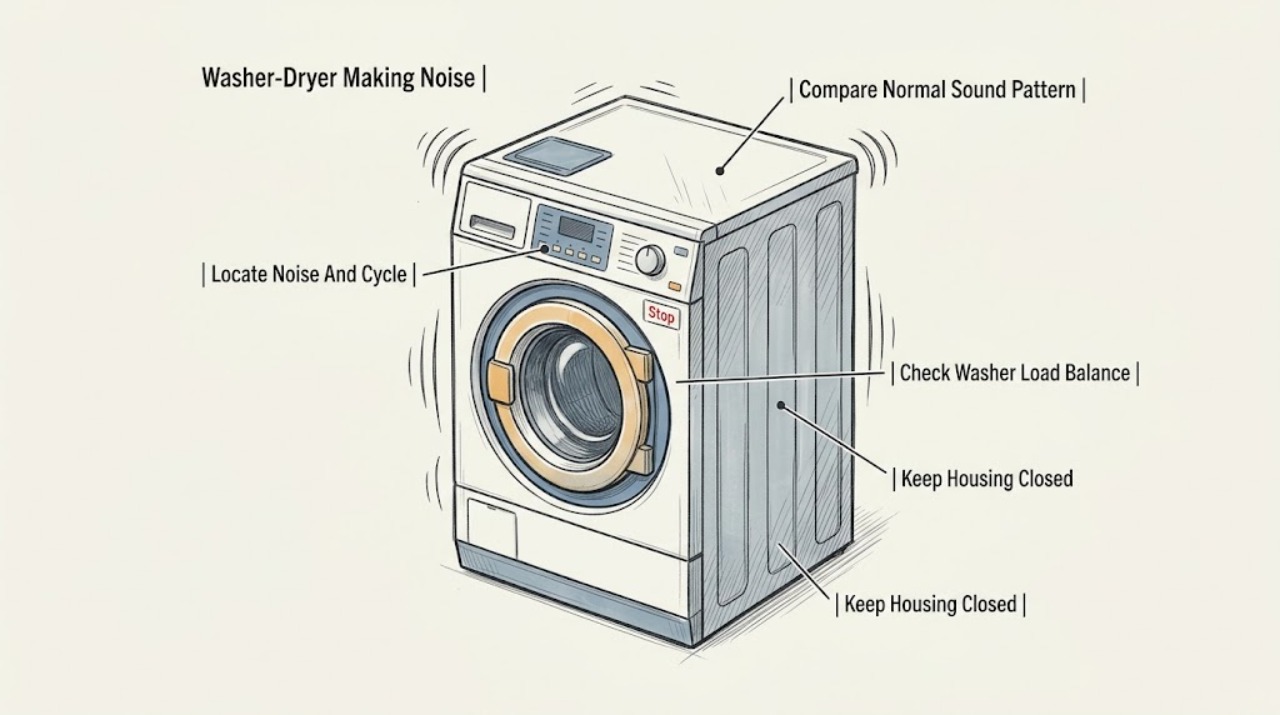
GE Washer-Dryer Making Noise: Identify the Cycle Before You Repair
First identify whether the noise comes from the washer or dryer portion and note the cycle, sound, and whether it is brief or continuous. GE documents normal sounds such as water fill, drain gurgle, agitation, spin ramping, a short dryer start squeak, and the drum turning.
-
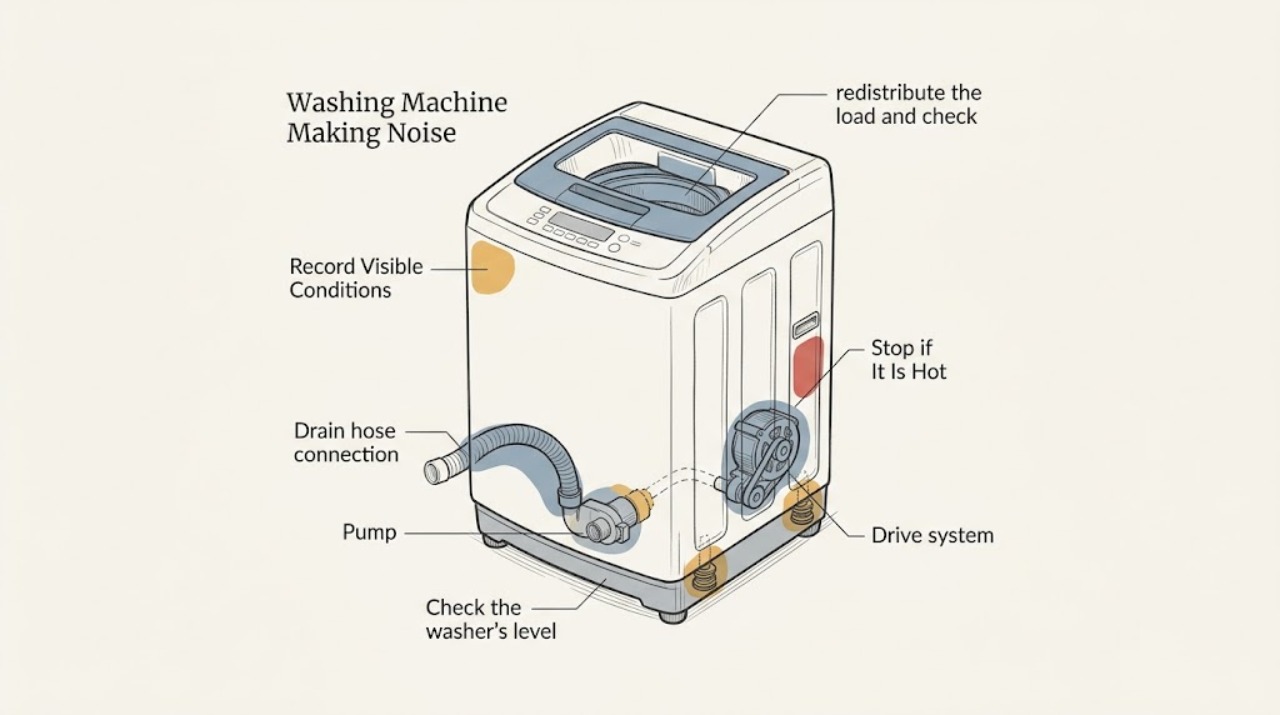
GE Washing Machine Making Noise: Identify the Sound Safely
First match the noise to the part of the cycle: GE lists clicks at lid lock, water sounds and hum during fill, pulsing or grinding during agitation, pump hum and water sounds during drain, slurping near the end of drain, and motor ramping during spin as potentially normal on applicable models. A new loud bang, scraping, squeal, repeated metal strike, or washer that walks is different.
-
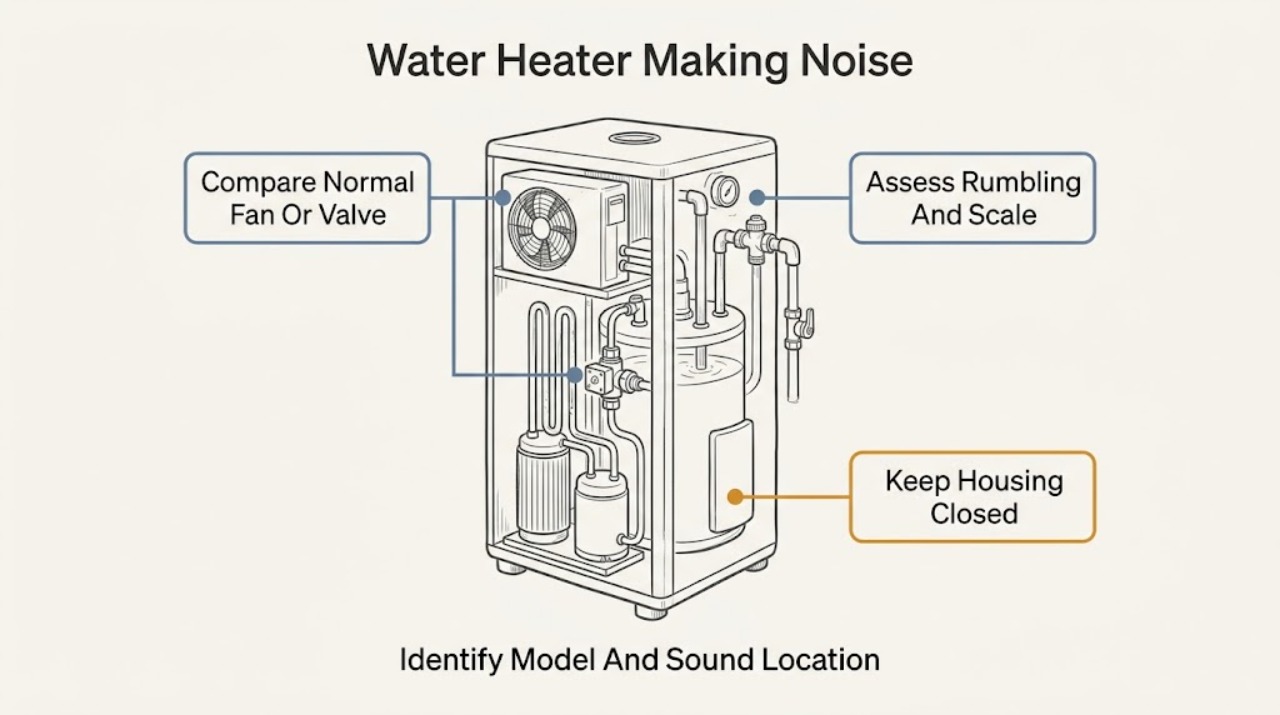
GE Water Heater Making Noise
First identify the GE water-heater model and whether it is a standard electric, integrated Electronic Mixing Valve (EMV), or GeoSpring heat-pump unit; noise behavior is not interchangeable across those designs. A soft fan sound on a GeoSpring and intermittent soft EMV motor noise can be normal.
-
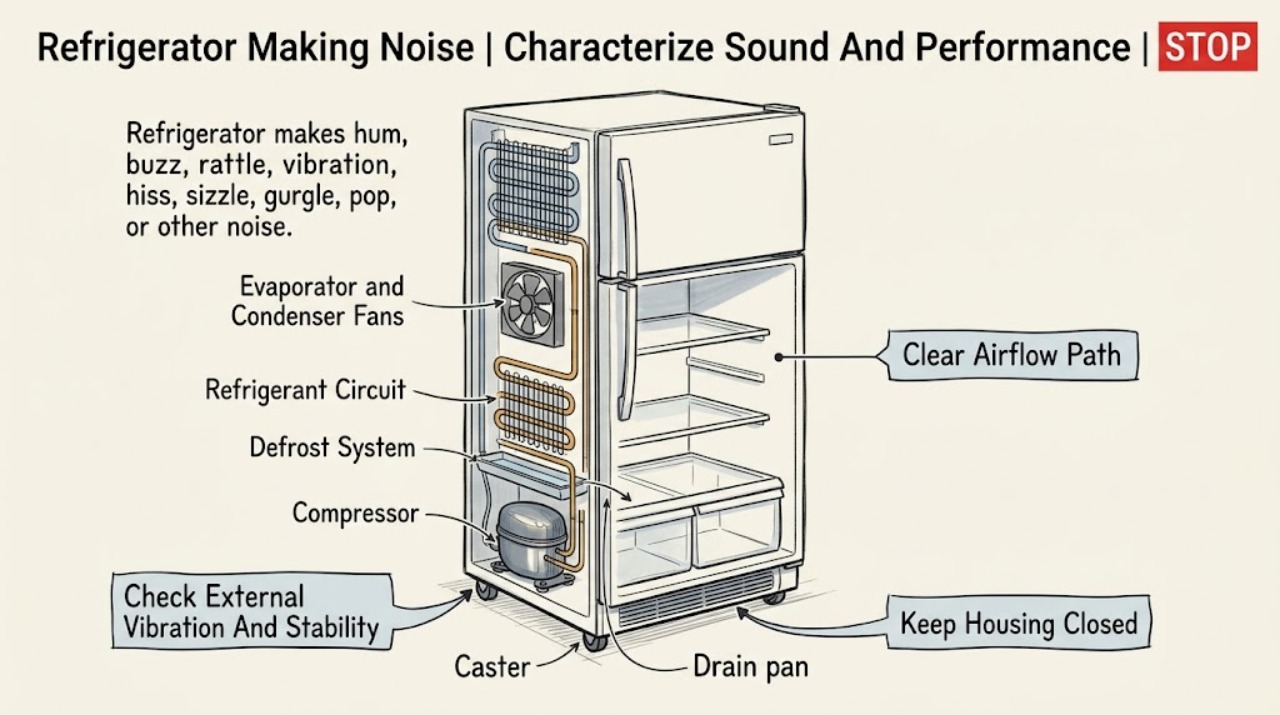
Gladiator Refrigerator Making Noise: Separate Normal Cycle Sounds from Faults
First record the sound, its location, whether it happens continuously or only during cooling, defrost, door opening, or loading, and whether the refrigerator is still cooling normally.
-
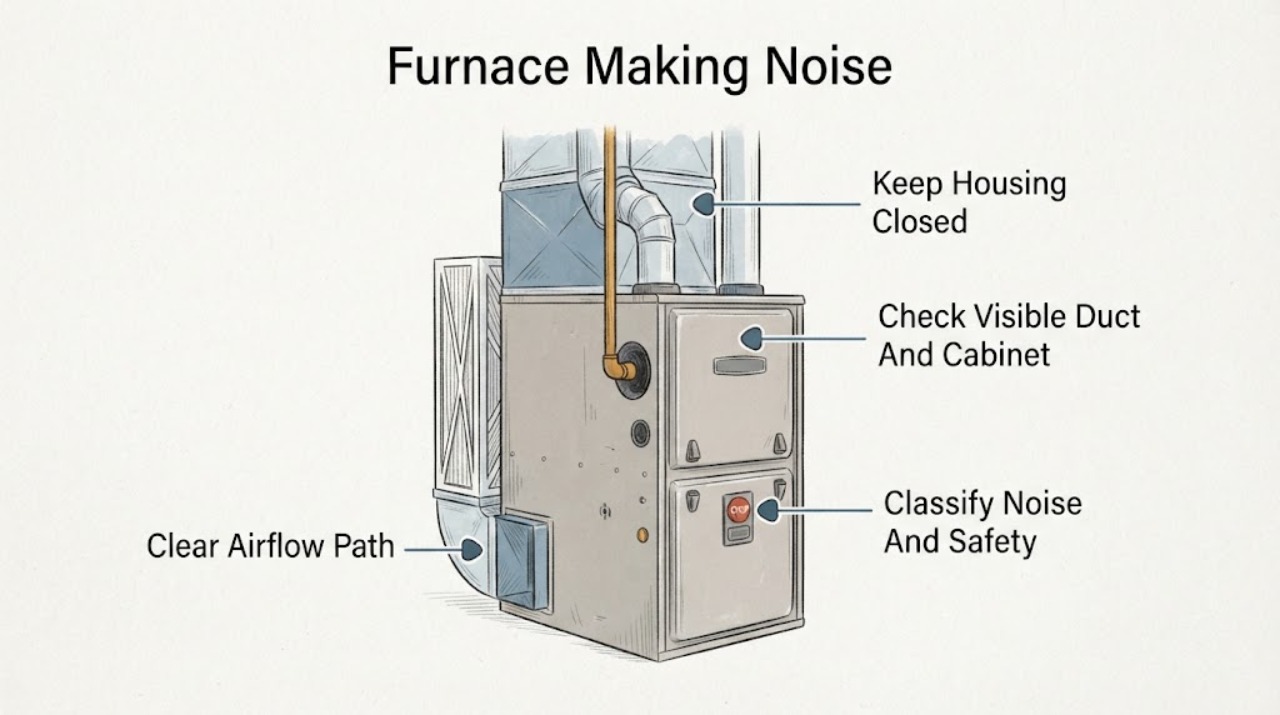
Goodman Furnace Making Noise: What to Check and What to Do Next
A Goodman furnace should not be assumed faulty from a familiar start-up click or airflow sound, but a new or worsening bang, grinding, screech, rattling, whistling, burning odor, or gas odor deserves attention. First note when the sound occurs—at ignition, during blower operation, at shutdown, or continuously—then check only the thermostat setting, accessible air filter, open registers, and loose-looking external duct or cabinet panels.
-
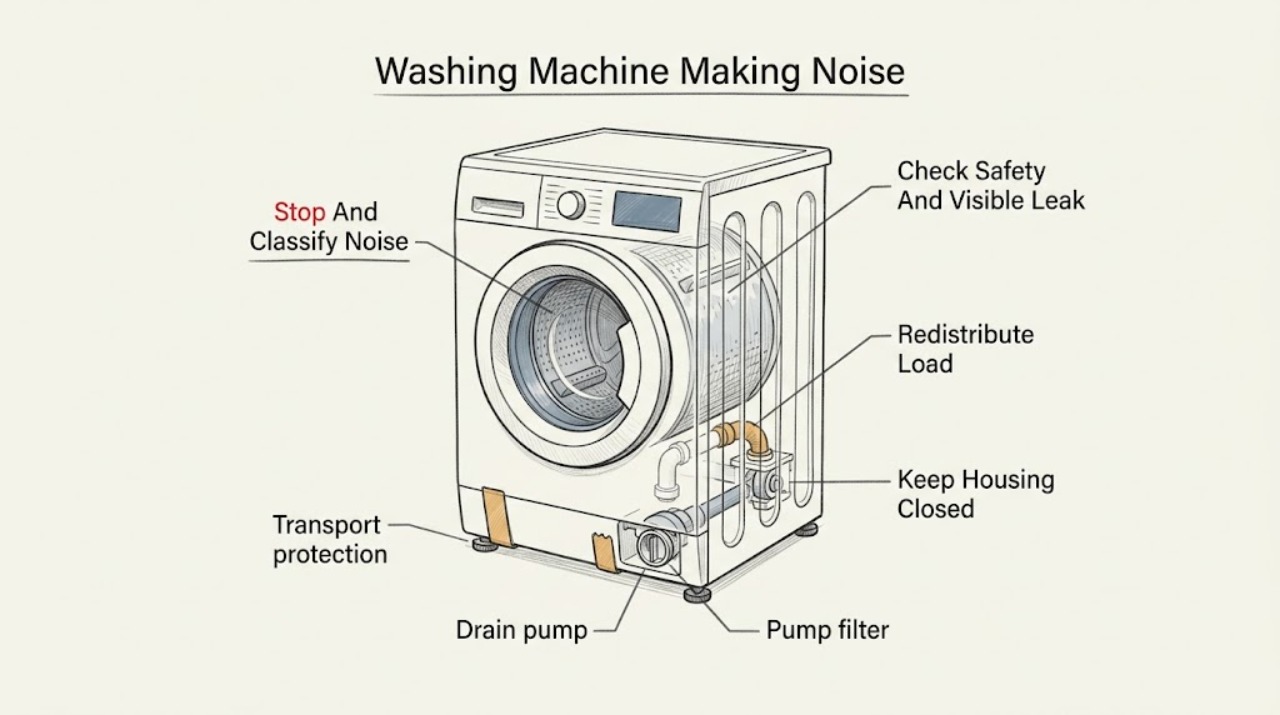
Gorenje Washing Machine Making Noise
Pause the Gorenje washing machine and classify the noise before running another cycle. A thump or walking during spin is commonly associated with an uneven load, too little laundry, an unlevel machine, loose lock nuts, or transport bolts left in after installation.
-
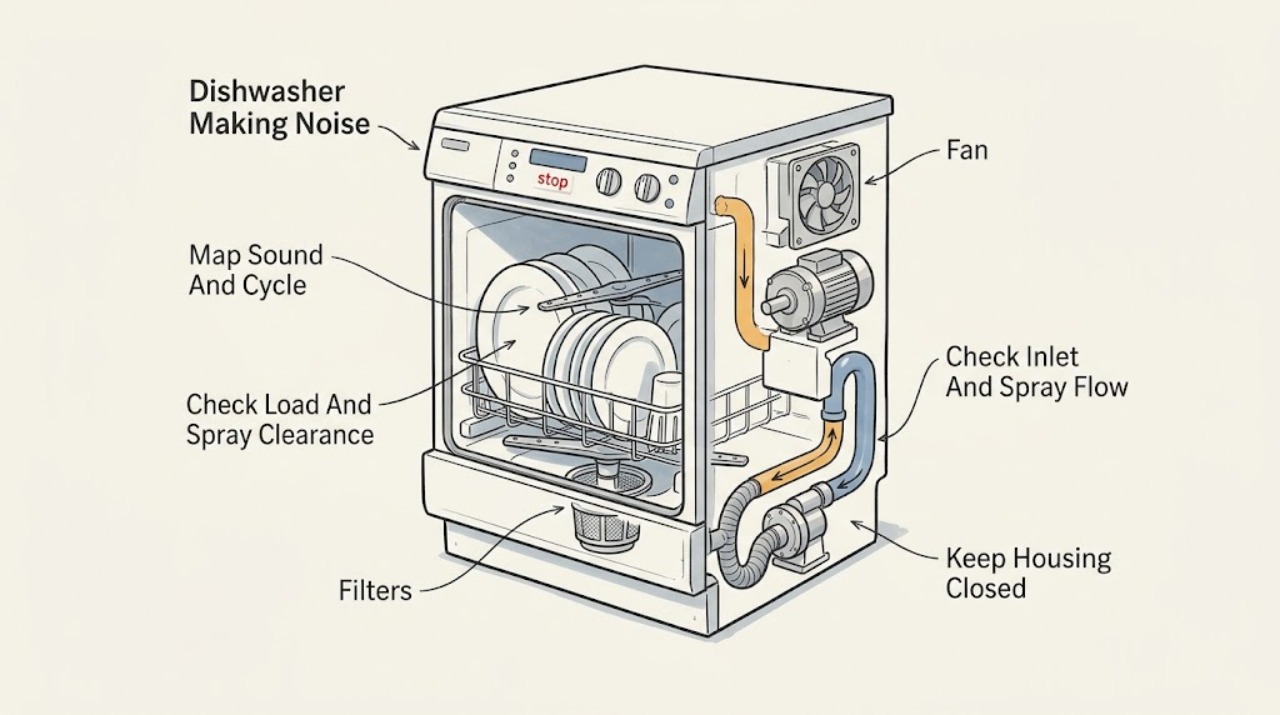
Haier Dishwasher Making Noise: Identify the Cycle and Sound Before Servicing
First record when the sound starts and whether it comes from the wash cabinet, the drain area, or the household pipework. Check the load only after stopping the program and waiting for movement and spray to cease: a loose dish or an item that restricts a spray arm can create a rattle or knock.
-
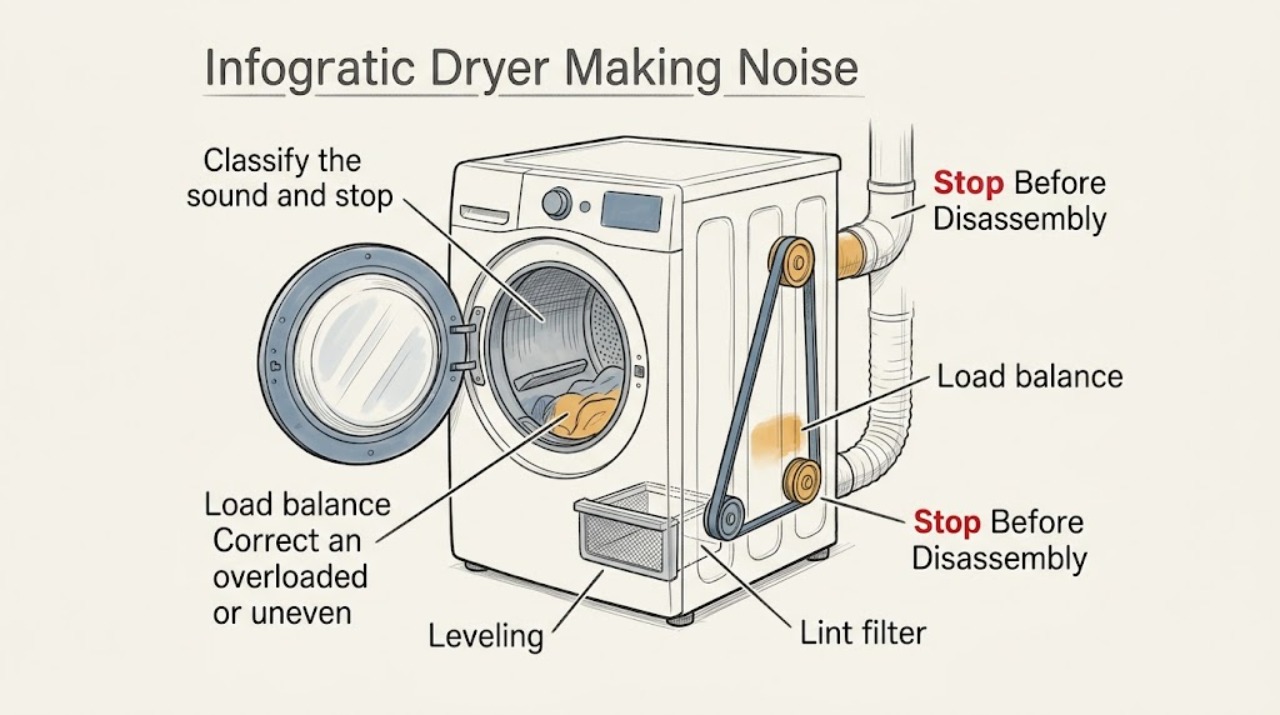
Haier Dryer Making Noise: Safe Load, Drum, and Airflow Checks
Stop the Haier dryer and let it cool if the sound is accompanied by a burning smell, smoke, scraping, metal-on-metal contact, a loose drum, or excessive shaking. With power off and the drum stopped, remove loose objects from the drum, check that the load is not overfilled, confirm the dryer is level and all four feet support it, and make sure the door closes completely.
-
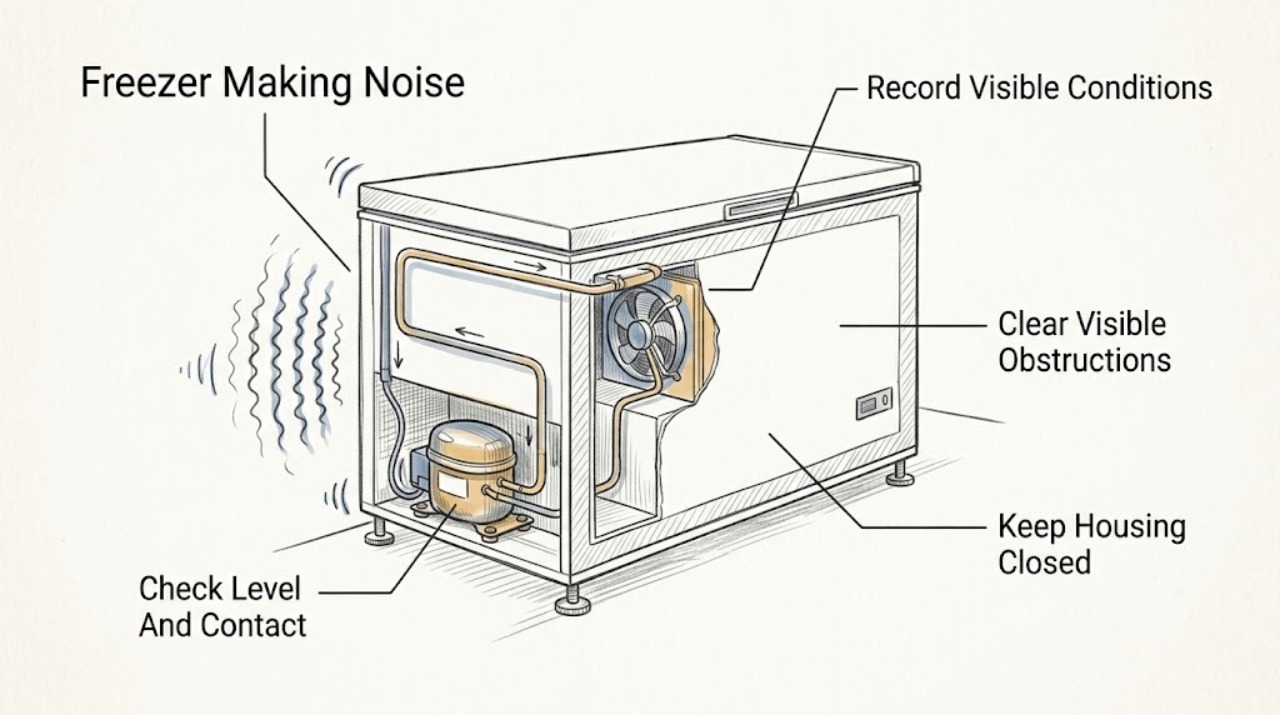
Haier Freezer Making Noise: Identify Normal Sounds and Vibration
Some Haier freezer sounds are normal: compressor operation and clicking at start or stop, refrigerant moving through the cooling system, fan operation, cooling-system rumble, and expansion or contraction of parts. A hard floor, wall, or cabinet can make a normal sound seem louder.
-
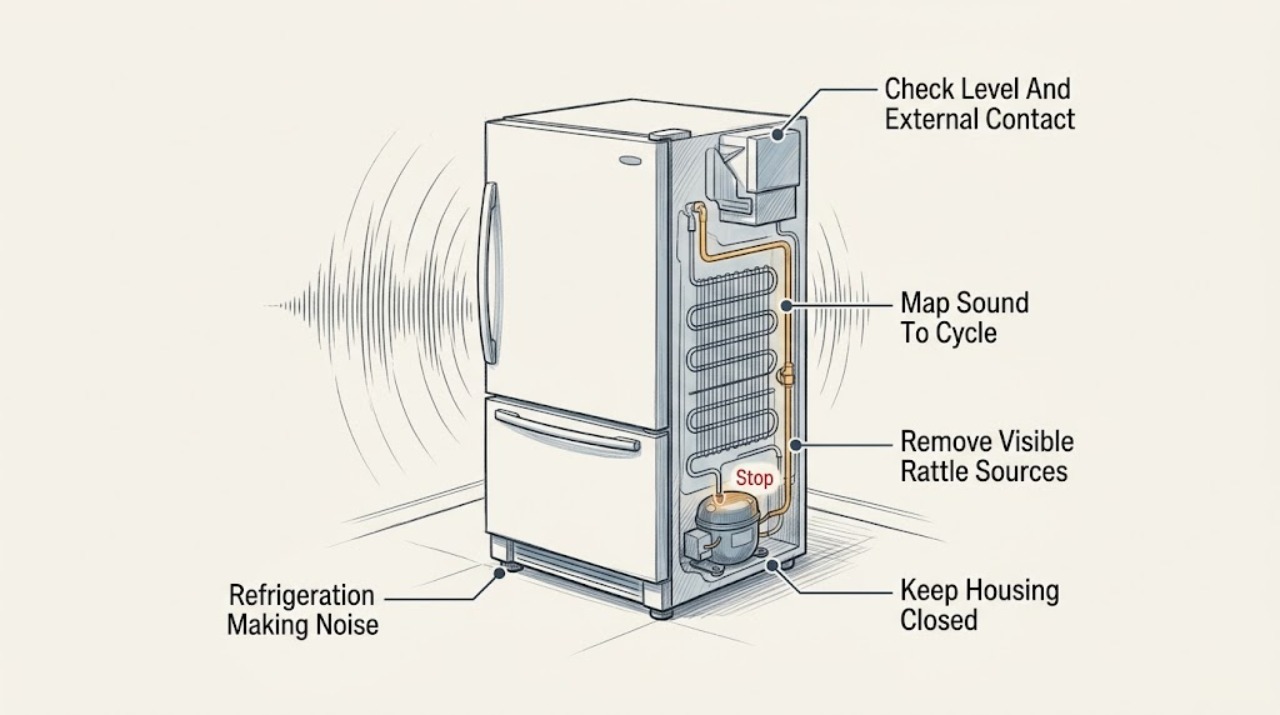
Haier Refrigerator Making Noise
Some Haier refrigerator sounds are expected: a compressor hum, fan whoosh, refrigerant gurgle, defrost drips or sizzle, control clicks, and brief cracking as parts change temperature. First record whether the sound follows compressor or fan cycles, door opening, icemaker operation, defrost, or loading.
-
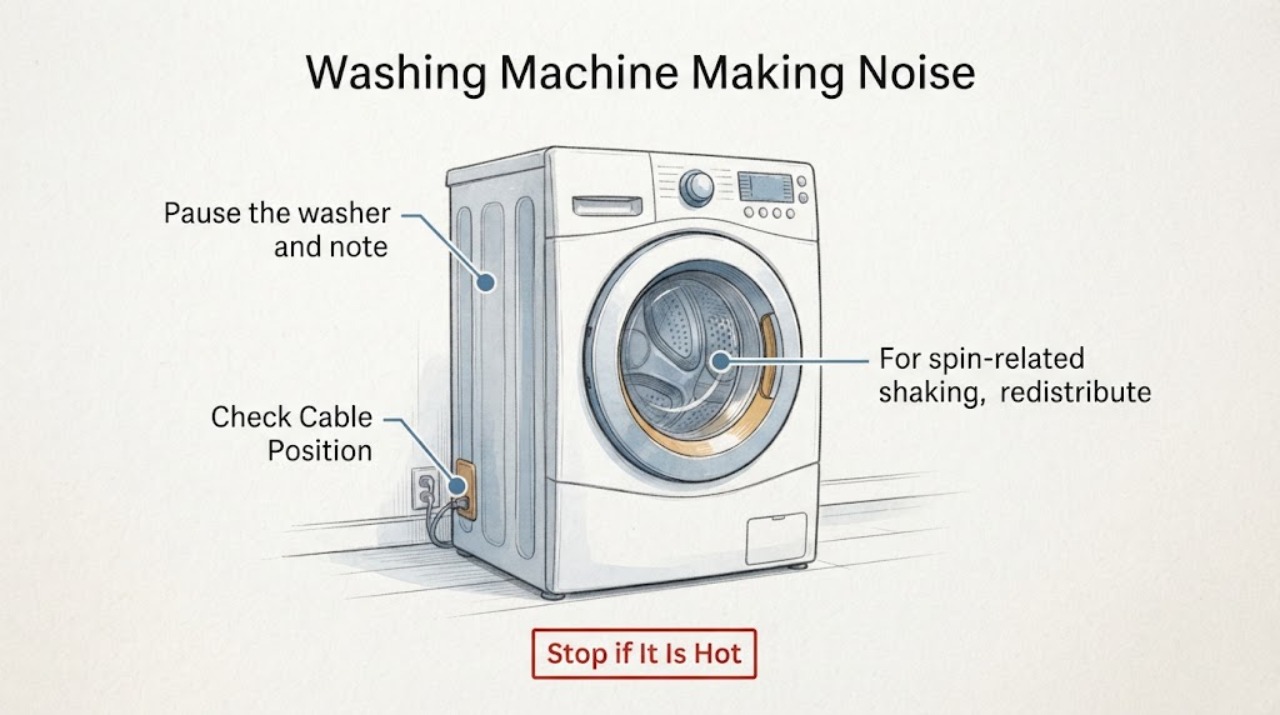
Haier Washing Machine Making Noise
Pause the Haier washer and identify when the sound occurs: only during high-speed spin, while draining, or whenever the drum moves. A load that is off-center, an unlevel floor, or transport bolts left after installation can cause shaking and knocking.
-
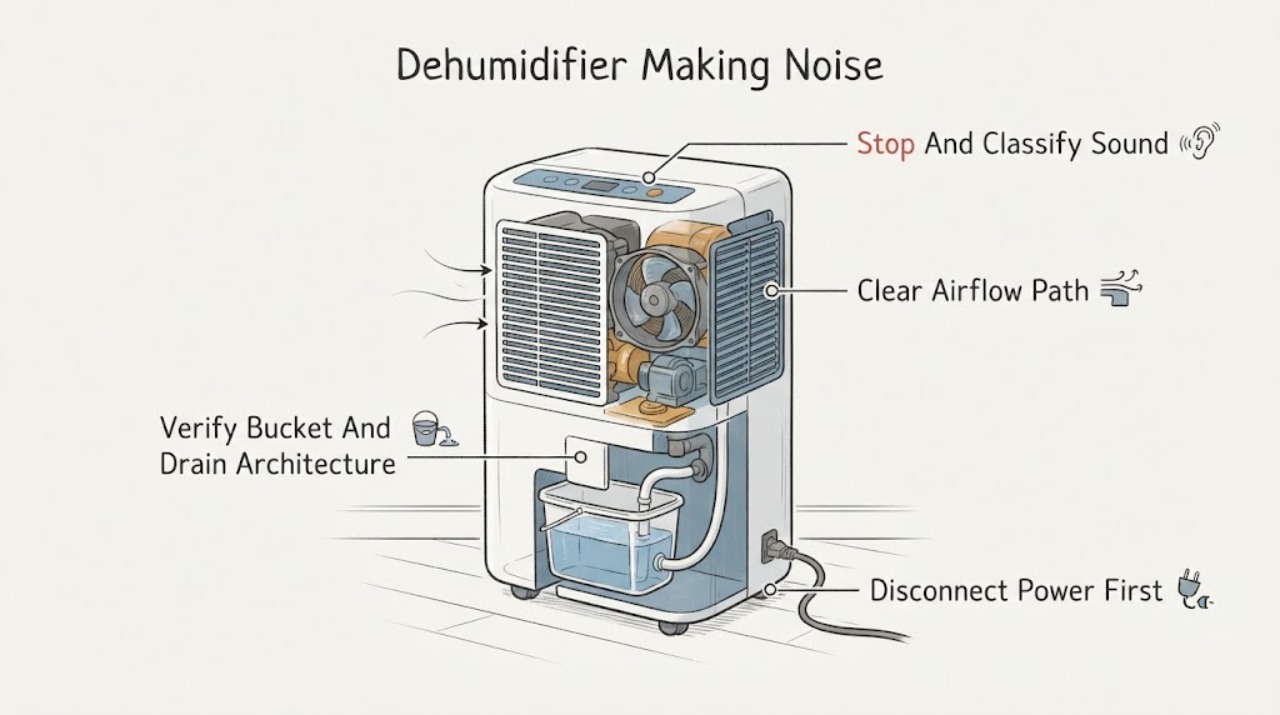
Hisense Dehumidifier Making Noise: Separate Normal Cycling from a Fault
First classify the sound and stop if it is genuinely strange: Hisense's dehumidifier guide lists compressor noise, fan air movement, pump noise, and clicking as sounds that can occur during normal operation, while the same guide says to unplug and contact Hisense if the product makes a strange noise or emits an odor or smoke. Check the exact model label because not every unit has Quiet mode or a pump.