
Repair problem
Making Noise Troubleshooting Guides – Page 4
Published FixGraph guidance for diagnosing and responding to making noise.
Matching published guides
Choose a guide that matches the service, equipment, and conditions you are seeing.
-
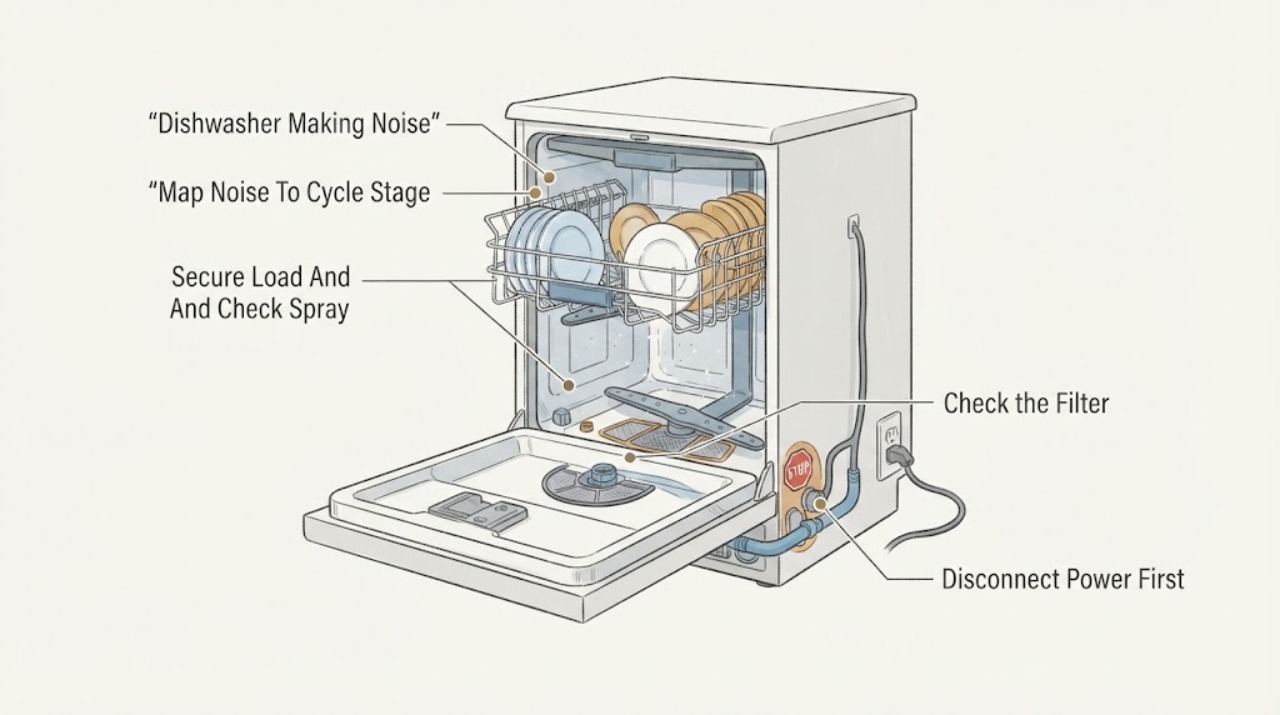
Hisense Dishwasher Making Noise
First locate when and where the noise occurs: loading or rack movement, filling, washing, draining, drying, or the entire cycle. On the opened Hisense dishwasher manual, a rattling sound is associated with dishes that are not secure or spray arms that cannot rotate; with power disconnected and the tub cool, rearrange the load and spin the spray arms by hand only as the manual permits.
-
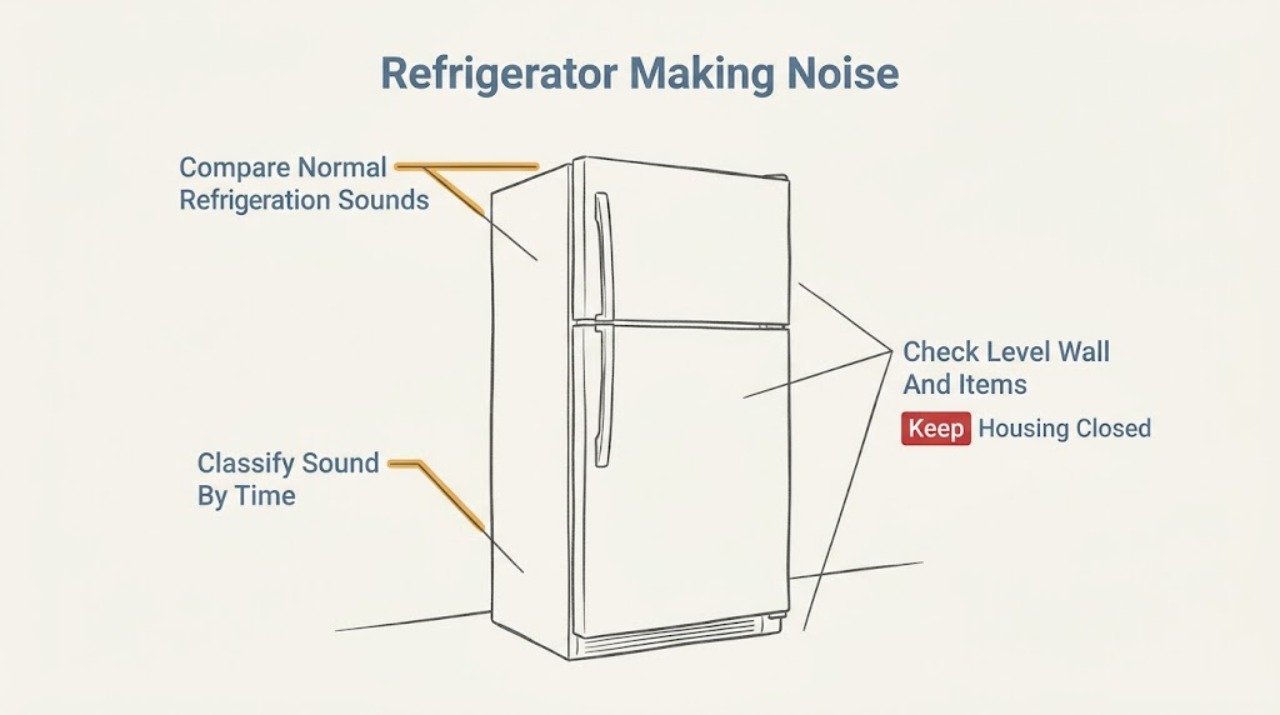
Hisense Refrigerator Making Noise: Match the Sound to Its Timing and Location
First record where the sound comes from and when it occurs: at compressor start/stop, continuously while cooling, when a fan runs, during automatic defrost, when a door opens, or only when the cabinet or stored items vibrate.
-
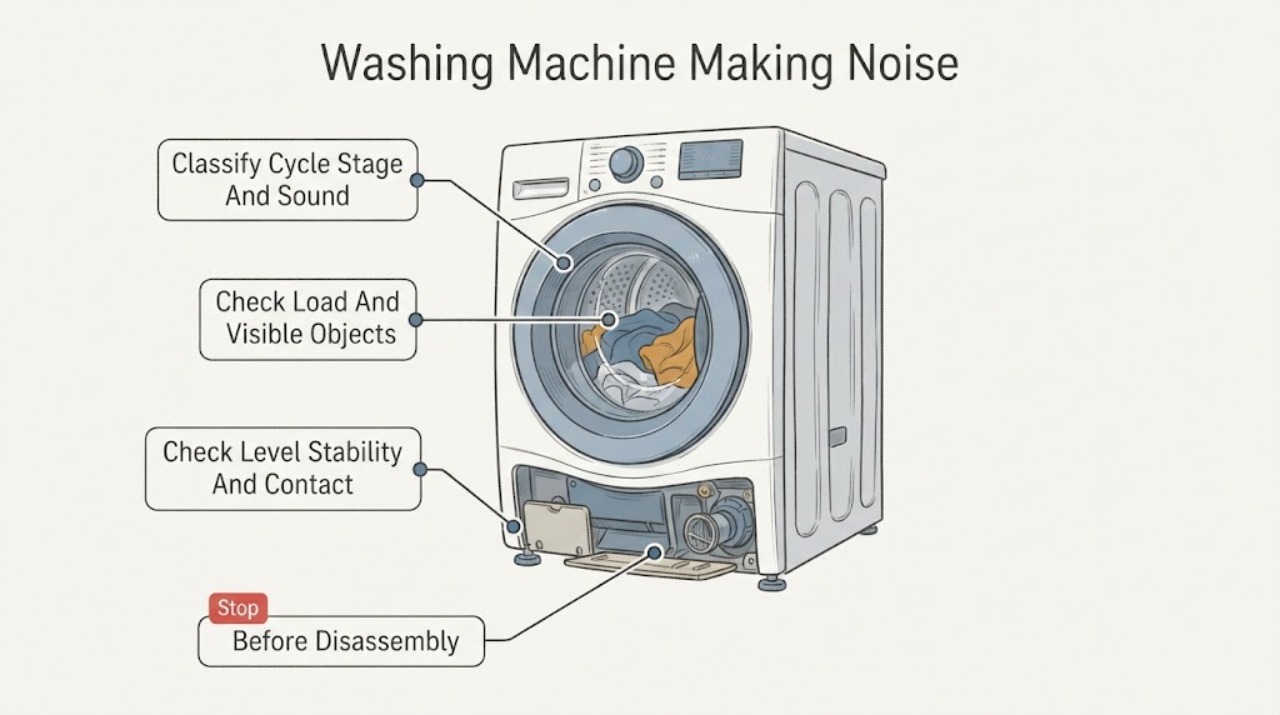
Hisense Washing Machine Making Noise: Locate It by Cycle Stage
A Hisense washing machine noise is easier to diagnose when you note whether it occurs during filling, washing, draining, or spinning. Hisense support identifies foreign objects, an unstable or unlevel floor, a drain hose touching the cabinet, an unsuitable load, a blocked pump filter, and transport restraints left on a new machine as different noise checks.
-
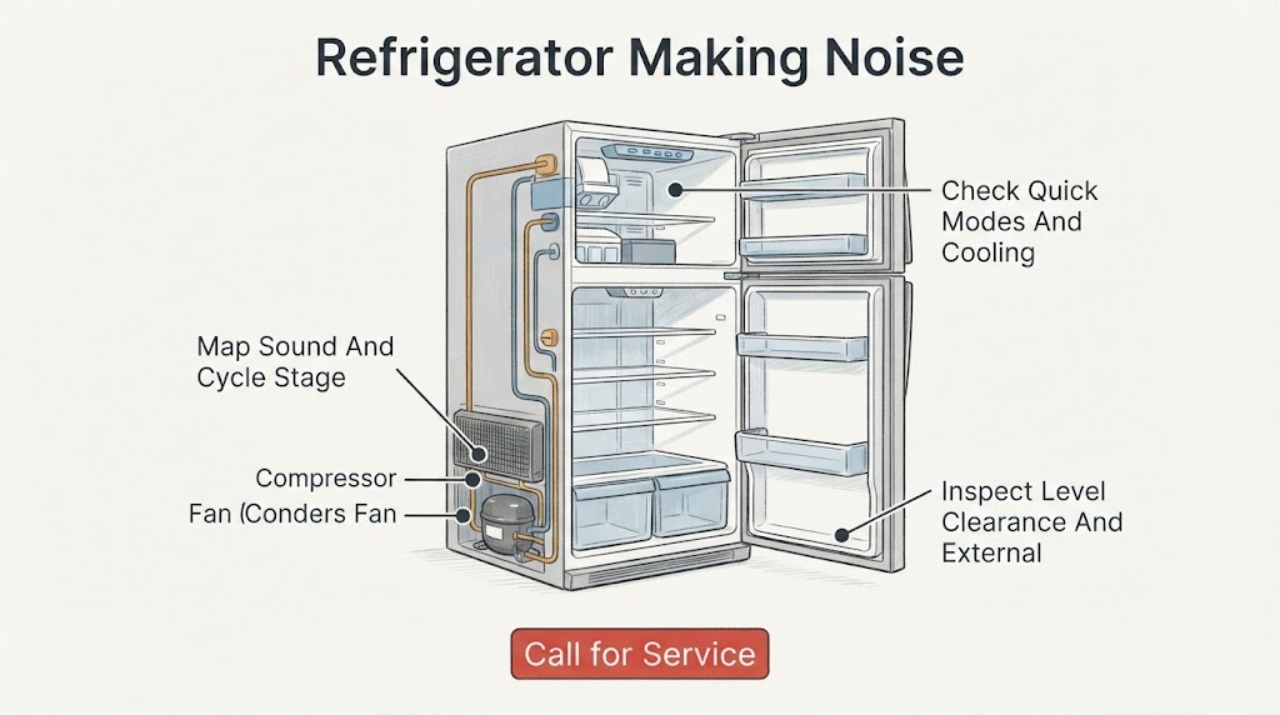
Hitachi Refrigerator Making Noise
First record the sound and when it occurs: startup or frequent door opening, compressor cooling, fan circulation, defrost, water or refrigerant flow, ice making, door closing, or a constant scrape, grind, or vibration.
-
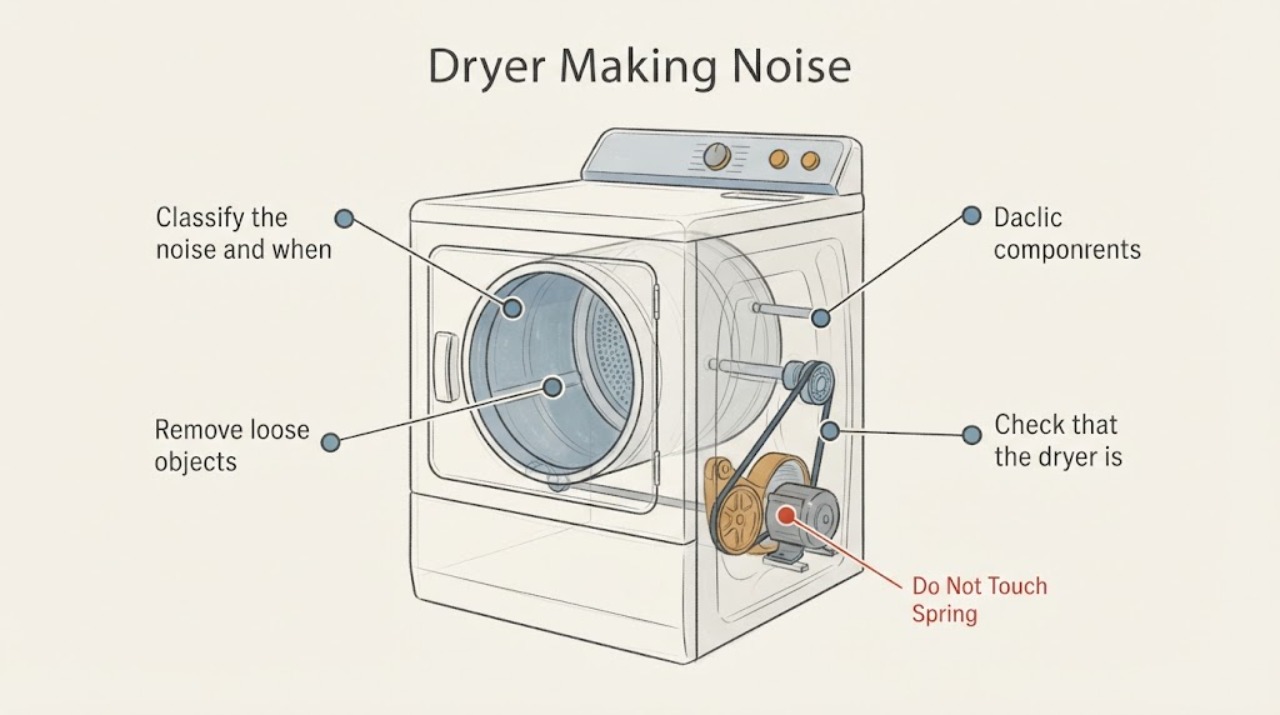
Hoover Dryer Making Noise
Stop the Hoover dryer and disconnect it before inspecting or moving it. First identify whether the sound is a brief rumble at startup, a squeak, a deep rumble, metal-on-metal grinding, a creak, or a new rattle.
-
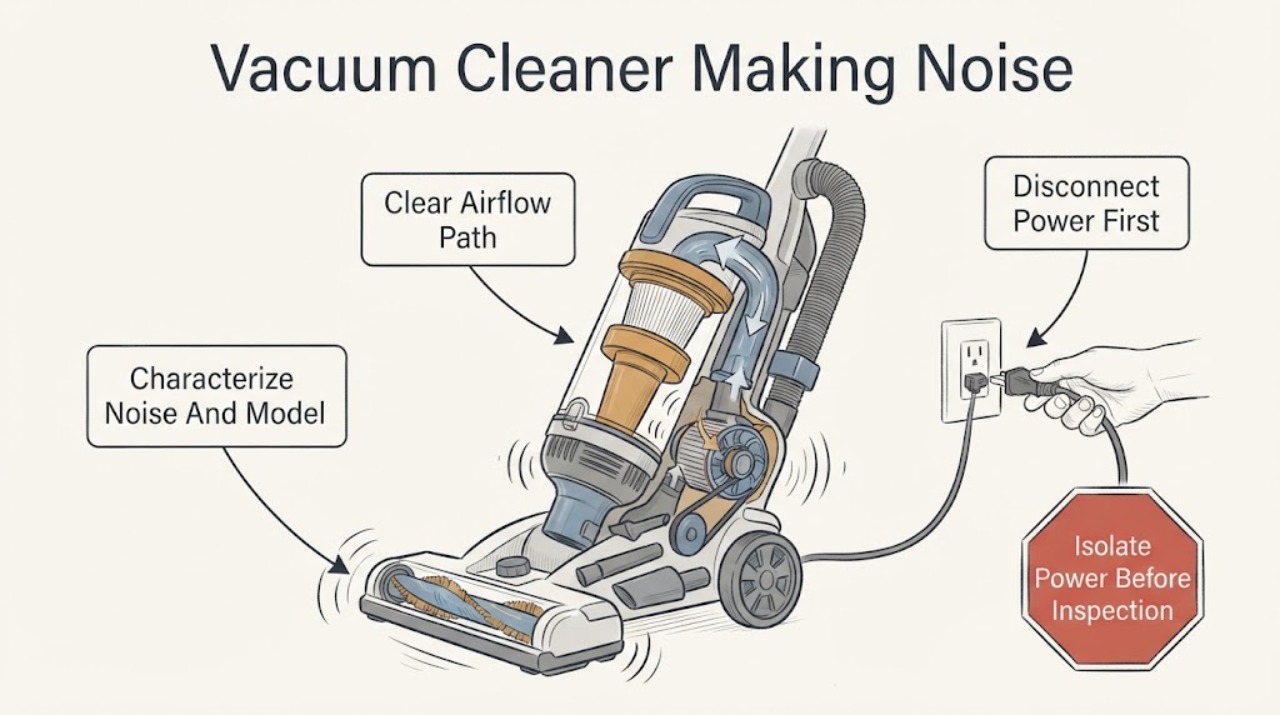
Hoover Vacuum Cleaner Making Noise: Check the Brush Roll, Air Path, and Filters
First describe the new sound and where it begins: a whistle or splutter with weak suction points toward a restricted air path, while a rattle, vibration, grinding, or squeal from the floor head points toward debris, a damaged brush roll, or a drive problem. Hoover's official Advice Centre says a vacuum can become noisy or vibrate when debris is tangled around the brush roll or agitator, and it requires the appliance to be disconnected from the mains before examination.
-
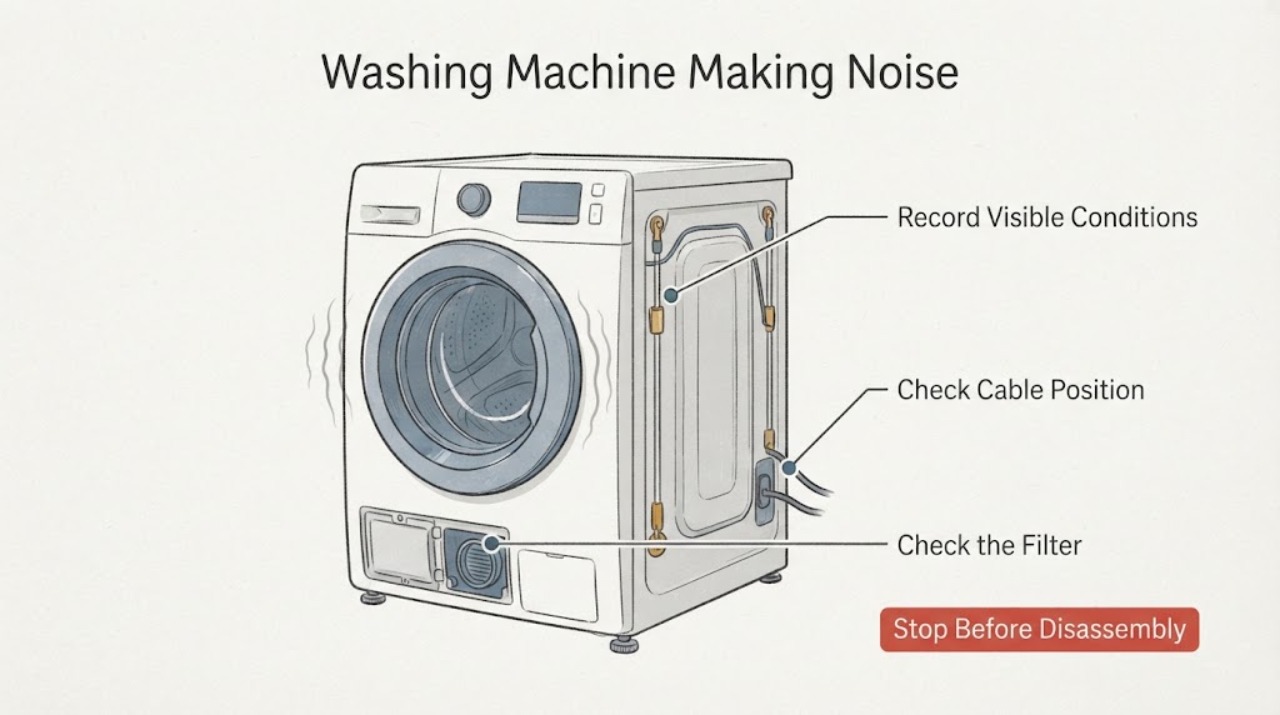
Hoover Washing Machine Making Noise: Find the Cause Safely
First note when the noise occurs: a low hum, water slosh, and faster spin sound can be normal, but sudden grinding, scraping, repeated banging, or loud clicking needs a check. Stop the Hoover washing machine and disconnect it before inspecting accessible areas.
-
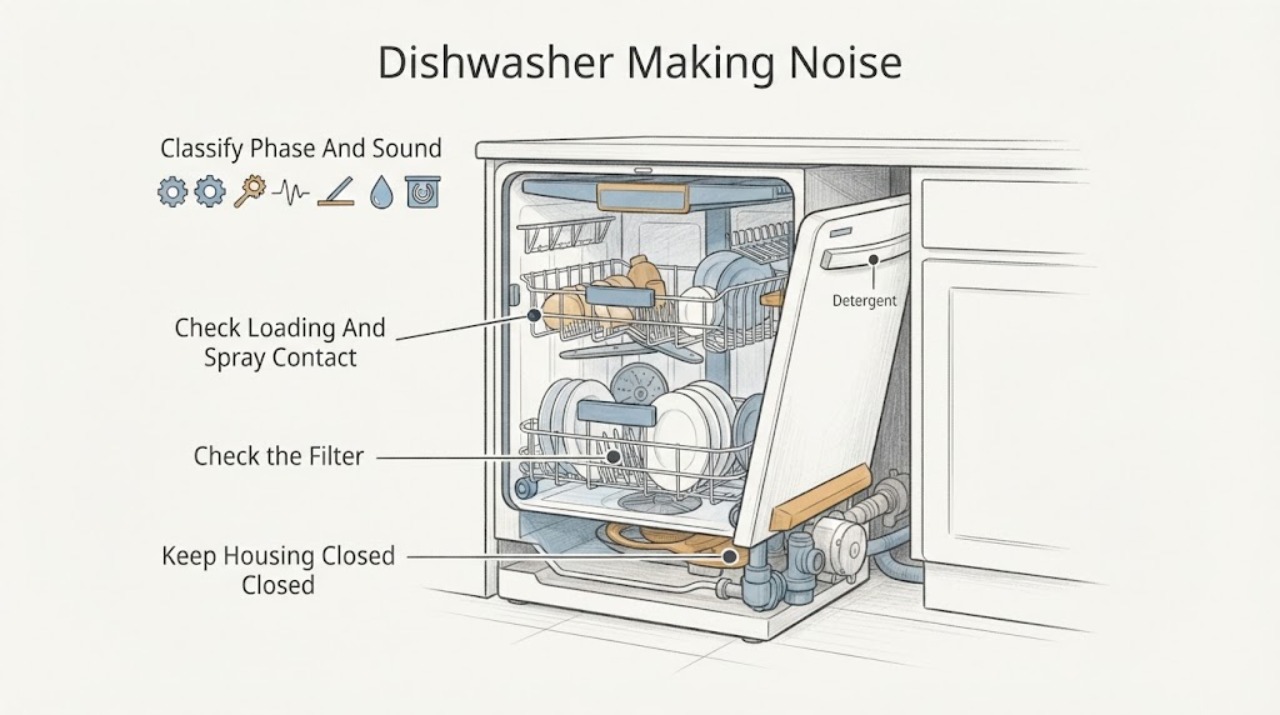
Hotpoint Dishwasher Making Noise: Separate Cycle Sounds from Faults
First note when the noise occurs and whether it is a swish or hum tied to water movement, a brief rattle when spray arms meet a dish, a repeated knock, or a new grinding/buzzing sound. Some operating noise can be cycle-related, and Hotpoint lists models with a Super Silent setting, but the exact manual is needed for model-specific behavior.
-
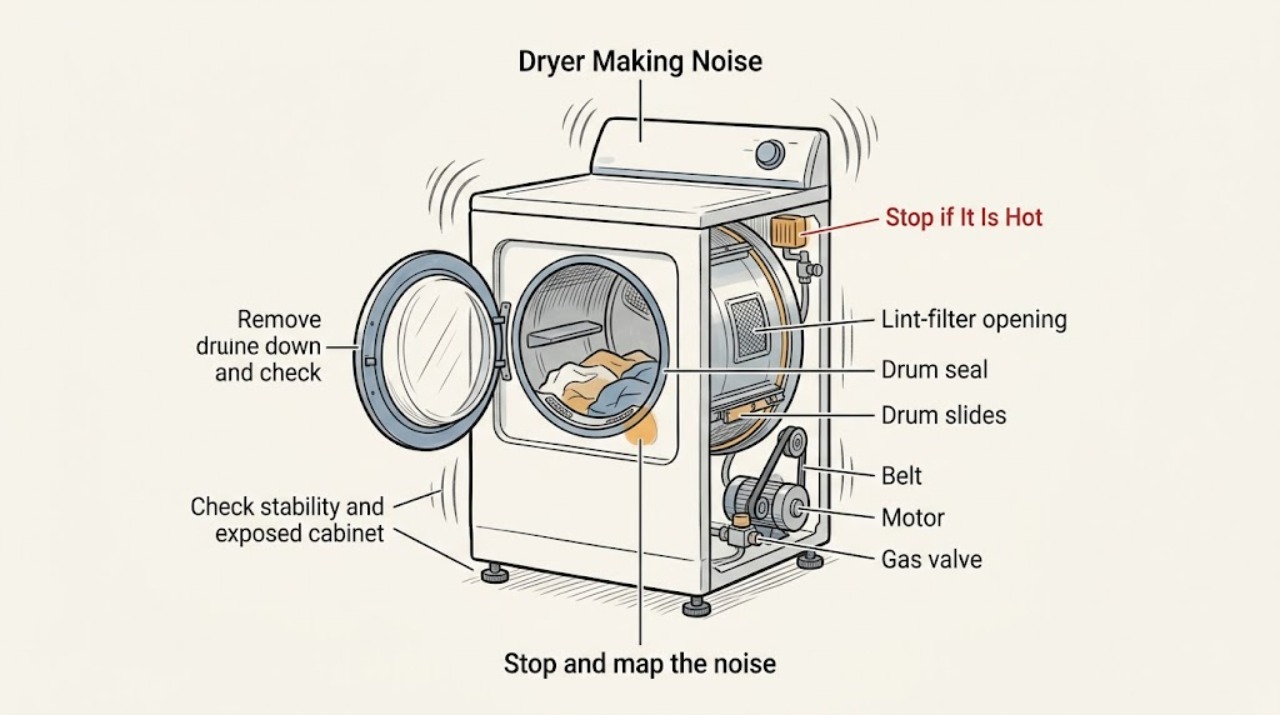
Hotpoint Dryer Making Noise: Identify the Sound Before It Causes Damage
A Hotpoint dryer can make normal operating sounds, such as the drum turning, a brief start-up squeak, or on a gas model a valve click, buzz, or low burner roar. A thump, persistent hum, heat-related squeak, repeating chirp, metal scrape, or noise that began after an object entered the drum needs a check.
-
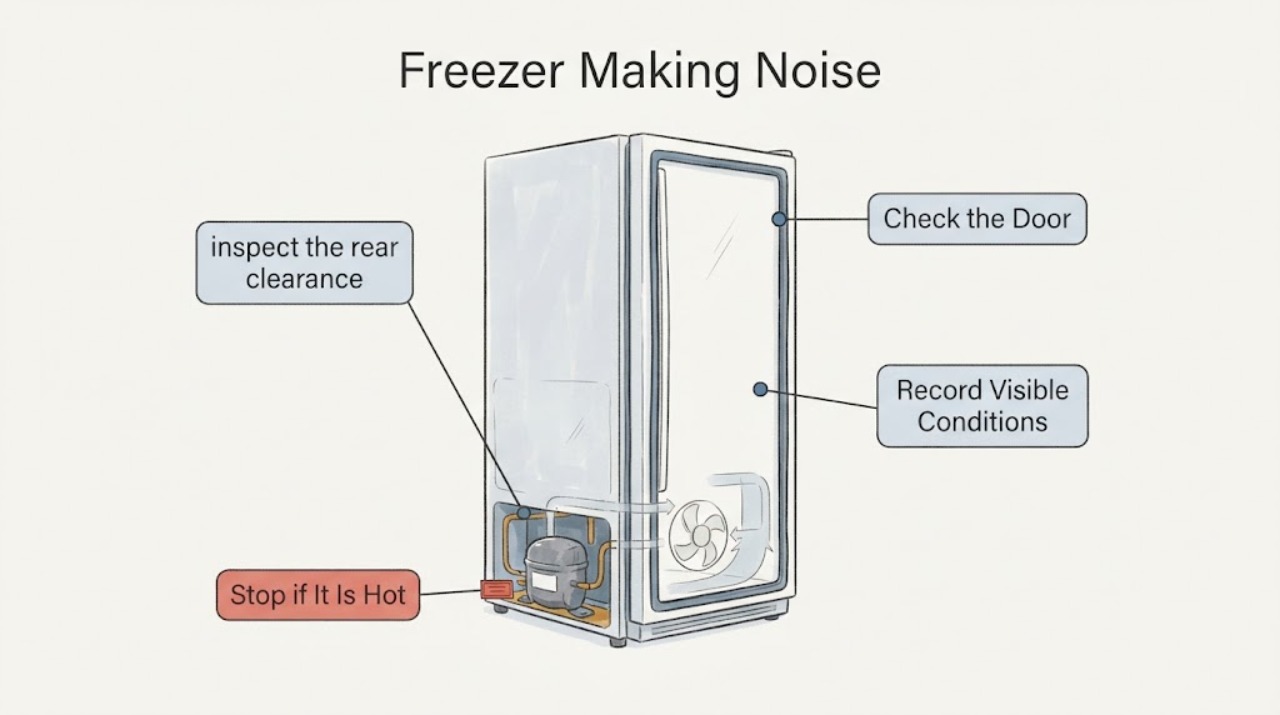
Hotpoint Freezer Making Noise
Many Hotpoint freezer sounds are normal: a compressor can buzz or hum, refrigerant can gurgle or bubble, a fan can whirr, and temperature changes can cause brief cracking. A new or frost-free freezer may sound different from an older one.
-
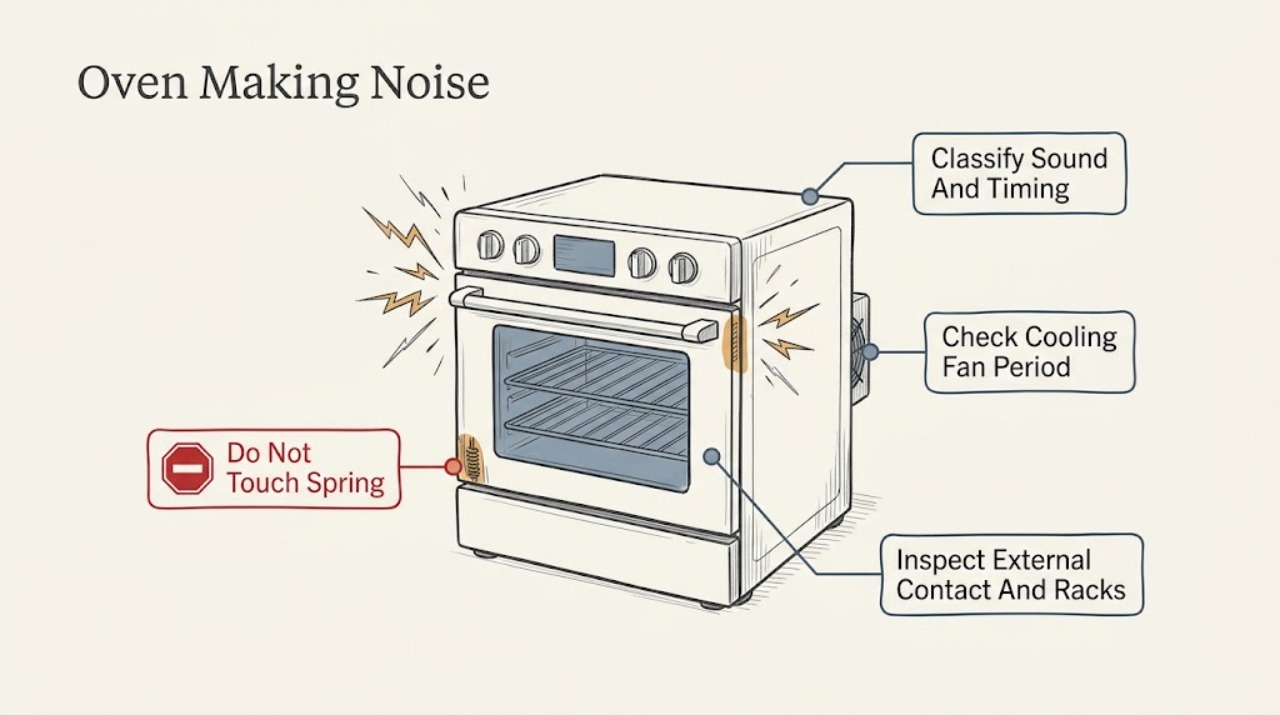
Hotpoint Oven Making Noise: Identify Normal Fan Sounds and Unsafe Faults
A Hotpoint oven noise is easier to judge by when it occurs and whether heat, ignition, or a safety symptom changes with it. A cooling fan can continue for up to 30 minutes after the oven is switched off and may cycle on and off during that period, which Hotpoint describes as normal.
-
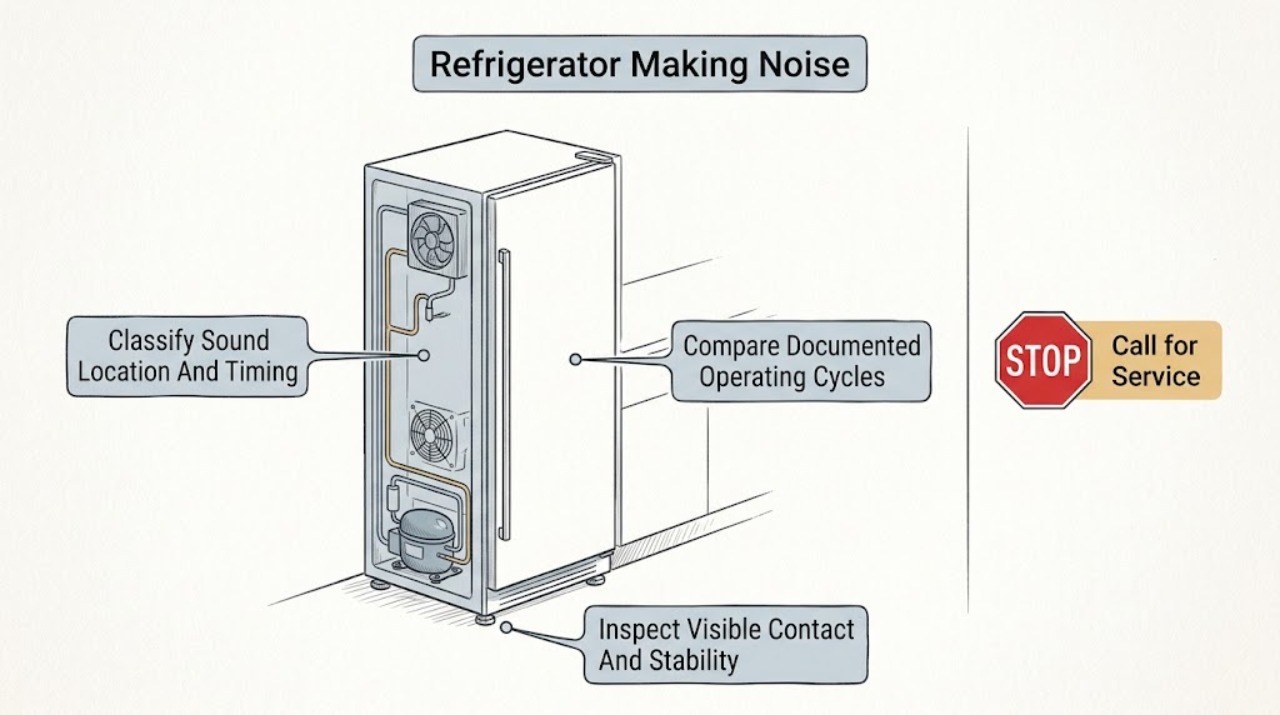
Hotpoint Refrigerator Making Noise
First record what the Hotpoint refrigerator sounds like, where it comes from, and when it happens. Hotpoint’s official guidance says a pump or compressor motor, gas circulating in the pipes, and cracking from defrosting can be normal; frost-free models also use internal and external fans and can sound different from older refrigerators.
-
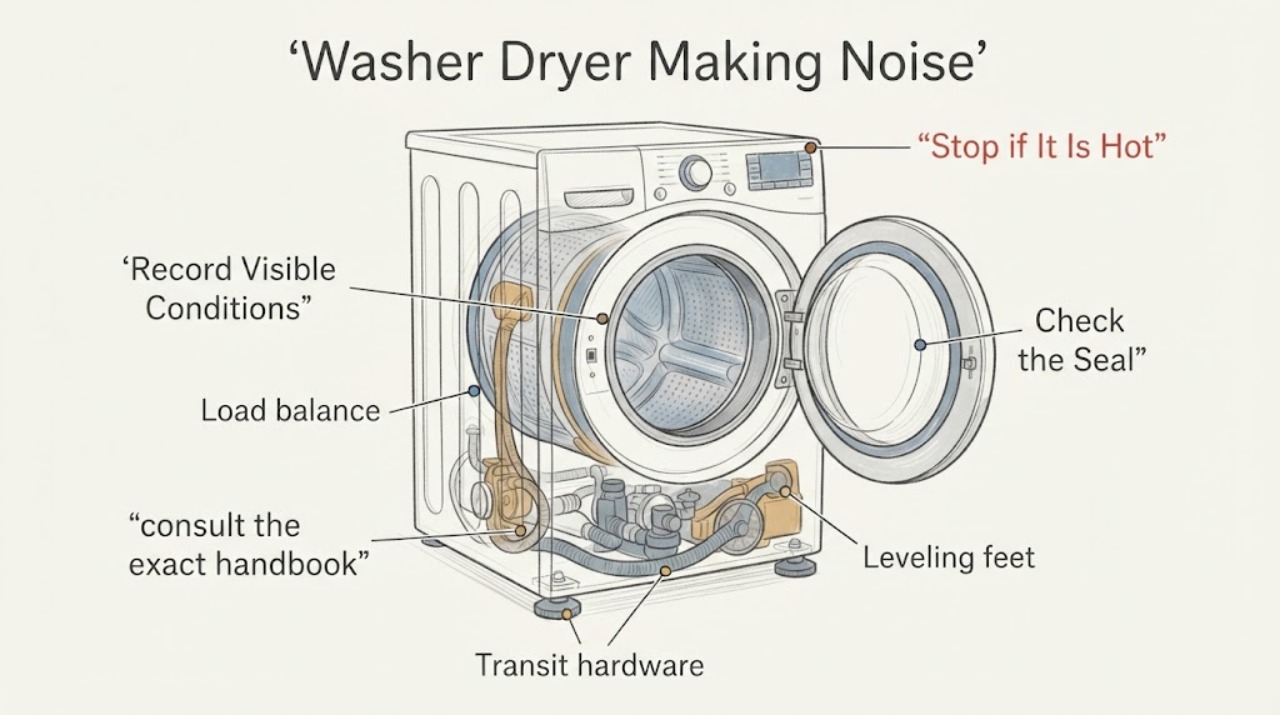
Hotpoint Washer Dryer Making Noise
If a Hotpoint washer-dryer is making noise, first note whether the sound occurs while filling, washing, draining, spinning, or drying, and whether the cabinet moves. A machine that is noisy or unstable on its first use may still have transportation brackets or bolts installed; Hotpoint says those protective parts must be removed according to the handbook before use.
-
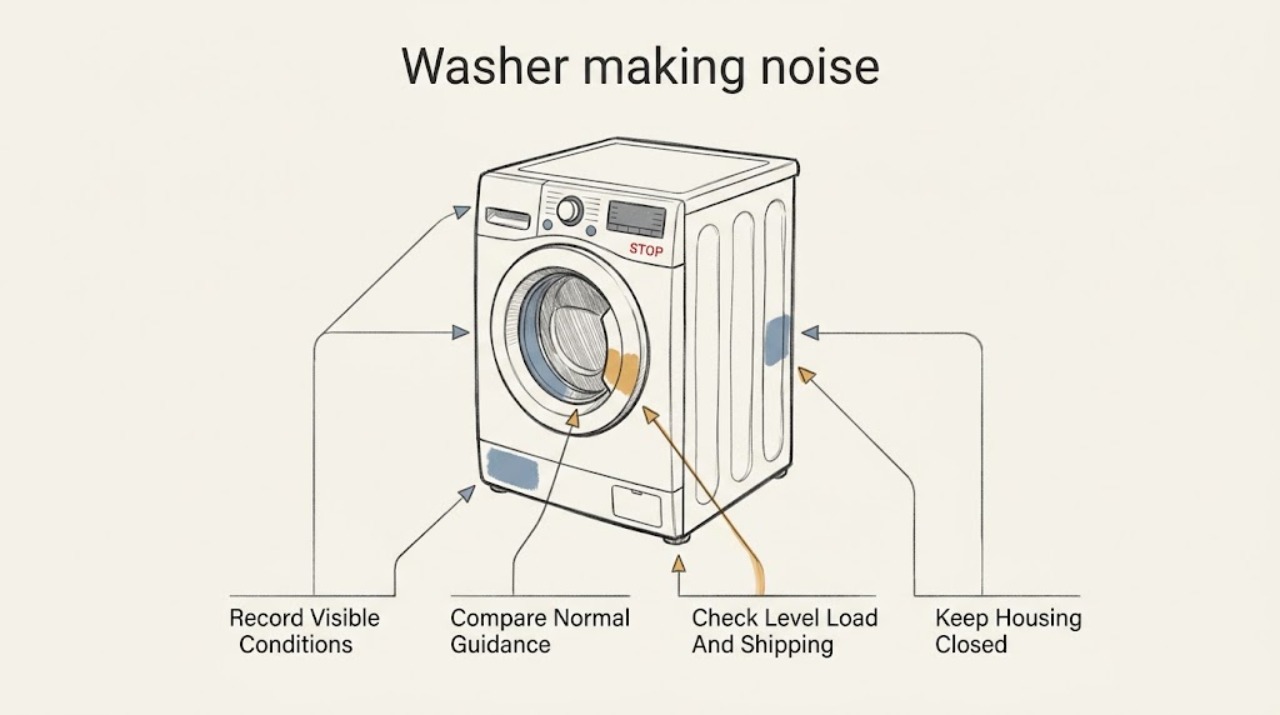
Hotpoint washer making noise: What to Check and What to Do Next
Identify the sound and the cycle stage before assuming a failed part. A Hotpoint washer can normally click while the lid or mode mechanism engages, hum while filling or draining, gurgle at the end of drain, or make a gentle-cycle click from the clutch; the opened GE Appliances support article specifically says that gentle-cycle clicking is normal on GE and Hotpoint washers.
-
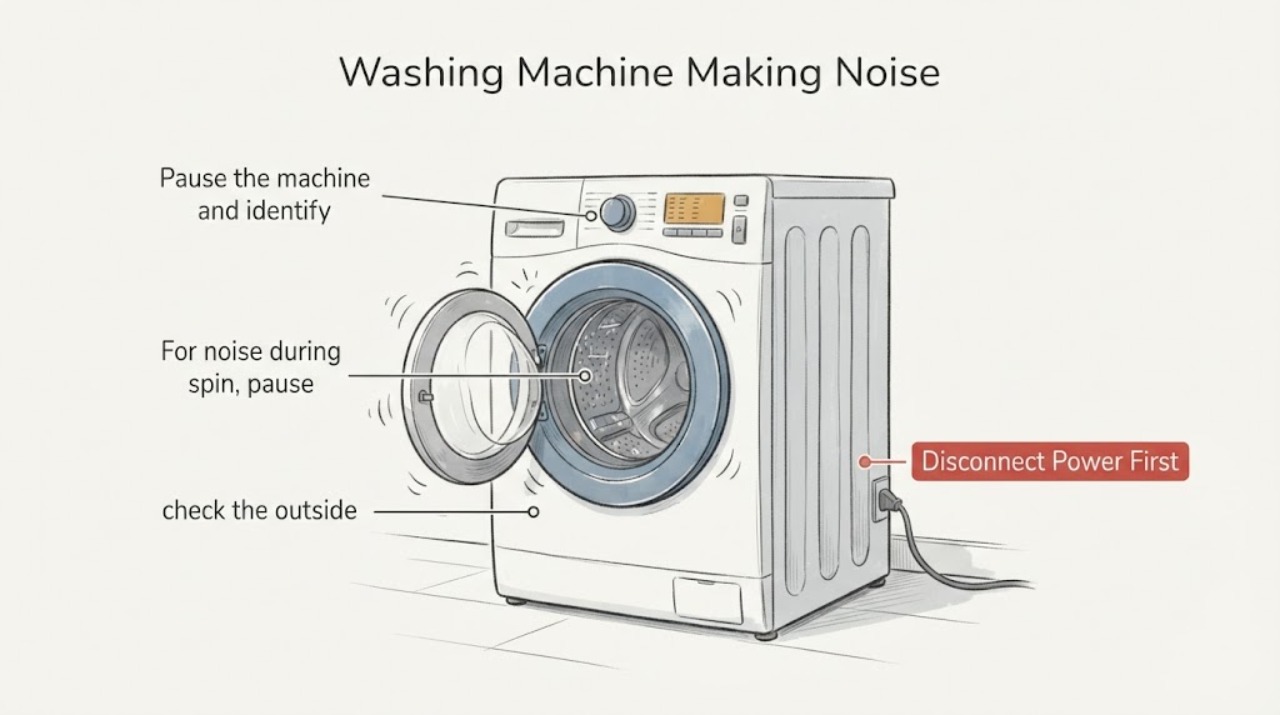
Hotpoint Washing Machine Making Noise: Find the Source Safely
A noisy Hotpoint washing machine is best diagnosed by noting when the sound occurs: filling, washing, draining, or spinning. A new machine that bangs or walks may still have transport brackets or bolts installed, while a sudden rattle can be a coin or other object in the drum or pump path.
-
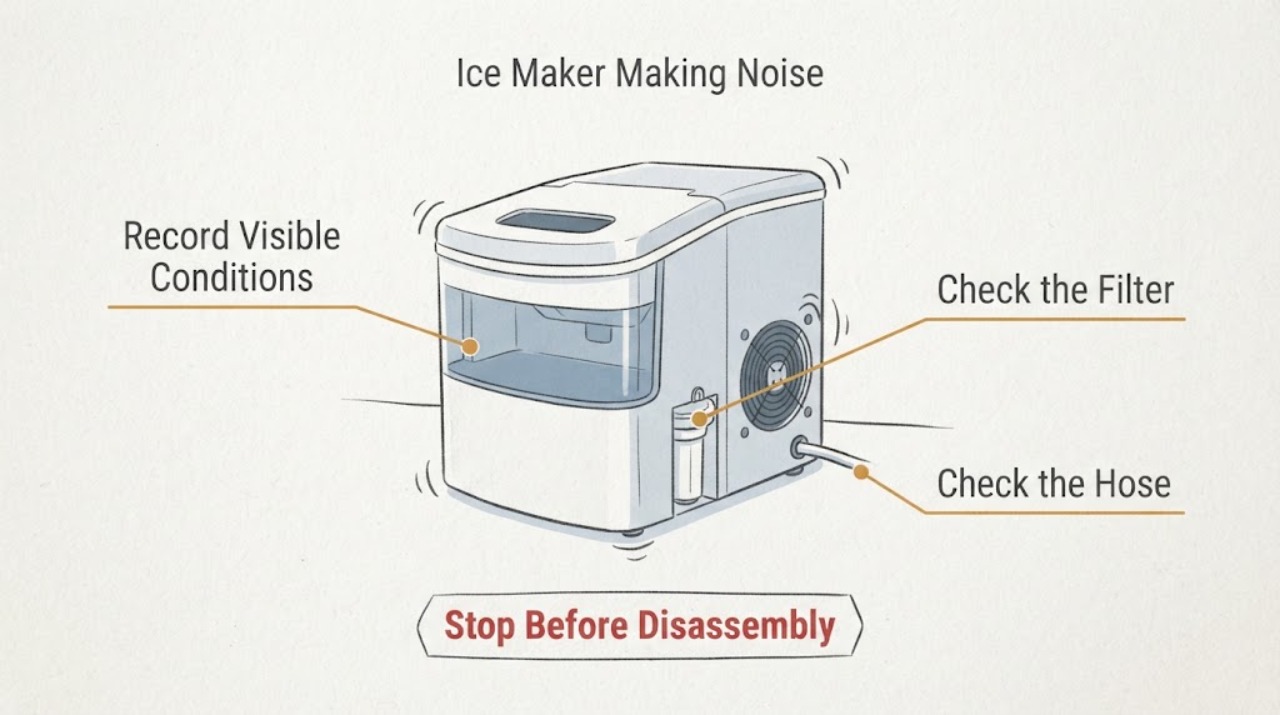
Ice Maker Making Noise
A noisy ice maker is often making a water-fill, circulation, or ice-drop sound, but a new scrape, grinding sound, repeated buzz, or noise with poor ice production needs diagnosis. Stop the cycle, note when the sound occurs, check that the unit is level and has clearances, and inspect only accessible filter and bin areas. Keep it unplugged and arrange service for electrical odor, leaking water, a jammed cutter, or a noise that persists after these checks.
-
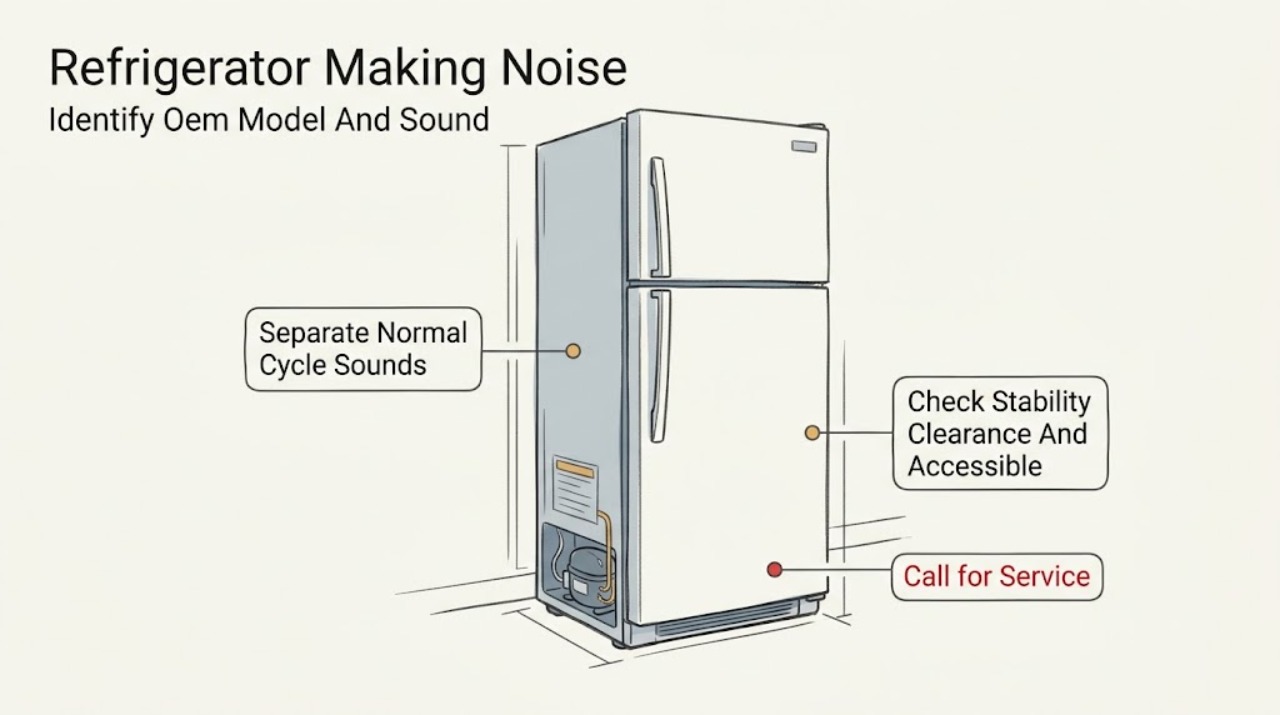
IKEA Refrigerator Making Noise: Identify Normal Cycles and Abnormal Sounds
First record where and when the sound occurs: at compressor start, during cooling, when a door or ice-maker function operates, during defrost, or continuously while the cabinet vibrates. IKEA’s official refrigerator guidance identifies brief humming or buzzing, refrigerant rippling, compressor or thermostat clicking, popping, hissing, gurgling, sizzling, water running, and ice-maker sounds as potentially normal on applicable models.
-
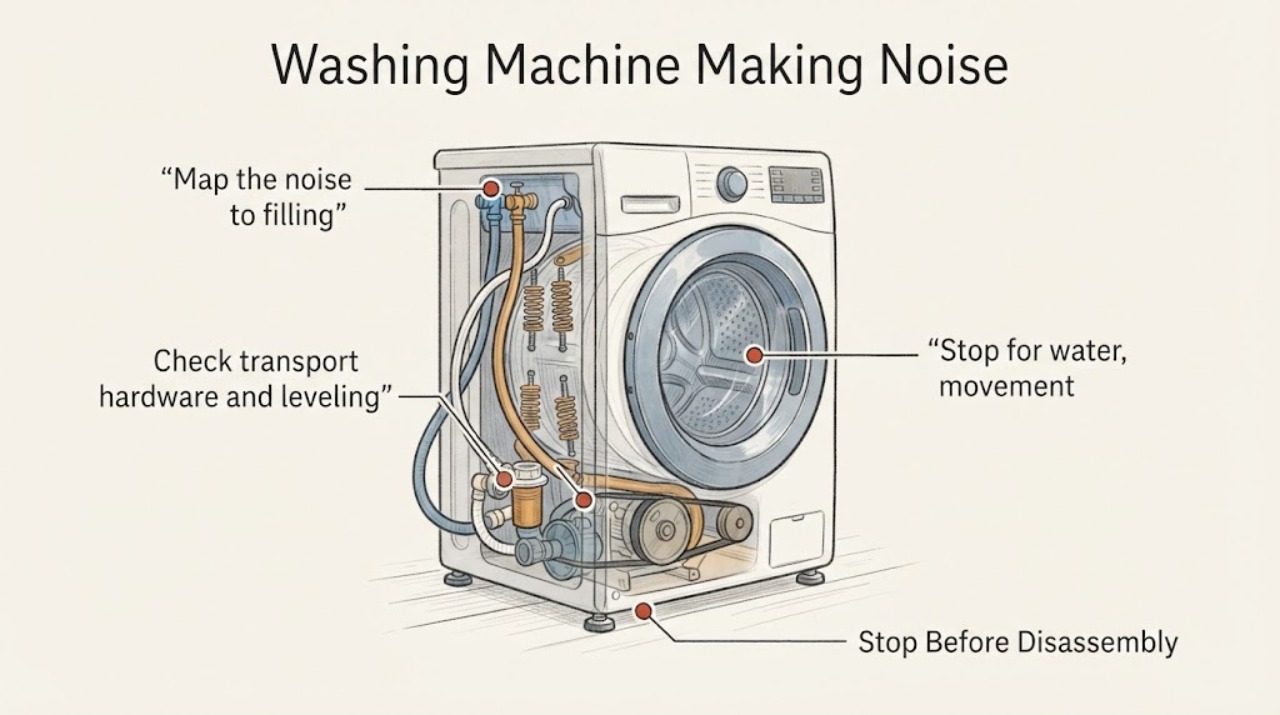
Indesit Washing Machine Making Noise: Locate It by Cycle Stage
First stop the Indesit washer if the noise comes with a leak, violent movement, metal-on-metal grinding, burning or electrical odor, smoke, sparks, or repeated breaker trips. When the area is dry and the machine is safely off, record whether the sound occurs while filling, washing, draining, or spinning.
-
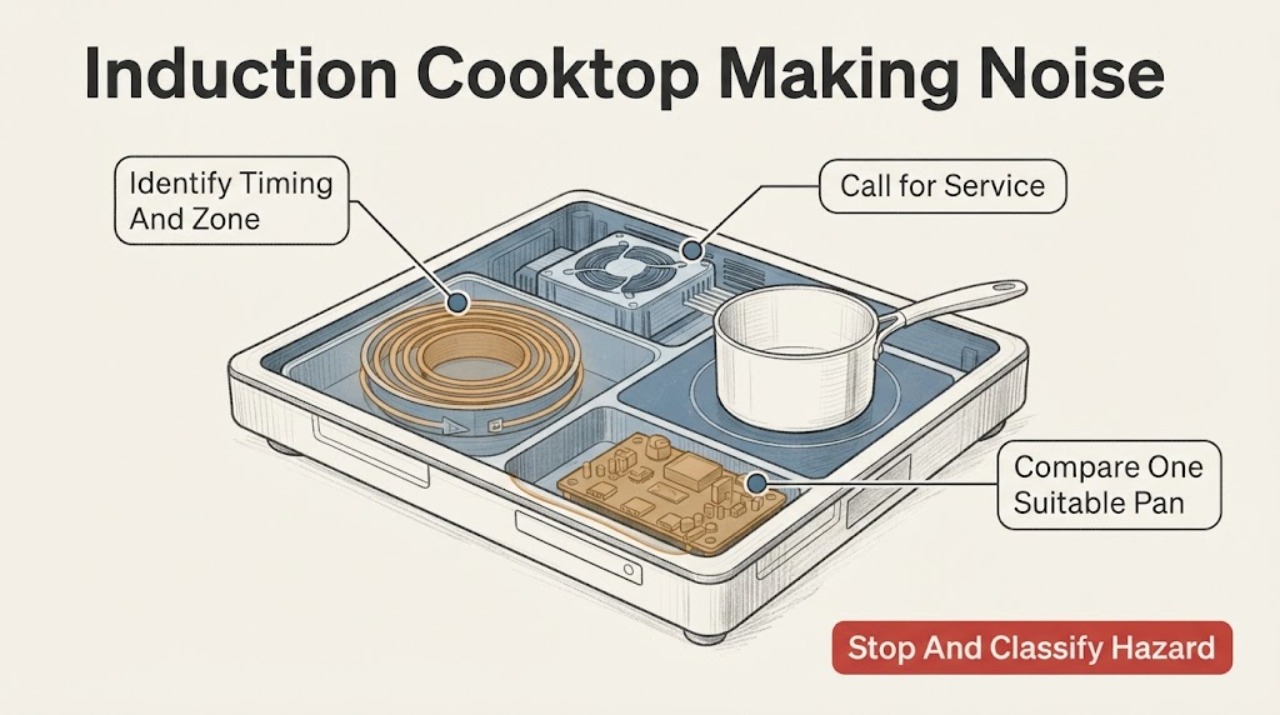
Induction Cooktop Making Noise: Humming, Buzzing, and Fan Checks
Many induction-cooktop hums, buzzes, clicks, crackles, and whirs are normal reactions to cookware, power level, adjacent zones, or the cooling fan. With the surface cool and safe, identify whether the sound occurs only while a pan heats, after cooking, or with no pan.
-
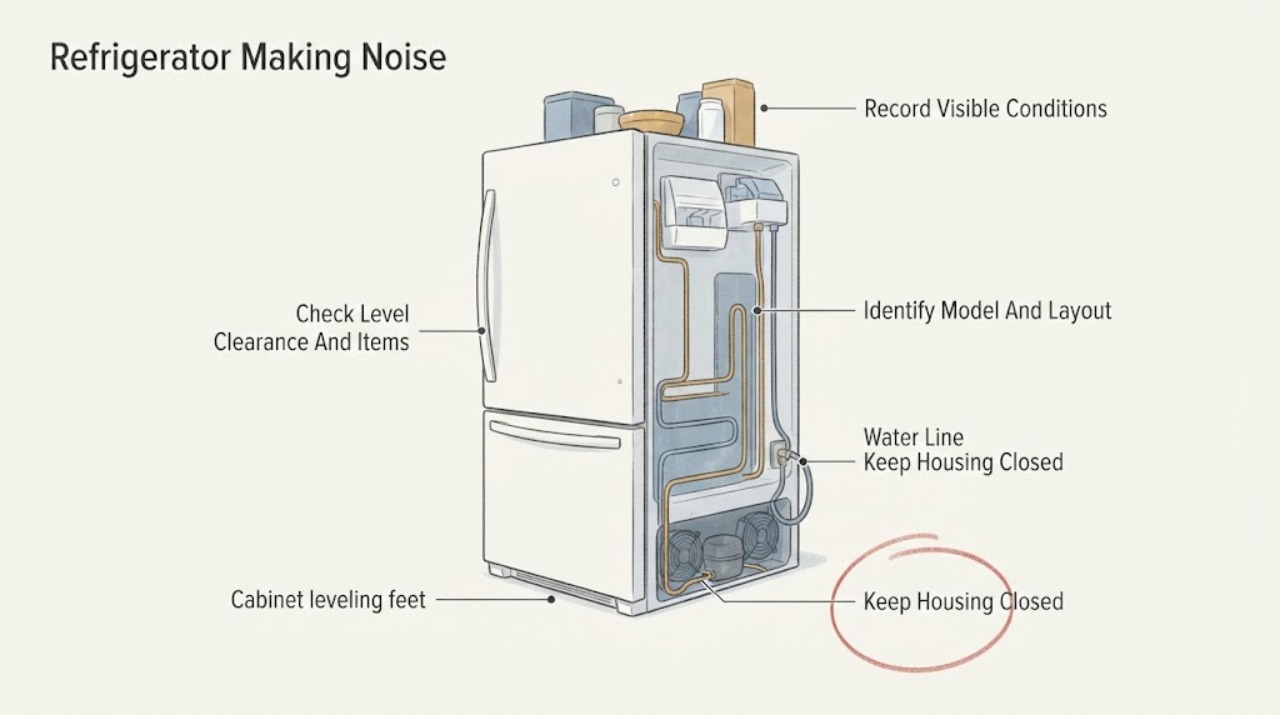
Inglis Refrigerator Making Noise: Separate Normal Cycle Sounds from a Fault
First record the sound's character, location, timing, and effect on cooling. Inglis' official troubleshooting page says that a refrigerator that seems too noisy may be making normal sounds and directs owners to the Use & Care Guide; it also notes that high-efficiency motors can run longer and that a defrost cycle can temporarily stop operation.
-
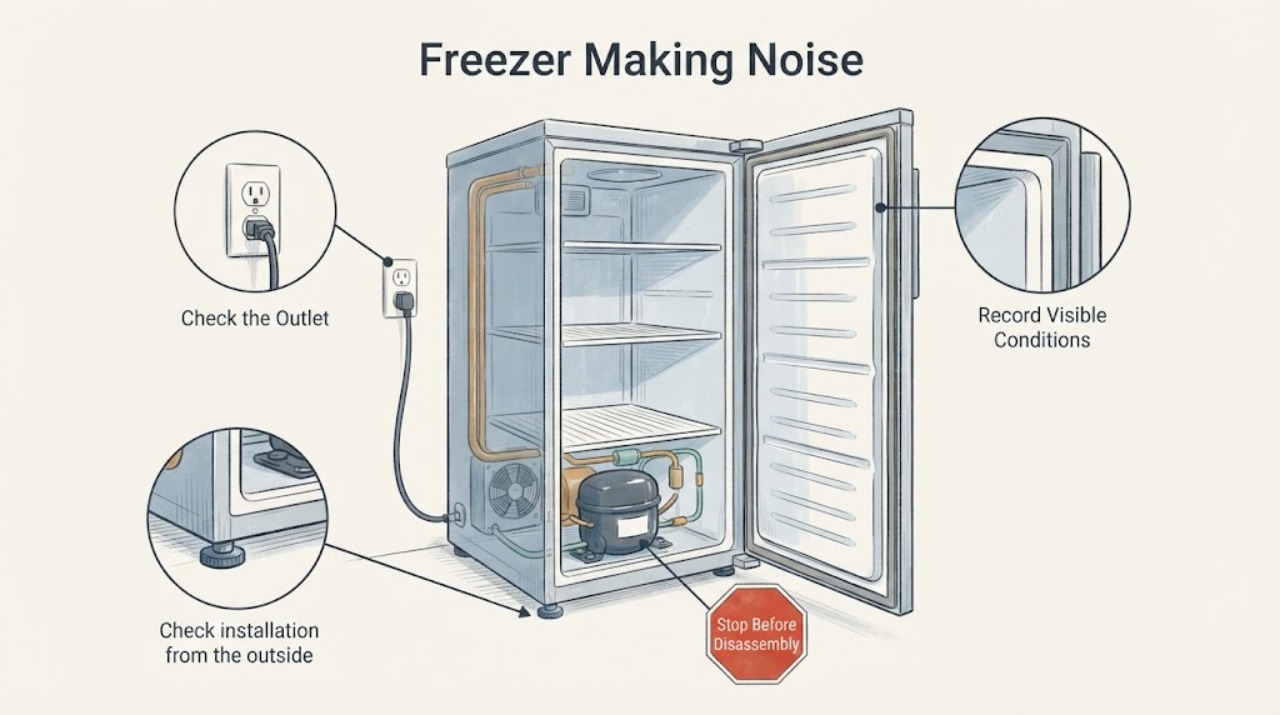
Insignia Freezer Making Noise: Separate Normal Cooling Sounds from a Fault
An Insignia freezer may make a brief hum, click, or refrigerant-flow sound as it cools, and metal parts can expand or contract. A new grinding, scraping, rattling, or loud vibration is more concerning, especially with weak cooling, frost, a door that does not seal, or a cabinet touching a wall.
-
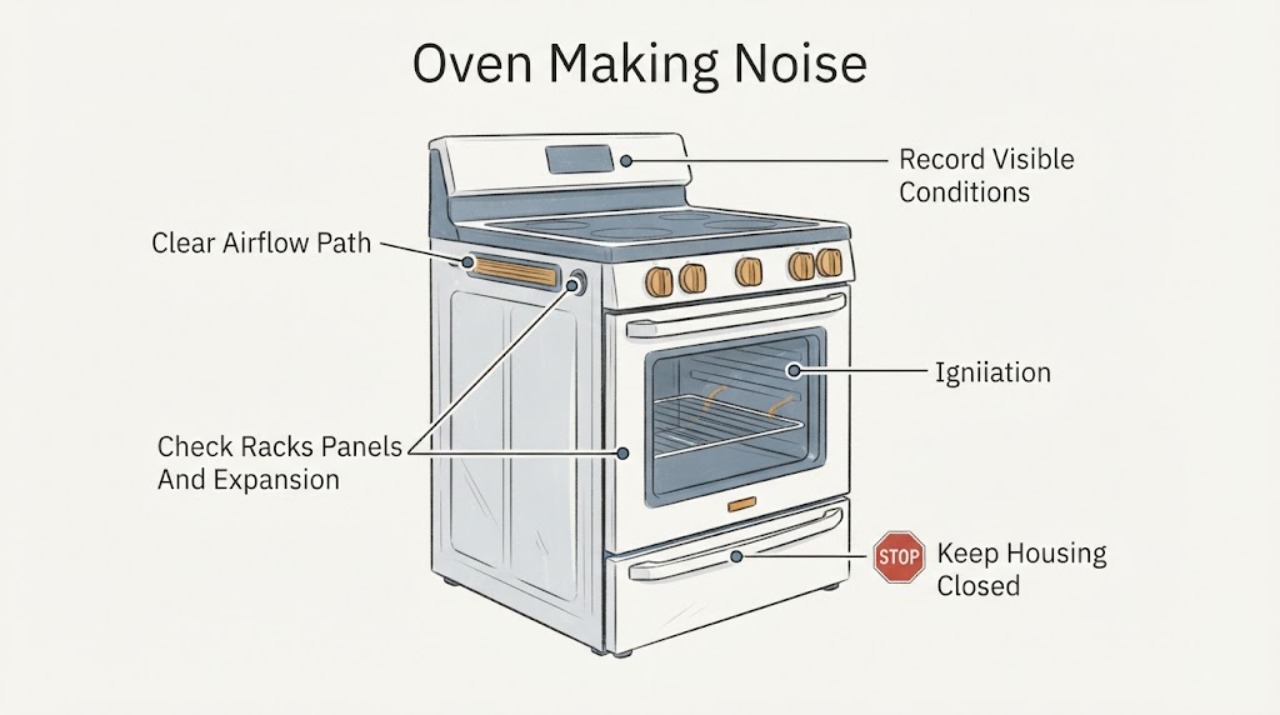
JennAir Oven Making Noise: Identify the Sound Before Calling It a Fault
A JennAir oven can make normal fan, element-cycling, thermal expansion, or gas-ignition sounds, but persistent scraping, impact, electrical buzzing, repeated failed ignition, gas odor, smoke, sparks, or a noise paired with abnormal heat needs service. First record the exact model, electric/gas/dual-fuel type, oven cavity, cooking mode, and when the sound occurs.
-
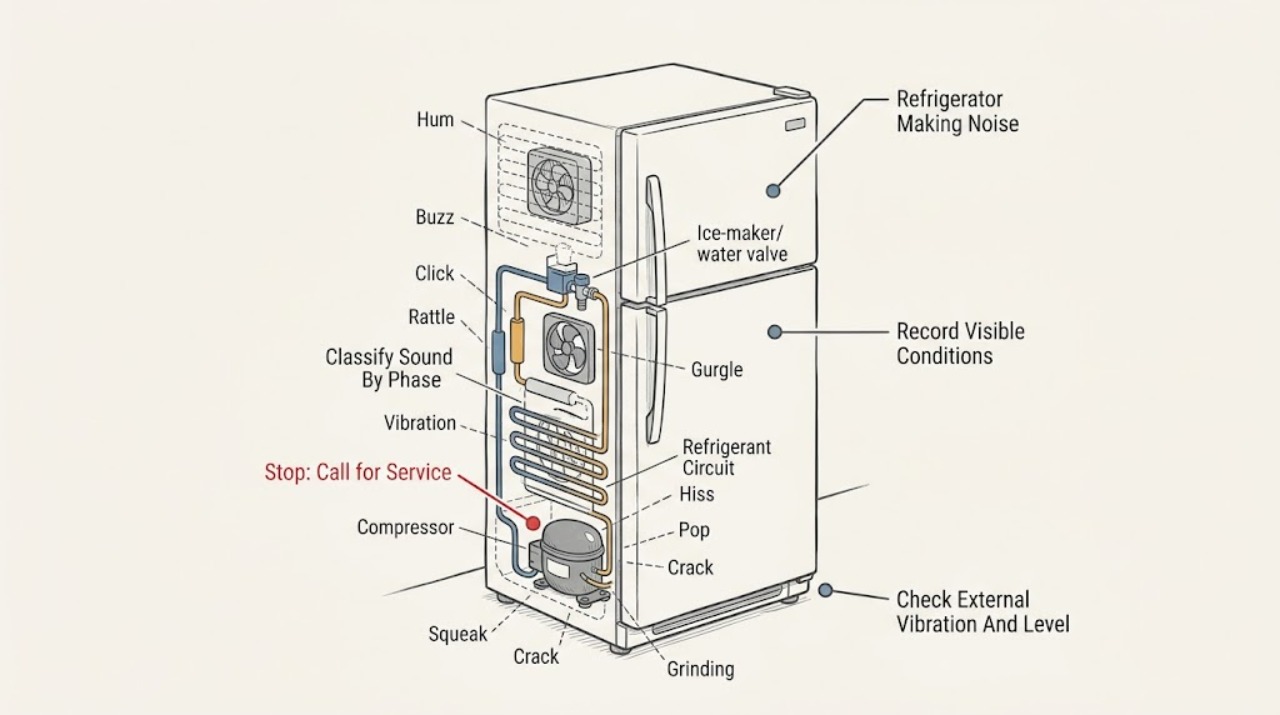
JennAir Refrigerator Making Noise: Separate Normal Cooling Sounds from a Fault
Identify the sound by timing and location before treating it as a failure. JennAir says low humming from the compressor or fans, soft airflow, gentle refrigerant gurgling, brief high-pitched or pulsating compressor/fan sounds, relay or control clicks, water-valve buzz during ice filling, defrost hissing or dripping, and popping from wall contraction or ice ejection can be normal.
-
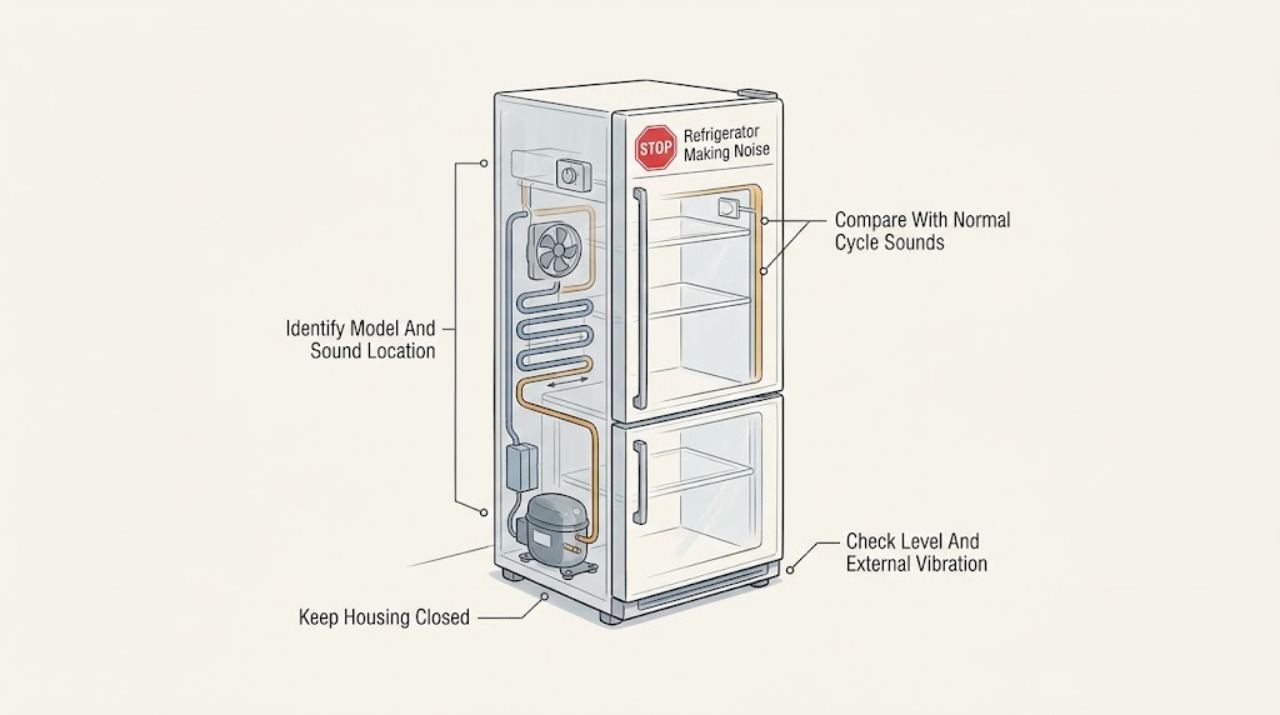
Kelvinator Refrigerator Making Noise: Normal Cooling Sounds vs. Vibration
First locate the sound and compare it with the exact Kelvinator model manual. The opened Kelvinator KBM653TSE bottom-freezer manual identifies cracking during automatic defrost or material expansion, a short crack when the thermostat switches the compressor, compressor motor noise, bubbling or splashing from refrigerant flow, water flowing to the evaporation container during defrost, and air movement on some models as normal operating sounds.
-
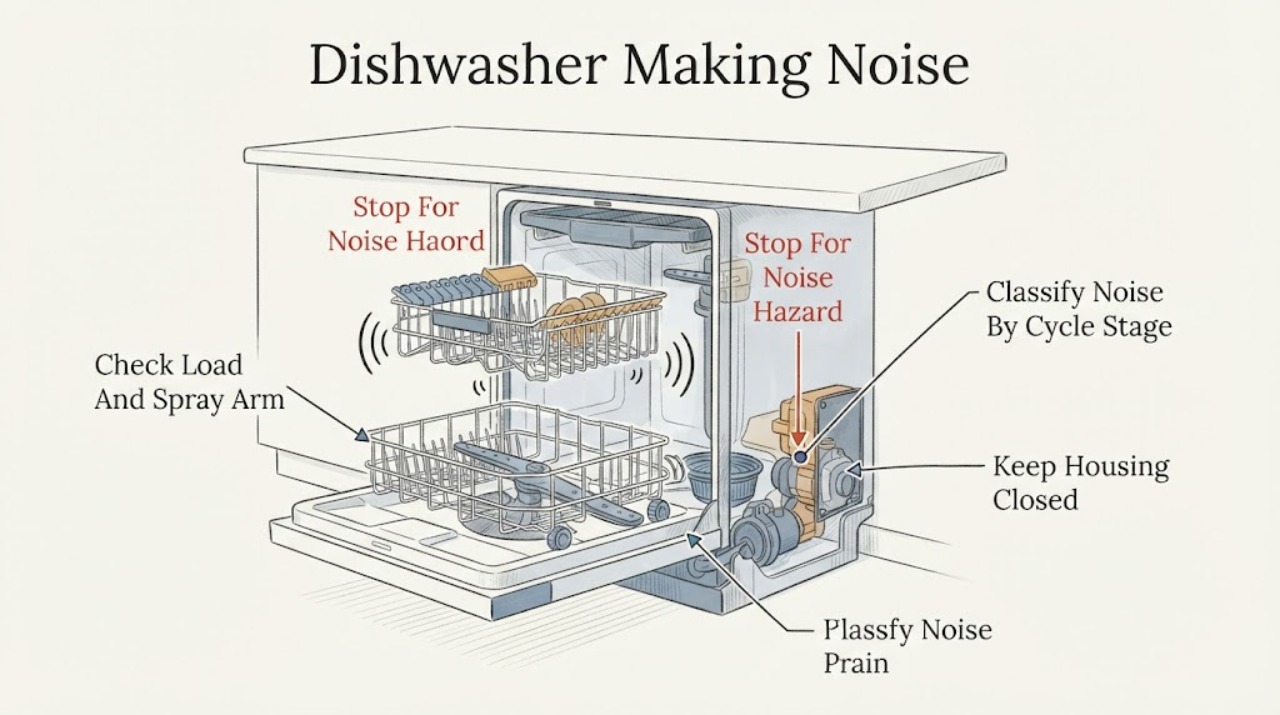
Kenmore Dishwasher Making Noise: Identify the Cycle Stage Before Calling Service
First note when the sound occurs—filling, washing, draining, drying, or after the cycle—and whether it tracks a rack, utensil, spray arm, fan, or pump event. Kenmore's official dishwasher materials show that models differ: some use pressurized spray arms, filtration, drying fans, delay start, and a Quiet Wash option, while sound ratings vary by model.
-
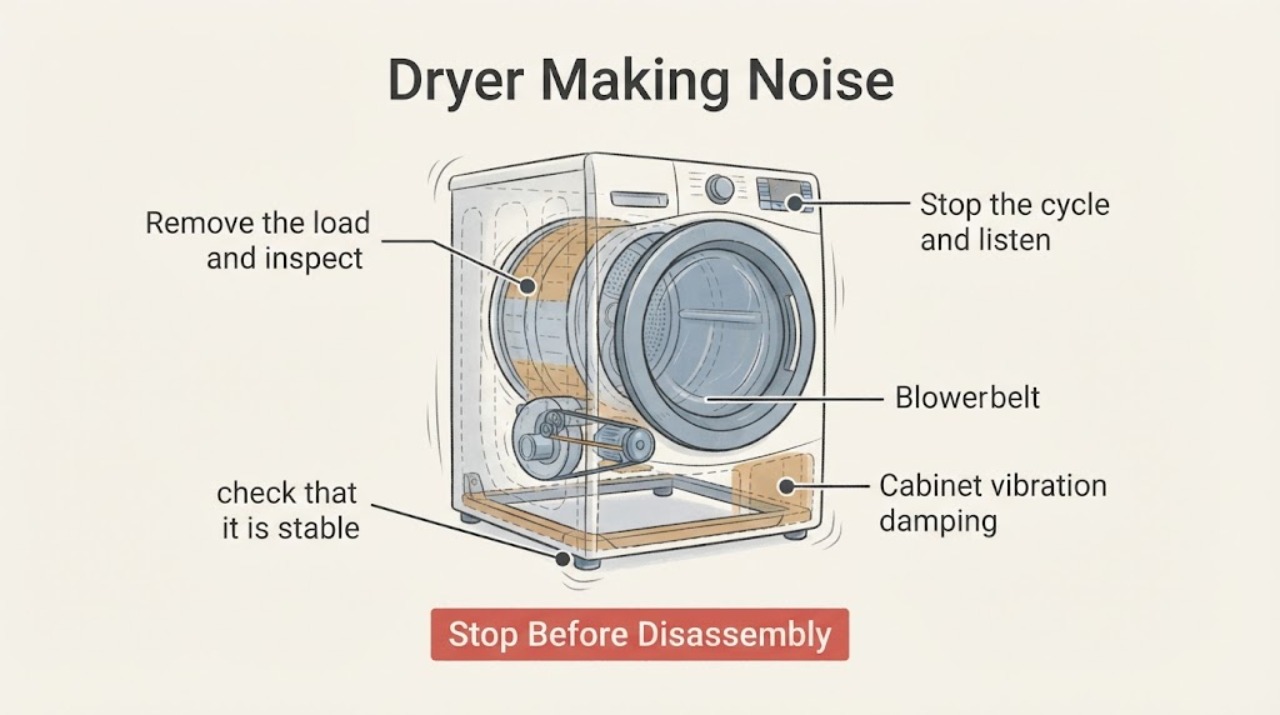
Kenmore Dryer Making Noise: Find the Source Before Replacing Parts
A Kenmore dryer making noise should be classified by sound and timing before any part is ordered. Stop the cycle and check the load, drum edges, lint-screen area, cabinet clearances, and level footing using only safe external or visible checks.
-
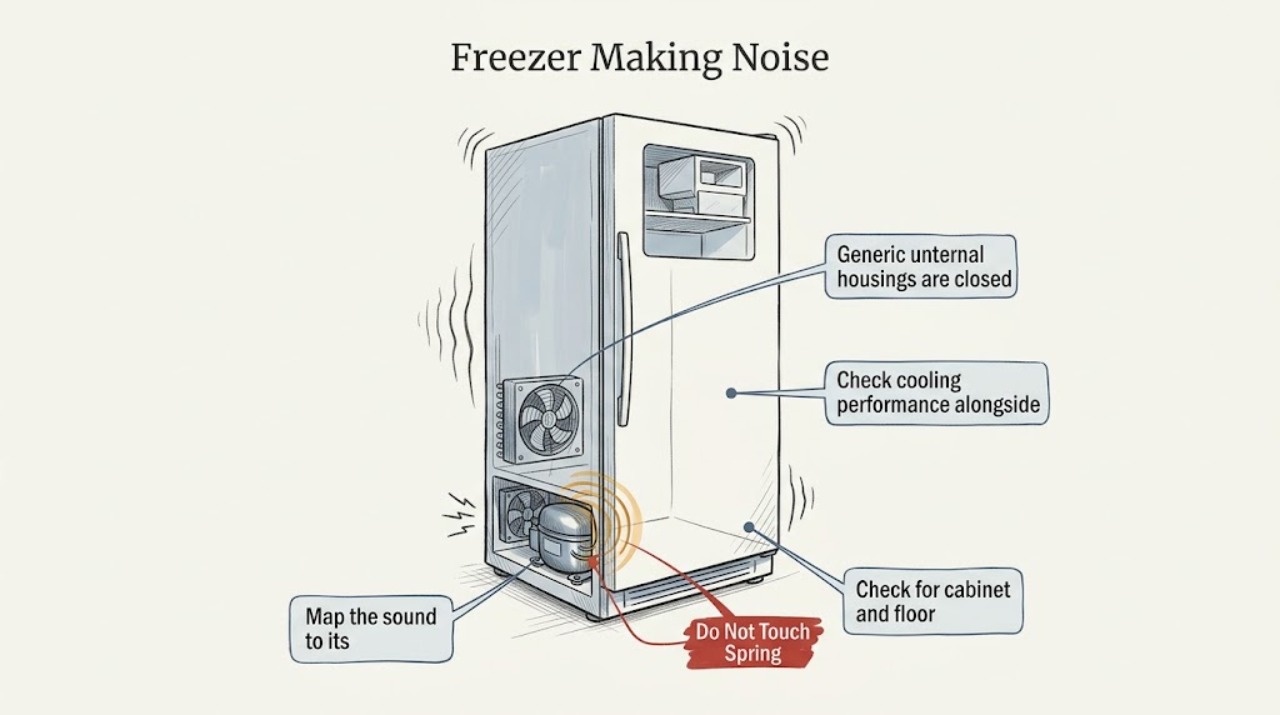
Kenmore Freezer Making Noise
Start by recording what the Kenmore freezer sounds like, where the sound comes from, when it occurs, and whether the freezer is still holding temperature. A steady hum, airflow sound, or occasional click may be part of normal refrigeration operation on some models, but a new grinding, scraping, repeated start-click, loud vibration, or noise accompanied by warming food is more concerning.
-
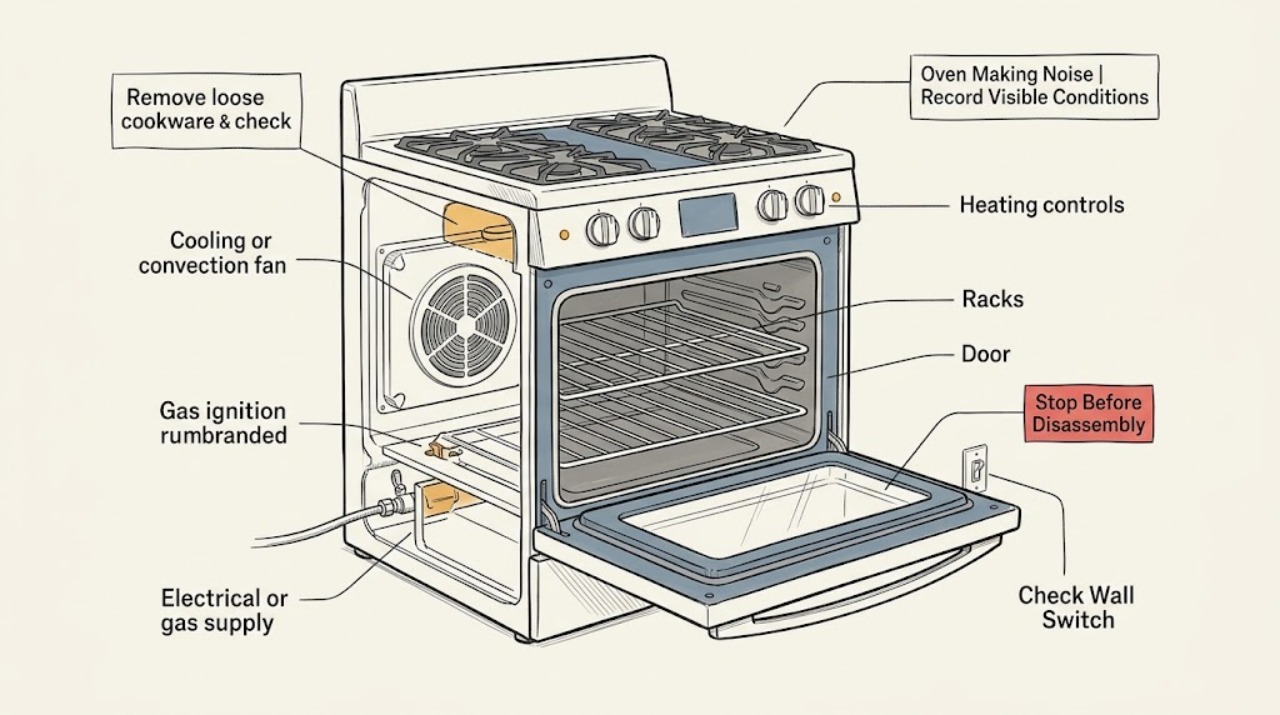
Kenmore Oven Making Noise: Identify the Sound by Timing, Heat, and Safety Signs
Record exactly when the sound starts, whether the oven is gas or electric, which mode is selected, whether the fan or burner is operating, and whether heat, smoke, an odor, or an error display accompanies it. A brief click or pop during a gas bake or broil ignition, a short fan or relay cycle, and mild expansion sounds can be normal on some models; a cooling fan may also continue after heating ends.
-
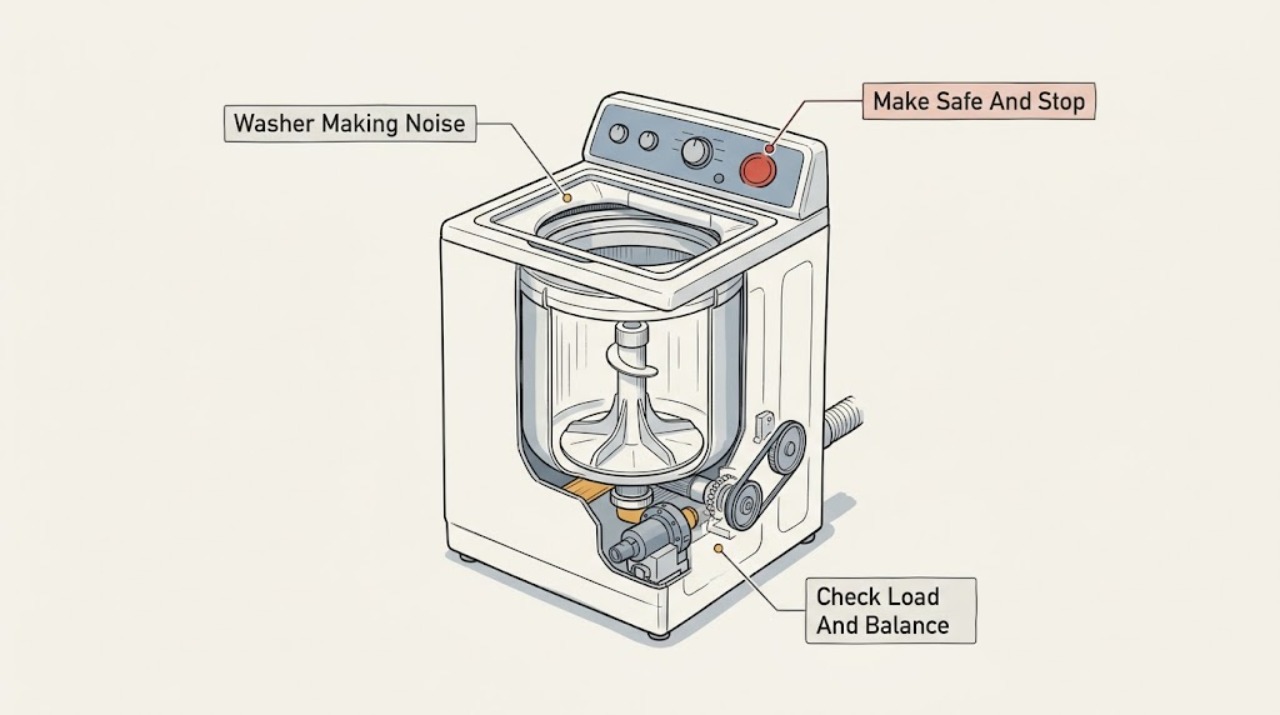
Kenmore Washer Making Noise: Identify the Sound and Choose the Safe Next Step
First note the Kenmore washer's sound, when it starts, and whether it changes with the load. A brief click, water sound, pump hum, or change as the cycle shifts can be normal on some models; a new bang or walking during spin often points to an unbalanced load, leveling or installation issue, or an object moving in the basket.
-
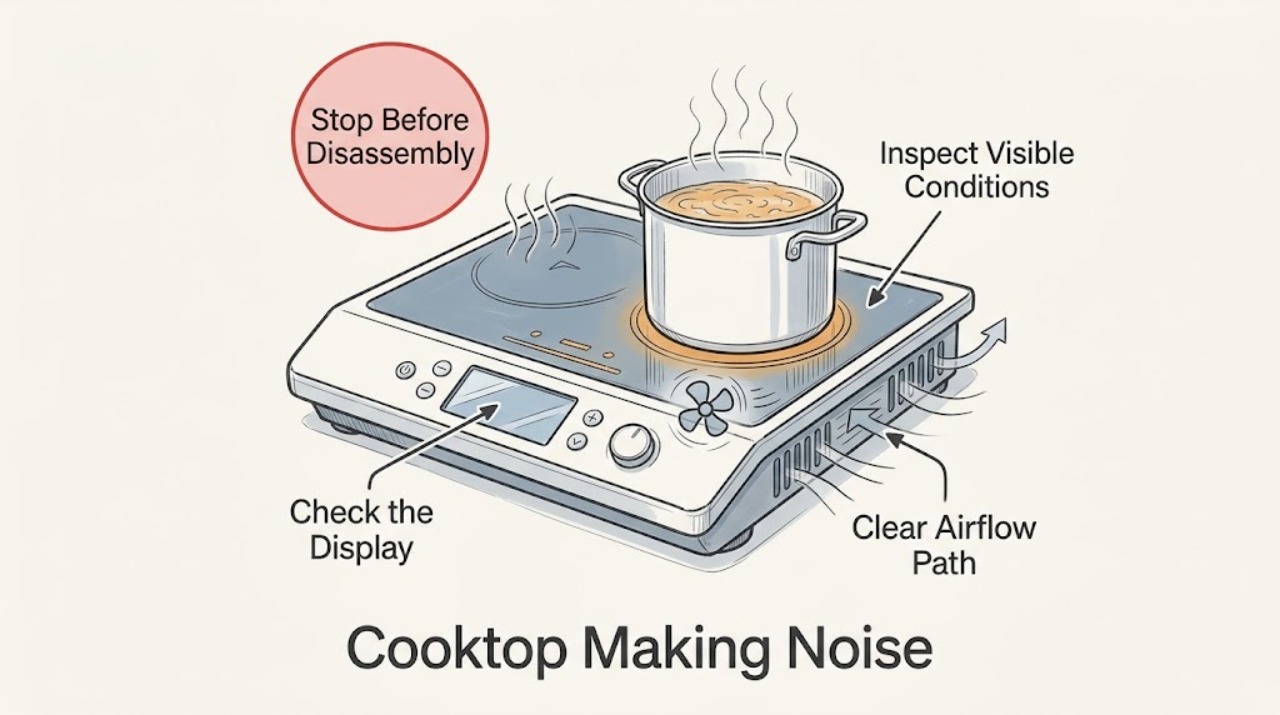
Kitchenaid Cooktop Making Noise: Identify the Sound and Choose a Safe Fix
First identify whether the sound is a low hum, crackle, fan noise, clicking, popping, or a noisy flame, and whether the cooktop is electric, induction, or gas. A low hum or crackle that changes with power or cookware, or a cooling or downdraft fan that runs during or after use, can be normal.
-
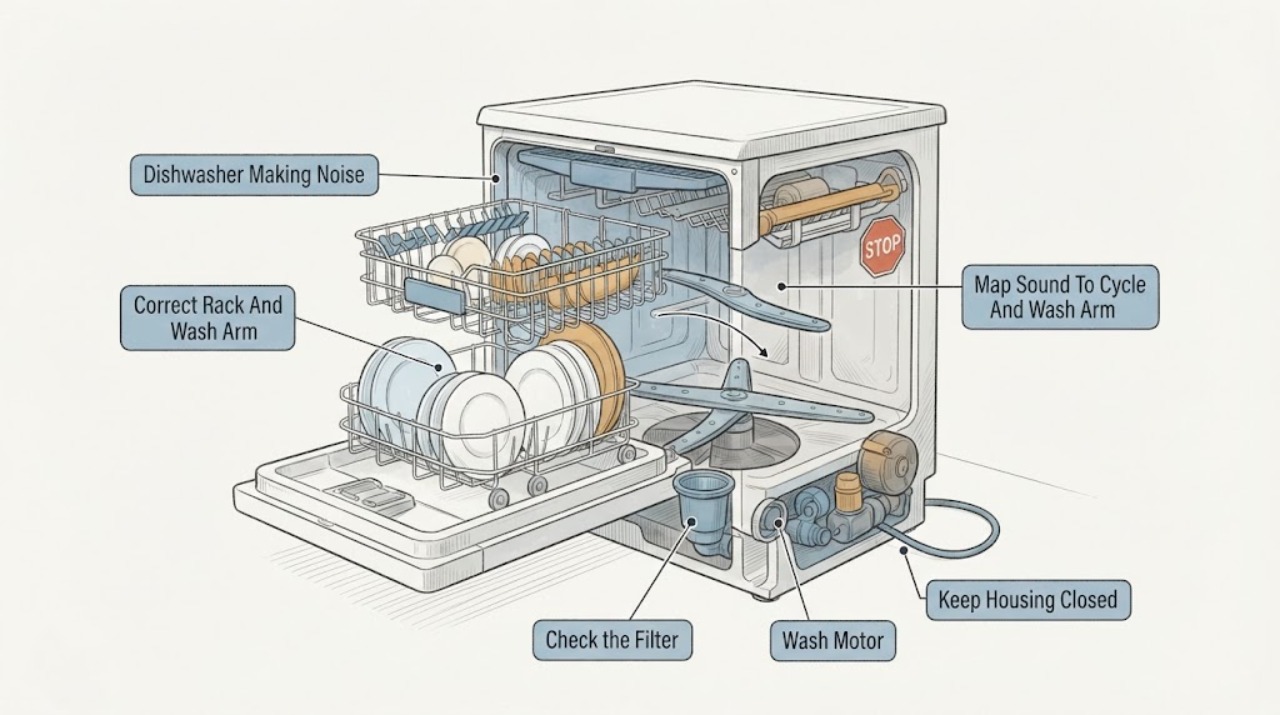
Kitchenaid Dishwasher Making Noise: Match the Sound to the Cycle Before Servicing
A KitchenAid dishwasher can normally hum, hiss, rush, swish, click, or briefly gurgle as it fills, sprays, drains, or dries. Identify where and when the sound occurs before treating it as a failed part.
-
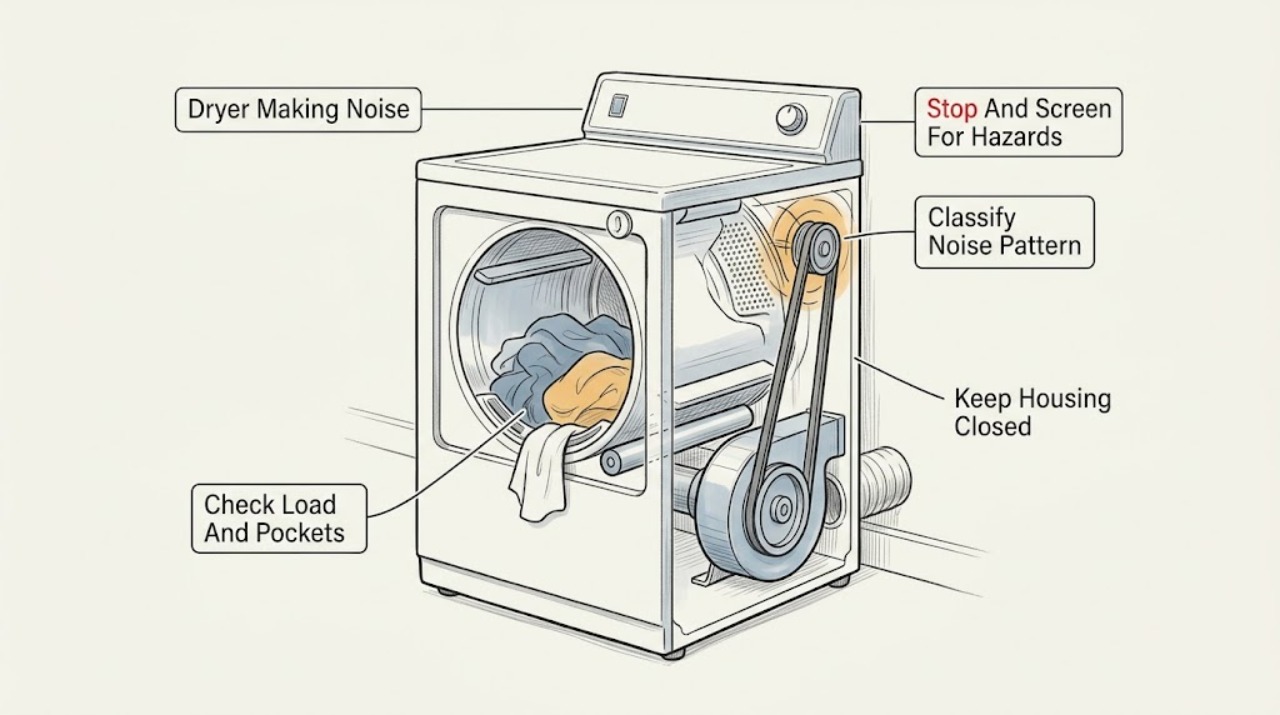
KitchenAid Dryer Making Noise: Separate Load Sounds from a Dryer Fault
A KitchenAid dryer can make a brief click from a gas valve, a light thump after sitting unused, or a rattle from zippers, buttons, coins, or a balled-up load. Stop the dryer and arrange service immediately for scraping that continues with an empty drum, grinding, a high-pitched squeal that persists, violent movement, overheating, a burning or gas smell, smoke, sparks, or a breaker trip.
-
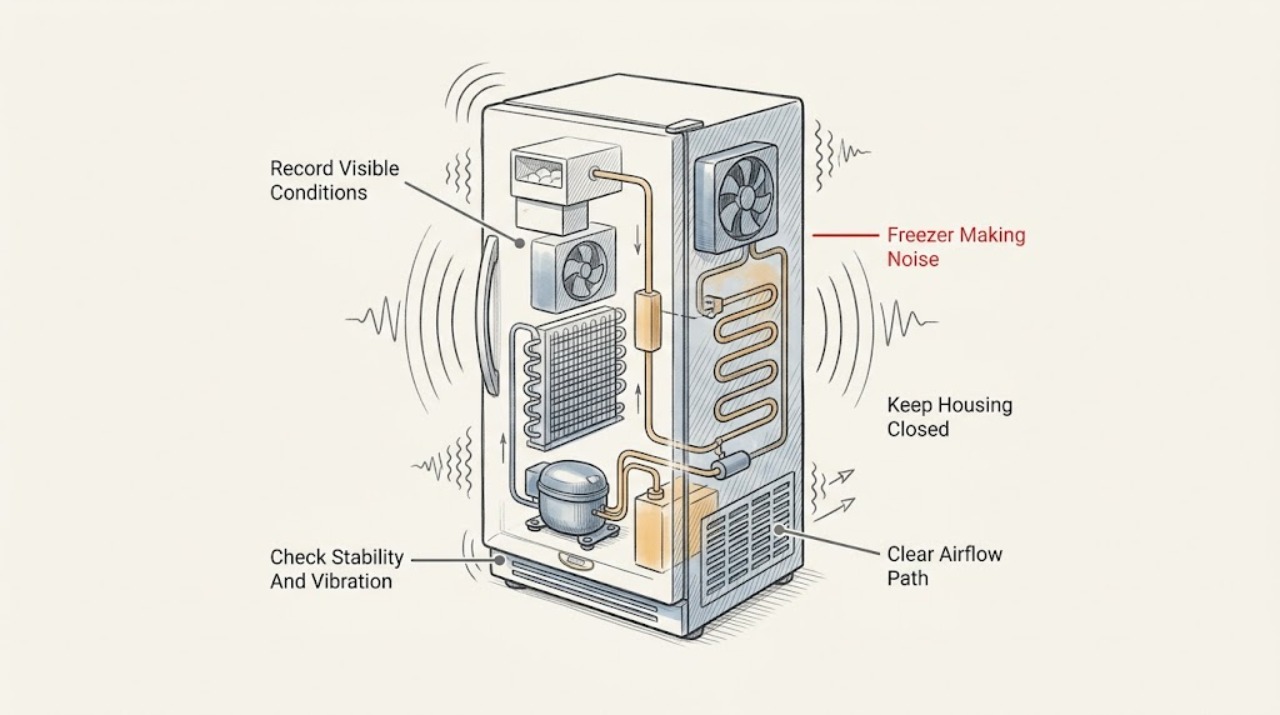
KitchenAid Freezer Making Noise
Many KitchenAid freezer sounds are normal: humming or pulsating from the compressor or fans, dripping or gurgling during defrost, cracking as interior walls contract, refrigerant rattling, and clacking from an ice maker. First record the sound, where it comes from, when it occurs, whether the freezer is cooling, and whether the sound is new or getting louder.
-
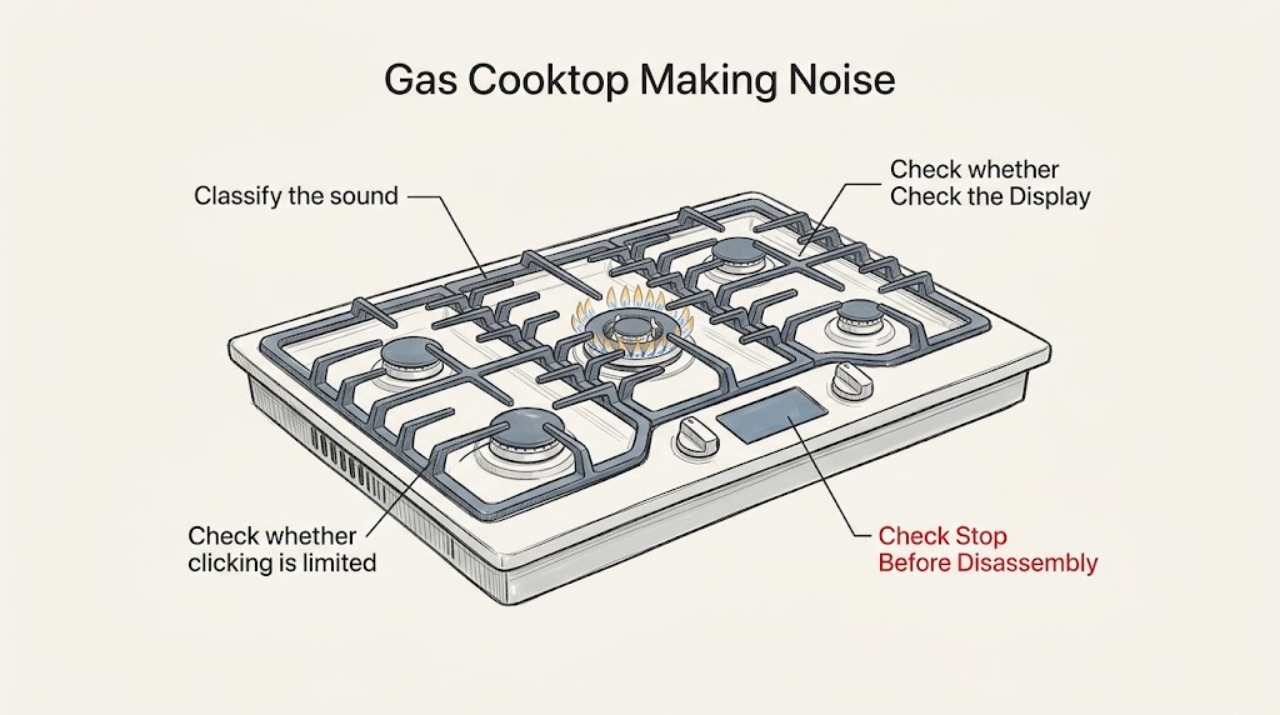
KitchenAid Gas Cooktop Making Noise: Separate Normal Clicking from Flame Trouble
Identify the sound before treating it as a failure. Clicking while a knob is in IGNITE/FLAME can be normal; continued clicking after all knobs are off commonly points to moisture or a reignition response.
-
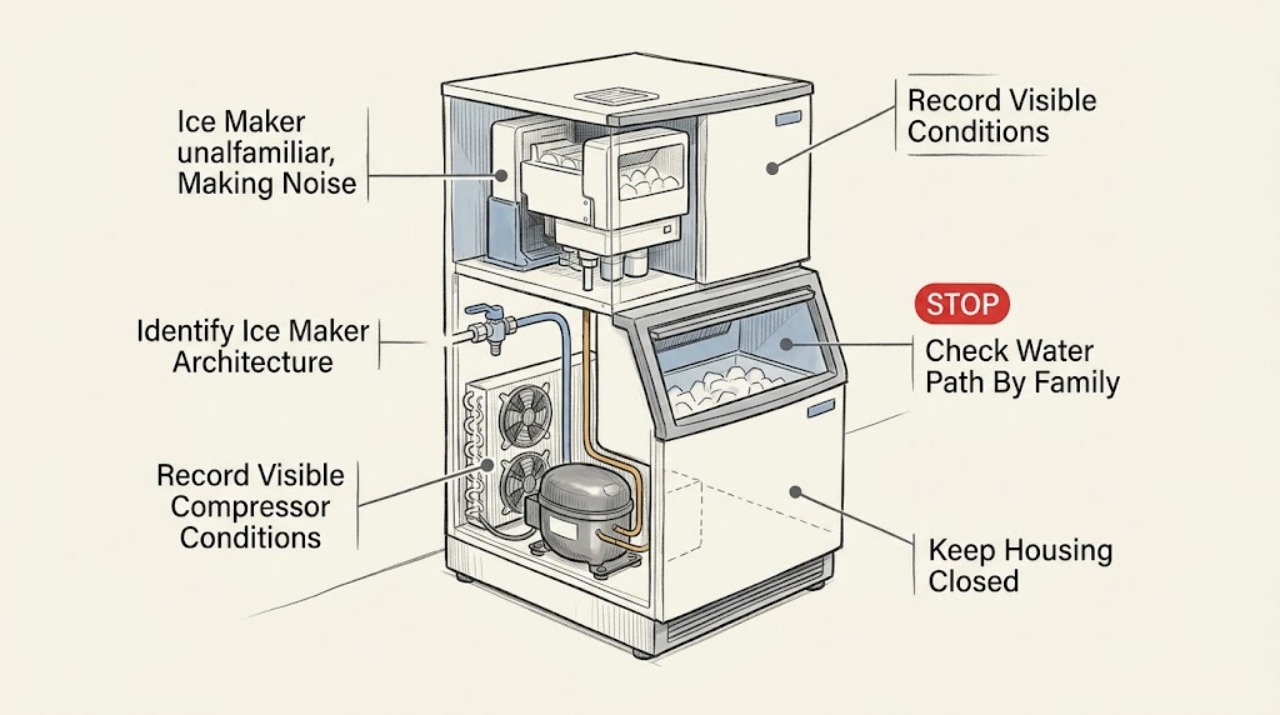
KitchenAid Ice Maker Making Noise: Identify Normal Sounds by Ice-Maker Type
First establish whether the KitchenAid ice maker is a freestanding/undercounter unit or an ice maker built into a refrigerator; the same sound has different likely sources in those two families. On a freestanding unit, splashing, water running during the initial rinse, a bang when ice drops, reservoir overflow, and a compressor hum can be normal.
-
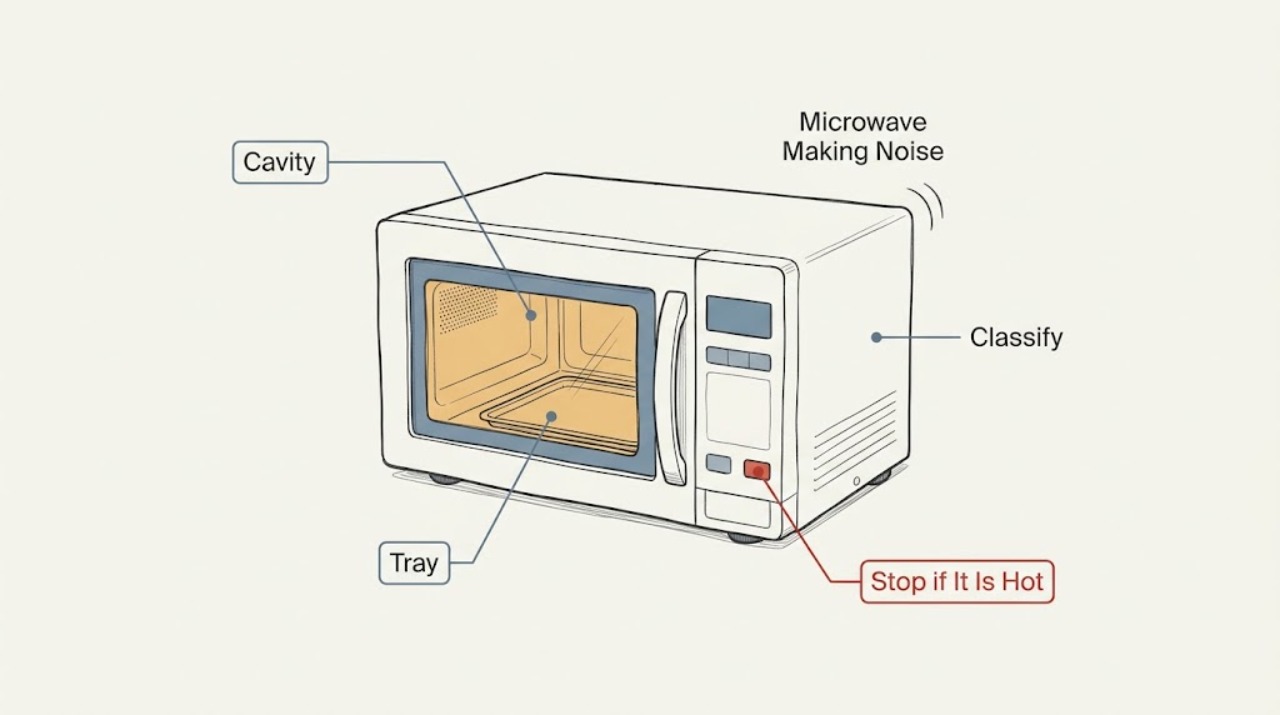
KitchenAid Microwave Making Noise: Separate Normal Sounds from a Fault
Identify the sound and when it occurs. KitchenAid says humming or buzzing during operation can be normal, while a thump or rumble can come from an incorrectly installed turntable or roller support. Stop for grinding, crackling, smoke, arcing, failed heating, or a damaged door and request service.
-
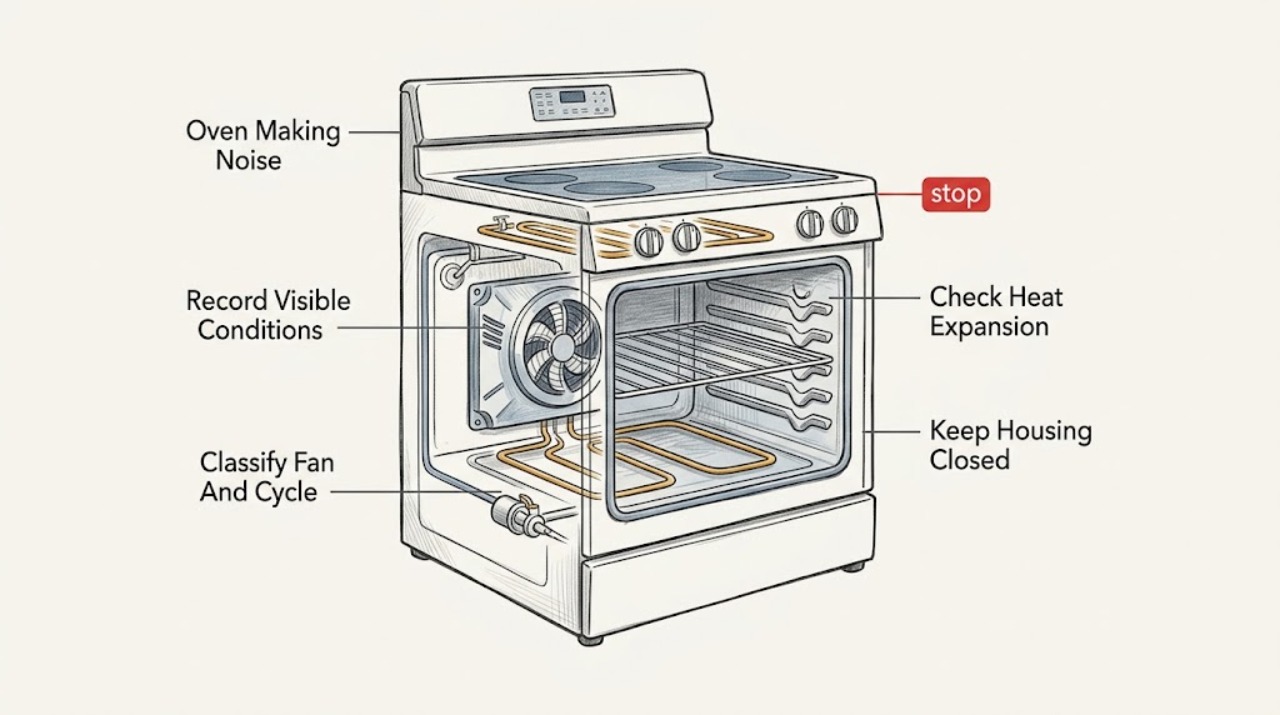
KitchenAid Oven Making Noise: Identify Normal Cycling Before Service
A KitchenAid oven can normally make a cooling-fan hum after or during cooking, short clicks while a gas burner ignites, and occasional pops or cracks as porcelain, steel, or an element expands and cools.
-
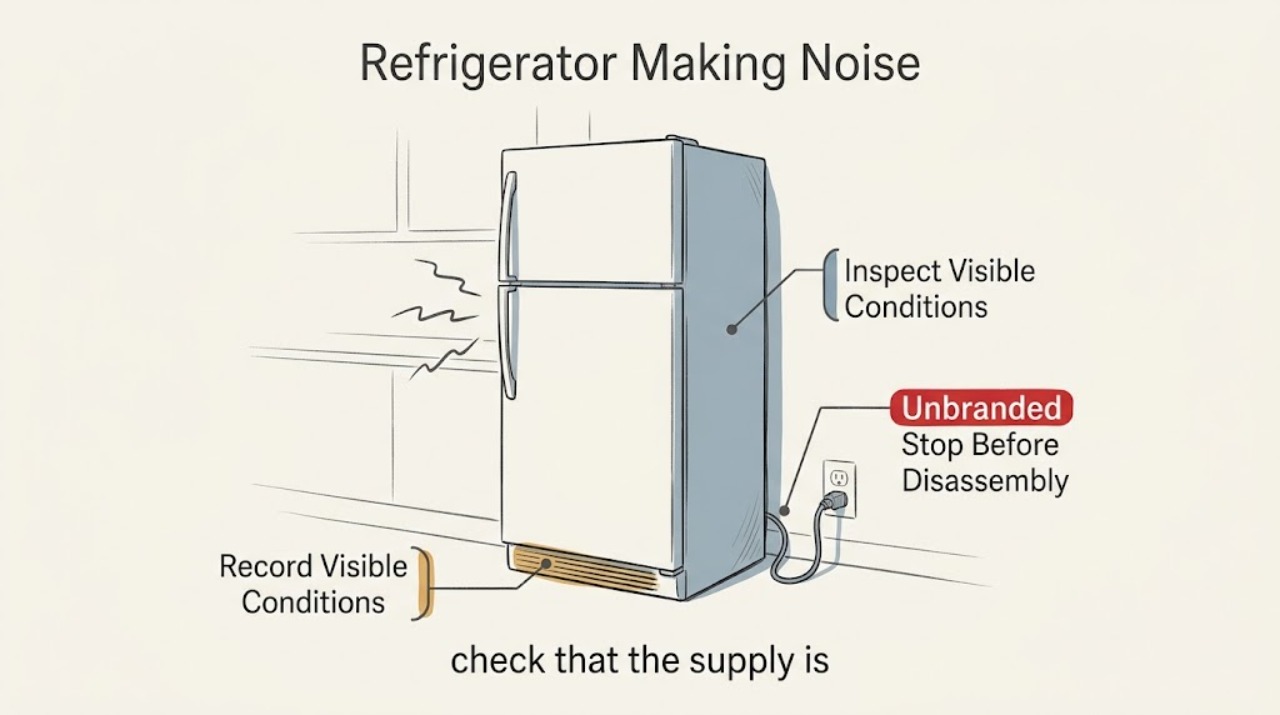
KitchenAid Refrigerator Making Noise
Brief humming, gurgling, clicking, popping, and airflow sounds can be normal as a KitchenAid refrigerator cools and defrosts. Identify the sound and timing, check leveling and external vibration, and arrange service for persistent grinding, harsh vibration, or cooling loss.
-
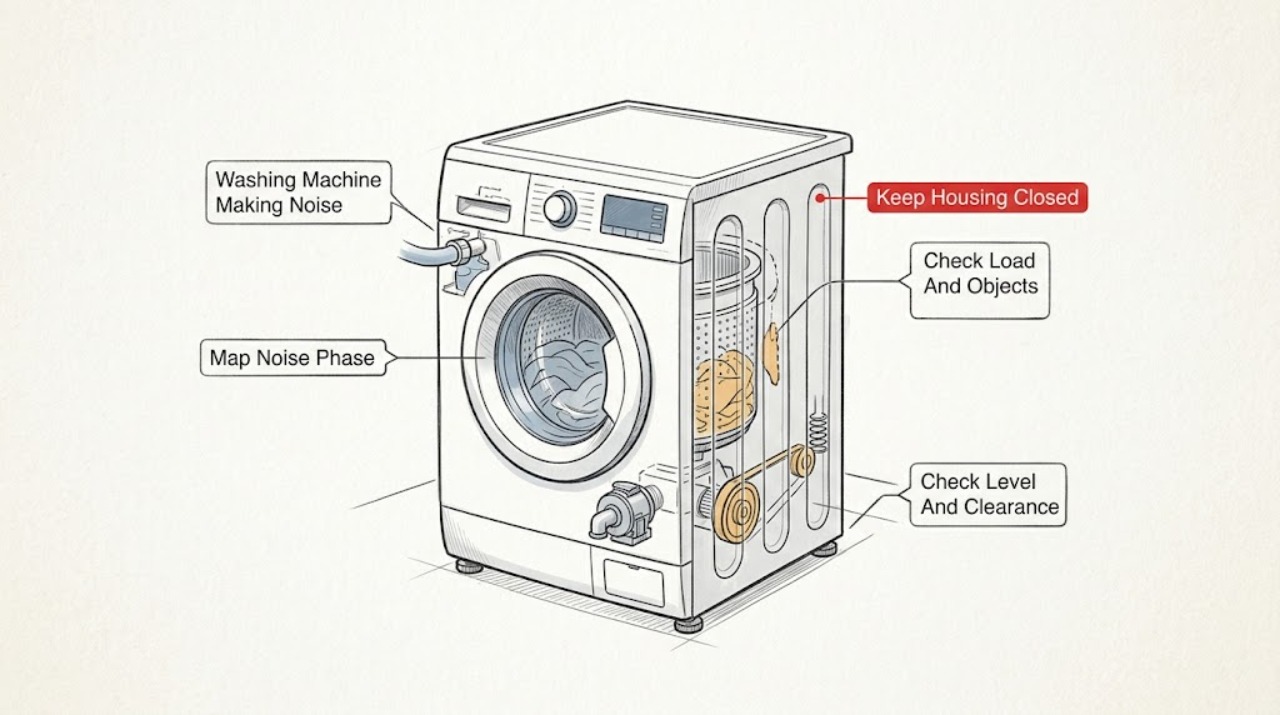
KitchenAid Washing Machine Making Noise: Trace It by Fill, Wash, Drain, or Spin
Trace a KitchenAid washer noise by phase and location before assuming a failed part. A brief inlet click, sensing hum, drain-pump hum with gurgling, or basket deceleration whir can be normal on the cited KitchenAid washer guidance.
-
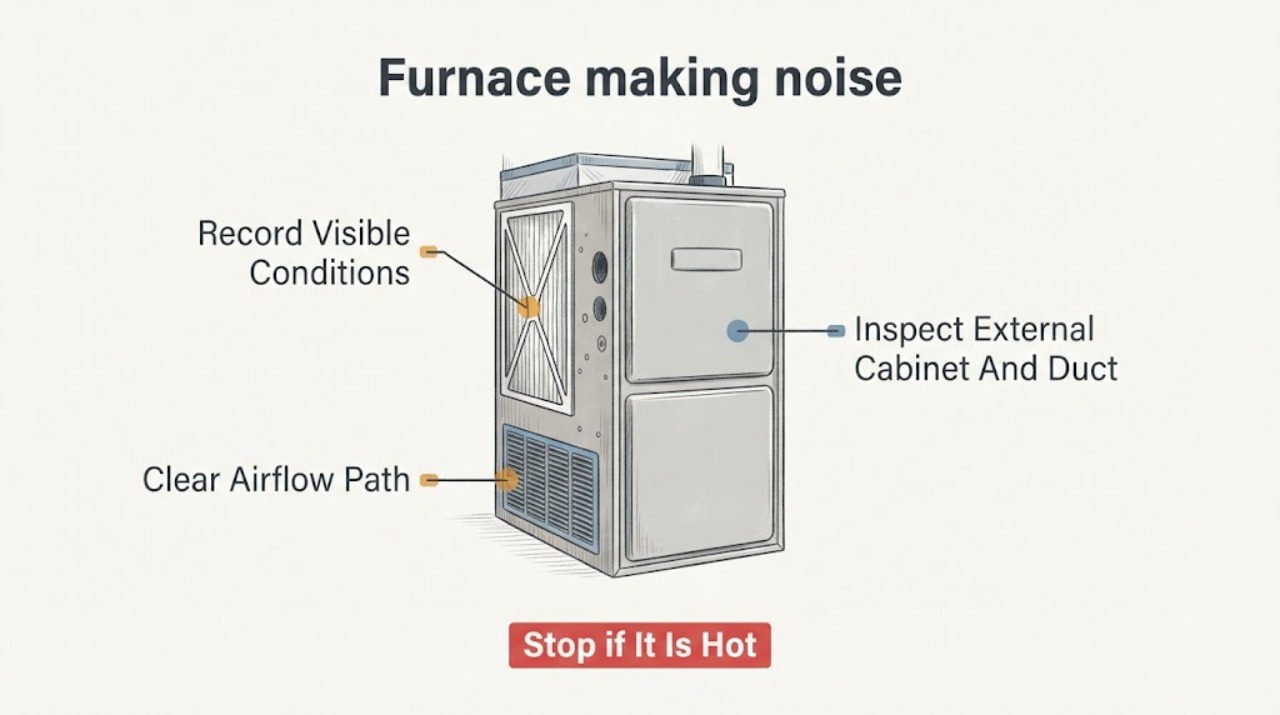
Lennox furnace making noise: What to Check and What to Do Next
First identify when the Lennox furnace makes the noise: a brief click or soft hum can occur during a normal call for heat, while a loud buzz, rattle, screech, bang, grinding sound, or noise that continues when the furnace is idle needs attention. Turn the system off if the sound is sudden, worsening, or accompanied by a burning smell, flickering lights, a repeated breaker trip, smoke, a gas odor, or weak airflow.
-
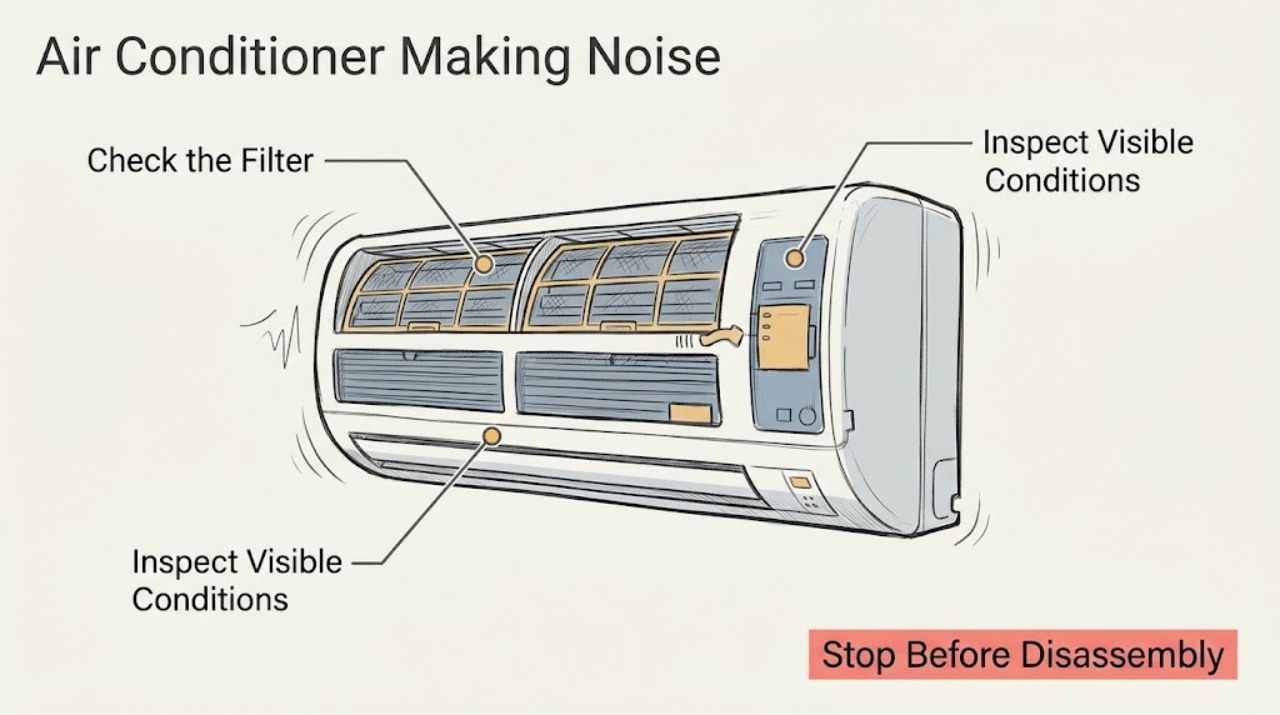
LG Air Conditioner Making Noise
Brief clicks, hisses, gurgles, hums, and soft airflow sounds can be normal. Loud rattling, rapid tapping, grinding, or persistent high-pitched noise needs service. Clean the accessible filter and do not disassemble the unit.
-
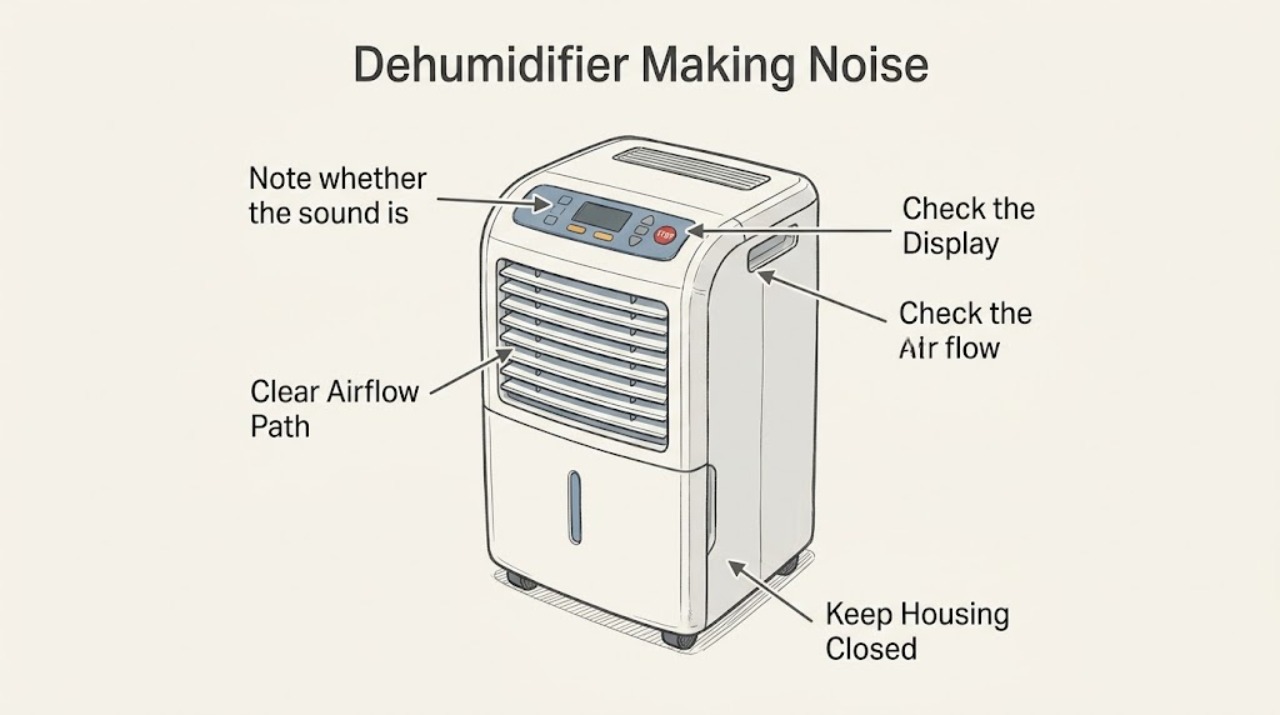
LG Dehumidifier Making Noise
A brief hum or vibration when the compressor starts or stops can be normal. For a new rattle or scrape, check the level surface, bucket seating, filter, and airflow externally. Stop for burning odor, sparking, or an unresolved error code.
-
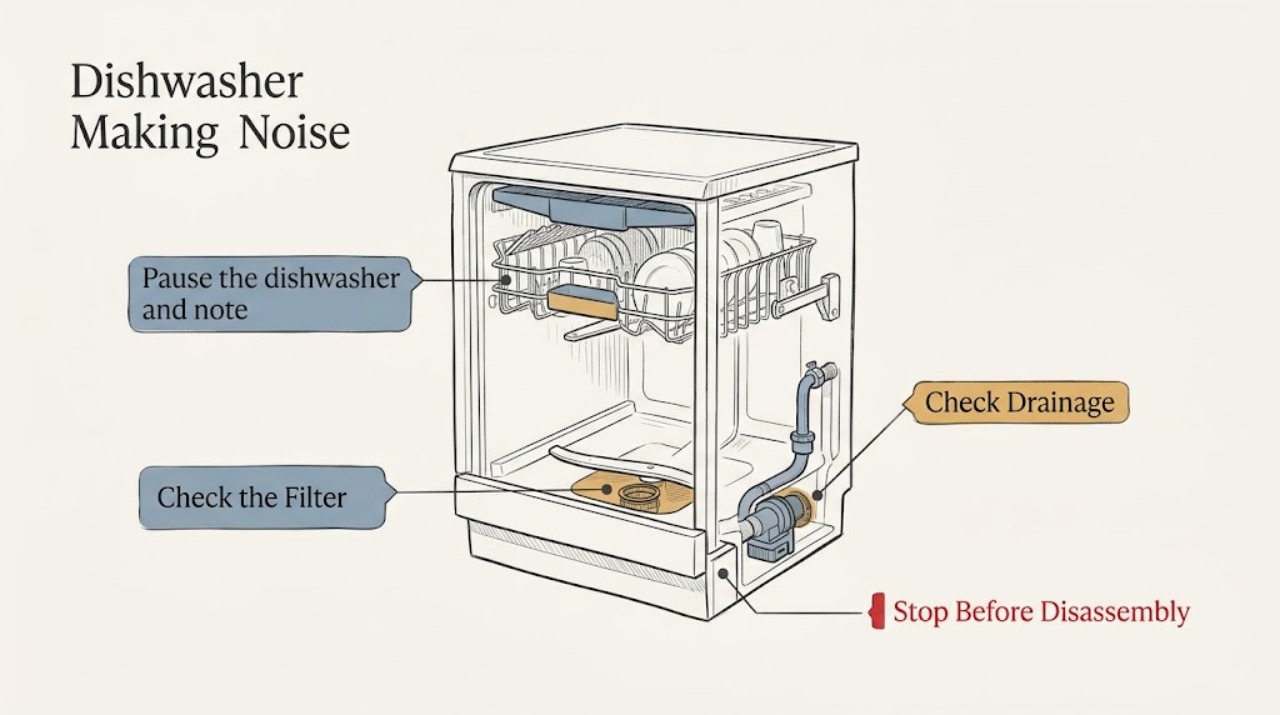
LG Dishwasher Making Noise: Normal Versus Abnormal
LG dishwasher whistling, water-flow, and some air sounds can be normal, while rattling, grinding, or persistent squealing needs a closer check. Pause the cycle, secure the load, clean and seat the filter, and arrange service if the noise persists or sounds like a failing pump.
-
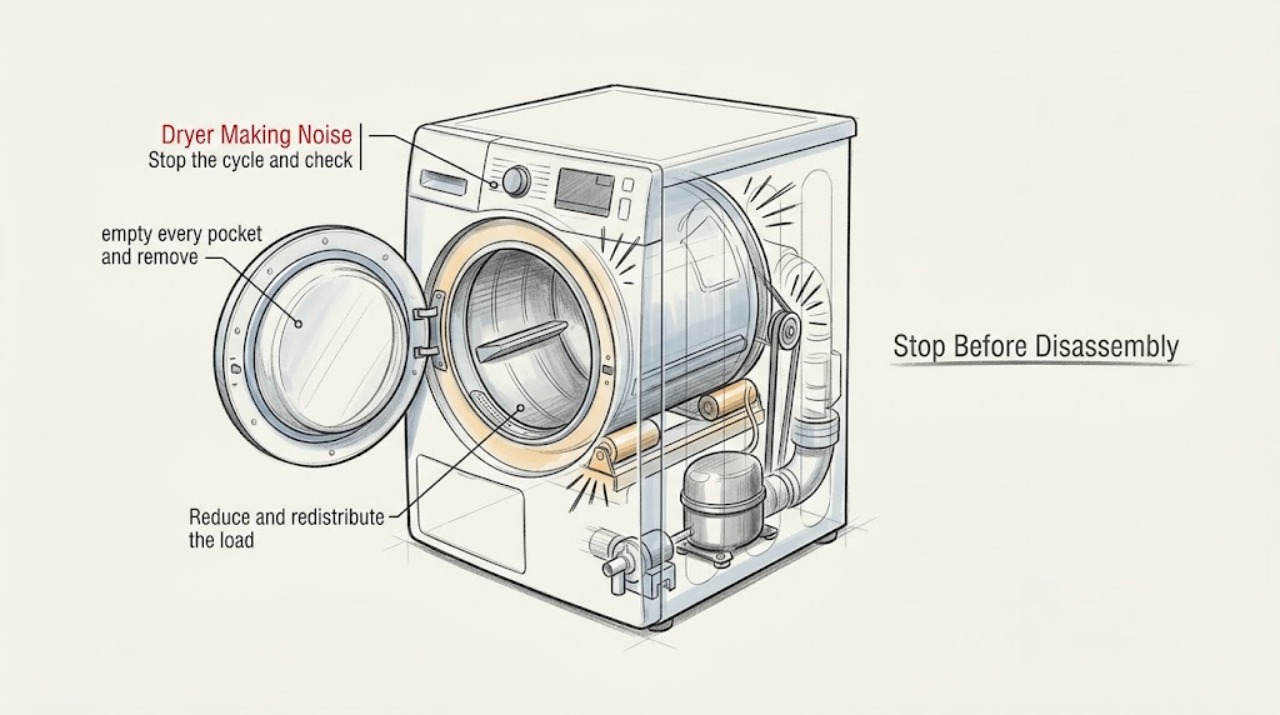
LG Dryer Making Noise
First match the sound to when it happens. LG says brief clacking or rattling can come from zippers, buttons, coins, or keys; a thump can come from rollers or an uneven load; and low humming or gurgling can come from the compressor, fan, or drain pump.
-
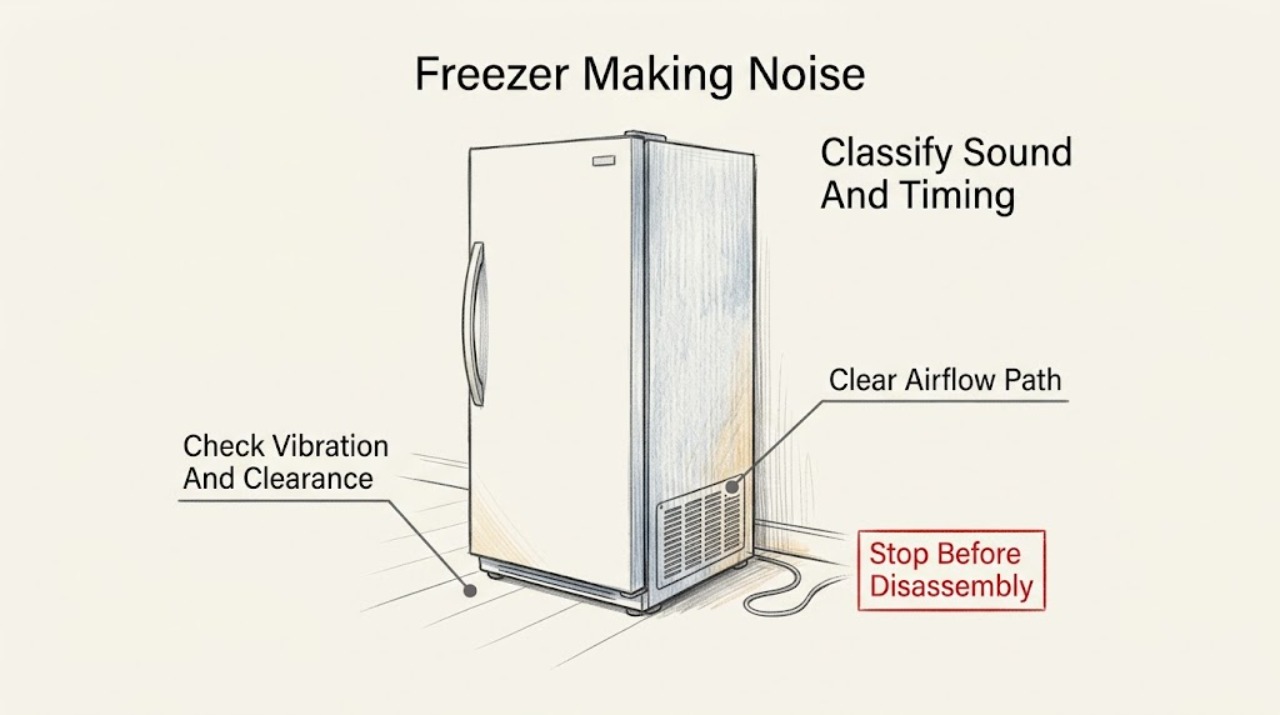
LG Freezer Making Noise
Some LG freezer sounds are normal: a fan or compressor may hum, the ice maker may rattle while harvesting, and clicking, cracking, dripping, or whooshing can occur as temperatures and air pressure change. First identify when and where the sound occurs, then check for vibration, contact with nearby objects, blocked airflow, or frost around a fan.
-
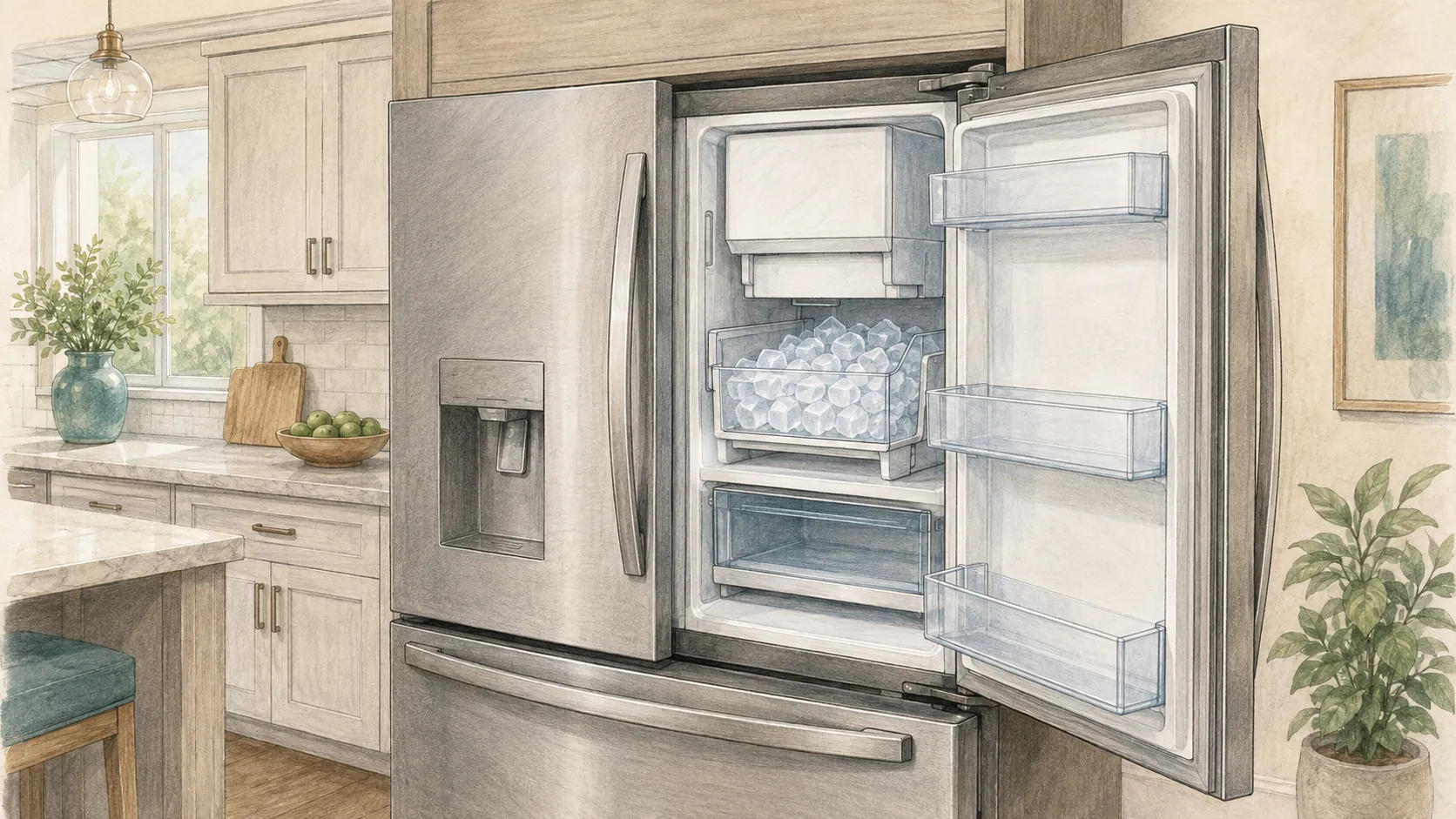
LG Ice Maker Making Noise: Tell Normal Ice Drops From an Abnormal Sound
First match the sound to the moment it occurs. A short rattle or thud when cubes fall into the bin, a brief motor sound during harvest, and ordinary fan hum can be normal. A drilling-like sound that gets louder when the ice maker runs without a water supply should be stopped by switching the ice maker off. Continuous tapping or rattling, a sound that changes with the doors, or a noise that persists with poor cooling needs LG service rather than a guessed part replacement.
-
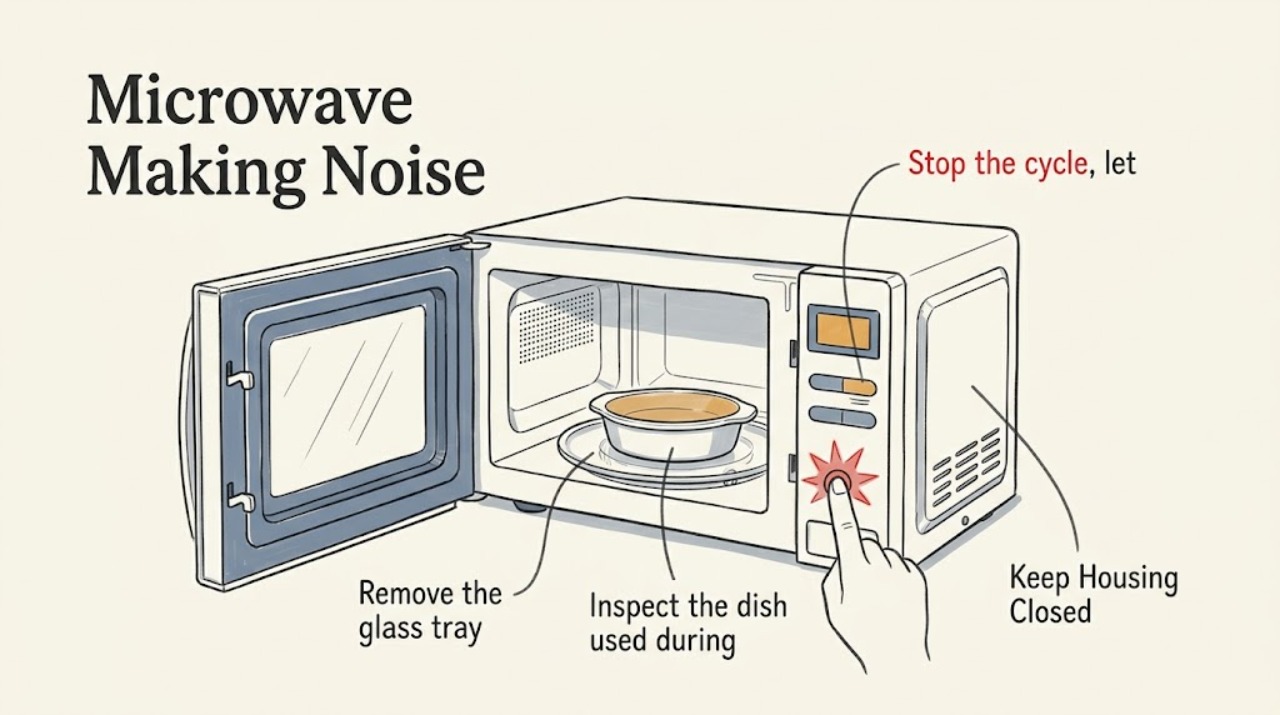
LG Microwave Making Noise: Locate the Sound Before Service
Stop the cycle and identify whether the noise is a scrape, rattle, hum, pop, or spark. Clean food buildup, check the glass tray and support ring, and remove cookware with metallic decoration. If the sound continues with smoke, arcing, a burnt smell, or a damaged rotating part, stop using the microwave and arrange service.
-
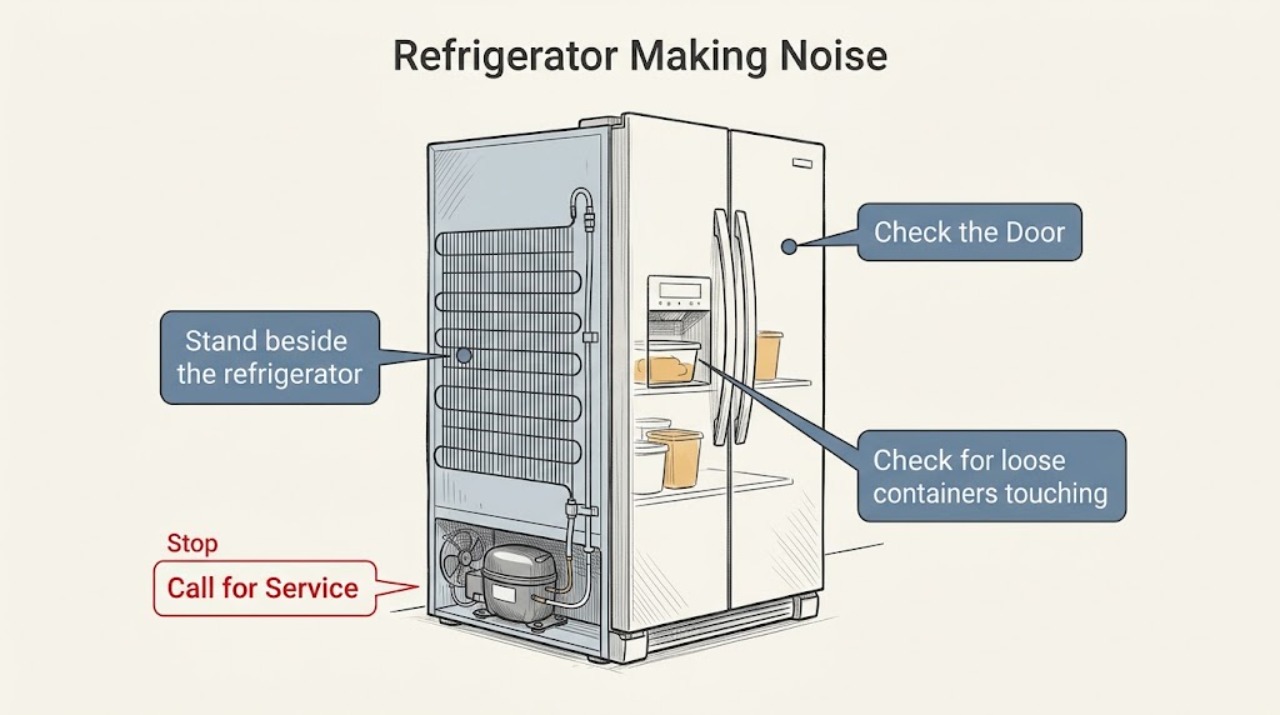
LG Refrigerator Making Noise: Match the Sound to Its Source
Classify the sound before touching anything. Clicking, gurgling, hissing, and a low compressor hum can be normal LG operating sounds. A new rattling that changes when the unit is moved, a fan-like scrape, or a loud noise that persists while cooling is poor deserves a focused inspection and possibly service.