
On this page
Start here
Quick answer
LG dishwasher whistling, water-flow, and some air sounds can be normal, while rattling, grinding, or persistent squealing needs a closer check. Pause the cycle, secure the load, clean and seat the filter, and arrange service if the noise persists or sounds like a failing pump.
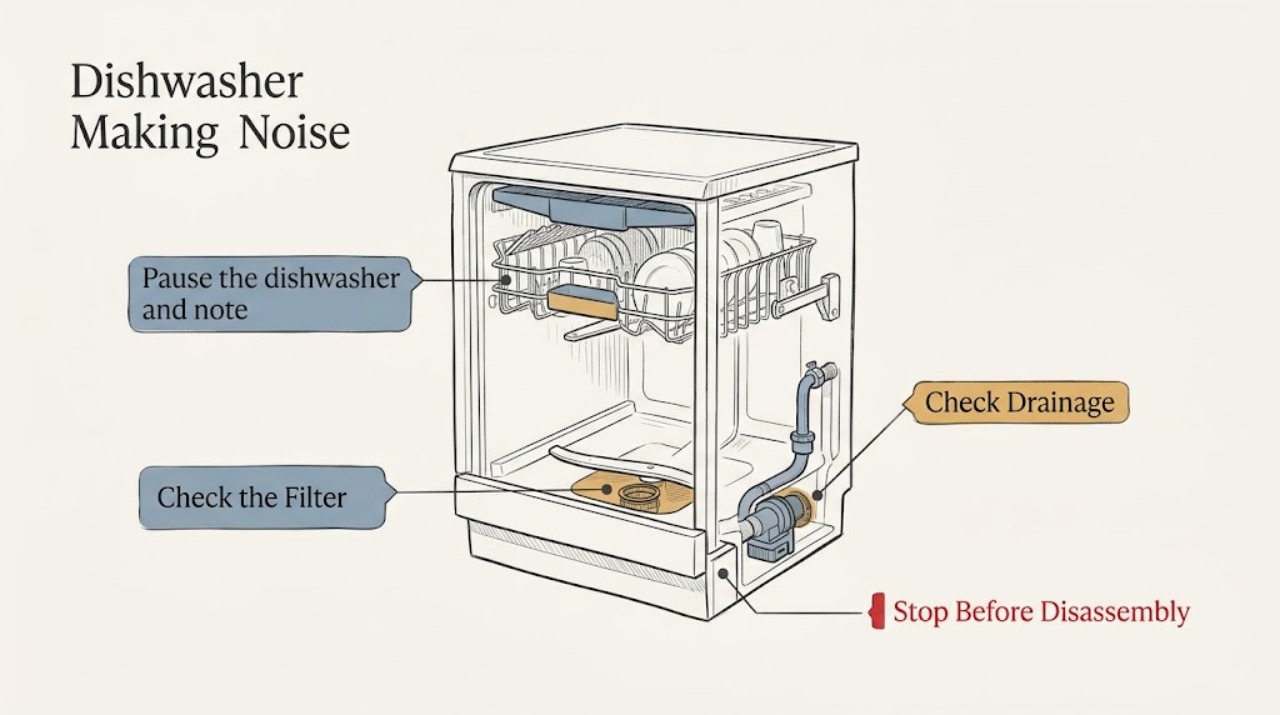
Work through in order
Diagnostic checks
Use only checks that match the exact appliance or system and its official guide.
-
Check 1
Pause the dishwasher and note whether the sound is whistling during fill, rattling during spray, growling during drain, or squealing/grinding throughout operation.
Expected result: The sound is a brief fill/air sound, a load-related rattle, or persistent mechanical noise.
Next step: Continue with loading and filter checks for rattles; request service for persistent grinding or squealing.
Why this matters
Why: Water-flow and some air sounds can be normal; utensils and loose filters can rattle; persistent squealing/grinding can indicate a pump issue.
-
Check 2
Rearrange dishes and utensils so nothing projects into the spray path, then remove and clean the accessible drain filter and reinstall it securely.
Expected result: Noise stops after loading/filter correction, or it remains.
Next step: Run a short test only if safe; stop and request service if the noise remains loud or the unit leaks.
Why this matters
Why: A changed result supports a load or filter cause; unchanged mechanical noise points to a component or installation issue.
-
Check 3
Observe whether the noise occurs only while water enters or drains, and check for slow sink drainage or standing water without reaching into the pump.
Expected result: Noise is limited to water flow, or it occurs with poor drainage/standing water.
Next step: Check only an accessible hose kink or valve position as the manual permits; use service for internal blockage or pump diagnosis.
Why this matters
Why: Flow noise may relate to water pressure; poor drainage can accompany a blocked path or pump concern.
Use your observations
Decision map
Find the observation that best matches what you see, then follow the next safe action.
-
PATH 01Next step
What you see
Whistling occurs only during filling and the dishwasher otherwise performs normally
Do this next
Treat it as a water-flow sound; if excessive, have the supply pressure/valve checked rather than opening the unit.
-
PATH 02Next step
What you see
Grinding, squealing, or loud growling persists after load and filter checks
Do this next
Stop the cycle and request qualified LG dishwasher service for pump or internal inspection.
Helpful context
Understand the symptom
Use the sound and timing
Noise during filling, washing, draining, or drying narrows the likely source. A loose utensil can sound like a mechanical fault, so inspect the load before parts.
When checks do not resolve it
Need a professional?
Call for persistent grinding/squealing, standing water, leaks, an error code, or noise that continues with an empty correctly loaded rack.
Common questions
FAQ
Is a dishwasher whistling sound always a defect?
No. Water entering the dishwasher can whistle, especially with higher flow. Have the supply checked if the sound is excessive or performance changes.
What does grinding suggest?
LG identifies persistent squealing or grinding as a possible pump indicator. Stop if it persists and request service.
Read the exact guide
Official sources
- LG Dishwasher - Common NoisesLG Electronics · Manufacturer guidance distinguishes common dishwasher sounds and suggests load/filter checks.
Community feedback
Share a repair observation
Share a plain-text repair observation. Accepted observations are published automatically; this page may take a moment to update.