
On this page
Start here
Quick answer
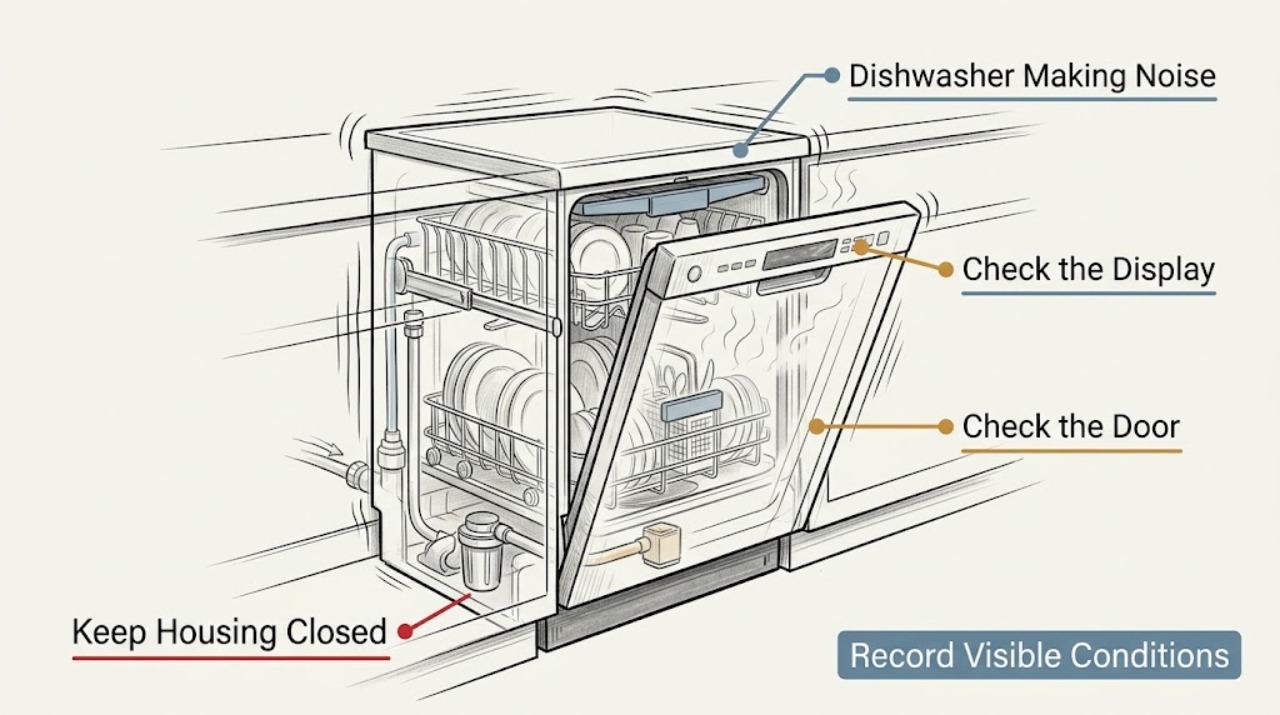
First identify when the Asko dishwasher makes the noise: only while washing, when draining, during drying, after the program, or when the load is moving. Asko describes a Night mode that lowers spray-arm water pressure to reduce noise, so a sound tied to wash pressure is different from a harsh sound that continues when the machine is idle. With the dishwasher off, check that dishes are stable, racks and spray arms are not obstructed, and nothing is visibly contacting the tub. Check only accessible filter and drain conditions; Asko's cleaning guide links a stopped cycle to a plugged filter or drain and says to use less detergent, while excessive foam can make operation abnormal. Verify the appliance is properly plugged in and that the door closes. Do not reach into a running machine, remove pump covers, disconnect plumbing, open electrical panels, or move a built-in dishwasher. If the noise is sudden, grinding, accompanied by a leak, a continuously running drain pump, smoke, a burning odor, a repeated electrical trip, or a cycle that stops after the safe checks, turn power and water off as appropriate and arrange qualified service.
Before you begin
Safety first
- Do not pull out a built-in dishwasher, open electrical covers, reach into a running spray system, remove pump protection, disconnect hoses, or test live components.
Work through in order
Diagnostic checks
Use only checks that match the exact appliance or system and its official guide.
-
Check 1
Listen from outside the closed appliance and record the sound in plain words, its location, duration, repetition, and program stage. Note whether it begins during water fill, washing, draining, drying, door movement, or after the program appears finished.
Expected result: The noise is a light rattle or knock during washing; a low water or motor sound; a scrape or grind; a hum during drain; a sound only with a certain program; or a continuous sound when no program should be active.
Next step: Continue with the check matching the trigger and save the exact program, indicator, and a short recording if safe. Stop immediately for a harsh mechanical sound, leak, smoke, burning odor, or continuous pump operation.
Why this matters
Why: A sound tied to a wash stage or option is more useful as a process clue than as evidence of one failed part. Asko documents wash-pressure changes through Night mode and identifies a continuously running drain pump as an abnormal condition requiring power and water shutoff.
-
Check 2
Turn the dishwasher off before opening the door and inspect the load, racks, and visible spray-arm area. Reposition only a dish or utensil that is visibly loose, touching another item, or blocking free spray-arm movement; do not force a rack or reach under a spray arm.
Expected result: The noise changes or stops after a visible load obstruction is corrected; the racks are not seated; the spray area is blocked; or the same noise remains with a correctly arranged load.
Next step: Run no more than one permitted verification program if there is no leak or electrical warning. If the noise remains harsh, the cycle stops, or the spray arm cannot move freely without disassembly, stop and arrange service.
Why this matters
Why: A load-related change makes dish or rack contact a plausible external contributor. A noise that remains with no visible contact is not enough to identify a pump, motor, bearing, or spray-arm part.
-
Check 3
If the sound occurs during washing or changes with the selected program, compare the documented Night mode or another model-approved program without changing detergent or forcing controls. Do not treat a published noise-level specification as a promise that every sound is normal.
Expected result: The sound becomes quieter with Night mode; it occurs only at higher spray pressure; it is unchanged across programs; or it continues after the program ends.
Next step: Use the quieter mode only as an observation, not as a repair. Preserve the program behavior and contact service if the noise is worsening, affects cleaning, or occurs outside the documented wash stage.
Why this matters
Why: A change with Night mode is consistent with Asko's statement that lower spray-arm water pressure reduces noise. No change, a noise after the program, or a harsh sound independent of wash pressure shifts the concern toward load, drain, installation, or service assessment.
-
Check 4
With the dishwasher switched off, inspect the removable filters and visible drain area using the Asko cleaning guide for the model family. Clean only the documented filter components with the permitted method, reinstall them correctly, and check that the visible drain path is not blocked; never use chemical drain cleaner or open a pump cover.
Expected result: Food or debris is present in the filter, the filter is loose, the drain area is blocked, foam is visible, or the filter and visible drain path are clear.
Next step: Remove only loose accessible debris, use less detergent on the next model-approved cycle if foam was the clue, and monitor once. If water remains, the pump hums without flow, or the noise persists, turn power and water off as appropriate and arrange service.
Why this matters
Why: Asko links clogged filters or a dirty drain with a unit stopping during a cycle and notes that excessive detergent can create abnormal foam. A clear filter does not rule out a hidden pump, installation, or control fault and does not identify a replacement part.
-
Check 5
Check the external operating conditions without moving the built-in appliance: confirm the power plug is properly seated if accessible, the door closes fully, and there is no visible water leak at the front or under-sink connection. Do not pull the dishwasher out or disconnect a hose.
Expected result: The plug is loose, the door is not fully closed, water is visible, the drain pump keeps running, or power, door, and visible connections appear normal.
Next step: Correct only an obvious accessible plug or door position when the area is dry. For water, a continuously running pump, an inaccessible connection, or a repeated stop, turn power and water off as appropriate and contact qualified service.
Why this matters
Why: Asko's guide lists a properly plugged unit and clean drain as checks when the machine stops during a cycle. A leak or continuously running drain pump is a protection or plumbing concern, not a noise to mask with another program.
Use your observations
Decision map
Find the observation that best matches what you see, then follow the next safe action.
-
PATH 01Next step
What you see
The sound occurs only during a wash stage and changes when Night mode lowers spray-arm pressure, while the load is stable and the cycle completes normally.
Do this next
Use the model-approved quieter mode if desired and monitor the next normal cycle. Arrange service if the sound becomes harsh, affects washing, continues after the cycle, or changes independently of program pressure.
Why this path and its safety boundary
Why it matters: The timing is more consistent with wash-water pressure and program behavior than with a confirmed failed part.
-
PATH 02Next step
What you see
The noise changes after a dish, rack, or spray-arm obstruction is corrected, and no leak, foam, or electrical warning is present.
Do this next
Keep the load stable and run one permitted verification cycle. Escalate if the noise returns with a correctly arranged load or the spray arm still cannot move freely.
Why this path and its safety boundary
Why it matters: Contact between the load and the spray system is more likely than an internal drive fault.
-
PATH 03Next step
What you see
The dishwasher stops, retains water, or becomes noisy while the filter or visible drain area contains debris or foam, but there is no active leak.
Do this next
Switch the machine off, clean and reseat only the documented filters, use less detergent if foam was present, and verify once. Keep it off and arrange service if water remains or the symptom returns.
Why this path and its safety boundary
Why it matters: A user-accessible filter, drain, or detergent condition is a plausible contributor; it does not establish a pump or control failure.
-
PATH 04Next step
What you see
The sound is sudden, harsh, grinding, continuous after the program, accompanied by a continuously running drain pump, leak, smoke, burning odor, repeated electrical trip, or a cycle that still stops after safe checks.
Do this next
Turn power and water off as appropriate and arrange qualified Asko service. Do not pull out the built-in unit, open panels, remove pump covers, disconnect hoses, or order a motor, pump, valve, or control from the noise alone.
Why this path and its safety boundary
Why it matters: The pattern is not safely explained by load or documented wash-pressure behavior and may involve an internal, plumbing, installation, or electrical fault.
Helpful context
Understand the symptom
The trigger is more useful than the word loud
A noise that appears only while spray pressure changes, draining, or drying has a different decision path from a scrape or grind that continues with the program stopped. Asko's dishwasher brochure says Night mode lowers spray-arm water pressure to reduce noise and extends the program, so a change with that option is a useful observation rather than proof of a failed motor. Record the stage, duration, and whether the noise changes with the load or program.
Start with the load and documented cleaning checks
Asko's cleaning guidance says to verify filters and the drain are clear when a unit stops during a cycle, to use less detergent, and to keep controls and the door area clean. The same guide describes removing and reinstalling its filter components and cautions against chemical cleaners. Those are limited user-level checks; they do not justify reaching into a pump or assuming that a filter is the source of every noise.
A built-in appliance has a hard stop for DIY diagnosis
Do not pull an integrated Asko dishwasher out to listen to hidden parts, open an electrical cover, disconnect its hoses, or test a pump or motor live. If a drain pump runs continuously, Asko's guide directs the user to turn power and water off and contact customer care. Treat leaks, smoke, burning odors, and repeated breaker trips as stop conditions rather than noise clues to investigate further.
When checks do not resolve it
Need a professional?
The sound is sudden, harsh, grinding, scraping, continuous, or unrelated to a wash, drain, or drying stage., A cycle stops, water remains, the drain pump runs continuously, foam or a leak persists, or an electrical warning appears., The next diagnosis would require pulling out the built-in unit, opening panels, removing pump protection, disconnecting plumbing, or testing live components.
Safety scope: Do not pull out a built-in dishwasher, open electrical covers, reach into a running spray system, remove pump protection, disconnect hoses, or test live components.
Have this ready
- The complete Asko model number and installation type.
- A description or safe recording of the sound, its location, program stage, duration, and whether Night mode or the load changes it.
- Filter, drain, detergent or foam, door, plug, leak, pump, and cycle-completion observations, plus the exact checks already completed.
Common questions
FAQ
Why is my Asko dishwasher making a rattling noise?
First turn it off and check whether a dish, utensil, rack, or visible spray-arm obstruction is contacting another part. A noise that changes with the load points to an external loading condition, while a noise that remains with a stable load needs service assessment rather than a guessed pump or motor part.
Does Asko Night mode make a dishwasher quieter?
Asko's dishwasher brochure says Night mode lowers spray-arm water pressure to reduce noise and extends the program. If the sound changes only with that mode, the timing is useful evidence about wash pressure, but it does not prove that a new harsh or persistent noise is normal.
Can detergent or a dirty filter cause an Asko dishwasher to make noise?
Asko's cleaning guide says to use less detergent when a unit stops during a cycle and to verify that filters and the drain are clear. Excess foam, filter debris, or a restricted drain can change operation, but a clear filter does not identify an internal pump or motor fault.
What should I do if the Asko dishwasher drain pump keeps running?
Asko directs the user to turn power and water off and contact customer care when the drain pump runs continuously. Do not keep starting programs, remove a pump cover, or disconnect a hose to investigate the sound.
When should I stop troubleshooting an Asko dishwasher noise?
Stop for a leak, smoke, burning odor, repeated electrical trip, sudden harsh grinding or scraping, a continuously running drain pump, or a cycle that stops again after the safe external checks. Do not pull out the built-in appliance or open electrical, pump, or plumbing components; provide the model number and sound timing to qualified service.
Read the exact guide
Official sources
- ASKO Dishwasher Cleaning GuideASKO · Official ASKO guidance for accessible filters, drain, detergent, plug, door, controls, pump behavior, and cycle-stop checks; the exact use-and-care guide controls model-specific procedures.
- ASKO Dishwasher BrochureASKO · Official ASKO product literature for the listed dishwasher series; program availability and controls vary by model.
Community feedback
Share a repair observation
Share a plain-text repair observation. Accepted observations are published automatically; this page may take a moment to update.