
On this page
Start here
Quick answer
A noisy Hotpoint washing machine is best diagnosed by noting when the sound occurs: filling, washing, draining, or spinning. A new machine that bangs or walks may still have transport brackets or bolts installed, while a sudden rattle can be a coin or other object in the drum or pump path. An occasional click or water sound can be normal, but repeated banging, metal grinding, a drum that feels loose, leaking, burning smell, or a machine that moves across the floor calls for a stop and qualified service. Unplug before any user-level inspection, keep hands out of a drum with trapped water, and use the exact Hotpoint manual for filter access and installation details.
Before you begin
Safety first
- Owner checks stop at observing the stage and sound, confirming external installation, redistributing a load, inspecting visible drum areas while unplugged, and following a model-approved accessible filter procedure. No cabinet, wiring, drive, bearing, or suspension work is included.
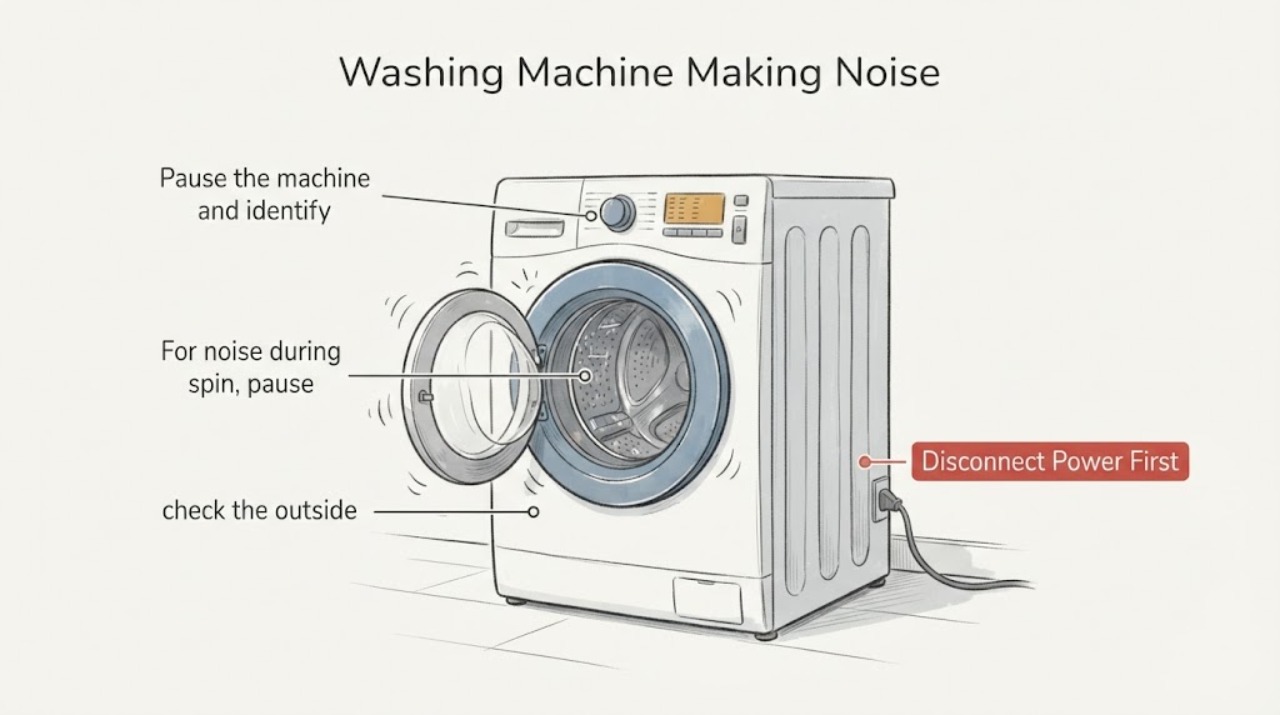
Work through in order
Diagnostic checks
Use only checks that match the exact appliance or system and its official guide.
-
Check 1
Pause the machine and identify the exact stage when the noise starts: water fill, tumbling or agitation, drain, or spin. From a safe position, describe the sound as a hum, click, rattle, scraping, squeal, or repeated bang and note whether the cabinet moves.
Expected result: The noise occurs only during drain, only as spin speed rises, throughout tumbling, or while the machine is idle or filling.
Next step: Stop immediately for smoke, burning smell, water near electrical parts, violent movement, or metal-on-metal impact. Otherwise continue only with the branch that matches the stage and sound.
Why this matters
Why: Timing narrows the decision: a drain-only rattle suggests the pump or filter path; a spin-only bang suggests load balance, installation, or suspension; a speed-following scrape or rumble suggests a mechanical fault; an idle or fill sound may involve valves or the cabinet.
-
Check 2
If the noise began with the first installation or after the machine was moved, check the outside and the model manual for the transport brackets or bolts. Confirm that the machine is level, all feet are firmly supported, and it is not touching a wall or cabinet.
Expected result: A transport restraint remains installed, a foot is not supporting the machine, or the installation looks correct.
Next step: Do not run the machine with a restraint installed. Correct the external installation only as described in the manual, then perform one supervised empty or small-load test. If it still bangs or walks, stop and arrange service.
Why this matters
Why: A retained transport restraint or unstable base can make normal spin forces sound like a major internal failure. Correct installation must follow the exact model instructions; a correct installation with persistent violent noise points elsewhere.
-
Check 3
For noise during spin, pause when safe and redistribute the load evenly. Remove a single heavy item or add similarly sized items only if the manual permits that load, then select one appropriate spin or rinse-and-spin test.
Expected result: The noise disappears after redistribution, returns only with a particular load, or remains with a balanced small load.
Next step: Do not keep repeating high-speed tests when the machine is unstable. If the sound remains with a balanced load, stop use and document the speed, load, and movement for service.
Why this matters
Why: A change with load points to imbalance or loading rather than proving a failed part. Noise that remains with a balanced load, especially if the cabinet moves or spin aborts, needs a suspension, leveling, or drive diagnosis.
-
Check 4
With the machine paused and unplugged, and only when the drum is empty and accessible, inspect the drum opening, door seal, and visible drum holes for a coin, button, wire, or other foreign object. Do not reach into trapped water or remove panels.
Expected result: An object is visible and removable without force, nothing is visible, or the drum has a sharp scrape, damaged seal, or loose-feeling movement.
Next step: Remove only a loose object that is safely reachable while unplugged. If the object is trapped, the seal is damaged, or the drum feels loose, stop and arrange service rather than reaching farther or dismantling the machine.
Why this matters
Why: A visible object can explain a rattle or scrape, but a loose drum, damaged seal, or persistent metal sound can indicate a bearing, support, or drive problem. Absence of a visible object does not clear the pump or internal mechanism.
-
Check 5
If the sound occurs during draining, check for standing water and consult the exact manual for any user-accessible pump-filter procedure. If the manual permits it, unplug first, wait for hot water to cool, protect the floor, and open only the specified access point; do not force a locked door or reach into the pump.
Expected result: Water remains in the drum, the filter path contains a safe-to-remove object, the pump makes a loud rattle, or the drain path appears clear but the noise persists.
Next step: Stop if water spills toward electrical parts, the access cap will not move normally, or the manual does not cover the procedure. Arrange service for a persistent drain noise, leak, or pump symptom.
Why this matters
Why: Water remaining with a drain rattle can point to a blocked filter, hose, or pump path. A clear path with a persistent harsh noise can indicate a pump fault. Trapped water and an inaccessible filter make further owner checks unsafe.
-
Check 6
After the low-risk checks, compare the sound with an empty drum only if there is no leak, burning smell, severe movement, or damaged door seal and the manual allows a short supervised test. Note whether the sound follows drum speed, appears under load only, or remains with no laundry.
Expected result: The empty test is quiet, the noise remains with an empty drum, or the sound is accompanied by grinding, squealing, leaking, heat, smoke, or a trip.
Next step: Stop the test for any hazardous symptom or violent movement. For persistent empty-drum noise, isolate the machine safely and arrange qualified service; do not open the cabinet or replace a drive part based on sound alone.
Why this matters
Why: A quiet empty test supports a load or installation branch but does not prove the appliance is healthy. Persistent speed-related noise with an empty drum is more consistent with a drive, bearing, drum support, or suspension fault and requires professional diagnosis.
Use your observations
Decision map
Find the observation that best matches what you see, then follow the next safe action.
-
PATH 01Next step
What you see
The noise started on first use or immediately after moving the machine.
Do this next
Check the manual for transport restraints and confirm the machine is level and supported on all feet before another supervised test. Persistent instability requires service.
-
PATH 02Next step
What you see
The noise is a thump only during spin and changes after the load is redistributed.
Do this next
Use the manual's loading guidance and avoid repeated high-speed tests with an unstable load. If a balanced load still bangs or the cabinet walks, stop and request service.
-
PATH 03Next step
What you see
A rattle or scrape is present during tumbling or with the drum empty.
Do this next
Inspect only the visible drum opening and seal while unplugged. If no object is safely reachable or the sound persists, arrange service for a possible drum-support or drive fault.
-
PATH 04Next step
What you see
The sound occurs while draining and water remains in the drum.
Do this next
Follow the exact manual's safe filter and drain-path instructions only if the access is user-serviceable. Stop for trapped water, leakage toward electrics, or a persistent pump rattle.
-
PATH 05Next step
What you see
The noise follows spin speed, remains with an empty drum, or comes with a loose drum, leak, or harsh grinding.
Do this next
Stop operating the machine and arrange qualified service. Do not open the cabinet or choose a bearing, belt, motor, or suspension part from the sound alone.
-
PATH 06Next step
What you see
There is violent movement, smoke, burning smell, a spark, a repeated electrical trip, or water near electrical parts.
Do this next
Stop immediately, keep people away, and isolate power only from a safe, dry position if that can be done without reaching through water. Arrange qualified electrical or appliance service.
Helpful context
Understand the symptom
Map the noise before touching the machine
Pause the cycle and write down the stage, sound, and location. A humming or rattling sound during drain points toward the pump or filter path; a scrape that follows drum speed is a different concern from a thump that happens only as spin accelerates. A light click from a control or lock can be normal on some models. Do not keep running a machine that is striking the cabinet, leaking, smoking, or smelling hot just to capture a recording.
Start with installation and load checks
Hotpoint specifically calls out transport brackets or bolts when a washer is noisy or unstable on first use. The machine should also stand level, with all feet supporting it, and the load should be spread rather than packed to one side. These checks can resolve a spin thump without implying that a suspension part has failed. Use the model manual for the exact bolt locations and leveling method.
Treat new grinding or movement as a stop signal
A sound that began suddenly, gets louder with speed, repeats with an empty drum, or comes with a loose-feeling drum or water leak is not a normal load-balance problem. Do not open the cabinet, reach behind the drum, or tighten internal belts and fasteners. Isolate the appliance safely and give the technician the stage, sound type, load, and any leak or error indication.
Safety boundary
Stop conditions
- Stop immediately for smoke, burning smell, sparks, a repeated electrical trip, violent cabinet movement, a damaged cord, or water approaching electrical parts.
- Stop for metal grinding, a loose-feeling drum, a torn door seal, a door that will not close safely, or a leak that continues during the cycle.
- Do not run the machine with transport restraints installed, reach into trapped water, remove panels, or work on belts, bearings, suspension, wiring, or the drive system.
- Do not keep repeating high-speed cycles to reproduce a bang. Arrange qualified service when the noise remains after external installation, load, and visible-object checks.
Only after diagnosis
Potential parts
- pump filter or drain-pump assembly
Consider this category only when the exact model manual and a qualified diagnosis connect a drain-stage rattle or poor emptying to the filter or pump path.
Confirm the complete model and the user-accessible design before selecting a part; do not treat a noise as proof of pump failure. - washing machine shock absorber or suspension component
Consider this category only when installation and load checks are correct but a qualified diagnosis finds persistent spin instability or damaged suspension.
Verify the exact model and revision; suspension parts are not interchangeable by appearance alone. - washing machine drum bearing or support
Consider this category only for a confirmed speed-related rumble, grinding, or loose drum after a qualified inspection.
This is an internal repair boundary; use model-specific service information rather than ordering from sound alone. - drive belt or motor component
Consider this category only when a technician confirms a drive-related noise or fault after ruling out load, installation, foreign-object, and drain causes.
Confirm the complete model and diagnosis before selecting any drive component.
When checks do not resolve it
Need a professional?
Arrange qualified Hotpoint appliance service when noise persists with a balanced or empty drum, when the machine moves or leaks, when the pump or filter path remains noisy, or when the sound suggests a bearing, suspension, motor, belt, or drum-support fault. Use electrical emergency help for smoke, fire, sparks, or a dangerous wet electrical condition.
Safety scope: Owner checks stop at observing the stage and sound, confirming external installation, redistributing a load, inspecting visible drum areas while unplugged, and following a model-approved accessible filter procedure. No cabinet, wiring, drive, bearing, or suspension work is included.
Common questions
FAQ
Why is my Hotpoint washer banging during spin?
First check for transport restraints if the machine is new or was moved, then confirm the machine is level and redistribute the load. If a balanced load still bangs or the cabinet walks, stop using it and arrange service.
What can cause a rattling sound during a Hotpoint wash?
A coin, button, wire, or similar object can rattle in the visible drum area or enter the drain path. Unplug first, remove only an object that is safely reachable, and request service if it is trapped or the sound remains.
Is a Hotpoint washer humming during drain normal?
Some pump sound is expected, but a harsh rattle with water left in the drum can indicate a filter, hose, or pump-path problem. Use the exact manual for any accessible filter check and stop if water approaches electrical parts.
Should I keep running the washer to locate a grinding noise?
No. A speed-related grind, a loose-feeling drum, a leak, smoke, a burning smell, or violent movement is a stop condition. Unplug safely and arrange qualified service rather than opening the cabinet.
Could a worn bearing or suspension part be causing the noise?
It is possible when noise persists with an empty drum or follows spin speed, but sound alone cannot identify a part. A technician should confirm the model and fault after installation, load, visible-object, and drain checks.
Read the exact guide
Official sources
- Hotpoint Service Washing Machine Repair - HotpointHotpoint · Hotpoint washing-machine repair advice, manual lookup, safety boundaries, and service escalation
- Hotpoint Service Help and Advice - HotpointHotpoint · Hotpoint owner help, manuals, service pathways, and first-use washing-machine noise guidance
- Washing Machine Troubleshooting - Quick fixes & Tips - Hotpoint - HotpointHotpoint · Hotpoint washing-machine troubleshooting for unusual noise, unbalanced loads, foreign objects, drainage, and service escalation
Community feedback
Share a repair observation
Share a plain-text repair observation. Accepted observations are published automatically; this page may take a moment to update.