
On this page
Start here
Quick answer
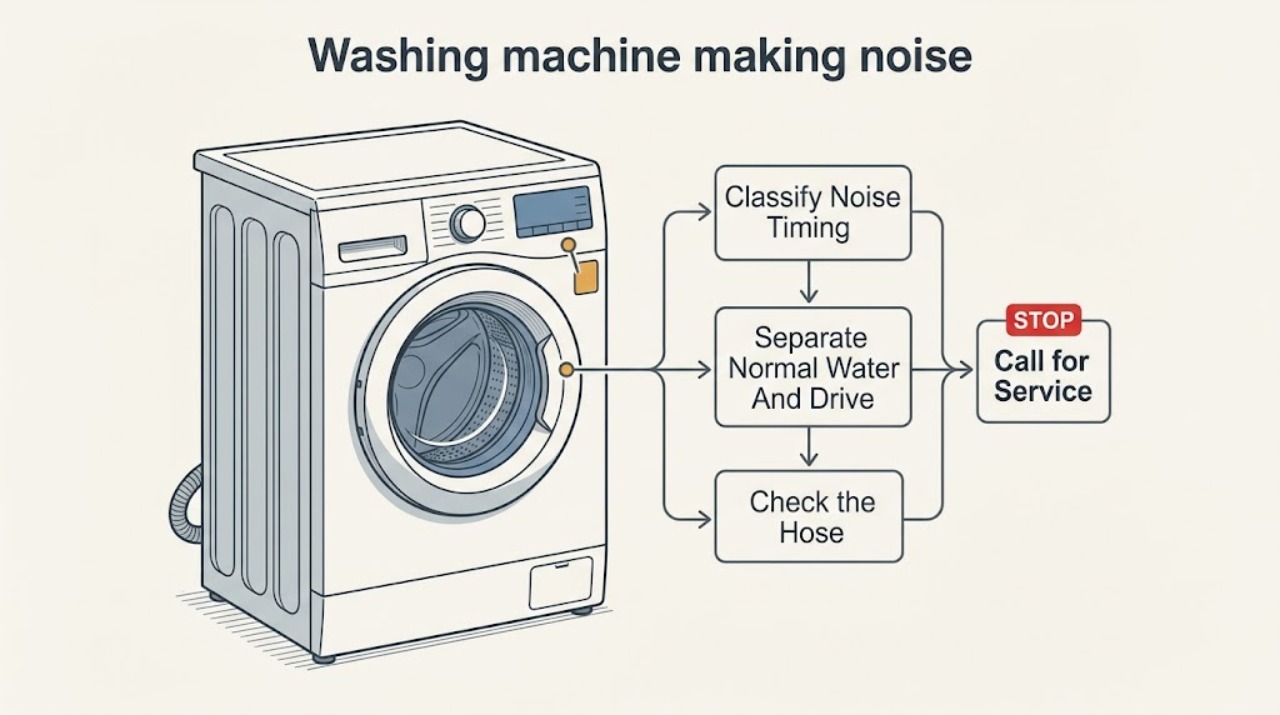
First identify when and where the noise occurs. Some Amana sounds are normal, including drive or gear sounds as the machine changes direction, spray or sloshing during filling and rinsing, and occasional locking or operating clicks. Rattling at the rear often comes from an inlet or drain hose, while thumping, grinding, or heavy vibration during spin commonly follows an unbalanced load or an unlevel washer. Stop the cycle normally, wait for the basket to stop, redistribute or reduce the load, check that the washer is stable, and secure only visibly loose external hoses or objects. If the noise persists with a balanced load, is a harsh metal-on-metal sound, comes with a leak, burning or hot-rubber smell, smoke, sparking, damaged parts, or repeated power trips, stop using the washer and arrange qualified Amana service. Do not reach into motion or open the cabinet to inspect the drive or pump.
Work through in order
Diagnostic checks
Use only checks that match the exact appliance or system and its official guide.
-
Check 1
From a safe position, note whether the Amana washer is top-load or front-load, the exact sound, and whether it occurs during fill, agitation, direction change, drain, spin, or only at startup; record vibration, movement, water, and any display warning.
Expected result: The sound is a spray or slosh, brief click, hose rattle, thump, grind, rub, whirling sound, or harsh noise with smoke, smell, leak, sparking, or violent movement.
Next step: Follow the matching normal-sound, hose, load, level, installation, drain-pan, or service branch below; do not reach into a moving basket.
Stop if: Stop immediately for smoke, burning or hot-rubber smell, electrical smell, visible sparking, a leak near electrical parts, exposed wiring, violent movement, or repeated breaker trips.
Why this matters
Why: Timing separates normal water or drive sounds from external hose contact, load imbalance, leveling, drain-pan contact, and possible internal faults. A hazard symptom overrides ordinary troubleshooting.
-
Check 2
If the sound is a brief click at startup, a spray or slosh during fill or rinse, or a motor and gear sound while agitation changes direction, let the cycle continue only while the washer remains stable and operates normally.
Expected result: The sound is brief and phase-linked with normal filling, rinsing, locking, or direction changes, or it becomes loud, continuous, phase-independent, or paired with poor operation.
Next step: Monitor one ordinary cycle if the sound stays phase-linked and harmless; if it changes character or adds a symptom, stop normally and continue with external checks or service.
Stop if: Do not continue a cycle that produces smoke, hot-rubber smell, sparking, a leak, violent movement, or a harsh grinding sound.
Why this matters
Why: Amana describes several water, lock, motor, and gear sounds as normal operation. A continuous or worsening sound, especially with movement, leaks, or loss of function, is not explained by that normal pattern alone.
-
Check 3
If rattling, tapping, or banging comes from the rear or outside, stop the washer normally and inspect from outside for inlet or drain hoses touching the cabinet, loose objects on top or beside the washer, or items leaning against it; secure only a visibly loose external hose with the supplied restraint or an appropriate tie.
Expected result: The sound stops when a hose or loose object is moved away, or it continues with the outside clear and the hoses no longer contacting the cabinet.
Next step: Run one short normal observation only if the hose path is safe and there is no leak; if the noise remains, stop and inspect the load and floor stability rather than opening the cabinet.
Stop if: Do not pull a pressurized hose, move a leaking appliance, use a damaged tie near moving parts, or continue if water reaches electrical connections.
Why this matters
Why: Amana says hose movement and nearby household objects can transmit vibration or create a rattle. Persistence with no external contact points to load, leveling, drain-pan, or internal causes.
-
Check 4
If thumping, grinding, or heavy vibration appears during agitation or spin, stop normally and wait until the basket is completely still; redistribute a bunched load, reduce an overloaded load, or add suitable counterweight items to a single bulky load according to the model manual.
Expected result: The load is packed, a single heavy item is present, clothes are gathered to one side, the noise falls after redistribution, or the same noise returns with a balanced load.
Next step: Run one appropriate cycle with a balanced load; arrange service if the noise persists, the tub strikes the cabinet, or the washer stops spinning.
Stop if: Do not reach into a moving basket, overload the washer, continue violent banging, or force a locked lid or door.
Why this matters
Why: Amana links uneven or oversized loads to noise, vibration, reduced spin, and movement of the basket. A balanced load that still grinds or bangs points to leveling, installation, an object, or an internal fault.
-
Check 5
With the washer stopped, check from outside whether it rocks diagonally and whether all four feet appear firmly supported; if a drain pan is installed, look for visible contact or damage between the tub area and pan, and follow the exact installation instructions before adjusting anything.
Expected result: The washer rocks, a foot is not firmly supported, the noise worsens with heavy loads, the drain pan is visibly rubbing or damaged, or the unit is stable but the noise persists.
Next step: Correct leveling or pan clearance only as described in the model installation instructions; run one normal observation and arrange service if the noise remains.
Stop if: Do not lift, tip, or dismantle the washer, place hands under a loaded appliance, or continue if it walks, strikes the cabinet, leaks, or has a damaged pan.
Why this matters
Why: Amana says an unlevel washer can worsen vibration and noise, and a drain pan can rub the tub bottom during heavy or bulky loads. Stability after a correct installation check with persistent noise points beyond leveling.
-
Check 6
If a front-load washer became noisy immediately after installation or relocation, verify against the exact installation instructions that all shipping materials were removed and the washer is level, without removing panels or reaching behind a moving unit.
Expected result: Shipping materials were left in place, the machine is unlevel, or the installation is correct but the noise remains.
Next step: Have the installation corrected according to the manual, then make one normal observation; arrange service if the noise remains or the appliance was damaged.
Stop if: Do not move a heavy appliance alone, remove hidden hardware by force, or continue if the cabinet, hoses, floor, or cord is damaged.
Why this matters
Why: Amana identifies unremoved shipping materials as a source of excessive front-load noise and requires a level installation. Correct installation can resolve a new noise; persistence indicates another cause.
-
Check 7
After the washer is off, unplugged in a dry safe area, and the basket is still, inspect only the accessible drum and exterior for a coin, button, fastener, or other loose object; do not remove the agitator, pump, cabinet, or drive parts to chase a sound.
Expected result: A loose object is accessible and can be removed without tools or contact with internal parts, or the noise continues with no visible object after load and level checks.
Next step: Remove only a loose accessible object, then make one normal observation; arrange qualified service for a persistent, harsh, or internal-sounding noise.
Stop if: Do not reach into the pump, remove an agitator or service flap without the exact model's safe procedure, test live parts, or continue after smoke, smell, leak, or violent movement.
Why this matters
Why: Amana notes that loose objects can rattle or clunk and that a persistent object may be in the pump. A sound that remains after safe external checks may involve the pump, drive, suspension, motor, or tub.
-
Check 8
After the external hose, load, level, pan, installation, and loose-object checks, record the exact sound, cycle phase, load type, and whether the noise changes with an empty or balanced test permitted by the model manual; do not repeatedly run a suspected damaging cycle.
Expected result: The noise is gone, returns only with one load, remains with a balanced load, worsens, or is accompanied by poor spin, leaks, a code, smell, or electrical symptoms.
Next step: Leave the washer off when unsafe and arrange qualified Amana appliance service with the recorded sound, phase, load, and checks performed.
Stop if: Do not keep reproducing a harsh noise, open the cabinet, bypass safety functions, or reconnect after smoke, sparking, water intrusion, or a power trip.
Why this matters
Why: A load-specific noise supports a balance or contact cause. Persistence or worsening with a balanced load means the cause cannot be identified safely from outside and may require internal diagnosis.
Use your observations
Decision map
Find the observation that best matches what you see, then follow the next safe action.
-
PATH 01Safety boundary
What you see
The sound is a brief click, spray, slosh, or motor/gear sound tied to a normal cycle phase, with stable operation and no hazard.
Do this next
Monitor one ordinary cycle and consult the exact model manual if the sound changes or adds a symptom.
Why this path and its safety boundary
Safety stop: Stop for smoke, smell, sparking, leaks, violent movement, or poor operation.
-
PATH 02Safety boundary
What you see
Rattling or tapping comes from a hose touching the cabinet or an object leaning on or beside the washer.
Do this next
Move the nearby object and secure only the visibly loose external hose, then observe one safe cycle.
Why this path and its safety boundary
Safety stop: Do not pull a pressurized or leaking hose or continue if water reaches electrical parts.
-
PATH 03Safety boundary
What you see
Thumping, grinding, or vibration occurs during spin with a bunched, overloaded, single-heavy, or bulky load.
Do this next
Wait until the basket is still, redistribute or reduce the load, and run one appropriate cycle.
Why this path and its safety boundary
Safety stop: Arrange service if a balanced load still bangs, walks, or cannot spin; never reach into motion.
-
PATH 04Safety boundary
What you see
Noise or vibration is worse with heavy loads and the washer rocks or a drain pan visibly contacts the tub area.
Do this next
Follow the exact installation instructions for leveling or pan clearance, then make one normal observation.
Why this path and its safety boundary
Safety stop: Do not lift or tip a loaded washer; stop for a damaged pan, leaking appliance, or violent movement.
-
PATH 05Safety boundary
What you see
A front-load washer became excessively noisy directly after installation or relocation and shipping materials may remain.
Do this next
Verify and correct shipping-material removal according to the installation instructions before further use.
Why this path and its safety boundary
Safety stop: Do not force hardware or move the heavy appliance without safe assistance; arrange service if noise or damage remains.
-
PATH 06Safety boundary
What you see
A clunk, rattle, grinding, or rubbing sound remains after load, hose, level, pan, and installation checks, or an object may be in the pump or tub.
Do this next
Remove only a loose accessible object; otherwise leave the washer off and arrange qualified diagnosis.
Why this path and its safety boundary
Safety stop: Do not remove the agitator, pump, cabinet, or drive components or continue with a harsh noise.
-
PATH 07Safety boundary
What you see
Noise is accompanied by smoke, burning or hot-rubber smell, electrical smell, sparking, a leak, exposed wiring, damaged glass or cabinet, or repeated power trips.
Do this next
Stop using the washer and isolate power only if it can be done without touching water or damaged equipment; arrange qualified appliance or electrical service.
Why this path and its safety boundary
Safety stop: Do not reconnect, open the cabinet, reach into the machine, or keep testing the noise.
Helpful context
Understand the symptom
Timing and sound type narrow the cause
A spray or slosh during fill or rinse, a brief lock click, or a motor and gear sound while the drive changes direction may be normal for the model. A rattle at the rear points toward hoses or objects touching the cabinet. A thump, grind, or rub that appears at spin points toward load balance, leveling, a drain pan, or an object in the tub. Record the phase, speed, load, and whether the noise changes when the washer stops before taking action.
Correct external causes before suspecting a component
Stop normally and wait until the basket is still. Look for loose items on or beside the washer, hoses tapping the cabinet, a tightly packed or single bulky load, and rocking at the floor. For a front-load unit, also consider shipping materials if the noise began immediately after installation. These checks can change the sound without opening the appliance.
A persistent or hazardous noise changes the boundary
If the noise remains after the visible external checks, do not run diagnostic cycles just to reproduce it. A foreign object in the pump or tub, drive, suspension, motor, or another internal part may require service. Smoke, burning or hot-rubber smell, sparking, a leak, exposed wiring, or violent movement is a stop condition, not a loading adjustment.
Safety boundary
Stop conditions
- Stop immediately for smoke, burning or hot-rubber smell, electrical smell, visible sparking, water near electrical parts, a damaged or hot cord, a leak, violent movement, or repeated breaker trips.
- Stop using the washer when a harsh grinding or rubbing noise persists with a balanced load, the basket strikes the cabinet, the appliance walks, or the noise is accompanied by poor spin or a warning.
- Do not reach into a moving basket, lift or tip a loaded washer, remove the agitator or pump, open the cabinet, bypass a lid or door lock, or test live wiring.
Only after diagnosis
Potential parts
- drain pump assembly
Only consider this part if a qualified diagnosis confirms that a persistent internal rattle or drain-related noise comes from the pump after visible objects and the external drain path are ruled out.
Confirm the exact Amana model and manufacturer fit information before ordering; a noise alone does not identify the pump. - suspension or tub support component
Only consider this component if qualified testing confirms excessive tub movement after the load, leveling, pan, and installation checks are correct.
Confirm the exact Amana model and diagnosis before ordering; do not infer a support fault from vibration alone.
When checks do not resolve it
Need a professional?
Arrange qualified Amana appliance or electrical service when noise persists after safe hose, load, level, pan, installation, and accessible-object checks; a balanced load still causes grinding, rubbing, or violent vibration; an object may be inside the pump or tub; the appliance leaks, trips power, or produces smoke, smell, or sparking.
Common questions
FAQ
What noises are normal for an Amana washer?
Depending on the model and cycle, spray or sloshing during fill and rinse, a brief lock click, and motor or gear sounds during direction changes can be normal. A new, harsh, continuous, or symptom-linked noise should be isolated and may need service.
Why does my Amana washer thump during spin?
Amana links thumping and vibration to an uneven, overloaded, single-heavy, or bulky load and to an unlevel washer. Stop normally, wait for the basket to stop, redistribute or reduce the load, and check stability before running one appropriate cycle.
Why is my Amana washer rattling at the back?
The inlet or drain hoses may be knocking against the cabinet, or a nearby object may be touching the washer. Inspect from outside and secure only a visibly loose hose or move the object. A rattle that remains with the outside clear needs further diagnosis.
Why does my Amana washer make a grinding or rubbing sound?
Amana says grinding or rubbing can result from an overloaded or unlevel washer, and a drain pan can contact the tub area. Correct the load and follow the installation instructions for leveling or pan clearance. Persistent harsh noise with a balanced load needs qualified service.
Can a drain pan cause Amana washer noise?
Yes. Amana notes that the tub bottom may rub against a drain pan, especially with heavy or bulky items. Check only for visible contact or damage and follow the model installation instructions; do not lift or tip a loaded washer.
What should I do if the noise continues after balancing the load?
Stop repeated testing and record the sound, phase, load, and external checks. If the noise remains with a balanced, stable washer and clear hose path, the pump, drive, suspension, motor, tub, or another internal part may require qualified diagnosis. Stop immediately for smoke, smell, sparking, leaks, or violent movement.
Read the exact guide
Official sources
- Troubleshooting Washer NoisesAmana · Amana identifies hose rattling, unbalanced-load thumping, grinding or rubbing from imbalance or leveling, and drain-pan contact as noise causes, with professional repair for unresolved noise.
- Knocking or Thumping - NoiseAmana · Amana distinguishes hose and nearby-object knocking, normal drive transition sounds, unbalanced loads, and washer leveling for top-load noise.
- Vibration or Out of Balance loadsAmana · Amana explains how unbalanced or oversized loads create noise and vibration, how the washer may self-correct, and why firm leveling matters.
- Grinding or Rubbing Noise - WasherAmana · Amana describes normal motor or gear sounds, louder grinding from overload, unlevel installation, and possible drain-pan contact.
- Whirling or Spinning Noise - Front Load WasherAmana · Amana covers progressive spin sounds, unbalanced or bulky loads, leveling, and removal of shipping bolts for a front-load washer.
Community feedback
Share a repair observation
Share a plain-text repair observation. Accepted observations are published automatically; this page may take a moment to update.