
On this page
Start here
Quick answer
A Beko washing machine can make normal humming, whirling, sloshing, or clunking sounds during filling, draining, and changes between wash stages. Loud rhythmic banging usually points to an uneven load, an object in the drum, contact with a wall or hose, or an unlevel machine. If the noise started after installation, check the transport bolts and protective packing; if it is a grinding or high-pitched sound, continues with an empty balanced load, or comes with leaking, smoke, a burning smell, or abnormal operation, stop the machine and arrange qualified service.
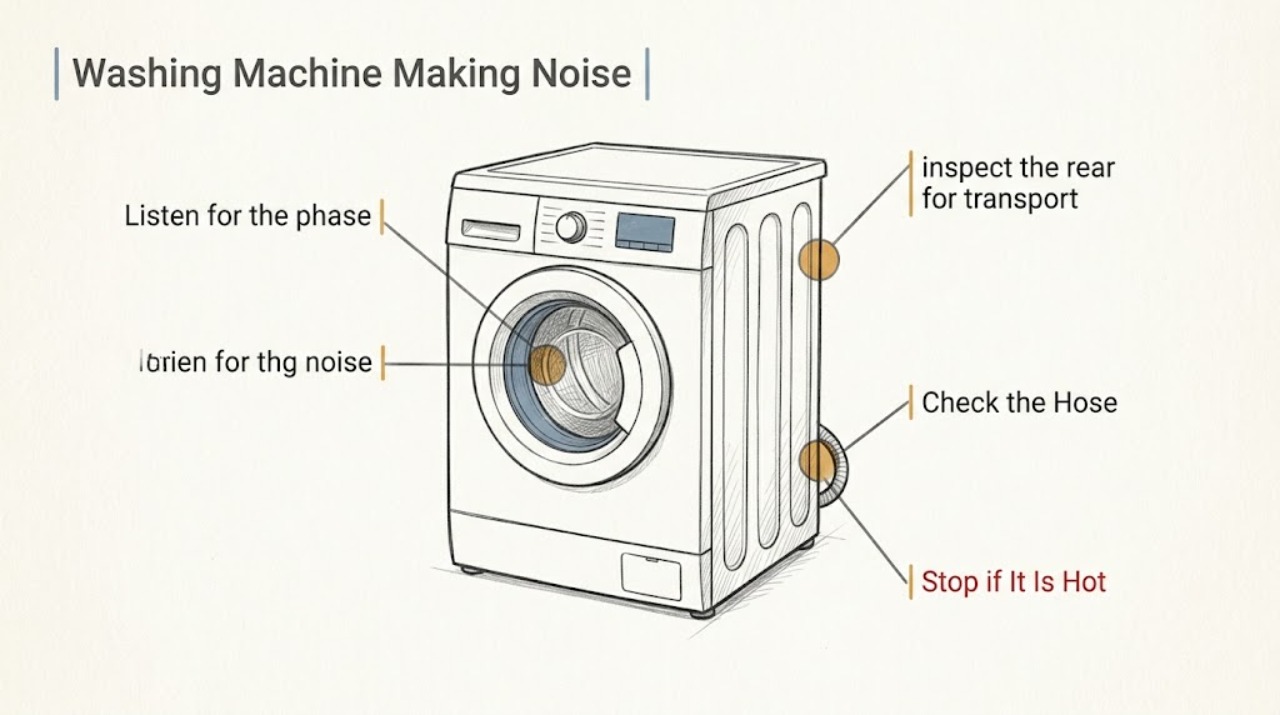
Work through in order
Diagnostic checks
Use only checks that match the exact appliance or system and its official guide.
-
Check 1
Listen for the phase and character of the noise: filling, washing or agitation, draining, spinning, or the transition between stages. Note whether it is a hum, slosh, brief clunk, rhythmic bang, rattle, grinding, or high-pitched sound, and whether the washer otherwise completes the programme.
Expected result: The sound is brief and tied to filling, draining, or a stage change, or it is loud, rhythmic, grinding, or high-pitched and the appliance is not operating normally.
Next step: If the sound is only a normal phase-related noise, monitor it. If it is rhythmic or abnormal, stop the cycle and continue with the load and installation checks.
Why this matters
Why: Beko identifies some humming, whirling, gurgling, slurping, splashing, and brief clunking as normal operating sounds. A persistent or unusual sound with abnormal operation needs further checking rather than repeated cycles.
-
Check 2
If the washer is new or the noise began after moving or installation, inspect the rear for transport safety bolts and check underneath for protective packing, following the installation section of the model manual. Do not run repeated spin cycles while installation hardware remains in place.
Expected result: A transport bolt or protective packing is still present, or all installation materials have been removed.
Next step: If installation material remains, stop and have it removed according to the manual before testing. If the installation is complete, proceed to balance and load checks.
Why this matters
Why: Transport bolts hold the drum during shipping, and Beko says they must be removed for operation. Remaining transport protection can make the machine vibrate or move noisily.
-
Check 3
With the programme stopped, redistribute the laundry so heavy or bulky items are not gathered on one side, remove a few items if the drum is overloaded, and check that the washer is not touching a wall, cabinet, or its rear hoses. Rock the cabinet gently and use a level to check that it stands firmly on all feet.
Expected result: The load is uneven, the cabinet wobbles, a hose or wall is being struck, or the machine is level and clear of surrounding contact.
Next step: Correct only the accessible load, clearance, and foot-level issues described by the manual, then run a short test. If the sound remains with a balanced, stable machine, continue to the drum and filter checks.
Why this matters
Why: Beko links rhythmic banging and vibration to uneven loads, an unlevel appliance, or contact with hoses, walls, or cabinets. A stable cabinet and evenly distributed load remove those common external causes.
-
Check 4
After stopping the machine and handling any remaining water as directed by the manual, inspect the drum for coins, keys, stones, or other hard objects. If the model gives you access to the pump filter, place a bowl or towels below it, drain safely, and check the filter and its cavity for foreign material before refitting it securely.
Expected result: A hard object is in the drum or pump-filter area, the filter is clogged, or both areas are clear.
Next step: Remove only accessible objects, rinse and refit the filter as the model manual specifies, and test with a small balanced load. Do not reach behind panels or dismantle the pump or drive system.
Why this matters
Why: Beko lists foreign objects in the drum and hard material in the pump filter as causes of rattling, grinding, vibration, or drain-related noise. A clear drum and filter make a hidden mechanical fault more likely if the noise persists.
-
Check 5
Run one supervised test with an appropriate balanced load after the accessible checks. Watch for water leaks, drum scraping, a rising high-pitched or grinding sound, burning odor, smoke, unusual movement, or a programme that fails to operate normally.
Expected result: The noise is gone or reduced to normal phase sounds, or it remains loud and abnormal despite a stable, balanced machine with no accessible obstruction.
Next step: If the test is normal, continue using the washer according to its manual. If any safety symptom appears or the unusual noise remains, stop using the machine and arrange qualified service.
Why this matters
Why: Improvement after correcting load, installation, contact, or debris supports that cause. Persistent grinding or high-pitched noise can indicate a worn bearing, drive pulley, or another internal fault that requires a technician to assess.
Use your observations
Decision map
Find the observation that best matches what you see, then follow the next safe action.
-
PATH 01Safety boundary
What you see
The sound is a brief hum, whirling, slosh, gurgle, or clunk during a normal fill, drain, or stage change, and the programme completes normally.
Do this next
Treat it as a normal operating sound and monitor it. Do not add parts or dismantle the washer solely because these phase-related sounds are audible.
Why this path and its safety boundary
Safety stop: Classify the sound as rhythmic, rattling, grinding, high-pitched, or otherwise unusual and continue with the physical checks.
-
PATH 02Safety boundary
What you see
The washer is new or has just been moved, and transport bolts or protective packing may remain.
Do this next
Stop repeated testing and remove the transport materials according to the installation instructions or have the installation corrected before using the washer.
Why this path and its safety boundary
Safety stop: Check the load, cabinet level, rear hoses, and clearance from walls or cabinets.
-
PATH 03Safety boundary
What you see
The noise is rhythmic banging or rattling and changes when the load is redistributed or an accessible object is removed.
Do this next
Use an evenly distributed load within the model's capacity, keep the washer level and clear of contact, and confirm the pump filter is secured after cleaning.
Why this path and its safety boundary
Safety stop: A persistent high-pitched, grinding, or abnormal noise from a stable machine should be treated as an internal fault and escalated.
-
PATH 04Safety boundary
What you see
The noise is accompanied by a leak, burning smell, smoke, severe movement, scraping, or a programme that is not operating normally.
Do this next
Stop the machine, do not continue spin testing, and arrange qualified appliance service. Do not remove cabinet panels or attempt motor, drive, suspension, or electrical repairs.
Why this path and its safety boundary
Safety stop: If one supervised test is quiet after the accessible corrections, return to normal use while monitoring for recurrence.
Helpful context
Understand the symptom
Start with when the sound occurs, not just how loud it seems. A hum or whirling during drainage, a slosh while filling, and a brief clunk as the machine changes stages can be normal when the washer is operating normally. A rhythmic bang that follows drum rotation is more often related to load distribution, a loose object, installation, or the machine touching something around it.
Use only checks that are accessible from the outside. Stop the programme before reaching into the drum or opening the pump-filter area, and expect water if the filter is opened. Do not remove cabinet panels or attempt to repair the motor, drive system, suspension, or electrical parts yourself.
The exact control names and filter arrangement vary by Beko model. Use the model's manual whenever it differs from the general sequence below, especially for draining residual water and adjusting the feet.
When checks do not resolve it
Need a professional?
Stop the machine for persistent grinding, high-pitched, scraping, or abnormal noise, and stop immediately for a leak, burning smell, smoke, or severe movement.
Have this ready
- Provide the model number, the noise type and cycle phase, whether the machine was recently installed or moved, whether the drum and pump filter were checked, and any leak or error symptom.
Common questions
FAQ
Is a humming or sloshing sound normal on a Beko washing machine?
It can be normal when it occurs during filling or draining and the washer otherwise operates normally. Beko describes humming, whirling, gurgling, slurping, splashing, and some brief stage-change clunks as normal operating sounds. A sound that is unusually loud, persistent, or paired with abnormal operation needs checking.
Why does my Beko washer bang during spin?
A rhythmic bang can come from an uneven or bulky load, an object in the drum, the washer touching a hose, wall, or cabinet, or an unlevel cabinet. Stop the cycle, redistribute the load within capacity, inspect accessible objects, check clearance, and confirm that the machine stands level on all feet.
What should I check if a new Beko washing machine is noisy?
Check whether the transport safety bolts and protective packing were removed during installation, then check the machine's level and load distribution. Do not keep testing with transport materials installed; follow the model's installation instructions or arrange installation help.
When should a noisy Beko washing machine be serviced?
Arrange qualified service for a persistent grinding or high-pitched noise, or for noise accompanied by leaking, smoke, a burning smell, scraping, severe movement, or abnormal operation after the safe external checks. Do not remove panels or attempt internal drive, suspension, motor, or electrical repairs.
Read the exact guide
Official sources
- TroubleshootingBeko · Official Beko owner guide for the covered front-loading washer model; controls and parts access vary by model.
- My washing machine makes loud noises? How do I fix a noisy washing machine?Beko · Beko washing machine noise FAQ covering drainage, rattling, banging, knocking, clunking, and loud noises.
- How to fix a washing machine that's shaking or vibratingBeko · Beko guidance for shaking or vibration caused by transport materials, leveling, load distribution, and pump-filter obstructions.
- How to fix a noisy washing machineBeko UK · Beko UK guidance for loud washing-machine noises, including load, leveling, foreign objects, pump filter, and professional service boundaries.
Community feedback
Share a repair observation
Share a plain-text repair observation. Accepted observations are published automatically; this page may take a moment to update.