
On this page
Start here
Quick answer
An ASKO washing machine making noise should be diagnosed by when the sound occurs and whether the machine is stable. Rattling during draining can point to a foreign object in the accessible pump-filter path; knocking or walking during spin is more consistent with an uneven load or an unstable installation. Stop the cycle and arrange qualified service for grinding, scraping, a burning smell, leaks, severe movement, or noise that remains after safe external checks. Do not remove cabinet panels or reach under the machine while it is connected.
Work through in order
Diagnostic checks
Use only checks that match the exact appliance or system and its official guide.
-
Check 1
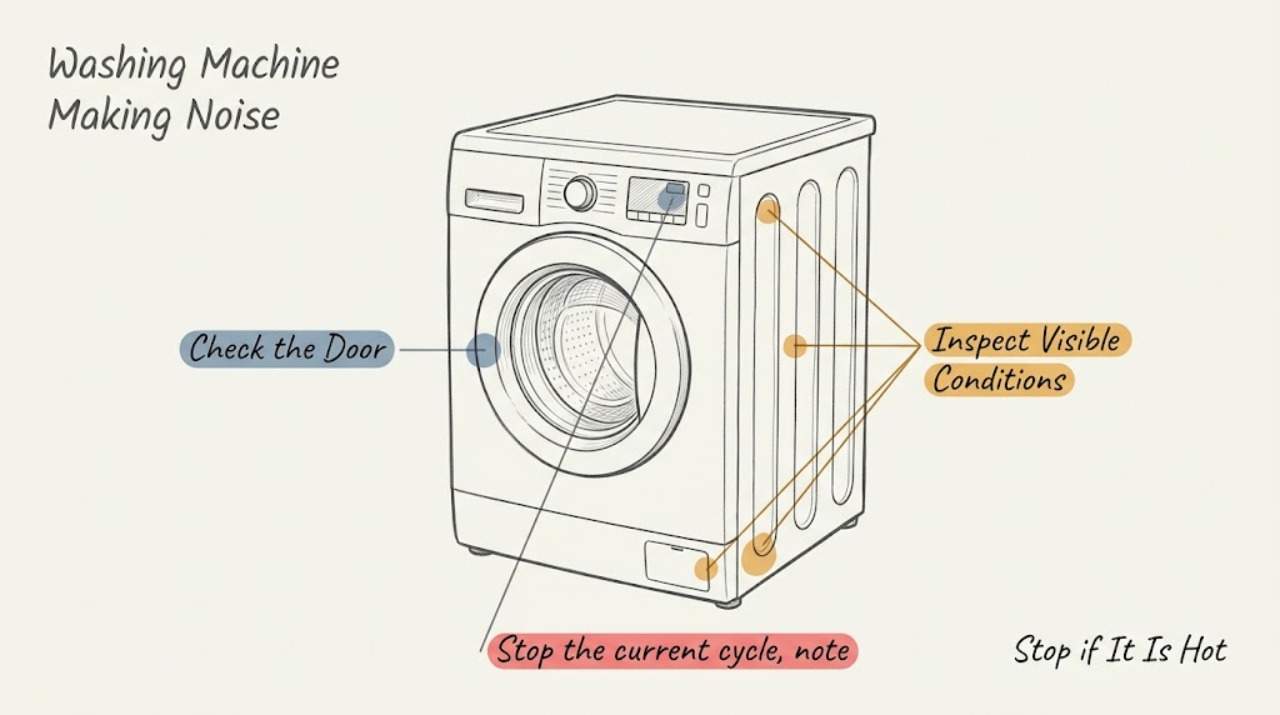
Stop the current cycle, note whether the sound occurs during filling, washing, draining, or spin, and identify whether it is a rattle, single knock, repeated thump, scrape, or grinding sound.
Expected result: The sound is limited to draining, appears when spin speed rises, follows the load as it tumbles, or occurs continuously with scraping or grinding.
Next step: Use the matching branch below and do not keep running the washer to reproduce a severe sound. For scraping, grinding, smoke, or an electrical burning smell, stop and arrange service immediately.
Stop if: Stop at once for severe movement, a leak, smoke, burning odor, exposed wiring, or a sound that suggests metal-on-metal contact.
Why this matters
Why: Timing narrows the next check: drain-stage rattling makes the pump-filter path relevant, while spin-stage knocking makes load balance and stability relevant. Continuous scraping or grinding is not a normal adjustment issue.
-
Check 2
When the washer is stopped and the load is safe to handle, open the door and check whether one heavy item is wrapped around several smaller items or the drum is packed unevenly; redistribute the load loosely without exceeding the model capacity.
Expected result: A single bulky item or tightly gathered load is present, the load is reasonably mixed and loose, or the washer makes the same noise with no laundry.
Next step: Run one normal, balanced load at the documented program. If the washer still knocks or walks, stop using it and inspect stability or arrange service; do not add weight to force balance.
Stop if: Do not reach into a moving drum, run a cycle with a damaged door seal, or continue if the washer moves sharply or leaks.
Why this matters
Why: ASKO's balance control detects uneven distribution and reduces spin-related noise and mechanical stress. A one-sided or bulky load can therefore create knocking that changes when the load is redistributed; the same noise with no laundry points away from load balance.
-
Check 3
With the machine off, observe whether the washer stands level and stable on the floor, whether it rocks when gently pressed at the upper frame, and whether it is contacting a wall, cabinet, or adjacent appliance.
Expected result: The cabinet rocks or visibly leans, a gap has closed against nearby surfaces, or the washer is stable with clearance.
Next step: If the washer is unstable or built into a tight space, stop high-speed cycles and have the installation checked by an installer or qualified service technician. If it is stable and clear, continue to the drain-path check for a drain-stage rattle.
Stop if: Do not reach underneath, loosen feet hardware on an occupied or built-in installation, or drag a heavy washer to reposition it by yourself.
Why this matters
Why: ASKO installation instructions state that leveling the washer and securing the adjustable-foot lock nuts reduces noise, vibration, and movement during spin. Contact with surrounding surfaces can transmit otherwise minor vibration as a loud knock.
-
Check 4
If the sound is a rattle during draining and your exact ASKO manual identifies a user-accessible pump filter, make the washer powerless and let the water cool before preparing towels and a shallow container for residual water; inspect the filter only as that manual directs.
Expected result: The filter path contains a visible coin, button, lint, or other foreign object, or it is clear and the rattle remains.
Next step: Remove only loose, reachable debris permitted by the model manual, refit the filter and cover securely, and run one supervised drain check. If the rattle remains, water leaks, or access is uncertain, stop and arrange service.
Stop if: Do not open the filter if the washer cannot be made powerless, water is hot, the cover is damaged, or the manual does not authorize user access; do not use sharp tools or reach into a moving pump.
Why this matters
Why: ASKO service guidance says foreign objects in the pump filter can cause strange or rattling sounds and that residual water can escape during cleaning. A clear filter shifts attention to the pump, drain path, or another mechanical source that needs service.
-
Check 5
After one supervised cycle with a balanced load and clear surroundings, observe whether the noise is gone, reduced only at lower speed, or unchanged and accompanied by a leak, error, or drum roughness.
Expected result: The washer is quiet and stable, the noise returns only at spin, or the washer makes the same harsh sound regardless of load and speed.
Next step: Stop using the washer for persistent or harsh noise and give a qualified technician the sound timing, load condition, movement, water behavior, and any displayed fault information.
Stop if: Do not remove panels, spin the drum with access covers removed, test live circuits, or replace suspension, bearings, pump, or motor parts from the noise description alone.
Why this matters
Why: Improvement after redistribution or filter cleaning supports an operating-condition cause. A persistent or speed-related harsh sound can involve suspension, bearings, drive, drum, pump, or installation hardware and cannot be safely identified by sound alone.
Use your observations
Decision map
Find the observation that best matches what you see, then follow the next safe action.
-
PATH 01Next step
What you see
The noise is a knock or walking movement during spin, and the load is uneven or the washer rocks.
Do this next
Stop the cycle, redistribute the load, and have the washer leveled and its installation checked if movement returns. Do not continue high-speed cycles while it is unstable.
-
PATH 02Next step
What you see
The sound is a rattle during draining and foreign material is visible in the model-approved pump-filter path.
Do this next
Make the washer powerless and cool, follow the exact manual's filter-access procedure, remove only permitted loose debris, refit the filter securely, and arrange service if the sound or leak remains.
-
PATH 03Next step
What you see
The washer is stable, the load is balanced, and the same scrape, grind, or harsh noise remains.
Do this next
Stop using the washer and arrange qualified appliance service for the drum, pump, drive, suspension, or bearing diagnosis. Do not attempt cabinet disassembly.
-
PATH 04Next step
What you see
Noise is accompanied by a leak, smoke, electrical burning odor, damaged cord, severe movement, or a repeated error.
Do this next
Stop the cycle and keep clear. If safe to do so, leave the appliance disconnected using its normal accessible control or isolation point, then arrange qualified appliance or electrical service; do not investigate inside the cabinet.
Helpful context
Understand the symptom
Locate the noise before changing anything
A short pump sound, a steady motor hum, and a brief spin ramp can be normal, but a new rattle, repeated knock, scrape, or grinding sound needs a different path. Note whether the sound happens while filling, draining, tumbling, or spinning, and whether the cabinet stays still. ASKO's balance and suspension features reduce vibration during spin, so a machine that suddenly walks or bangs should not be left to run unattended.
Keep the inspection external
The safe checks below use the controls, load, visible installation position, and model-approved pump-filter access only. Do not remove the top or rear cover, reach beneath the cabinet, test energized wiring, or try to repair the motor, suspension, drum, or pump itself.
Safety boundary
Stop conditions
- Smoke, electrical burning odor, exposed or damaged wiring, a damaged cord, a leak near electrical parts, or severe uncontrolled movement: stop the cycle, keep clear, and arrange qualified service.
- Persistent scrape, grind, harsh knock, or noise after a balanced load and stable installation check: stop using the washer and arrange professional diagnosis.
- Do not remove panels, reach underneath, test energized circuits, or replace a pump, motor, suspension, bearing, or drum component from sound alone.
Only after diagnosis
Potential parts
- washing-machine drain pump
Consider this category only if qualified diagnosis links a drain-stage rattle or poor draining to the pump after the accessible filter path is clear.
Confirm the complete washer model and manufacturer fit information before selecting any component; do not infer compatibility from noise alone. - washing-machine suspension component
Consider this category only if qualified diagnosis finds abnormal spin movement after load distribution and installation stability are verified.
Suspension components are model-specific and require qualified installation; do not order or install from a knocking sound alone.
When checks do not resolve it
Need a professional?
Arrange qualified ASKO appliance service when noise remains after a balanced load, stable clearance, and any model-approved pump-filter check; when the washer walks or bangs during spin; when the sound is scraping or grinding; or when noise is accompanied by a leak, error, smoke, or burning odor. Tell the technician when the sound occurs, what it sounds like, whether the drum was loaded, and whether the cabinet moved.
Common questions
FAQ
Why does my ASKO washing machine bang during spin?
A one-sided or bulky load and an unstable or unlevel installation are the first safe checks. Redistribute the load and observe whether the washer rocks or contacts nearby surfaces. If banging or walking returns, stop high-speed cycles and arrange service or installation correction.
What can cause a rattling sound while an ASKO washer drains?
ASKO service guidance points to foreign objects in the pump-filter path as one possible cause. Only access that filter if your exact manual permits it, the washer is powerless and cool, and you can safely contain residual water; otherwise arrange service.
When is ASKO washer noise a service problem?
Arrange service for persistent scraping or grinding, severe movement, noise with a leak or error, smoke, burning odor, or noise that remains after a balanced load, stable installation, and any model-approved filter check. Do not remove panels or test internal components.
Read the exact guide
Official sources
- Laundry CatalogueASKO · Applicable as ASKO manufacturer technical context for washing-machine spin balance and noise; exact model documentation takes precedence.
- Washing machine W2096P.WASKO · Applicable only as general ASKO product context; use the exact model's support manual for diagnosis.
- Logic Washer Install InstructionsASKO · Applicable to ASKO Logic washing-machine installation; exact model instructions take precedence.
- Hoe maak ik het filter van de wasmachine schoon?ASKO Service · Applicable to ASKO washers with a user-accessible pump filter; use the exact model manual for access and cleaning instructions.
Community feedback
Share a repair observation
Share a plain-text repair observation. Accepted observations are published automatically; this page may take a moment to update.