
On this page
Start here
Quick answer
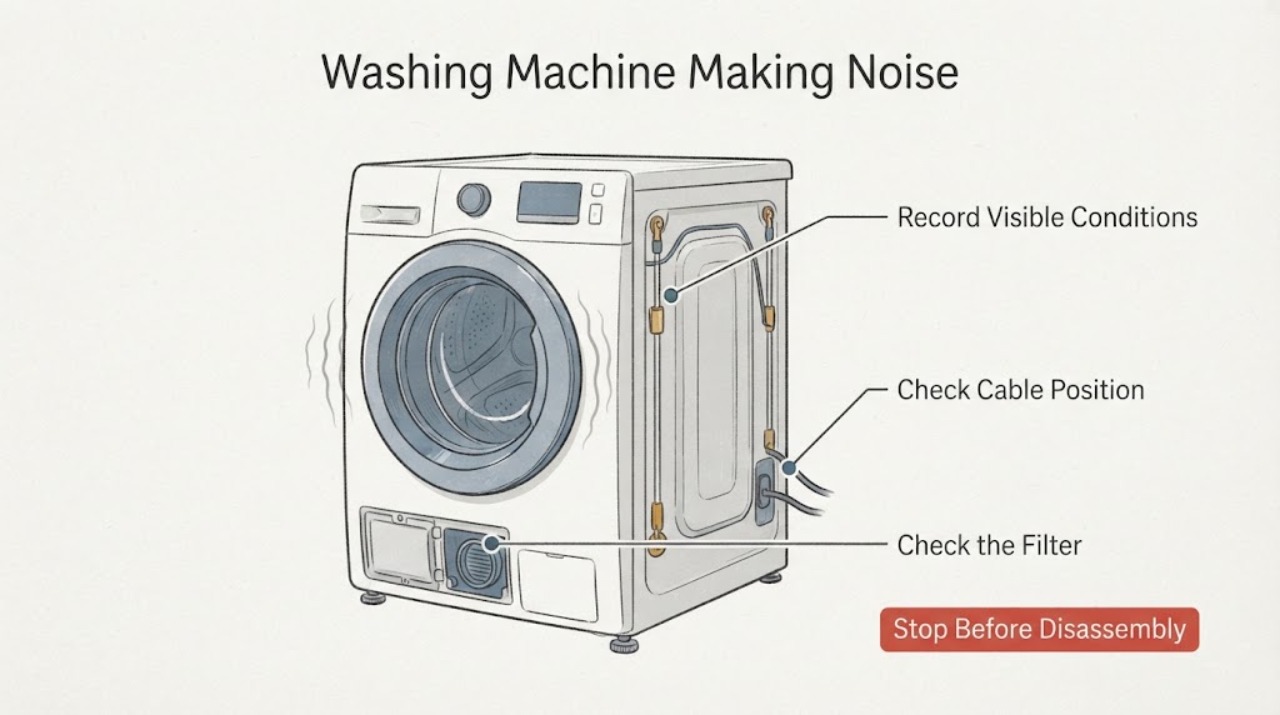
First note when the noise occurs: a low hum, water slosh, and faster spin sound can be normal, but sudden grinding, scraping, repeated banging, or loud clicking needs a check. Stop the Hoover washing machine and disconnect it before inspecting accessible areas. Check for coins or other loose items in the drum and door seal, then use the model instructions to inspect the pump filter if the noise is strongest while draining. If the noise began after installation or a move, confirm the transit system was removed; if the machine walks or bangs during spin, check load balance, all four feet, clearance, and installation. Stop immediately for severe impact, metal-on-metal scraping, leakage near electricity, burning smell, smoke, sparks, overheating, or a repeated breaker trip, and arrange qualified service.
Work through in order
Diagnostic checks
Use only checks that match the exact appliance or system and its official guide.
-
Check 1
Stop the machine and identify the sound without putting hands near moving parts. Note whether it is a gentle hum or water slosh, a whistling sound, a rattle or tapping, grinding or scraping, a pump-like chatter, or repeated banging. Record whether it occurs during filling, wash movement, draining, or spin.
Expected result: The sound is mild and occurs at a normal stage, or it is sudden, loud, metallic, repetitive, or associated with movement.
Next step: For a harsh, metallic, or worsening sound, leave the machine off and continue only with cool, unplugged visual checks. For a mild sound that matches the model's normal operation, monitor one complete cycle and stop if it changes.
Why this matters
Why: Hoover describes some motor, water, and spin sounds as normal, but a new or much louder sound narrows attention to an obstruction, balance or installation issue, pump path, or mechanical fault.
-
Check 2
With the machine off and unplugged, remove laundry and inspect the drum holes, door seal, and accessible space around the door for coins, keys, bra wire, hair clips, buttons, or other loose objects. Do not spin the drum forcefully or reach behind the tub.
Expected result: A loose item is visible in the drum or seal, or the accessible area is clear but the noise remains.
Next step: Remove only an object that is loose and safely reachable. If the sound is grinding or scraping with an empty drum, stop using the machine and arrange service rather than removing panels or trying to retrieve a hidden object.
Why this matters
Why: Small objects can tap in the drum, catch at the seal, or travel to the pump. A clear visible area does not rule out an object in the pump or a mechanical problem.
-
Check 3
If the noise is loudest during draining or the machine stops with water inside, follow the exact model manual for the accessible pump-filter procedure. Keep the machine unplugged, prepare for residual water, and stop if water approaches the plug, outlet, or other electrical equipment; do not open a filter against a full tub without the model's drain procedure.
Expected result: The filter contains a coin, key, lint, or other debris; the filter is clear; or water cannot be safely controlled.
Next step: Clean and refit the accessible filter only as the model instructions describe, then perform one supervised drain or spin check. If the noise remains, water leaks, or the filter cannot be opened safely, leave the machine off and arrange service.
Why this matters
Why: Hoover says foreign objects can interfere with the drain pump and make a loud noise while the machine spins or empties water. A clear filter with persistent noise keeps the pump or another internal fault in scope.
-
Check 4
For banging, walking, or strong vibration during spin, stop the cycle and redistribute the load. Avoid a single heavy item or a very small load, and do not exceed the model's load guidance. With power off, check that the machine has clearance and that all four adjustable feet contact the floor without rocking.
Expected result: The load was clumped or too small, the cabinet rocks or a foot is not planted, or the load and feet appear stable but banging continues.
Next step: Correct only the load arrangement and accessible leveling condition described by the manual. If the machine still moves or bangs, stop spin testing and arrange service; do not add weight to mask a mechanical fault.
Why this matters
Why: Hoover links an unbalanced load with failed or noisy spin behavior. A machine that rocks, or bangs with a balanced load, may have a leveling, suspension, drum, or installation problem.
-
Check 5
If the noise began immediately after installation, delivery, or a move, inspect the rear installation area without removing covers. Compare the model instructions with the visible transit-bolt or transport-protection arrangement; these must be removed before normal use, while they should be refitted for transport.
Expected result: Transit protection is still installed, was removed correctly, or the installation state cannot be confirmed.
Next step: If the installation is uncertain, stop use and have the installer or qualified service confirm the model-specific setup. Do not improvise with missing hardware or reach inside the cabinet.
Why this matters
Why: Hoover warns that transit bolts left in place can make the machine very noisy, move excessively during spin, and lead to product damage. A machine used after an uncertain installation should not be repeatedly run for diagnosis.
-
Check 6
Run no further test if the machine has severe impact, metal-on-metal scraping, a persistent rumble that increases with spin, leakage, a burning smell, smoke, sparks, unusual heat, a damaged cord, or a breaker that trips again. Otherwise, after the safe checks, observe one short model-supported cycle from a dry location and note the exact stage at which the noise returns.
Expected result: The noise disappears after the load, obstruction, filter, feet, or installation issue is corrected, or it returns with an otherwise empty and stable machine.
Next step: Stop using the machine and provide the recording, cycle stage, model number, and recent installation or move history to qualified service. Do not remove panels or run repeated cycles to confirm an internal fault.
Why this matters
Why: A resolved external cause supports continued monitored use. Persistent noise with a balanced load and clear accessible paths suggests bearings, suspension, motor, belt, pump, or another internal issue.
Use your observations
Decision map
Find the observation that best matches what you see, then follow the next safe action.
-
PATH 01Next step
What you see
The sound is a mild hum, water slosh, or faster spin sound that matches the model's normal cycle.
Do this next
Monitor one cycle without touching moving parts. Stop if the sound becomes sudden, loud, metallic, or associated with leakage or heat.
Why this path and its safety boundary
Why it matters: The sound may be normal operation rather than a fault.
-
PATH 02Next step
What you see
A rattle or tapping is heard with laundry moving, and a coin, key, wire, or other loose object is visible in the drum or door seal.
Do this next
With the machine unplugged, remove only the loose accessible object. If the sound continues with an empty drum, arrange service.
Why this path and its safety boundary
Why it matters: A loose object is a plausible source and may damage the drum, seal, or pump if left in place.
-
PATH 03Next step
What you see
The loudest noise occurs while draining or spinning with water, and the accessible pump filter contains debris.
Do this next
Follow the exact manual filter and residual-water procedure, then make one supervised check. Stop if water cannot be controlled or the noise remains.
Why this path and its safety boundary
Why it matters: The debris may be interfering with the drain pump.
-
PATH 04Next step
What you see
The cabinet rocks, walks, or bangs during spin, especially with a single heavy item, very small load, or clumped laundry.
Do this next
Stop and redistribute the load; verify all four feet are planted and the machine has clearance. Use service if movement continues with a balanced load.
Why this path and its safety boundary
Why it matters: Load imbalance or an unlevel installation is the first low-risk explanation.
-
PATH 05Next step
What you see
The noise began after installation or relocation and the transit protection may still be fitted.
Do this next
Do not keep running the machine. Have the installation checked against the model instructions and remove or refit transport hardware only through the proper installation procedure.
Why this path and its safety boundary
Why it matters: Transport hardware may be restraining the suspension and causing excessive vibration or damage.
-
PATH 06Next step
What you see
The machine makes persistent grinding, metal scraping, worsening rumbling, severe banging, or noise with an empty stable drum.
Do this next
Leave the machine off and arrange qualified service. Do not open the cabinet or keep running cycles to see whether the fault worsens.
Why this path and its safety boundary
Why it matters: An internal pump, bearing, suspension, motor, belt, or drum fault remains possible.
-
PATH 07Next step
What you see
There is leakage near electrical equipment, a burning smell, smoke, sparks, unusual heat, a damaged cord, or a breaker trips again.
Do this next
Keep away from the appliance if there is fire or electrical danger. Isolate power only when the path is dry and safe, do not reset repeatedly, and arrange qualified appliance or electrical service.
Why this path and its safety boundary
Why it matters: This is an immediate stop condition and not a routine noise check.
Helpful context
Understand the symptom
Use the cycle stage as the first clue
A noise heard only while filling or washing points toward water flow, a loose item, or normal motor operation. A noise that begins as the machine drains makes the pump and filter more relevant. Repeated banging or movement during spin points first to load distribution, feet, clearance, or transit protection. A rumble that grows with spin speed, or grinding that remains with an empty drum, is a reason to stop and arrange service rather than keep testing.
Keep a noisy washer within a safe boundary
Turn the appliance off and disconnect it before examining the drum, seal, rear installation area, or filter. Do not reach into a moving drum, remove panels, test live wiring, or continue a cycle to reproduce a harsh noise. Water near the plug or outlet, a burning smell, smoke, sparks, unusual heat, or a breaker that trips again changes the problem from routine noise diagnosis to an immediate stop and service call.
Safety boundary
Stop conditions
- Stop immediately for smoke, fire, sparks, a burning smell, severe heat, a damaged cord, water near the plug or outlet, or a breaker that trips again.
- Stop for severe banging, metal-on-metal scraping, a worsening rumble, or movement that continues after a balanced load and safe foot check.
- Disconnect the machine before examining the drum, seal, rear installation area, or pump filter; do not reach into a moving drum or probe live wiring.
- Do not remove cabinet panels, defeat safety devices, improvise transport hardware, or keep running cycles to confirm an internal fault.
Only after diagnosis
Potential parts
- drain pump or pump filter assembly
Only consider this after a qualified diagnosis confirms that the accessible filter and drain path are clear but the pump remains noisy or fails to move water.
Confirm the complete Hoover product code and manufacturer fit information before ordering; debris noise alone does not identify a replacement pump. - suspension damper or spring
Only consider this when a balanced load, planted feet, correct clearance, and confirmed transport-bolt removal still leave severe movement and a qualified inspection identifies suspension wear.
Match the exact model and use a qualified diagnosis; do not add parts to mask an unlevel floor or transport error. - drum bearing or support assembly
Only consider this when a qualified technician confirms persistent rumbling or grinding that increases with spin and is not caused by a loose object, load, filter, or installation.
The repair scope varies substantially by model; verify the model and diagnosis before ordering any component.
When checks do not resolve it
Need a professional?
Arrange qualified Hoover appliance service when noise persists with an empty or balanced drum, the pump filter is clear but draining remains loud, the machine continues to walk after a safe leveling check, transit protection or installation is uncertain, or the sound suggests bearings, suspension, motor, belt, drum, or another internal part. Use an electrician when the outlet, cord, household circuit, or repeated breaker trip is implicated.
Have this ready
- The complete Hoover model or product code and whether it is a washer or washer dryer
- A short description or recording of the noise and the exact cycle stage when it occurs
- Whether the sound began after delivery, installation, relocation, or a particular load
- Whether the drum, seal, pump filter, feet, load balance, and transit protection were checked
- Any water leak, error display, unusual heat, smell, smoke, spark, damaged cord, or breaker event
Common questions
FAQ
Why is my Hoover washing machine making a banging noise on spin?
Stop the cycle and check for a clumped or single heavy load, a rocking cabinet, feet that do not all contact the floor, or transit protection left after installation. If banging continues with a balanced load and stable machine, arrange service.
Why does my Hoover washer make noise when draining?
Coins, keys, lint, or another foreign object can interfere with the pump. With power disconnected and water safely controlled, follow the exact model procedure to inspect the accessible pump filter. If it is clear but the noise remains, use qualified service.
Are some Hoover washing-machine noises normal?
A gentle motor hum, water movement, cycle-change clicks, and a faster spin sound can be normal. A noise that is sudden, much louder than usual, metallic, repetitive, or worsening needs investigation and may require service.
Can transit bolts cause a Hoover washer to be noisy?
Yes. Hoover warns that transport bolts left fitted before use can make the appliance very noisy, move excessively during spin, and lead to damage. If installation is uncertain, stop using it and have the setup checked against the model instructions.
When should I stop using a noisy Hoover washing machine?
Stop for severe banging, metal scraping, worsening rumbling, leakage near electricity, a burning smell, smoke, sparks, unusual heat, a damaged cord, or a breaker that trips again. Do not keep running cycles or open the cabinet; arrange qualified service.
Read the exact guide
Official sources
- Have you removed the transit bolts?Hoover Advice Centre · Hoover washing-machine transit-bolt installation and excessive-noise warning
- Watch our helpful videoHoover Advice Centre · Hoover washing-machine installation and transit-bolt component guidance
- Hoover Washing Machine VisionHD 8 VHD822 Instruction ManualHoover · Hoover washing-machine filter cleaning, unbalanced load, leveling, transit brackets, and troubleshooting boundaries for the documented model family
- NoisyHoover Advice Centre · Hoover washer pump-filter debris, unbalanced-load, and noise troubleshooting guidance
- Why Is My Washing Machine Noisy?Hoover Home – Hoover UK · Hoover washing-machine normal sounds, grinding, banging, clicking, spin noise, load balance, and professional-service guidance
- Jumping and vibrating when spinningHoover Advice Centre · Hoover washer transit-bolt and spin-vibration guidance
Community feedback
Share a repair observation
Share a plain-text repair observation. Accepted observations are published automatically; this page may take a moment to update.