
On this page
Start here
Quick answer
First match the sound to the moment it occurs. A short rattle or thud when cubes fall into the bin, a brief motor sound during harvest, and ordinary fan hum can be normal. A drilling-like sound that gets louder when the ice maker runs without a water supply should be stopped by switching the ice maker off. Continuous tapping or rattling, a sound that changes with the doors, or a noise that persists with poor cooling needs LG service rather than a guessed part replacement.
Before you begin
Safety first
- Keep hands, tools, and loose clothing away from the ice-maker mechanism and fans. Do not remove covers, open sealed refrigeration components, or work on energized wiring. If the refrigerator must be moved or leveled, use two or more people or arrange service.
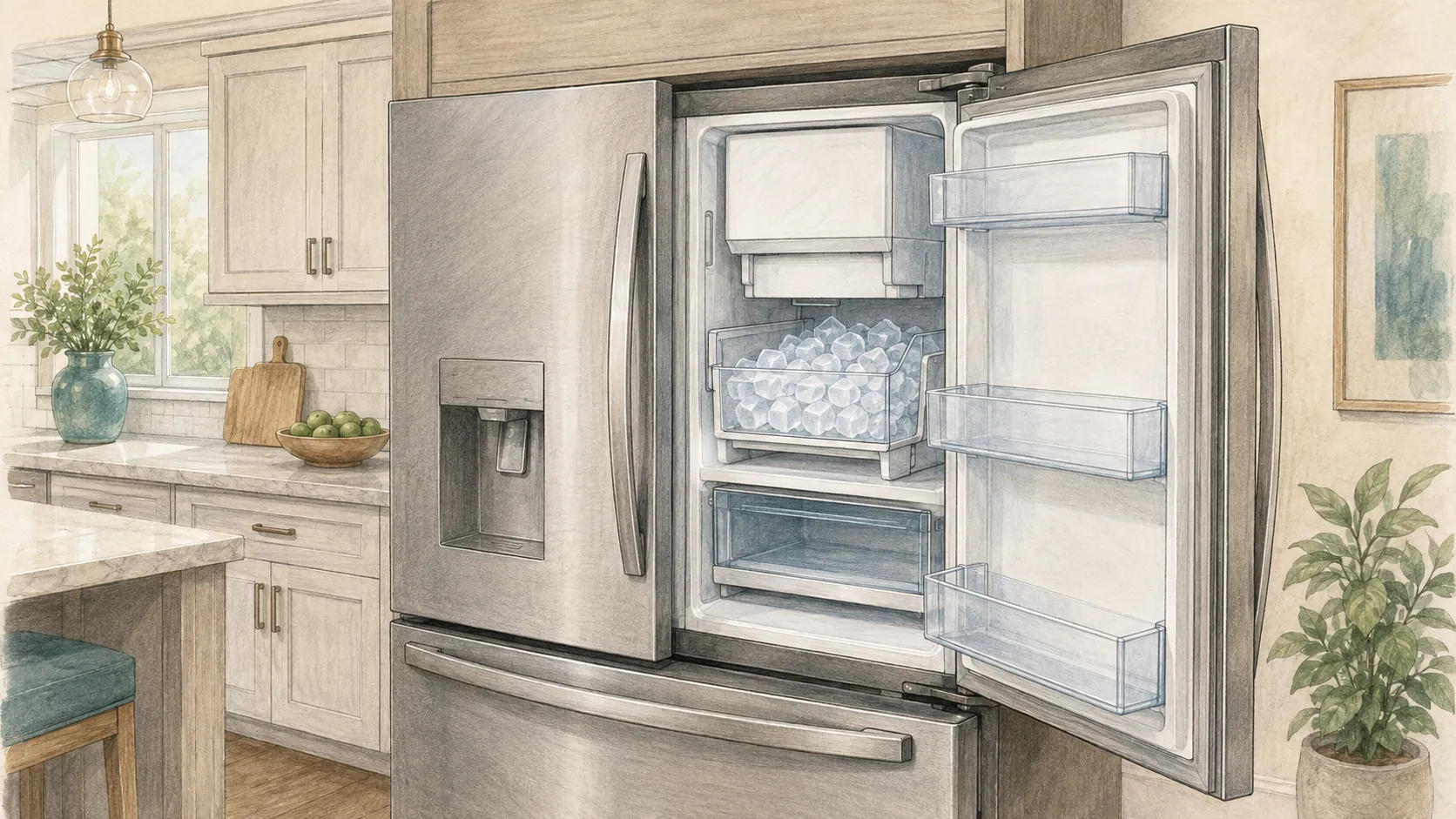
Work through in order
Diagnostic checks
Use only checks that match the exact appliance or system and its official guide.
-
Check 1
Listen once during a normal ice-making event and record the sound, its location, and what operation starts it: cube drop, water fill, harvest motor, fan run, or an ongoing vibration.
Expected result: The sound is a short rattle or thud exactly when cubes fall, a brief crack/click/drip as temperatures change, a motor or fan hum, or a continuous drilling, tapping, grinding, or rattling sound.
Next step: Continue to the water-supply and door-state checks if the sound is loud, new, continuous, or difficult to match to one normal event. Do not remove covers or reach into the mechanism while it is operating.
Why this matters
Why: A timed sound tied to cube drop, thermal change, or ordinary motor/fan operation is more consistent with normal operation. A continuous or worsening sound needs a separate check and should not be labelled normal only because it comes from the ice-maker side.
-
Check 2
Check whether the ice maker has a connected water supply. If the refrigerator is not connected to water, switch the ice maker to OFF (O) using the normal control; leave it off until the water connection is available.
Expected result: The drilling or vibration occurs while the ice maker is running without water, or the sound does not depend on a dry ice-making cycle.
Next step: Keep the ice maker off when there is no water supply and reassess after the supply is correctly available. If an unusually loud knock or tap occurs when water is supplied, request LG support instead of tightening or opening the rear water system yourself.
Why this matters
Why: LG says the ice-maker motor can become louder when it runs dry, and a water-valve vibration can be amplified when the ice maker is on without a water supply. That pattern points to an operating-state issue rather than proof that a motor or valve must be replaced.
-
Check 3
With hands and tools away from the appliance, note whether the noise changes when a refrigerator door is opened and then closed during the same operating condition.
Expected result: The noise stops while the door is open and returns when the door is closed, or it continues unchanged regardless of the door position.
Next step: Arrange LG service for a door-dependent noise, especially if it is continuous or accompanied by cooling trouble. Do not reach through the fan area or remove an internal cover to confirm the source.
Why this matters
Why: LG identifies a noise that stops with the doors open and returns when they close as likely fan noise requiring service. A sound that is unchanged by the door state is less specifically tied to that fan clue and must be matched to its timing and location.
-
Check 4
Check only accessible installation points: make sure the refrigerator is not touching a wall or cabinet, nothing is resting on top or against its sides, and loose bins, shelves, or containers are not touching one another.
Expected result: The noise changes when an external contact or loose item is removed, or the refrigerator remains noisy while it is stable and clear of surrounding contact.
Next step: Leave the appliance in a stable position and monitor one normal ice-making cycle after clearing the contact. If leveling or moving is necessary, use two or more people or arrange service; do not tilt or move the refrigerator alone.
Why this matters
Why: LG explains that an unlevel installation, contact with nearby surfaces, or items touching inside the cabinet can amplify normal compressor, fan, or water-valve vibration. If clearing those contacts does not change the sound, installation contact is less likely to be the cause.
-
Check 5
After the accessible correction, compare the next sound with the original pattern and check whether the refrigerator is still cooling normally; record any repeated or worsening change.
Expected result: The sound occurs only at the expected ice-drop or operating event and settles, or it remains continuous, becomes louder, includes grinding, or occurs with poor cooling.
Next step: Stop troubleshooting and request LG or qualified appliance service for a persistent or worsening noise, especially when cooling is affected. Provide the model number, sound description, timing, water-supply status, door-state result, and installation checks.
Why this matters
Why: A sound that follows a documented normal cycle is more likely an operating sound. Persistence, abnormal motor noise, or cooling loss leaves a fan, compressor, frost, water-line, or other component issue unresolved and cannot identify a safe replacement part by symptom alone.
Use your observations
Decision map
Find the observation that best matches what you see, then follow the next safe action.
-
PATH 01Next step
What you see
The sound is a short rattle or thud only as ice falls into the bin, and its volume varies with the amount of ice in the bin.
Do this next
Continue normal operation and monitor for a new continuous, grinding, or door-dependent sound.
-
PATH 02Next step
What you see
A drilling-like motor sound appears during the ice-maker harvest period, becomes louder while the ice maker runs without a water supply, and improves when the ice maker is switched off.
Do this next
Keep the ice maker off until a proper water supply is available. If the sound remains with the supply available or returns as an unusually loud knock or tap during filling, arrange LG service.
-
PATH 03Next step
What you see
The sound stops when the refrigerator doors are open and returns when they close, or continuous tapping/rattling remains near a fan area.
Do this next
Stop at observation and request service for a proper diagnosis. Do not remove fan covers or attempt to clear a hidden obstruction while the appliance is energized.
-
PATH 04Next step
What you see
The sound is unchanged after surrounding contact and loose-item checks, becomes louder or grinding, or occurs together with poor cooling.
Do this next
Stop troubleshooting and contact LG or qualified appliance service with the recorded pattern. Do not choose a replacement part from the noise description alone.
Helpful context
Understand the symptom
What the timing and sound can tell you
The useful clue is not volume by itself. Note whether the sound happens as ice drops, while water enters the ice maker, during the motor's harvest period, when a fan is running, or continuously between ice-making events. Also note whether it is a short event or a repeating sound and whether opening a refrigerator door changes it. Those observations separate an expected cycle from a fan, water-line, installation, or service symptom.
Do not diagnose a part from the word noisy
The same LG refrigerator can make several normal sounds as it cools and makes ice. Use the checks below to record the sound pattern and stop at the accessible boundary. A service technician can use the model number, the recording or description of the sound, its timing, and the checks you completed to choose the correct diagnosis.
When checks do not resolve it
Need a professional?
Request LG or qualified appliance service when the noise is continuous, worsening, grinding, door-dependent, accompanied by poor cooling, or remains after the documented accessible checks. Also request support for an unusually loud knock or tap when water is supplied to the ice maker.
Safety scope: Keep hands, tools, and loose clothing away from the ice-maker mechanism and fans. Do not remove covers, open sealed refrigeration components, or work on energized wiring. If the refrigerator must be moved or leveled, use two or more people or arrange service.
Have this ready
- Provide the refrigerator model number, the sound description, where it is heard, when it starts, whether it changes with the doors, the water-supply status, whether switching the ice maker off changes it, and whether cooling remains normal.
Common questions
FAQ
Is a rattling sound from an LG ice maker always a failure?
No. A short rattle or thud that occurs when ice falls into the bin is described by LG as normal, and its volume can vary with the amount of ice in the bin. A continuous or worsening rattle needs a separate diagnosis.
Why does the LG ice maker make a drilling or motor sound?
The ice maker has a motor that moves cubes from the freezing tray to the bin during harvest. LG says this is a normal operating event, but the sound can become louder when the ice maker runs without a water supply; switch the ice maker off if it is not connected to water.
When should I stop troubleshooting an LG ice-maker noise?
Stop and request service when the sound is continuous, door-dependent, grinding, unusually loud during water fill, accompanied by poor cooling, or unchanged after the accessible water-supply and installation checks. Do not remove covers or order a part from the symptom alone.
Read the exact guide
Official sources
- Vibrating NoiseLG USA Support · LG refrigerator vibration and ice-maker operation
- LG Refrigerator - Troubleshooting Ice Maker Noises On My LG RefrigeratorLG USA Support · LG refrigerator ice maker
- My LG refrigerator makes a loud noise when ice drops into the bin. How can I reduce it?LG USA Support · LG refrigerator ice maker and water supply
- How to Troubleshoot Unusual Noises From Your LG RefrigeratorLG USA Support · LG refrigerator compressor, fan, installation, and cooling sounds
Community feedback
Share a repair observation
Share a plain-text repair observation. Accepted observations are published automatically; this page may take a moment to update.