
On this page
Start here
Quick answer
Brief humming, gurgling, clicking, popping, and airflow sounds can be normal as a KitchenAid refrigerator cools and defrosts. Identify the sound and timing, check leveling and external vibration, and arrange service for persistent grinding, harsh vibration, or cooling loss.
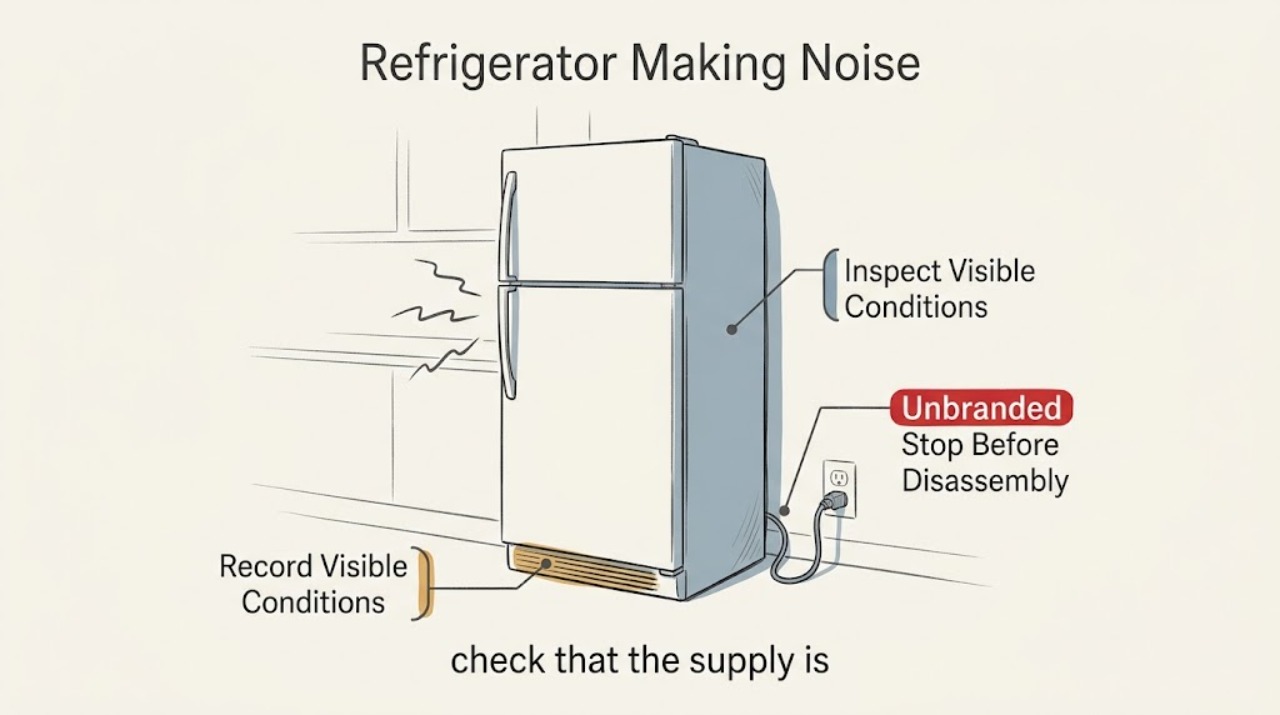
Work through in order
Diagnostic checks
Use only checks that match the exact appliance or system and its official guide.
-
Check 1
Record the sound type, location, and whether it occurs during cooling, dispensing, defrosting, or after a door opens.
Expected result: The sound is brief and cycle-linked or continuous and harsh.
Next step: Continue with stability checks and request service for persistent harsh noise.
Why this matters
Why: Brief cycle sounds may be normal; continuous grinding or harsh vibration needs inspection.
-
Check 2
Check that the cabinet is level and stable, remove items on top, and look for nearby panels vibrating against it.
Expected result: The unit rocks or external contact is visible, or it is stable.
Next step: Correct accessible contact and use the manual for leveling; do not remove panels.
Why this matters
Why: Leveling and contact can amplify vibration; stable installation with noise points to an internal source.
-
Check 3
If noise occurs during water or ice operation, check that the supply is open and line not kinked; if unconnected, verify the ice maker is off as directed.
Expected result: Noise changes with water/ice operation or continues independently.
Next step: Correct only an obvious kink or setting and request service if noise persists.
Why this matters
Why: Valve and line sounds can occur during filling; independent mechanical noise needs diagnosis.
Use your observations
Decision map
Find the observation that best matches what you see, then follow the next safe action.
-
PATH 01Next step
What you see
Noise is brief humming, gurgling, clicking, popping, or soft airflow with normal cooling
Do this next
Monitor after confirming stability and clearance.
-
PATH 02Next step
What you see
Grinding, harsh vibration, or persistent noise occurs with cooling or ice/water loss
Do this next
Arrange qualified KitchenAid service and do not open sealed or electrical areas.
Helpful context
Understand the symptom
Timing narrows the source
Note whether the sound occurs while cooling, dispensing water/ice, or defrosting. A new continuous sound deserves more attention than a brief cycle-linked noise.
When checks do not resolve it
Need a professional?
Call for persistent grinding, harsh vibration, abnormal tone, or performance loss.
Read the exact guide
Official sources
- Refrigerator Normal Sounds and NoisesKitchenAid · Manufacturer guidance on normal sounds, leveling, water lines, and vibration.
Community feedback
Share a repair observation
Share a plain-text repair observation. Accepted observations are published automatically; this page may take a moment to update.