
On this page
Start here
Quick answer
First record the sound and when it occurs: a low hum, gentle gurgle, airflow, clicking, popping, sizzling, or a brief high-pitched or pulsating sound can be normal as an Amana refrigerator cools, defrosts, circulates air, or dispenses water and ice. Rattling or vibration can also come from items on top, the water line, refrigerant flow, or an unlevel refrigerator. Check only accessible conditions: remove loose items from the cabinet top, note whether the unit rocks, inspect a visible water line for a kink, and check whether the noise occurs only during dispensing or when a door moves. If an ice maker is not connected to water, turn that ice maker off according to the model instructions. Do not remove panels, work on fans or the sealed refrigeration system, or move a heavy refrigerator alone. Arrange qualified service when the sound is sudden and harsh, is accompanied by loss of cooling, a leak, smoke, burning odor, damaged cord, repeated breaker trips, scraping or grinding that continues with the doors closed, or persists after model-approved external checks.
Before you begin
Safety first
- Do not open rear or electrical panels, reach into fans, disturb refrigerant tubing, disconnect water tubing, move a heavy refrigerator alone, or reset a repeatedly tripping breaker.
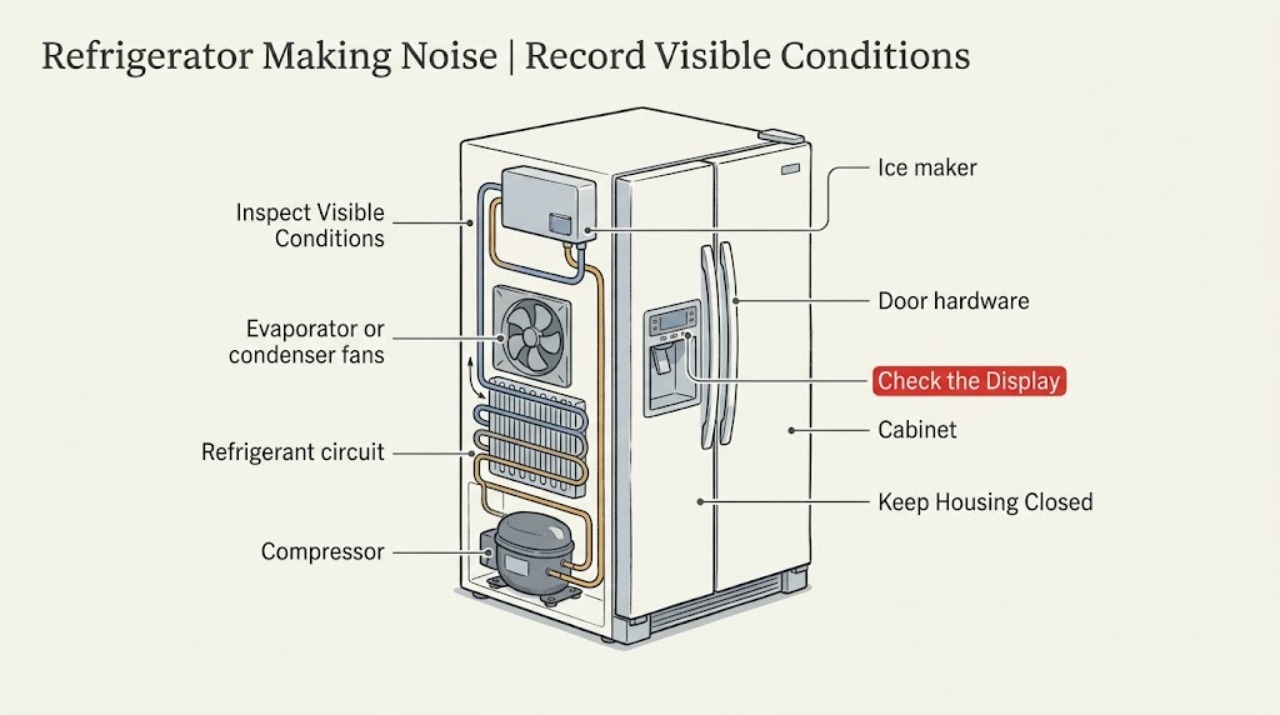
Work through in order
Diagnostic checks
Use only checks that match the exact appliance or system and its official guide.
-
Check 1
Listen from a safe standing position and record the sound in plain words, its apparent location, duration, repetition, and trigger. Note whether it occurs during cooling, after a cycle stops, during defrost, when a door opens or closes, or while water or ice is dispensed.
Expected result: The sound is a low hum, soft airflow, gurgle, click, pop, sizzle, high-pitched tone, rattle, buzz, chatter, grinding, squeak, or thump, and it is tied or not tied to a specific event.
Next step: Continue to the check that matches the trigger. Preserve a short recording and the exact model number for service if the sound is persistent, worsening, or difficult to classify; do not remove a cover to locate it.
Why this matters
Why: Amana maps several brief or gentle sounds to normal compressor, fan, refrigerant, defrost, water-line, ice-maker, or cabinet activity. Timing that is unrelated to any operating event, becomes harsh, or is accompanied by a cooling problem is less consistent with that normal pattern.
-
Check 2
Inspect only the outside of the cabinet and its immediate surroundings: remove items resting on top, check that the refrigerator is stable rather than rocking, and look for a visible cabinet or door rubbing against nearby cabinetry. Do not pull or tilt the refrigerator to reach underneath it.
Expected result: The sound stops when a loose item is removed; the cabinet or floor transmits vibration; the refrigerator rocks or appears unlevel; or the noise continues with no external contact.
Next step: Keep the top clear and follow the exact model instructions for safe leveling. Get help from an installer or technician for a heavy-unit adjustment, door alignment, or any condition requiring the refrigerator to be moved; escalate if the noise persists without an external cause.
Why this matters
Why: Amana identifies items on top and an unlevel refrigerator or floor as possible rattling, vibration, grinding, or squeaking sources. If the sound remains after external contact is removed, an internal fan, compressor, water-line, or sealed-system cause remains possible and cannot be selected by sound alone.
-
Check 3
If the noise occurs during water or ice use, stop dispensing and inspect only the visible supply line for a sharp kink or obvious vibration. If the ice maker is installed but has no water connection, check its user control and turn it off as the model manual directs; do not disconnect tubing or open a valve assembly.
Expected result: Chattering occurs only while dispensing; the visible line is kinked; buzzing or clicking occurs while an unconnected ice maker tries to fill; a thump occurs during a fill; or the noise occurs with no water or ice activity.
Next step: Stop using the dispenser if the visible line is kinked or leaking, and have the water connection corrected by a qualified installer when it is not an obvious user-control issue. Do not repeatedly run the ice maker or probe the valve.
Why this matters
Why: Amana links dispensing chatter to a kinked water line and buzzing or clicking to an ice maker without a water supply. Water-line movement can also create rattling or thumping during a fill. A sound unrelated to dispensing shifts attention back to cooling, fans, leveling, or service assessment.
-
Check 4
Compare the noise with the refrigerator's cooling and defrost behavior without opening service panels: note whether cooling remains normal, whether the sound is a soft hum or airflow, and whether gurgling, bubbling, sizzling, hissing, popping, or a brief high-pitched tone follows a cycle or door activity.
Expected result: Cooling temperatures remain normal and the sound is brief or repeats with a cycle; the sound is continuous and harsh; cooling is worsening; or water, frost, or a burning smell is present.
Next step: If cooling and safety conditions are normal, monitor and use the model manual for routine maintenance. If cooling is worsening, the noise is severe or persistent, or frost, water, smoke, or burning odor appears, stop exposing the appliance to further testing and arrange qualified service.
Why this matters
Why: Amana attributes gentle hums and airflow to compressor or fan operation, gurgles to refrigerant or defrost-water movement, sizzling or hissing to water on the defrost heater, popping to cabinet expansion, and high-pitched or pulsating sounds to compressor or fan adjustment. A harsh sound with cooling or safety symptoms is not resolved by normal-sound labeling.
-
Check 5
Record the model number, sound description and location, when it began, whether the refrigerator was recently moved or loaded, dispenser or ice-maker status, cooling symptoms, leaks, visible vibration, and the external checks already completed. Do not test a suspected motor, fan, valve, compressor, or sealed system yourself.
Expected result: The noise is new or worsening; the refrigerator was recently relocated; the same sound returns despite a clear exterior; cooling or dispensing is affected; or a safety symptom is present.
Next step: Arrange Amana or qualified appliance service for a persistent or abnormal noise, and provide the model number and recording. Keep the refrigerator operating only when there is no electrical, water, or food-safety concern; otherwise leave it in the safest state and seek prompt service.
Why this matters
Why: A sound alone cannot identify a compatible replacement part or distinguish a fan, compressor, valve, door, or sealed-system fault. Timing, model identity, cooling performance, and safety observations give a technician useful evidence without live or internal testing.
Use your observations
Decision map
Find the observation that best matches what you see, then follow the next safe action.
-
PATH 01Next step
What you see
The sound is brief, soft, and synchronized with cooling, defrost, air circulation, water dispensing, or ice making, while temperatures remain normal and there is no leak or electrical warning.
Do this next
Monitor the timing and keep the model manual available. Arrange service if the character, duration, volume, or cooling performance changes.
Why this path and its safety boundary
Why it matters: The pattern is more consistent with Amana's documented normal operating sounds than with a confirmed failed part.
-
PATH 02Next step
What you see
Rattling or vibration changes when items on top are removed, the cabinet is stabilized, or the refrigerator is found to be unlevel, and cooling is otherwise normal.
Do this next
Keep the cabinet top clear and follow the exact model leveling instructions, using an installer or technician for any heavy-unit movement or adjustment. Escalate if the sound remains after the safe external correction.
Why this path and its safety boundary
Why it matters: An external vibration or leveling condition is more likely than a confirmed internal motor or compressor failure.
-
PATH 03Next step
What you see
Buzzing or clicking occurs only around ice-maker filling without a water connection, or chattering occurs only while dispensing and a visible supply line is kinked.
Do this next
Turn an unconnected ice maker off using the model control and stop dispensing through a kinked or leaking visible line. Have an unfamiliar or damaged connection checked; do not dismantle the valve or tubing.
Why this path and its safety boundary
Why it matters: The water-supply or ice-maker operating condition is more likely than a general refrigeration fault.
-
PATH 04Next step
What you see
The noise is sudden, harsh, continuously grinding or scraping, repeats independently of normal cycles, or occurs with loss of cooling, a leak, smoke, burning odor, damaged cord, or repeated breaker trips.
Do this next
Stop troubleshooting and arrange qualified appliance service. Do not open panels, touch fans or refrigerant tubing, move the refrigerator alone, reset a repeatedly tripping breaker, or order a part based on the sound alone.
Why this path and its safety boundary
Why it matters: The pattern is not safely explained by Amana's normal-sound guidance and may involve a mechanical, electrical, water, or refrigeration fault.
Helpful context
Understand the symptom
Classify the sound by timing, not just volume
A sound after a cooling cycle, during defrost, when the compressor or fans change speed, or while water or ice is being dispensed can be part of normal operation. Amana lists humming, gurgling, whooshing, clicking, popping, sizzling, and brief high-pitched or pulsating sounds among expected refrigerator noises. Note whether the sound is continuous, rhythmic, tied to a door or dispenser, or accompanied by a temperature change before assuming a part has failed.
External vibration is a separate path
Rattling does not automatically mean a compressor or fan problem. Amana points to items stored on top, water-line movement, refrigerant flow, and an unlevel refrigerator or floor. Remove only loose external items and observe stability. Follow the exact Owner's Manual for leveling; do not pull out, tip, or adjust a heavy refrigerator without appropriate help.
Know when normal-sound guidance no longer fits
Normal explanations do not establish that every new noise is harmless. A sound that is harsh, rapidly worsening, tied to loss of cooling or a water leak, or accompanied by an electrical warning needs service assessment. Do not open the rear cover, access a fan, disturb refrigerant tubing, or order a motor, fan, valve, or compressor from a sound description alone.
When checks do not resolve it
Need a professional?
The sound is sudden, harsh, worsening, continuously scraping or grinding, or unrelated to cooling, defrost, dispensing, or door movement., Cooling is worsening, a water leak or frost problem appears, or smoke, burning odor, damaged wiring, or repeated breaker trips occurs., The refrigerator needs panels removed, a fan or sealed system inspected, heavy movement or leveling, or a water-line connection repaired.
Safety scope: Do not open rear or electrical panels, reach into fans, disturb refrigerant tubing, disconnect water tubing, move a heavy refrigerator alone, or reset a repeatedly tripping breaker.
Have this ready
- The complete Amana model number, installation or relocation history, and a short recording if safe to make.
- The sound type, apparent location, trigger, duration, repetition, and whether it changes when dispensing or opening a door.
- Cooling temperature changes, leaks or frost, ice-maker and water-supply status, cabinet stability, and the accessible checks already completed.
Common questions
FAQ
Are Amana refrigerator noises normal?
Often, yes. Amana lists low humming, airflow, gurgling, clicking, popping, sizzling, water-line sounds, and brief high-pitched or pulsating tones as sounds that can occur during cooling, defrost, air circulation, dispensing, or ice making. The sound should still be judged by timing, severity, cooling performance, and safety symptoms.
Why is my Amana refrigerator rattling or vibrating?
Amana identifies refrigerant or water-line flow, items stored on top, and an unlevel refrigerator or floor as possible causes. Remove loose external items and observe whether the cabinet is stable; follow the exact manual for leveling and get help rather than pulling or tipping the refrigerator alone.
Why does my Amana refrigerator buzz or click when the ice maker is not connected?
Amana says an ice maker without a water supply can make a buzzing or clicking sound while it tries to fill. Turn the ice maker off using the model's user control when it is not connected, and have any unfamiliar water connection checked rather than opening the valve assembly.
What does a high-pitched or pulsating Amana refrigerator sound mean?
Amana says compressor or fan speed adjustments can create a high-pitched or pulsating sound, and this can be normal when it is brief and tied to regular operation. A new harsh or persistent sound, especially with cooling loss or another safety symptom, needs qualified service assessment.
When should I stop troubleshooting an Amana refrigerator noise?
Stop for smoke, burning odor, a water leak, damaged cord or wiring, repeated breaker trips, worsening cooling, or a sudden harsh scraping or grinding sound. Also stop when the next check would require panels, fan access, sealed-system work, water-line disconnection, or moving the refrigerator; provide the model number and sound details to qualified service.
Read the exact guide
Official sources
- Humming Noise - RefrigeratorAmana Product Help · Direct Amana guidance for humming and leveling on applicable refrigerator configurations; use the exact model manual for adjustment details.
- Refrigerator Noise - High-Pitched or PulsatingAmana Product Help · Direct Amana guidance for high-frequency noise; compressor and fan behavior varies by model.
- Refrigerator Troubleshooting NoisesAmana · Direct Amana consumer guidance for common refrigerator sounds and service escalation; model-specific manuals control exact adjustments.
- Refrigerator Normal Sounds and NoisesAmana Product Help · Direct Amana guidance on expected compressor, fan, refrigerant, defrost, water-line, ice-maker, and cabinet sounds; exact features vary by model.
- Refrigerator Noise - Rattling or VibratingAmana Product Help · Direct Amana guidance for rattling and vibration; exact leveling procedure depends on the model and installation.
Community feedback
Share a repair observation
Share a plain-text repair observation. Accepted observations are published automatically; this page may take a moment to update.