
On this page
Start here
Quick answer
Some Beko refrigerator sounds are part of normal operation: flowing or bubbling sounds can come from refrigerant movement, clicking can come from a defrost timer or ice maker, cracking can come from components expanding or contracting, and hissing can occur during No-Frost defrosting. First identify the sound and whether cooling remains normal. A beeping sound usually means a door-open alarm, while clicking accompanied by a rising internal temperature can indicate the compressor is switching off from overheating; Beko points to dirty condenser coils as one possible cause. Unplug the appliance before any permitted external coil cleaning, never use a damp cloth on the coils, and arrange authorized service when the noise is unusually loud, persists with poor cooling, or involves smoke, burning odor, electrical damage, or a fan or compressor that needs internal access.
Before you begin
Safety first
- This article covers listening, door and gasket observations, temperature comparison, visible frost, and an external dry coil check only when the exact model permits it. Qualified service must handle energized wiring, fan or compressor access, sealed-system work, refrigerant, and built-in unit dismantling.
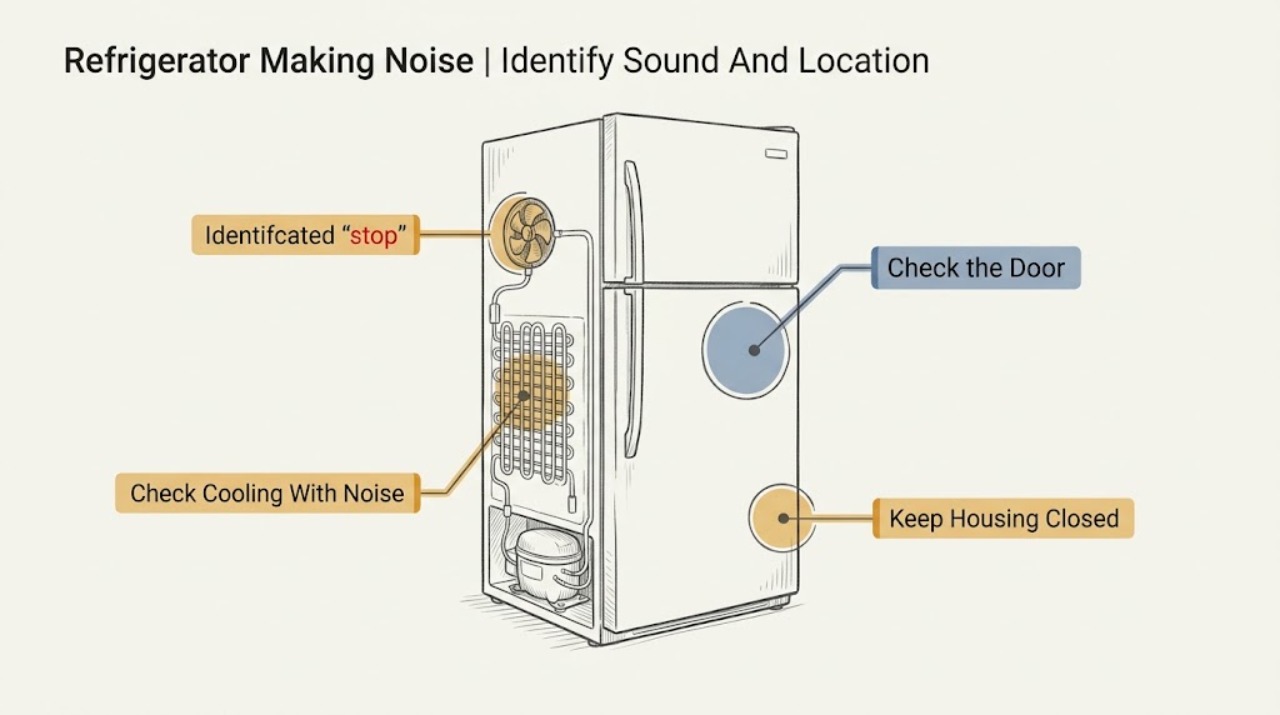
Work through in order
Diagnostic checks
Use only checks that match the exact appliance or system and its official guide.
-
Check 1
Listen briefly with the doors closed and then note the sound's character and location: flowing, bubbling, gurgling, whirring, clicking, cracking, hissing, beeping, rubbing, or another sound. Record whether it occurs during cooling, defrosting, ice making, or when a door is open.
Expected result: The sound matches a flowing or bubbling noise, a periodic click or crack, a No-Frost hiss, a door-open beep, or a loud rubbing or otherwise unfamiliar noise.
Next step: Continue to the temperature and door checks for a sound that is brief and familiar. Arrange service if the noise is new, progressively louder, or cannot be safely located without moving covers or the appliance.
Stop if: Do not put fingers or tools near a fan, compressor, ice maker, or moving mechanism while listening.
Why this matters
Why: Beko identifies several fluid, defrost, ice-maker, and material-expansion sounds as potentially normal. A sound that is unusually loud, rubbing, or paired with abnormal operation needs a different path than a brief normal operating sound.
-
Check 2
Check whether the refrigerator and freezer are cooling as usual while the noise occurs. Look for a simultaneous temperature rise, thawing food, a new alarm, or a compressor that starts and stops repeatedly.
Expected result: Cooling remains normal, or the noise occurs with a rising internal temperature, poor cooling, repeated short operation, or another abnormal function.
Next step: For a normal-temperature appliance, continue with the door and coil observations. For rising temperature or repeated abnormal operation, stop prolonged use and arrange authorized service after recording the sound and conditions.
Stop if: Do not keep restarting a refrigerator that is overheating, losing cooling, smoking, or producing a burning odor.
Why this matters
Why: Normal cooling makes a documented operating sound more likely. Beko says clicking with a rise in internal temperature can mean the compressor is overheating and switching off; poor cooling with noise raises the need for service diagnosis.
-
Check 3
If the sound is a beep, close every refrigerator and freezer door fully and check that food, shelves, or drawers are not holding a door open. Inspect the visible gasket for a gap without removing it.
Expected result: The beeping stops after closure, a door remains slightly open, the gasket has a visible gap, or the doors close and seal normally.
Next step: Remove only an obvious obstruction and follow the model care instructions for a visible gasket issue. Arrange service for a damaged gasket, misaligned door, or alarm that continues with secure closure.
Stop if: Do not force the door, bend hinges, bypass an alarm, or keep using the refrigerator if the door cannot seal or water is reaching electrical parts.
Why this matters
Why: Beko identifies beeping as the door-open alarm and says it stops when the door is closed. A door that cannot close or seal can also allow warm air in and make the appliance run more, while normal closure shifts concern back to the sound source.
-
Check 4
Only if the model's external condenser coils are accessible without removing a cover, unplug the refrigerator and look for visible dust on the coils. Use a gentle brush or a low-suction vacuum brush only if the manual permits it; keep the area dry.
Expected result: The coils are visibly dusty, the coils are inaccessible behind a panel, the refrigerator is built in, or the coils look clear.
Next step: After safe external cleaning, restore power and observe whether both sound and cooling recover according to the model instructions. Arrange service if the sound or temperature problem returns or if access requires dismantling.
Stop if: Do not use damp cloths, high-pressure air, sharp tools, or a vacuum with aggressive suction; do not remove a condenser cover or reach into a fan.
Why this matters
Why: Beko says dirty condenser coils can contribute when clicking is accompanied by a rising internal temperature because the condenser releases heat. Inaccessible coils or a clear coil surface do not rule out a compressor, fan, control, or sealed-system fault.
-
Check 5
For a No-Frost model, note whether a brief hissing, dripping, or clicking sound occurs during a defrost cycle and whether the appliance resumes normal cooling afterward. Look only for visible frost that blocks an air path; do not remove panels.
Expected result: The sound is brief and cooling remains normal, heavy frost is visible, the sound persists outside a defrost cycle, or cooling does not recover.
Next step: Follow the exact model manual for any permitted defrost guidance and arrange service for recurring frost, an inaccessible fan, persistent noise, or cooling loss.
Stop if: Do not chip ice, pierce a panel, apply direct heat, or remove an evaporator or fan cover.
Why this matters
Why: Beko describes No-Frost hissing and some clicking as possible defrost operation. Heavy frost, persistent noise outside that pattern, or poor cooling indicates that the normal-sound explanation is insufficient and the defrost, fan, or cooling system needs diagnosis.
Use your observations
Decision map
Find the observation that best matches what you see, then follow the next safe action.
-
PATH 01Safety boundary
What you see
The sound is flowing, bubbling, gurgling, whirring, cracking, or a brief No-Frost hiss, and cooling and door operation remain normal.
Do this next
Monitor the sound and record its location and timing. Arrange service if it becomes unusually loud or the refrigerator stops operating normally.
Why this path and its safety boundary
Why it matters: Beko documents these as sounds that can result from refrigerant flow, defrost, ice making, or components expanding and contracting rather than a malfunction.
Safety stop: Do not dismantle the cabinet to eliminate a sound that remains brief and consistent with normal operation.
-
PATH 02Safety boundary
What you see
The sound is a beeping alarm that stops after all refrigerator and freezer doors are closed.
Do this next
Check for an obstruction or gasket gap and arrange service if the alarm continues despite secure closure.
Why this path and its safety boundary
Why it matters: The door-open alarm is more likely than a compressor or fan fault.
Safety stop: Do not force a door or bypass its alarm or interlock.
-
PATH 03Safety boundary
What you see
A clicking sound occurs with a rising internal temperature, repeated compressor shutoff, or poor cooling.
Do this next
Perform only the documented external coil check with power disconnected and dry tools. Arrange authorized service if cooling or clicking does not recover.
Why this path and its safety boundary
Why it matters: Beko says the compressor may be overheating and points to condenser coils as one possible contributor; continued poor cooling also leaves fan, control, compressor, or sealed-system faults open.
Safety stop: Do not repeatedly cycle the appliance, open electrical covers, or test the compressor or refrigerant circuit.
-
PATH 04Safety boundary
What you see
The noise is rubbing, grinding, progressively louder, or otherwise unusual, or the appliance is not operating normally while making it.
Do this next
Stop at safe external observations and contact an authorized service agent with the sound description, location, cooling behavior, and model information.
Why this path and its safety boundary
Why it matters: A fan, compressor, mounting, control, or other internal fault is more likely than a documented normal operating sound.
Safety stop: Do not reach into a fan, remove panels, move a built-in unit, or continue through smoke, burning odor, or electrical damage.
Helpful context
Understand the symptom
Classify the sound before treating it as a failure
Beko distinguishes several sounds that can occur during normal operation. Flowing or bubbling sounds may be refrigerant movement, a water supply or ice-maker sound, or automatic defrosting. Clicking may come from a defrost timer or ice-making function, cracking may reflect components expanding or contracting, and hissing may occur when defrost water reaches the heaters on a No-Frost model. The important change is whether cooling and other appliance functions remain normal.
Temperature and sound together are more informative
A sound by itself does not identify a failed part. Note where it comes from, when it occurs, and whether the refrigerator is still maintaining cooling. Beko specifically warns that clicking alongside a rise in internal temperature can mean the compressor is overheating; that pattern deserves an external condenser check and service escalation if it does not clear.
Use safe boundaries for coil and cabinet checks
If the exact model exposes condenser coils for user care, Beko says to unplug the appliance and use a gentle brush or a vacuum brush attachment on low suction; it says not to use damp cloths or towels. Do not remove covers, reach into a fan, handle refrigerant, or move a built-in refrigerator just to locate a sound. Unusual noise with abnormal operation belongs with an authorized service agent.
Safety boundary
Stop conditions
- Stop using the refrigerator and arrange service for smoke, burning odor, arcing, a damaged cord, exposed wiring, or water near electrical parts.
- Do not reach into a fan or compressor, remove covers, open the sealed refrigeration circuit, handle refrigerant, or apply direct heat to frost.
- Do not use damp cloths or towels on condenser coils; if coils are not safely accessible, leave them for qualified service.
- Move perishable food to a known-safe cold appliance if the noise is accompanied by loss of cooling, and follow local food-safety guidance for food that has warmed.
When checks do not resolve it
Need a professional?
Safety scope: This article covers listening, door and gasket observations, temperature comparison, visible frost, and an external dry coil check only when the exact model permits it. Qualified service must handle energized wiring, fan or compressor access, sealed-system work, refrigerant, and built-in unit dismantling.
Common questions
FAQ
Are bubbling or gurgling sounds normal on a Beko refrigerator?
Often. Beko says sounds resembling running water can result from liquid and gas moving through the refrigerant system, water supply, or automatic defrost. If cooling remains normal and the sound is brief, monitor it; arrange service if the appliance is not operating normally.
Why is my Beko refrigerator clicking and getting warmer?
Beko says clicking with a rise in internal temperature can mean the compressor is overheating and switching off, with dirty condenser coils as one possible contributor. Unplug before any model-permitted dry external coil cleaning and arrange service if cooling or clicking does not recover.
What does a beeping sound mean on a Beko refrigerator?
Beko identifies beeping as the door-open alarm. Close the refrigerator and freezer doors fully and check for a shelf, drawer, food item, or gasket problem. If the alarm continues with secure closure, arrange service.
Is a hissing sound normal on a Beko No-Frost refrigerator?
A brief hissing sound can be normal during No-Frost defrosting, when water reaches the defrost heaters. Do not remove panels or apply heat; arrange service if hissing persists with poor cooling or abnormal operation.
When should I call service for a noisy Beko refrigerator?
Call when the sound is unusually loud, rubbing, progressively louder, or accompanied by poor cooling, a rising temperature, repeated compressor shutoff, smoke, burning odor, or electrical damage. Internal fan, compressor, control, and sealed-system work requires qualified service.
Read the exact guide
Official sources
- Help Center Result | Beko AustraliaBeko · Official Beko refrigerator FAQ from the Australia support site; use the exact local model manual for procedures.
- Help Center ResultBeko · Official Beko refrigerator help center; climate class and defrost behavior are model-specific.
- How to fix a refrigerator that won’t stop runningBeko · Official Beko refrigerator troubleshooting article; exact model and climate class control operating limits.
- Help Center ResultBeko · Official Beko refrigerator troubleshooting help center; sound behavior and available features vary by model.
Community feedback
Share a repair observation
Share a plain-text repair observation. Accepted observations are published automatically; this page may take a moment to update.