
On this page
Start here
Quick answer
A GE dryer can make a brief startup squeak and the ordinary sound of the drum turning, but a thump, persistent squeak, chirp that repeats every few seconds, humming, scraping, or a new noise after heating deserves a check. Stop immediately for smoke, a burning or electrical smell, a gas odor, a hot cord or outlet, sparks, or a dryer that is excessively hot. With the dryer safely disconnected, remove loose items from the drum and lint-filter opening, check that the dryer is level and not touching anything, and inspect exposed screws and the visible vent for obvious problems. GE identifies foreign objects, loose cabinet screws, worn drum slides, and a frayed belt as possible causes; worn slides and a damaged belt need service. If the unusual noise continues after safe external checks, discontinue use and arrange qualified service.
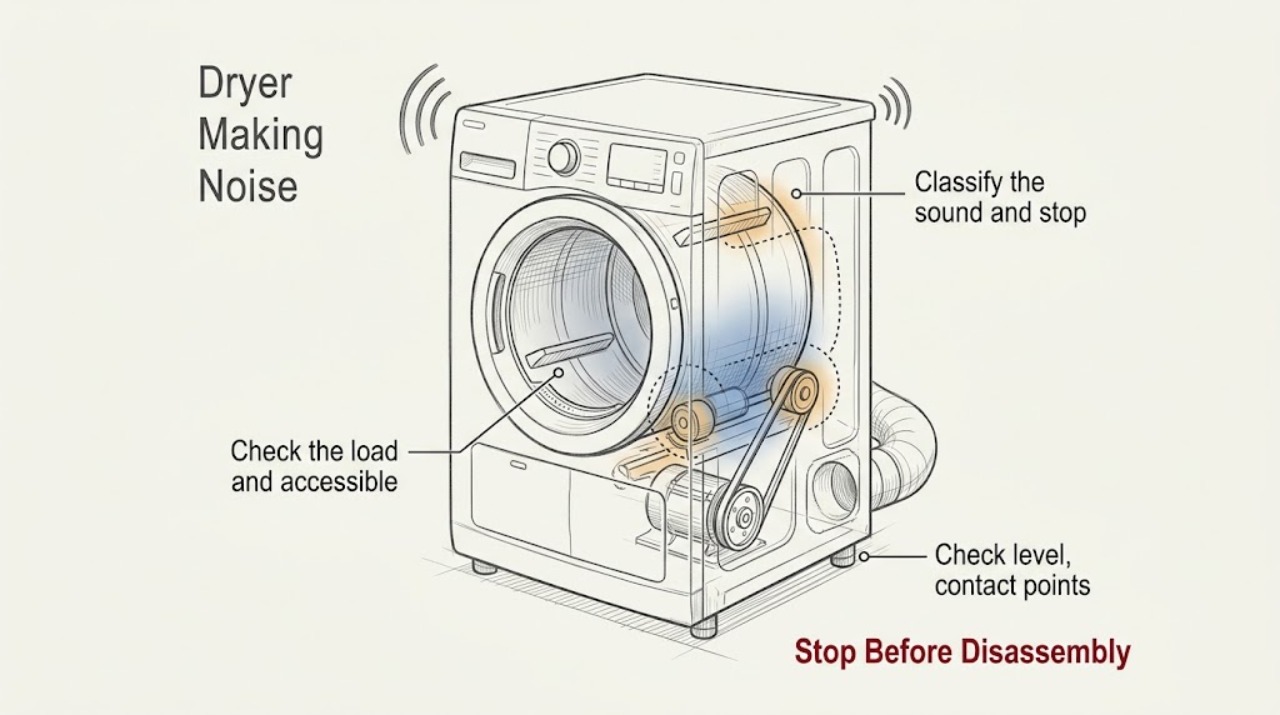
Work through in order
Diagnostic checks
Use only checks that match the exact appliance or system and its official guide.
-
Classify the sound and stop for immediate hazards
Stop the cycle and identify whether the noise is a brief startup squeak, steady drum-turning sound, thump, hum, repeated chirp, metal scrape, rattle, or a gas-valve click or burner roar. Look and smell for smoke, sparks, a hot electrical or burning odor, a gas odor, a hot cord or outlet, or an unusually hot cabinet.
Expected result: The sound is only a brief startup squeak or ordinary drum sound with no hazard, or it is persistent, worsening, accompanied by heat or an abnormal smell, or associated with smoke, sparks, gas odor, or a hot electrical connection.
Next step: For smoke, sparks, a hot electrical smell, or a damaged cord or outlet, stop using the dryer, disconnect power only if safe, and seek qualified electrical or appliance help. For a gas odor, do not operate switches or create a flame; leave the area and contact the gas utility or emergency service from a safe location. Otherwise continue only with the dryer unplugged for the following accessible checks.
Why this matters
Why: GE describes a brief startup squeak, normal drum rotation, and certain gas ignition sounds as expected in context. A persistent mechanical noise or any heat, smoke, electrical, or gas symptom is a stop condition rather than a routine adjustment.
-
Check the load and accessible foreign objects
With the dryer unplugged and cool, remove the load and inspect the drum for coins, paper clips, buttons, zippers, or other loose objects. Remove the lint filter and look down into its opening with a light; if an object can be reached without forcing your hand, use work gloves because the opening edges may be sharp. Do not reach into hidden areas or use a tool to pry inside.
Expected result: A loose object is in the drum or lint-filter opening, or the accessible areas are clear while the noise remains.
Next step: Remove only a loose, easily accessible object, reinstall the lint filter, and keep the dryer disconnected until the opening is clear. If the noise was scraping at the front seal or continues with an empty drum, arrange service rather than reaching farther into the cabinet.
Why this matters
Why: GE notes that objects in the drum can rattle or scrape and that objects below the lint filter can make noise. Clear accessible items may resolve a load-related sound, but a clear opening does not rule out an object near the drum seal or an internal mechanical fault.
-
Check level, contact points, and exposed screws
Inspect the dryer's feet and surrounding floor to confirm that it sits firmly on a flat, solid surface and is not leaning against a wall, shelf, vent, or another appliance. From the outside only, look for loose accessible cabinet screws and tighten them only if the owner's instructions permit it; do not remove panels.
Expected result: The dryer rocks, a foot is not seated, something is touching the cabinet, or a visibly loose external screw is present; or the dryer is stable and clear.
Next step: Correct only the external positioning or an accessible screw, then leave the dryer unplugged while checking for other causes. If the cabinet is damaged or the noise remains after the dryer is stable and clear, stop using it and arrange qualified service.
Why this matters
Why: GE identifies an uneven floor, contact with nearby objects, and loose cabinet screws as possible contributors to shaking or squeaking. A stable, isolated dryer shifts attention toward the drum, belt, supports, or another internal source.
-
Separate drum-rotation noise from a heating-cycle sound
After the dryer is unplugged, cool, and empty, gently turn the drum from the opening only if the design allows a normal hand check. Note any rubbing, scraping, tight spot, wobble, or abnormal resistance; do not remove the front, rear, or side panels and do not attempt to lubricate or adjust internal supports.
Expected result: The drum turns smoothly and quietly, or it rubs, scrapes, catches, wobbles, or makes the same noise at a particular point of rotation.
Next step: If rotation is abnormal or the sound is a persistent scrape, thump, or chirp, do not run another load; arrange qualified appliance service and report when the sound occurs. If rotation is normal, continue with the external airflow and gas/electric safety check rather than opening the cabinet.
Why this matters
Why: A rotation-linked noise is more consistent with an object near the drum seal, worn or loose drum slides, rollers or other drum supports, or a belt-related problem than with a harmless startup sound. GE specifically directs service for foreign objects at the front seal, worn drum slides, and a frayed or damaged belt.
-
Inspect visible exhaust and heat conditions
Without disconnecting the vent from a gas dryer, inspect the visible vent hose and outside wall cap for kinks, collapse, lint obstruction, or blocked airflow. Confirm that the dryer is not pressed against the wall and that the cabinet is not excessively hot. Do not operate a gas dryer without its vent and do not insert tools into the duct.
Expected result: The visible vent is kinked or blocked, outside airflow is weak, the cabinet is unusually hot, or the vent and temperature appear normal while the noise continues.
Next step: Stop using the dryer until a safe, model-appropriate vent cleaning or qualified duct service corrects a restriction. If airflow is normal but the noise persists, treat it as an unresolved dryer fault and arrange appliance service.
Why this matters
Why: GE states that restricted airflow can retain heat and humidity and that a gas dryer must not be operated without its vent because combustion fumes can enter the room. A vent issue can coexist with a mechanical noise but does not explain every thump or scrape.
-
Retest once and set the service boundary
Only if the dryer is stable, the accessible drum and lint-filter opening are clear, there is no abnormal heat or smell, and the vent is safe, run one short supervised test with a small load. Stop immediately if the unusual noise returns, changes, or is joined by a burning smell, gas odor, smoke, or excessive heat.
Expected result: The sound disappears and the dryer runs normally, or the same sound returns, becomes louder, or is accompanied by a safety symptom.
Next step: If the sound is gone, monitor the next load and keep the lint filter and vent maintained. If it returns or any hazard appears, stop using the dryer and provide the technician the sound type, timing, gas or electric model, load condition, and checks already completed.
Why this matters
Why: A noise that disappears after removing a loose object or correcting contact may have been external or load-related. A recurring noise indicates that continued operation could worsen wear; GE recommends discontinuing use until a qualified servicer checks unresolved unusual noises.
Use your observations
Decision map
Find the observation that best matches what you see, then follow the next safe action.
-
PATH 01Next step
What you see
The dryer makes only a brief startup squeak or normal drum and, where applicable, gas ignition sounds, with no abnormal heat or smell.
Do this next
Monitor the sound and keep the dryer level, clear of contact, and properly vented. Escalate if the sound lasts beyond startup or changes.
-
PATH 02Next step
What you see
A loose object, unstable floor, cabinet contact, or accessible loose screw explains the noise and the dryer is otherwise safe.
Do this next
Correct that accessible condition, keep the lint filter and vent clear, and perform only one supervised retest.
-
PATH 03Next step
What you see
The drum scrapes, catches, wobbles, thumps, or makes a repeated chirp, or the noise returns with an empty drum.
Do this next
Discontinue use and arrange qualified service for the drum supports, slides, belt, seal area, or another internal mechanical fault. Do not open the cabinet.
-
PATH 04Next step
What you see
The dryer is excessively hot, airflow is restricted, or the visible vent is kinked or blocked.
Do this next
Stop the dryer and correct the venting through a safe model-appropriate cleaning or qualified duct service; never run a gas dryer without its vent.
-
PATH 05Next step
What you see
Smoke, sparks, a burning or electrical smell, gas odor, damaged cord or outlet, or a breaker that trips again is present.
Do this next
Stop immediately. Disconnect power only if safe for an electrical hazard; for a gas odor leave the area and contact gas or emergency help from a safe location. Do not operate or dismantle the dryer.
Helpful context
Understand the symptom
Sound timing is useful. A short squeak at startup can be normal, while a squeak that continues, starts only after the dryer heats, or repeats like a chirp is not treated as a normal operating sound in GE's noise guidance. Gas dryers can also click or buzz as the valve and ignition operate and can make a low burner roar; that does not make a gas smell or a loud new mechanical sound safe to ignore.
The checks below stay at the accessible exterior and drum opening. Unplug the dryer before maintenance or cleaning, and do not open the cabinet, work on a live circuit, defeat a safety control, or attempt to repair a belt, drum support, burner, or gas valve yourself. If an external check does not explain the noise, stop using the appliance until it has been checked by a qualified servicer.
When checks do not resolve it
Need a professional?
Arrange qualified appliance service for persistent or returning thumps, humming, chirping, scraping, heat-related squeaks, a drum that rubs or catches, suspected worn drum supports or belt damage, or any noise not explained by an accessible object or stable positioning. Stop immediately for smoke, sparks, a burning or electrical smell, gas odor, excessive heat, a damaged cord or outlet, or a repeatedly tripping breaker.
Common questions
FAQ
Is a squeak from a GE dryer always a problem?
Not always. GE says a squeak at startup that disappears after the first few seconds can be normal. A squeak that continues, starts after heating, or repeats every few seconds is not treated as normal and should be checked; stop using the dryer if it persists after accessible checks.
Why does my GE dryer make a thumping or scraping sound?
Check for loose objects in the drum or lint-filter opening and confirm that the dryer is level and not touching another object. A rotation-linked scrape or thump can involve the drum seal, slides, supports, or belt and requires qualified service if it persists.
Can I run a GE gas dryer with the vent disconnected to find the noise?
No. GE warns not to operate a gas dryer without its vent because combustion fumes can enter the room. Inspect the visible vent externally and arrange qualified duct or appliance service when airflow or noise remains abnormal.
Read the exact guide
Official sources
- Dryer - NoisesGE Appliances · GE dryer normal and abnormal noises, accessible checks, mechanical causes, and service boundary
- Frequently Asked Questions About GE DryersGE Appliances · GE dryer support topics including making a squeaking noise and service support
- Dryer - Things To Check For A Venting IssueGE Appliances · GE dryer vent, airflow, leveling, temperature, and gas-dryer vent safety guidance
Community feedback
Share a repair observation
Share a plain-text repair observation. Accepted observations are published automatically; this page may take a moment to update.