
GE appliance guidance
GE Dryer Repair Guides
Troubleshooting and repair guidance for published GE Dryer problems, symptoms, and maintenance questions.
Published GE Dryer guides
Choose the guide whose symptom or condition most closely matches what you are seeing.
-
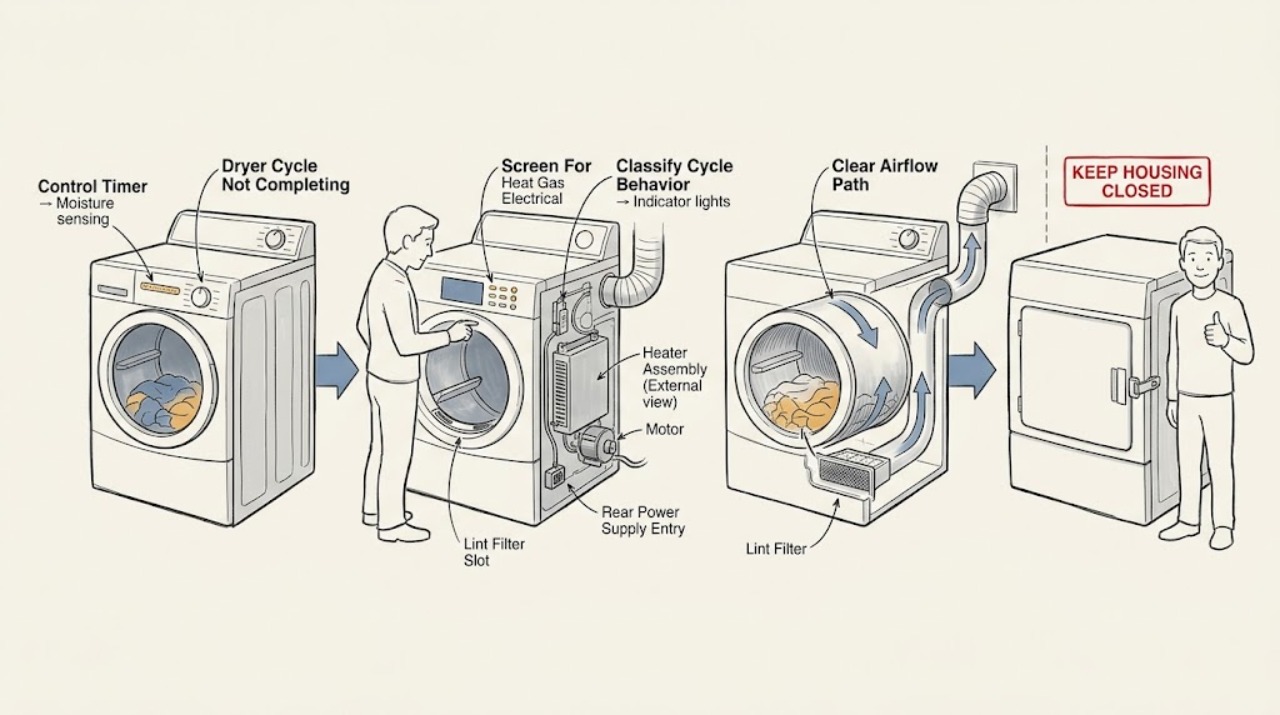
GE Dryer Cycle Not Completing: Check Timer, Load, and Airflow
First decide whether the GE dryer has actually stopped, is taking a long time to dry, or is behaving normally on an automatic cycle. GE says an automatic-cycle timer can advance sporadically, and a brief pause can occur when the drum reverses direction.
-
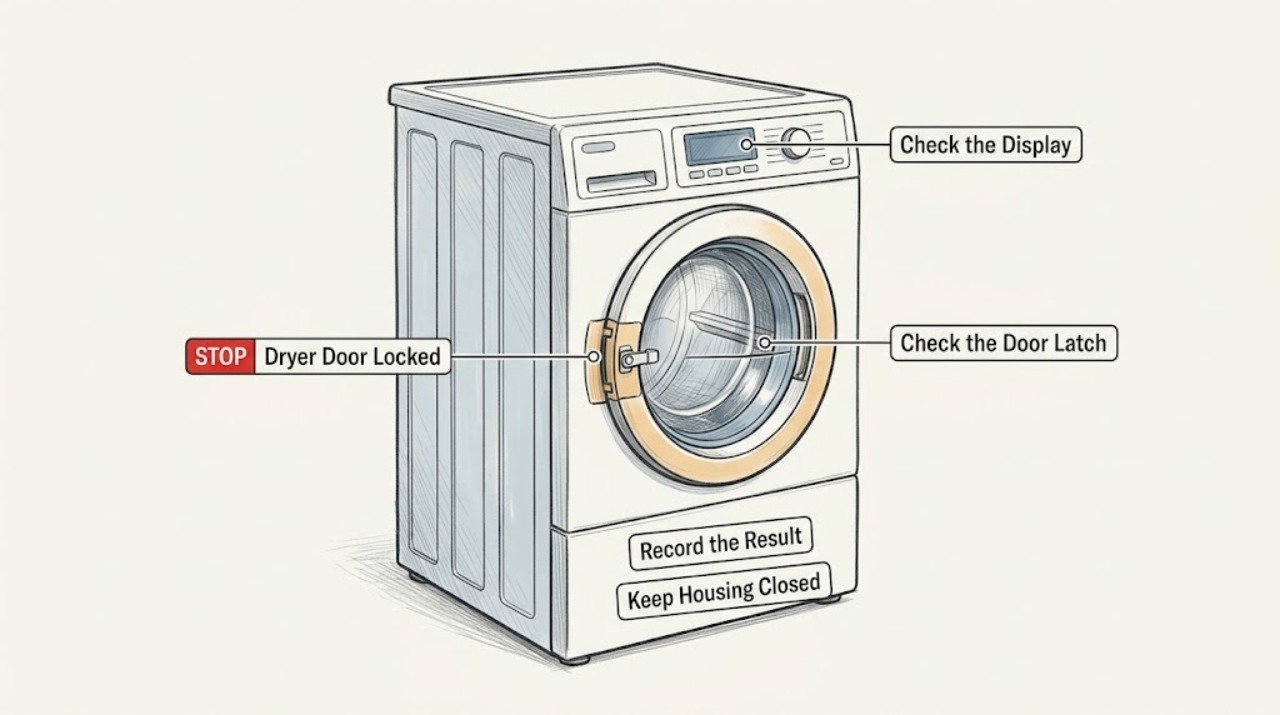
GE Dryer Door Locked: Tell Control Lock from a Stuck Latch
First determine whether the control panel is locked or the dryer door is physically latched. If a control-lock icon is on and the door opens normally, use the exact model manual to unlock the controls; GE lists a few common button combinations, but they vary by model.
-
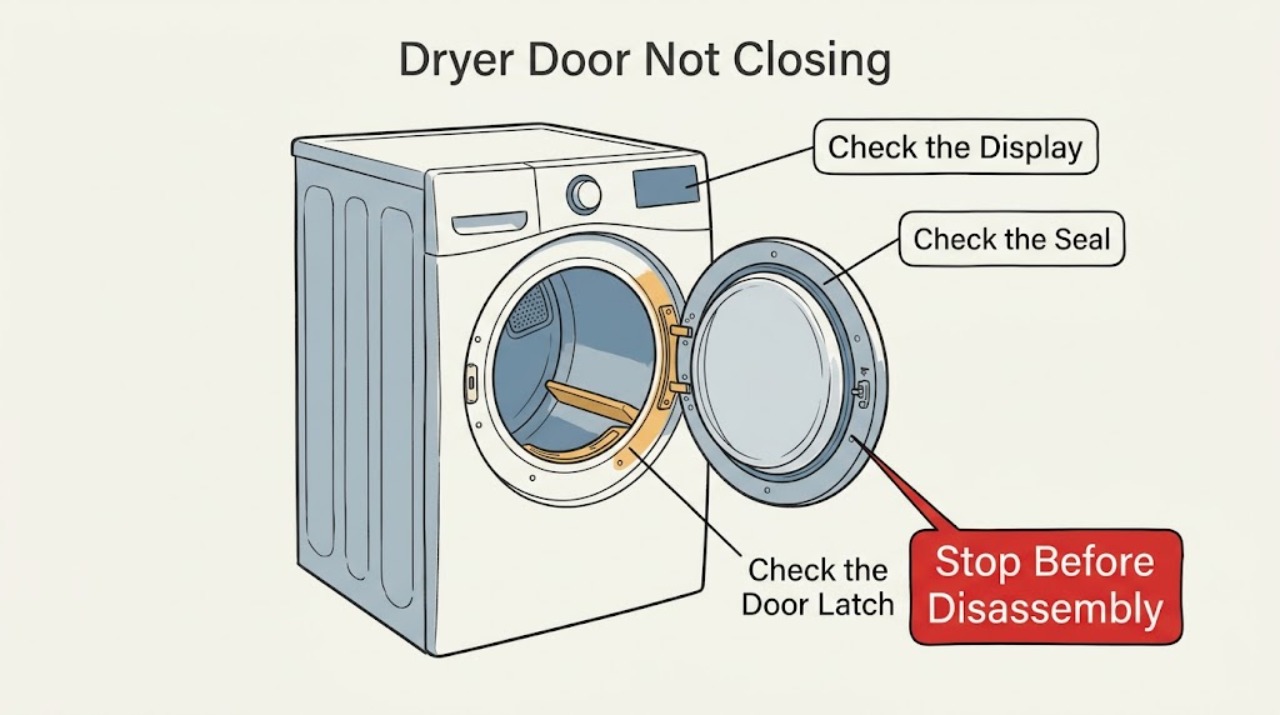
GE Dryer Door Not Closing: Clear the Seal, Check Alignment, and Stop Safely
A GE dryer door that will not close is commonly blocked by clothing, lint, or a shifted gasket; misalignment at the hinge or strike; a bent door or cabinet; or a latch or switch that is damaged. Stop the dryer, remove the load, inspect the seal and door opening with the drum stationary, and close the door gently without forcing it.
-
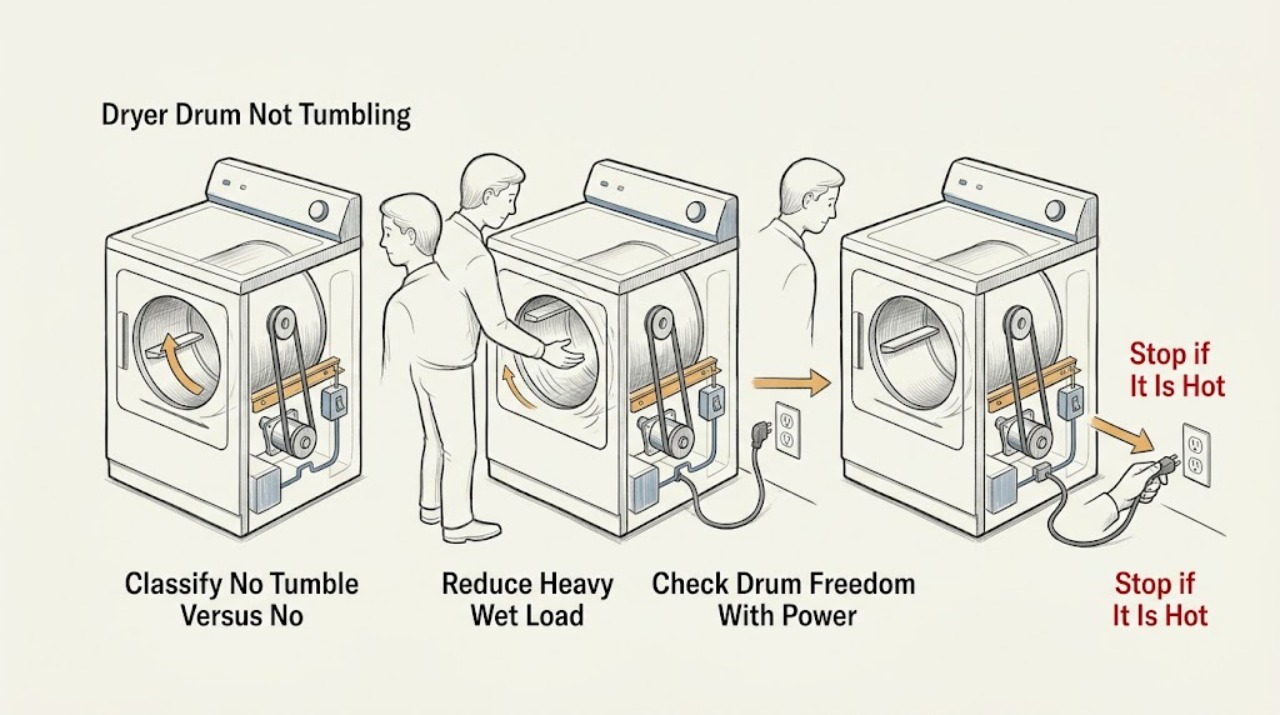
GE Dryer Drum Not Tumbling: What to Check and What to Do Next
If a GE dryer runs but the drum is not tumbling, stop the cycle and remove part of a heavy, wet load before trying again. GE says an overloaded load can let the drive belt slip; if the drum turns unusually freely when the dryer is off and disconnected from power, the belt may be broken or loose and service is required.
-
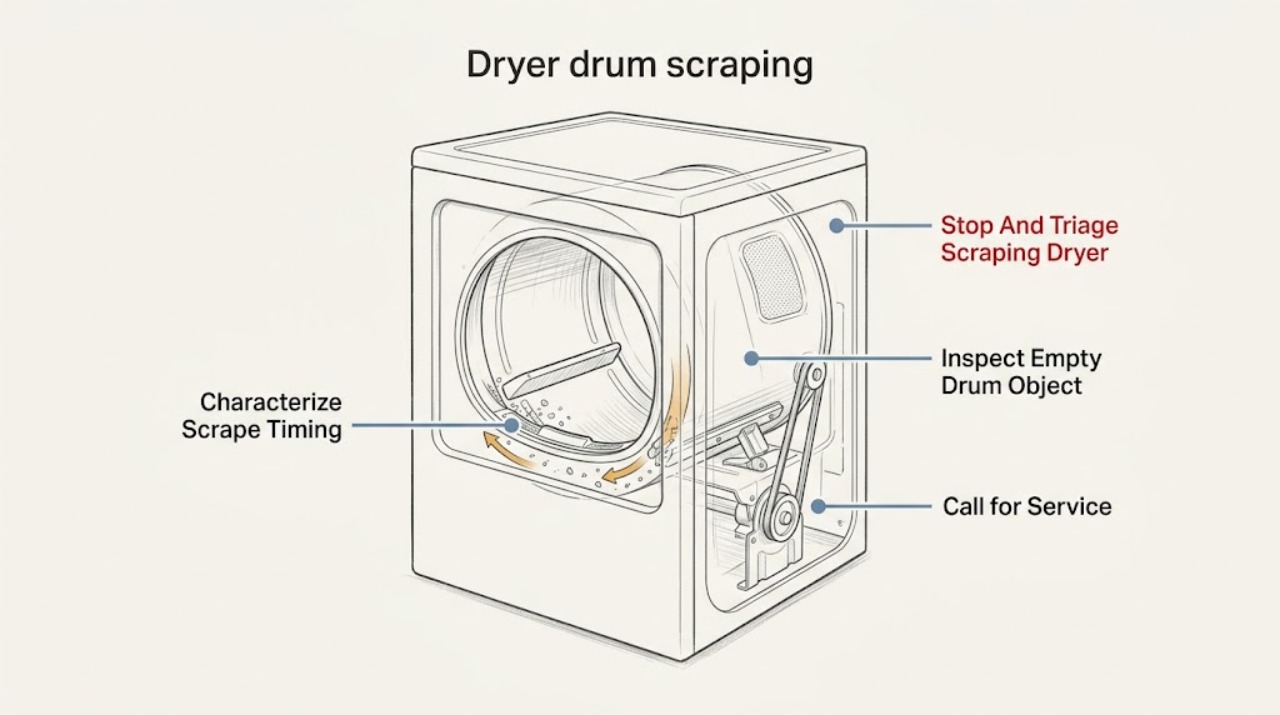
GE dryer drum scraping: What to Check and What to Do Next
Stop the GE dryer and wait until the drum is completely stationary and cool enough to approach. GE says coins, paper clips, buttons, or zippers can scrape or rattle in the drum, while an object at the drum front seal or worn or loose drum slides can create metal scraping that needs service.
-
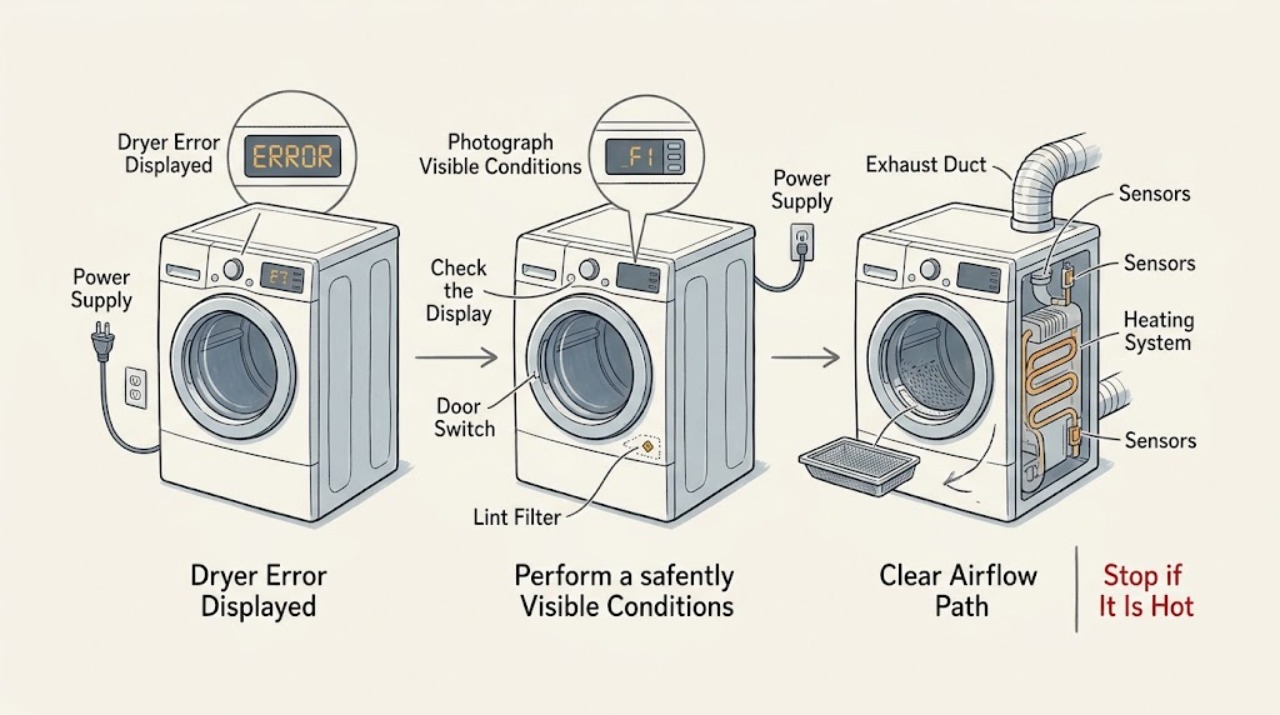
GE Dryer Error Displayed
A GE dryer display code is a symptom label, not a universal diagnosis. Write down the exact characters, whether the dryer tumbles or heats, and whether the code returns after the cycle is stopped.
-
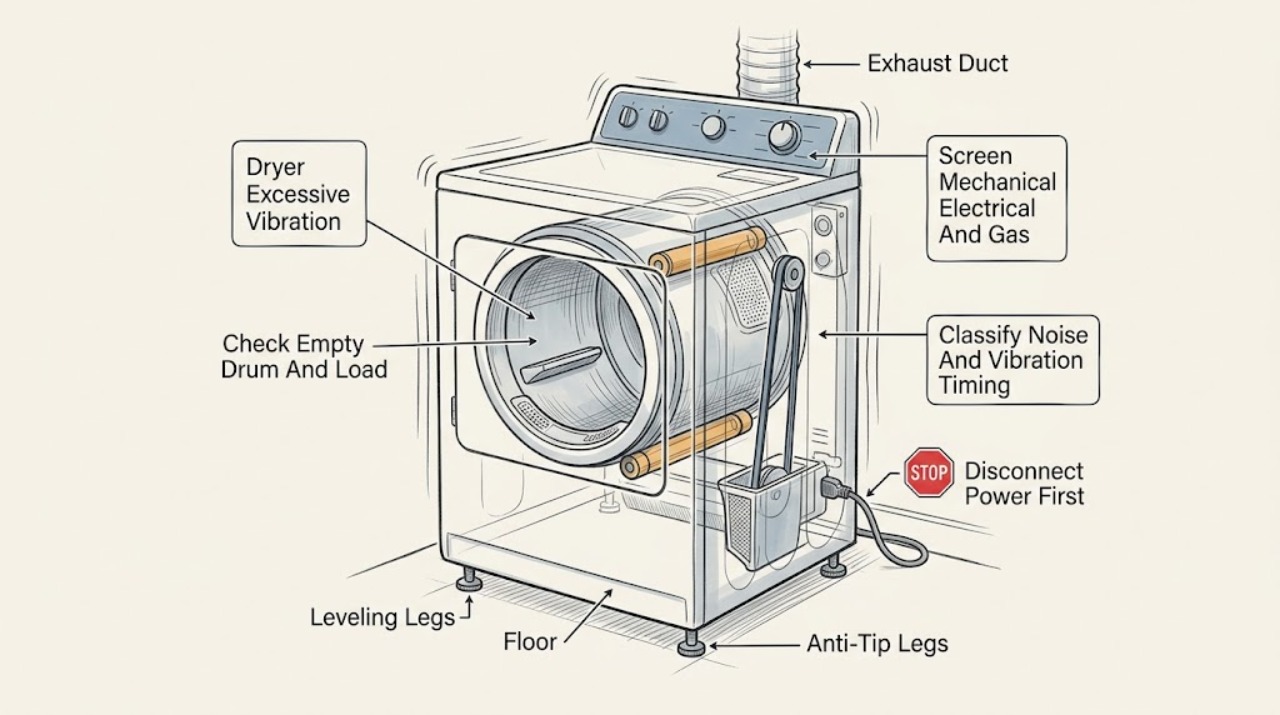
Ge Dryer Excessive Vibration
Excessive vibration from a GE dryer is most often caused by an unlevel dryer, a soft or uneven floor, a loose anti-tip or leveling leg, an uneven load, a foreign object, a loose cabinet fastener, or a worn belt, drum slide, or support component. Stop immediately for smoke, a burning or gas odor, sparks, a hot or damaged cord, a gas leak, scraping that worsens, a dryer that walks or tips, or a drum that binds; keep the dryer off and arrange qualified service.
-
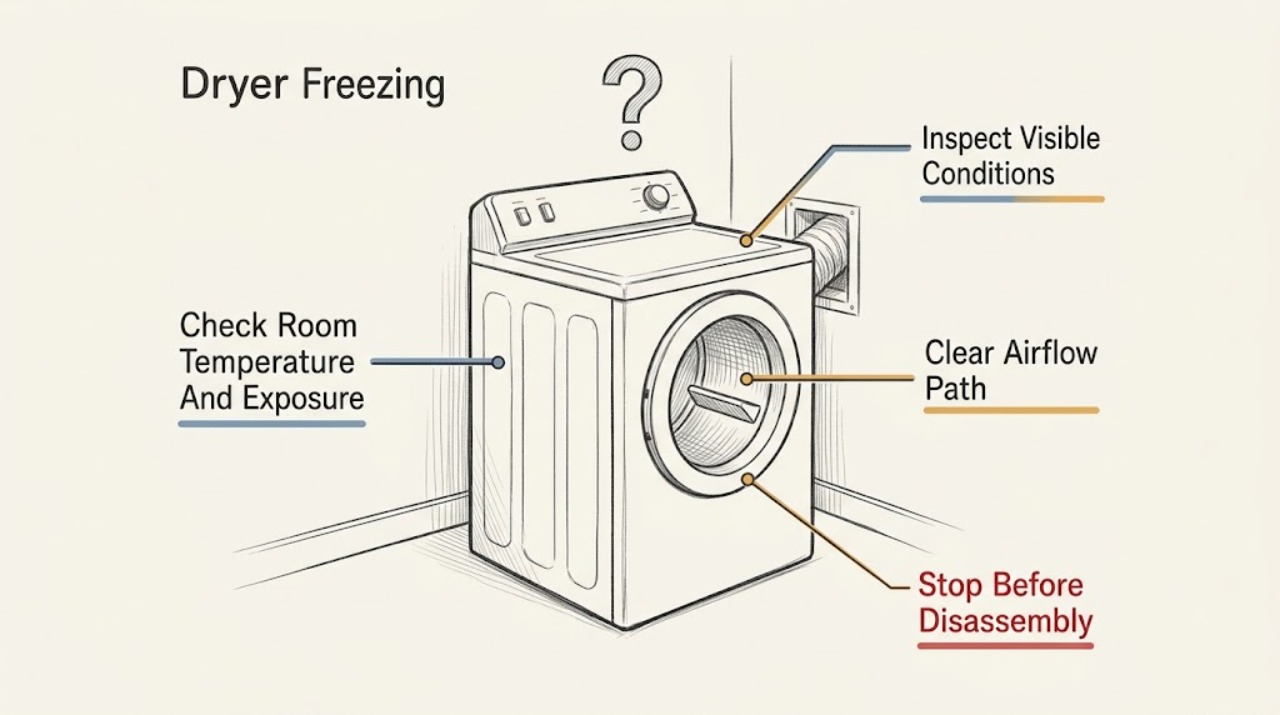
GE Dryer Freezing
If ‘freezing’ means a GE dryer is installed or stored in freezing weather, do not run it there. GE says a dryer should not be exposed to temperatures below freezing and recommends a location above 50°F for satisfactory control-system operation; below 50°F, the thermostat may not operate correctly and drying times can increase.
-
GE Dryer Has a Burning Smell: What to Check and What to Do Next
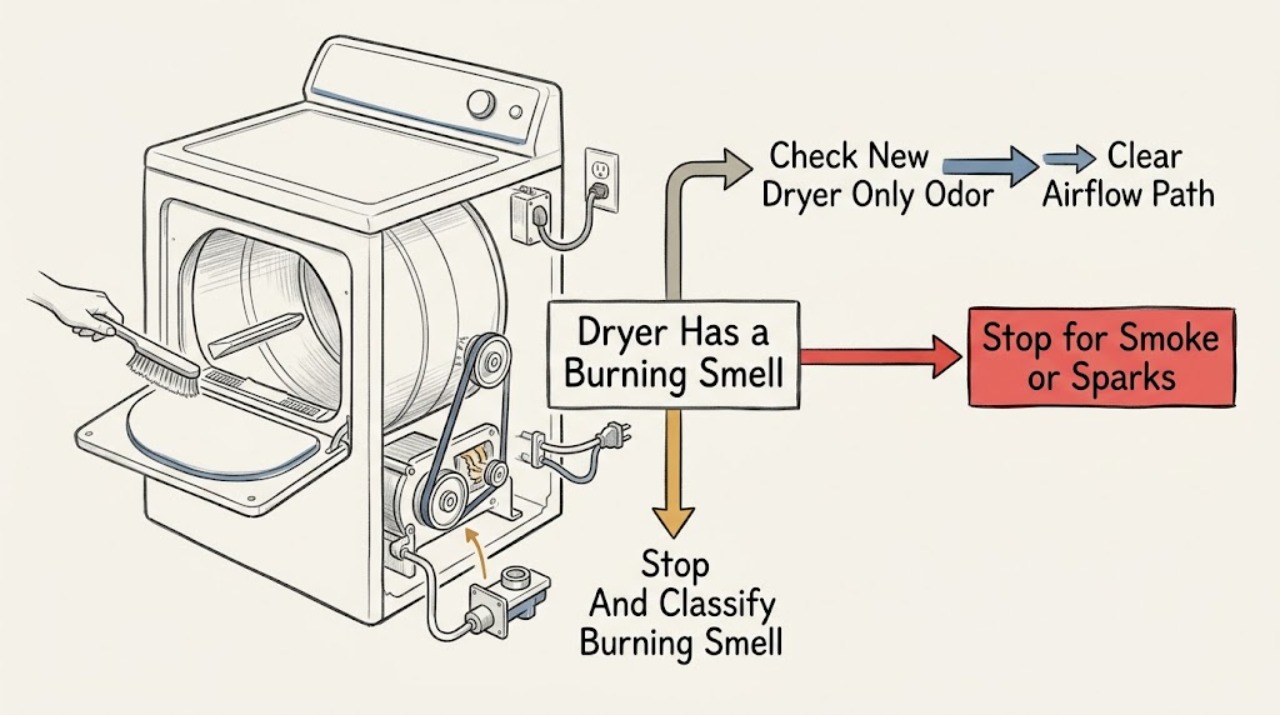
Treat a burning smell from a GE dryer as a safety symptom first. Stop the cycle, remove the load only after the drum has stopped, and disconnect power when it is safe; do not run the dryer again while smoke, a strong or worsening smell, unusual heat, sparks, a damaged cord, or a gas odor is present.
-
GE Dryer Leaking: Find the Water Source Before Service
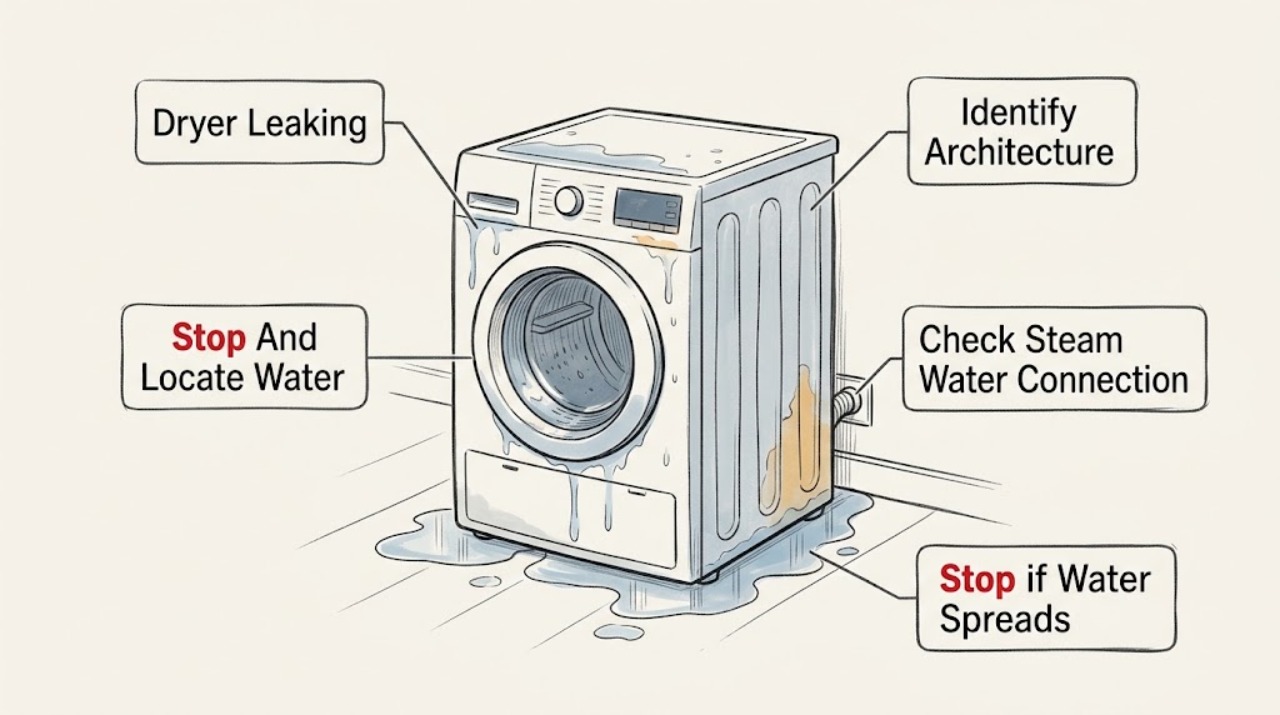
A GE dryer leak has different likely paths depending on the dryer architecture and where the water appears. A ventless condenser dryer collects water in a tank or sends it through a drain hose, and GE says pushing that hose more than 4 inches into the standpipe can cause leaking.
-
GE Dryer Making Noise: Identify Normal Sounds and Safe Next Steps
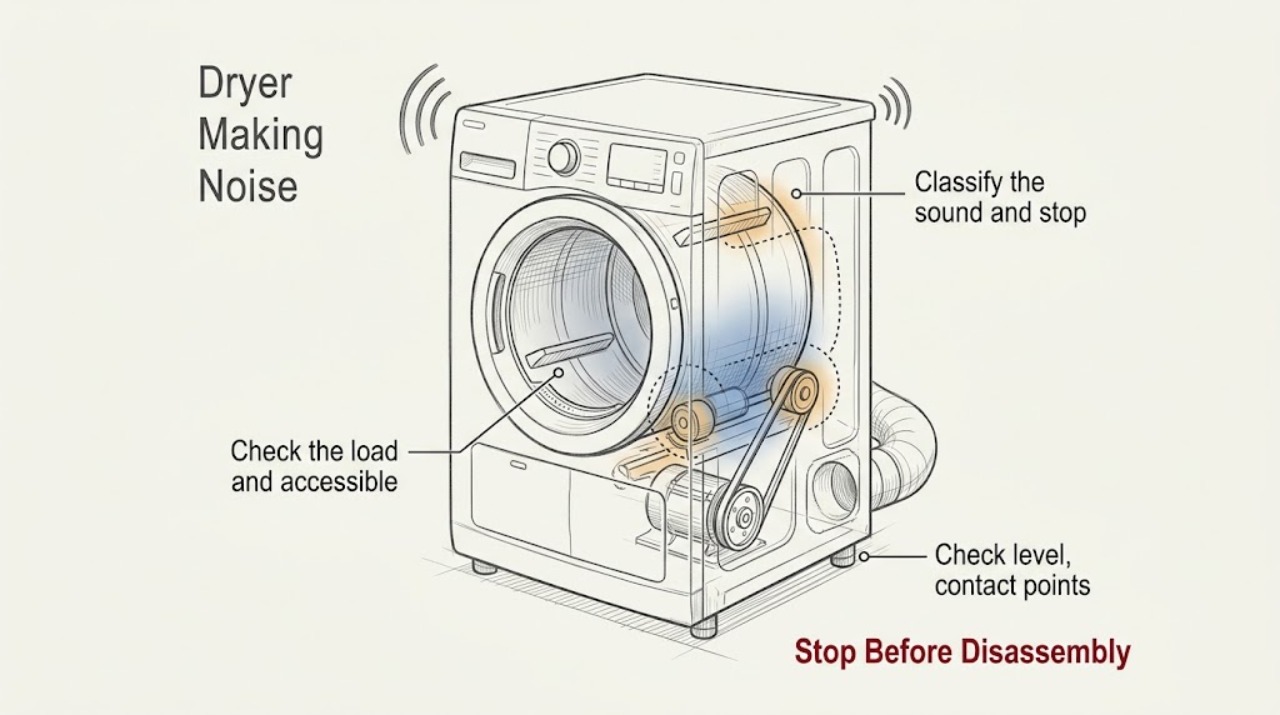
A GE dryer can make a brief startup squeak and the ordinary sound of the drum turning, but a thump, persistent squeak, chirp that repeats every few seconds, humming, scraping, or a new noise after heating deserves a check. Stop immediately for smoke, a burning or electrical smell, a gas odor, a hot cord or outlet, sparks, or a dryer that is excessively hot.
-
GE Dryer Not Draining: Identify the Water Path First
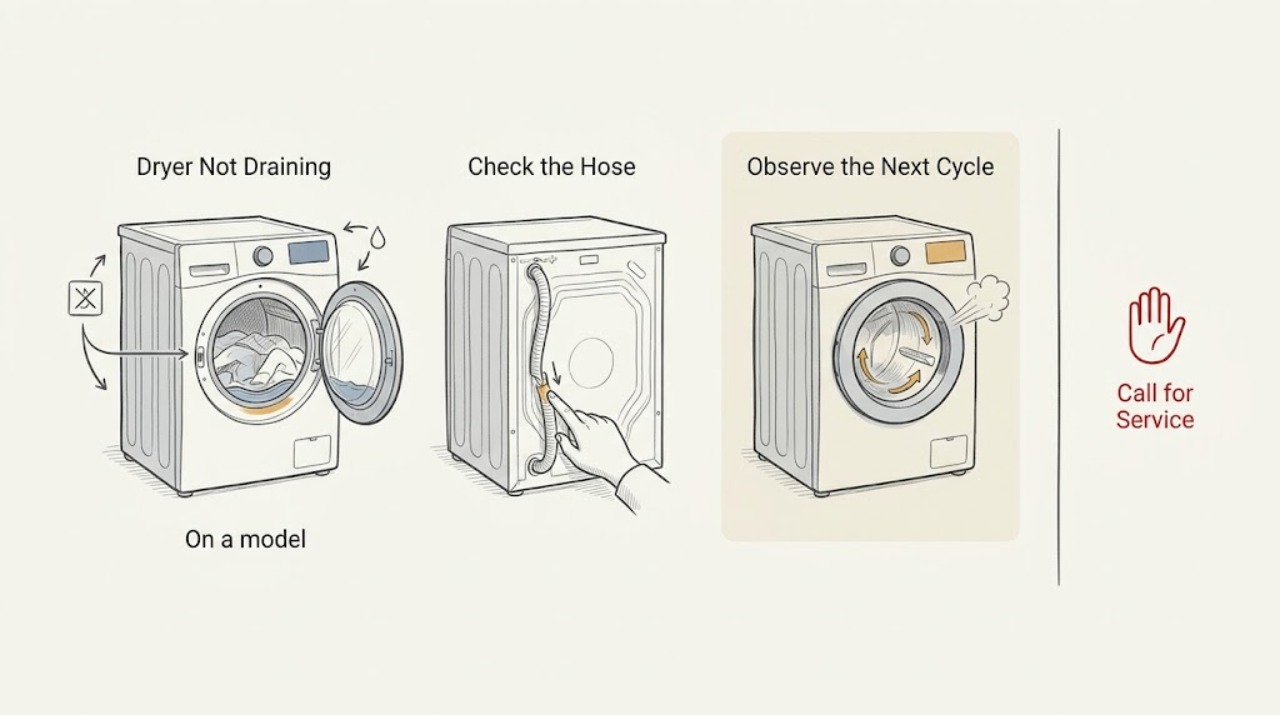
A GE dryer may be a vented model that exhausts moist air or a ventless condenser model that sends condensed water to a removable tank or a direct drain. Do not apply the tank procedure to a vented dryer.
-
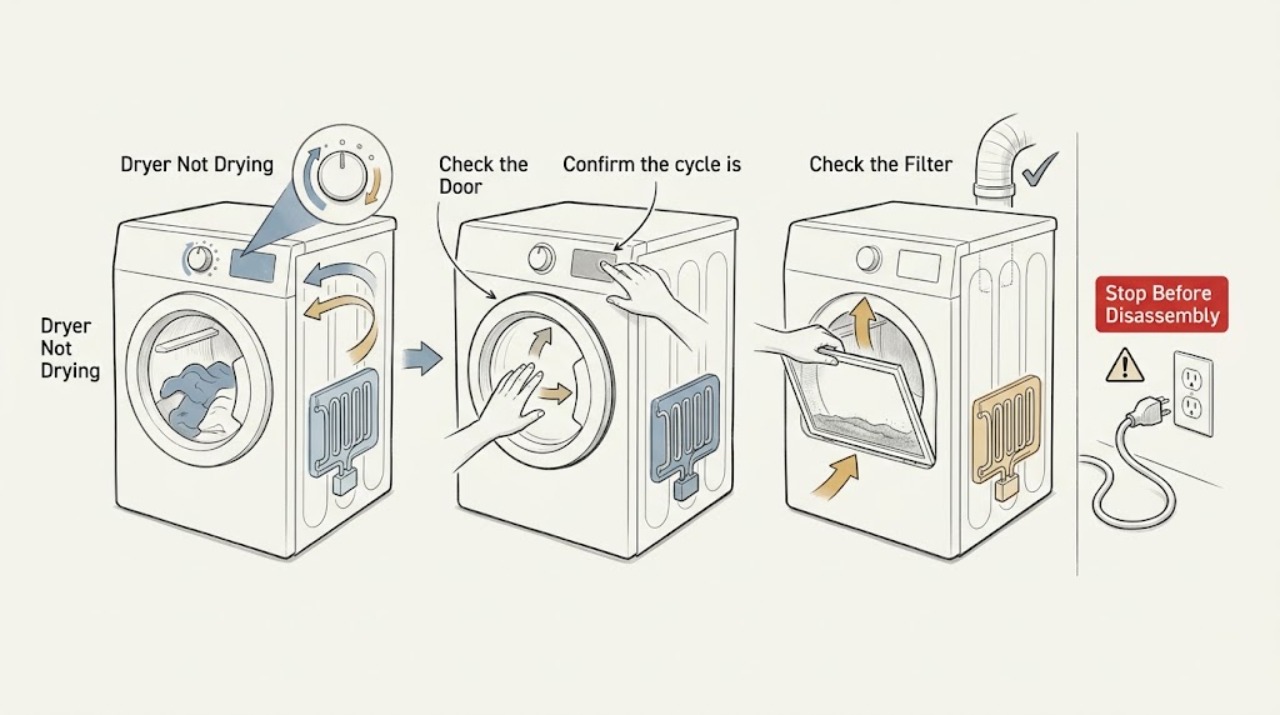
GE Dryer Not Drying: Check the Cycle, Airflow, Load, and Heat Safely
A GE dryer that leaves clothes damp may be using a cool or low-dry setting, overloaded or poorly sorted, receiving clothes that are too wet from the washer, or losing airflow through a kinked, crushed, dirty, or blocked vent. A lint filter, sensor-dry load, power supply, gas supply, heating system, or condenser can also affect drying.
-
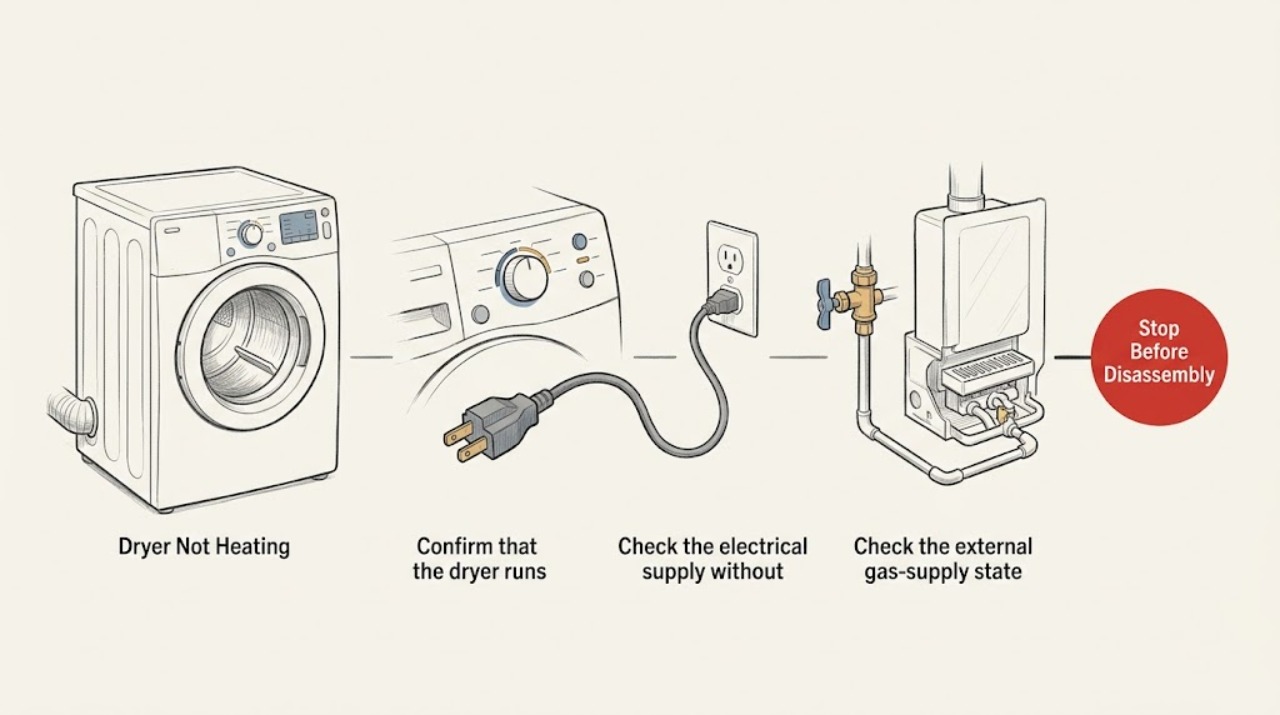
GE Dryer Not Heating: Check Cycle, Power, Gas, and Venting Safely
First confirm that the cycle is a heated dry cycle rather than Air Fluff or Cool Down, and that the dryer is actually running. Check the accessible outlet and breaker or fuse state; an electric dryer can tumble with incomplete power, while a gas dryer also needs a working gas supply.
-
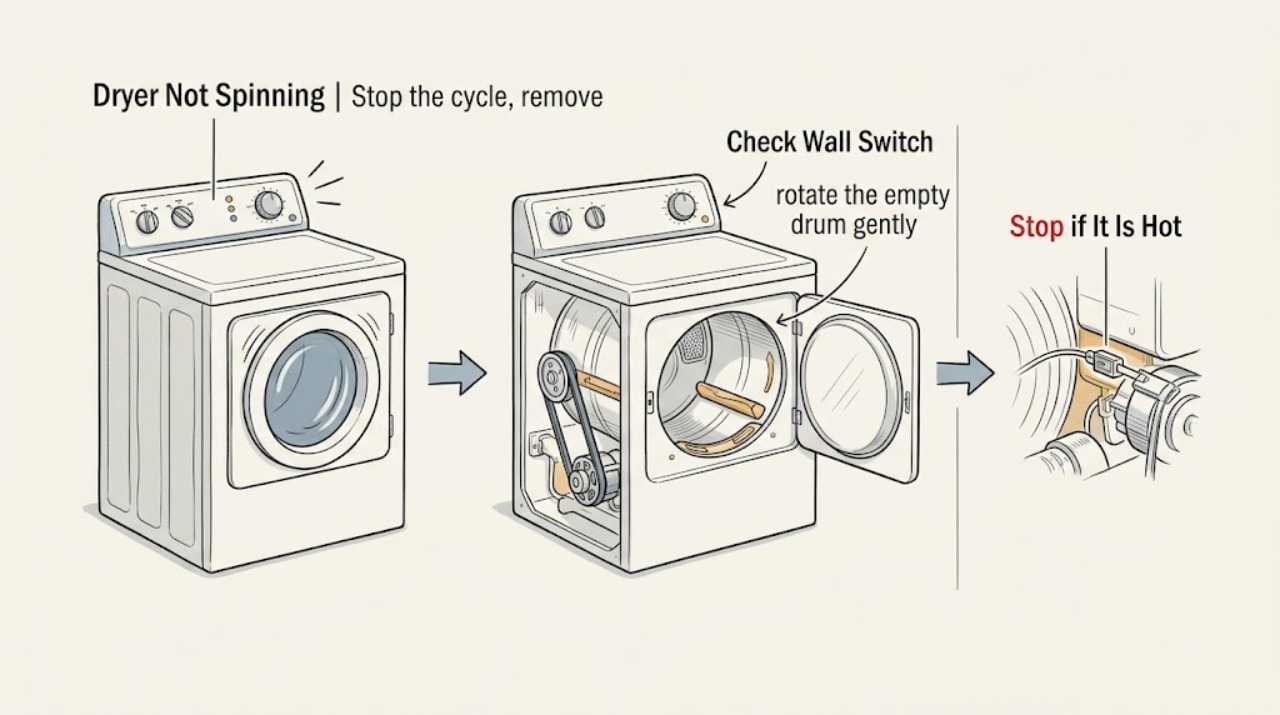
Ge Dryer Not Spinning
If a GE dryer is not spinning, first separate a dryer that will not start from one whose motor runs but the drum stays still. With the dryer off and unplugged, remove a heavy or wet load and retry only with a normal-size load.
-
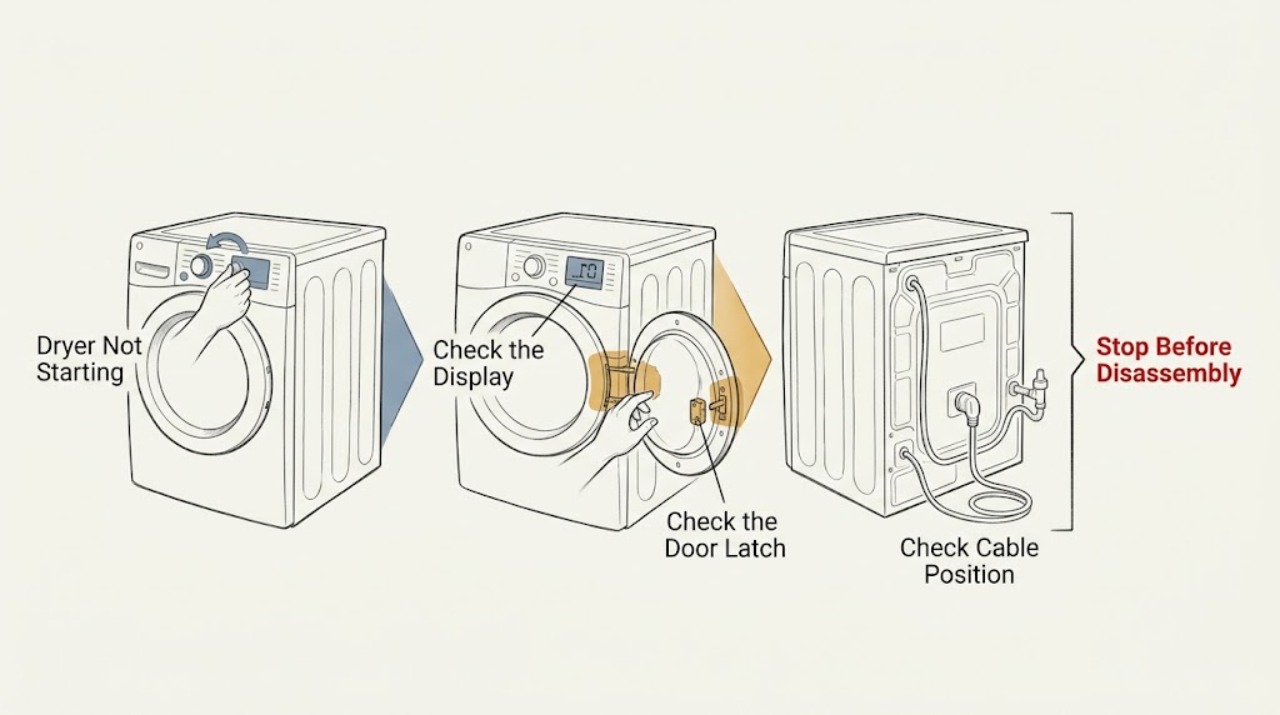
GE Dryer Not Starting: Check the Door, Controls, and Power Safely
A GE dryer may not start because the door is not fully closed, clothing or lint is preventing the latch from engaging, the cycle or start control is wrong, the control panel is locked or asleep, or the dryer has lost power. A recently moved or installed dryer may also have a model-specific configuration or connection issue.
-
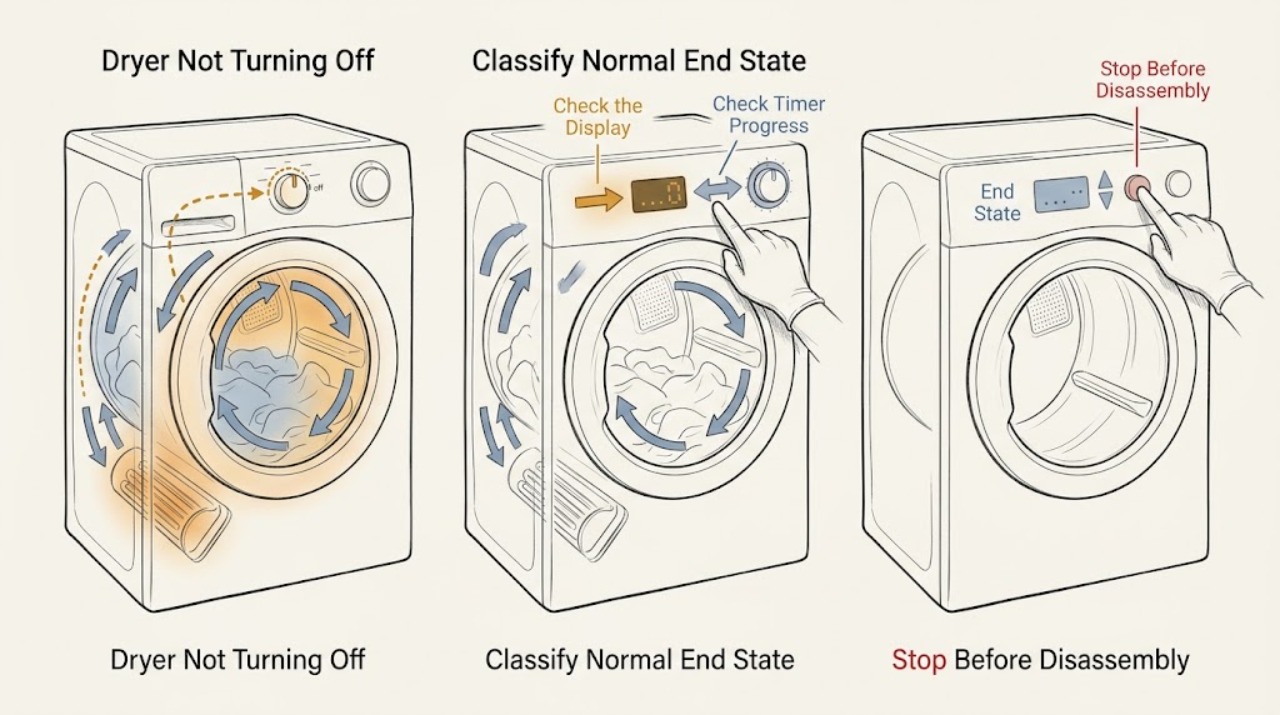
GE Dryer Not Turning Off: Check the Cycle, Timer, Sensors, and Safety Conditions
First determine whether the GE dryer is still in a normal cool-down, sensor-dry pause, or reverse-tumble phase, or whether it continues running after a timed cycle has elapsed. On automatic cycles, the timer can advance intermittently while the dryer senses load moisture and temperature; the dryer should eventually cool down and shut off.
-
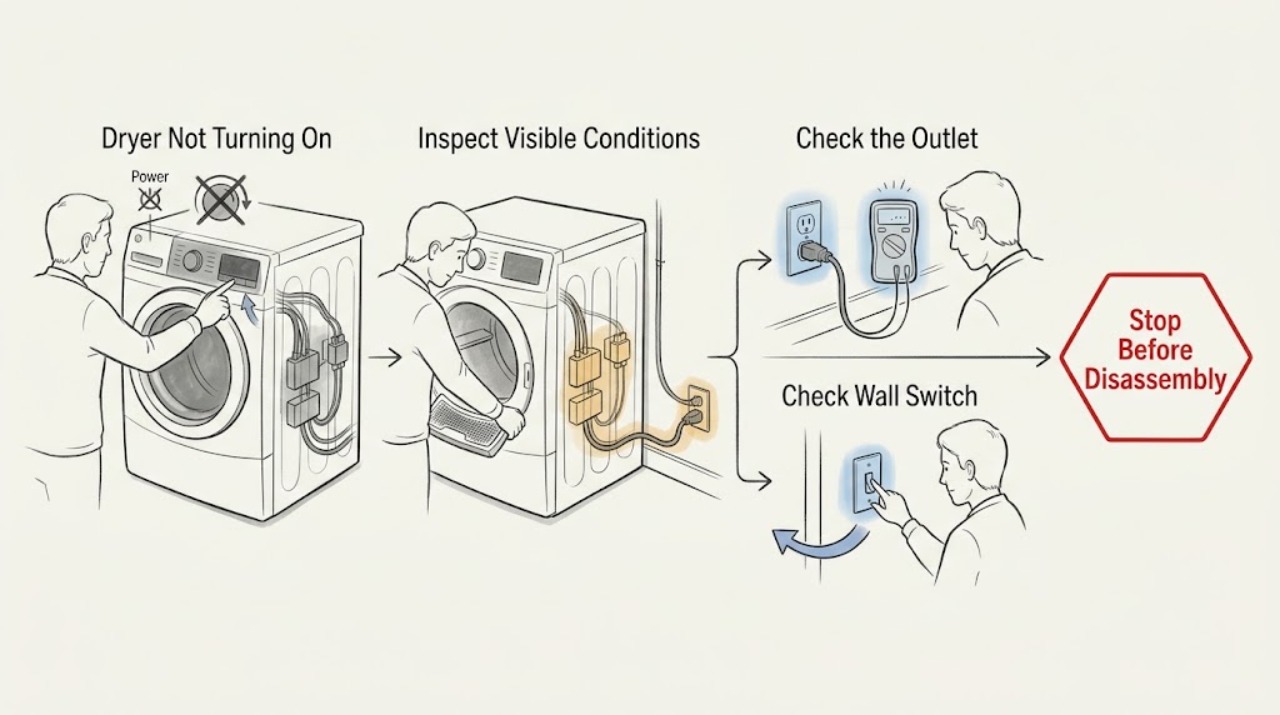
GE Dryer Not Turning On: Check the Door, Start Control, and Power
Start with the low-risk external checks: make sure the plug is fully seated, the door closes tightly, a valid cycle is selected, and the Start control is pressed completely. Check the dryer’s dedicated breaker or fuses and reset a partially tripped breaker once.
-
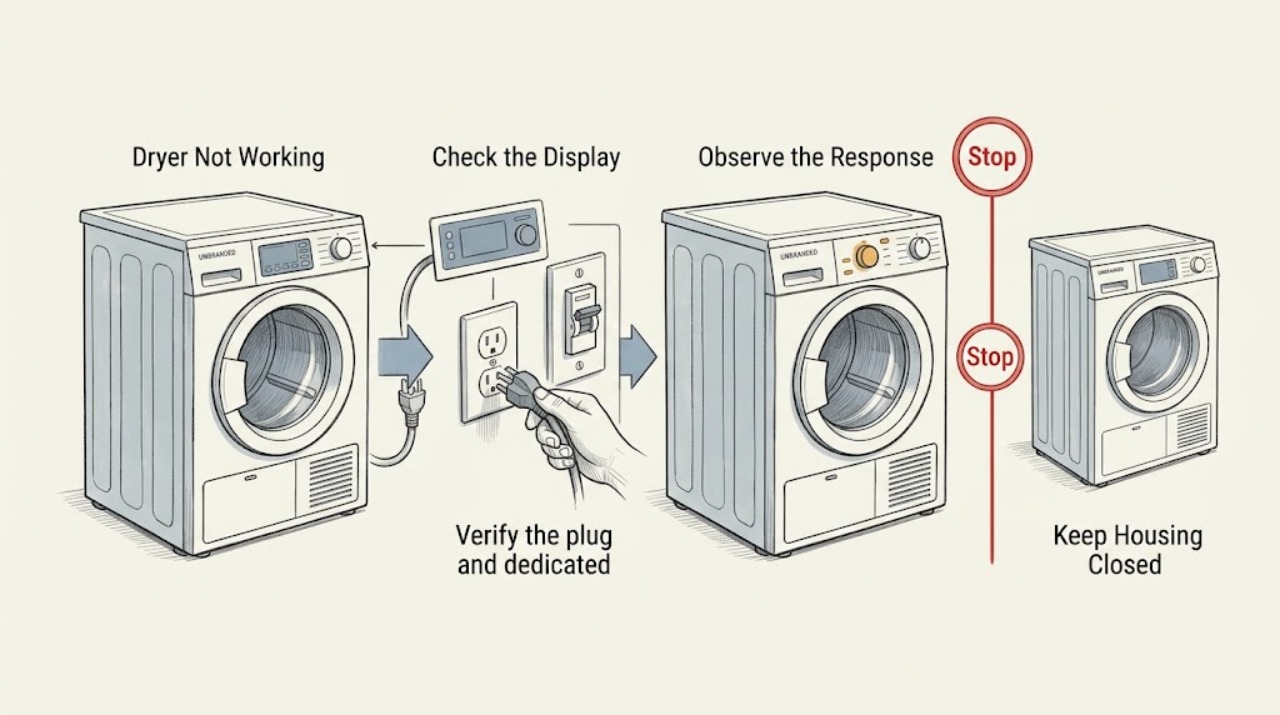
Ge Dryer Not Working
When a GE dryer is not working, first separate a blank or unresponsive control from a dryer that starts but will not tumble or heat. Confirm the plug, dedicated circuit, door closure, cycle settings, and Start command; then note whether the door switch, drum, and display behave normally.
-
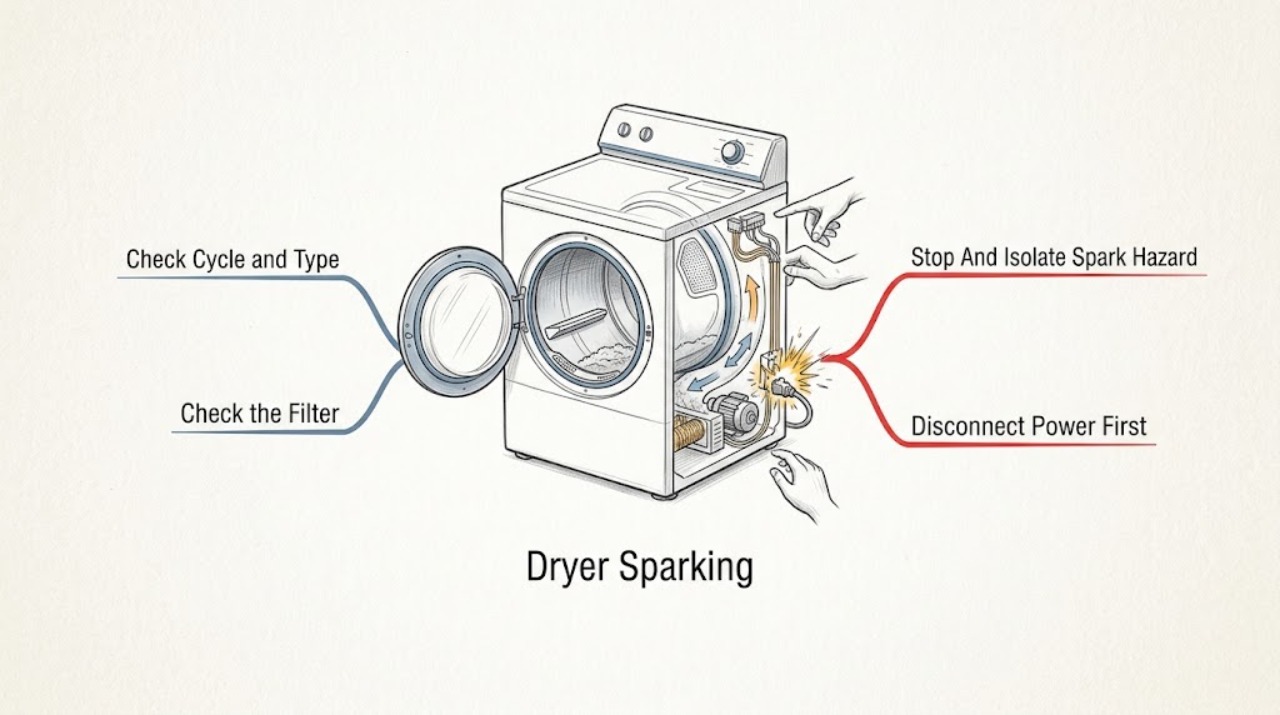
GE Dryer Sparking: Stop Safely and Check the Fire Risks
Stop the GE dryer immediately when you see sparks, a flash, smoke, a burning smell, or a hot connection. Remove clothing only if the drum has stopped and it is safe, then disconnect power from a safe accessible control or switch off the dryer circuit without touching a damaged cord or wet area.
-
GE dryer stops before cycle ends: What to Check and What to Do Next
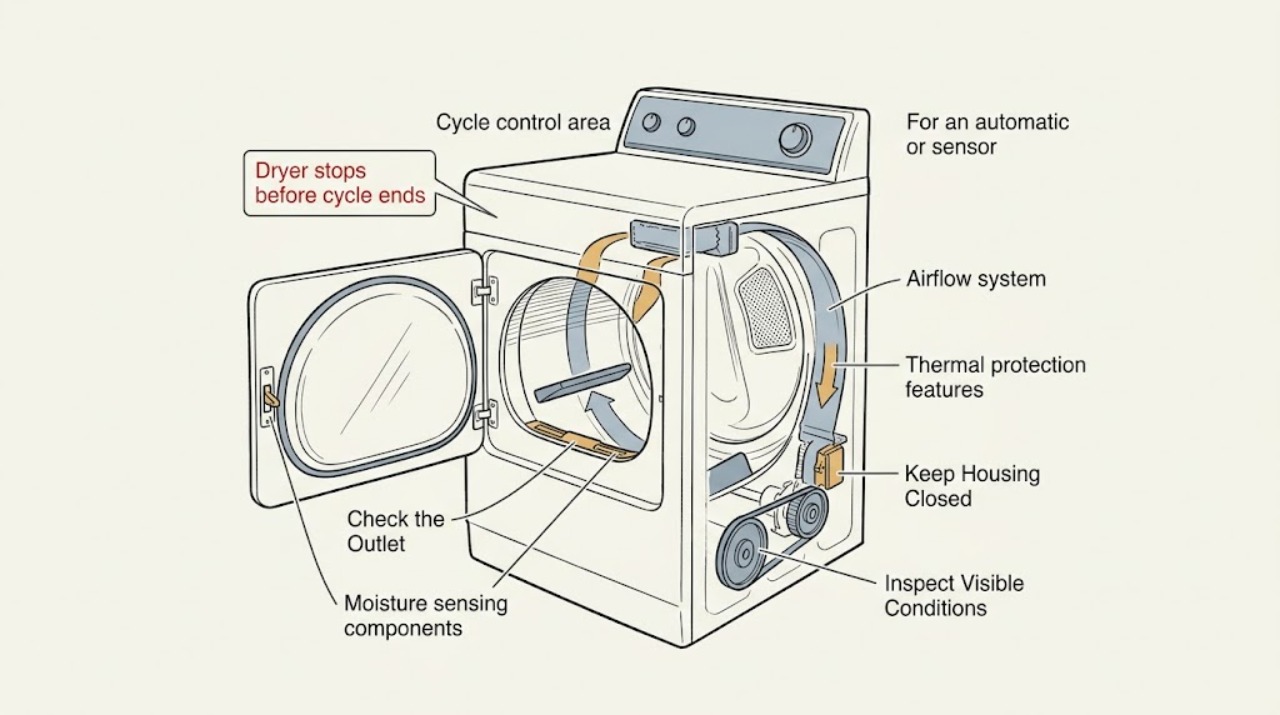
If a GE dryer stops before the cycle ends, first separate a normal sensor-cycle decision or a door interruption from a fault. GE says automatic-cycle timers can advance intermittently, and some models stop after about two minutes when no load is detected or the load has moved away from the sensor rods.
-
GE dryer takes too long to dry: What to Check and What to Do Next
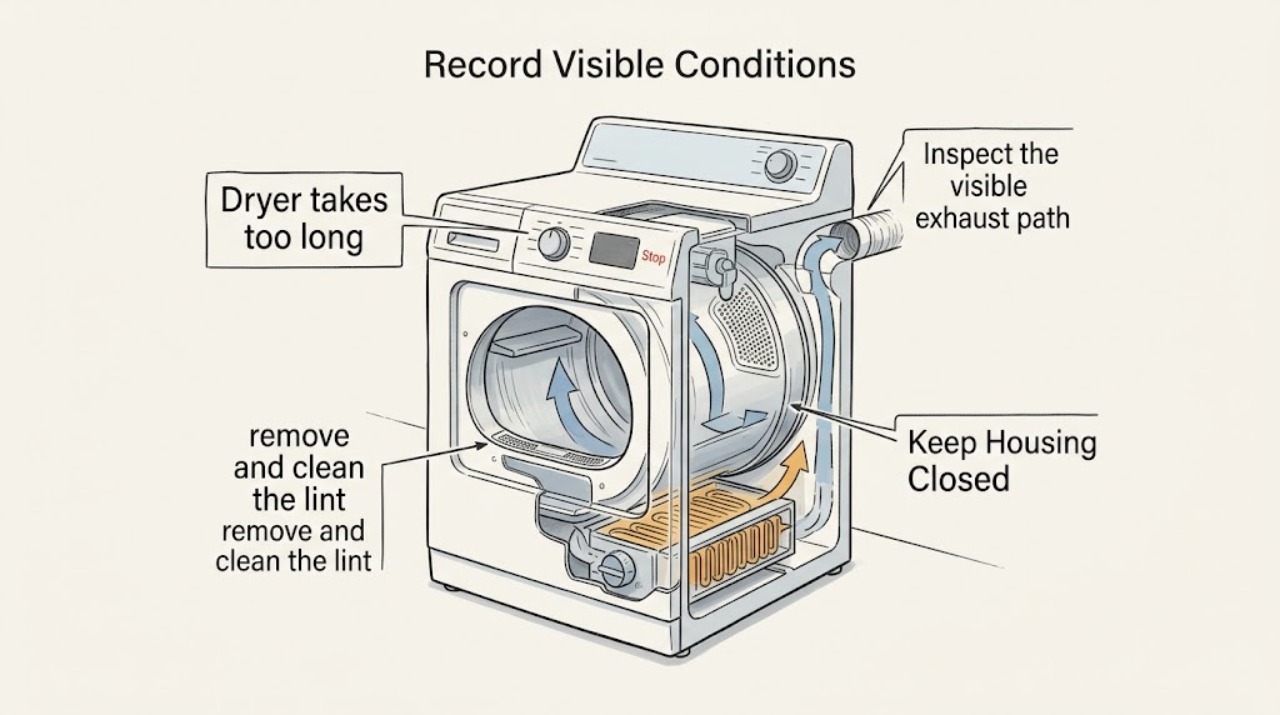
A GE dryer that takes too long to dry is most often affected by exhaust airflow, a coated lint screen, an unsuitable load or cycle, or clothing that enters the dryer wetter than usual. GE says drying time depends on heat source, load size, fabric, moisture, selected cycle, and vent condition; its support guidance specifically calls out crushed or obstructed ducting, a blocked hood, plastic or unsuitable flexible venting, poor front clearance, and lint buildup.
-
GE Gas Dryer Smells Like Gas: Stop, Ventilate Safely, and Call Service
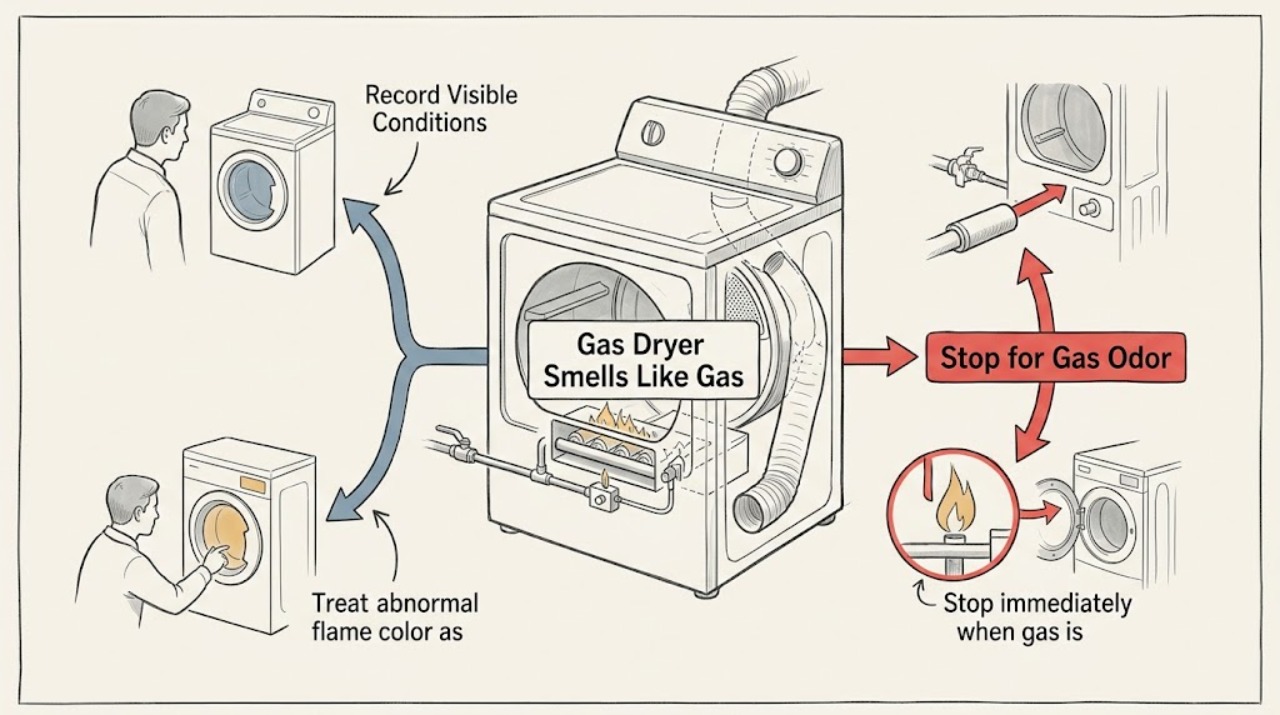
If you smell gas around a GE dryer, stop the dryer, extinguish open flames only if it is safe, avoid operating electrical switches, ventilate or leave the area as appropriate, and contact the gas supplier or emergency service from a safe location. Do not restart the dryer to see whether the smell clears.
-
Why a GE Dryer Smells Bad and What to Check
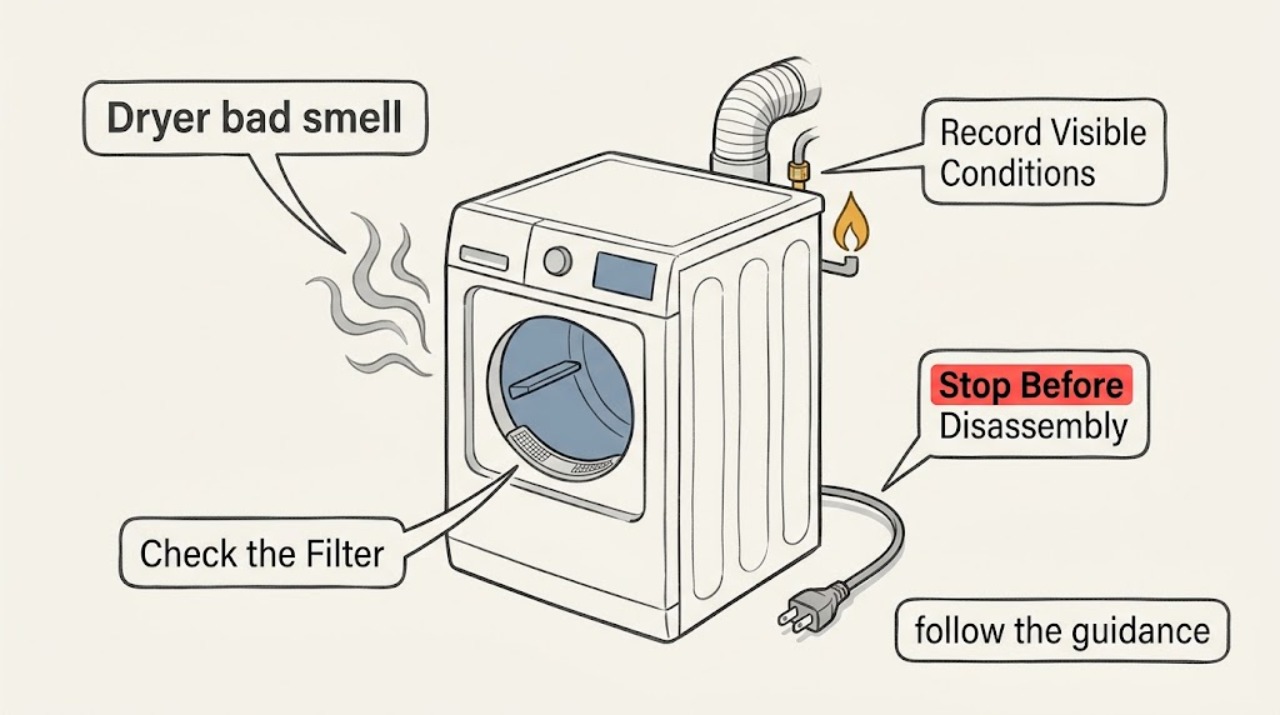
A bad smell from a GE dryer is commonly tied to first-use residue, lint or restricted exhaust, damp or musty conditions, or an abnormal gas flame. Stop the dryer and sort the odor before continuing: a new-machine oily smell may fade after the manufacturer-recommended empty run, while a persistent burning smell, smoke, melting odor, or gas odor is a safety stop.
-
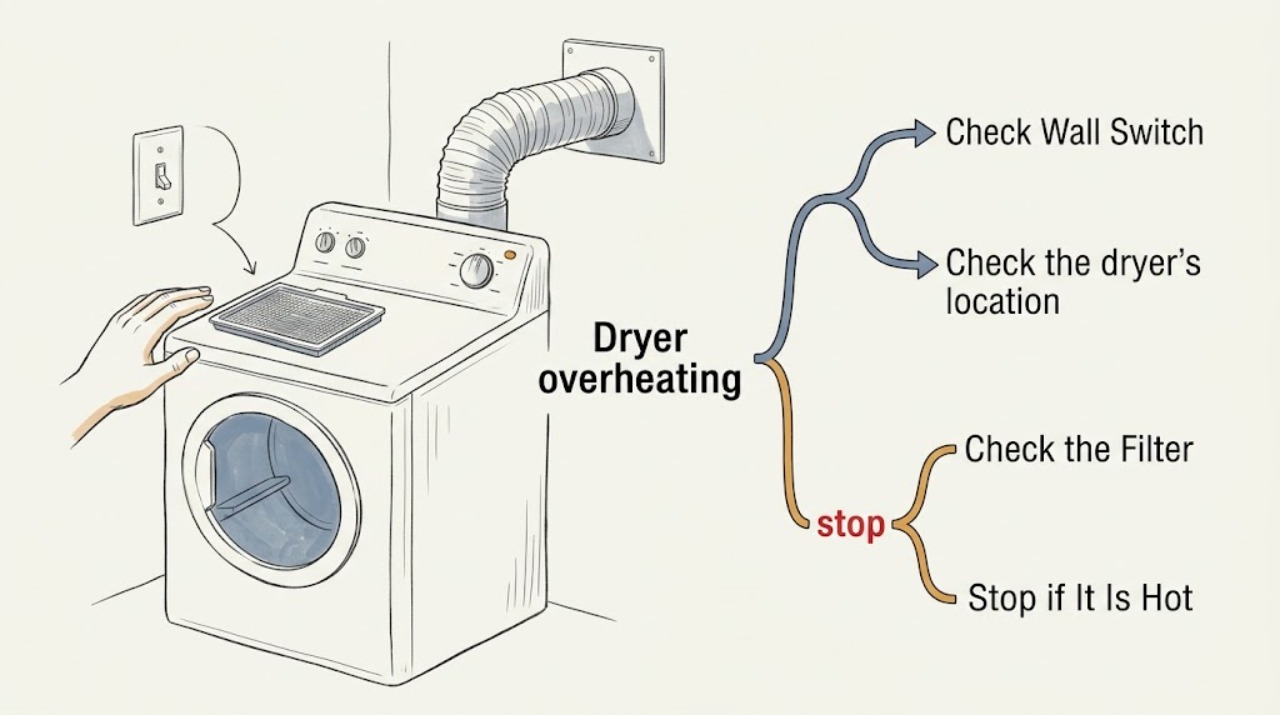
Why Is My GE Dryer Overheating?
Stop a GE dryer that is excessively hot, shutting off from heat, producing a burning smell, or making smoke. Let it cool, then clean the lint filter and visually check the exhaust duct and outside wall cap for lint, crushing, kinks, or blockage.